Overview
In this unit you will develop the capacity to engage with, assess, and manage obstetrics and paediatric patients. Upon completion of this unit, you will be able to draw upon your knowledge of pathophysiology, epidemiology, and aetiology to provide professional, situational, and culturally appropriate treatment pathways for managing these special populations.
Details
Pre-requisites or Co-requisites
Pre requisite: PMSC12005. Please note: Any student who has not successfully completed a PMSC residential school within the preceding 12 months or undertaken a clinical placement unit, should consult with the Head of Course to discuss completing a PMSC12001 refresher. This ensures currency with all contemporary skills and procedures in line with industry standards and professional capabilities.
Important note: Students enrolled in a subsequent unit who failed their pre-requisite unit, should drop the subsequent unit before the census date or within 10 working days of Fail grade notification. Students who do not drop the unit in this timeframe cannot later drop the unit without academic and financial liability. See details in the Assessment Policy and Procedure (Higher Education Coursework).
Offerings For Term 1 - 2026
Attendance Requirements
All on-campus students are expected to attend scheduled classes - in some units, these classes are identified as a mandatory (pass/fail) component and attendance is compulsory. International students, on a student visa, must maintain a full time study load and meet both attendance and academic progress requirements in each study period (satisfactory attendance for International students is defined as maintaining at least an 80% attendance record).
Recommended Student Time Commitment
Each 6-credit Undergraduate unit at CQUniversity requires an overall time commitment of an average of 12.5 hours of study per week, making a total of 150 hours for the unit.
Class Timetable
Assessment Overview
Assessment Grading
This is a graded unit: your overall grade will be calculated from the marks or grades for each assessment task, based on the relative weightings shown in the table above. You must obtain an overall mark for the unit of at least 50%, or an overall grade of 'pass' in order to pass the unit. If any 'pass/fail' tasks are shown in the table above they must also be completed successfully ('pass' grade). You must also meet any minimum mark requirements specified for a particular assessment task, as detailed in the 'assessment task' section (note that in some instances, the minimum mark for a task may be greater than 50%). Consult the University's Grades and Results Policy for more details of interim results and final grades.
All University policies are available on the CQUniversity Policy site.
You may wish to view these policies:
- Grades and Results Policy
- Assessment Policy and Procedure (Higher Education Coursework)
- Review of Grade Procedure
- Student Academic Integrity Policy and Procedure
- Academic Progression Policy and Procedure
- Student Refund and Credit Balance Policy and Procedure
- Complaints Policy and Procedure
- Information and Communications Technology Acceptable Use Policy and Procedure
This list is not an exhaustive list of all University policies. The full list of University policies are available on the CQUniversity Policy site.
Feedback, Recommendations and Responses
Every unit is reviewed for enhancement each year. At the most recent review, the following staff and student feedback items were identified and recommendations were made.
Feedback from T1 2025 SUTE Unit Comment Report
It would be good to group the video lectures together and have the pdf materials below them in the same order.
Will ensure the current format is aligned and group all the weekly content into one large PDF and one large video at the end of the week for students.
- Analyse and apply the pathophysiology to antenatal patients through all stages of pregnancy, including intrapartum and post-partum
- Analyse and apply the knowledge of key growth, anatomical and physiological differences when assessing paediatric patients
- Integrate theoretical knowledge in the clinical assessment of common and emergent obstetric and paediatric conditions
- Demonstrate the application of clinical skills, interventions, and pharmacology in the management of obstetric and paediatric patients in the pre-hospital environment
- Employ the principles of effective communication when dealing with paediatric and obstetric patients, with consideration of culturally appropriate, ethical, and professional behaviours required of the registered paramedic.
| Standard/Attribute/Criteria | Learning Outcomes |
| Domain 1: The professional and ethical practitioner 1.1.1, 1.1.2, 1.1.3, 1.1.4, 1.1.5, 1.1.6, 1.1.7, 1.1.8, 1.1.9, 1.1.10, 1.1.11, 1.2.2, 1.2.3, 1.2.4, 1.2.5, 1.2.6, 1.3.1, 1.3.2, 1.3.3, 1.4.1, 1.4.2 | LO1, LO2, LO3, LO4, LO5 |
| Domain 2: The communicator and collaborator 2.1.1, 2.1.2, 2.1.3, 2.1.4, 2.1.5, 2.1.6, 2.1.7, 2.2.1, 2.2.2, 2.2.3, 2.2.5, 2.2.6 | LO4, LO5 |
| Domain 3: The evidence-based practitioner 3.1.1, 3.1.2, 3.2.1, 3.2.2, 3.2.3, 3.2.3, 3.2.4, 3.2.5, 3.2.6, 3.3.1, 3.3.2, 3.3.3, 3.3.4, 3.4.2 | LO1, LO2, LO3, LO4, LO5 |
| Domain 4: The safety and risk management practitioner 4.1.1, 4.1.2, 4.1.3, 4.1.4, 4.1.5, 4.2.1, 4.2.2, 4.2.3, 4.2.4, 4.3.2, 4.5.3 | LO2, LO3, LO4, LO5 |
| Domain 5: The paramedic practitioner 5.1.1, 5.1.2, 5.1.3, 5.1.4, 5.1.5, 5.2.1, 5.2.3, 5.2.4, 5.2.5, 5.3.1, 5.3.2, 5.3.4, 5.3.5, 5.3.6, 5.4.1, 5.4.2, 5.4.3, 5.4.4, 5.4.5, 5.4.6, 5.6.1, 5.6.2, 5.6.3, 5.6.4 | LO1, LO2, LO3, LO4, LO5 |
National Safety and Quality Health Service Standards
The Australian Commission on Safety and Quality in Health Care Standards developed in this unit are:
| Standard | Learning Outcomes |
| Clinical Governance | LO1, LO2, LO3, LO4 |
| Partnering with Consumers | LO2, LO3, LO4, LO5 |
| Preventing and Controlling Infections | LO2, LO3, LO4, LO5 |
| Medication Safety | LO4, LO5 |
| Comprehensive Care | LO1, LO2, LO3, LO4, LO5 |
| Communicating for Safety | LO4, LO5 |
| Recognising and Responding to Acute Deterioration | LO3, LO4, LO5 |
Alignment of Assessment Tasks to Learning Outcomes
| Assessment Tasks | Learning Outcomes | ||||
|---|---|---|---|---|---|
| 1 | 2 | 3 | 4 | 5 | |
| 1 - Written Assessment - 40% | |||||
| 2 - Online Quiz(zes) - 20% | |||||
| 3 - Online Quiz(zes) - 40% | |||||
| 4 - Practical Assessment - 0% | |||||
Alignment of Graduate Attributes to Learning Outcomes
| Graduate Attributes | Learning Outcomes | ||||
|---|---|---|---|---|---|
| 1 | 2 | 3 | 4 | 5 | |
| 1 - Communication | |||||
| 2 - Problem Solving | |||||
| 3 - Critical Thinking | |||||
| 4 - Information Literacy | |||||
| 5 - Team Work | |||||
| 6 - Information Technology Competence | |||||
| 7 - Cross Cultural Competence | |||||
| 8 - Ethical practice | |||||
| 9 - Social Innovation | |||||
| 10 - First Nations Knowledges | |||||
| 11 - Aboriginal and Torres Strait Islander Cultures | |||||
Textbooks
Textbook of Adult Emergency Medicine
- Edition: 5th (2019)
- Authors: by Peter Cameron MBBS MD FACEM (Editor), Mark Little MBBS FACEM MPH&TM DTM&H IDHA (Editor), Biswadev Mitra MBBS MHSM PhD FACEM (Editor), Conor Deasy MB DCH Dip IMC Dip Tox FRCEM PhD (Editor)
- Elsevier
- ISBN: 0702076244
Midwifery: Preparation for Practice
- Edition: 4th (2019)
- Authors: by Sally Pairman MNZM D.Mid MA BA RM RGON. (Editor), Sally K. Tracy DMID MA BNURS AdvDipMid RM RGON (Editor), Hannah Dahlen BN GradCert (Mid-Pharm) MCommN PhD RN RM FACM (Editor), Lesley Dixon PHD RM
- Elsevier
- ISBN: 072954267X
Textbook of Paediatric Emergency Medicine
- Edition: 4th (2024)
- Authors: Peter Cameron, MBBS, MD, FACEM, Gary J. Browne, MD, MBBS, MSpMed, DipMedEd, FRACP, FACEM, FAAP, Biswadev Mitra, MBBS MHSM PhD FACEM, Stuart Dalziel, MBChB FRACP PhD and Simon Craig, MBBS MHPE MPH FACE
- Elsevier
- ISBN: 978-0702073052
IT Resources
- CQUniversity Student Email
- Internet
- Unit Website (Moodle)
All submissions for this unit must use the referencing style: American Psychological Association 7th Edition (APA 7th edition)
For further information, see the Assessment Tasks.
e.moore@cqu.edu.au
Week 1
Begin Date: 09 Mar 2026Module/Topic
Introduction to the Obstetric Patient
History Taking in the Obstetric Patient
Complications of Pregnancy
Chapter
Please refer to the eReading list for this weeks readings
Events and Submissions/Topic
Week 2
Begin Date: 16 Mar 2026Module/Topic
Normal Cephalic Delivery
Cultural Considerations in Obstetrics
Postpartum Anxiety and Depression
Chapter
Please refer to the eReading list for this weeks readings
Events and Submissions/Topic
Week 3
Begin Date: 23 Mar 2026Module/Topic
Obstetric Emergencies
Neonatal Resuscitation
Chapter
Please refer to the eReading list for this weeks readings
Events and Submissions/Topic
Week 4
Begin Date: 30 Mar 2026Module/Topic
Introduction to Paediatrics
Paediatric Resuscitation
Chapter
Please refer to the eReading list for this weeks readings
Events and Submissions/Topic
Week 5
Begin Date: 06 Apr 2026Module/Topic
Paediatric Respiratory Conditions
Chapter
Please refer to the eReading list for this weeks readings
Events and Submissions/Topic
Written Assessment Case Study Due: Week 5 Friday (10 Apr 2026) 9:00 am AEST
Week 6
Begin Date: 13 Apr 2026Module/Topic
Paediatric Medical Conditions
Chapter
Please refer to the eReading list for this weeks readings
Events and Submissions/Topic
Vacation Week
Begin Date: 20 Apr 2026Module/Topic
No content
Chapter
Please refer to the eReading list for this weeks readings
Events and Submissions/Topic
Week 7
Begin Date: 27 Apr 2026Module/Topic
Paediatric Neurological Conditions
Submersion Injuries
Minor Trauma in Paediatric Patients
Chapter
Please refer to the eReading list for this weeks readings
Events and Submissions/Topic
Week 8
Begin Date: 04 May 2026Module/Topic
Social determinants of health and medication access
Culturally and linguistically diverse backgrounds
Rheumatic Heart Disease
Stillbirth care
Termination of pregnancy
Venous thromboembolism prophylaxis in pregnancy
Chapter
Please refer to the eReading list for this weeks readings
Events and Submissions/Topic
Week 9
Begin Date: 11 May 2026Module/Topic
Preventative infectious diseases:
Childhood immunisations
Global pandemic
Early onset Group B streptococcal disease
Chapter
Please refer to the eReading list for this weeks readings
Events and Submissions/Topic
Week 10
Begin Date: 18 May 2026Module/Topic
Special Needs:
Autism spectrum disorder
Sensory processing disorder
Attention Deficit Hyperactivity Disorder (ADHD)
Blindness
Deafness
Physical Disability
Intellectual Disability
Chapter
Please refer to the eReading list for this weeks readings
Events and Submissions/Topic
Week 11
Begin Date: 25 May 2026Module/Topic
Additional consideration including:
Fetal movement
Jaundice
Perinatal substance use: neonatal
Safer infant sleep
Persistent pelvic pain
Chapter
Please refer to the eReading list for this weeks readings
Events and Submissions/Topic
Week 12
Begin Date: 01 Jun 2026Module/Topic
Self Review and Goal Setting
Chapter
Please refer to the eReading list for this weeks readings
Events and Submissions/Topic
Exam Week
Begin Date: 08 Jun 2026Module/Topic
Chapter
Events and Submissions/Topic
Vacation/Exam Week
Begin Date: 15 Jun 2026Module/Topic
Chapter
Events and Submissions/Topic
1 Written Assessment
Work through a case study and complete the five (5) tasks that are included within it. These tasks vary in focus, wordcount, and overall weighting, with detailed breakdowns provided within the case study. A brief overview of each tasks focus is:
TASK ONE: Focused on provisional diagnosis and definition.
TASK TWO: Focused on identifying key risk factors and complications.
TASK THREE: Focused on key obstetric manoeuvre's.
TASK FOUR: Focused on risk management.
TASK FIVE: Focused on management rationale.
Level of GenAI Use Allowed:
Level 2 AI PLANNING: Al may be used for pre-task activities such as brainstorming, outlining and initial research. This level focuses on the effective use of Al for planning, synthesis, and ideation, but assessments should emphasise the ability to develop and refine these ideas independently.
You may use Al for planning, idea development, and research. Your final submission should show how you have developed and refined these ideas.
Week 5 Friday (10 Apr 2026) 9:00 am AEST
Week 8 Friday (8 May 2026)
You will be required to demonstrate the theoretical knowledge taught to you throughout this unit. This will be conducted through varying tasks throughout the case study. The case study will have points awarded to each task with the accumulation of these points being the final result. The case and marking guide will be provided on the unit Moodle page. The assessment will be based on marking criteria covering the following key points:
- Successful completion of each task
- Well articulated, researched and referenced work provided throughout the workbook
- Analyse and apply the pathophysiology to antenatal patients through all stages of pregnancy, including intrapartum and post-partum
- Integrate theoretical knowledge in the clinical assessment of common and emergent obstetric and paediatric conditions
2 Online Quiz(zes)
In this online quiz, you will be required to complete a single online quiz on Moodle comprising 40 questions.
The quiz is designed to assess your knowledge and understanding of content delivered during Weeks 1 to 7, inclusive, and includes both obstetric and paediatric questions. There will be a strong focus on the pathophysiology, growth and development of these patients through the stages of obstetric and paediatric development. The quiz does not involve drug calculations, however, it will involve questions about the key conditions that have been covered during the allocated weeks.
This quiz will be a combination of multiple-choice, true/false and short-answer questions. The quiz is open-book. Please take note that this is an individual assessment, with no collaboration allowed. Generative AI is not allowed to be utilised during the quiz.
Level of GenAI Use Allowed:
Level 1 No AI: This assessment is to be completed without AI assistance.
Week 8 Friday (8 May 2026) 9:00 am AEST
The quiz will be available from Monday Week 8 at 09:00am AEST and will close on Friday Week 8 at 09:00 am AEST.
This single quiz is worth 20% of the total mark for the unit. Marks are awarded if a question is answered correctly, and the total marks are tallied after the quiz has been attempted. Non-attempts will score a zero mark. The quiz will have a time limit of 60 minutes. When the time for the quiz expires, any open attempts are automatically submitted. You must therefore commence the quiz allowing the appropriate amount of time to complete the attempt.
In the absence of an approved extension, there will be no opportunity to complete the task after the due date, and there will be no opportunity to apply a late penalty of five percent per day. This quiz may not be re-attempted. The 72-hour grace period does not apply to this assessment.
- Analyse and apply the pathophysiology to antenatal patients through all stages of pregnancy, including intrapartum and post-partum
- Analyse and apply the knowledge of key growth, anatomical and physiological differences when assessing paediatric patients
3 Practical Assessment
This assessment has two instruments.
1) Short case Objective Structured Clinical Examination (OSCE), designed to assess your knowledge and practical skills acquired during this unit. You will be allocated 15 minutes to complete the assessment. The short case OSCE will be delivered in the format of a structured scenario, looking at the patient assessment and history taking, evidence gathering and patient treatment, implementation of interventions, procedures, pharmacology and skills, and overall patient and scene management.
And
2) Long case Objective Structured Clinical Examination (OSCE), designed to assess your knowledge and practical skills acquired during this unit. You will be allocated 20 minutes to complete the assessment. The long case OSCE will be delivered in the format of a structured scenario, looking at the patient assessment and history taking, evidence gathering and patient treatment, implementation of interventions, procedures, pharmacology and skills, and overall patient and scene management.
Week 10 Monday (18 May 2026) 11:45 pm AEST
This assessment will be conducted at the allocated residential school. The 72-hour grace period does not apply to this assessment.
This is a Pass/Fail assessment task. You will need to pass both instruments (short-case OSCE and long-case OSCE).
Both the short-case and long-case OSCE's will be marked according to the rubrics provided on the unit Moodle page, covering areas such as assessment, scene management, diagnosis, clinical management, and professionalism.
There will be an opportunity for a single re-sit if you are unsuccessful in either one of the short-case or long-case OSCE's. The 72-hour grace period does not apply to this assessment.
Level of GenAI Use Allowed:
Level 1 No AI: This assessment is to be completed without AI assistance.
- Demonstrate the application of clinical skills, interventions, and pharmacology in the management of obstetric and paediatric patients in the pre-hospital environment
- Employ the principles of effective communication when dealing with paediatric and obstetric patients, with consideration of culturally appropriate, ethical, and professional behaviours required of the registered paramedic.
4 Online Quiz(zes)
In this online quiz, you will be required to complete a single online quiz on Moodle comprising 30 questions.
The quiz is designed to assess your knowledge and understanding of content delivered during Weeks 1 to 11, inclusive, and includes both obstetric and paediatric questions. It will primarily cover the assessment and management of obstetric and paediatric and involve case studies that will require drug calculations.
This quiz will be a combination of multiple-choice, true/false and short-answer questions. The quiz is open-book. Please take note that this is an individual assessment, with no collaboration allowed.
Level of GenAI Use Allowed:
Level 1 No AI: This assessment is to be completed without AI assistance.
Week 12 Friday (5 June 2026) 9:00 am AEST
The quiz will open on the Monday of Week 12 at 09:00am and will close on the Friday of Week 12 at 09:00am AEST.
This single quiz is worth 40% of the total mark for the unit. Marks are awarded if a question is answered correctly, and the total marks are tallied after the quiz has been attempted. Non-attempts will score a zero mark. The quiz will have a time limit of 90 minutes. When the time for the quiz expires, any open attempts are automatically submitted. You must therefore commence the quiz allowing the appropriate amount of time to complete the attempt.
In the absence of an approved extension, there will be no opportunity to complete the task after the due date, and there will be no opportunity to apply a late penalty of five percent per day. This quiz may not be re-attempted. The 72-hour grace period does not apply to this assessment.
- Integrate theoretical knowledge in the clinical assessment of common and emergent obstetric and paediatric conditions
- Demonstrate the application of clinical skills, interventions, and pharmacology in the management of obstetric and paediatric patients in the pre-hospital environment
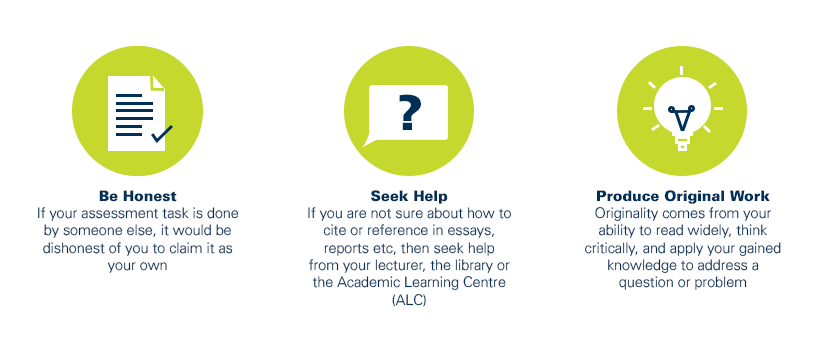
As a CQUniversity student you are expected to act honestly in all aspects of your academic work.
Any assessable work undertaken or submitted for review or assessment must be your own work. Assessable work is any type of work you do to meet the assessment requirements in the unit, including draft work submitted for review and feedback and final work to be assessed.
When you use the ideas, words or data of others in your assessment, you must thoroughly and clearly acknowledge the source of this information by using the correct referencing style for your unit. Using others’ work without proper acknowledgement may be considered a form of intellectual dishonesty.
Participating honestly, respectfully, responsibly, and fairly in your university study ensures the CQUniversity qualification you earn will be valued as a true indication of your individual academic achievement and will continue to receive the respect and recognition it deserves.
As a student, you are responsible for reading and following CQUniversity’s policies, including the Student Academic Integrity Policy and Procedure. This policy sets out CQUniversity’s expectations of you to act with integrity, examples of academic integrity breaches to avoid, the processes used to address alleged breaches of academic integrity, and potential penalties.
What is a breach of academic integrity?
A breach of academic integrity includes but is not limited to plagiarism, self-plagiarism, collusion, cheating, contract cheating, and academic misconduct. The Student Academic Integrity Policy and Procedure defines what these terms mean and gives examples.
Why is academic integrity important?
A breach of academic integrity may result in one or more penalties, including suspension or even expulsion from the University. It can also have negative implications for student visas and future enrolment at CQUniversity or elsewhere. Students who engage in contract cheating also risk being blackmailed by contract cheating services.
Where can I get assistance?
For academic advice and guidance, the Academic Learning Centre (ALC) can support you in becoming confident in completing assessments with integrity and of high standard.
What can you do to act with integrity?