Overview
In this unit, you will develop essential knowledge and clinical skills required to recognise, diagnose and manage patients experiencing acute and life-threatening medical conditions. This unit integrates pathophysiology, patient assessment, and clinical history-taking to support the formulation of provisional diagnoses and the implementation of treatment plans. An emphasis is placed on procedural competence, including the indications, contraindications of core paramedic interventions used to manage neurological, respiratory, cardiovascular, endocrine and gastrointestinal presentations. These skills are taught and reinforced through hands-on practice on campus, where you will implement these newly acquired skills into simulated patient scenarios of a broad range of clinical presentations guided by National Safety and Quality Health Services (NSQHS) standards and Quality Use of Medicines framework. Case-based learning and simulations will assist you in contextualising your clinical skills and decision-making to ensure you meet the Paramedic Board of Australia’s registration requirements.
Details
Pre-requisites or Co-requisites
Pre-requisites: PMSC11002 Foundations of Paramedicine A BMSC11010 Human Anatomy and Physiology 1 or BMSC11001 Human Body Systems 1
Important note: Students enrolled in a subsequent unit who failed their pre-requisite unit, should drop the subsequent unit before the census date or within 10 working days of Fail grade notification. Students who do not drop the unit in this timeframe cannot later drop the unit without academic and financial liability. See details in the Assessment Policy and Procedure (Higher Education Coursework).
Offerings For Term 1 - 2026
Attendance Requirements
All on-campus students are expected to attend scheduled classes - in some units, these classes are identified as a mandatory (pass/fail) component and attendance is compulsory. International students, on a student visa, must maintain a full time study load and meet both attendance and academic progress requirements in each study period (satisfactory attendance for International students is defined as maintaining at least an 80% attendance record).
Recommended Student Time Commitment
Each 6-credit Undergraduate unit at CQUniversity requires an overall time commitment of an average of 12.5 hours of study per week, making a total of 150 hours for the unit.
Class Timetable
Assessment Overview
Assessment Grading
This is a graded unit: your overall grade will be calculated from the marks or grades for each assessment task, based on the relative weightings shown in the table above. You must obtain an overall mark for the unit of at least 50%, or an overall grade of 'pass' in order to pass the unit. If any 'pass/fail' tasks are shown in the table above they must also be completed successfully ('pass' grade). You must also meet any minimum mark requirements specified for a particular assessment task, as detailed in the 'assessment task' section (note that in some instances, the minimum mark for a task may be greater than 50%). Consult the University's Grades and Results Policy for more details of interim results and final grades.
All University policies are available on the CQUniversity Policy site.
You may wish to view these policies:
- Grades and Results Policy
- Assessment Policy and Procedure (Higher Education Coursework)
- Review of Grade Procedure
- Student Academic Integrity Policy and Procedure
- Academic Progression Policy and Procedure
- Student Refund and Credit Balance Policy and Procedure
- Complaints Policy and Procedure
- Information and Communications Technology Acceptable Use Policy and Procedure
This list is not an exhaustive list of all University policies. The full list of University policies are available on the CQUniversity Policy site.
Feedback, Recommendations and Responses
Every unit is reviewed for enhancement each year. At the most recent review, the following staff and student feedback items were identified and recommendations were made.
Feedback from Verbal feedback within virtual tutorials.
Students expressed high satisfaction with the quality of learning material and the learning and teaching approach.
The learning material will continue to use the same learning and teaching approach within future offerings of this unit.
Feedback from Verbal feedback within virtual tutorials.
Some of the learning material is outdated, with referenced guidelines no longer available.
This unit will be redesigned for the 2026 offering, with new learning material reflective of the curriculum enhancements.
- Articulate the theoretical underpinnings, including the anatomical and pathophysiological reasons, for the application of advanced care skills and interventions in the management of a critically ill or injured patient relevant to paramedic practice
- Identify and interpret the indications, precautions, risks and contraindications of using specific paramedic interventions involved in advanced care prehospital practice
- Employ critical thinking and clinical reasoning for using specific paramedic interventions involved in advanced care prehospital skills and interventions
- Apply and explain the application of paramedic advanced care prehospital interventions, guided by standards such as National Safety and Quality Health Service (NSQHS) standards and Quality Use of Medicines framework, in a safe, ethical and professional manner.
| Standard/Attribute/Criteria | Learning Outcomes |
| Domain 1: The professional and ethical practitioner 1.1.4, 1.1.5, 1.1.9, 1.1.10, 1.1.11, 1.2.2, 1.2.4, 1.2.5, 1.3.2, 1.3.3 | LO1, LO2, LO3, LO4 |
| Domain 2: The communicator and collaborator 2.1.2, 2.1.3, 2.1.4, 2.2.4, 2.2.5 | LO1, LO2, LO3 LO4 |
| Domain 3: The evidence-based practitioner 3.1.1, 3.2.2, 3.2.3, 3.2.5, 3.2.6, 3.3.3 | LO1, LO2, LO3, LO4 |
| Domain 4: The safety and risk management practitioner 4.1.2, 4.1.3, 4.1.4, 4.1.5, 4.2.4 | LO1, LO2, LO3, LO4 |
| Domain 5: The paramedic practitioner 5.2.1, 5.2.2, 5.2.3, 5.2.4, 5.2.5, 5.3.1, 5.3.3, 5.3.4, 5.3.6, 5.4.1, 5.4.2, 5.4.3, 5.4.4, 5.4.5, 5.6.1, 5.6.2, 5.6.3, 5.6.4, | LO1, LO2, LO3, LO4 |
National Safety and Quality Health Service Standards
| Standard | Learning Outcomes |
| Clinical Governance: 1.01b, 1.27a, 1.27b | LO3 |
| Partnering with Consumers: 2.01a, 2.04, 2.05a, 2.05b, 2.06, 2.10a, 2.10b, 2.10c, 2.10d | LO2, LO4 |
| Preventing and Controlling Infections: 3.01a, 3.01b, 3.02b, 3.06, 3.07b, 3.10a, 3.11a, 3.12 | LO1, LO2, LO3, LO4 |
| Medication Safety: 4.03a, 4.03b, 4.03c, 4.11, 4.15a | LO2, LO4 |
| Comprehensive Care: 5.03, 5.04a, 5.04b, 5.04c, 5.04d, 5.06, 5.10a, 5.10b, 5.10c, 5.11, 5.14a 5.14b, 5.14c, 5.14d, 5.21, 5.22, 5.24a, 5.24b, 5.24c, 5.25 | LO1, LO2, LO3, LO4 |
| Communicating for Safety: 6.03, 6.04 | LO2, LO4 |
| Recognising and Responding to Acute Deterioration: 8.03, 8.06, 8.10, 8.13 | LO1, LO2, LO3, LO4 |
Alignment of Assessment Tasks to Learning Outcomes
| Assessment Tasks | Learning Outcomes | |||
|---|---|---|---|---|
| 1 | 2 | 3 | 4 | |
| 1 - Practical Assessment - 0% | ||||
| 2 - Online Quiz(zes) - 50% | ||||
| 3 - Written Assessment - 50% | ||||
Alignment of Graduate Attributes to Learning Outcomes
| Graduate Attributes | Learning Outcomes | |||
|---|---|---|---|---|
| 1 | 2 | 3 | 4 | |
| 1 - Communication | ||||
| 2 - Problem Solving | ||||
| 3 - Critical Thinking | ||||
| 4 - Information Literacy | ||||
| 5 - Team Work | ||||
| 6 - Information Technology Competence | ||||
| 7 - Cross Cultural Competence | ||||
| 8 - Ethical practice | ||||
| 9 - Social Innovation | ||||
| 10 - First Nations Knowledges | ||||
| 11 - Aboriginal and Torres Strait Islander Cultures | ||||
Textbooks
Textbook of Adult Emergency Medicine
- Edition: 5th (2020)
- Authors: Cameron, P., Little, M., Mitra, B. & Connor, D.
- Elsevier
- Sydney Sydney , NSW , Australia
- ISBN: 9780702076244
Additional Textbook Information
Textbook of Adult Emergency Medicine is the prescribed textbook used throughout the course. The 4th version is accessible online to read and download via the eReading list on Moodle.
IT Resources
- CQUniversity Student Email
- Internet
- Unit Website (Moodle)
No referencing style set.
k.verney@cqu.edu.au
Week 1
Begin Date: 09 Mar 2026Module/Topic
Foundational professional practice
- Clinical frameworks and decision-making
- Consent, capacity and vulnerable
- Communication for paramedicine
- Quality use of medicines
- Safety of self and others
Chapter
See eReading list and Moodle page.
Events and Submissions/Topic
Week 2
Begin Date: 16 Mar 2026Module/Topic
Clinical Skills
- Airway and ventilation
- Drug routes of administration, preparation and safety
Chapter
See eReading list and Moodle page.
Events and Submissions/Topic
Week 3
Begin Date: 23 Mar 2026Module/Topic
Neurological:
- Alert level of consciousness
- Syncope
- Stroke
- Seizure
- Headache
Chapter
See eReading list and Moodle page.
Events and Submissions/Topic
Week 4
Begin Date: 30 Mar 2026Module/Topic
Respiratory
- Dyspnoea
- Hyperventilation
- Asthma
- Chronic Obstructive Pulmonary Disease
Chapter
See eReading list and Moodle page.
Events and Submissions/Topic
Week 5
Begin Date: 06 Apr 2026Module/Topic
Cardiovascular
- Acute Coronary Syndrome
- Chest pain differential diagnosis
- Perfusion status
Chapter
See eReading list and Moodle page.
Events and Submissions/Topic
Week 6
Begin Date: 13 Apr 2026Module/Topic
Infection and Immune:
- Infection
- Fever
- Urticaria
- Anaphylaxis
Chapter
See eReading list and Moodle page.
Events and Submissions/Topic
Vacation Week
Begin Date: 20 Apr 2026Module/Topic
VACATION WEEK
Chapter
Events and Submissions/Topic
Online quiz: Opens Friday 24th April 2026, 9:00am AEST.
Week 7
Begin Date: 27 Apr 2026Module/Topic
Endocrine:
- Diabetes
- Hypoglycaemia
Chapter
See eReading list and Moodle page.
Events and Submissions/Topic
Week 8
Begin Date: 04 May 2026Module/Topic
Gastrointestinal
- Nausea and vomiting
- Diarrhoea
- Constipation
Chapter
See eReading list and Moodle page.
Events and Submissions/Topic
Week 9
Begin Date: 11 May 2026Module/Topic
Pain, injuries and falls
- Pain management
- Falls
- Musculoskeletal trauma
- Basic haemorrhage control
Chapter
See eReading list and Moodle page.
Events and Submissions/Topic
Thursday 14th May: On campus student assessment day. Written assessment and practical assessment.
Week 10
Begin Date: 18 May 2026Module/Topic
Safe patient movements
- Manual handling
- Equipment
- Patient safety
Chapter
See eReading list and Moodle page.
Events and Submissions/Topic
Week 11
Begin Date: 25 May 2026Module/Topic
Clinical skills integration and case-based learning.
Chapter
Events and Submissions/Topic
Week 12
Begin Date: 01 Jun 2026Module/Topic
Introduction to diverse patients:
- Geriatrics
- Paediatrics
- Cultural diversity
Chapter
Events and Submissions/Topic
Residential school: Wednesday 3rd June- Sunday 7th June
Exam Week
Begin Date: 08 Jun 2026Module/Topic
Chapter
Events and Submissions/Topic
Residential school: Monday 8th June- Friday 12th June
Vacation/Exam Week
Begin Date: 15 Jun 2026Module/Topic
Chapter
Events and Submissions/Topic
1 Online Quiz(zes)
The online quiz is designed to assess your foundational knowledge of anatomy and pathophysiology of disease processes, patient assessment, and formation of provisional diagnosis. It will evaluate your ability to identify and interpret clinical considerations, including indications, contraindications and precautions of skills and pharmacology. The application of critical thinking and clinical reasoning will be assessed, to determine the appropriate use of paramedic skills. The quiz will include questions covering content from weeks one to six, encompassing lecture materials, online modules, links, and required readings. The questions will be in the form of multiple-choice, diagrams, and short answers to assess the breadth and depth of knowledge.
Week 7 Friday (1 May 2026) 9:00 am AEST
Week 9 Friday (15 May 2026)
Results will be released by Friday 15th May.
- The quiz will open on Friday 24th April 09:00 am AEST and close Friday 1st May 09:00 am AEST.
- Time allocation of 60 minutes to complete the quiz.
- There will be a combination of multiple choice, short answer and diagrams.
- You will only be given one attempt.
- When the due date expires, any open attempts are automatically submitted; you must therefore start the quiz before that deadline or you will not receive your full time period.
- This is an individual assessment with no collaboration allowed.
- In the absence of an approved extension, there will be no opportunity to complete the task after this date, and there will be no opportunity to apply a late penalty of five percent per day.
- If you have any technical issues you must notify the unit coordinator immediately.
The 72-hour grace period does not apply to this assessment. A quiz that has not been attempted will result in a fail for the unit.
Level of GenAI use: Level 1- No AI. You must not use AI at any point during the assessment. You must demonstrate your core skills and knowledge.
- Articulate the theoretical underpinnings, including the anatomical and pathophysiological reasons, for the application of advanced care skills and interventions in the management of a critically ill or injured patient relevant to paramedic practice
- Identify and interpret the indications, precautions, risks and contraindications of using specific paramedic interventions involved in advanced care prehospital practice
- Employ critical thinking and clinical reasoning for using specific paramedic interventions involved in advanced care prehospital skills and interventions
2 Written Assessment
Clinical case studies are a valuable tool for health professionals to simulate authentic situations and challenge you to demonstrate your knowledge of complex clinical presentations and your ability to apply advanced care skills in a safe, ethical, and evidence-informed manner.
In this task, you will explore multiple case studies. You will be required to identify the relevant pathophysiology of the condition, detail clinical assessment, demonstrate sound clinical reasoning in formulating a provisional diagnosis and justification of the treatment plan, whilst incorporating safe and ethical practice.
This written task draws on content from lectures, reading and tutorial activities from weeks 1-11. It is a 45-minute handwritten task completed under exam conditions.
On-campus students: Thursday, 14th May.
Online students: Day 4 of the 5-day residential school.
The 72-hour grace period does not apply to this assessment.
Level of GenAI use: Level 1- No AI. You must not use AI at any point during the assessment. You must demonstrate your core skills and knowledge.
In class written assessment: On-campus students: Thursday, 14th May. Online students: Day 4 of the 5-day residential school.
Three weeks following the final residential school.
You will be required to demonstrate your theoretical knowledge taught to you throughout this unit. This assessment will be conducted by case-based learning in a 45-minute in-class test, conducted in exam conditions at the residential school. The marks awarded to each question will accumulate to the final result. The assessment will be based on marking criteria covering the following key points:
- Articulation of pathophysiology
- Application of clinical assessments and interpretation
- Clinical reasoning and provisional diagnosis
- Formulation of provisional diagnosis
- Justification of treatment plans
- Safe, ethical and patient-centred practice
- Articulate the theoretical underpinnings, including the anatomical and pathophysiological reasons, for the application of advanced care skills and interventions in the management of a critically ill or injured patient relevant to paramedic practice
- Employ critical thinking and clinical reasoning for using specific paramedic interventions involved in advanced care prehospital skills and interventions
3 Practical Assessment
The safe and competent performance of medical skills and procedures is a fundamental component of paramedic practice. Paramedics must not only understand the theoretical principles underpinning these interventions but also demonstrate their application in a safe, ethical, and professional manner within simulated patient care environments.
These assessments are designed to evaluate your ability to integrate knowledge, clinical reasoning, and hands-on skills at a novice level, reflecting real-world prehospital care scenarios.
You will complete:
1 x 15-minute skills station (will include multiple skills and knowledge questions)
- You will be expected to answer knowledge questions, explain the rationale of each skill, and demonstrate its safe and effective execution in a structured setting.
1 x 20-minute clinical scenario involving a structured simulated patient interaction
- You will be expected to conduct a thorough patient assessment, formulate a provisional diagnosis, implement timely and appropriate interventions, demonstrate effective communication, and act ethically and professionally.
The 72-hour grace period does not apply to this assessment.
Level of GenAI use: Level 1- No AI. You must not use AI at any point during the assessment. You must demonstrate your core skills and knowledge.
On-campus students: Thursday 14th May. Online students: Assessments will occur during the final day of residential school.
Two weeks following the final residential school.
15-minute skills station assessment (may include multiple skills).
- Structured questions on indications, contraindications, precautions, and other key information of each skill.
- Demonstrate its safe and effective execution in a structured setting.
20-minute clinical scenario involving a structured simulated patient interaction.
- Conduct a thorough patient assessment, formulate a provisional diagnosis, implement timely and appropriate interventions, demonstrate effective communication, and act ethically and professionally.
To successfully pass this unit, you must achieve a minimum of 50% on each practical assessment task. If you fail one task, you will be offered the opportunity to reattempt that task. If you fail both the skill station and clinical scenario, you will not be offered a reattempt.
- Identify and interpret the indications, precautions, risks and contraindications of using specific paramedic interventions involved in advanced care prehospital practice
- Explain and demonstrate the skills and interventions for specific paramedic interventions involved in advanced care prehospital practice in a safe, ethical and professional manner.
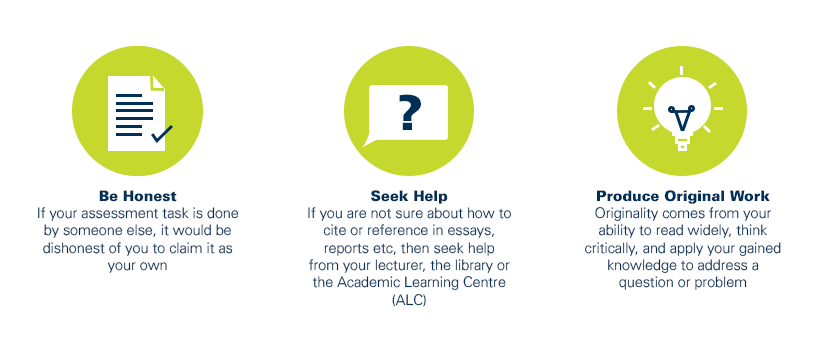
As a CQUniversity student you are expected to act honestly in all aspects of your academic work.
Any assessable work undertaken or submitted for review or assessment must be your own work. Assessable work is any type of work you do to meet the assessment requirements in the unit, including draft work submitted for review and feedback and final work to be assessed.
When you use the ideas, words or data of others in your assessment, you must thoroughly and clearly acknowledge the source of this information by using the correct referencing style for your unit. Using others’ work without proper acknowledgement may be considered a form of intellectual dishonesty.
Participating honestly, respectfully, responsibly, and fairly in your university study ensures the CQUniversity qualification you earn will be valued as a true indication of your individual academic achievement and will continue to receive the respect and recognition it deserves.
As a student, you are responsible for reading and following CQUniversity’s policies, including the Student Academic Integrity Policy and Procedure. This policy sets out CQUniversity’s expectations of you to act with integrity, examples of academic integrity breaches to avoid, the processes used to address alleged breaches of academic integrity, and potential penalties.
What is a breach of academic integrity?
A breach of academic integrity includes but is not limited to plagiarism, self-plagiarism, collusion, cheating, contract cheating, and academic misconduct. The Student Academic Integrity Policy and Procedure defines what these terms mean and gives examples.
Why is academic integrity important?
A breach of academic integrity may result in one or more penalties, including suspension or even expulsion from the University. It can also have negative implications for student visas and future enrolment at CQUniversity or elsewhere. Students who engage in contract cheating also risk being blackmailed by contract cheating services.
Where can I get assistance?
For academic advice and guidance, the Academic Learning Centre (ALC) can support you in becoming confident in completing assessments with integrity and of high standard.
What can you do to act with integrity?