Overview
This is the first unit in the Music Ensemble minor. Studying at an intermediate level in music and production, you will gain knowledge of how music is created, rehearsed, recorded, and performed. You will specialise in contemporary musical styles. Using industry recognised software, you will gain experience with multi-track recording, editing and audio mixing. The study of practical and theoretical principles gives you the opportunity to establish various performance, technical and creative skills.
Details
Pre-requisites or Co-requisites
Students must be enrolled in CG51 Bachelor of Music (Specialisation).
Important note: Students enrolled in a subsequent unit who failed their pre-requisite unit, should drop the subsequent unit before the census date or within 10 working days of Fail grade notification. Students who do not drop the unit in this timeframe cannot later drop the unit without academic and financial liability. See details in the Assessment Policy and Procedure (Higher Education Coursework).
Offerings For Term 1 - 2026
Attendance Requirements
All on-campus students are expected to attend scheduled classes - in some units, these classes are identified as a mandatory (pass/fail) component and attendance is compulsory. International students, on a student visa, must maintain a full time study load and meet both attendance and academic progress requirements in each study period (satisfactory attendance for International students is defined as maintaining at least an 80% attendance record).
Recommended Student Time Commitment
Each 6-credit Undergraduate unit at CQUniversity requires an overall time commitment of an average of 12.5 hours of study per week, making a total of 150 hours for the unit.
Class Timetable
Assessment Overview
Assessment Grading
This is a graded unit: your overall grade will be calculated from the marks or grades for each assessment task, based on the relative weightings shown in the table above. You must obtain an overall mark for the unit of at least 50%, or an overall grade of 'pass' in order to pass the unit. If any 'pass/fail' tasks are shown in the table above they must also be completed successfully ('pass' grade). You must also meet any minimum mark requirements specified for a particular assessment task, as detailed in the 'assessment task' section (note that in some instances, the minimum mark for a task may be greater than 50%). Consult the University's Grades and Results Policy for more details of interim results and final grades.
All University policies are available on the CQUniversity Policy site.
You may wish to view these policies:
- Grades and Results Policy
- Assessment Policy and Procedure (Higher Education Coursework)
- Review of Grade Procedure
- Student Academic Integrity Policy and Procedure
- Academic Progression Policy and Procedure
- Student Refund and Credit Balance Policy and Procedure
- Complaints Policy and Procedure
- Information and Communications Technology Acceptable Use Policy and Procedure
This list is not an exhaustive list of all University policies. The full list of University policies are available on the CQUniversity Policy site.
Feedback, Recommendations and Responses
Every unit is reviewed for enhancement each year. At the most recent review, the following staff and student feedback items were identified and recommendations were made.
Feedback from Personal Communication
Students offered encouraging feedback regarding the blend of performance and music technology in the design of the assessment in this unit.
Students continue to comment positively on the integration of performance and production focused studies in this unit. They have indicated that they place high value on the diverse skills developed in the project work undertaken in this unit. It is recommended that the delivery of this unit continues to provide these opportunities for technical and performance development.
- Demonstrate musical knowledge and relevant skills needed for the performance of repertoire at an intermediate level
- Apply technical knowledge and relevant skills needed for the performance of repertoire at an intermediate level
- Collaborate with others to perform musical arrangements of repertoire at an intermediate level
- Implement a range of professional skills relating to performance including punctuality and preparedness, attendance and personal practice
- Create a portfolio of audio work, relevant to intermediate repertoire, using audio production techniques in a digital audio workstation.
Alignment of Assessment Tasks to Learning Outcomes
| Assessment Tasks | Learning Outcomes | ||||
|---|---|---|---|---|---|
| 1 | 2 | 3 | 4 | 5 | |
| 1 - Practical Assessment - 35% | |||||
| 2 - Practical Assessment - 35% | |||||
| 3 - Practical Assessment - 30% | |||||
Alignment of Graduate Attributes to Learning Outcomes
| Graduate Attributes | Learning Outcomes | ||||
|---|---|---|---|---|---|
| 1 | 2 | 3 | 4 | 5 | |
| 1 - Communication | |||||
| 2 - Problem Solving | |||||
| 3 - Critical Thinking | |||||
| 4 - Information Literacy | |||||
| 5 - Team Work | |||||
| 6 - Information Technology Competence | |||||
| 7 - Cross Cultural Competence | |||||
| 8 - Ethical practice | |||||
| 9 - Social Innovation | |||||
| 10 - First Nations Knowledges | |||||
| 11 - Aboriginal and Torres Strait Islander Cultures | |||||
Textbooks
There are no required textbooks.
IT Resources
- CQUniversity Student Email
- Internet
- Unit Website (Moodle)
- Webcam
All submissions for this unit must use the referencing style: American Psychological Association 7th Edition (APA 7th edition)
For further information, see the Assessment Tasks.
j.smyth-tomkins@cqu.edu.au
Week 1
Begin Date: 09 Mar 2026Module/Topic
Ensemble: Repertoire development relative to projects and live performances.
Chapter
Events and Submissions/Topic
Week 2
Begin Date: 16 Mar 2026Module/Topic
Ensemble: Repertoire development relative to projects and live performances.
Chapter
Events and Submissions/Topic
Week 3
Begin Date: 23 Mar 2026Module/Topic
Ensemble: Repertoire development relative to projects and live performances.
Chapter
Events and Submissions/Topic
Week 4
Begin Date: 30 Mar 2026Module/Topic
Ensemble: Repertoire development relative to projects and live performances.
Chapter
Events and Submissions/Topic
Week 5
Begin Date: 06 Apr 2026Module/Topic
Ensemble: Repertoire development relative to projects and live performances.
Chapter
Events and Submissions/Topic
Week 6
Begin Date: 13 Apr 2026Module/Topic
Ensemble: Repertoire development relative to projects and live performances.
Chapter
Events and Submissions/Topic
Vacation Week
Begin Date: 20 Apr 2026Module/Topic
Chapter
Events and Submissions/Topic
Week 7
Begin Date: 27 Apr 2026Module/Topic
Ensemble: Repertoire development relative to recording projects and live performances.
Production Studies: Production Class
See Moodle for specific details.
Chapter
Events and Submissions/Topic
Week 8
Begin Date: 04 May 2026Module/Topic
Ensemble: Repertoire development relative to recording projects and live performances.
Production Studies: Production Class
See Moodle for specific details.
Chapter
Events and Submissions/Topic
Week 9
Begin Date: 11 May 2026Module/Topic
Ensemble: Repertoire development relative to recording projects and live performances.
Production Studies: Production Class
See Moodle for specific details.
Chapter
Events and Submissions/Topic
Week 10
Begin Date: 18 May 2026Module/Topic
Ensemble: Repertoire development relative to recording projects and live performances.
Production Studies: Audio intensive week
See Moodle for specific details.
Chapter
Events and Submissions/Topic
Production Project Due: Week 10 Monday (18 May 2026) 11:45 pm AEST
Week 11
Begin Date: 25 May 2026Module/Topic
Ensemble: Repertoire development relative to recording projects and live performances.
See Moodle for specific details.
Chapter
Events and Submissions/Topic
Week 12
Begin Date: 01 Jun 2026Module/Topic
Ensemble: Repertoire development relative to recording projects and live performances.
See Moodle for specific details.
Chapter
Events and Submissions/Topic
Exam Week
Begin Date: 08 Jun 2026Module/Topic
Chapter
Events and Submissions/Topic
Vacation/Exam Week
Begin Date: 15 Jun 2026Module/Topic
Chapter
Events and Submissions/Topic
1 Practical Assessment
In this assessment, you will demonstrate your professional rehearsal practice and ensemble engagement across the term. You will be evaluated based on rehearsals and associated performance preparation activities.
Your ensemble directors will assess your participation, preparation, responsiveness to feedback, and collaborative musicianship as observed throughout the rehearsal process.
This assessment focuses on how you:
- prepare material independently
- apply musical direction and feedback
- contribute to ensemble outcomes
- demonstrate professional behaviour and work ethic
AI Assessment Scale (AIAS): Not applicable
There is no AI use relevant to the tutor’s grading of the assessment.
72-hour grace period
IMPORTANT NOTE: This assessment is exempt from the 72-hour submission grace period.
Week 10 Monday (18 May 2026) 11:45 pm AEST
End of term.
You will be assessed through observations of your contributions during ensemble rehearsals and feedback from ensemble directors. Evaluations will be based on the criteria outlined below:
Technical Proficiency (15%)
Development of instrument techniques and accuracy in performing assigned parts.
Musicality (30%)
Consistency of intonation and tone quality.
Consistency of rhythm and precision of articulation.
Appropriateness of stylistic phrasing.
Improvisation/Interpretation (7.5%)
Contribution of improvisations or interpretations showcasing creativity, musicality, and knowledge of appropriate musical vocabulary.
Aural Awareness (7.5%)
Effective contribution to the ensemble's overall sound, dynamics, and balance.
Creativity and Individuality (12.5%)
Contribution of creative musical ideas enhancing the ensemble's sound.
Demonstration of initiative in technical, creative, and performance areas.
Responsiveness (12.5%)
Ability to adapt playing style, tone, and technique to match different musical pieces and arrangements.
Ability to take direction and apply concepts during rehearsals.
Professionalism and Work Ethic (15%)
Degree of memorisation of lyrics, harmony, melody, and arrangement.
Active engagement in the rehearsal process, demonstrating a strong work ethic and commitment to musical excellence.
Degree of preparation and punctuality for rehearsals, including transcriptions/arrangements and individual practice.
No submission method provided.
- Demonstrate musical knowledge and relevant skills needed for the performance of repertoire at an intermediate level
- Apply technical knowledge and relevant skills needed for the performance of repertoire at an intermediate level
- Collaborate with others to perform musical arrangements of repertoire at an intermediate level
- Implement a range of professional skills relating to performance including punctuality and preparedness, attendance and personal practice
2 Practical Assessment
In this assessment, you will demonstrate your performance skills in a live ensemble context. You will perform assigned repertoire as part of a scheduled performance event.
This assessment evaluates your ability to integrate technical skill, musical expression, stylistic understanding, and professional stage presence within an ensemble performance setting.
You are expected to prepare all assigned material thoroughly and perform with confidence, accuracy, and musical awareness.
AI Assessment Scale (AIAS): Not applicable
There is no AI use relevant to the tutor’s grading of the assessment.
72-hour grace period
IMPORTANT NOTE: This assessment is exempt from the 72-hour submission grace period and must be completed at the scheduled performance time.
Week 12 Monday (1 June 2026) 11:45 pm AEST
End of term.
You will be assessed through observations of your contributions to live performances. Evaluations will be based on the criteria outlined below:
Technical Proficiency (30%)
Demonstration of technical instrument proficiency through accurate execution of challenging passages during performances.
Musicality (42.5%)
Secure pitch and intonation.
Stylistically appropriate articulations and rhythmic devices performed with accuracy.
Musical expression, incorporating stylistic phrasing and appropriate nuances.
Improvisation/Interpretation (10%)
Contribution of improvisations or interpretations demonstrating creativity, musicality, and knowledge of stylistically appropriate musical vocabulary.
Aural Awareness (12.5%)
Adjustment of performing dynamics, phrasing, and interactions with other musicians based on the live performance environment.
Professionalism and Stage Presence (15%)
Demonstration of professionalism on stage, including confidence, stage presence, and a positive demeanour throughout the performance.
No submission method provided.
- Demonstrate musical knowledge and relevant skills needed for the performance of repertoire at an intermediate level
- Apply technical knowledge and relevant skills needed for the performance of repertoire at an intermediate level
- Collaborate with others to perform musical arrangements of repertoire at an intermediate level
- Implement a range of professional skills relating to performance including punctuality and preparedness, attendance and personal practice
3 Practical Assessment
In this assessment, you will demonstrate your understanding and practical application of live audio production techniques for a band or ensemble. The task integrates theoretical knowledge with hands-on skills, requiring you to plan, set up, operate, and mix sound reinforcement systems safely and effectively in a live performance context.
You will be assessed on your ability to interpret live audio production theory, identify and operate relevant equipment, apply safe work practices, and deliver a balanced, professional-quality live mix for an ensemble.
This task reflects industry-standard expectations for entry-level live sound engineers and production practitioners.
Assessment Components
You will complete the following:
You will plan and deliver live sound for a small ensemble or band, completing the following:
- Identify and prepare appropriate equipment for the performance context
- Perform a safe and effective system setup, including microphones, monitors, front-of-house system, and mixing console
- Conduct a soundcheck with the ensemble
- Produce a live mix that demonstrates:
- Appropriate gain structure
- Musical balance between instruments and voices
- Clear vocal intelligibility
- Effective use of EQ and basic processing - Maintain safe operating practices throughout the session
- Students must demonstrate professionalism, organisation, and adaptability during the live production process.
Demonstration Requirements
Participation in a supervised practical live audio session
AI Assessment Scale (AIAS): Not applicable
There is no AI use relevant to the tutor’s grading of the assessment.
72-hour grace period
IMPORTANT NOTE: This assessment is exempt from the 72-hour submission grace period and must be completed at the scheduled performance time.
Week 10 Monday (18 May 2026) 11:45 pm AEST
End of term.
You will be assessed on:
Application of Live Sound Theory (10%)
Accurately applies signal flow, gain structure, EQ and dynamics processing during setup and mixing.
Equipment Identification and Operation (10%)
Correctly selects, patches and operates all required audio equipment independently.
PA Setup and System Tuning (15%)
Safely sets up, configures and tunes the PA system for optimal coverage and clarity.
Front of House Mix (25%)
Delivers and maintains a clear, balanced and feedback-free front of house mix.
Monitor Mix for Performers (15%)
Creates and adjusts an effective monitor mix that meets performer needs.
Safe and Efficient Setup (10%)
Completes setup and pack-down efficiently using an organised and systematic workflow.
WHS Compliance (5%)
Applies appropriate workplace health and safety practices throughout the task.
Communication and Professional Practice (10%)
Communicates professionally and collaborates effectively with performers and crew.
No submission method provided.
- Create a portfolio of audio work, relevant to intermediate repertoire, using audio production techniques in a digital audio workstation.
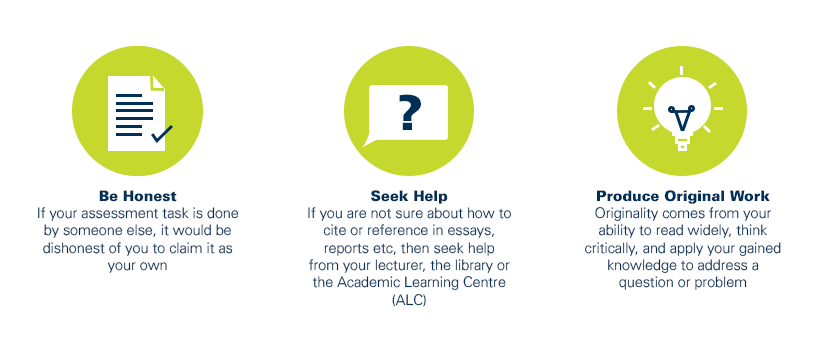
As a CQUniversity student you are expected to act honestly in all aspects of your academic work.
Any assessable work undertaken or submitted for review or assessment must be your own work. Assessable work is any type of work you do to meet the assessment requirements in the unit, including draft work submitted for review and feedback and final work to be assessed.
When you use the ideas, words or data of others in your assessment, you must thoroughly and clearly acknowledge the source of this information by using the correct referencing style for your unit. Using others’ work without proper acknowledgement may be considered a form of intellectual dishonesty.
Participating honestly, respectfully, responsibly, and fairly in your university study ensures the CQUniversity qualification you earn will be valued as a true indication of your individual academic achievement and will continue to receive the respect and recognition it deserves.
As a student, you are responsible for reading and following CQUniversity’s policies, including the Student Academic Integrity Policy and Procedure. This policy sets out CQUniversity’s expectations of you to act with integrity, examples of academic integrity breaches to avoid, the processes used to address alleged breaches of academic integrity, and potential penalties.
What is a breach of academic integrity?
A breach of academic integrity includes but is not limited to plagiarism, self-plagiarism, collusion, cheating, contract cheating, and academic misconduct. The Student Academic Integrity Policy and Procedure defines what these terms mean and gives examples.
Why is academic integrity important?
A breach of academic integrity may result in one or more penalties, including suspension or even expulsion from the University. It can also have negative implications for student visas and future enrolment at CQUniversity or elsewhere. Students who engage in contract cheating also risk being blackmailed by contract cheating services.
Where can I get assistance?
For academic advice and guidance, the Academic Learning Centre (ALC) can support you in becoming confident in completing assessments with integrity and of high standard.
What can you do to act with integrity?