Overview
Non-communicable diseases (NCDs) such as cardiovascular disease, cancer, diabetes, mental health, and chronic obstructive pulmonary disease, are among the leading cause of premature death and disability globally including in Australia. The causes of NCDs are complex and multiple, they disproportionately affect groups with low socio-economic status, culturally and linguistically diverse populations and Aboriginal and Torres Strait Islander peoples. Our behaviour and lifestyles, which are influenced by the commercial and social determinants of health, are major contributors to the increased burden of NCDs and multimorbidity is also an emerging public health challenge. This unit explores the knowledge, principles and skills required to address NCD prevention and management in the Australian context as well as in low- and middle-income countries. In this unit, you will learn about current knowledge of the causes of NCDs and best practices in public health management. You will also gain the capacity to develop and evaluate NCD interventions and healthcare services leading to improved service delivery and a reduced burden of disease.
Details
Pre-requisites or Co-requisites
There are no requisites for this unit.
Important note: Students enrolled in a subsequent unit who failed their pre-requisite unit, should drop the subsequent unit before the census date or within 10 working days of Fail grade notification. Students who do not drop the unit in this timeframe cannot later drop the unit without academic and financial liability. See details in the Assessment Policy and Procedure (Higher Education Coursework).
Offerings For Term 1 - 2026
Attendance Requirements
All on-campus students are expected to attend scheduled classes - in some units, these classes are identified as a mandatory (pass/fail) component and attendance is compulsory. International students, on a student visa, must maintain a full time study load and meet both attendance and academic progress requirements in each study period (satisfactory attendance for International students is defined as maintaining at least an 80% attendance record).
Recommended Student Time Commitment
Each 6-credit Postgraduate unit at CQUniversity requires an overall time commitment of an average of 12.5 hours of study per week, making a total of 150 hours for the unit.
Class Timetable
Assessment Overview
Assessment Grading
This is a graded unit: your overall grade will be calculated from the marks or grades for each assessment task, based on the relative weightings shown in the table above. You must obtain an overall mark for the unit of at least 50%, or an overall grade of 'pass' in order to pass the unit. If any 'pass/fail' tasks are shown in the table above they must also be completed successfully ('pass' grade). You must also meet any minimum mark requirements specified for a particular assessment task, as detailed in the 'assessment task' section (note that in some instances, the minimum mark for a task may be greater than 50%). Consult the University's Grades and Results Policy for more details of interim results and final grades.
All University policies are available on the CQUniversity Policy site.
You may wish to view these policies:
- Grades and Results Policy
- Assessment Policy and Procedure (Higher Education Coursework)
- Review of Grade Procedure
- Student Academic Integrity Policy and Procedure
- Academic Progression Policy and Procedure
- Student Refund and Credit Balance Policy and Procedure
- Complaints Policy and Procedure
- Information and Communications Technology Acceptable Use Policy and Procedure
This list is not an exhaustive list of all University policies. The full list of University policies are available on the CQUniversity Policy site.
Feedback, Recommendations and Responses
Every unit is reviewed for enhancement each year. At the most recent review, the following staff and student feedback items were identified and recommendations were made.
Feedback from SUTE
The content was good, more audio-visual resources would help support learning.
Consider adding more audio-visual resources to support the unit's content.
- Define and appraise major non-communicable diseases (NCDs) affecting populations in general, and in particular groups with low socio-economic status
- Critically analyse the common NCD risk factors from a public health perspective and using a socio-ecological model
- Evaluate the trends of NCD burden across low and middle- and high-income countries
- Apply a system approach to prevention and management of NCDs
- Appraise and apply the roles of public health professionals in terms of prevention and management of NCDs.
Alignment of Assessment Tasks to Learning Outcomes
| Assessment Tasks | Learning Outcomes | ||||
|---|---|---|---|---|---|
| 1 | 2 | 3 | 4 | 5 | |
| 1 - Case Study - 50% | |||||
| 2 - Report - 50% | |||||
Alignment of Graduate Attributes to Learning Outcomes
| Graduate Attributes | Learning Outcomes | ||||
|---|---|---|---|---|---|
| 1 | 2 | 3 | 4 | 5 | |
| 1 - Knowledge | |||||
| 2 - Communication | |||||
| 3 - Cognitive, technical and creative skills | |||||
| 4 - Research | |||||
| 5 - Self-management | |||||
| 6 - Ethical and Professional Responsibility | |||||
| 7 - Leadership | |||||
| 8 - First Nations Knowledges | |||||
| 9 - Aboriginal and Torres Strait Islander Cultures | |||||
Textbooks
Global handbook on non-communicable diseases and health promotion
- Edition: 1st (2013)
- Authors: David McQueen
- Springer
- Bern Bern , Switzerland
- ISBN: 978-1-4614-7593-4
Oxford Textbook of Global Public Health
- Edition: 7th (2021)
- Authors: Detels, Roger, and others
- Oxford Academic
- London London , UK
- ISBN: 9780198816805
The New Public Health
- Edition: 4th (2016)
- Authors: Fran Baun
- Oxford Press
- Melbourne Melbourne , Victoria , Australia
- ISBN: 9780195588088
IT Resources
- CQUniversity Student Email
- Internet
- Unit Website (Moodle)
- You will need access to the following IT resources: CQUniversity Student Email, Internet, Unit Website (Moodle) and a computer. You will need to have zoom software loaded on your preferred devices before study commences
All submissions for this unit must use the referencing styles below:
For further information, see the Assessment Tasks.
l.rawal@cqu.edu.au
Week 1: Introduction to non-communicable diseases (NCDs), current situation of NCDs
Begin Date: 09 Mar 2026Module/Topic
Introduction to non-communicable diseases (NCDs), current situation of NCDs
Chapter
Various readings and learning
materials.
Events and Submissions/Topic
Online lecture (recorded)
Tutorial class (on-campus and online
classes for domestic/ distance
students)
Group discussions
Week 2: Transition from communicable diseases to NCDs and co/multimorbidity; NCDs and SDGs
Begin Date: 16 Mar 2026Module/Topic
Introduction to NCDs: Transition from communicable diseases to NCDs and co/ multimorbidity
Non-communicable diseases and the Sustainable Development Goals (SDGs)
Chapter
Various readings and learning
materials.
Events and Submissions/Topic
Online lecture (recorded)
Tutorial class (on-campus and online
classes for domestic/ distance
students)
Group discussions
Week 3: Mental health and substance use
Begin Date: 23 Mar 2026Module/Topic
Mental health and substance use
Chapter
Various readings and learning
materials.
Events and Submissions/Topic
Online lecture (recorded)
Tutorial class (on-campus and online
classes for domestic/ distance
students)
Group discussions
Week 4: Non-communicable disease risk factors (Modifiable and non-modifiable NCD risk factors)
Begin Date: 30 Mar 2026Module/Topic
Non-communicable disease risk factors (Modifiable and non-modifiable NCD risk factors)
Chapter
Various readings and learning
materials.
Events and Submissions/Topic
Online lecture (recorded)
Tutorial class (on-campus and online
classes for domestic/ distance
students)
Group discussions
Week 5: NCDs prevention and management policies and strategies
Begin Date: 06 Apr 2026Module/Topic
NCDs prevention and management policies and strategies
Chapter
Various readings and learning
materials.
Events and Submissions/Topic
Online lecture (recorded)
Tutorial class (on-campus and online
classes for domestic/ distance
students)
Group discussions
Week 6: NCDs prevention and management frameworks and agendas
Begin Date: 13 Apr 2026Module/Topic
NCDs prevention and management frameworks and agendas
Chapter
Various readings and learning
materials.
Events and Submissions/Topic
Online lecture (recorded)
Tutorial class (on-campus and online
classes for domestic/ distance
students)
Group discussions
Vacation Week
Begin Date: 20 Apr 2026Module/Topic
No classes
Chapter
Events and Submissions/Topic
Week 7: Frameworks, policies and strategies to prevent and manage NCDs in Australia
Begin Date: 27 Apr 2026Module/Topic
NCDs frameworks, policies and strategies to prevent and manage NCDs in Australia
Chapter
Various readings and learning
materials.
Events and Submissions/Topic
Online lecture (recorded)
Tutorial class (on-campus and online
classes for domestic/ distance
students)
Group discussions
Case study Due: Week 7 Friday (1 May 2026) 5:00 pm AEST
Week 8: Integrated care for prevention and management of NCDs in different settings
Begin Date: 04 May 2026Module/Topic
Integrated care for prevention and management of NCDs in different settings
Chapter
Various readings and learning
materials.
Events and Submissions/Topic
Online lecture (recorded)
Tutorial class (on-campus and online
classes for domestic/ distance
students)
Group discussions
Week 9: Life course approach to prevention and management of NCDs
Begin Date: 11 May 2026Module/Topic
Life course approach to prevention and management of NCDs
Chapter
Various readings and learning
materials.
Events and Submissions/Topic
Online lecture (recorded)
Tutorial class (on-campus and online
classes for domestic/ distance
students)
Group discussions
Week 10: Self-management of non-communicable diseases/ improving health behaviour and lifestyle
Begin Date: 18 May 2026Module/Topic
Self-management of non-communicable diseases/ improving health behaviour and lifestyle
Chapter
Various readings and learning
materials.
Events and Submissions/Topic
Online lecture (recorded)
Tutorial class (on-campus and online
classes for domestic/ distance
students)
Group discussions
Week 11: Prevention and management of non-communicable diseases: key principles in professional practice
Begin Date: 25 May 2026Module/Topic
Prevention and management of non-communicable diseases: key principles in professional practice
Chapter
Various readings and learning
materials.
Events and Submissions/Topic
Online lecture (recorded)
Tutorial class (on-campus and online
classes for domestic/ distance
students)
Group discussions
Week 12: Unit revision and Feedback
Begin Date: 01 Jun 2026Module/Topic
Unit revision and Feedback
Chapter
Unit guide, weekly modules and various reading materials.
Events and Submissions/Topic
Tutorial class (on-campus and online
classes for domestic/ distance
students), Classroom discussion
Individual report Due: Week 12 Friday (5 June 2026) 5:00 pm AEST
Week 13: Exam Week, results and feedback
Begin Date: 08 Jun 2026Module/Topic
Exam Week, assessment submission and marking
Chapter
Assessment moderation, marking, results and feedback preparation
Events and Submissions/Topic
Assessment allocation to markers and marking
Week 14: Assessment marking, results and feedback
Begin Date: 15 Jun 2026Module/Topic
Assessment marking
Chapter
Assessment marking, results and feedback preparation
Events and Submissions/Topic
Assessment marking by markers and draft grades ready for certification
Weekly tutorial classes (on-campus for international students and online classes for domestic/ distance students) will be offered. The weekly sessions will emphasize interactive learning approach and will involve group discussions, presentation, questions answers and constructive feedback.
1 Case Study
The first assessment task is an individual case study of approximately 2,000 words. You will need to select a topic that must be approved by the unit coordinator or your lecturer.
The structure of the case study should include the following sections:
1. Introduction (background)
2. Significance of the problem
3. Populations affected
4. Consequences
5. Social determinants related to the selected public problem or health issue.
Make sure to address each of these components in your case study.
Format
This assessment must be composed in a formal, academic style, avoiding the first-person perspective. It is essential to fully reference the work using either Harvard or APA 7th edition referencing. If assistance with referencing is required, it is advisable to consult the Academic Learning Centre (ALC) or the library at the earliest opportunity. A minimum mark of 50% is required on this assessment in order to pass the unit.
Topics
Below is a list of possible topics for your assignment. You can choose one from this list or propose a different topic of your interest. If you opt for your own topic, you must obtain approval from the Unit Coordinator by the end of Week 3 of this term. All students are required to inform the Unit Coordinator, Tutor, or Lecturer of their selected topic by the end of Week 3.
You are expected to begin working on your topic immediately. The tutorial discussion in week 6 will focus on students' topics, and you will be required to provide an update on the progress of your assessment. Additionally, be prepared to discuss the essential elements of your assessment.
Possible topic areas:
- Cardiovascular diseases/ heart diseases
- Cancer
- Diabetes Mellitus
- Chronic lung disease
- Mental health conditions
- Neurological diseases including Alzheimer’s disease
- Chronic kidney disease
- Liver disease
- Oral health problems
- Hypertension
- Tobacco
- Harmful use of alcohol
- Obesity
- Gestational Diabetes Mellitus
- Cerebral palsy
- Climate change and NCDs
Use of Generative AI (Gen AI)
In accordance with CQUniversity policy, please note that a declaration must be provided if Gen AI is used. A declaration form will be available in the Moodle site.
Week 7 Friday (1 May 2026) 5:00 pm AEST
All students are required to submit the assessment via Moodle site.
Week 9 Friday (15 May 2026)
The marks and feedback will be available online by Friday Week 09.
The structure of the case study will involve (a) Introduction (background)/ significance of the problem; (b) Populations affected; (c) Consequences; and social determinants of problem selected. Students are suggested to appropriately use the published literature to support their arguments and the literature published in the past 5 years are preferred. Following assessment criteria will be used, and the details of each criterion are provided in the marking rubric:
- Introduction and rationale/ significance of the problem: 30%.
- Populations affected and consequences: 30%.
- Causes (NCD risk factors) and social determinants of NCD problem selected: 30%.
- Appropriate use of references: 10%
- Define and appraise major non-communicable diseases (NCDs) affecting populations in general, and in particular groups with low socio-economic status
- Critically analyse the common NCD risk factors from a public health perspective and using a socio-ecological model
- Evaluate the trends of NCD burden across low and middle- and high-income countries
2 Report
The second assessment task for this unit is a reflective report. This is an individual assessment of approximately 2,000 words that focuses on your experiences throughout the term, specifically addressing the non-communicable disease (NCD) problem you selected in Assessment 1.
You are required to:
(a) Discuss and analyze what you have learned about NCD prevention and control,
(b) Explore the roles of different sectors, including public, private, and other relevant institutions,
(c) Examine the role of public health professionals in addressing NCDs, particularly among individuals in special circumstances and those with low socioeconomic status, and
(d) Provide conclusions and recommendations for addressing the NCD problem you selected in Assessment 1.
This assessment aims to demonstrate your deeper understanding of non-communicable diseases (NCDs) and public health interventions, placing your experiences in a broader context. It is not sufficient to simply describe what you studied throughout the course; you must clearly show that you have reflected on these experiences and have sought to understand them in relation to your own learning.
Guidelines for the reflective assignment will be provided on Moodle and during the tutorials. Since this is a reflective assessment, a more informal writing style is acceptable. However, your reflection should not be entirely descriptive. It must include an assessment of how your views or thinking have evolved, as well as what you have learned regarding the prevention and control of NCDs as a public health professional.
Please note that you must achieve a minimum mark of 50% on this assignment to pass the unit.
Use of Generative AI (Gen AI)
In accordance with CQUniversity policy, please note that a declaration must be provided if Gen AI is used. A declaration form will be available in the Moodle site.
Week 12 Friday (5 June 2026) 5:00 pm AEST
All students are required to submit the assessment via Moodle site.
Vacation/Exam Week Friday (19 June 2026)
Marked assessments will be available for students to view in Week 14 of the term.
The structure of the Individual report will involve (a) Introduction and reflection on growing understanding on NCDs; (b) Role of different sectors in addressing NCDs; (c) Reflection on personal experience; (d) Use of relevant literature and (e) Writing and Integrity. Followings assessment criteria will be used, and the details of each criterion are provided in the marking rubric:
- Introduction and reflection on growing understanding on NCDs and NCD risk factors using systems approach: 30%
- Role of different sectors in addressing NCDs: 30%
- Reflection on personal experience and roles of public health professionals in terms of prevention and management of NCDs: 20%
- Use of relevant literature: 10%; and
- Writing and Integrity: 10%
- Define and appraise major non-communicable diseases (NCDs) affecting populations in general, and in particular groups with low socio-economic status
- Evaluate the trends of NCD burden across low and middle- and high-income countries
- Apply a system approach to prevention and management of NCDs
- Appraise and apply the roles of public health professionals in terms of prevention and management of NCDs.
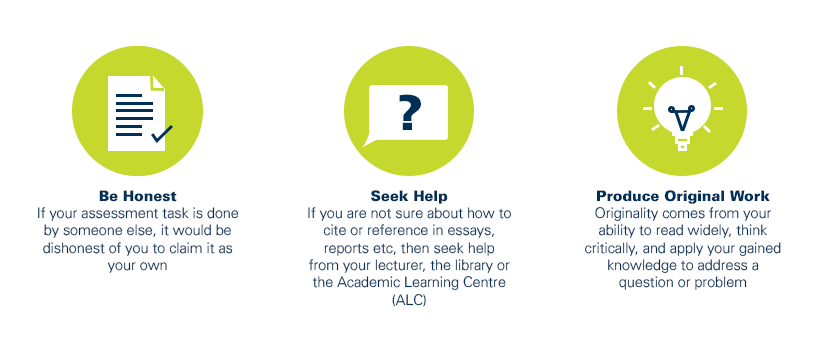
As a CQUniversity student you are expected to act honestly in all aspects of your academic work.
Any assessable work undertaken or submitted for review or assessment must be your own work. Assessable work is any type of work you do to meet the assessment requirements in the unit, including draft work submitted for review and feedback and final work to be assessed.
When you use the ideas, words or data of others in your assessment, you must thoroughly and clearly acknowledge the source of this information by using the correct referencing style for your unit. Using others’ work without proper acknowledgement may be considered a form of intellectual dishonesty.
Participating honestly, respectfully, responsibly, and fairly in your university study ensures the CQUniversity qualification you earn will be valued as a true indication of your individual academic achievement and will continue to receive the respect and recognition it deserves.
As a student, you are responsible for reading and following CQUniversity’s policies, including the Student Academic Integrity Policy and Procedure. This policy sets out CQUniversity’s expectations of you to act with integrity, examples of academic integrity breaches to avoid, the processes used to address alleged breaches of academic integrity, and potential penalties.
What is a breach of academic integrity?
A breach of academic integrity includes but is not limited to plagiarism, self-plagiarism, collusion, cheating, contract cheating, and academic misconduct. The Student Academic Integrity Policy and Procedure defines what these terms mean and gives examples.
Why is academic integrity important?
A breach of academic integrity may result in one or more penalties, including suspension or even expulsion from the University. It can also have negative implications for student visas and future enrolment at CQUniversity or elsewhere. Students who engage in contract cheating also risk being blackmailed by contract cheating services.
Where can I get assistance?
For academic advice and guidance, the Academic Learning Centre (ALC) can support you in becoming confident in completing assessments with integrity and of high standard.
What can you do to act with integrity?