Overview
The World Health Organisation has identified the link between anthropogenic environmental change and public health as an issue of significant concern and has engaged in a workplan with priorities to advocate and raise awareness, strengthen partnerships, enhance scientific evidence and strengthen health systems. This unit aims to develop your understanding of factors within the anthropogenic and natural environments that impact upon health outcomes, including environmentally transmitted diseases, climate change and sustainable development. Content will include an exploration of zoonotic diseases, vector borne conditions, emerging epidemiologic trends, community resilience and capacity building. You will discover the value of participation through an exploration of community resilience and capacity building. Prevention will be emphasised as you learn about the aetiologies, risk factors, epidemiological trends and underlying environmental factors relating to a range of diseases of public health importance. The theme of partnership will be developed as you examine the issue of environmental sustainability and emerging environmental health issues while learning the importance of working with traditional and contemporary custodians of natural environments, collaborating with government and non-government agencies in creating healthy environmental policy.
Details
Pre-requisites or Co-requisites
96 credit points
Important note: Students enrolled in a subsequent unit who failed their pre-requisite unit, should drop the subsequent unit before the census date or within 10 working days of Fail grade notification. Students who do not drop the unit in this timeframe cannot later drop the unit without academic and financial liability. See details in the Assessment Policy and Procedure (Higher Education Coursework).
Offerings For Term 1 - 2026
Attendance Requirements
All on-campus students are expected to attend scheduled classes - in some units, these classes are identified as a mandatory (pass/fail) component and attendance is compulsory. International students, on a student visa, must maintain a full time study load and meet both attendance and academic progress requirements in each study period (satisfactory attendance for International students is defined as maintaining at least an 80% attendance record).
Recommended Student Time Commitment
Each 6-credit Undergraduate unit at CQUniversity requires an overall time commitment of an average of 12.5 hours of study per week, making a total of 150 hours for the unit.
Class Timetable
Assessment Overview
Assessment Grading
This is a graded unit: your overall grade will be calculated from the marks or grades for each assessment task, based on the relative weightings shown in the table above. You must obtain an overall mark for the unit of at least 50%, or an overall grade of 'pass' in order to pass the unit. If any 'pass/fail' tasks are shown in the table above they must also be completed successfully ('pass' grade). You must also meet any minimum mark requirements specified for a particular assessment task, as detailed in the 'assessment task' section (note that in some instances, the minimum mark for a task may be greater than 50%). Consult the University's Grades and Results Policy for more details of interim results and final grades.
All University policies are available on the CQUniversity Policy site.
You may wish to view these policies:
- Grades and Results Policy
- Assessment Policy and Procedure (Higher Education Coursework)
- Review of Grade Procedure
- Student Academic Integrity Policy and Procedure
- Academic Progression Policy and Procedure
- Student Refund and Credit Balance Policy and Procedure
- Complaints Policy and Procedure
- Information and Communications Technology Acceptable Use Policy and Procedure
This list is not an exhaustive list of all University policies. The full list of University policies are available on the CQUniversity Policy site.
Feedback, Recommendations and Responses
Every unit is reviewed for enhancement each year. At the most recent review, the following staff and student feedback items were identified and recommendations were made.
Feedback from Previous recommendation
Lectures for Module 3 are now dated.
Consider re-recording for 2025 offering.
Feedback from Student Unit Evaluation, personal reflection.
Quiz questions require revision, with one needing to be corrected.
Correct quiz question that required manual marking and consider revising remaining questions for clarity.
- Explain primary drivers of environmental change and how they interact to result in public health consequences
- Examine the aetiology and risk factors of environmentally transmitted diseases and conditions
- Evaluate the social-ecological framework as a means to build and maintain partnerships to address environmental health issues
- Predict and debate potential scenarios to respond to environmental health challenges based on current and emerging evidence
- Communicate information relating to emerging environmental health issues to a wide variety of audiences
- Describe the use of Health Impact Assessment, Environmental Impact Assessment and social innovation in the development of sustainable public policy to support health.
Content in this unit aligns with the enHealth Skills and Knowledge Matrix as follows:
Part 1- all generic skills
Part 2- underpinning skills and knowledge in the areas of:
- microbiology
- foundation and applied principles of natural and built environmental science
- science
- public and environmental health concepts
- research methods
- political, legislative and policy context
- risk assessment and management
- communication, cultural awareness and interpersonal skills
Part 3- applied skills and knowledge under the headings of
- Prevention and control of notifiable and communicable diseases
- Indigenous environmental health
- Sustainability and climate change
Alignment of Assessment Tasks to Learning Outcomes
| Assessment Tasks | Learning Outcomes | |||||
|---|---|---|---|---|---|---|
| 1 | 2 | 3 | 4 | 5 | 6 | |
| 1 - Online Test - 15% | ||||||
| 2 - Online Test - 15% | ||||||
| 3 - Group Discussion - 30% | ||||||
| 4 - Written Assessment - 40% | ||||||
Alignment of Graduate Attributes to Learning Outcomes
| Graduate Attributes | Learning Outcomes | |||||
|---|---|---|---|---|---|---|
| 1 | 2 | 3 | 4 | 5 | 6 | |
| 1 - Communication | ||||||
| 2 - Problem Solving | ||||||
| 3 - Critical Thinking | ||||||
| 4 - Information Literacy | ||||||
| 5 - Team Work | ||||||
| 6 - Information Technology Competence | ||||||
| 7 - Cross Cultural Competence | ||||||
| 8 - Ethical practice | ||||||
| 9 - Social Innovation | ||||||
| 10 - First Nations Knowledges | ||||||
| 11 - Aboriginal and Torres Strait Islander Cultures | ||||||
Alignment of Assessment Tasks to Graduate Attributes
| Assessment Tasks | Graduate Attributes | ||||||||||
|---|---|---|---|---|---|---|---|---|---|---|---|
| 1 | 2 | 3 | 4 | 5 | 6 | 7 | 8 | 9 | 10 | 11 | |
| 1 - Online Test - 15% | |||||||||||
| 2 - Online Test - 15% | |||||||||||
| 3 - Group Discussion - 30% | |||||||||||
| 4 - Written Assessment - 40% | |||||||||||
Textbooks
Environment, Health and Sustainable Development
- Edition: 2nd edn (2017)
- Authors: Emma Hutchinson, Sari Kovats
- Open University Press, McGraw Hill Education
- Maidenhead Maidenhead , Berkshire , United Kingdom
- ISBN: 9780335245376
This textbook is available online through the CQUniversity Library and readings will be able to be accessed through the e-reading list on Moodle. Students are not required to purchase this book.
- Binding: Paperback
IT Resources
- CQUniversity Student Email
- Internet
- Unit Website (Moodle)
- Zoom Conferencing (Webcam and Microphone)
All submissions for this unit must use the referencing style: Harvard (author-date)
For further information, see the Assessment Tasks.
s.delport@cqu.edu.au
Week 1
Begin Date: 09 Mar 2026Module/Topic
Environmental sustainability and driving forces behind environmental change.
Chapter
Hutchinson & Kovats (2017) Chapter 2
Events and Submissions/Topic
Week 2
Begin Date: 16 Mar 2026Module/Topic
Environmental sustainability and driving forces behind environmental change.
Chapter
Hutchinson & Kovats (2017) Chapter 3
Events and Submissions/Topic
Week 3
Begin Date: 23 Mar 2026Module/Topic
Environmental sustainability and driving forces behind environmental change.
Chapter
Hutchinson & Kovats (2017) Chapter 12
Events and Submissions/Topic
Week 4
Begin Date: 30 Mar 2026Module/Topic
Environmental sustainability and driving forces behind environmental change.
Chapter
Hutchinson & Kovats (2017) Chapter 13
Events and Submissions/Topic
Quiz 1 will open on Monday of Week 4 at 9:00 am and remains open until 9:00 am on the Monday of Week 5.
Week 5
Begin Date: 06 Apr 2026Module/Topic
Impacts of environmental change upon public health
Chapter
Hutchinson & Kovats (2017) Chapter 4 & 5
Events and Submissions/Topic
Week 6
Begin Date: 13 Apr 2026Module/Topic
Impacts of environmental change upon public health
Chapter
Hutchinson & Kovats (2017) Chapter 6 & 8
Events and Submissions/Topic
Quiz 2 will open on Monday of Week 6 at 9:00 am and remain open until 9:00 am on the Monday of Week 7.
Vacation Week
Begin Date: 20 Apr 2026Module/Topic
Chapter
Events and Submissions/Topic
Week 7
Begin Date: 27 Apr 2026Module/Topic
Impacts of environmental change upon public health
Chapter
Hutchinson & Kovats (2017) Chapters 7 & 9
Events and Submissions/Topic
Week 8
Begin Date: 04 May 2026Module/Topic
Impacts of environmental change upon public health
Chapter
Hutchinson & Kovats (2017) Chapter 10
Events and Submissions/Topic
Week 9
Begin Date: 11 May 2026Module/Topic
Responding to emerging environmental health challenges
Chapter
Hutchinson & Kovats (2017) Chapter 11
Events and Submissions/Topic
Assessment task 3: Seminars to be scheduled this week.
Speakers' notes/slides and Self & Peer assessment Due: Friday 5:00pm
Seminar Due: Week 9 Monday (11 May 2026) 9:00 am AEST
Week 10
Begin Date: 18 May 2026Module/Topic
Responding to emerging environmental health challenges
Chapter
Hutchinson & Kovats (2017) Chapter 14
Events and Submissions/Topic
Week 11
Begin Date: 25 May 2026Module/Topic
Responding to emerging environmental health challenges
Chapter
Events and Submissions/Topic
Week 12
Begin Date: 01 Jun 2026Module/Topic
Responding to emerging environmental health challenges
Chapter
Events and Submissions/Topic
Exam Week
Begin Date: 08 Jun 2026Module/Topic
Chapter
Events and Submissions/Topic
Vacation/Exam Week
Begin Date: 15 Jun 2026Module/Topic
Chapter
Events and Submissions/Topic
1 Online Test
- The quiz will open at 9:00am on the Monday of Week 4 and remain open until 9am on the Monday of Week 5.
- There is no time limit to complete the quiz and you can save your quiz and return to it later (while the quiz is available).
- You will get your final result from the quiz showing which questions you got right or wrong. This will let you know what areas you need to study/revise.
- You should choose the most correct answer.
NO Gen AI is allowed for this assessment.
The 72-hour grace period does not apply to this assessment.
Week 5 Monday (6 Apr 2026) 9:00 am AEST
Results wil be available once the quiz has closed.
This quiz will assess the student's knowledge of the principles of sustainability and the drivers of environmental change.
- Explain primary drivers of environmental change and how they interact to result in public health consequences
- Evaluate the social-ecological framework as a means to build and maintain partnerships to address environmental health issues
- Communication
- Problem Solving
- Critical Thinking
- Information Technology Competence
2 Online Test
- The quiz will open at 9:00am on the Monday of Week 6 and remain open until 9:00am on the Monday of Week 7.
- There is no time limit to complete the quiz and you can save your quiz and return to it later (while the quiz is available).
- You will get your final result from the quiz showing which questions you got right or wrong. This will let you know what areas you need to study/revise.
- You should choose the most correct answer.
NO Gen AI is allowed for this assessment.
The 72-hour grace period does not apply to this assessment.
Week 7 Monday (27 Apr 2026) 9:00 am AEST
Results will be available once the quiz has closed.
This quiz will test the student's knowledge of the impacts of environmental change upon public health including the risk factors and emerging epidemiological trends of environmentally transmitted diseases and conditions.
- Examine the aetiology and risk factors of environmentally transmitted diseases and conditions
- Communication
- Problem Solving
- Critical Thinking
- Information Technology Competence
3 Group Discussion
Early in the term you will be formed into groups.
In small groups, you will prepare and deliver an interactive seminar exploring a public health issue that is influenced by environmental change. A list of suggested topics will be provided on Moodle, or you can select your own.
Your seminar will be delivered live on Zoom in Week 9 at a time to be confirmed. In addition to delivering the seminar, your group will be required to submit your presentation slide deck and speakers notes. You will also submit an individual reflection on the task, including a self and peer assessment.
Further information and marking criteria will be available on Moodle.
Use of Generative AI
Level of GenAI use allowed: Level 2: You may use AI for planning, idea development, and research. Your final submission should show how you have developed and refined these ideas.
Week 9 Monday (11 May 2026) 9:00 am AEST
Agreed times during Week 9. Your Presentation Slides/speakers' notes and Self and Peer Assessment task are due Monday of Week 9 by 9:00am.
Week 11 Monday (25 May 2026)
Further information and marking criteria will be available on Moodle.
- Evaluate the social-ecological framework as a means to build and maintain partnerships to address environmental health issues
- Communicate information relating to emerging environmental health issues to a wide variety of audiences
- Communication
- Problem Solving
- Critical Thinking
- Information Literacy
- Team Work
- Cross Cultural Competence
- Ethical practice
4 Written Assessment
This is your opportunity to investigate and theorise in depth about an issue of interest that has arisen from your seminar research. Using the topic chosen for your seminar, write a discussion paper around a specific topic related to your selected public health challenge. Consider possible future scenarios, linkages and elements within the system and propose methods for responding to the challenge to improve or maintain public health. You should take into account learning that came out of your seminar and group discussions as well as the current evidence from the literature. You may wish to develop scenarios to illustrate the potential impact of your proposed responses.
You should prepare your paper as if for publication in a relevant journal. An exemplar will be provided on Moodle as a guide.
Word limit: 4000 words (+/- 20%)
Use of Generative AI
Level of GenAI use allowed: Level 2: You may use AI for planning, idea development, and research. Your final submission should show how you have developed and refined these ideas.
Week 12 Friday (5 June 2026) 5:00 pm AEST
Vacation/Exam Week Friday (19 June 2026)
Results for this assessment task will be available prior to Certification of Grades.
Further information and marking criteria will be available on Moodle.
- Predict and debate potential scenarios to respond to environmental health challenges based on current and emerging evidence
- Describe the use of Health Impact Assessment, Environmental Impact Assessment and social innovation in the development of sustainable public policy to support health.
- Communication
- Problem Solving
- Critical Thinking
- Information Literacy
- Cross Cultural Competence
- Ethical practice
- Social Innovation
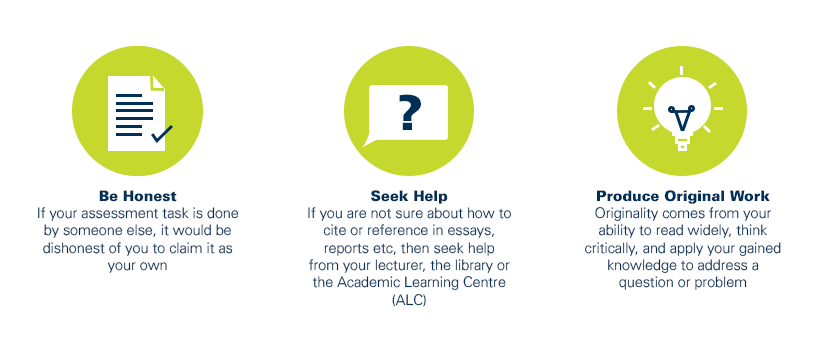
As a CQUniversity student you are expected to act honestly in all aspects of your academic work.
Any assessable work undertaken or submitted for review or assessment must be your own work. Assessable work is any type of work you do to meet the assessment requirements in the unit, including draft work submitted for review and feedback and final work to be assessed.
When you use the ideas, words or data of others in your assessment, you must thoroughly and clearly acknowledge the source of this information by using the correct referencing style for your unit. Using others’ work without proper acknowledgement may be considered a form of intellectual dishonesty.
Participating honestly, respectfully, responsibly, and fairly in your university study ensures the CQUniversity qualification you earn will be valued as a true indication of your individual academic achievement and will continue to receive the respect and recognition it deserves.
As a student, you are responsible for reading and following CQUniversity’s policies, including the Student Academic Integrity Policy and Procedure. This policy sets out CQUniversity’s expectations of you to act with integrity, examples of academic integrity breaches to avoid, the processes used to address alleged breaches of academic integrity, and potential penalties.
What is a breach of academic integrity?
A breach of academic integrity includes but is not limited to plagiarism, self-plagiarism, collusion, cheating, contract cheating, and academic misconduct. The Student Academic Integrity Policy and Procedure defines what these terms mean and gives examples.
Why is academic integrity important?
A breach of academic integrity may result in one or more penalties, including suspension or even expulsion from the University. It can also have negative implications for student visas and future enrolment at CQUniversity or elsewhere. Students who engage in contract cheating also risk being blackmailed by contract cheating services.
Where can I get assistance?
For academic advice and guidance, the Academic Learning Centre (ALC) can support you in becoming confident in completing assessments with integrity and of high standard.
What can you do to act with integrity?