Overview
The prevention of disease is recognised internationally as being of fundamental importance to quality of life and is a core skillset for any public health professional. This unit covers the important public health topic of communicable diseases and their control. Students will learn the value of participation by engaging in team activities and tutorial activities. They will learn about prevention by exploring the aetiologies, risk factors, epidemiological trends and underlying issues relating to a wide range of communicable diseases. Students will critique the public health literature and public health campaigns to discover the importance of partnerships in the effective control of communicable diseases. Topics will include the aetiology, transmission, epidemiological trends and control strategies relating to a range of communicable diseases, including enteric, vaccine preventable and sexually transmitted infections. The impact of communicable disease upon individual and population health will be explored, with particular emphasis on the indigenous community and global context. Students will develop skills in disease surveillance and/or the prevention or management of disease outbreaks. Residential school will be compulsory for Environmental Health students but optional for Health Promotion and other students.
Details
Pre-requisites or Co-requisites
48 credit points
Important note: Students enrolled in a subsequent unit who failed their pre-requisite unit, should drop the subsequent unit before the census date or within 10 working days of Fail grade notification. Students who do not drop the unit in this timeframe cannot later drop the unit without academic and financial liability. See details in the Assessment Policy and Procedure (Higher Education Coursework).
Offerings For Term 1 - 2026
Attendance Requirements
All on-campus students are expected to attend scheduled classes - in some units, these classes are identified as a mandatory (pass/fail) component and attendance is compulsory. International students, on a student visa, must maintain a full time study load and meet both attendance and academic progress requirements in each study period (satisfactory attendance for International students is defined as maintaining at least an 80% attendance record).
Recommended Student Time Commitment
Each 6-credit Undergraduate unit at CQUniversity requires an overall time commitment of an average of 12.5 hours of study per week, making a total of 150 hours for the unit.
Class Timetable
Assessment Overview
Assessment Grading
This is a graded unit: your overall grade will be calculated from the marks or grades for each assessment task, based on the relative weightings shown in the table above. You must obtain an overall mark for the unit of at least 50%, or an overall grade of 'pass' in order to pass the unit. If any 'pass/fail' tasks are shown in the table above they must also be completed successfully ('pass' grade). You must also meet any minimum mark requirements specified for a particular assessment task, as detailed in the 'assessment task' section (note that in some instances, the minimum mark for a task may be greater than 50%). Consult the University's Grades and Results Policy for more details of interim results and final grades.
All University policies are available on the CQUniversity Policy site.
You may wish to view these policies:
- Grades and Results Policy
- Assessment Policy and Procedure (Higher Education Coursework)
- Review of Grade Procedure
- Student Academic Integrity Policy and Procedure
- Academic Progression Policy and Procedure
- Student Refund and Credit Balance Policy and Procedure
- Complaints Policy and Procedure
- Information and Communications Technology Acceptable Use Policy and Procedure
This list is not an exhaustive list of all University policies. The full list of University policies are available on the CQUniversity Policy site.
Feedback, Recommendations and Responses
Every unit is reviewed for enhancement each year. At the most recent review, the following staff and student feedback items were identified and recommendations were made.
Feedback from UC reflection
Online tests are still susceptible to generative AI use.
Continue to redesign assessment task 2 to reduce risk.
- Describe risk factors and aetiology for a range of communicable diseases important to public health.
- Explain the impact of communicable diseases in the context of individual and population health.
- Identify and analyse primary, secondary and tertiary approaches for the prevention and control of communicable diseases.
- Evaluate the social and cultural impact of notifiable diseases.
- Explain the methods of measurement, monitoring, prioritisation and surveillance of communicable disease and how they are used to safeguard public health.
The learning outcomes of this unit relate to the enHealth Skills and Knowledge Matrix:
Part 1- all generic attributes
Part 2- underpinning skills and knowledge in the areas of
-
Science
- basic human anatomy and physiology related to identifying disease causation and exposure pathways
- microorganisms of significance for human health
- transmission mechanisms and likely carriers
- infective dose levels
-
Public & Environmental Health Concepts
- The points of impact to influence environmental health determinants and related methods of impact
-
Research methods
- Effective design and implementation of studies, policies and programs to protect public and environmental health and minimise risks
Part 3- Applied Skills and Knowledge
- Prevention and control of notifiable and communicable conditions.
Alignment of Assessment Tasks to Learning Outcomes
| Assessment Tasks | Learning Outcomes | ||||
|---|---|---|---|---|---|
| 1 | 2 | 3 | 4 | 5 | |
| 1 - Online Test - 15% | |||||
| 2 - Online Test - 15% | |||||
| 3 - Online Test - 15% | |||||
| 4 - Written Assessment - 55% | |||||
Alignment of Graduate Attributes to Learning Outcomes
| Graduate Attributes | Learning Outcomes | ||||
|---|---|---|---|---|---|
| 1 | 2 | 3 | 4 | 5 | |
| 1 - Communication | |||||
| 2 - Problem Solving | |||||
| 3 - Critical Thinking | |||||
| 4 - Information Literacy | |||||
| 5 - Team Work | |||||
| 6 - Information Technology Competence | |||||
| 7 - Cross Cultural Competence | |||||
| 8 - Ethical practice | |||||
| 9 - Social Innovation | |||||
| 10 - First Nations Knowledges | |||||
| 11 - Aboriginal and Torres Strait Islander Cultures | |||||
Alignment of Assessment Tasks to Graduate Attributes
| Assessment Tasks | Graduate Attributes | ||||||||||
|---|---|---|---|---|---|---|---|---|---|---|---|
| 1 | 2 | 3 | 4 | 5 | 6 | 7 | 8 | 9 | 10 | 11 | |
| 1 - Online Test - 15% | |||||||||||
| 2 - Online Test - 15% | |||||||||||
| 3 - Online Test - 15% | |||||||||||
| 4 - Written Assessment - 55% | |||||||||||
Textbooks
There are no required textbooks.
IT Resources
- CQUniversity Student Email
- Internet
- Unit Website (Moodle)
- Zoom access: microphone and webcam required
All submissions for this unit must use the referencing styles below:
For further information, see the Assessment Tasks.
g.haintz@cqu.edu.au
Week 1
Begin Date: 09 Mar 2026Module/Topic
Principles of disease causation
Chapter
Work through the weekly Moodle topic page and complete any associated learning activities and eReadings as instructed.
Events and Submissions/Topic
In addition to online lectures and resources, tutorials provide the opportunity to complete individual and group activities; and build your skills and knowledge base related to unit content and assessment tasks.
Week 2
Begin Date: 16 Mar 2026Module/Topic
Disease transmission and the immune response
Chapter
Work through the weekly Moodle topic page and complete any associated learning activities and eReadings as instructed.
Events and Submissions/Topic
In addition to online lectures and resources, tutorials provide the opportunity to complete individual and group activities; and build your skills and knowledge base related to unit content and assessment tasks.
Week 3
Begin Date: 23 Mar 2026Module/Topic
Enteric diseases
Chapter
Work through the weekly Moodle topic page and complete any associated learning activities and eReadings as instructed.
Events and Submissions/Topic
In addition to online lectures and resources, tutorials provide the opportunity to complete individual and group activities; and build your skills and knowledge base related to unit content and assessment tasks.
Week 4
Begin Date: 30 Mar 2026Module/Topic
Parasitic diseases
Chapter
Work through the weekly Moodle topic page and complete any associated learning activities and eReadings as instructed.
Events and Submissions/Topic
In addition to online lectures and resources, tutorials provide the opportunity to complete individual and group activities; and build your skills and knowledge base related to unit content and assessment tasks.
Week 5
Begin Date: 06 Apr 2026Module/Topic
Vector-borne diseases
Chapter
Work through the weekly Moodle topic page and complete any associated learning activities and eReadings as instructed.
Events and Submissions/Topic
In addition to online lectures and resources, tutorials provide the opportunity to complete individual and group activities; and build your skills and knowledge base related to unit content and assessment tasks.
Assessment 1: Online test opens Friday 10th April.
Week 6
Begin Date: 13 Apr 2026Module/Topic
Vaccine preventable diseases
Chapter
Work through the weekly Moodle topic page and complete any associated learning activities and eReadings as instructed.
Events and Submissions/Topic
In addition to online lectures and resources, tutorials provide the opportunity to complete individual and group activities; and build your skills and knowledge base related to unit content and assessment tasks.
Assessment 1: Online test closes 3.00pm Friday 17th April.
Assessment 2: Online test opens Friday 17th April.
Fundamentals of communicable disease controle, enteric, parasitic and vector-borne diseases Due: Week 6 Friday (17 Apr 2026) 3:00 pm AEST
Vacation Week
Begin Date: 20 Apr 2026Module/Topic
Chapter
Events and Submissions/Topic
Week 7
Begin Date: 27 Apr 2026Module/Topic
Disease surveillance and epidemiology
Chapter
Work through the weekly Moodle topic page and complete any associated learning activities and eReadings as instructed.
Events and Submissions/Topic
In addition to online lectures and resources, tutorials provide the opportunity to complete individual and group activities; and build your skills and knowledge base related to unit content and assessment tasks.
Assessment 2: Online test closes 3.00pm Friday 1st May.
Immunisation, and vaccine preventable diseases Due: Week 7 Friday (1 May 2026) 3:00 pm AEST
Week 8
Begin Date: 04 May 2026Module/Topic
Outbreak investigation and management
Chapter
Work through the weekly Moodle topic page and complete any associated learning activities and eReadings as instructed.
Events and Submissions/Topic
In addition to online lectures and resources, tutorials provide the opportunity to complete individual and group activities; and build your skills and knowledge base related to unit content and assessment tasks.
Week 9
Begin Date: 11 May 2026Module/Topic
Blood-borne viruses and sexually transmitted infections
Chapter
Work through the weekly Moodle topic page and complete any associated learning activities and eReadings as instructed.
Events and Submissions/Topic
In addition to online lectures and resources, tutorials provide the opportunity to complete individual and group activities; and build your skills and knowledge base related to unit content and assessment tasks.
Assessment 3: Online test opens Friday 22nd May.
Week 10
Begin Date: 18 May 2026Module/Topic
Public health measures - historic and contemporary approaches
Chapter
Work through the weekly Moodle topic page and complete any associated learning activities and eReadings as instructed.
Events and Submissions/Topic
In addition to online lectures and resources, tutorials provide the opportunity to complete individual and group activities; and build your skills and knowledge base related to unit content and assessment tasks.
Residential School: Tuesday 19th May - Thursday 21st May.
Assessment 3: Online test closes 3.00pm Friday 22nd May.
Blood-borne viruses and Sexually Transmitted Infections (STIs) Due: Week 10 Friday (22 May 2026) 3:00 pm AEST
Week 11
Begin Date: 25 May 2026Module/Topic
Public health measures - emerging approaches
Chapter
Work through the weekly Moodle topic page and complete any associated learning activities and eReadings as instructed.
Events and Submissions/Topic
In addition to online lectures and resources, tutorials provide the opportunity to complete individual and group activities; and build your skills and knowledge base related to unit content and assessment tasks.
Week 12
Begin Date: 01 Jun 2026Module/Topic
Communicable disease in pandemics and emergencies
Chapter
Work through the weekly Moodle topic page and complete any associated learning activities and eReadings as instructed.
Events and Submissions/Topic
In addition to online lectures and resources, tutorials provide the opportunity to complete individual and group activities; and build your skills and knowledge base related to unit content and assessment tasks.
Case study report Due: Week 12 Friday (5 June 2026) 3:00 pm AEST
Exam Week
Begin Date: 08 Jun 2026Module/Topic
Chapter
Events and Submissions/Topic
Assessment 4: Written report due 3.00pm Friday 12th June.
Vacation/Exam Week
Begin Date: 15 Jun 2026Module/Topic
Chapter
Events and Submissions/Topic
Structure and approach to the unit
Students are required to work through materials and resources on the weekly Moodle page each week, and prior to attending tutorials. Completing the resources provides the basis for further exploration and application of concepts to activities and assessment task development during tutorials. If, however, you are unable to complete the materials in any particular week, do still come along to the tutorial. Still coming along will enable you to hear and engage with discussions (and you may still be able to contribute by drawing on your existing knowledge or by asking questions for discussion), and will help to keep you on-track in the unit and prevent falling further behind.
Residential School
The residential school for this unit will be held in Week 10, from 19-21 May at the Rockhampton campus. This residential school is compulsory for students majoring in Environmental Health. Other students are also welcome, but attendance is not compulsory.
Use of Generative Artificial Intelligence (GenAI) in this unit
In this unit, students are permitted to utilise GenAI tools in restricted ways to enhance their learning and creativity. For assessment tasks, the permissions may vary; please check the precise permissions, indicated under the assessment task information in this unit profile and on the unit Moodle site, for details pertaining to each specific assessment task. In cases where GenAI is used with permission, it is imperative to use these tools with integrity. This means:
Acknowledging AI Assistance: Clearly indicate when and how AI tools have been used in your work.
Originality: Ensure that your submissions reflect your own understanding and effort. AI tools should support, not replace, your critical thinking and creativity.
Ethical Use: Do not use AI to generate content that misrepresents your abilities or knowledge. Plagiarism, even with AI generated content, is strictly prohibited.
Respect for Guidelines: Follow all academic guidelines and policies regarding the use of GenAI tools in your coursework.
By adhering to these principles, you contribute to a fair and honest academic environment that values genuine learning and integrity. Use of GenAI outside of these guidelines may be considered to be a breach of academic integrity, which will be officially reported and acted upon.
This statement was developed with assistance from Microsoft Copilot
1 Online Test
Assessment task 1 is an online test covering the content covered in Weeks 1-5. The questions will be selected randomly from a question bank.
- The test will open on the Friday of Week 5 and remain open until 3:00pm on the following Friday (Week 6)
- You have 60 minutes to complete the test
- You can only make one attempt at the test
- You cannot save your responses and return to the test to complete it
- You will get your final result from the test showing which questions you got right or wrong. This will let you know which areas you need to study/revise
- For multiple choice questions, you should choose the most correct answer.
See the unit Moodle site for full task guidelines and rubric.
Generative AI and this Assessment
Level 1: No AI. You must not use AI at any point in the assessment. You must demonstrate your core skills and knowledge.
Grace period
The 72 hour grace period does not apply to this assessment.
Further support
If you require further academic support with this assignment, please utilise the range of resources available through the CQUniversity Library and Academic Learning Centre (ALC) for support with academic skills including:
- understanding and interpreting assessment task requirements and rubrics
- time management
- organising learning resources and notes
- revision strategies
Week 6 Friday (17 Apr 2026) 3:00 pm AEST
Online
Week 8 Friday (8 May 2026)
via Moodle
Knowledge of the principles of disease causation, disease transmission and the aetiology, prevention and control of enteric, parasitic and vector-borne diseases.
- Describe risk factors and aetiology for a range of communicable diseases important to public health.
- Explain the impact of communicable diseases in the context of individual and population health.
- Identify and analyse primary, secondary and tertiary approaches for the prevention and control of communicable diseases.
- Communication
- Critical Thinking
- Information Literacy
- Information Technology Competence
2 Online Test
Assessment task 2 is an online test covering the content covered in Week 6. The questions will be selected randomly from a question bank.
- The test will open on the Friday of Week 6 and remain open until 3.00pm on the following Friday (Week 7)
- You have 60 minutes to complete the test
- You can only make one attempt at the test
- You cannot save your responses and return to the test to complete it
- You will get your final result from the test showing which questions you got right or wrong. This will let you know which areas you need to study/revise
- For multiple choice questions, you should choose the most correct answer.
See the unit Moodle site for full task guidelines and rubric.
Generative AI and this Assessment
Level 1: No AI. You must not use AI at any point in the assessment. You must demonstrate your core skills and knowledge.
Grace period
The 72 hour grace period does not apply to this assessment.
Further support
If you require further academic support with this assignment, please utilise the range of resources available through the CQUniversity Library and Academic Learning Centre (ALC) for support with academic skills including:
- understanding and interpreting assessment task requirements and rubrics
- time management
- organising learning resources and notes
- revision strategies
Week 7 Friday (1 May 2026) 3:00 pm AEST
Online
Week 9 Friday (15 May 2026)
via Moodle
Knowledge of the principles of vaccination, the immune response and the aetiology of vaccine preventable diseases.
- Describe risk factors and aetiology for a range of communicable diseases important to public health.
- Explain the impact of communicable diseases in the context of individual and population health.
- Identify and analyse primary, secondary and tertiary approaches for the prevention and control of communicable diseases.
- Explain the methods of measurement, monitoring, prioritisation and surveillance of communicable disease and how they are used to safeguard public health.
- Communication
- Critical Thinking
- Information Literacy
- Information Technology Competence
3 Online Test
Assessment task 3 is an online test covering the content covered in Week 9. The questions will be selected randomly from a question bank.
- The test will open on the Friday of Week 9 and remain open until 3.00pm on the following Friday (Week 10)
- You have 60 minutes to complete the test
- You can only make one attempt at the test
- You cannot save your responses and return to the test to complete it
- You will get your final result from the test showing which questions you got right or wrong. This will let you know which areas you need to study/revise
- For multiple choice questions, you should choose the most correct answer.
See the unit Moodle site for full task guidelines and rubric.
Generative AI and this Assessment
Level 1: No AI. You must not use AI at any point in the assessment. You must demonstrate your core skills and knowledge.
Grace period
The 72 hour grace period does not apply to this assessment.
Further support
If you require further academic support with this assignment, please utilise the range of resources available through the CQUniversity Library and Academic Learning Centre (ALC) for support with academic skills including:
- understanding and interpreting assessment task requirements and rubrics
- time management
- organising learning resources and notes
- revision strategies
Week 10 Friday (22 May 2026) 3:00 pm AEST
Online
Exam Week Friday (12 June 2026)
via Moodle
Knowledge of the aetiology, prevention and control of blood borne viruses and sexually transmitted infections.
- Describe risk factors and aetiology for a range of communicable diseases important to public health.
- Explain the impact of communicable diseases in the context of individual and population health.
- Identify and analyse primary, secondary and tertiary approaches for the prevention and control of communicable diseases.
- Evaluate the social and cultural impact of notifiable diseases.
- Explain the methods of measurement, monitoring, prioritisation and surveillance of communicable disease and how they are used to safeguard public health.
- Communication
- Critical Thinking
- Information Literacy
- Information Technology Competence
4 Written Assessment
There are two options for this assessment task. Option 1 is for Environmental Health students and students from other disciplines who have attended residential school for this unit. Option 2 is for Health Promotion students and students from other disciplines who have not attended residential school.
Option 1: Environmental Health majors and other students who have attended residential school
While at residential school, you will be involved in the investigation of a simulated outbreak of a communicable disease. For this assignment, you will write a report based on that investigation including:
- a description of the disease, its aetiology and the mechanism of the outbreak
- factors leading to the outbreak
- the actions taken to control the spread of the disease
- a critical evaluation of these actions
- future public health interventions that could prevent the outbreak from reoccurring.
Although you will work as a team while investigating the outbreak, you will need to submit an individual report. Students will be evaluated on their critical evaluation of the outbreak, drawing on the core themes and topics presented throughout the unit. If you use any information provided by your team members, you should reference these appropriately in your report. Report writing will be addressed at residential school and an exemplar will be provided on Moodle.
Word count: 2500- 3000 words
Full task resources and supporting documents will be made available on Moodle.
Option 2: Health Promotion majors
For this assignment, you will need to write a report which argues for a communicable disease to be given priority as part of a State Health Strategy. Topic options will be provided on Moodle. You will need to choose one of the topics, and choose a priority population "of concern" based on trends in diagnosis, prevalence and morbidity. You will then develop a report which includes the following:
The report will include the following:
1. a background to the disease, including
-
- the nature of the problem (description of the disease and a brief aetiology);
- the extent of the problem (trends in diagnosis, prevalence and morbidity); and
- the risk factors and protective factors.
2. a description of the population of concern, including
-
- a definition of the population group at risk;
- an explanation of the extent of the problem in the population group (eg. trends in diagnosis, prevalence and morbidity); and
- an investigation of the factors contributing to trends in population group.
3. a rationale for inclusion in State policy, including
-
- the impact of the disease (eg. cost to individuals and community); and
- the potential for prevention and early intervention in reducing this burden.
Generative AI and this Assessment
Level 2: AI Planning. You may use AI for planning, idea development, and research. Your final submission should show how you have developed and refined these ideas.
Further support
If you require further academic support with this assignment, please utilise the range of resources available through the CQUniversity Library and Academic Learning Centre (ALC) for support with academic skills including:
- understanding and interpreting assessment task requirements and rubrics
- researching (including developing effective search terms, and effectively utilising search databases)
- writing (including paraphrasing, synthesising, critical appraisal)
- referencing (including what, how and where to reference appropriately)
Week 12 Friday (5 June 2026) 3:00 pm AEST
Document upload via Moodle
Two weeks following the due date of the task
For both options, the overarching assessment criteria are:
- Relevance - i.e. the appropriateness and context of the report content
- Validity - i.e. the strength of the evidence and quality of the references used
- Organisation and Presentation - i.e. the structure, writing and referencing (accuracy) of the report
Full rubrics with further details of each criteria, and the various levels of attainment (e.g. HD, D, C, P, F) will be available on the Assessment 4 page on the on the Moodle site.
- Explain the impact of communicable diseases in the context of individual and population health.
- Identify and analyse primary, secondary and tertiary approaches for the prevention and control of communicable diseases.
- Evaluate the social and cultural impact of notifiable diseases.
- Communication
- Problem Solving
- Critical Thinking
- Information Literacy
- Team Work
- Information Technology Competence
- Cross Cultural Competence
- Ethical practice
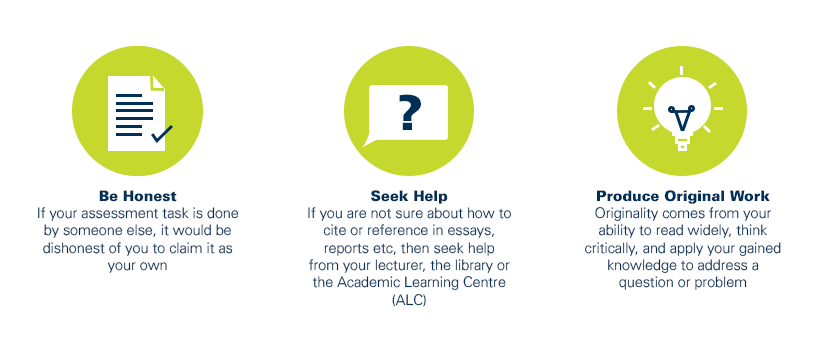
As a CQUniversity student you are expected to act honestly in all aspects of your academic work.
Any assessable work undertaken or submitted for review or assessment must be your own work. Assessable work is any type of work you do to meet the assessment requirements in the unit, including draft work submitted for review and feedback and final work to be assessed.
When you use the ideas, words or data of others in your assessment, you must thoroughly and clearly acknowledge the source of this information by using the correct referencing style for your unit. Using others’ work without proper acknowledgement may be considered a form of intellectual dishonesty.
Participating honestly, respectfully, responsibly, and fairly in your university study ensures the CQUniversity qualification you earn will be valued as a true indication of your individual academic achievement and will continue to receive the respect and recognition it deserves.
As a student, you are responsible for reading and following CQUniversity’s policies, including the Student Academic Integrity Policy and Procedure. This policy sets out CQUniversity’s expectations of you to act with integrity, examples of academic integrity breaches to avoid, the processes used to address alleged breaches of academic integrity, and potential penalties.
What is a breach of academic integrity?
A breach of academic integrity includes but is not limited to plagiarism, self-plagiarism, collusion, cheating, contract cheating, and academic misconduct. The Student Academic Integrity Policy and Procedure defines what these terms mean and gives examples.
Why is academic integrity important?
A breach of academic integrity may result in one or more penalties, including suspension or even expulsion from the University. It can also have negative implications for student visas and future enrolment at CQUniversity or elsewhere. Students who engage in contract cheating also risk being blackmailed by contract cheating services.
Where can I get assistance?
For academic advice and guidance, the Academic Learning Centre (ALC) can support you in becoming confident in completing assessments with integrity and of high standard.
What can you do to act with integrity?