Overview
This unit introduces key topics in oral anatomy, which will enable you to begin preclinical training in term 2, and will form the foundations for clinical practice. In the first half of this unit you will study morphology of teeth, sequence of eruption and basic occlusion. The study of distinct features and traits of teeth will enable you to identify and examine teeth, as well as develop an awareness of root morphology required for primary tooth extractions and periodontal treatment for the adult dentition. The study of the sequence of eruption and exfoliation will develop your understanding of the changes with age from infancy to adulthood. This knowledge and understanding will also enable you to predict changes in the dentition with age and identify abnormalities in the eruption sequence. The study of dental morphology and occlusion will provide you with an understanding of tooth shape and function that applies to the restoration of natural tooth form. The second half of this unit will introduce you to anatomy of the head and neck, including surface anatomy, bones, muscles, blood vessels, nerves and lymphatics. Applications of this knowledge, in patient examination and local anaesthesia, will be developed further in ORAL11005 Oral Anatomy 2 in term 2.
Details
Pre-requisites or Co-requisites
Condition: Students must be enrolled full-time in CB29 Oral Health Course to enrol in this unit. Corequisite: ORAL11001 Introduction to Oral Health Therapy
Important note: Students enrolled in a subsequent unit who failed their pre-requisite unit, should drop the subsequent unit before the census date or within 10 working days of Fail grade notification. Students who do not drop the unit in this timeframe cannot later drop the unit without academic and financial liability. See details in the Assessment Policy and Procedure (Higher Education Coursework).
Offerings For Term 1 - 2026
Attendance Requirements
All on-campus students are expected to attend scheduled classes - in some units, these classes are identified as a mandatory (pass/fail) component and attendance is compulsory. International students, on a student visa, must maintain a full time study load and meet both attendance and academic progress requirements in each study period (satisfactory attendance for International students is defined as maintaining at least an 80% attendance record).
Recommended Student Time Commitment
Each 6-credit Undergraduate unit at CQUniversity requires an overall time commitment of an average of 12.5 hours of study per week, making a total of 150 hours for the unit.
Class Timetable
Assessment Overview
Assessment Grading
This is a graded unit: your overall grade will be calculated from the marks or grades for each assessment task, based on the relative weightings shown in the table above. You must obtain an overall mark for the unit of at least 50%, or an overall grade of 'pass' in order to pass the unit. If any 'pass/fail' tasks are shown in the table above they must also be completed successfully ('pass' grade). You must also meet any minimum mark requirements specified for a particular assessment task, as detailed in the 'assessment task' section (note that in some instances, the minimum mark for a task may be greater than 50%). Consult the University's Grades and Results Policy for more details of interim results and final grades.
All University policies are available on the CQUniversity Policy site.
You may wish to view these policies:
- Grades and Results Policy
- Assessment Policy and Procedure (Higher Education Coursework)
- Review of Grade Procedure
- Student Academic Integrity Policy and Procedure
- Academic Progression Policy and Procedure
- Student Refund and Credit Balance Policy and Procedure
- Complaints Policy and Procedure
- Information and Communications Technology Acceptable Use Policy and Procedure
This list is not an exhaustive list of all University policies. The full list of University policies are available on the CQUniversity Policy site.
Feedback, Recommendations and Responses
Every unit is reviewed for enhancement each year. At the most recent review, the following staff and student feedback items were identified and recommendations were made.
Feedback from In class
Students enjoyed learning dental morphology through hands-on activities like tooth drawing and wax carving. They appreciated the collaborative atmosphere in the lab, which encouraged discussion and peer learning.
It is recommended to continue and expand hands-on, collaborative learning activities in oral anatomy.
Feedback from In class and by email
Students valued the unit coordinator’s prompt and approachable responses to emails and queries.
It is recommended to maintain prompt communication by ensuring emails to the unit coordinator are answered in a timely and approachable manner.
Feedback from In class and by email
Students reported stress prior to their multistation anatomy tests, expressing concern about their performance and the possibility of failing.
It is recommended that mock station-based tests be incorporated, and students be encouraged to quiz each other to allow practice in a low-stakes environment that builds confidence for time pressured assessments.
- Identify and name teeth in the human dentitions and anatomical features of the head and neck
- Describe the anatomy of the head and neck relevant to the function of the oral cavity
- Describe features and traits of teeth in the human dentitions, as well as normal sequence of eruption and exfoliation, and occlusion
- Demonstrate appropriate oral and written communication skills, professional attitudes and ethical behaviours as required of an Oral Health Therapist.
All unit profiles in the Bachelor of Oral Health are made available to the Australian Dental Council for on-going accreditation purposes.
Alignment of Assessment Tasks to Learning Outcomes
| Assessment Tasks | Learning Outcomes | |||
|---|---|---|---|---|
| 1 | 2 | 3 | 4 | |
| 1 - Practical Assessment - 40% | ||||
| 2 - Online Quiz(zes) - 25% | ||||
| 3 - In-class Test(s) - 35% | ||||
Alignment of Graduate Attributes to Learning Outcomes
| Graduate Attributes | Learning Outcomes | |||
|---|---|---|---|---|
| 1 | 2 | 3 | 4 | |
| 1 - Communication | ||||
| 2 - Problem Solving | ||||
| 3 - Critical Thinking | ||||
| 4 - Information Literacy | ||||
| 5 - Team Work | ||||
| 6 - Information Technology Competence | ||||
| 7 - Cross Cultural Competence | ||||
| 8 - Ethical practice | ||||
| 9 - Social Innovation | ||||
| 10 - First Nations Knowledges | ||||
| 11 - Aboriginal and Torres Strait Islander Cultures | ||||
Textbooks
Illustrated Anatomy of the Head and Neck
- Edition: 7th (2025)
- Authors: Margaret J. Ferenbach
- Elsevier Australia
- Great Britain
- ISBN: ISBN: 9780443124426 ISBN-10: 0443124426
Illustrated Dental Embryology, Histology, and Anatomy
- Edition: 6th (2025)
- Authors: Margaret J. Ferenbach, Tracey Popowics
- Elsevier US
- Great Britain
- ISBN: ISBN: 9780443104244 ISBN-10: 0443104247
Additional Textbook Information
This is the first time Illustrated Anatomy of the Head and Neck 7th edition and Illustrated Dental Embryology, Histology, and Anatomy 6th Edition have been prescribed textbooks for ORAL11004 Oral Anatomy 1. the same textbooks will be the prescribed textbooks for the second term unit ORAL11005 Oral Anatomy 2.
IT Resources
- CQUniversity Student Email
- Internet
- Unit Website (Moodle)
All submissions for this unit must use the referencing styles below:
For further information, see the Assessment Tasks.
c.m.fay@cqu.edu.au
Week 1
Begin Date: 09 Mar 2026Module/Topic
Introduction to oral anatomy:
- Basic terminology for anatomy
- Bones of the head and neck
- Surface anatomy of the head and neck and oral cavity
- Introduction to the dentitions and periodontium
- Introduction to dental charting and notation.
Chapter
Fehrenbach, M. J. (2025) Illustrated anatomy of the head and neck. (7th Ed.,), Elsevier, St Louis, Missouri. USA. Chapter 1 and 2.
Events and Submissions/Topic
Anatomy practical class
Week 2
Begin Date: 16 Mar 2026Module/Topic
Introduction to dental morphology:
- Basic terminology to describe tooth morphology
- Dental notation.
Chapter
Fehrenbach, M.J., and Popowics, T, (2025) Illustrated dental embryology, histology, and anatomy, (6th Ed.,) Elsevier Health Sciences St Louis, Missouri. USA. Chapter 15.
Events and Submissions/Topic
Dental morphology practical class
Week 3
Begin Date: 23 Mar 2026Module/Topic
Morphology of the permanent teeth:
- Permanent incisor
- Permanent canines
- Permanent premolars
- Permanent molars.
Chapter
Fehrenbach, M.J., and Popowics, T, (2025) Illustrated dental embryology, histology, and anatomy, (6th Ed.,) Elsevier Health Sciences St Louis, Missouri. USA. Chapters 16 and 17.
Events and Submissions/Topic
Dental morphology practical class
Week 4
Begin Date: 30 Mar 2026Module/Topic
Morphology of teeth in the primary dentition:
- Incisors
- Canines
- Molars.
Chapter
Fehrenbach, M.J., and Popowics, T, (2025) Illustrated dental embryology, histology, and anatomy, (6th Ed.,) Elsevier Health Sciences St Louis, Missouri. USA. Chapter 18.
Events and Submissions/Topic
Dental morphology practical class.
Week 5
Begin Date: 06 Apr 2026Module/Topic
Periodontal anatomy for permanent teeth and dental anomalies:
- Anatomy of the Periodontium, clinical appearance and morphology
- Variations in number of teeth
- Variations in crown and root morphology
- Abnormalities of enamel and dentine.
Chapter
Scheid, R. C., and Weiss, G. (2017) Woelfel's dental anatomy (9th ed.,) Wolters Kluwer Health/Lippincott Williams and Wilkins, Philadelphia, Pennsylvania, USA. Part 2, Chapters 7 and 11.
Events and Submissions/Topic
Dental morphology practical class.
Assessment 2: Online Quiz A due.
Week 6
Begin Date: 13 Apr 2026Module/Topic
Occlusion:
- Features of the ideal occlusion
- Terminology to describe tooth positions
- Movements of the mandible
- Angle’s classification of malocclusions
- Dental and skeletal malocclusions.
Chapter
Fehrenbach, M.J., and Popowics, T, (2025) Illustrated dental embryology, histology, and anatomy, (6th Ed.,) Elsevier Health Sciences St Louis, Missouri. USA. Chapter 20.
Events and Submissions/Topic
Assessment 1: Practical Assessment A will be conducted.
Vacation Week
Begin Date: 20 Apr 2026Module/Topic
Break week
Chapter
Events and Submissions/Topic
Week 7
Begin Date: 27 Apr 2026Module/Topic
Introduction to head and neck anatomy:
- Review anatomical terms
- Review bone nomenclature
- Bones of the head and neck.
Chapter
Fehrenbach, M. J. (2025) Illustrated anatomy of the head and neck. (7th Ed.,), Elsevier, St Louis, Missouri. USA. Chapter 3.
Events and Submissions/Topic
Head and neck anatomy practical class.
Week 8
Begin Date: 04 May 2026Module/Topic
Muscles of the head and neck:
- Review muscle nomenclature
- Muscles of mastication
- Muscles which assist mastication and affect the position of the temporomandibular joint
- Muscles of facial expression
- Muscles of the neck
- Anatomical divisions of the neck.
Chapter
Fehrenbach, M. J. (2025) Illustrated anatomy of the head and neck. (7th Ed.,), Elsevier, St Louis, Missouri. USA. Chapter 4.
Events and Submissions/Topic
Head and neck anatomy practical class.
Week 9
Begin Date: 11 May 2026Module/Topic
Nerve supply of the head and neck:
- Review general structure and function of the nervous system
- Cranial nerves
- Cranial nerves relevant to dental treatment
- Innervation of oral structures.
Chapter
Fehrenbach, M. J. (2025) Illustrated anatomy of the head and neck. (7th Ed.,), Elsevier, St Louis, Missouri. USA. Chapter 8.
Events and Submissions/Topic
Head and neck anatomy practical class.
Week 10
Begin Date: 18 May 2026Module/Topic
Vascular and lymphatic systems of the head and neck:
- Review the vascular system of the body
- Vascular system of the head and neck
- Review the lymphatic system of the body
- Lymphatic system of the head and neck.
Chapter
Fehrenbach, M. J. (2025) Illustrated anatomy of the head and neck. (7th Ed.,), Elsevier, St Louis, Missouri. USA. Chapters 6 and 10.
Events and Submissions/Topic
Head and neck anatomy practical class.
Week 11
Begin Date: 25 May 2026Module/Topic
Radiographic landmarks of the head and neck for dental practice:
- Radiographic techniques and images produced in dental practice
- Intra-oral and extra-oral radiographic landmarks.
Chapter
Robinson, D. S. (2023) Modern dental assisting (14th ed.,) Elsevier. St Louis, Missouri, USA. Part 8, Chapters 41 and 42.
Scheid, R. C., and Weiss, G. (2017) Woelfel's dental anatomy (9th edn.,) Wolters Kluwer Health/Lippincott Williams and Wilkins, Philadelphia, Pennsylvania, USA . Part 3, Chapter 14.
Events and Submissions/Topic
Head and neck anatomy practical class.
Assessment 2: Online Quiz B due.
Week 12
Begin Date: 01 Jun 2026Module/Topic
Revision:
Preparation for Practical Assessment A
Preparation for In Class Test
Term review, evaluations and feedback.
Chapter
Events and Submissions/Topic
Assessment 1: Practical Assessment B will be conducted.
Exam Week
Begin Date: 08 Jun 2026Module/Topic
Chapter
Events and Submissions/Topic
Assessment 3: In-Class Test will be conducted.
In Class Test Due: Exam Week Wednesday (10 June 2026) 1:00 pm AEST
Vacation/Exam Week
Begin Date: 15 Jun 2026Module/Topic
Chapter
Events and Submissions/Topic
1 Practical Assessment
You will complete two practical tests (Practical Assessment A and Practical Assessment B) to assess your knowledge of the dentitions and anatomical features of the head and neck. Both tests are multistation assessments consisting of numbered stations set up around a room, through which you will move at timed intervals. Questions at each station will ask you to correctly identify or name a structure or describe a simple function. (Questions will not be multiple choice.) You may also be asked to draw and label a simple diagram at a station.
Each test will include approximately 20–30 stations, with additional rest stations, and you will have approximately three minutes at each station. The duration of each practical assessment will be approximately 75–90 minutes.
The practical assessments will be conducted on campus as scheduled. You will need to bring pens and photo identification. As the practical assessment is a closed-book assessment, textbooks, other written materials, and internet access will not be permitted in the examination room.
To prepare for these assessments, you will engage in practical learning activities as outlined in your workbooks and supported by theory in lectures. You are encouraged to attend all practical sessions in dental morphology and head and neck anatomy to familiarize yourself with the anatomical models used in the practical assessments.
You will complete two practical assessments. Practical Assessment A will take place Thursday 16th April 2026. Practical Assessment B will take place Friday 5th June 2026.
Results and feedback will be returned within two weeks of the assessment dates.
You will be assessed on correctly identifying teeth and anatomical structures using various models, diagrams, and charts or drawing a structure in a simple diagram. Your performance will be evaluated based on the following criteria:
• Accurate identification or drawing of anatomical features
• Correct description of anatomical functions
• Correct or recognizable spelling of anatomical terms
• Correct use of anatomical terminology and conventions.
Practical Assessment A is worth 15% and Practical Assessment B is worth 25%. The combined results will contribute 40% to your overall grade.
Level of GenAI use allowed: Level 1: No AI. You must not use AI at any point during the assessment.
The 72-hour grace period does not apply to this assessment.
- Identify and name teeth in the human dentitions and anatomical features of the head and neck
- Demonstrate appropriate oral and written communication skills, professional attitudes and ethical behaviours as required of an Oral Health Therapist.
2 Online Quiz(zes)
You will complete two on-line quizzes to assess your knowledge of anatomy. The questions will focus on key terminology and concepts which are essential for the study of oral anatomy. The quizzes will include matching and multiple-choice questions. As questions will be randomly generated from a pool of questions. No two students will sit the exact same list of questions.
To prepare for this assessment, you will complete the weekly formative practice quizzes and study the learning materials in the relevant weeks assessed by each quiz.
You are allowed only one attempt for each quiz and must complete the quizzes within a limited time. Your attempts for each quiz will be submitted automatically, but no more questions can be answered once the time limit expires. No attempts are allowed after the quizzes are closed. If you are unable to complete the quizzes by the due date, you must apply for an extension before the due date.
Each quiz is outlined below.
Online Quiz A opens Wednesday 1st April 5.00pm and closes Wednesday 8th April 5.00pm. This quiz tests learning material in weeks 1-4. There are 40 questions (maximum). The time limit is 30 minutes. This quiz is worth 10%.
Online Quiz B opens Wednesday 13th May 5.00pm and closes Wednesday 27th May 5.00pm. This quiz tests learning material in weeks 5-10. There are 60 questions (maximum). The time limit is 45 minutes. This quiz is worth 15%.
The Online Quiz A is due 5.00pm 8th April 2026. The Online Quiz B is due 5.00pm 27th May 2026.
Results are made available immediately after the quiz closes.
Questions will be automatically marked correct or incorrect on the completion of the quiz.
Online Quiz A is worth 10% and Online Quiz B is worth 15%. The combined results will contribute 25% to your overall grade.
Level of GenAI use allowed: Level 1: No AI. You must not use AI at any point during the assessment.
- Describe the anatomy of the head and neck relevant to the function of the oral cavity
- Describe features and traits of teeth in the human dentitions, as well as normal sequence of eruption and exfoliation, and occlusion
3 In-class Test(s)
You will complete a written In-Class Test during the university examination week. The test will include both short answers and longer response questions.
For a guide to the assessment of this course and final test, please read and study the unit learning outcomes as well as the weekly learning outcomes. You will find weekly learning outcomes in the study guide and lecture slides. To prepare for this test, you should study recommended textbook chapters, weekly study guides and participate in weekly lectures and tutorials. Weekly practice questions and quizzes can be used to self-test your knowledge and example questions for the In-Class Test with exemplar answers can be found in the weekly study guides.
You will require pens and photo identification for this assessment. This is a closed book assessment. This means that textbooks and other written material, will not be allowed in the examination room and you will not be allowed to access internet through any devices. The test will take 180mins minutes to complete.
Exam Week Wednesday (10 June 2026) 1:00 pm AEST
Results of the In-Class test will be made available on release of grades.
You will be assessed against a standard answer sheet on:
- Description of anatomical structures of the head and neck relevant to the function of the oral cavity
- Explanation of the functional significance of head, neck, and oral anatomical structures
- Description tooth morphology and distinguishing traits of the human dentition
- Description the normal sequence of tooth eruption and exfoliation
- Communication of anatomical knowledge using appropriate written language.
The In-Class Test result will contribute 35% to your overall grade.
Level of GenAI use allowed: Level 1: No AI. You must not use AI at any point during the assessment.
The 72-hour grace period does not apply to this assessment.
- Describe the anatomy of the head and neck relevant to the function of the oral cavity
- Describe features and traits of teeth in the human dentitions, as well as normal sequence of eruption and exfoliation, and occlusion
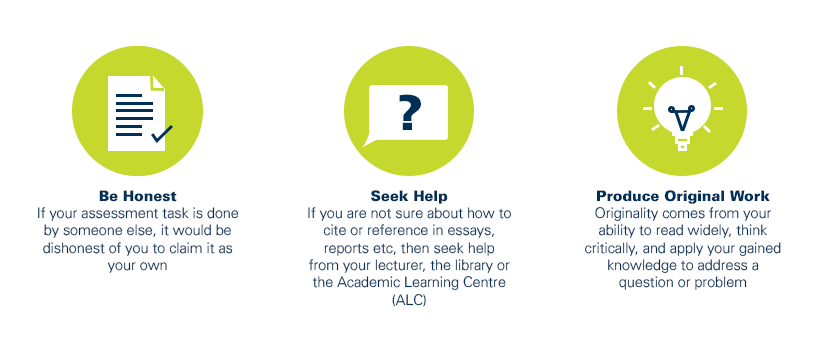
As a CQUniversity student you are expected to act honestly in all aspects of your academic work.
Any assessable work undertaken or submitted for review or assessment must be your own work. Assessable work is any type of work you do to meet the assessment requirements in the unit, including draft work submitted for review and feedback and final work to be assessed.
When you use the ideas, words or data of others in your assessment, you must thoroughly and clearly acknowledge the source of this information by using the correct referencing style for your unit. Using others’ work without proper acknowledgement may be considered a form of intellectual dishonesty.
Participating honestly, respectfully, responsibly, and fairly in your university study ensures the CQUniversity qualification you earn will be valued as a true indication of your individual academic achievement and will continue to receive the respect and recognition it deserves.
As a student, you are responsible for reading and following CQUniversity’s policies, including the Student Academic Integrity Policy and Procedure. This policy sets out CQUniversity’s expectations of you to act with integrity, examples of academic integrity breaches to avoid, the processes used to address alleged breaches of academic integrity, and potential penalties.
What is a breach of academic integrity?
A breach of academic integrity includes but is not limited to plagiarism, self-plagiarism, collusion, cheating, contract cheating, and academic misconduct. The Student Academic Integrity Policy and Procedure defines what these terms mean and gives examples.
Why is academic integrity important?
A breach of academic integrity may result in one or more penalties, including suspension or even expulsion from the University. It can also have negative implications for student visas and future enrolment at CQUniversity or elsewhere. Students who engage in contract cheating also risk being blackmailed by contract cheating services.
Where can I get assistance?
For academic advice and guidance, the Academic Learning Centre (ALC) can support you in becoming confident in completing assessments with integrity and of high standard.
What can you do to act with integrity?