Overview
This unit introduces you to the profession of an Oral Health Therapist and to your role within the dental team. You will be introduced to regulatory, ethical, and legal frameworks which form the basis of dental practice. in particular, this unit will focus on workplace health and safety, infection control and prevention, communication, practice management and requirements for registration. This unit will also develop the foundation knowledge and skills in the dental environment as you commence preclinical and clinical training. An important part of your preclinical training in this unit will be to gain theoretical knowledge in radiation safety and radiographic imaging procedures and learn to take both intra-oral and extra-oral radiographs safely and competently in a simulated environment. Mandatory requirements for clinical practice including, First Aid, Immunisations and Blue Card must be fulfilled.
Details
Pre-requisites or Co-requisites
Condition: Students must be enrolled full-time in CB29 Oral Health Course to enrol in this unit. Corequisites: BMSC11010 Human Anatomy and Physiology 1 and ALLH11009 Research Methods for Health Professionals.
Important note: Students enrolled in a subsequent unit who failed their pre-requisite unit, should drop the subsequent unit before the census date or within 10 working days of Fail grade notification. Students who do not drop the unit in this timeframe cannot later drop the unit without academic and financial liability. See details in the Assessment Policy and Procedure (Higher Education Coursework).
Offerings For Term 1 - 2026
Attendance Requirements
All on-campus students are expected to attend scheduled classes - in some units, these classes are identified as a mandatory (pass/fail) component and attendance is compulsory. International students, on a student visa, must maintain a full time study load and meet both attendance and academic progress requirements in each study period (satisfactory attendance for International students is defined as maintaining at least an 80% attendance record).
Recommended Student Time Commitment
Each 6-credit Undergraduate unit at CQUniversity requires an overall time commitment of an average of 12.5 hours of study per week, making a total of 150 hours for the unit.
Class Timetable
Assessment Overview
Assessment Grading
This is a graded unit: your overall grade will be calculated from the marks or grades for each assessment task, based on the relative weightings shown in the table above. You must obtain an overall mark for the unit of at least 50%, or an overall grade of 'pass' in order to pass the unit. If any 'pass/fail' tasks are shown in the table above they must also be completed successfully ('pass' grade). You must also meet any minimum mark requirements specified for a particular assessment task, as detailed in the 'assessment task' section (note that in some instances, the minimum mark for a task may be greater than 50%). Consult the University's Grades and Results Policy for more details of interim results and final grades.
All University policies are available on the CQUniversity Policy site.
You may wish to view these policies:
- Grades and Results Policy
- Assessment Policy and Procedure (Higher Education Coursework)
- Review of Grade Procedure
- Student Academic Integrity Policy and Procedure
- Academic Progression Policy and Procedure
- Student Refund and Credit Balance Policy and Procedure
- Complaints Policy and Procedure
- Information and Communications Technology Acceptable Use Policy and Procedure
This list is not an exhaustive list of all University policies. The full list of University policies are available on the CQUniversity Policy site.
Feedback, Recommendations and Responses
Every unit is reviewed for enhancement each year. At the most recent review, the following staff and student feedback items were identified and recommendations were made.
Feedback from In class
Students expressed concern about the expectations and requirements for the portfolio assessments.
It is recommended that assessment expectations be discussed with the students, and written instructions on Moodle and in the practical activity workbooks be reviewed to ensure clarity.
Feedback from In class
Students would like to see more links to real applications. For example, invite guest speakers from dental industry representatives or practising OHTs.
It is recommended that guest speakers from dental industry representatives or practising oral health therapists be invited to enhance students' understanding of real-world applications and practical skills in this unit.
Feedback from In class
Students would like more opportunities to develop hand skills in preparation for hygiene and operative preclinical practice in Term 2.
It is recommended that the unit schedule to explore opportunities for incorporating additional hand skill activities in preparation for Term 2 preclinical practice.
- Understand the roles and responsibilities of an Oral Health Therapist as a member of the dental team and of the community.
- Demonstrate preclinical skills in the use of dental instruments, equipment and materials in a simulated environment including the techniques for intra-oral and extra-oral radiography.
- Understand the principles of infection control, workplace health and safety as well as the scientific basis, applications and safe use of ionizing radiation in dental practice.
- Demonstrate appropriate professional and ethical values and behaviors and communication skills for the dental practitioner.
The learning outcomes of this unit are part of the overall learning outcomes in the Bachelor of Oral Health course at CQUniversity and are included in the annual report to the Australian Dental Council (ADC).
Alignment of Assessment Tasks to Learning Outcomes
| Assessment Tasks | Learning Outcomes | |||
|---|---|---|---|---|
| 1 | 2 | 3 | 4 | |
| 1 - In-class Test(s) - 60% | ||||
| 2 - Portfolio - 0% | ||||
| 3 - Online Quiz(zes) - 40% | ||||
Alignment of Graduate Attributes to Learning Outcomes
| Graduate Attributes | Learning Outcomes | |||
|---|---|---|---|---|
| 1 | 2 | 3 | 4 | |
| 1 - Communication | ||||
| 2 - Problem Solving | ||||
| 3 - Critical Thinking | ||||
| 4 - Information Literacy | ||||
| 5 - Team Work | ||||
| 6 - Information Technology Competence | ||||
| 7 - Cross Cultural Competence | ||||
| 8 - Ethical practice | ||||
| 9 - Social Innovation | ||||
| 10 - First Nations Knowledges | ||||
| 11 - Aboriginal and Torres Strait Islander Cultures | ||||
Textbooks
Modern Dental Assisting
- Edition: 14th (2023)
- Authors: Debbie S. Robinson
- Elsevier
- St Louis St Louis , Missouri , USA
- ISBN: Hardback ISBN: 9780323824408 and eBook ISBN: 9780323882422
IT Resources
- CQUniversity Student Email
- Internet
- Unit Website (Moodle)
All submissions for this unit must use the referencing styles below:
For further information, see the Assessment Tasks.
c.m.fay@cqu.edu.au
Week 1
Begin Date: 09 Mar 2026Module/Topic
The professional oral health therapist as part of the dental team.
Introduction to radiation physics and the biologic effcts of radiation.
Simulation Laboratory:
- Hand hygiene
- PPE
- Operation and maintenance of the dental simulation units.
Chapter
Robinson, D. S. (2023) Modern dental assisting (14th ed.,) Elsevier. St Louis, Missouri, USA. Chapters 1-3 and Chapter 38.
Tsang A K Led (2010) Oral HealthTherapy programs in Australia and New Zealand: Emergence and Development. Knowledge books and Software. Varsity Lakes, Queensland, Australia. Chapters 1-2.
Events and Submissions/Topic
Week 2
Begin Date: 16 Mar 2026Module/Topic
Introduction to infection control and prevention.
Introduction to instruments and equipments used in dental radiography.
Simulation laboratory:
- Operation and maintenance of the dental simulation units and ergonomics.
Chapter
Robinson, D. S. (2023) Modern dental assisting (14th ed.,) Elsevier. St Louis, Missouri, USA. Part 4 and Chapter 38 and 39.
Events and Submissions/Topic
Week 3
Begin Date: 23 Mar 2026Module/Topic
Workplace health and safety.
Introduction to radiation safety and radiation protection in dental practice.
Clinic:
- Clinic facilities tour
- Operation of the dental chair
- Patient changeover procedure.
Chapter
Robinson, D. S. (2023) Modern dental assisting (14th ed.,) Elsevier. St Louis, Missouri, USA. Part 5 and Chapters 38 and 40.
Events and Submissions/Topic
Week 4
Begin Date: 30 Mar 2026Module/Topic
Dental instruments and equipment.
Dental radiography techniques - Intra-oral imaging.
Clinic:
- Patient changeover procedure check
- Admitting and seating the patient
- Ergonomics
- Extra oral examination on peer.
Chapter
Robinson, D. S. (2023) Modern dental assisting (14th ed.,) Elsevier. St Louis, Missouri, USA. Part 7 and Chapter 41.
Events and Submissions/Topic
Week 5
Begin Date: 06 Apr 2026Module/Topic
Dental Records.
Radiography techniques - Extra-oral imaging.
Simulation laboratory:
- Rubber dam and X-ray sensor holders.
- Clinic:
Radiography session 1.
Chapter
Robinson, D. S. (2023) Modern dental assisting (14th ed.,) Elsevier. St Louis, Missouri, USA. Chapters 26 and 42.
Events and Submissions/Topic
Assessment 3. Online Quiz A. Due Tuesday 7th April 2026.
Week 6
Begin Date: 13 Apr 2026Module/Topic
Dental materials.
Infection control in dental radiography.
Simulation laboratory:
- Dental instruments
- Modified pen grip activities.
Chapter
Robinson, D. S. (2023) Modern dental assisting (14th ed.,) Elsevier. St Louis, Missouri, USA. Part 9 and Chapter 40.
Events and Submissions/Topic
Week 7
Begin Date: 27 Apr 2026Module/Topic
Practice management.
Simulation laboratory:
- Handpieces and burs.
Clinic:
- Radiography session 2.
Chapter
Robinson, D. S. (2023) Modern dental assisting (14th ed.,) Elsevier. St Louis, Missouri, USA. Chapters 62 and 43.
Events and Submissions/Topic
Assessment 2. Portfolio: Mental Health First Aid online training. Due Monday 27th April 2026.
Week 8
Begin Date: 04 May 2026Module/Topic
Infection control procedures.
Simulation laboratory:
- Engraving a metal object and prophylaxis with a handpiece.
Clinic:
- Radiography session 3.
Chapter
Robinson, D. S. (2023) Modern dental assisting (14th ed.,) Elsevier. St Louis, Missouri, US. Part 4 and 5 and Chapter 40.
Events and Submissions/Topic
Assessment 3. Online Quiz B. Due Monday 4th May 2026.
Assessment 2. Portfolio: Mental Health First Aid face-to-face training. Due Friday 8th May 2026.
Week 9
Begin Date: 11 May 2026Module/Topic
Dental examination procedures.
Simulation laboratory:
- Dentac prac activities
Clinic:
- Radiography session 4.
Chapter
Robinson, D. S. (2023) Modern dental assisting (14th ed.,) Elsevier. St Louis, Missouri, US. Chapters 26, 28, 41 and 42.
Events and Submissions/Topic
Week 10
Begin Date: 18 May 2026Module/Topic
Introduction to law and ethics in dental practice.
Simulation laboratory:
- Dentac prac activities
Clinic:
- Radiography sessions 5.
Chapter
Robinson, D. S. (2023) Modern dental assisting (14th ed.,) Elsevier. St Louis, Missouri, US. Chapters 4 and 5.
Events and Submissions/Topic
Week 11
Begin Date: 25 May 2026Module/Topic
Introduction to communication.
Simulation laboratory:
- Denta prac activities
Clinic:
- Radiography session 6.
Chapter
Robinson, D. S. (2023) Modern dental assisting (14th ed.,) Elsevier. St Louis, Missouri, US. Chapter 61.
Events and Submissions/Topic
Week 12
Begin Date: 01 Jun 2026Module/Topic
Revision and review week
- Evaluations
- Preparation for the In-Class test
- Preparation for Online Quiz C.
Simulation laboratory:
- Periodontal probing techniques
Clinic:
- Radiography safety audit.
Chapter
Events and Submissions/Topic
Assessment 2. Portfolio: Dental Radiography Safety Audit will be conducted Tuesday 2nd June.
Assessment 2. Portfolio: Mandatory Requirement progress tasks. Due Friday 5th June 2026.
Assessment 2. Portfolio: First Nations Cross-Cultural Competency Training. Due Friday 5th June 2026.
Exam Week
Begin Date: 08 Jun 2026Module/Topic
Chapter
Events and Submissions/Topic
Assessment 2. Portfolio: Skills Development. Due Monday 8th June 2026.
In Class Test Due: Exam Week Tuesday (9 June 2026) 11:00 am AEST
Vacation/Exam Week
Begin Date: 15 Jun 2026Module/Topic
Chapter
Events and Submissions/Topic
Assessment 3. Online Quiz C . Due Monday 15th June 2026.
1 In-class Test(s)
You will complete an In-Class test on campus in exam week. The test will cover the practical activities you completed in the simulation laboratory, the clinic, the radiography sessions and the theory that supports all of these activities. Required content is clearly outlined in workbooks 1, 2, and 3 and supported by relevant weekly lectures.
To prepare for the test you will participate in the practical sessions in the simulation laboratory, prosthetic laboratory and clinic, answer all the questions in the workbook and study recommended textbook chapters, weekly lectures and learning materials on Moodle. Each workbook includes 20 review questions for every session, and you are expected to complete these questions as part of your preparation for the test.
You will require pens and photo identification for this assessment. This is a closed book assessment. This means that textbooks and other written material, will not be allowed in the examination room and you will not be allowed to access internet through any devices. The test will take 180mins to complete.
Exam Week Tuesday (9 June 2026) 11:00 am AEST
Results of the In-Class test will be made available on release of grades.
You will be assessed against a standard answer sheet on:
- Naming and identifying instruments and equipment
- Describing the maintenance and functions of instruments and equipment
- Describing work practices that comply with infection control, prevention, and workplace health and safety principles.
- Explaining the theory which underpins these work practices.
The In-Class Test results contribute 60% to your final grade.
The 72-hour grace period does not apply to this assessment.
Level of GenAI use allowed: Level 1: No AI. You must not use AI at any point during the assessment. You must demonstrate your core skills and knowledge.
- Demonstrate preclinical skills in the use of dental instruments, equipment and materials in a simulated environment including the techniques for intra-oral and extra-oral radiography.
- Understand the principles of infection control, workplace health and safety as well as the scientific basis, applications and safe use of ionizing radiation in dental practice.
2 Portfolio
Throughout your study in Bachelor of Oral Health and your professional career, you will need to maintain a portfolio containing key documents for employment. These may include your degree, registration, professional memberships, work history, continuing education records, referee letters, special skills, and required health and immunisation documentation. In this assessment you will begin building a professional portfolio by compiling evidence of your skills and the necessary documentation.
There are five components to this Portfolio:
- Mandatory Requirements
- Skills Development
- Mental Health First Aid Training
- First Nations Cross-Cultural Competency training
- Dental Radiography Safety Audit.
Each component is displayed on Moodle as an assignment.
There are multiple due dates. Mandatory Requirement progress tasks are due Friday 5th June 2026. Skills Development is due Monday 8th June 2026. Mental Health First Aid online training must be completed by Monday 27th April 2026. Mental Health First Aid face-to-face training must be completed by Friday 8th May 2026. First Nations Cross-Cultural Competency Training is due Friday 5th June 2026. Dental Radiography Safety Audit will be conducted on Tuesday 2nd June 2026.
Results of each component will be returned within two weeks of the due date and progress in the portfolio assessments will be monitored throughout the term. Results of assessment in dental radiographic procedures will be returned by Friday 5th June 2026.
You will be assessed on:
- Completion of a short list of mandatory requirements. The list is available on Moodle.
- Gathering evidence of skills developed in the simulation laboratory and clinic including changeover procedure. The list is available on Moodle.
- Successful completion of the online module for Mental Health First Aid and attendance in face-to-face training.
- Successful completion of the online module for Understanding Sexual Orientation and Gender Diversity, and Cultural Safety.
- Successful completion of the Dental Radiation Safety Audit which is assessed against a criterion-referenced rubric as displayed below. If you do not pass the safety audit you will be given one opportunity to re-attempt within the following week.

You must pass all five components of the Portfolio to pass this unit. Each component is Pass/Fail.
Level of GenAI use allowed: NA
The 72-hour grace period does not apply to this assessment.
- Demonstrate preclinical skills in the use of dental instruments, equipment and materials in a simulated environment including the techniques for intra-oral and extra-oral radiography.
- Demonstrate appropriate professional and ethical values and behaviors and communication skills for the dental practitioner.
3 Online Quiz(zes)
You will complete three on-line quizzes to assess your knowledge of this unit. The quizzes are based on topics covered in the weekly lecture schedule and includes radiography theory.
The format of the online quizzes will include matching, multiple-choice questions and short response questions. Questions will be randomly generated from a pool of questions. No two students will sit the exact same combination of questions.
To prepare for this assessment, complete the weekly formative practice quizzes and practice questions in the study guides for the relevant weeks assessed by each quiz.
You are allowed only one attempt for each quiz and must complete the quizzes in a limited time. Your attempts for each quiz will be submitted automatically, but no more questions can be answered once the time limit expires. No attempts are allowed after the quizzes are closed. If you are unable to complete the quizzes by the due date, you must apply for an extension before the due date.
This is an open book assessment which means you may access Moodle resources, textbooks, lecture materials and internet sources.
Referencing is required for all sources used, including Generative AI, internet searches, textbooks, and lecture materials. Referencing will be explained and discussed in class and information on referencing AI can also be found on the Academic Learning Centre (ALC) guidelines for referencing AI.
• Acceptable styles: Harvard or APA 7th edition
• If Moodle resources from ORAL11001 are use, references must include page numbers / slide numbers.
• For referencing Generative AI, refer to Academic Learning Centre guidelines.
While the quizzes are open book, answers must be your own work as per CQUniversity Student Academic Integrity Policy and Procedure. Any identified cases of potential collusion or plagiarism to answer the questions will result in a breach of academic integrity case being raised.
Online Quiz A is due 5.00pm Tuesday 7th April 2026. Online Quiz B is due 5.00pm Monday 4th May 2026. Online Quiz C is due 5.00pm Monday 15th June 2026.
Results of the Online Quizzes will be available two weeks after each quiz closes.
Each quiz is outlined below.
Online Quiz A will test your knowledge of the learning material in weeks 1-3. The time limit is 60 minutes.
Online Quiz B will test your knowledge of the learning material in weeks 4-7. The time limit is 60 minutes.
Online Quiz C will test your knowledge of the learning material in weeks 8-11. The time limit is 60 minutes.
Grading will be a combination of manual and automatic grading.
Online Quiz A is worth 10%, Online Quiz B is worth 15% and Online Quiz C is worth 15%. The combined results will contribute 40% to your overall grade
Level of GenAI use allowed: Level 2: AI planning as discussed in the task description.
- Understand the roles and responsibilities of an Oral Health Therapist as a member of the dental team and of the community.
- Understand the principles of infection control, workplace health and safety as well as the scientific basis, applications and safe use of ionizing radiation in dental practice.
- Demonstrate appropriate professional and ethical values and behaviors and communication skills for the dental practitioner.
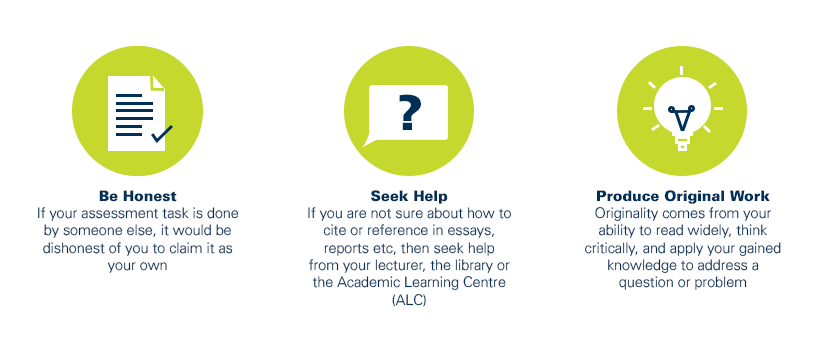
As a CQUniversity student you are expected to act honestly in all aspects of your academic work.
Any assessable work undertaken or submitted for review or assessment must be your own work. Assessable work is any type of work you do to meet the assessment requirements in the unit, including draft work submitted for review and feedback and final work to be assessed.
When you use the ideas, words or data of others in your assessment, you must thoroughly and clearly acknowledge the source of this information by using the correct referencing style for your unit. Using others’ work without proper acknowledgement may be considered a form of intellectual dishonesty.
Participating honestly, respectfully, responsibly, and fairly in your university study ensures the CQUniversity qualification you earn will be valued as a true indication of your individual academic achievement and will continue to receive the respect and recognition it deserves.
As a student, you are responsible for reading and following CQUniversity’s policies, including the Student Academic Integrity Policy and Procedure. This policy sets out CQUniversity’s expectations of you to act with integrity, examples of academic integrity breaches to avoid, the processes used to address alleged breaches of academic integrity, and potential penalties.
What is a breach of academic integrity?
A breach of academic integrity includes but is not limited to plagiarism, self-plagiarism, collusion, cheating, contract cheating, and academic misconduct. The Student Academic Integrity Policy and Procedure defines what these terms mean and gives examples.
Why is academic integrity important?
A breach of academic integrity may result in one or more penalties, including suspension or even expulsion from the University. It can also have negative implications for student visas and future enrolment at CQUniversity or elsewhere. Students who engage in contract cheating also risk being blackmailed by contract cheating services.
Where can I get assistance?
For academic advice and guidance, the Academic Learning Centre (ALC) can support you in becoming confident in completing assessments with integrity and of high standard.
What can you do to act with integrity?