Overview
This unit will help you make the connection between science and safety so that you will think scientifically to promote evidence-based safety practice. You will be introduced to the science that explains how hazards behave, the concept of energy conversion and how hazards cause harm. Management of health and safety risk is discussed from an evidence-informed perspective. Case studies will be used to assist you in developing an appreciation of the linkages between the causation of harm and fundamental theories of physics, chemistry, physiology and social sciences.
Details
Pre-requisites or Co-requisites
Pre-requisite study of 24 credit points
Important note: Students enrolled in a subsequent unit who failed their pre-requisite unit, should drop the subsequent unit before the census date or within 10 working days of Fail grade notification. Students who do not drop the unit in this timeframe cannot later drop the unit without academic and financial liability. See details in the Assessment Policy and Procedure (Higher Education Coursework).
Offerings For Term 1 - 2026
Attendance Requirements
All on-campus students are expected to attend scheduled classes - in some units, these classes are identified as a mandatory (pass/fail) component and attendance is compulsory. International students, on a student visa, must maintain a full time study load and meet both attendance and academic progress requirements in each study period (satisfactory attendance for International students is defined as maintaining at least an 80% attendance record).
Recommended Student Time Commitment
Each 6-credit Undergraduate unit at CQUniversity requires an overall time commitment of an average of 12.5 hours of study per week, making a total of 150 hours for the unit.
Class Timetable
Assessment Overview
Assessment Grading
This is a graded unit: your overall grade will be calculated from the marks or grades for each assessment task, based on the relative weightings shown in the table above. You must obtain an overall mark for the unit of at least 50%, or an overall grade of 'pass' in order to pass the unit. If any 'pass/fail' tasks are shown in the table above they must also be completed successfully ('pass' grade). You must also meet any minimum mark requirements specified for a particular assessment task, as detailed in the 'assessment task' section (note that in some instances, the minimum mark for a task may be greater than 50%). Consult the University's Grades and Results Policy for more details of interim results and final grades.
All University policies are available on the CQUniversity Policy site.
You may wish to view these policies:
- Grades and Results Policy
- Assessment Policy and Procedure (Higher Education Coursework)
- Review of Grade Procedure
- Student Academic Integrity Policy and Procedure
- Academic Progression Policy and Procedure
- Student Refund and Credit Balance Policy and Procedure
- Complaints Policy and Procedure
- Information and Communications Technology Acceptable Use Policy and Procedure
This list is not an exhaustive list of all University policies. The full list of University policies are available on the CQUniversity Policy site.
Feedback, Recommendations and Responses
Every unit is reviewed for enhancement each year. At the most recent review, the following staff and student feedback items were identified and recommendations were made.
Feedback from Student queries
Some students experienced difficulties uploading their video recordings in the assessment area, via Echo360.
Aim to ensure the information on how to submit via Echo360 reaches the students. Ensure it is included in the Assessment Tile and in the associated assessment submission area. Include advice to contact TaSAC for help if required.
Feedback from Student Unit & Teacher Evaluation data
Update content.
Review and update content as necessary on the Moodle site.
- Describe the scientific nature of hazards
- Explain the principles of energy conversion as it applies to health and safety risk
- Apply scientific principles to explain fatality, injury, illness and harm
- Utilise scientific research to improve health and safety outcomes
- Analyse the utility and practicality of risk controls in a structured and scientific manner.
Alignment of Assessment Tasks to Learning Outcomes
| Assessment Tasks | Learning Outcomes | ||||
|---|---|---|---|---|---|
| 1 | 2 | 3 | 4 | 5 | |
| 1 - Case Study - 30% | |||||
| 2 - Written Assessment - 30% | |||||
| 3 - Online Quiz(zes) - 40% | |||||
Alignment of Graduate Attributes to Learning Outcomes
| Graduate Attributes | Learning Outcomes | ||||
|---|---|---|---|---|---|
| 1 | 2 | 3 | 4 | 5 | |
| 1 - Communication | |||||
| 2 - Problem Solving | |||||
| 3 - Critical Thinking | |||||
| 4 - Information Literacy | |||||
| 5 - Team Work | |||||
| 6 - Information Technology Competence | |||||
| 7 - Cross Cultural Competence | |||||
| 8 - Ethical practice | |||||
| 9 - Social Innovation | |||||
| 10 - First Nations Knowledges | |||||
| 11 - Aboriginal and Torres Strait Islander Cultures | |||||
Alignment of Assessment Tasks to Graduate Attributes
| Assessment Tasks | Graduate Attributes | ||||||||||
|---|---|---|---|---|---|---|---|---|---|---|---|
| 1 | 2 | 3 | 4 | 5 | 6 | 7 | 8 | 9 | 10 | 11 | |
| 1 - Case Study - 30% | |||||||||||
| 2 - Written Assessment - 30% | |||||||||||
| 3 - Online Quiz(zes) - 40% | |||||||||||
Textbooks
Occupational Risk Control: Predicting and Preventing the Unwanted
- Edition: eBook (2016)
- Authors: Derek Viner
- Taylor & Francis
- London London , United Kingdom
- ISBN: 9781315598703
Additional Textbook Information
Recommended additional readings will be available in the eReading List
IT Resources
- CQUniversity Student Email
- Internet
- Unit Website (Moodle)
- Viedo conferencing (Zoom) or Teams
All submissions for this unit must use the referencing style: Harvard (author-date)
For further information, see the Assessment Tasks.
e.crawford@cqu.edu.au
Week 1
Begin Date: 09 Mar 2026Module/Topic
Introduction to Safety Science
Chapter
OHS BoK 12.1 Systems and Systems Thinking
OHS BoK 15 Hazard
Events and Submissions/Topic
Introduce yourself in the Arrivals Lounge so we know you can access the unit Moodle site.
Direct Access to the Textbook: OHS Body of Knowledge (BoK)
Quiz 1 opened on Monday.
Note: The quizzes close automatically when they are due.
Week 2
Begin Date: 16 Mar 2026Module/Topic
Underpinning Scientific Concepts of Safety
Chapter
OHS BoK 14 Foundational science
OHS BoK 34.1 Control
Events and Submissions/Topic
Quiz Tip: There are four quizzes throughout the term. Once opened, you can review and save them as many times as you like until it is due. If you do not submit the quiz when it is due, Moodle will automatically submit for you. Try to work on them throughout the term.
Week 3
Begin Date: 23 Mar 2026Module/Topic
Underpinning Scientific Concepts of Safety, Cont.
Chapter
Viner, D 2016, Occupational risk control: predicting and preventing the unwanted, Taylor & Francis, London, UK., Chapters 3 and 4.
OHS BoK 34.1 Control
Events and Submissions/Topic
Quiz 1 Due: Week 3 Friday (27 March 2026) 11:59 pm AEST
Week 4
Begin Date: 30 Mar 2026Module/Topic
Physical and Mechanical Hazards
Chapter
OHS BoK 16 Work related MSDs
OHS BoK 27 Gravitational hazards
OHS BoK 28 Mechanical plant
Events and Submissions/Topic
Census Date: Tuesday is the last day you can drop a unit without financial and academic penalty. Now is a good time to review your current study load.
Quiz 2 opened on Monday
Week 5
Begin Date: 06 Apr 2026Module/Topic
Noise and Vibration
Chapter
OHS BoK 22.1 Occupational noise
OHS BoK 22.2 Vibration
Events and Submissions/Topic
Quiz 2 Due: Week 5 Friday (10 April 2026) 11:59 pm AEST
Assessment Item 1 Tip: Work on your 3 case studies for Assessment Item 1 (list on Moodle).
Week 6
Begin Date: 13 Apr 2026Module/Topic
Light and Radiation
Chapter
OHS BoK 24 Ionising radiation
OHS BoK 25 Non-ionising radiation
Events and Submissions/Topic
Quiz 3 opened on Monday
Vacation Week
Begin Date: 20 Apr 2026Module/Topic
Chapter
Events and Submissions/Topic
Week 7
Begin Date: 27 Apr 2026Module/Topic
Electrical Hazards
Chapter
OHS BoK 23.1 Electricity
OHS BoK 23.2 Electricity appendix
Events and Submissions/Topic
Assessment 2a Collaborative Bibliography (Wiki) Tip - review the case study and source reputable literature that supports analysis of the case. Note that all references must be different.
Quiz 3 Due: Week 7 Friday (1 May 2026) 11:59 pm AEST
Week 8
Begin Date: 04 May 2026Module/Topic
Chemical Hazards I - Reactivity
Chapter
OHS BoK 17 Chemical hazards
Events and Submissions/Topic
Quiz 4 opened on Monday.
Case Study Analyses Due: Week 8 Friday (8 May 2026) 11:59 pm AEST
Week 9
Begin Date: 11 May 2026Module/Topic
Chemical Hazards II - Toxicity & More
Chapter
OHS BoK 17.4 Process hazards
OHS BoK 26 Thermal environment
Events and Submissions/Topic
Quiz 4 Due: Week 9 Friday (15 May 2026) 11:59 pm AEST
Week 10
Begin Date: 18 May 2026Module/Topic
Biological Hazards
Chapter
OHS BoK 18 Biological hazards
Events and Submissions/Topic
Assessment 2a: Bibliography (Wiki) due: Friday (22 May 2026) 11:59 pm AEST. Remember it must be different to those already added.
Week 11
Begin Date: 25 May 2026Module/Topic
Psychosocial Hazards
Chapter
OHS BoK 8.1 The human - basic psychological principles
OHS BoK 19 Psychosocial hazards and occupational stress
OHS BoK 21 Bullying and violence
Events and Submissions/Topic
Week 12
Begin Date: 01 Jun 2026Module/Topic
The Big Picture
Chapter
Events and Submissions/Topic
Exam Week
Begin Date: 08 Jun 2026Module/Topic
Chapter
Events and Submissions/Topic
Vacation/Exam Week
Begin Date: 15 Jun 2026Module/Topic
Chapter
Events and Submissions/Topic
1 Case Study
The purpose of this assignment is to demonstrate that you can apply scientific principles and a systems thinking lens to explain the process that resulted in damage or harm. You will be presented a list of case studies on Moodle.
You are required to select and analyse three (3) case studies from the list provided within Moodle. Your three selected case studies must each feature a different type of damaging energy.
Using Viner's energy-damage model, each analysis must address the following:
- Case Study: Identify the selected case study
- Preconditions: Applying a systems thinking lens, identify preconditions that make the event mechanisms possible
- HCFM: Identify and describe the Hazard Control Failure Mechanism (HCFM) that led to the event
- Damaging Energy: Identify the form of energy immediately before control of its damaging properties was lost
- Event: Describe the point in time in which control was lost
- STM: Identify the space transfer mechanism (STM)
- Energy Transfer: Describe the energy transference that led to damage
- Consequences: Identify the assets damaged (recipients)
- Damage threshold: Identify the damage threshold of the recipients
- References: CQUni Harvard Referencing Style Guide (link located in the Unit Profile)
- Appendix: GenAI statement of use
Students are more likely to be successful with submissions of 300-400 words per case study AND use the nine headings above to structure their assessment submission. Table format is recommended (see provided template on Moodle).
Note: Permission to use Generative AI is given for limited purposes to understand/explore course concepts, topics and terms. Please see the 'GenAI Guidelines for referencing Artificial Intelligence in your assignments' available from the Academic Learning Centre and please refer to the CQUniversity guideline on AI Awareness for Academic Integrity V2 as it relates to plagiarism.
Level of GenAI use allowed:
Level 2: AI Planning (As per The AI Aseessment Scale by Perkins, Furze, Roe & MacVaugh 2024)
AI may be used to help complete the task for initial research. You must critically evaluate and modify any AI-generated content you use to demonstrate your understanding.
Append the following to your assessment submission:
- A statement on how you used GenAI and the system/s you used
- A Citation of the GenAI models used
Week 8 Friday (8 May 2026) 11:59 pm AEST
Three case studies are to be submitted in one document. Please provide a cover page.
Week 10 Friday (22 May 2026)
Grades will be returned within 2 weeks of the due date.
Your submission will be assessed against the following criteria:
Each case study analysis (10 marks, for a total of 30 marks)
Accuracy and conciseness for the following:
- The Case (1 mark)
- Preconditions (1 mark)
- Hazard Control Failure Mechanism (1 mark)
- Damaging Energy (1 mark)
- Damage Event (1 mark)
- Space Transfer Mechanism (1 mark)
- Energy transference process (1 mark)
- Consequences (damaged assets) (1 mark)
- Recipient damage threshold (1 mark)
- References - reputability and style accuracy (1 mark)
A detailed marking rubric will be provided in Moodle
- Describe the scientific nature of hazards
- Explain the principles of energy conversion as it applies to health and safety risk
- Apply scientific principles to explain fatality, injury, illness and harm
- Utilise scientific research to improve health and safety outcomes
- Communication
- Problem Solving
- Critical Thinking
- Information Literacy
- Information Technology Competence
2 Written Assessment
The purpose of this assignment is to demonstrate application of scientific principles and systems thinking to a safety science problem.
There are two parts to this Assessment Item:
Ass 2a: Collaborative Bibliography (20%)
In Moodle, you will be provided a fictitious case study to analyse. Your task for Part 1 is to contribute at least one citation to the Collaborative Bibliography located in the Wiki (located within the assessment tile). You are required to add the following:
- A complete reference of a reputable source not yet added to the WIki, in CQUniversity Harvard Referencing Style
- A short statement (about 40 words) that explains the relevance of the resource towards the analysis of the case study under examination.
- Due Week 10 in the Wiki - Friday 11:59pm.
Ass 2b: Presentation & Short Report (80%)
In Moodle, you will be provided a fictitious case study to analyse including preventative recommendations in the form of a 10-minute presentation and associated report (containing the references list).
There are three aspects to this submission:
I. A short report (600 words) including the following:
- Assessment Item Cover Page
- Introduction (problem and background on prevalence of similar accidents)
- Methods (the approach taken and materials used to investigate the problem)
- Findings of your analysis of the major hazard (as per the case study), including details of:
- The conditions under which the major hazard can occur,
- The chemical, physical, psychological and/or biological properties of the major hazard/ damaging energy,
- The potential for secondary events (e.g. fires, explosions, psychosocial, and other impacts) following energy release, and
- Existing risk control measures or practices and their potential effectiveness (support with evidence, i.e. reputable literature).
- Discussion offers potential interventions and their merits
- Recommendations for implementing your chosen intervention strategy/strategies
- References: At least ten (10) references. You must use at least two (2) references from the collaborative bibliography (located in the wiki)
- Appendix: GenAI statement of use
II. The presentation slides should contain the following:
- 10-15 slides
- Reflects the structure and message within the short report
- Designed to aid interest and comprehension
III. The video recording should be as follows:
- 10 minutes in length
- Camera on the presenter
- Saved as an mp4 file.
- We recommend using Zoom or Teams to create the video.
In the submission area:
- Upload the video presentation into the Echo link (click on the echo icon to open).
- Upload the powerpoint presentation
- Upload the short report (in word or pdf format)
- Before submitting the above items, ensure the video has successfully uploaded, then hit submit.
Responsible use of Generative Artificial Intelligence (GenAI)
Note: Permission to use Generative AI is given for limited purposes to understand/explore course concepts, topics and terms. Please see the 'GenAI Guidelines for referencing Artificial Intelligence in your assignments' available from the Academic Learning Centre and please refer to the CQUniversity guideline on AI Awareness for Academic Integrity V2 as it relates to plagiarism.
Level of GenAI use allowed:
Level 3: AI Collaboration (As per The AI Aseessment Scale by Perkins, Furze, Roe & MacVaugh 2024)
AI may be used to help complete the task, including idea generation, drafting, feedback, and refinement. You must critically evaluate and modify any AI-generated suggested outputs, to demonstrate your understanding.
Append the following to your assessment submission:
- A statement on how you used GenAI and the system/s you used
A Citation of the GenAI models used
Aspects of the assessment where you DO NOT have permission to use GenAI:
- Direct copy and paste from GenAI (please paraphrase)
- Unchecked references (please verify source legitimacy)
This Task aligns with Learning Outcomes (LO) 3, 4 and 5
LO 3: Apply scientific principles to explain fatality, injury, illness and harm
LO 4: Utilise scientific research to improve health and safety outcomes
LO 5: Analyse the utility and practicality of risk controls in a structured and scientific manner
Week 12 Friday (5 June 2026) 11:59 pm AEST
Submit 2a in the Wiki on Moodle. Submit all three items of 2b together in Moodle Assessment Submission area. The video should be uploaded into Echo360 via the submission area. Ensure the video fully uploads before hitting the submit button.
Vacation/Exam Week Friday (19 June 2026)
Marks and feedback will be available to students two weeks after the due date.
Total weighting 30%
- Ass 2a: Collaborative Bibliography (wiki) (20 marks),
- Ass 2b: Recorded presentation, Slides & Report (80 marks)
Your submission will be assessed against the following criteria:
Ass 2a: Collaborative Bibliography (20 marks)
Submit in Wiki
- At least one reference in CQUniversity Harvard style accuracy, and added by the due date (10 marks)
- 40-word statement - stating the relevance and applicability to the case study (10 marks)
Ass 2b: Video presentation, slides & report (80 marks)
Submit in Moodle submission area
- Video presentation (30 marks)
- Mechanics: time management, audio/visual quality, slide control (10 marks)
- Message: Supports slides in a coherent and concise manner (10 marks).
- Delivery style: voice is engaging, clear, vocal variety enhances (pause, pitch, pace) and shows confidence (10 marks)
- Slide deck design (20 marks)
- Topic organisation: Content presented in a logical order with no distractions. (10 marks)
- Design: clear and coherent, supported with images/graphics, uncluttered, aid comprehension (10 marks)
- Short report (30 marks)
- Topic: the message aligns with the slides, logically organised, and summarises the message presented on the slides. (10 marks)
- Depth: Shows depth of inquiry, relevance, recommendations are logical (10 marks)
- Technicalities: Written expression, grammar, spelling, reputable citations, two (2) are drawn from the collaborative bibliography, accuracy of CQUniversity Harvard Style referencing and formatting (10 marks)
- Apply scientific principles to explain fatality, injury, illness and harm
- Utilise scientific research to improve health and safety outcomes
- Analyse the utility and practicality of risk controls in a structured and scientific manner.
- Communication
- Problem Solving
- Critical Thinking
- Information Literacy
- Team Work
- Information Technology Competence
- Cross Cultural Competence
- Social Innovation
3 Online Quiz(zes)
You are required to complete 4 online quizzes, each assessing your understanding of the learning material and associated technicalities (including CQUniversity Harvard Style formatting, referencing and responsible use of GenAI). The quizzes must be completed by the due day and time. Once the quiz has opened, you have two (4) weeks to complete the quiz. You can save your answers and return to the quiz as many times as you like before that quiz closes. If you have not submitted your quiz, the quiz will submit automatically on the due date. Results are available after the quiz has closed and all open answer questions have been marked. While there is a lot of flexibility for when you complete quiz questions, it is recommended that you complete the quizzes as the related topic is covered each week, or soon after.
The following details apply to each quiz.
- Quiz 1 (10%) covers the material from weeks 1 to 3. It opens Monday of Week 1 and closes Friday of Week 3 (27 March 2026) at 11:59 pm AEST.
- Quiz 2 (10%) covers the material from weeks 4 to 5. It opens Monday of Week 4 and closes Friday of Week 5 (10 April 2026) at 11:59 AEST.
- Quiz 3 (10%) covers the material from weeks 6 to 7. It opens Monday of Week 6 and closes Friday of Week 7 (1 May 2026) at 11:59 AEST.
- Quiz 4 (10%) covers the material from weeks 8 to 9. It opens Monday of Week 8 and closes Friday of Week 9 (15 May 2026) at 11:59 AEST.
All four (4) quizzes will automatically submit your work when it is due. So, ensure you save your work regularly and keep an eye on due dates. If you have technical difficulties, please contact your lecturer (or Unit Coordinator) as soon as possible. In light of the flexibility afforded to you, extensions may not be granted.
Quiz 1 - Week 3, Friday (27 March 2026) 11:59pm AEST; Quiz 2 - Week 5 (10 April 2026) 11:59pm AEST; Quiz 3 - Week 7 (1 May 2026) 11:59pm AEST; Quiz 4 - Week 9 (15 May 2026) 11:59pm AEST.
Two weeks following due date
Each quiz is worth 10% of your overall grade, totalling 40% of your overall grade. Marks will be awarded for correct answers.
Responsible use of Generative Artificial Intelligence (GenAI)
Permission to use GenAI (e.g. ChatGPT, etc.) is granted at Level 2: to conduct initial research only.
- Describe the scientific nature of hazards
- Explain the principles of energy conversion as it applies to health and safety risk
- Analyse the utility and practicality of risk controls in a structured and scientific manner.
- Problem Solving
- Critical Thinking
- Information Technology Competence
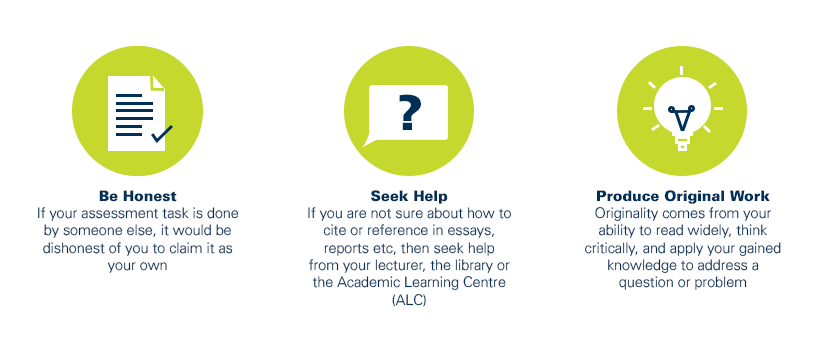
As a CQUniversity student you are expected to act honestly in all aspects of your academic work.
Any assessable work undertaken or submitted for review or assessment must be your own work. Assessable work is any type of work you do to meet the assessment requirements in the unit, including draft work submitted for review and feedback and final work to be assessed.
When you use the ideas, words or data of others in your assessment, you must thoroughly and clearly acknowledge the source of this information by using the correct referencing style for your unit. Using others’ work without proper acknowledgement may be considered a form of intellectual dishonesty.
Participating honestly, respectfully, responsibly, and fairly in your university study ensures the CQUniversity qualification you earn will be valued as a true indication of your individual academic achievement and will continue to receive the respect and recognition it deserves.
As a student, you are responsible for reading and following CQUniversity’s policies, including the Student Academic Integrity Policy and Procedure. This policy sets out CQUniversity’s expectations of you to act with integrity, examples of academic integrity breaches to avoid, the processes used to address alleged breaches of academic integrity, and potential penalties.
What is a breach of academic integrity?
A breach of academic integrity includes but is not limited to plagiarism, self-plagiarism, collusion, cheating, contract cheating, and academic misconduct. The Student Academic Integrity Policy and Procedure defines what these terms mean and gives examples.
Why is academic integrity important?
A breach of academic integrity may result in one or more penalties, including suspension or even expulsion from the University. It can also have negative implications for student visas and future enrolment at CQUniversity or elsewhere. Students who engage in contract cheating also risk being blackmailed by contract cheating services.
Where can I get assistance?
For academic advice and guidance, the Academic Learning Centre (ALC) can support you in becoming confident in completing assessments with integrity and of high standard.
What can you do to act with integrity?