Overview
This unit provides an overview of occupational health and safety as a discipline. Students will trace the history and development of the discipline and develop an appreciation of the impact of the occupational environment on the health and safety of individuals. Students will examine the costs and benefits of strategies to prevent occupational injury and illness and be introduced to the different specialities within the OHS discipline.
Details
Pre-requisites or Co-requisites
There are no requisites for this unit.
Important note: Students enrolled in a subsequent unit who failed their pre-requisite unit, should drop the subsequent unit before the census date or within 10 working days of Fail grade notification. Students who do not drop the unit in this timeframe cannot later drop the unit without academic and financial liability. See details in the Assessment Policy and Procedure (Higher Education Coursework).
Offerings For Term 1 - 2026
Attendance Requirements
All on-campus students are expected to attend scheduled classes - in some units, these classes are identified as a mandatory (pass/fail) component and attendance is compulsory. International students, on a student visa, must maintain a full time study load and meet both attendance and academic progress requirements in each study period (satisfactory attendance for International students is defined as maintaining at least an 80% attendance record).
Recommended Student Time Commitment
Each 6-credit Undergraduate unit at CQUniversity requires an overall time commitment of an average of 12.5 hours of study per week, making a total of 150 hours for the unit.
Class Timetable
Assessment Overview
Assessment Grading
This is a graded unit: your overall grade will be calculated from the marks or grades for each assessment task, based on the relative weightings shown in the table above. You must obtain an overall mark for the unit of at least 50%, or an overall grade of 'pass' in order to pass the unit. If any 'pass/fail' tasks are shown in the table above they must also be completed successfully ('pass' grade). You must also meet any minimum mark requirements specified for a particular assessment task, as detailed in the 'assessment task' section (note that in some instances, the minimum mark for a task may be greater than 50%). Consult the University's Grades and Results Policy for more details of interim results and final grades.
All University policies are available on the CQUniversity Policy site.
You may wish to view these policies:
- Grades and Results Policy
- Assessment Policy and Procedure (Higher Education Coursework)
- Review of Grade Procedure
- Student Academic Integrity Policy and Procedure
- Academic Progression Policy and Procedure
- Student Refund and Credit Balance Policy and Procedure
- Complaints Policy and Procedure
- Information and Communications Technology Acceptable Use Policy and Procedure
This list is not an exhaustive list of all University policies. The full list of University policies are available on the CQUniversity Policy site.
Feedback, Recommendations and Responses
Every unit is reviewed for enhancement each year. At the most recent review, the following staff and student feedback items were identified and recommendations were made.
Feedback from SUTE Teacher Evaluation
Students reported that they enjoyed the delivery and content of the unit.
It is recommended to keep the delivery and content of the unit for the next offering.
Feedback from SUTE Teach Evaluation
Students reported that they found the teaching of the unit enjoyable with the lecture delivery manner being great.
It is recommended to keep the lectures enjoyable with a focus on real world examples and student engagement.
- Trace the history and development of occupational health and safety.
- Identify the essential elements of occupational health and safety.
- Describe the impact of occupational injury and disease on individuals, organisations and society.
- Source risk management and prevention guidance material.
- Construct a reflective mind map related to occupational health and safety topics.
Alignment of Assessment Tasks to Learning Outcomes
| Assessment Tasks | Learning Outcomes | ||||
|---|---|---|---|---|---|
| 1 | 2 | 3 | 4 | 5 | |
| 1 - Online Quiz(zes) - 40% | |||||
| 2 - Written Assessment - 20% | |||||
| 3 - Written Assessment - 40% | |||||
Alignment of Graduate Attributes to Learning Outcomes
| Graduate Attributes | Learning Outcomes | ||||
|---|---|---|---|---|---|
| 1 | 2 | 3 | 4 | 5 | |
| 1 - Communication | |||||
| 2 - Problem Solving | |||||
| 3 - Critical Thinking | |||||
| 4 - Information Literacy | |||||
| 5 - Team Work | |||||
| 6 - Information Technology Competence | |||||
| 7 - Cross Cultural Competence | |||||
| 8 - Ethical practice | |||||
| 9 - Social Innovation | |||||
| 10 - First Nations Knowledges | |||||
| 11 - Aboriginal and Torres Strait Islander Cultures | |||||
Alignment of Assessment Tasks to Graduate Attributes
| Assessment Tasks | Graduate Attributes | ||||||||||
|---|---|---|---|---|---|---|---|---|---|---|---|
| 1 | 2 | 3 | 4 | 5 | 6 | 7 | 8 | 9 | 10 | 11 | |
| 1 - Online Quiz(zes) - 40% | |||||||||||
| 2 - Written Assessment - 20% | |||||||||||
| 3 - Written Assessment - 40% | |||||||||||
Textbooks
There are no required textbooks.
IT Resources
- CQUniversity Student Email
- Internet
- Unit Website (Moodle)
All submissions for this unit must use the referencing style: Harvard (author-date)
For further information, see the Assessment Tasks.
k.klockner@cqu.edu.au
Week 1
Begin Date: 09 Mar 2026Module/Topic
Introduction to the Unit
Chapter
All Chapter Readings are from the OHS Body of Knowledge (BoK):
Chapter 3 - The Generalist OHS Professional
Chapter 4 - Global Concepts - Work
Events and Submissions/Topic
Tutorial and Lecture
Complete Assessment 1 - Quiz 1
Week 2
Begin Date: 16 Mar 2026Module/Topic
The Extent of the OHS Problem
Chapter
Chapter 5 - Global Concepts - Safety
Chapter 6 - Global Concepts - Health
Events and Submissions/Topic
Tutorial and Lecture
Complete Assessment 1 - Quiz 2
Week 3
Begin Date: 23 Mar 2026Module/Topic
Humans
Chapter
Chapter 7.1 - The Human: As a biological system
Chapter 8.1 - The Human: Basic psychological principles
Chapter 8.2 - The Human: Basic principles of social interaction
Events and Submissions/Topic
Tutorial and Lecture
Complete Assessment 1 - Quiz 3
Week 4
Begin Date: 30 Mar 2026Module/Topic
Organisations
Chapter
Chapter 10.1 - The Organisation
Chapter 10.2.1 - Organisational Culture
Events and Submissions/Topic
Tutorial and Lecture
Complete Assessment 1 - Quiz 4
Week 5
Begin Date: 06 Apr 2026Module/Topic
Socio-Political Context
Chapter
Chapter 9.1 - Socio-political context in Australia
Chapter 9.2 - Work Health and Safety Law in Australia
Events and Submissions/Topic
Tutorial and Lecture
OHS Profession Learning Quizzes Due: Week 5 Friday (10 Apr 2026) 11:45 pm AEST
Week 6
Begin Date: 13 Apr 2026Module/Topic
Hazards and Risks
Chapter
Chapter 15 - Hazard as a Concept
Chapter 19 - Psychosocial Hazards
Chapter 31.1. - Risk
Events and Submissions/Topic
Tutorial and Lecture
Vacation Week
Begin Date: 20 Apr 2026Module/Topic
Chapter
Events and Submissions/Topic
Week 7
Begin Date: 27 Apr 2026Module/Topic
Control: Prevention and Intervention
Chapter
Chapter 34.1 - Control: Prevention and Intervention
Chapter 34.2 - User-Centric Safe Design Approach to Control
Chapter 34.3 - Health and Safety in Design
Events and Submissions/Topic
Tutorial and Lecture
Week 8
Begin Date: 04 May 2026Module/Topic
Systems
Chapter
Chapter 12.1 - Systems
Chapter 12.2 - OHS Management Systems
Events and Submissions/Topic
Tutorial and Lecture
Multimedia Mind Map Due: Week 8 Friday (8 May 2026) 11:45 pm AEST
Week 9
Begin Date: 11 May 2026Module/Topic
Models of Causation - Safety
Chapter
Chapter 32 - Models of Causation - Safety
Events and Submissions/Topic
Tutorial and Lecture
Week 10
Begin Date: 18 May 2026Module/Topic
Models of Causation - Health Determinants
Chapter
Chapter 33 - Models of Causation - Health Determinates
Events and Submissions/Topic
Tutorial and Lecture
Week 11
Begin Date: 25 May 2026Module/Topic
Introduction to OHS Practice
Chapter
Chapter 37 - Introduction to 'practice' as a concept
Chapter 38.3 - Ethics and Professional Practice
Chapter 39.1 - The OHS professional as a 'critical consumer' of research
Events and Submissions/Topic
Tutorial and Lecture
Week 12
Begin Date: 01 Jun 2026Module/Topic
Introduction to OHS - Unit Summary
Chapter
Events and Submissions/Topic
Lecture
No tutorial
Written Assessment - OHS Professional Practice Due: Week 12 Friday (5 June 2026) 11:45 pm AEST
Exam Week
Begin Date: 08 Jun 2026Module/Topic
Chapter
Events and Submissions/Topic
Permission to use Generative AI is given for limited purposes, please see the 'Permission to Use AI' sheet on the Moodle site.
Please refer to the CQUniversity guideline on AI Awareness for Academic Integrity as it relates to plagiarism.
1 Online Quiz(zes)
Students come into a unit with one understanding of a subject and - one hopes - leave with another. This assessment is therefore interested in quizzing you about your learning journey and the highlights, 'lightbulb moments' or 'turning points' in your early learning and reading about the OHS profession across the first 4 weeks of term.
In this assessment you will complete 4 online quizzes, 1 per week for the first 4 weeks of term, via the Moodle site. Your weekly assigned readings from the OHS Body of Knowledge (Bok) chapters from week 1 to week 4 will be used for your online quizzes. You are required to reflect and share your 'lightbulb moments' or 'turning points' and learning experiences via the Moodle site with your class cohort.
(1) Week 1 - BoK Chapters 3 and 4 - The Generalist OHS Professional and Global Concept - Work.
Quiz 1 - What was your 'lightbulb moment' or 'turning point' learning from your week 1 readings on the OHS Profession and the modern-day concept of work and how it has changed across time?
(2) Week 2 - BoK Chapters 5 and 6 - Global Concept - Safety and Global Concept - Health.
Quiz 2 - What was your 'lightbulb moment' or 'turning point' learning from your week 2 readings on the history and theory of Safety Science, and physical and psychological health?
(3) Week 3 - Bok Chapters - Humans - Chapters 7.1, 8.1 and 8.2.
Quiz 3 - What was your 'light bulb' or 'turning point' learning from your week 3 readings on humans?
(4) Week 4 - Bok Chapters - Organisations - Chapters 10.1 and 10.2.
Quiz 4 - What was your 'lightbulb moment' or 'turning point' learning from your week 4 readings on organisational complexity, culture and safety performance?
Students are required to complete all 4 quizzes by the end of Week 5, and it is suggested you post your quiz answers weekly across the first 4 weeks of term. Your weekly quiz answer should be no more than 250 words as a maximum.
There is no need to formally submit an assessment item in the Moodle site, your quiz answers will be marked by the unit coordinator directly from the week 1 - 4 quiz answer area on the Moodle site. A marking matrix will be provided in the Moodle site Assessment tile.
Minimum mark or grade: To pass this unit students must obtain a minimum grade of 50% for all assessment tasks.
Level of GenAI use allowed:
Level 1: You must not use AI at any point during the assessment. You must demonstrate your core skills and knowledge.
Week 5 Friday (10 Apr 2026) 11:45 pm AEST
As per study schedule
Week 7 Friday (1 May 2026)
Within 2 weeks of due date
Quiz 1 - Answers the quiz by reflecting on and describing your lightbulb moment or turning point learning from your week 1 readings. (10 marks)
Quiz 2 - Answers the quiz by reflecting on and describing your lightbulb moment or turning point learning from your week 2 readings. (10 marks)
Quiz 3 - Answers the quiz by reflecting on and describing your lightbulb moment or turning point learning from your week 3 readings. (10 marks)
Quiz 4 - Answers the quiz by reflecting on and describing your lightbulb moment or turning point learning from your week 4 readings. (10 marks)
- Trace the history and development of occupational health and safety.
- Identify the essential elements of occupational health and safety.
- Describe the impact of occupational injury and disease on individuals, organisations and society.
- Source risk management and prevention guidance material.
- Communication
- Problem Solving
- Critical Thinking
- Information Technology Competence
- Cross Cultural Competence
- Ethical practice
2 Written Assessment
Multimedia has been widely used in the Occupational Health and Safety (OHS) Profession to win hearts and minds and in this assignment, we are interested in how multimedia can help OHS learning experiences which wield together both entertainment and education.
Furthermore, the history of OHS has been centred on social reform and improving workplace practices to eliminate the impact of occupational injury and disease on individuals, organisations and society. This assignment is therefore about how students, in an introductory professional practice unit, can understand both the social reform history of their profession and if the use of multimedia can influence their OHS professional learning.
You are required to watch six (6) short videos presented in the first two weeks of the teaching term to understand both the social reform history of OHS from its early inception in the USA context and the continuing impact of OHS practices on people. Firstly, watch the 4 videos related to the history of OHS presented in week 1 and then the 2 videos on the continuing impact of OHS practices on people (1 is serious and 1 is intended to be funny but is also serious) presented in the week 2.
Develop a one-page Mind Map (instructions are provided in the Moodle site) with ‘OHS Multimedia’ at the centre of your mind map. Then develop four main branches (Discourse Purpose, Cognitive Structure, Emotional Resonance Structure and Behaviour Impacts) from this centre. Then answer each of the four questions presented below: -
1. Discourse Purpose -Thinking about the key messages in the 6 videos presented to you in the first two weeks of term, how effective do you think this educational multimedia has been in the context of your learning about the social reform history of OHS and the continuing impact of OHS practices on people? Give 5 short sentences which act as the branches for your answer.
2. Cognitive Structure - Thinking about the way the stories were presented to you in the 6 videos in the first two weeks of term, what elements of the multimedia helped you to understand the key messages about the social reform history of OHS and the continuing impact of OHS practices on people? You may want to consider your own personal prior and/or current experience as it relates to OHS issues? Give 5 short sentences which act as the branches for your answer.
3. Emotional Resonance Structure - Thinking about the key messages in the 6 videos presented to you in the first two weeks of term about the social reform history of OHS and the continuing impact of OHS practices on people, what emotions did you have from your interaction with the educational multimedia and how did this help you connect to your own personal journey into OHS education? Give 5 short sentences which act as your branches for your answer.
4. Behaviour Impact - Thinking about the key messages in the 6 videos presented to you in the first two weeks of term about the social reform history of OHS and the continuing impact of OHS practices on people, what behaviours or actions might you intend to apply in the future as a result of acquiring or synthesising the educational multimedia content into your OHS education or work practices. Give 5 short sentences which act as your branches for your answer.
Use the term "OHS Multimedia" as the central heading in your mind map, map branches for each of the 4 topics listed above (Discourse Purpose, Cognitive Structure, Emotional Resonance Structure and Behaviour Impacts) and then add 5 further short sentence branches about your reflections in each of the 4 topic branches.
Examples of Mind Maps and suggestions for using Mind Map software will be provided in Moodle and a detailed marking matrix will also be provided.
Presentation Format:
You are required to prepare a ONE-page Mind Map of your key learnings under each of the 4 main branches referred to above.
Students are remined to follow instructions (no more than 5 short sentences for each of the 4 main branches) and reflect on your own personal experience, not those of any AI non-human being!
Examples of Mind Maps will be given in Moodle, however, please feel free to research Mind Maps and think about how you would like to present your work.
Minimum mark or grade: To pass this unit students must obtain a minimum grade of 50% for all assessment tasks.
Level of GenAI use allowed:
Level 2: You may use Al for planning, idea development, and research. Your final submission should show how you have developed and refined these ideas.
Week 8 Friday (8 May 2026) 11:45 pm AEST
Week 10 Friday (22 May 2026)
Within 2 weeks of due date
When grading this submission specific attention will concentrate on the following: -
1. Discourse Purpose (5 marks);
2. Cognitive Structure (5 marks);
3. Emotional Resonance Structure (5 marks);
4. Behavioural Impact (5 marks).
A detailed marking matrix will be provided via the Moodle site.
- Trace the history and development of occupational health and safety.
- Identify the essential elements of occupational health and safety.
- Describe the impact of occupational injury and disease on individuals, organisations and society.
- Source risk management and prevention guidance material.
- Construct a reflective mind map related to occupational health and safety topics.
- Communication
- Critical Thinking
- Information Literacy
- Information Technology Competence
- Cross Cultural Competence
- Ethical practice
3 Written Assessment
For this assessment you will prepare a written paper that discusses your understanding of both Occupational Health and Safety (OHS) as a 'profession' and the 'role' of the OHS professional in practice.
Your paper should cover the following two main areas which have been covered in this unit: -
1. Discuss both (a) a brief historical development of the profession of OHS demonstrating your understanding of how the profession began in the early industrial (UK) era, and (b) how the OHS profession is understood to now be conducted in complex socio-technical systems, then:
2. Discuss how the essential elements of OHS practice, covered in the foundational chapters of the OHS Body of Knowledge that you have studied this term, informs and assists OHS professionals, in their role to reduce the occupational injury and disease impacts to individuals, organisations and the wider community (society) (i.e. refer to the wide range of chapters and topics covered in this unit via the OHS BoK).
Word or PDF format. Length - 1500 words.
Minimum mark or grade: To pass this unit students must obtain a minimum grade of 50% for all assessment tasks.
Level of GenAI use allowed:
Level 2: You may use Al for planning, idea development, and research. Your final submission should show how you have developed and refined these ideas.
Week 12 Friday (5 June 2026) 11:45 pm AEST
Exam Week Friday (12 June 2026)
Assessment Criteria:
Ability to discuss the early UK historical development of the OHS profession - 10 marks
Ability to discuss a modern-day socio-technical view of the OHS profession - 10 marks
Ability to discuss how the OHS professional uses the OHS Body of Knowledge chapters to inform OHS practice - 10 marks
Organisation and sequence of written expression of the report, accurate grammar and spelling - 5 marks
Correct Use of Harvard Style Referencing - 5 marks
A detailed marking matrix will be available to you via the Moodle site.
- Trace the history and development of occupational health and safety.
- Identify the essential elements of occupational health and safety.
- Describe the impact of occupational injury and disease on individuals, organisations and society.
- Communication
- Problem Solving
- Critical Thinking
- Cross Cultural Competence
- Ethical practice
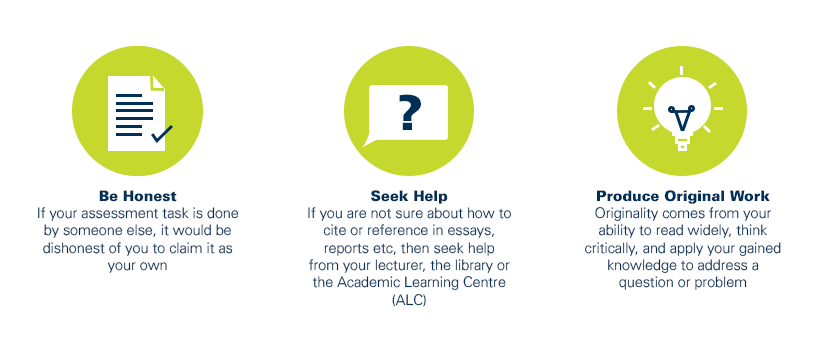
As a CQUniversity student you are expected to act honestly in all aspects of your academic work.
Any assessable work undertaken or submitted for review or assessment must be your own work. Assessable work is any type of work you do to meet the assessment requirements in the unit, including draft work submitted for review and feedback and final work to be assessed.
When you use the ideas, words or data of others in your assessment, you must thoroughly and clearly acknowledge the source of this information by using the correct referencing style for your unit. Using others’ work without proper acknowledgement may be considered a form of intellectual dishonesty.
Participating honestly, respectfully, responsibly, and fairly in your university study ensures the CQUniversity qualification you earn will be valued as a true indication of your individual academic achievement and will continue to receive the respect and recognition it deserves.
As a student, you are responsible for reading and following CQUniversity’s policies, including the Student Academic Integrity Policy and Procedure. This policy sets out CQUniversity’s expectations of you to act with integrity, examples of academic integrity breaches to avoid, the processes used to address alleged breaches of academic integrity, and potential penalties.
What is a breach of academic integrity?
A breach of academic integrity includes but is not limited to plagiarism, self-plagiarism, collusion, cheating, contract cheating, and academic misconduct. The Student Academic Integrity Policy and Procedure defines what these terms mean and gives examples.
Why is academic integrity important?
A breach of academic integrity may result in one or more penalties, including suspension or even expulsion from the University. It can also have negative implications for student visas and future enrolment at CQUniversity or elsewhere. Students who engage in contract cheating also risk being blackmailed by contract cheating services.
Where can I get assistance?
For academic advice and guidance, the Academic Learning Centre (ALC) can support you in becoming confident in completing assessments with integrity and of high standard.
What can you do to act with integrity?