Overview
This capstone unit builds upon the foundation knowledge and practice experience you have built throughout the occupational therapy course. The focus of this unit is to equip you to function as an autonomous, evidence-informed new graduate practitioner in Australia. It is comprised of various modules which will advance your professional skills for independent practice. Each module will be offered in semi-block mode to enable immersion in a specialised area of professional practice. The range of modules will be subject to resources including availability of experts to contribute. Depending on the number and scope of modules offered, there may be some choice in which modules you undertake. However, a compulsory module will focus on the application of telehealth for motivational interviewing, a skill in facilitating client behavioural change applicable across caseloads.
Details
Pre-requisites or Co-requisites
Prerequisites: OCCT13009 (or OCCT13008 or OCCT13005 and OCCT13006) and OCCT14003
Important note: Students enrolled in a subsequent unit who failed their pre-requisite unit, should drop the subsequent unit before the census date or within 10 working days of Fail grade notification. Students who do not drop the unit in this timeframe cannot later drop the unit without academic and financial liability. See details in the Assessment Policy and Procedure (Higher Education Coursework).
Offerings For Term 2 - 2026
Attendance Requirements
All on-campus students are expected to attend scheduled classes - in some units, these classes are identified as a mandatory (pass/fail) component and attendance is compulsory. International students, on a student visa, must maintain a full time study load and meet both attendance and academic progress requirements in each study period (satisfactory attendance for International students is defined as maintaining at least an 80% attendance record).
Recommended Student Time Commitment
Each 6-credit Undergraduate unit at CQUniversity requires an overall time commitment of an average of 12.5 hours of study per week, making a total of 150 hours for the unit.
Class Timetable
Assessment Overview
Assessment Grading
This is a graded unit: your overall grade will be calculated from the marks or grades for each assessment task, based on the relative weightings shown in the table above. You must obtain an overall mark for the unit of at least 50%, or an overall grade of 'pass' in order to pass the unit. If any 'pass/fail' tasks are shown in the table above they must also be completed successfully ('pass' grade). You must also meet any minimum mark requirements specified for a particular assessment task, as detailed in the 'assessment task' section (note that in some instances, the minimum mark for a task may be greater than 50%). Consult the University's Grades and Results Policy for more details of interim results and final grades.
All University policies are available on the CQUniversity Policy site.
You may wish to view these policies:
- Grades and Results Policy
- Assessment Policy and Procedure (Higher Education Coursework)
- Review of Grade Procedure
- Student Academic Integrity Policy and Procedure
- Academic Progression Policy and Procedure
- Student Refund and Credit Balance Policy and Procedure
- Complaints Policy and Procedure
- Information and Communications Technology Acceptable Use Policy and Procedure
This list is not an exhaustive list of all University policies. The full list of University policies are available on the CQUniversity Policy site.
Feedback, Recommendations and Responses
Every unit is reviewed for enhancement each year. At the most recent review, the following staff and student feedback items were identified and recommendations were made.
Feedback from Informal student comments, unit coordinator reflection. SUTE comments.
Students appreciated the inclusion of the Lymphoedema module in this unit, recognising this is a valuable specialist area of OT practice. Furthermore, this was the most popular elective specialty area.
It is recommended that the Lymphoedema module should continue to be included in OCCT14002 when available to support student learning.
Feedback from Informal student comments and unit coordinator reflection.
Students gave positive feedback for the opportunity to elect some of the specialisation modules for OCCT 14002, to preference their areas of interest.
It is recommended that inclusion of elective specialist modules for OCCT14002 is continued in future offerings, with topics determined by demand and availability.
Feedback from Informal student feedback SUTE comments UC reflection.
Students found some quizzes to be onerous compared with the marks allocated and not necessarily contributing to their learning.
It is recommended that the suite of assessments is reviewed for the 2026 offering.
- Appraise and synthesise available evidence in order to formulate best-practice assessment and intervention pathways.
- Formulate and synthesise best available evidence to develop and deliver written or oral presentations that are accessible to a wide range of stakeholders.
- Demonstrate effective motivational interviewing techniques that may facilitate behavioural change to support patient/client/consumer/participant health and wellbeing.
Alignment of Assessment Tasks to Learning Outcomes
| Assessment Tasks | Learning Outcomes | ||
|---|---|---|---|
| 1 | 2 | 3 | |
| 1 - Reflective Practice Assignment - 50% | |||
| 2 - Objective Structured Clinical Examinations (OSCEs) - 50% | |||
Alignment of Graduate Attributes to Learning Outcomes
| Graduate Attributes | Learning Outcomes | ||
|---|---|---|---|
| 1 | 2 | 3 | |
| 1 - Communication | |||
| 2 - Problem Solving | |||
| 3 - Critical Thinking | |||
| 4 - Information Literacy | |||
| 5 - Team Work | |||
| 6 - Information Technology Competence | |||
| 7 - Cross Cultural Competence | |||
| 8 - Ethical practice | |||
| 9 - Social Innovation | |||
| 10 - First Nations Knowledges | |||
| 11 - Aboriginal and Torres Strait Islander Cultures | |||
Textbooks
An occupational therapist's guide to home modifications practice
- 2nd edition (2018 )
- Authors: Desleigh de Jonge, Elizabeth Ainsworth
- Taylor & Francis
- Great Britain
- ISBN: 9781630912185
IT Resources
- CQUniversity Student Email
- Internet
- Unit Website (Moodle)
- Laptop video camera
All submissions for this unit must use the referencing style: American Psychological Association 7th Edition (APA 7th edition)
For further information, see the Assessment Tasks.
desley.simpson@cqu.edu.au
Week 1
Begin Date: 13 Jul 2026Module/Topic
Introduction to the unit and assessment overview
Motivational Interviewing 1
Chapter
Beck, A. K., Baker, A. L., Britton, B., Lum, A., Pohlman, S., Forbes, E., Moore, L., Barnoth, D., Perkes, S. J., Oldmeadow, C., & Carter, G. (2023). Adapted motivational interviewing for brief healthcare consultations: A systematic review and meta-analysis of treatment fidelity in real-world evaluations of behaviour change counselling. British Journal of Health Psychology, No Pagination Specified. doi:10.1111/bjhp.12664
Miller, W. R. (2023). The evolution of motivational interviewing. Behavioural and Cognitive Psychotherapy, No Pagination Specified. https://doi.org/10.1017/S1352465822000431
Kline, E. R., Thibeau, H., Sanders, A. S., English, K., Davis, B. J., Fenley, A. R., & Keshavan, M. S. (2021). Motivational interviewing for loved ones in early psychosis: Development and pilot feasibility trial of a brief psychoeducational intervention for caregivers. Frontiers in Psychiatry, 12, 659568
Events and Submissions/Topic
This will be a compulsory first session to attend on each campus, so that we can all come together to discuss the term ahead, assessment requirements, guest speakers and T2 expectations in OCCT14002.
MI via telehealth modules will be delivered online. Full attendance and interaction with audio and cameras on is expected in real-time as the combination of theory and practice will prepare you for the 50% OSCE.
Week 2
Begin Date: 20 Jul 2026Module/Topic
Motivational Interviewing 2
Chapter
Kenyon, L. K., Krajenka, V. M., Lach, K., VanBeek, H., Williams, B., & Bower Russa, M. (2023). Motivate-to-move: Development of an intervention promoting parental adherence to early power mobility programs. Disability and Rehabilitation: Assistive Technology, 18(2), 185-194. https://doi.org/10.1080/17483107.2020.1841310
Ding, J., Yang, Y., Wu, X., Xiao, B., Ma, L., & Xu, Y. (2023). The telehealth program of occupational therapy among older people: An up-to-date scoping review. Aging Clinical & Experimental Research, 35(1), 23-40. https://doi.org/10.1007/s40520-022-02291-w
Feldhacker, D. R., Jewell, V. D., Jung LeSage, S., Collins, H., Lohman, H., & Russell, M. (2022). Telehealth interventions within the scope of occupational therapy practice: A Systematic review. American Journal of Occupational Therapy, 76(6), 1-10. https://doi.org/10.5014/ajot.2022.049417
Kelli Garber, D. N. P., & Tina Gustin, D. N. P. (2023). Put PEP into telehealth: An etiquette framework for successful encounters. Online Journal of Issues in Nursing, 28(2), 1-10.
Events and Submissions/Topic
Week 3
Begin Date: 27 Jul 2026Module/Topic
Motivational Interviewing simulation practice for OSCE
Chapter
No readings - practical rehearsal of MI skills
Events and Submissions/Topic
Week 4
Begin Date: 03 Aug 2026Module/Topic
Advanced Home Modifications Module 1
Chapter
Specific readings will be chosen by Liz Ainsworth and made available to you on Moodle as term commences.
Two resources for this module will be available to you via your e-reading list on the OCCT14002 Moodle site and via the Library Services. They are:
1. the Ainsworth & De Jonge text
2. Standards Australia, with specific attention to:
- Design for access & mobility
- Adaptable Housing.
Events and Submissions/Topic
This will be delivered online 9am-noon and 1pm-5pm. The session will not be recorded for copyright reasons.
Week 5
Begin Date: 10 Aug 2026Module/Topic
Advanced Home Modifications Module 2
Chapter
Specific readings will be chosen by Liz Ainsworth and made available to you on Moodle as term commences.
Two resources for this module will be available to you via your e-reading list on the OCCT14002 Moodle site and via the Library Services. They are:
1. the Ainsworth & De Jonge text
2. Standards Australia, with specific attention to:
- Design for access & mobility
- Adaptable Housing.
Events and Submissions/Topic
This will be delivered online 9am-noon and 1pm-5pm. The session will not be recorded for copyright reasons.
Week 6
Begin Date: 17 Aug 2026Module/Topic
MI OSCE 50%
Chapter
.
Events and Submissions/Topic
Vacation Week
Begin Date: 24 Aug 2026Module/Topic
Chapter
Events and Submissions/Topic
Week 7
Begin Date: 31 Aug 2026Module/Topic
Lymphoedema 1
Chapter
Please be advised that the guest educator does not require you to read any assigned literature for their modules.
Events and Submissions/Topic
Week 8
Begin Date: 07 Sep 2026Module/Topic
Lymphoedema 2
Chapter
Events and Submissions/Topic
Week 9
Begin Date: 14 Sep 2026Module/Topic
Dementia Module 1
Chapter
Australian Institute of Health & Welfare. (2025). Dementia in Australia Cat. no. DEM 2. Canberra: AIHW. https://www.aihw.gov.au/reports/dementia/dementia-in-aus/contents/about
Occupational Therapy Australia (2025). Capability Framework for occupational therapists working with older people (aged care). https://otaus.com.au/resources/capability-framework-for-occupational-therapists-working-with-older-people-aged-care
Laver, K., et al. (2017). Evidence-based occupational therapy for people with dementia and their families: What clinical practice guidelines tell us and implications for practice. Australian Occupational Therapy Journal, 64(1), 3-10. https://doi.org/https://doi.org/10.1111/1440-1630.12309
Events and Submissions/Topic
Week 10
Begin Date: 21 Sep 2026Module/Topic
Dementia Module 2
Chapter
Fleming, R., Bennett, K. A., & Zeisel, J. (2023). Values and Principles Informing Designs for People Living with Dementia—an Emerging International Consensus. Journal of Aging and Environment, 37(3), 245–254. https://doi.org/10.1080/26892618.2022.2062806
Swaffer, K. (2021). Chapter 1 - Rehabilitation: A human right for everyone. In L.-F. Low & K. Laver (Eds.), Dementia Rehabilitation (pp. 1-13). Academic Press. https://doi.org/https://doi.org/10.1016/B978-0-12-818685-5.00001-5
Events and Submissions/Topic
The assessment schedule will run over Wednesday and Thursday of week 10. The roster will be supplied in week 1 so that you may organise your week 10 commitments around your assessment time.
Week 11
Begin Date: 28 Sep 2026Module/Topic
Paediatric Module 1
Chapter
The following required readings are for both module 1 and module 2 over the two weeks:
Mahler, K., Hample, K., Jones, C., Sensenig, J., Thomasco, P., & Hilton, C. (2022). Impact of an interoception-based program on emotional regulation in autistic children. Occupational Therapy International, 1(e9328967). https://doi.org/10.1155%2F2022%2F9328967
Bonaz, B., Lane, R. D., Oshinsky, M. L., Kenny, P. J., Sinha, R., Mayer, E. A., Critchley, H. D. (2021). Diseases, disorders, and comorbidities of interoception. Trends in Neuroscience, 44(1), 39-51. https://doi.org/10.1016/j.tins.2020.09.009
Lage, C. R., Wright, S., de S. Monteiro, R. G., Aragao, L., Boshoff, K. (2024). Collaborative practice with parents in occupational therapy for children: A scoping review. Australian Occupational Therapy Journal, 71(5), 641-895. https://doi.org/10.1111%2F1440-1630.12974
Events and Submissions/Topic
Week 12
Begin Date: 05 Oct 2026Module/Topic
Paediatric Module 2
Chapter
Events and Submissions/Topic
Exam Week
Begin Date: 12 Oct 2026Module/Topic
Chapter
Events and Submissions/Topic
Vacation/Exam Week
Begin Date: 19 Oct 2026Module/Topic
Chapter
Events and Submissions/Topic
All weekly content in OCCT14002 Specialisation in Occupational Therapy will be offered via a zoom link. Students are required to attend on the scheduled day of lectures as per the handbook (Wednesday) and fully participate for the duration of the online lectures and workshops. Please ensure you have connectivity to enable full audio and camera participation. Students are encouraged to attend via the method that best suits their learning i.e. attendance in the booked classrooms, or via huddle spaces on CQUniversity campuses, or from home. The classes are synchronous and not intended for students to log in and log out at their leisure. Classes are as timetabled in the handbook. The OSCE schedule for Assessment 1 will be released at the commencement of term. Please ensure you organise your commitments well in advance so that your allocated time is reserved. Upon completion of the OSCEs each day, all students who completed their OSCE that day will receive the link to their individual recording. That group of students will then have 48 hours to submit their written analysis and reflection via Moodle. This means that regardless of when your OSCE is scheduled, all students will have an equal amount of time to complete and submit their analysis and reflection.
1 Objective Structured Clinical Examinations (OSCEs)
Motivational Interviewing via Telehealth.

Motivational Interviewing (MI) is a patient interview style designed to promote behavioural changes in our patients/clients/consumers. Facilitating behaviour change to promote health and wellbeing is a therapeutic skill of great benefit to patient outcomes, transcending specific caseloads. Following on from MI lectures, practical sessions and simulated interviews for practice, this assessment requires you to conduct a patient interview in which you demonstrate the principles of motivational interviewing. The interview will be recorded and observed by the examiner in real-time. The interview will be of 20 minutes duration.
Following completion of your interview, you are required to view the recording and complete a rating of your performance using the tool provided, and a written analysis and reflection. Heading prompts are supplied below to support your analysis and reflection.
The method of your motivational interview and thus your assessment will be via a telehealth process. This advances your skills in both motivational interviewing but also in the application of clinical work across technology platforms which may increasingly be part of flexible and accessible patient service offerings. This is assessing graduate-level skills, so it is assumed you already have sound skills in setting up the interview space, developing rapport with the patient, ensuring informed consent and utilising professional verbal and non-verbal communication. In this assessment, your skills in evocation, collaboration, supporting autonomy, directing, empathy and asking open-ended questions are the focus. You are demonstrating your ability to facilitate the patient's ownership of goals and actions. The patient/client/consumer will be a standardised patient played by an actor.
Reflections must be 1800 words (+/- 150 words). This word count excludes your references. The assessment rubric provides guidance for you in how your content and written expression will be assessed. Those students who are able to incorporate and synthesise key content, referencing a wide range of relevant readings, and present it in a concise way are likely to score highly. Your written reflection is your own original work, but you will use a motivational interviewing reflection tool in order to inform a robust analysis of your skills. You will be supplied with the tool throughout your learning experience.
Please submit the following in one Word file: Analysis and reflection - 1800 words and reference list
Refer to the Assessment Tile on OCCT14002's Moodle site for further detail.
The 72-hour grace period applies only to the written submission of Assessment 1, NOT the OSCE process.
Suggested headings to guide your analysis & reflection
Overall summary and discussion of the experience (conducting the MI, watching and listening to your recording)
Overall summary and discussion of the scores and comments on your performance on the MITI with suggested subheadings as follows:
-cultivating change talk
- softening sustain talk
- partnership
- empathy
- techniques used or not e.g. OARS, readiness, looking forward and back, decisional balance, querying extremes, change planning
-MI spirit, MI process and MI traps
What were your strengths in the motivational interview and why?
What did not go as well as hoped for in the motivational interview and why?
Application of and skills with Telehealth
What have been some key learnings from this experience?
What MI traps will you be conscious of to avoid using in future practice?
What skills have you acquired that you can envisage using in future practice?
-in what context can you see yourself using these MI skills?
Final statements
Week 6 Friday (21 Aug 2026) 11:45 pm AEST
Students will be scheduled via zoom across the Wednesday and Thursday of week 6 for their OSCE. OCCT14004 classes will not run in week 6 to accommodate the OSCE schedule.
Week 8 Friday (11 Sept 2026)
MI Performance - Telehealth OSCE (50 marks): MI spirit & core principles 10 marks; Cultivating change talk & softening sustain talk 10 marks; OARS 10 marks; Empathy & therapeutic partnership 10 marks; telehealth professionalism & technical competence 10 marks
Written Reflection (50 marks): Knowledge & understanding of MI principles and clinical application 15 marks; critical evaluation of performance using evidence 15 marks; synthesis & future practice application 10 marks; written communication & academic referencing 10
- Appraise and synthesise available evidence in order to formulate best-practice assessment and intervention pathways.
- Demonstrate effective motivational interviewing techniques that may facilitate behavioural change to support patient/client/consumer/participant health and wellbeing.
2 Reflective Practice Assignment
Assessment Type: Reflective Practice Assignment

Task Description
There are two parts to this assessment:
1) the development of a Knowledge Translation Kit consisting of your infographic/poster and your accompanying podcast or YouTube production and
2) your audio reflection which will articulate your rationale for the chosen Knowledge Translation tools.
You must also submit a bibliography containing all sources consulted in the creation of your products in the Knowledge Translation Kit.
Knowledge Translation tools present evidence in concise, clear, user-friendly formats to enhance the uptake of evidence into clinical practice. Examples of Knowledge Translation tools include clinical practice guidelines, educational resources and patient decision aids. You will choose one of the clinical practice specialisation areas in OCCT14002 not including MI as MI is being assessed by the other assessment task:
- home assessment and modifications
- dementia
- paediatrics
- lymphoedema
Use contemporary, cutting edge literature and knowledge from your chosen area to create a Knowledge Translation kit in that field. Your Knowledge Translation kit will be comprised of two products/tools. Decide what your message is and who your audience will be. The design will differ depending on whether your audience is other OTs, a multidisciplinary team, GPs, the general public, to name a few. The kit will be a synthesis of the evidence, delivered via the best medium chosen by you in a way that disseminates the evidence for optimum understanding and uptake by various stakeholders. You must choose one product/tool from the choices of:
poster/infographic or
clinical practice guideline/protocol
Your companion product will be a choice between the production of:
- a 10-minute podcast suitable for either the free Spotify for Podcasters or the free Podcast Hosting site PodBean (do not go under 9 minutes or exceed 11 minutes)
- a 10-minute audio and video recording suitable for uploading to YouTube (do not go under 9 minutes or exceed 11 minutes.
The aim of your Knowledge Translation tools is to ensure that end users (stakeholders such as other practitioners or clients/consumers) receive best clinical service delivery because of your information. The Knowledge Translation products must be visually appealing, accessible and presented without clinical terminology and jargon. Your products must incorporate what the most contemporary state of science is in your chosen area. As such, your sources will be peer-reviewed journal articles preferably published within the last 5-7 years.
The second part of this assessment is to present your rationale for the chosen knowledge translation tool and how it will have real impact on the relevant stakeholders (other occupational therapy practitioners, educating members of the multidisciplinary team, general practitioners, empowering clients with education and knowledge). This rationale is summarised concisely in a 5-minute audio reflection submitted to your unit coordinator. An MP4 recording uploaded from your smart device works well. A great reflection on the whole process cannot be achieved without having done your solid background research, determining your audience and then careful consideration to the design and execution of both the visual product and your podcast/You Tube.
The due date for this assessment is week 11, by which time you will not have covered all of the final modules. Do not let that sway your decision, as the aim is for you to independently search for the contemporary literature in a clinical area of particular interest to you. You are welcome to use the resources supplied on Moodle within those modules as a starting point. A resource folder will be supplied to you in your Assessment Tile containing links and exemplars for inspiration and ideas.
In addition to the complete Knowledge Translation kit, you will present a bibliography sheet to your assessor providing evidence of all sources used in the development of your kit. The production of a poster/infographic requires skill at a graduate level that you have been developing throughout your introductory and intermediate units. The podcast or You Tube presentation must be a balance of stakeholder-accessible messages and presentation, together with appropriate links or references to the relevant literature. The audience must know that your content is evidence-based, not just based on personal opinion.
Summary - what to upload to Moodle by the due date
· podcast or You Tube link
· MP4 (or similarly accessible format) reflection and rationale
· Bibliography (all sources consulted in the creation of your product)
The 72-hour grace period applies only to Assessment 2
Week 11 Wednesday (30 Sept 2026) 11:55 pm AEST
Exam Week Monday (12 Oct 2026)
synthesis of clinical information 15 marks
clarity & accessibility of clinical message to target audience 10 marks
evidence of research and incorporation into final products 15 marks
visual presentation (infographic or clinical guideline) 20 marks
oral presentation (podcast or You Tube) 20 marks
reflection 20 marks
- Appraise and synthesise available evidence in order to formulate best-practice assessment and intervention pathways.
- Formulate and synthesise best available evidence to develop and deliver written or oral presentations that are accessible to a wide range of stakeholders.
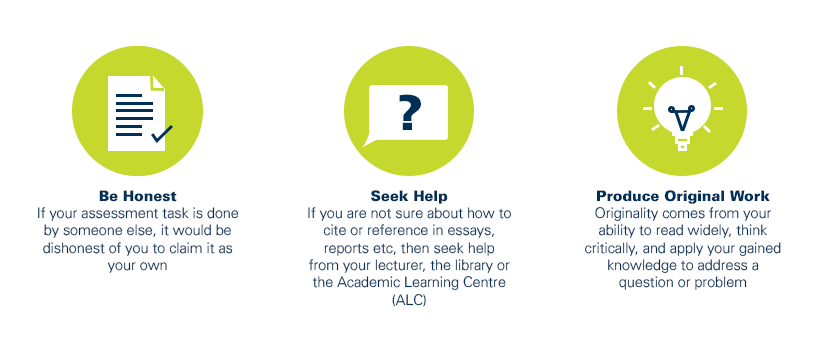
As a CQUniversity student you are expected to act honestly in all aspects of your academic work.
Any assessable work undertaken or submitted for review or assessment must be your own work. Assessable work is any type of work you do to meet the assessment requirements in the unit, including draft work submitted for review and feedback and final work to be assessed.
When you use the ideas, words or data of others in your assessment, you must thoroughly and clearly acknowledge the source of this information by using the correct referencing style for your unit. Using others’ work without proper acknowledgement may be considered a form of intellectual dishonesty.
Participating honestly, respectfully, responsibly, and fairly in your university study ensures the CQUniversity qualification you earn will be valued as a true indication of your individual academic achievement and will continue to receive the respect and recognition it deserves.
As a student, you are responsible for reading and following CQUniversity’s policies, including the Student Academic Integrity Policy and Procedure. This policy sets out CQUniversity’s expectations of you to act with integrity, examples of academic integrity breaches to avoid, the processes used to address alleged breaches of academic integrity, and potential penalties.
What is a breach of academic integrity?
A breach of academic integrity includes but is not limited to plagiarism, self-plagiarism, collusion, cheating, contract cheating, and academic misconduct. The Student Academic Integrity Policy and Procedure defines what these terms mean and gives examples.
Why is academic integrity important?
A breach of academic integrity may result in one or more penalties, including suspension or even expulsion from the University. It can also have negative implications for student visas and future enrolment at CQUniversity or elsewhere. Students who engage in contract cheating also risk being blackmailed by contract cheating services.
Where can I get assistance?
For academic advice and guidance, the Academic Learning Centre (ALC) can support you in becoming confident in completing assessments with integrity and of high standard.
What can you do to act with integrity?