Overview
In this unit, you will explore the role of occupational therapy in assisting clients to engage in work, considering historical perspectives as well as contemporary legislative and professional frameworks that guide practice. Building on your emerging task analysis skills, you will identify enablers and barriers to work participation, for use in creating appropriate client-centred goals. You will engage in simulations using occupational therapy tools to evaluate work environments and clients’ functional capacity for work. Learning activities provide you with the opportunity to develop case management and return to work plans for clients with a range of physical and psychosocial conditions.
Details
Pre-requisites or Co-requisites
The following unit is an essential co-requisite:OCCT13007 Successful completion of the following units as essential pre-requisites:OCCT12002OCCT12004OCCT12006BMSC12007HLTH12028
Important note: Students enrolled in a subsequent unit who failed their pre-requisite unit, should drop the subsequent unit before the census date or within 10 working days of Fail grade notification. Students who do not drop the unit in this timeframe cannot later drop the unit without academic and financial liability. See details in the Assessment Policy and Procedure (Higher Education Coursework).
Offerings For Term 1 - 2026
Attendance Requirements
All on-campus students are expected to attend scheduled classes - in some units, these classes are identified as a mandatory (pass/fail) component and attendance is compulsory. International students, on a student visa, must maintain a full time study load and meet both attendance and academic progress requirements in each study period (satisfactory attendance for International students is defined as maintaining at least an 80% attendance record).
Recommended Student Time Commitment
Each 6-credit Undergraduate unit at CQUniversity requires an overall time commitment of an average of 12.5 hours of study per week, making a total of 150 hours for the unit.
Class Timetable
Assessment Overview
Assessment Grading
This is a graded unit: your overall grade will be calculated from the marks or grades for each assessment task, based on the relative weightings shown in the table above. You must obtain an overall mark for the unit of at least 50%, or an overall grade of 'pass' in order to pass the unit. If any 'pass/fail' tasks are shown in the table above they must also be completed successfully ('pass' grade). You must also meet any minimum mark requirements specified for a particular assessment task, as detailed in the 'assessment task' section (note that in some instances, the minimum mark for a task may be greater than 50%). Consult the University's Grades and Results Policy for more details of interim results and final grades.
All University policies are available on the CQUniversity Policy site.
You may wish to view these policies:
- Grades and Results Policy
- Assessment Policy and Procedure (Higher Education Coursework)
- Review of Grade Procedure
- Student Academic Integrity Policy and Procedure
- Academic Progression Policy and Procedure
- Student Refund and Credit Balance Policy and Procedure
- Complaints Policy and Procedure
- Information and Communications Technology Acceptable Use Policy and Procedure
This list is not an exhaustive list of all University policies. The full list of University policies are available on the CQUniversity Policy site.
Feedback, Recommendations and Responses
Every unit is reviewed for enhancement each year. At the most recent review, the following staff and student feedback items were identified and recommendations were made.
Feedback from SUTE comments, informal student comments and unit coordinator reflection.
Student feedback suggested some challenges with receiving learning materials in a timely manner, impacting on preparation for unit content prior to class.
It is recommended that teaching staff aim to upload learning materials 24 hours prior to class to allow students time to prepare for class content.
Feedback from SUTE comments, informal student comments and unit coordinator reflection.
Student feedback identified some perceived delays in teaching staff responses to online questions through Moodle, especially related to assessment tasks.
It is recommended that teaching staff provide students with clear guidelines around the expected response times for online questions through Moodle. In addition, teaching staff may provide opportunity for assessment related questions in class for further clarification.
Feedback from SUTE comments, informal student comments and unit coordinator reflection.
Student feedback indicated some challenges with understanding the requirements of assessment tasks, especially in relation to the use of AI (assessment task 3) and appropriate completion of templates (assessment task 2&3).
It is recommended that the assessment tasks are further reviewed for clarity, especially assessment task 3 that was adapted in 2025, and this is reflected on Moodle and assessment task sheets. Additionally, consideration may be given for the provision of template examples to support student understanding.
- Describe occupational therapy roles for enabling work participation
- Use selected occupational therapy assessment tools to identify barriers to work participation
- Synthesise information from clients and stakeholders to set appropriate work participation goals
- Develop work-based interventions using contemporary evidence and clearly communicated professional reasoning
- Integrate principles from the legislation and occupational justice when planning inclusive occupational therapy interventions that promote work participation.
OCCT13001 learning outcomes link directly to the following professional standards from the Australian Occupational Therapy Competency Standards (2018):
- Professionalism: Standards 1.2, 1.3, 1.5, 1.6, 1.7, 1.8, 1.9, 1.10, 1.11, 1.13, 1.15, 1.17
- Knowledge and Learning: Standards 2.1, 2.2, 2.3, 2.5, 2.6, 2.8
- Occupational Therapy Process and Practice: Standards 3.1, 3.2, 3.3, 3.4, 3.7, 3.8
- Communication: Standards 4.1, 4.2, 4.4, 4.5, 4.10, 4.11
Alignment of Assessment Tasks to Learning Outcomes
| Assessment Tasks | Learning Outcomes | ||||
|---|---|---|---|---|---|
| 1 | 2 | 3 | 4 | 5 | |
| 1 - Presentation - 25% | |||||
| 2 - Written Assessment - 35% | |||||
| 3 - Case Study - 40% | |||||
Alignment of Graduate Attributes to Learning Outcomes
| Graduate Attributes | Learning Outcomes | ||||
|---|---|---|---|---|---|
| 1 | 2 | 3 | 4 | 5 | |
| 1 - Communication | |||||
| 2 - Problem Solving | |||||
| 3 - Critical Thinking | |||||
| 4 - Information Literacy | |||||
| 5 - Team Work | |||||
| 6 - Information Technology Competence | |||||
| 7 - Cross Cultural Competence | |||||
| 8 - Ethical practice | |||||
| 9 - Social Innovation | |||||
| 10 - First Nations Knowledges | |||||
| 11 - Aboriginal and Torres Strait Islander Cultures | |||||
Alignment of Assessment Tasks to Graduate Attributes
| Assessment Tasks | Graduate Attributes | ||||||||||
|---|---|---|---|---|---|---|---|---|---|---|---|
| 1 | 2 | 3 | 4 | 5 | 6 | 7 | 8 | 9 | 10 | 11 | |
| 1 - Presentation - 25% | |||||||||||
| 2 - Written Assessment - 35% | |||||||||||
| 3 - Case Study - 40% | |||||||||||
Textbooks
Work : Promoting Participation and Productivity Through Occupational Therapy.
- Edition: 1st (2012)
- Authors: Braveman, B., & Page, J.
- F.A. Davis
- Philadelphia Philadelphia , PA , USA
- ISBN: 9780803600164. 9780803629950.
This text is available as an e-book through the library and does not need to be purchased. It is strongly recommended that you download and save the essential readings prior to class so you are not disadvantaged by concurrent user limits to the e-book.
- Binding: eBook
IT Resources
- CQUniversity Student Email
- Internet
- Unit Website (Moodle)
- Microsoft office or similar word processing, spreadsheeting and presentation software
- PowerPoint
- Microsoft CoPilot Generative Artificial Intelligence tool.
All submissions for this unit must use the referencing style: American Psychological Association 7th Edition (APA 7th edition)
For further information, see the Assessment Tasks.
m.oreilly@cqu.edu.au
Week 1 Legislation and models for practice
Begin Date: 09 Mar 2026Module/Topic
- A history of work enablement in occupational therapy
- Legislation important to consider
- Occupational therapy and other models for practice
- Occupational injustice
- A hierarchy for return to work
Chapter
a) Braveman, B., & Page, J.J. (2012). Work: Promoting Participation and Productivity Through Occupational Therapy. F.A. Davis
- history of work pp. 3-6
- work as an area of occupation p. 9
- MOHO pp.40-42, pp. 82-83
- work related OT practice p.117
b) Boyt Schell, B. & Gillen, G. (2018). Willard & Spackman's Occupational Therapy. (13th ed.). Lippincott, Williams and Wilkins.
- Work, pp. 1477-1480
c) Whiteford, G. E., Parnell, T., Ramsden, L., Nott, M., & Vine-Daher, S. (2022). Understanding and advancing occupational justice and social inclusion. In P. Liamputtong
(Ed.), Handbook of Social Inclusion: Research and Practices in Health and Social Sciences (pp. 181–210). Springer International Publishing
d) WHS Act 2011, p. 26
Events and Submissions/Topic
- Use Moodle to select a topic for Assessment 1 group presentation by the end of Week 1.
Class Preparation:
- You will be allocated specific pages of the Week 2 C and D readings to summarise and briefly present to your peers in the Week 2 class.
Week 2 Common conditions
Begin Date: 16 Mar 2026Module/Topic
Chapter
a) Boyt Schell, B. & Gillen, G. (2019). Willard & Spackman's Occupational Therapy. (13th ed.). Wolters Kluwer.
- Risk factors for musculoskeletal injury, pp. 1493-1495
- Rationale for work evaluation, pp. 1486-1487
b) Curtin, M., Egan, M. & Adams, J. (2017).Occupational therapy for people experiencing illness, injury or impairment (7th ed.). Elsevier.
- Reasoning underpinning assessments for people experiencing musculoskeletal conditions pp. 273-278.
c) Evicore Healthcare (2019). Clinical guidelines for medical necessity review of physical and occupational therapy services. (v.1.0.2019). American Medical Association.
d) Se Won Lee, M. (2017). Musculoskeletal Injuries and Conditions : Assessment and Management. Demos Medical.
Events and Submissions/Topic
Wear singlet top, closed in joggers and pants to Tutorial this week- suitable for physical activity.
Week 3 Evaluating workers and their job
Begin Date: 23 Mar 2026Module/Topic
Chapter
a) Braveman, B., & Page, J.J. (2012). Work: Promoting Participation and Productivity Through Occupational Therapy. F.A. Davis
- Functional Capacity Evaluation pp. 263-281
- Chapter 15, Job Demands and Work Task analysis pp. 276, pp. 331-333
b) Curtin, M., Egan, M. & Adams, J. (2017) Occupational therapy for people experiencing illness, injury or impairment. (7th ed.). Elsevier.
- Chapter 15, Dynamic Performance Analysis pp. 207-215
c) Boyt Schell, B. & Gillen, G. (2019). Willard & Spackman's Occupational Therapy. (13th ed.). Wolters Kluwer.
- Job Analysis pp.1486-1487 including Table 52-1
- Gathering data pp.1491-1492 including Table 52-3
- Functional Capacity Evaluation, pp. 1511-1512
d) Gooding, P., & West, A. (2023). Disability assessments and the algorithmic veil: lessons from the abandoned ‘independent assessments’ proposal for the National Disability Insurance Scheme. Australian Journal of Human Rights, 29(1), 44–64.
Events and Submissions/Topic
Wear singlet top, closed in joggers and pants to class this week- suitable for performing functional capacity and manual handling tasks.
Week 4 In class presentations
Begin Date: 30 Mar 2026Module/Topic
- Student group presentations in class.
- See the Presentation Schedule in Moodle.
Chapter
No prescribed readings this week.
Presentation Tips:
Events and Submissions/Topic
Post your Annotated Bibliography handout to the Moodle forum prior to class.
Roles and Legislation presentation Due: Week 4 Thursday (2 Apr 2026) 8:00 am AEST
Week 5 Workplace Evaluation
Begin Date: 06 Apr 2026Module/Topic
- Processes and purposes of workplace evaluation
- Job Analysis practice
Chapter
a) Boyt Schell, B. & Gillen, G. (2019). Willard & Spackman's Occupational Therapy. (13th ed.). Wolters Kluwer.
- Workplace modifications pp.1498-1500
Work hardening and Work conditioning pp.1510-1511
b) Braveman, B., & Page, J.J. (2012). Work: Promoting Participation and Productivity Through Occupational Therapy. F.A. Davis
- Chapter 15, Workplace Based Assessment pp. 326-327
c) Corlett, & McAtamney, L. (2019). RULA - Rapid Upper Limb Assessment. Osmond Ergonomics.
d) Hedge, A. (2000). REBA Employee Assessment Worksheet. ErgoPlus.
Events and Submissions/Topic
Simulated Workplace Evaluation.
- A pre-briefing will occur during the Workshop before the on-campus visits.
- The locations to meet DFM staff are to be advised for each campus.
- Wear your student uniform, closed in shoes, sun protection and a high vis vest.
- Please take a clipboard, pen, blank paper and your own printed copy of the Job Analysis template.
- We will reconvene in the classroom after the Workplace Evaluation.
Week 6 Return to Work plans
Begin Date: 13 Apr 2026Module/Topic
- Choosing appropriate Suitable Duties to faciliate client work resumption
- Case example of grading job tasks to tailor a RTW plan that matches client functional limitations
- Grading of work tasks for the Suitable Duties Plan
Chapter
a) Commonwealth of Australia. (2019). National Return to Work Strategy 2020‑2030. Safe Work Australia.
b) James, C., Southgate, E., Kable, A., Rivett, D. A., Guest, M., & Bohatko-Naismith, J. (2014). Return-to-work coordinators’ resourcefulness and the provision of suitable duties for nurses with injuries. Work, 48(4), 557–566
c) Abedi, M., Aplin, T., Gane, E., & Johnston, V. (2024). "No Man’s Land”: the experiences of persons injured in a road traffic crash wanting to return to work in Queensland, Australia., Disability and Rehabilitation. 46(1), 48–57.
d) Desiron, H., de Rijk, A., Van Hoof, E., & Donceel, P. (2011). Occupational therapy and return to work: a systematic literature review. BMC Public Health, 11(1), 615–628.
Events and Submissions/Topic
Week 7 Applying ergonomics to work settings
Begin Date: 27 Apr 2026Module/Topic
•Ergonomics and anthropometrics
•Body mechanics and leverage principles
•Best practice for workstation assessment and set up
•Common equipment for office workstations
•Practice evaluating and adjusting a simulated client's office workstation
Chapter
a) Braveman, B., & Page, J.J. (2012). Work: Promoting Participation and Productivity Through Occupational Therapy. F.A. Davis
- Preventing Injuries pp. 304–306
- Body mechanics pp. 306-311
- Anthropometrics p. 311
b) Saha, A. K., Jahin, M. A., Rafiquzzaman, M., & Mridha, M. F. (2024). Ergonomic design of computer laboratory furniture: Mismatch analysis utilizing anthropometric data of university students. Heliyon, 10(14), e34063-.
c) Ergonomic guide to computer based workstations
d) Setting up your workstation
e) CQUniversity Workstation Checklist (available on Moodle)
Events and Submissions/Topic
Simulated Office Workstation Evaluation.
• Small groups will visit an on-campus staff member to evaluate their office workstation using the CQUniversity Workstation Checklist.
Assessment 3.
Choose your case scenario in Moodle for Assessment 3, FCA report.
Week 8 Mental health and work
Begin Date: 04 May 2026Module/Topic
•Negative assumptions at workplaces about mental health
•Stigma about mental health at workplaces
•Occupational therapy interventions for Depression/Anxiety at work:
•Definitions of stress
•Symptoms of PTSD
•Chronic stressors
Chapter
a) Braveman, B., & Page, J.J. (2012). Work: Promoting Participation and Productivity Through Occupational Therapy. F.A. Davis
- Negative assumptions pp. 203–205
- Case of Don, pp. 204-205,
b) Parkinson, S., & Brooks, R. (2020). Occupational therapy in an independent vocational service- an example occupational formulation with measurable goals. in S. Parkinson, & R. Brooks. (2020). A guide to the formulation of plans and goals in occupational therapy. Taylor & Francis Group. pp. 169-173
c) Glattacker, M. , Heyduck, K. & Jakob, T. (2018). Yellow flags as predictors of rehabilitation outcome in chronic low back pain. Rehabilitation Psychology, 63 (3), 408-417.
d) Edgelow, M., Harrison, L., Miceli, M., & Cramm, H. (2020). Occupational therapy return to work interventions for persons with trauma and stress-related mental health conditions: A scoping review. Work, 65(4), 821–836.
Events and Submissions/Topic
Week 9 Writing effective FCA reports
Begin Date: 11 May 2026Module/Topic
- Introducing Formal Evaluation tools commonly used for FCA
- Interpreting evaluation tool results for FCA
- Documenting objective observations
- Revisiting occupation based goal writing
- Ethical use of GenAI tools
Chapter
a) Üstün, T.B., Kostanjsek,, N., Chatterji, S., & Rehm, j. (2012), Measuring Health and Disability. Manual for WHO Disability Assessment Schedule. World Health Organisation.
b) Farmer, C., Adedipe, D., Bal, V. H., Chlebowski, C., & Thurm, A. (2020). Concordance of the Vineland Adaptive Behavior Scales, second and third editions. Journal of Intellectual Disability Research, 64(1), 18–26.
c) Gateley, C. A. (2023). Documentation manual for occupational therapy (5th edition). SLACK Incorporated.
- Words for work occupations pp. 60, 65
- Organising objective info pp. 103-109
- Using COAST pp. 71, 73-78
- Example work goals pp. 81-82
Events and Submissions/Topic
Week 10 First Nations lived experiences of work
Begin Date: 18 May 2026Module/Topic
•"Closing the Gap" policies
•Authentic voices of Indigenous and First Nation peoples discussing work
•"Yarnsafe" principles
•Actively participate in a yarning circle to share understanding and stories about work and racism
Chapter
a) Biddle, N., Hunter, B., Yap, M., & Gray, M. (2016). Eight ways we can improve Indigenous employment.
b) Steel, L., & Heritage, B. (2020). Inter-cultural contexts: Exploring the experience of indigenous employees in mainstream Australian organisations. Australian Journal of Psychology, 72(3), 248–256.
c) headspace (2020). Clinical Tips: Working with Aboriginal and Torres Strait Islander Young People.
d) Burke, A. W., Welch, S., Power, T., Lucas, C., & Moles, R. J. (2022). Clinical yarning with Aboriginal and/or Torres Strait Islander peoples—a systematic scoping review of its use and impacts. Systematic Reviews, 11(1), 129–15.
Events and Submissions/Topic
Yarning circle with First Nations Guest speaker to be confirmed. This experience may alternatively involve viewing a recording of past students engaging in a yarning circle.
Week 11 No classes
Begin Date: 25 May 2026Module/Topic
- Post your FCA report Case Study questions to the Moodle forum.
Chapter
No prescribed Readings this week.
Events and Submissions/Topic
No class this week due to Bundaberg Show public holiday.
9am-10am The unit coordinator will hold an optional drop in Q & A session for your FCA report via Zoom.
Week 12 Medicolegal report writing
Begin Date: 01 Jun 2026Module/Topic
- Differences between assumed facts, facts and opinion
- Medicolegal language for report writing and common pitfalls
- Roles of expert witnesses
Chapter
a) Arnold, S., Mackenzie, L., Millington, M. and James, C. (2019), Occupational therapy medicolegal assessment of domestic assistance requirements: Focus group perspectives. Aust Occup Ther J, 66: 239-248
b) Uniform Civil Procedure (Expert
Evidence) Amendment Rule 2022 (Qld.) (Austl.)
c) Harry, J. (2021). How to write a medico-legal report. MDA National
Events and Submissions/Topic
Prescribed text: The library has been able to supply the prescribed text Braveman & Page (2012) as an EBook. There is a concurrent limit of 6 users on this resource. You are strongly advised to download the relevant pages (you are permitted to save or print up to 100 pages) of the eBook prior to class so you can access them easily for in-class learning activities.
Updated e-Readings: All e-Readings for OCCT13001 have been reviewed and updated especially for full text relevant recent sources easily accessible through the CQUniversity Library. Some older eReadings have been retained because alternative sources were not available. Not all e-Readings have unlimited user access. You are strongly advised to download the relevant pages prior to class so you can access them easily for in-class learning activities.
Campus support: This year it is planned to have on campus teaching support at both Rockhamption and Bundaberg.
Inherent requirements: You should be familiar with the CB84 Inherent Requirements listed in the "Getting Started" tab of the Handbook. These are essential capabilities, knowledge, behaviours and skills that are needed to complete this unit, especially as it contains several simulation experiences. While you are a health professional in training who is learning new knowledge and skills, there are required personal qualities that underpin your practice. These are assessed in OCCT13001 Learning Outcomes 3 and 4. You should be able to demonstrate Ethical Behaviour, Behavioural Stability, Communication Skills, Relational Skills, Reflective Skills, and Interpersonal Engagement in class, when communicating with staff and peers and for OCCT13001 simulation experiences.
WIL Hours: There are 14 hours of WIL embedded within this unit. WIL hours are achievable via a range of simulated clinical learning experiences: attendance at two planned on-campus worksite visits listed in the class schedule for Week 5 and Week 7 (up to 2 hours for each visit); completing your A2 Suitable Duties Plan and the A3 FCA report (up to 10 hours in total).
Prioritise attendance at all in-class opportunities. Teaching staff from OCCT13001 will not monitor or sign-off your WIL hours or attendance. It is your responsibility to keep honest and accurate records of your WIL hours.
Student workload: As for all 6 credit point units, you are expected to devote up to 150 hours of study to this unit. Assessment tasks and weekly readings have been reviewed to ensure your study committment fits within this timeframe. The timing of unit assessment tasks has been designed to reduce the burden of lengthy end of term assignments, particularly the due dates for your A2 Suitable Duties Plan and the A3 FCA report. Where possible, teaching staff have aimed to schedule different assessment due dates for core CB84 units by collaborating with your other unit co-ordinators for the term.
Assessment file version submissions: It is your responsibility to check you upload the correct and most up to date version of your files for marking. If you submit the wrong file/s to Moodle or omit a required item and advise staff, late penalties may be applied up to the date and time of your notification. If you submit the wrong file/s and do not notify staff, the file/s submitted to Moodle will be marked. In particular, if your Presentation handout is not uploaded to the Moodle Forum for sharing prior to the due date, your handout may not receive any marks for the associated marking criterion.
1 Presentation
Overview and Purpose:
In a small group, you will prepare and deliver a professional presentation about legislation influencing occupational therapy and multidisciplinary team roles in work enablement. You will apply principles from legislation and occupational justice pertinent to selected contexts for enabling work participation practice as an occupational therapist. You will also gain knowledge from engaging with peer presentations. It is expected you will demonstrate effective and professional presentation skills, building on the skills you have already used in Year 1 & 2.
This assessment reflects common oral presentation formats for many professional conferences, in-service and training opportunities and contains the following parts:
Group Part A:
A 15-minute oral presentation using PowerPoint for a specific legislative and population context. You are provided with choices for the legislation and population context in Moodle to use for your group presentation. You will design a specific case scenario and apply an occupational therapy practice model to help you contextualise your explanations for the work enabling roles of the occupational therapist and team. You will use appropriate evidence to prepare the content of your presentation. As part of the professional presentation format, your group will facilitate a class discussion time for your student peers at the end of your oral presentation.
Individual Part B:
An individually prepared Annotated Bibliography of two key sources that you will provide to your peers as a handout in digital form. A verbal explanation of one source per student from your handout. Your personal professional verbal and nonverbal communication will be evaluated during the presentation.
Preparation for your Assessment task:
- You will be allocated to a group before term starts.
- Your group will complete a Moodle Choice activity listing the campus-based topic options for the population context and legislation that you will discuss in your presentation.
- Groups will select and save one Moodle Choice topic for your campus of enrolment, then that choice will be unavailable to other groups.
- In your group, you will independently explore professional literature and relevant legislation to identify factors that influence practice as an occupational therapist in your chosen legislative and population context.
- You will use professionally prepared PowerPoint slides to support your oral presentation and class discussion time.
- Prior to the class seminar, you will post in the OCCT13001 Moodle forum to share your individually prepared Annotated Bibliography with your peers.
- You will submit your group PowerPoint slides, Presentation Script and individual Annotated Bibliography to Moodle for marking before the due date.
Filenames for Submission
Each group must submit one copy of the PowerPoint, one copy of the Presentation Script and all individual student Annotated Bibliographies to Moodle. Name your Moodle file submissions as follows to expedite marking:
- Annotated Bibliography: FirstnameLastname_AB e.g. SueJones_AB
- PowerPoint slides: Campusgroupnumber_PP e.g. BDG1_PP
- Presentation script: Campusgroupnumber_PS e.g. BDG1_PS
Schedule of Presentation Topics:
The schedule for the presentation order is fixed by your group choice of legislative and population context. For example, the Bundaberg group that selects Moodle Choice 3 will present 3rd and so on. The draft and final Presentation Schedule will be available on Moodle.
See the task instruction document on Moodle for more details.
Use of GenAI for this task:
AI Level 2 (AI Planning): You may use AI for planning, idea development, and research. Your final submission should show how you have developed and refined these ideas.
Word count:
Research has found that on average we can clearly present up to 150 spoken words per minute of presentation time, less if there are a lot of complex words of more than three syllables.
- Your group's prepared Presentation Script, including individual annotations, should therefore be approximately 2250-2500 words.
- Ensure that you orally present your information as concisely as possible while covering all key elements required. Allocate your time wisely according to the marks available for each element.
- It is suggested that presentation of each key professional literature source should take a maximum of 2 minutes or it will not fit into the total group presentation time available.
Week 4 Thursday (2 Apr 2026) 8:00 am AEST
Note: the 72 hour grace period does not apply to this assessment.
Week 6 Friday (17 Apr 2026)
Marked assignments and rubrics will be returned via Moodle
See the A1 Marking Rubric for marks available for each section of the assignment. Your total mark out of 100 will be weighted at 25% of your OCCT13001 grade.
Group marks:
- Develops a case scenario that relates to key interventions for the work enabling context. (10 marks)
- Describes the duties performed by an occupational therapist in the work enabling context (10 marks)
- Selects and applies an appropriate occupational therapy practice model and explains a payment source. (10 marks)
- Describes the contribution of key team members to client care. (10 marks)
- Applies principles from occupational justice and contextually relevant legislation to concepts for client advocacy (10 marks)
- Facilitates peer engagement in class discussion time that relates to presented content. (10 marks)
- Uses multimedia and organisation of content to maximise available time within set limits. (10 marks)
Individual Marks:
- Explains why the key professional source was relevant to the case study and topic. (10 marks)
- Provides peers with an APA7 style Annotated Bibliography handout for 2 relevant sources. (10 marks)
- Uses professional verbal and nonverbal communication. (use of eye contact, body language, speech volume, pace, pronunciation & enthusiasm). (10 marks)
- Describe occupational therapy roles for enabling work participation
- Integrate principles from the legislation and occupational justice when planning inclusive occupational therapy interventions that promote work participation.
- Communication
- Problem Solving
- Critical Thinking
- Information Literacy
- Team Work
- Information Technology Competence
- Cross Cultural Competence
- Ethical practice
- Social Innovation
2 Written Assessment
Overview and Purpose:
As occupational therapists, we can give advice regarding a client’s occupational performance needs for work. In this assignment you will address the needs of a client at Level 1 of the Return-to-Work Hierarchy who is likely to return to the same job with the same employer. You will highlight principles related to section 228 of the Workers’ Compensation and Rehabilitation Act 2003 when discussing the obligations of the client’s employer. You will generate a realistic graded “Suitable Duties “plan for the worker observed during the in-class worksite evaluation.
Scenario:
You are the occupational therapist who has received the WorkCover referral for the university maintenance employee who has had a Grade 2 lower back strain from lifting heavy objects at work. The worker is keen to return to work in some capacity, however the supervisor has previously mentioned that he wants the worker to be fully fit before resuming work. You will need to explain the benefits of the “Suitable Duties” program and selected key points from the “Guideline for standard for rehabilitation” (2nd ed., 2023) to the supervisor so he agrees to participate. This will enable you to facilitate the worker’s return to work as a key part of an effective vocational rehabilitation program.
Your task:
You will document information in the "Job Analysis Template" after the workplace evaluation of one of the worker’s colleagues, to consider how to grade the usual work duties. You will interpret information from the workplace evaluation to help determine essential functional capacities for all usual work duties and to guide your recommended interventions. You will have access to additional information about the client from a written referral, the Oswestry Disability Index and Work Capacity Capabilities Form for the worker's job type.
Synthesising the information that you gather, you will develop tables for each of the four MOHO components: volition, habituation, performance capacity and the environment in the “Intervention planning template”. You will identify barriers and set goals for the client before developing an evidence-based range of work enabling interventions. Use in-text citations of references containing best practice evidence to support all your recommended interventions.
One of your intervention strategies will be to create a graded "Suitable Duties Plan" for your client using an industry standard template. You will discuss how this intervention will be negotiated with the worker, the supervisor and WorkCover Rehabilitation Counsellor and how it addresses principles from the “Guidelines for standard for rehabilitation”. You will provide a clearly documented schedule of hours and duties to gradually upgrade to all usual work duties over the 4-week period of the Suitable Duties Plan.
Using the Word document settings that are contained within the templates, submit the following files to Moodle:
- Job Analysis Template (available on Moodle, 600 words ±10%)
- Intervention Planning Template (available on Moodle, 2600 words ±10%)
- WorkCover Queensland Suitable Duties template (available on Moodle, 150 words ±10%)
Filenames for submission:
Name your Moodle file submissions as follows to expedite marking:
- Job Analysis Template: FirstnameLastname_JA e.g. SueJones_JA
- Intervention Planning Template: FirstnameLastname_Ix e.g. SueJones_Ix
- WorkCover Queensland Suitable Duties Template: FirstnameLastname_SD e.g. SueJones_SD
Use of professional language and medicolegal writing style is expected for this report: see the task sheet on Moodle for more details.
Use of GenAI for this task:
AI Level 2 (AI Planning): You may use AI for planning, idea development, and research. Your final submission should show how you have developed and refined these ideas.
Word count:
Overall, we expect this assignment will take 3350 words ±10% to complete as per the suggested word counts for each document. In real world practice, the time taken to prepare long wordy reports may not be fully funded. Efficient production of written reports to meet industry standards is a critical professional skill to master.
Week 8 Thursday (7 May 2026) 11:45 pm AEST
Week 10 Friday (22 May 2026)
Marked assignments and rubrics will be returned via Moodle
Marking Criteria:
See the A2 Marking Rubric for marks available for each section of the assignment. Your total marks out of 100 will be weighted at 35% of your OCCT13001 grade.
- Documents observations from the simulated worksite visit in the Job Analysis template. (10 marks)
- Potential MOHO component barriers to desired outcomes are identified. (10 marks)
- Work related goals for each barrier are presented. (10 marks)
- Interventions to address volition and habituation goals are discussed. (2 X 5=10 marks)
- Interventions to address performance capacity and environmental goals are discussed. (2 X 5=10 marks)
- Outlines how the Suitable Duties plan will be negotiated with worker, supervisor, doctor, and insurer. (10 marks)
- Presents a graded schedule of work hours and restrictions for a 4-week Suitable Duties plan. (10 marks)
- Uses templates to record information about the client’s capabilities for work. (10 marks)
- Word choices, language structure and style used is chosen to communicate intended meaning. (10 marks)
- Evidence to justify best practice is cited and referenced in APA 7 style. (10 marks)
- Use selected occupational therapy assessment tools to identify barriers to work participation
- Synthesise information from clients and stakeholders to set appropriate work participation goals
- Develop work-based interventions using contemporary evidence and clearly communicated professional reasoning
- Integrate principles from the legislation and occupational justice when planning inclusive occupational therapy interventions that promote work participation.
- Communication
- Problem Solving
- Critical Thinking
- Information Literacy
- Information Technology Competence
- Cross Cultural Competence
- Ethical practice
- Social Innovation
3 Case Study
Overview and Purpose:
This assessment requires you to apply the work enabling skills and knowledge you have developed throughout this unit of study. Using a Generative AI tool, you will produce and edit a realistic Functional Capacity Assessment (FCA) report for a case study client with a disability who needs support to find and/or maintain a job.
Scenario:
You are the occupational therapist who has received a referral for a client from the NDIS support coordinator. You have been asked to develop a list of necessary supports to facilitate a work enabling plan for a participant in line with their current functional capacities. You know that producing a complex FCA report takes many hours, and you wish to use GenAI to streamline how long it takes to do your work. Your clinical supervisor has already created an FCA report template and a simple cover letter format using GenAI.
You realise that GenAI can produce “hallucinations” or off target responses. You are prepared to update and edit the GenAI responses until the FCA report is of similar accuracy and quality that you would produce without GenAI. You reason that this will be a more efficient use of time.
Instructions
Creating the best prompts to the GenAI tool will require you to select from one of the case study choices in Moodle as your referred client. You will upload the report template and deidentified details from your chosen case study history to your selected GenAI tool. You will develop appropriate prompts and engineer pathways for the GenAI tool in order to ethically and confidentially develop basic content for all of the FCA report headings and section requirements.
After your GenAI tool has produced a response, you will use the “Track Changes” feature in Microsoft Word to analyse the report content. You will highlight parts of the report that require editing and put a brief comment about what needs to be improved and why. You will then revise your prompts and pathways so that the GenAI output is a more appropriate FCA report and provide manual edits to the updated report where needed for accuracy and clarity. You will insert the client identifying details and any other confidential information after your final GenAI response has been generated to ensure ethical practice and confidentiality is maintained.
You will submit all GenAI prompts and responses including your “Track Changes” analysis comments. You will also submit the final edited version of the FCA report, which will be evaluated using the marking criteria.
Filenames for submission:
Name your Moodle file submissions as follows to expedite marking:
- Gen AI prompts: FirstnameLastname_GP e.g. SueJones_GP
- Gen AI responses and Track changes comments: FirstnameLastname_Ix e.g. SueJones_GR
- Final FCA report: FirstnameLastname_FCA e.g. SueJones_FCA
GenAI tools permitted for this assessment:
- Level 3 (AI Collaboration): You may use AI to assist with specific tasks such as drafting text, refining and evaluating your work. You must critically evaluate and modify any AI-generated content you use.
- You are required to use the University subscription to Microsoft Copilot to complete this task.
- You may use editing and citation tools such as Grammarly and Perplexity to assist you to improve your work.
Word Count:
Please note that the word count for each section of the FCA report in the Task Instruction sheet on Moodle is a suggested maximum. Your GenAI tool may easily produce content well below the maximum word count. It is part of your professional learning to use your critical thinking skills at an intermediate level to analyse the GenAI response as part of your task performance. You will identify any gaps in the report content to decide whether the detail and number of words produced for each section is sufficient to meet the marking criteria.
Please see Moodle for further details.
Week 12 Thursday (4 June 2026) 11:45 pm AEST
Vacation/Exam Week Friday (19 June 2026)
Marked assignments and rubrics will be returned via Moodle.
Marking Criteria:
The focus of marking for this task is the quality of the final FCA report, as expected in professional practice. The final FCA report represents the outcome of your professional and ethical use of GenAI to demonstrate capacity to meet the A3 task Learning Outcomes. Therefore most marks will be directed towards the final output.
See the A3 Marking Rubric for marks available for each section of the assignment. Your total marks out of 80 will be divided by 2 to calculate your Assessment 3 grade.
- Transfers client information to the template and provides a “Reason for the Report.” (2.5 marks)
- Provides professional statements for NDIS Participant goals (5 marks)
- Includes relevant background and service information for the Participant (5 marks)
- Functional capacities for client’s Activities of Daily Living are discussed (5 marks)
- Functional capacities for client’s Instrumental Activities of Daily Living are discussed (5 marks)
- Functional capacities for client’s cognitive performance are discussed (5 marks)
- Functional capacities for client’s social emotional skills are discussed (5 marks)
- Assessment names and medical history are stated correctly and professionally. (2.5 marks)
- Assessment results are interpreted and linked to relevant domains of participant functional performance (2 X 10 = 20 marks)
- Recommendations for work enabling supports required are presented in the template table (10 marks)
- Statement of need explains why funding is reasonable and necessary (2.5 marks)
- Writes a cover email to communicate with funding approvers. (5 marks)
- Cites evaluation tool authors and high quality sources to substantiate recommended supports using APA7 style. (5 marks)
- Appropriately edits and appraises the GenAI output (2.5 marks)
- Describe occupational therapy roles for enabling work participation
- Use selected occupational therapy assessment tools to identify barriers to work participation
- Synthesise information from clients and stakeholders to set appropriate work participation goals
- Develop work-based interventions using contemporary evidence and clearly communicated professional reasoning
- Problem Solving
- Critical Thinking
- Information Literacy
- Cross Cultural Competence
- Ethical practice
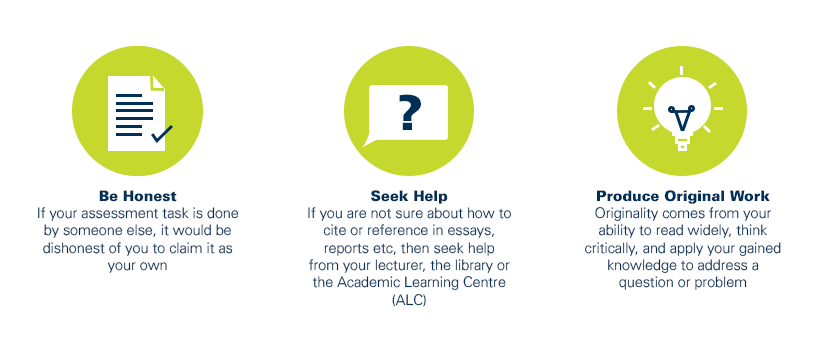
As a CQUniversity student you are expected to act honestly in all aspects of your academic work.
Any assessable work undertaken or submitted for review or assessment must be your own work. Assessable work is any type of work you do to meet the assessment requirements in the unit, including draft work submitted for review and feedback and final work to be assessed.
When you use the ideas, words or data of others in your assessment, you must thoroughly and clearly acknowledge the source of this information by using the correct referencing style for your unit. Using others’ work without proper acknowledgement may be considered a form of intellectual dishonesty.
Participating honestly, respectfully, responsibly, and fairly in your university study ensures the CQUniversity qualification you earn will be valued as a true indication of your individual academic achievement and will continue to receive the respect and recognition it deserves.
As a student, you are responsible for reading and following CQUniversity’s policies, including the Student Academic Integrity Policy and Procedure. This policy sets out CQUniversity’s expectations of you to act with integrity, examples of academic integrity breaches to avoid, the processes used to address alleged breaches of academic integrity, and potential penalties.
What is a breach of academic integrity?
A breach of academic integrity includes but is not limited to plagiarism, self-plagiarism, collusion, cheating, contract cheating, and academic misconduct. The Student Academic Integrity Policy and Procedure defines what these terms mean and gives examples.
Why is academic integrity important?
A breach of academic integrity may result in one or more penalties, including suspension or even expulsion from the University. It can also have negative implications for student visas and future enrolment at CQUniversity or elsewhere. Students who engage in contract cheating also risk being blackmailed by contract cheating services.
Where can I get assistance?
For academic advice and guidance, the Academic Learning Centre (ALC) can support you in becoming confident in completing assessments with integrity and of high standard.
What can you do to act with integrity?