Overview
This unit continues the analysis of the lifespan through an occupational lens. You will build on foundation knowledge of lifespan development to understand the occupational roles of adults from young adulthood to end of life. Selected issues impacting upon occupational performance during these periods of development will be explored using an overarching health framework (International Classification of Functioning, Disability and Health, also known as ICF) and occupational therapy practice models. The potential contribution of the occupational therapist during each phase will be highlighted, and the role of the occupational therapist in the facilitation of occupationally-inclusive interventions will be explored. You will be introduced to professional reasoning and evidence-based practice in the context of working with adults and older people. You will also attend a series of fieldwork sessions, working with older people in the community, which will enhance learning and provide the opportunity to practice application of the occupational therapy process in a real-world situation.
Details
Pre-requisites or Co-requisites
Pre-requisites: OCCT12003 OCCT12006
Important note: Students enrolled in a subsequent unit who failed their pre-requisite unit, should drop the subsequent unit before the census date or within 10 working days of Fail grade notification. Students who do not drop the unit in this timeframe cannot later drop the unit without academic and financial liability. See details in the Assessment Policy and Procedure (Higher Education Coursework).
Offerings For Term 2 - 2026
Attendance Requirements
All on-campus students are expected to attend scheduled classes - in some units, these classes are identified as a mandatory (pass/fail) component and attendance is compulsory. International students, on a student visa, must maintain a full time study load and meet both attendance and academic progress requirements in each study period (satisfactory attendance for International students is defined as maintaining at least an 80% attendance record).
Recommended Student Time Commitment
Each 6-credit Undergraduate unit at CQUniversity requires an overall time commitment of an average of 12.5 hours of study per week, making a total of 150 hours for the unit.
Class Timetable
Assessment Overview
Assessment Grading
This is a graded unit: your overall grade will be calculated from the marks or grades for each assessment task, based on the relative weightings shown in the table above. You must obtain an overall mark for the unit of at least 50%, or an overall grade of 'pass' in order to pass the unit. If any 'pass/fail' tasks are shown in the table above they must also be completed successfully ('pass' grade). You must also meet any minimum mark requirements specified for a particular assessment task, as detailed in the 'assessment task' section (note that in some instances, the minimum mark for a task may be greater than 50%). Consult the University's Grades and Results Policy for more details of interim results and final grades.
All University policies are available on the CQUniversity Policy site.
You may wish to view these policies:
- Grades and Results Policy
- Assessment Policy and Procedure (Higher Education Coursework)
- Review of Grade Procedure
- Student Academic Integrity Policy and Procedure
- Academic Progression Policy and Procedure
- Student Refund and Credit Balance Policy and Procedure
- Complaints Policy and Procedure
- Information and Communications Technology Acceptable Use Policy and Procedure
This list is not an exhaustive list of all University policies. The full list of University policies are available on the CQUniversity Policy site.
Feedback, Recommendations and Responses
Every unit is reviewed for enhancement each year. At the most recent review, the following staff and student feedback items were identified and recommendations were made.
Feedback from SUTE comments Teaching team observations
Poor on-site classroom audio hindered the learning experience.
It is recommended that the AV set up in the classrooms be monitored and improved where possible.
Feedback from SUTE comments Informal feedback
Students appreciated the availability of online lectures for some content.
It is recommended that further online lectures be added to the class schedule where practicable.
Feedback from SUTE feedback
There was some lack of clarity about assessment requirements.
It is recommended that all assessment materials be reviewed and that all information sources (e.g., Moodle, Unit Profile) be checked for consistency prior to the 2026 offering.
Feedback from SUTE comments Informal student feedback
The guest lecturers and special interest topics were well regarded.
It is recommended that the guest speaker format be continued and added to when possible.
- Analyse the cultural and developmental expectations and relevant environmental supports and barriers related to occupational performance from adolescence and early adulthood to older age and end of life.
- Analyse the implications for selected impairments commonly seen by occupational therapists in terms of activity limitations and participation in society.
- Select and apply appropriate assessment tools to understand the impact of impairment on occupational performance and identify how the occupational therapist might intervene.
- Set client-centred goals based on information obtained from clients and their significant others.
- Plan an evidence-based intervention with appropriate clinical justification for a person from adolescence through to older age.
- Describe the occupational therapist's role in promoting occupationally inclusive opportunities for people across the lifespan.
Alignment of Assessment Tasks to Learning Outcomes
| Assessment Tasks | Learning Outcomes | |||||
|---|---|---|---|---|---|---|
| 1 | 2 | 3 | 4 | 5 | 6 | |
| 1 - Research Assignment - 25% | ||||||
| 2 - Oral Examination - 35% | ||||||
| 3 - Portfolio - 40% | ||||||
Alignment of Graduate Attributes to Learning Outcomes
| Graduate Attributes | Learning Outcomes | |||||
|---|---|---|---|---|---|---|
| 1 | 2 | 3 | 4 | 5 | 6 | |
| 1 - Communication | ||||||
| 2 - Problem Solving | ||||||
| 3 - Critical Thinking | ||||||
| 4 - Information Literacy | ||||||
| 5 - Team Work | ||||||
| 6 - Information Technology Competence | ||||||
| 7 - Cross Cultural Competence | ||||||
| 8 - Ethical practice | ||||||
| 9 - Social Innovation | ||||||
| 10 - First Nations Knowledges | ||||||
| 11 - Aboriginal and Torres Strait Islander Cultures | ||||||
Textbooks
Human occupation: Contemporary concepts and lifespan perspectives
- (2025)
- Authors: T. Brown, S. Isbel, L. Gustaffson, S. Gutman, D. Powers, B. Collings, & T. Barlott (Eds.)
- Routledge
- Australia
- ISBN: 9781032214566
Life Span Human Development
- Edition: 4th (2022)
- Authors: Sieglman, C.K., de George, L., Cunial, K., Kohler, M., Ballam, N., & Rider, E.A.
- Cengage
- Australia
- ISBN: 9780170452816
- Binding: Paperback
IT Resources
- CQUniversity Student Email
- Internet
- Unit Website (Moodle)
- PowerPoint
All submissions for this unit must use the referencing style: American Psychological Association 7th Edition (APA 7th edition)
For further information, see the Assessment Tasks.
k.smith7@cqu.edu.au
Week 1
Begin Date: 13 Jul 2026Module/Topic
Lecture (Tuesday 9.00am-11.00am):
Introduction to OCCT12004
Introduction to Developmental Science
Practical Session
(Wednesday 9.00am-1.00pm):
Introduction to Work-Integrated Learning (WIL)
Tutorial
(Wednesday 2.00-5.00pm):
Considering occupational performance across the lifespan
Chapter
Sigelman, C.K., de George, L., Cunial, K., Ballam, N. & Rider, E.A. (2022). Life span human development: Australia and New Zealand (4th ed.). Cengage.
Chapter 1: pp. 3-20.
Chapter 2: pp. 47-85.
Events and Submissions/Topic
WIL group allocations to be finalised by 5.00pm Thursday Week 1.
Students will allocate themselves to either Group A or Group B
Week 2
Begin Date: 20 Jul 2026Module/Topic
Lecture (Tuesday ): 9am -11am
Physical Development Across the Life Span
Practical (Wednesday): 9am-1pm
Preparation for WIL
Tutorial - Wednesday 2pm - 5pm
Occupational Performance in Adolescence
Chapter
Sigelman, C.K., de George, L., Cunial, K., Ballam, N. & Rider, E.A. (2022). Life span human development: Australia and New Zealand (4th ed.). Cengage.
Chapter 4: pp. 149-153 & 177-197.
Rogers, S.L. (2023). Human occupations of adolescence and youth. In T. Brown, S. Isbel, L. Gustafsson, S. Gutman, D. Powers Dirette, B. Collins, & T. Barlott (Eds.), Human occupation: Contemporary concepts and lifespan perspectives (pp.511-535). Routledge. (Ch.27)
Events and Submissions/Topic
Students must ensure all mandatory requirements are up to date on SONIA by the end of week 2.
IPE group allocations to be finalised by Friday Week 2 by Unit Co-ordinator.
Week 3
Begin Date: 27 Jul 2026Module/Topic
Lecture (Tuesday): 9am - 11am
Cognitive Development Across the Life Span
Practical (Wednesday):
9.00am-10.00am: Onsite induction: Catholic Care CQ
10.30am-1.00pm: Preparation for WIL (on campus)
Tutorial - Wednesday 2pm - 5pm
Chapter
Sigelman, C.K., de George, L., Cunial, K., Ballam, N. & Rider, E.A. (2022). Life span human development: Australia and New Zealand (4th ed.). Cengage.
Chapter 5: pp. 209-224 & pp. 236-246.
Events and Submissions/Topic
All necessary pre-clinical documentation (as outlined in the WIL Handbook) must be printed for submission at the CatholicCare CQ induction session on Wednesday 29/7/2026.
Week 4
Begin Date: 03 Aug 2026Module/Topic
Lecture - Tuesday 9am-11am
Intelligence and Creativity Across the life span
Language, Literacy & Learning Development across the Life span
Practical Session Wednesday - 9am- 1pm
Catholic Care - Field work -
Tutorial - Wednesday 2pm - 5pm
IPE preparation
Chapter
Sigelman, C.K., de George, L., Cunial, K., Ballam, N. & Rider, E.A. (2022). Life span human development: Australia and New Zealand (4th ed.). Cengage.
Chapter 7: pp. 311-328 & pp. 334-351.
Chapter 8: pp. 361-367 & pp. 389-397
Gustafsson, L. (2023). Human occupations of early adulthood. In T. Brown, S. Isbel, L. Gustafsson, S. Gutman, D. Powers Dirette, B. Collins, & T. Barlott (Eds.), Human occupation: Contemporary concepts and lifespan perspectives (pp.537-551). Routledge. (Ch.28)
Events and Submissions/Topic
All students will be attending WIL at Catholic Care CQ in either Bundaberg or Rockhampton.
Week 5
Begin Date: 10 Aug 2026Module/Topic
Lecture (Tuesday): 9am - 11am
Sensory Perception, Attention & Memory Development Across the Life Span
Practical Session (WIL) - Wednesday 9am -1pm
Group A1 - Facilitating Group with Catholic Care
No tutorial - ( IPE meeting )
Chapter
Sigelman, C.K., de George, L., Cunial, K., Ballam, N. & Rider, E.A. (2022). Life span human development: Australia and New Zealand (4th ed.). Cengage.
Chapter 6: pp. 254-260 & pp. 285-300.
Events and Submissions/Topic
Group A students will be facilitating Ageing Well session at Catholic Care CQ in either Bundaberg or Rockhampton.
Group B - students prepare for WIL sessions
IPE Meeting #1: Please refer to the IPE Moodle Tile for group and session allocations.
Week 6
Begin Date: 17 Aug 2026Module/Topic
Lecture (Tuesday): 9am- 11am
Self & Personality Development Across the Life Span
Practical Session (WIL) - Wednesday 9am -1pm
Group B1 - Facilitating Group with Catholic Care
Tutorial - Wednesday 2pm - 5pm
Occupational performance in middle adulthood
Chapter
Sigelman, C.K., de George, L., Cunial, K., Ballam, N. & Rider, E.A. (2022). Life span human development: Australia and New Zealand (4th ed.). Cengage.
Chapter 9: pp. 406-410, pp. 429-431, pp. 437-443 & pp. 446-449.
DiZazzo-Miller, D., Gustafsson, L., & McAuliffe, T. (2023). Human occupations of middle adulthood (40-65). In T. Brown, S. Isbel, L. Gustafsson, S. Gutman, D. Powers Dirette, B. Collins, & T. Barlott (Eds.), Human occupation: Contemporary concepts and lifespan perspectives (pp.553-565). Routledge. (Ch.29)
Events and Submissions/Topic
Group B students will be facilitating Ageing Well session at Catholic Care CQ in either Bundaberg or Rockhampton.
Group A - students prepare for WIL sessions
Annotated Bibliography Due: Week 6 Monday (17 Aug 2026) 5:00 pm AEST
Vacation Week
Begin Date: 24 Aug 2026Module/Topic
Chapter
Events and Submissions/Topic
Week 7
Begin Date: 31 Aug 2026Module/Topic
Lecture (Tuesday): 9am - 11am
Social Cognition and Moral Development Across the Life Span
Emotions, Attachment & Social Relationships Across the Life Span
Practical Session (WIL) Wednesday 9am-1pm
Group A2 - Facilitating Group with Catholic Care
Tutorial Wednesday 2pm - 5pm - No tutorial this week ( Viva assessment)
Chapter
Sigelman, C.K., de George, L., Cunial, K., Ballam, N. & Rider, E.A. (2022). Life span human development: Australia and New Zealand (4th ed.). Cengage.
Chapter 10: pp. 461-478 & pp. 487-500. Chapter 11: pp. 510-519 & pp. 540-553.
Events and Submissions/Topic
Group A students will be facilitating Ageing Well session at Catholic Care CQ in either Bundaberg or Rockhampton.
Group B - students prepare for WIL sessions
VIVA Assessment to occur on Wednesday 02/09/2026. The VIVA schedule will be posted to Moodle in week 5
Oral exam Due: Week 7 Wednesday (2 Sept 2026) 11:45 pm AEST
Week 8
Begin Date: 07 Sep 2026Module/Topic
Lecture (Tuesday): 9am- 11am
Gender & Sexuality Development Across the Life Span
Practical Session (WIL) Wednesday 9am -1pm
Group B2 facilitating group with Catholic Care
Tutorial - Wednesday 2pm - 5pm
Sex and occupational performance
Chapter
Sigelman, C.K., de George, L., Cunial, K., Ballam, N. & Rider, E.A. (2022). Life span human development: Australia and New Zealand (4th ed.). Cengage.
Chapter 9: pp. 411-414, pp. 431-437 & pp. 443-446.
Grasso, B. (2023). Sexuality as human occupation. In T. Brown, S. Isbel, L. Gustafsson, S. Gutman, D. Powers Dirette, B. Collins, & T. Barlott (Eds.), Human occupation: Contemporary concepts and lifespan perspectives (p. 835-849, online). Routledge. (Ch.40)
Events and Submissions/Topic
Group B students will be facilitating Ageing Well session at Catholic Care CQ in either Bundaberg or Rockhampton.
Group A - students prepare for WIL sessions
Week 9
Begin Date: 14 Sep 2026Module/Topic
Lecture Tuesday: 9am -11am
Psychosocial Challenges Across the Life Span
Practical Session (WIL) Wednesday 9am -1pm
Group A3- facilitating group with Catholic Care
Tutorial Wednesday 2pm - 5pm
Sexual and gender diversity
Chapter
Sigelman, C.K., de George, L., Cunial, K., Ballam, N. & Rider, E.A. (2022). Life span human development: Australia and New Zealand (4th ed.). Cengage.
Chapter 12: pp. 566-572 & pp. 589-600.
Events and Submissions/Topic
Group A students will be facilitating Ageing Well session at Catholic Care CQ in either Bundaberg or Rockhampton.
Group B - students prepare for WIL sessions
Week 10
Begin Date: 21 Sep 2026Module/Topic
Lecture Tuesday: 9am - 11am
Psychosocial Challenges Across the Life Span
Practical Session (WIL) Wednesday 9am -1pm
Group B3 - facilitating group with Catholic Care
Tutorial - Wednesday 2pm - 5pm
Building Death Awareness & Occupational Therapy in prisons
Chapter
Sigelman, C.K., de George, L., Cunial, K., Ballam, N. & Rider, E.A. (2022). Life span human development: Australia and New Zealand (4th ed.). Cengage.
Chapter 12: pp. 566-572 & pp. 601-607.
Events and Submissions/Topic
Group B students will be facilitating Ageing Well session at Catholic Care CQ in either Bundaberg or Rockhampton.
Group A - students prepare for WIL sessions
Week 11
Begin Date: 28 Sep 2026Module/Topic
Lecture Tuesday: 9am -11am
Death and Dying, Grief and Grieving Across the Life Span
Practical Session (WIL) Wednesday 9am -1pm
All students - facilitating group with Catholic Care
Tutorial Wednesday 2pm - 5pm
Meaningful engagement within residential care
Chapter
Sigelman, C.K., de George, L., Cunial, K., Ballam, N. & Rider, E.A. (2022). Life span human development: Australia and New Zealand (4th ed.). Cengage.
Chapter 13: pp. 619-636 & pp. 643-659.
Events and Submissions/Topic
All students will be attending WIL at Catholic Care CQ in either Bundaberg or Rockhampton.
Week 12
Begin Date: 05 Oct 2026Module/Topic
Chapter
Events and Submissions/Topic
Exam Week
Begin Date: 12 Oct 2026Module/Topic
Chapter
Events and Submissions/Topic
Vacation/Exam Week
Begin Date: 19 Oct 2026Module/Topic
Chapter
Events and Submissions/Topic
During this unit we will be exploring Occupational Performance across the lifespan from young adulthood to end of life.
The lectures will provide the theory information, the tutorials sessions being a more interactive session to stimulate your thinking around the OT role throughout the lifespan. The tutorials will be a mixture of formal presentations and guest speakers.
Included in this unit will be a number of practical sessions that will contribute to your WIL hours. The practical sessions will be in conjunction with Catholic Care clients where you have the opportunity to improve clinical skills with fieldwork. This unit also provides the opportunity for a Interprofessional Education sessions with Psychology and Speech Therapy.
1 Research Assignment
You will be required to compile an annotated bibliography of occupational therapy interventions with both young adults (18- 40years) and middle adulthood (40 - 65years) experiencing occupational participation and performance challenges due to chronic conditions.
For this task you will use a combination of AI tools and traditional methods to research and summarise academic articles in occupational therapy for a chosen condition in each age group. You will create an annotated bibliography of 6 peer reviewed journal articles (3 for each age group) and discuss their content in relation to the age group and condition selected. The objective of this task is to identify, describe and discuss 3 separate occupational therapy interventions. It will include a reflection on your experience comparing the use of AI against traditional methods.
Week 6 Monday (17 Aug 2026) 5:00 pm AEST
Students are required to upload their Annotated Bibliography to Moodle by the due date.
Week 8 Monday (7 Sept 2026)
Marked assignments and rubrics will be returned via Moodle
- theoretical knowledge and interpretation of the challenges facing older adults in the community
- theoretical knowledge and interpretation of the chronic conditions
- identification, investigation and interpretation of OT interventions currently experienced each age group
- identification and explanation of thesis and future statements
- professional communication
- resources and referencing
- search strategy
- Reflection
Total = 25% weighting
Please refer to the Assessment Tile on Moodle for more information.
- Analyse the cultural and developmental expectations and relevant environmental supports and barriers related to occupational performance from adolescence and early adulthood to older age and end of life.
- Analyse the implications for selected impairments commonly seen by occupational therapists in terms of activity limitations and participation in society.
- Select and apply appropriate assessment tools to understand the impact of impairment on occupational performance and identify how the occupational therapist might intervene.
- Describe the occupational therapist's role in promoting occupationally inclusive opportunities for people across the lifespan.
2 Oral Examination
You will attend an individual 15-minute oral viva, during which you will be given the opportunity to demonstrate your knowledge and understanding about either young adulthood or middle adulthood developmental stage, and the occupational performance issues relevant to individuals at that stage of life. You will also be asked to describe what you found out about your chosen conditions and its implications for occupational performance in either of the age stages. Finally, you will have the opportunity to discuss and provide evidence for your thesis statement and your future statement based on the annotated bibliography.
Week 7 Wednesday (2 Sept 2026) 11:45 pm AEST
The VIVA assessment will occur in week 7, the assessment schedule will be posted to Moodle in Week 5
Week 9 Friday (18 Sept 2026)
Graded Rubric to be released to Moodle
- theoretical knowledge and interpretation of the challenges facing older adults in the community
- theoretical knowledge and interpretation of the chronic conditions
- identification, investigation and interpretation of OT interventions currently experienced each age group
- identification of the benefits and challenges with OT intervention
- identification and explanation of thesis and future statements
- search strategy
- professional communication
Total = 35% weighting
Please refer to the Assessment Tile on Moodle for more information.
No submission method provided.
- Analyse the cultural and developmental expectations and relevant environmental supports and barriers related to occupational performance from adolescence and early adulthood to older age and end of life.
- Analyse the implications for selected impairments commonly seen by occupational therapists in terms of activity limitations and participation in society.
- Set client-centred goals based on information obtained from clients and their significant others.
- Plan an evidence-based intervention with appropriate clinical justification for a person from adolescence through to older age.
- Describe the occupational therapist's role in promoting occupationally inclusive opportunities for people across the lifespan.
3 Portfolio
Over the course of your professional practice (WIL) experiences, you will generate a professional practice portfolio using an occupational therapy practice process model, CMOP-E and the Canadian Practice Process Framework (CPPF), as your guide. The portfolio will document your interactions with individual clients, as well as your group-based activities, and your interprofessional education (IPE) experience. This document should be built on as you progress through the term and should include the following sections:
Section 1: Context/background for the intervention sessions (600 words):
- a discussion about social isolation in older people and its implications for their health and wellbeing (you will need to refer to peer reviewed research for this part), and
- a description of the service (CatholicCare CQ) and the clients who use it.
Section 2: The occupational therapy practice process, based on the CPPF:
This section should demonstrate a step-by-step enactment of your engagement with the CPPF, using your professional practice sessions to evidence your work. You need to include Action Points 3, 4, 5, & 7, as outlined below:
Action Point 3: Assess/Evaluate (Individual Task)
- list and briefly describe each assessment used with the client (<100 words for each assessment), and
- a synopsis of your assessment results (500 words), including:
- your client’s demographics (age/generation, gender identity, ethnicity, marital status, living situation, etc), and
- your client’s occupational profile, including occupational history and experiences, patterns of daily living, occupational strengths, occupational challenges, interests, values, hopes/aspirations.
Action Point 4: Agree on Objectives and Plan (Individual Task)
- identify 3-5 overall aims for your client/client group that can be achieved in the context of the ‘Ageing Well Morning Tea’ sessions (this should be linked to the activity you have chosen),
- document a single goal in the format of a SMART goal.
Action Point 5: Implement the Plan (Group Task)
- the activity plan developed as part of your group session, including the rationale for choice of activity, and
- your completed Risk Assessment (using the template provided) for the activity.
Action Point 7: Evaluate Outcome
- (Group Task) progress note documenting your group session (i.e., the session facilitated by you), written in SOAP format, and
- (Individual Task) your personal reflection/s (600 words) about the group session that you implemented, as well about your experiences of the program as a whole. Include reflection and comment on your commitment to ethical and professional behaviour.
Section 3: Inter-professional perspectives
- documentation from your IPE meetings (inter-professional assessment plan, and intervention plan).
- a personal reflection (300 words) of the process.
Section 4: A Reference List of readings and resources used to support your learning, in APA 7th format.
Level of GenAI use allowed:
Level 1, No AI: You must not use Al at any point during the assessment. You must demonstrate your core skills and knowledge
More information about the portfolio components and expectations can be found in the WIL Guide and on the Assessment Tile on Moodle.
Exam Week Monday (12 Oct 2026) 5:00 pm AEST
Please upload your completed Portfolio and any additional supporting documents to Moodle by the due day and time for marking without penalty.
Vacation/Exam Week Friday (23 Oct 2026)
Feedback returned via Moodle prior to Certification of Grades.
- theoretical knowledge and interpretation of the challenges facing older adults in the community
- enactment of the OT practice process (Action Point's 3, 4 & 5)
- enactment of the OT practice process (Action Point 7)
- ethical practice and professional behaviour
- reflection on performance and learning needs
- professional communication
- resources and referencing
- mandatory attendance
Total = 40% weighting
Please refer to the Assessment Tile on Moodle for more information.
- Select and apply appropriate assessment tools to understand the impact of impairment on occupational performance and identify how the occupational therapist might intervene.
- Set client-centred goals based on information obtained from clients and their significant others.
- Plan an evidence-based intervention with appropriate clinical justification for a person from adolescence through to older age.
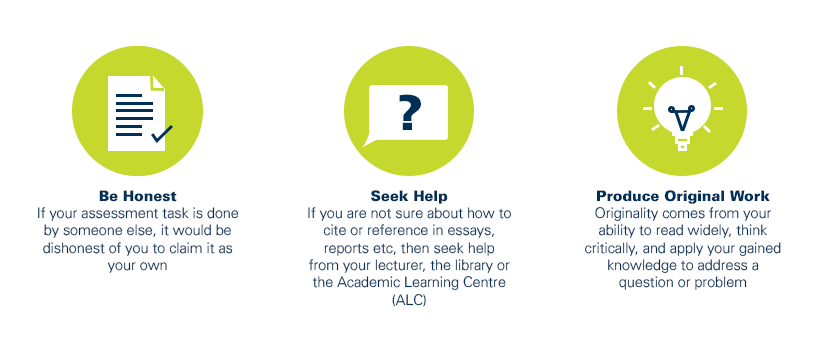
As a CQUniversity student you are expected to act honestly in all aspects of your academic work.
Any assessable work undertaken or submitted for review or assessment must be your own work. Assessable work is any type of work you do to meet the assessment requirements in the unit, including draft work submitted for review and feedback and final work to be assessed.
When you use the ideas, words or data of others in your assessment, you must thoroughly and clearly acknowledge the source of this information by using the correct referencing style for your unit. Using others’ work without proper acknowledgement may be considered a form of intellectual dishonesty.
Participating honestly, respectfully, responsibly, and fairly in your university study ensures the CQUniversity qualification you earn will be valued as a true indication of your individual academic achievement and will continue to receive the respect and recognition it deserves.
As a student, you are responsible for reading and following CQUniversity’s policies, including the Student Academic Integrity Policy and Procedure. This policy sets out CQUniversity’s expectations of you to act with integrity, examples of academic integrity breaches to avoid, the processes used to address alleged breaches of academic integrity, and potential penalties.
What is a breach of academic integrity?
A breach of academic integrity includes but is not limited to plagiarism, self-plagiarism, collusion, cheating, contract cheating, and academic misconduct. The Student Academic Integrity Policy and Procedure defines what these terms mean and gives examples.
Why is academic integrity important?
A breach of academic integrity may result in one or more penalties, including suspension or even expulsion from the University. It can also have negative implications for student visas and future enrolment at CQUniversity or elsewhere. Students who engage in contract cheating also risk being blackmailed by contract cheating services.
Where can I get assistance?
For academic advice and guidance, the Academic Learning Centre (ALC) can support you in becoming confident in completing assessments with integrity and of high standard.
What can you do to act with integrity?