Overview
This unit will provide you with a clear understanding of the fundamental theoretical frameworks that guide occupational therapy practice. An historical overview of the profession will be presented so that you can contrast the changes and plot the evolution of occupational therapy practice from the profession's foundations to the present day. The practical application of occupational theory as it drives contemporary occupational therapy practice will be introduced via one key occupational therapy practice model. You will be introduced to the regulatory and professional bodies guiding ethical occupational therapy practice locally and internationally. Skill development will focus on the acquisition of qualiative and quantitative information gathering techniques including interviewing and the application of standardised and non-standardised assessments.
Details
Pre-requisites or Co-requisites
There are no requisites for this unit.
Important note: Students enrolled in a subsequent unit who failed their pre-requisite unit, should drop the subsequent unit before the census date or within 10 working days of Fail grade notification. Students who do not drop the unit in this timeframe cannot later drop the unit without academic and financial liability. See details in the Assessment Policy and Procedure (Higher Education Coursework).
Offerings For Term 1 - 2026
Attendance Requirements
All on-campus students are expected to attend scheduled classes - in some units, these classes are identified as a mandatory (pass/fail) component and attendance is compulsory. International students, on a student visa, must maintain a full time study load and meet both attendance and academic progress requirements in each study period (satisfactory attendance for International students is defined as maintaining at least an 80% attendance record).
Recommended Student Time Commitment
Each 6-credit Undergraduate unit at CQUniversity requires an overall time commitment of an average of 12.5 hours of study per week, making a total of 150 hours for the unit.
Class Timetable
Assessment Overview
Assessment Grading
This is a graded unit: your overall grade will be calculated from the marks or grades for each assessment task, based on the relative weightings shown in the table above. You must obtain an overall mark for the unit of at least 50%, or an overall grade of 'pass' in order to pass the unit. If any 'pass/fail' tasks are shown in the table above they must also be completed successfully ('pass' grade). You must also meet any minimum mark requirements specified for a particular assessment task, as detailed in the 'assessment task' section (note that in some instances, the minimum mark for a task may be greater than 50%). Consult the University's Grades and Results Policy for more details of interim results and final grades.
All University policies are available on the CQUniversity Policy site.
You may wish to view these policies:
- Grades and Results Policy
- Assessment Policy and Procedure (Higher Education Coursework)
- Review of Grade Procedure
- Student Academic Integrity Policy and Procedure
- Academic Progression Policy and Procedure
- Student Refund and Credit Balance Policy and Procedure
- Complaints Policy and Procedure
- Information and Communications Technology Acceptable Use Policy and Procedure
This list is not an exhaustive list of all University policies. The full list of University policies are available on the CQUniversity Policy site.
Feedback, Recommendations and Responses
Every unit is reviewed for enhancement each year. At the most recent review, the following staff and student feedback items were identified and recommendations were made.
Feedback from SUTE comments
Students found concentrating for the entirety of long classes to be challenging.
It is recommended that more breaks and variety in learning activities be introduced to class content to enable continued concentration and engagement.
Feedback from SUTE comments; informal student feedback
Students requested more guidance and exemplars for the interview practice.
It is recommended that increased use of demonstration be incorporated into interview practice classes, including the use of video resources.
- Explain the theory and philosophy that underpins the profession of occupational therapy
- Demonstrate an understanding of the development and scope of the occupational therapy profession over time
- Describe the occupational therapy practice process across various contexts
- Conduct person-centred information gathering processes.
This content contributes to the development of Occupational Therapy Australia Competencies for Entry Level Practitioners.
Alignment of Assessment Tasks to Learning Outcomes
| Assessment Tasks | Learning Outcomes | |||
|---|---|---|---|---|
| 1 | 2 | 3 | 4 | |
| 1 - Written Assessment - 30% | ||||
| 2 - Practical and Written Assessment - 40% | ||||
| 3 - Presentation and Written Assessment - 30% | ||||
Alignment of Graduate Attributes to Learning Outcomes
| Graduate Attributes | Learning Outcomes | |||
|---|---|---|---|---|
| 1 | 2 | 3 | 4 | |
| 1 - Communication | ||||
| 2 - Problem Solving | ||||
| 3 - Critical Thinking | ||||
| 4 - Information Literacy | ||||
| 5 - Team Work | ||||
| 6 - Information Technology Competence | ||||
| 7 - Cross Cultural Competence | ||||
| 8 - Ethical practice | ||||
| 9 - Social Innovation | ||||
| 10 - First Nations Knowledges | ||||
| 11 - Aboriginal and Torres Strait Islander Cultures | ||||
Alignment of Assessment Tasks to Graduate Attributes
| Assessment Tasks | Graduate Attributes | ||||||||||
|---|---|---|---|---|---|---|---|---|---|---|---|
| 1 | 2 | 3 | 4 | 5 | 6 | 7 | 8 | 9 | 10 | 11 | |
| 1 - Written Assessment - 30% | |||||||||||
| 2 - Practical and Written Assessment - 40% | |||||||||||
| 3 - Presentation and Written Assessment - 30% | |||||||||||
Textbooks
The Intentional Relationship : Occupational Therapy and Use of Self
- Edition: 2nd (2020)
- Authors: Renee R. Taylor
- F.A. Davis
- Philadelphia Philadelphia , PA , USA
- ISBN: 978-0-8036-6977-2
- Binding: Paperback
Willard and Spackman's Occupational Therapy
- Edition: 14th (2023)
- Authors: Glen Gillen, Catana Brown
- Wolters Kluwer
- Baltimore Baltimore , MD , USA
- ISBN: 9781975174880
- Binding: Hardcover
IT Resources
- CQUniversity Student Email
- Internet
- Unit Website (Moodle)
All submissions for this unit must use the referencing style: American Psychological Association 7th Edition (APA 7th edition)
For further information, see the Assessment Tasks.
m.oreilly@cqu.edu.au
Week 1
Begin Date: 09 Mar 2026Module/Topic
Unit introduction
Concepts of occupation
Introduction to occupational therapy
Introduction to narrative
Chapter
Johnson, K. R., & Anvarizadeh, A. (2024). What is occupation? In G. Gillen & C. Brown (Eds.), Willard and Spackman's occupational therapy (14th ed., pp. 2-10). Wolters Kluwer. (Ch.1)
Coppola, S., Gillen, G., & Schell, B.A.B. (2024). Contemporary occupational therapy practice. In G. Gillen & C. Brown (Eds.), Willard and Spackman’s occupational therapy (14th ed., pp. 54-72). Wolters Kluwer. (Ch. 4)
Bourke-Taylor, H., Brown, T., Isbel, S., Cordier, R., & Gustafsson, L. (2021). An introduction to occupational therapy in an Australian context. In T. Brown, H. Bourke-Taylor, S. Isbel, R. Cordier, & L. Gustafsson (Eds.), Occupational therapy in Australia: Professional and practice issues (2nd ed., pp. 3-13). Routledge. (Ch. 1).
(Available on the e-Reading list)
Cohn, E.S., & Crepeau, E.B. (2024). Appendix III: First-Person Narratives Chapter A: Narrative as a key to understanding. In G. Gillen & C. Brown (Eds.), Willard and Spackman’s occupational therapy (14th ed., pp. 1343-1349). Wolters Kluwer.
(Note: Available in eBook only – see e-Reading list)
Events and Submissions/Topic
Clinical practice snapshots: brief guest presentations from clinicians during the workshop.
Week 2
Begin Date: 16 Mar 2026Module/Topic
History of occupation and the occupational therapy profession
Appropriate use of language
Introduction to the narrative interview
Chapter
Christiansen, C. H., & Haertl, K.L. (2024). A contextual history of occupational therapy. In G. Gillen & C. Brown (Eds.), Willard and Spackman’s occupational therapy (14th ed., pp.11-37). Wolters Kluwer.
Cusick, A., & Bye, R. (2021). History of Australian occupational therapy In T. Brown, H. Bourke-Taylor, S. Isbel, R. Cordier, & L. Gustafsson (Eds.), Occupational therapy in Australia: Professional and practice issues (2nd ed., pp. 31-49). Routledge Taylor & Francis Group. (Ch. 3).
(Available on the e-Reading list)
Taylor, R. (2020). The Intentional Relationship : Occupational Therapy and Use of Self (2nd ed., pp. 25-50). F.A. Davis. Chapter 2: "What defines a good therapist?"
Events and Submissions/Topic
ALC workshop: Academic writing and preparing for your first assessment.
Week 3
Begin Date: 23 Mar 2026Module/Topic
Occupational contexts
Narrative interviewing: Non-verbal communication.
Chapter
Bourke-Taylor, H., Sim, S.S., & Rassafiani, M. (2024). An occupational therapy perspective on families, occupation, health and disability. In G. Gillen & C. Brown (Eds.), Willard and Spackman’s occupational therapy (14th ed., pp.180-198). Wolters Kluwer. (Ch. 12).
Barrett, K., & Matuska., K. (2024). Patterns of occupation. In G. Gillen & C. Brown (Eds.), Willard and Spackman’s occupational therapy (14th ed., pp.199-208). Wolters Kluwer. (Ch.13)
Garlito, P.A.C., Meaulle, D.E., & Castillo, D. (2024). Culture, equality, inclusion, diversity, and culturally effective care. In G. Gillen & C. Brown (Eds.), Willard and Spackman’s occupational therapy (14th ed., pp. 209-223). Wolters Kluwer. (Ch. 14)
Taylor, R. (2020). The Intentional Relationship : Occupational Therapy and Use of Self (2nd ed., pp. 204-224). F.A. Davis. Chapter 8: "Therapeutic communication".
Events and Submissions/Topic
Practical experience: Narrative interviews with simulated clients
Week 4
Begin Date: 30 Mar 2026Module/Topic
Public holiday -- no classes
Chapter
Events and Submissions/Topic
Week 5
Begin Date: 06 Apr 2026Module/Topic
Occupational therapy philosophy
Ecological models of practice
The International Classification of Functioning Disability, and Health (ICF)
Narrative interviews: Empathic listening
Chapter
Wicks, A. (2021). Values and philosophy of occupational therapy. In T. Brown, H. Bourke-Taylor, S. Isbel, R. Cordier, & L. Gustafsson (Eds.), Occupational therapy in Australia: Professional and practice issues (2nd ed., pp. 70-79). Routledge Taylor & Francis Group. (Ch. 6).
(Available in the e-Reading list)
Brown, C. (2024). Ecologic models in occupational therapy. In G. Gillen & C. Brown (Eds.), Willard and Spackman’s occupational therapy (14th ed., pp. 574-585). Wolters Kluwer. (Ch. 35)
Burnett, S.E. (2018). Personal and social contexts of disability: Implications for occupational therapists. In H.M. Pendleton, & W. Schultz-Krohn (Eds.), Pedretti's occupational therapy: Practice skills for physical dysfunction (pp. 71-91). Elsevier. (Available on the e-reading list).
Taylor, R. (2020). The Intentional Relationship : Occupational Therapy and Use of Self. (2nd ed., pp. 225-242). Davis. Chapter 9: "Establishing intentional relationships".
Events and Submissions/Topic
Practical experience: Narrative interviews with simulated clients
Week 6
Begin Date: 13 Apr 2026Module/Topic
Occupational therapy practice processes
Narrative interviewing: Therapeutic relationships and the intentional use of self
Chapter
Fossey, E., Restall, G., Egan, M., & Moll, S. (2025). Models of practice that focus on human occupation. In T. Brown, S. Isbel, L. Gustaffson, S. Gutman, D. Powers, B. Collings, & T. Barlott (Eds.), Human occupation: Contemporary concepts and lifespan perspectives (pp. 75-99). Routledge.
(N.B. please read pp. 88-93: The Canadian Occupational Therapy Inter-relational Practice Process Framework)
de las Heras de Pablo, C.G., & Munoz, J.P. (2024). Therapeutic relationships and person-centered collaboration: Applying the intentional relationship model. In G. Gillen & C. Brown (Eds.), Willard and Spackman’s occupational therapy (14th ed., pp. 468-480). Wolters Kluwer. (Ch. 28)
Taylor, R. (2020). The Intentional Relationship : Occupational Therapy and Use of Self. (2nd ed., pp. 2-24). Davis. Chapter 1: "Therapeutic use of self in occupational therapy"
Supplemental Reading
The following chapter from your textbook provides extra information about the OT process:
Chisholm, D., & Schell, B.A.B. (2024). Overview of the occupational therapy process and outcomes. In G. Gillen & C. Brown (Eds.), Willard and Spackman’s occupational therapy (14th ed., pp. 282-298). Wolters Kluwer. (Ch. 18)
Events and Submissions/Topic
Practical experience: Narrative interviews with simulated clients
Assessment #2: Client case study for interview made available on Friday.
Occupational Therapy Theory and Practice Essay (30%) Due: Week 6 Thursday (16 Apr 2026) 11:45 pm AEST
Vacation Week
Begin Date: 20 Apr 2026Module/Topic
No classes
Chapter
Events and Submissions/Topic
Week 7
Begin Date: 27 Apr 2026Module/Topic
Assessment and evaluation
Collaborative goal setting
Professional reasoning
Chapter
Marazita, I., Petrocelli, T.K., & Shotwell, M.P. (2024). Evaluating clients. In G. Gillen & C. Brown (Eds.), Willard and Spackman’s occupational therapy (14th ed., pp. 299-319). Wolters Kluwer. (Ch. 19)
Gillen, G., & Schell, B.A.B. (2024). Introduction to evaluation, intervention, and outcomes for occupations. In G. Gillen & C. Brown (Eds.), Willard and Spackman’s occupational therapy (14th ed., pp. 684-688). Wolters Kluwer. (Ch. 42)
Bowman, J., Mogensen, L., & Lannin, N. (2017). Writing occupation-focused goals. In M. Curtin, M. Egan, & J. Adams (Eds.), Occupational therapy for people experiencing illness, injury or impairment: Promoting occupation and participation (7th ed., pp. 308-319). Elsevier. (Available on the e-reading list)
Unsworth, C.A. (2017). Professional reasoning in occupational therapy practice. In M. Curtin, M. Egan, & J. Adams (Eds.), Occupational therapy for people experiencing illness, injury or impairment: Promoting occupation and participation (7th ed., pp. 90-104). Elsevier. (Available on the e-reading list)
Schell, B.A.B., & Benfield, A.M. (2024). Professional reasoning in practice. In G. Gillen & C. Brown (Eds.), Willard and Spackman’s occupational therapy (14th ed., pp. 420-437). Wolters Kluwer. (Ch. 25)
Events and Submissions/Topic
Practical experience: Narrative interviews with simulated clients
Assessment #2: nominate interview times.
Assessment #3: Allocate presentation groups
Week 8
Begin Date: 04 May 2026Module/Topic
Manual handling workshop:
Inter-professional session, held in conjunction with PSIO11004 (physiotherapy).
Tuesday 5 May, 8am-12pm; location to be confirmed.
(No class on Friday this week)
Chapter
See Moodle for manual handling resources
Events and Submissions/Topic
Practical experience: learning how to safely assist people with bed mobility and transfers. Attendance is compulsory.
Assessment #3: Case studies for presentations allocated.
Week 9
Begin Date: 11 May 2026Module/Topic
No classes: Assessment #2 (client interviews)
Chapter
See Moodle for details
Events and Submissions/Topic
Assessment #2: Recording of video interviews, Monday 11 May - Friday 16 May.
Students to attend to record their interview on one of the above dates. Scheduling to be determined in class. See Moodle for full details.
Week 10
Begin Date: 18 May 2026Module/Topic
Environmental interventions
Clinical assessments: practical experience
Chapter
Leclair, L., & Ripat, J. (2024). Modifying performance contexts. In G. Gillen & C. Brown (Eds.), Willard and Spackman’s occupational therapy (14th ed., pp. 391-418). Wolters Kluwer. (Ch. 24)
Law M, Baptiste S, McColl M, Opzoomer A, Polatajko H, & Pollock N. (1990). The Canadian Occupational Performance Measure: An outcome measure for occupational therapy. Canadian Journal of Occupational Therapy, 57(2):82-87. https://doi.org/10.1177/000841749005700207
Events and Submissions/Topic
ALC Workshop: Preparing presentations and working in teams.
Clinical practice snapshots: brief guest presentations from clinicians during the workshop.
Assessment #2: recordings made available Monday 18 May.
Interview and communication analysis (40%) Due: Week 10 Friday (22 May 2026) 11:45 pm AEST
Week 11
Begin Date: 25 May 2026Module/Topic
No classes
Chapter
Events and Submissions/Topic
Week 12
Begin Date: 01 Jun 2026Module/Topic
Ethical practice
Professional behaviour and competency standards
Term review
Chapter
Doherty, R.F. (2024). Ethical practice. In G. Gillen & C. Brown (Eds.), Willard and Spackman’s occupational therapy (14th ed., pp. 454-467). Wolters Kluwer. (Ch. 27)
Falk-Kessler, J. (2024). Professionalism, communication, and teamwork. In G. Gillen & C. Brown (Eds.), Willard and Spackman’s occupational therapy (14th ed., pp. 496-511). Wolters Kluwer. (Ch 30)
Taylor, R. (2020). The Intentional Relationship : Occupational Therapy and Use of Self. (2nd ed., pp. 309-329). F.A. Davis. Chapter 14: "Professional Behavior, Values, and ethics".
Events and Submissions/Topic
Exam Week
Begin Date: 08 Jun 2026Module/Topic
End of term seminar: all students
must attend
Friday 12 June, 9:00am-4:00pm
for group presentations.
Chapter
Events and Submissions/Topic
Assessment #3: Group presentation
Case Study Presentation (30%) Due: Exam Week Friday (12 June 2026) 8:00 am AEST
1 Written Assessment
This assignment introduces you to foundational skills in occupational therapy, including literature searching, critical analysis, and reflective writing. Using a historical photograph and an artificial intelligence (AI) tool, you will explore the development of occupational therapy and evaluate how AI-generated information compares to academic sources. This assessment is worth 30% of your total OCCT11002 mark.
This task has two parts:
• Part 1: Essay (500 words + AI outputs).
• Part 2: Personal reflection (approximately 300 words).
The essay is to be written in response to an artificial intelligence (AI) enquiry about an historical photograph. The photographs each capture a moment in time concerning aspects of health service environments and/or occupational therapy provision.
You will be required to generate a description and analysis of the photograph using an AI platform such as Copilot or ChatGPT, verify that description by consulting the literature, and critique the response generated by AI.
You must include in-text citations and reference list using American Psychological Association referencing style (7th ed.), containing a minimum of six references. You should refer to your readings from Weeks 1-5, paying particular attention to the Week 2 readings; however, at least two references should be from outside sources (i.e. refereed journal articles, books or book chapters). All references need to come from primary academic sources, NOT commercial websites, social media, or blogs.
For the reflection, you will discuss how your own understanding of the practice of occupational therapy has developed as a result of researching and writing this paper.
Word count:
- Analysis: 500 words (AI outputs are not included in this count).
- No word limit for AI prompts/responses, but the results of five (5) prompts must be shown (include them as an appendix or clearly labelled section).
- Reflection: approximately 300 words.
You must ensure that all the work is your own, in line with the CQUniversity requirements
Note: Large Language Models (LLMs; e.g., ChatGPT, Copilot) can only be used in assignments at CQU if permitted by the Unit Coordinator (as per the following Guideline: https://delivery-cqucontenthub.stylelabs.cloud/api/public/content/Guidelines_referencing_Artificial_Intelligence?v=7f19c75d)
This assessment permits Level 3 AI use: i.e., you may use Al to assist with specific tasks such as drafting text, refining and evaluating your work. You must critically evaluate and modify any Al-generated content you use.
See Moodle for a detailed task description, including photographs.
Week 6 Thursday (16 Apr 2026) 11:45 pm AEST
Submit online via Moodle
Week 8 Monday (4 May 2026)
Marked assignments and rubrics will be returned via Moodle
- Use of AI platform and quality of prompts/responses (10)
- Accuracy of historical analysis and verification with literature (5)
- Understanding of occupational therapy concepts (5)
- Academic writing quality and APA referencing (5)
- Reflection on learning (5)
- Explain the theory and philosophy that underpins the profession of occupational therapy
- Demonstrate an understanding of the development and scope of the occupational therapy profession over time
- Describe the occupational therapy practice process across various contexts
- Communication
- Problem Solving
- Critical Thinking
- Information Literacy
- Cross Cultural Competence
2 Practical and Written Assessment
This assessment will allow you to develop your emerging skills of interviewing and information gathering. These are critical professional skills you will use as an occupational therapist every time you interact with a client.
You will prepare an interview schedule (list of questions/themes) and conduct a 15 minute interview with a "standardised client" (an actor plays this role).
Interviews will be held on campus and scheduled to occur in Week 9; you will be given a time in which to conduct the interview, we will arrange for the "client" to be present.
The purpose of the interview is to establish a therapeutic relationship, learn about the occupational performance of this person and explore any occupational barriers they are experiencing. During the interview you are expected to draw on the theoretical knowledge and practical skills you have developed in the Unit to date. Your choice of questions and information gathering approaches should demonstrate evidence of your understanding of different forms of information gathering. Respectful and professional conduct should be evident through all of your interactions with the client.
The interview will be video-recorded and on completion of your interview you will receive an electronic copy of the recording so you can complete a reflection on your interview performance. You will use a self-assessment to guide your reflection.
You will submit your interview questions and your completed self-reflection by the due date.
(Note: you do not need to upload your video recording)
Level of GenAI use allowed: Level 1, i.e., no AI: You must not use Al at any point during the assessment. You must demonstrate your core skills and knowledge.
Note: the 72hr grace period does not apply to this assessment.
See Moodle for detailed task description and self-reflection template.
Week 10 Friday (22 May 2026) 11:45 pm AEST
Submission of interview questions and self-reflection on this date: interview occurs in Week 9
Exam Week Monday (8 June 2026)
Marked assignments and rubrics will be returned via Moodle
- Establish an effective therapeutic relationship and create a supportive environment (4)
- Use of appropriate language and questions (8)
- Active listening (8)
- Obtaining information (8)
- Appropriate closure of interview (4)
- Realistic self analysis (8)
- Explain the theory and philosophy that underpins the profession of occupational therapy
- Conduct person-centred information gathering processes.
- Communication
- Problem Solving
- Critical Thinking
- Information Literacy
- Ethical practice
3 Presentation and Written Assessment
This is a group assignment designed to allow you to integrate the knowledge you have gained during the unit, as well as independent research, to develop a class presentation based on a case-study. Presenting to colleagues, peers and clients is an important professional skill for you to master over the course of your degree. Group allocations will occur in Week 7.
Each group will be provided with a case study containing details of a client during Week 8 (e.g., a child living with cerebral palsy, a young woman with schizophrenia, an older gentleman who has fractured his neck of femur). You are required to prepare a 10-minute presentation for a student and professional audience that systematically outlines how you would apply occupational therapy practice processes with this client, including theoretical foundations, information gathering and assessment, identification of occupational issues, collaborative goal setting, and intervention planning.
Presentation Format
10 minute presentation suitable for a professional audience supported by AV materials such as PowerPoint; all group members must contribute equally to preparation and presentation. A reference list and on-slide citations must be included. At the end of the presentation, all group members will be individually asked questions about the case, simulating a case conference.
Slides and individual "contribution to group" forms must be submitted to Moodle on the day of the presentation.
Level of GenAI use allowed: Level 3: You may use Al to assist with specific tasks such as drafting text, refining and evaluating your work. You must critically evaluate and modify any Al-generated content you use and ensure all references are appropriate and accurate.
Note: the 72hr grace period does not apply to this assessment.
See Moodle for a detailed task description and Contribution to Group forms.
Exam Week Friday (12 June 2026) 8:00 am AEST
The presentation seminar will occur in-class; slides and individual "contribution to group forms" must be submitted to Moodle by the above deadline
Marks and feedback will be returned prior to certification of grades
- Presentation content, structure and organisation (10)
- Presentation style (10)
- Use of technology and materials (5)
- Participation in question time (5)
- Describe the occupational therapy practice process across various contexts
- Communication
- Problem Solving
- Critical Thinking
- Information Literacy
- Information Technology Competence
- Ethical practice
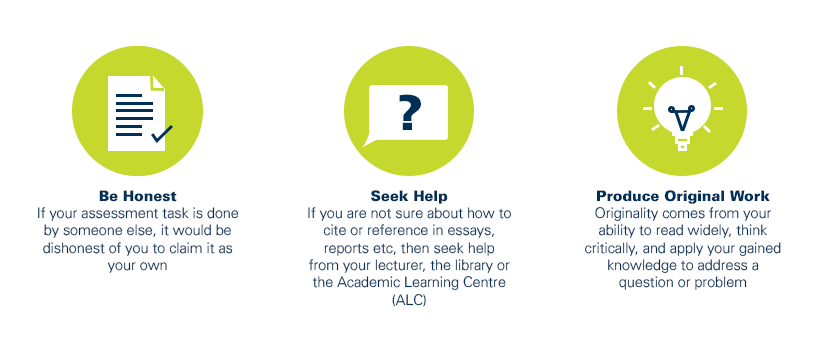
As a CQUniversity student you are expected to act honestly in all aspects of your academic work.
Any assessable work undertaken or submitted for review or assessment must be your own work. Assessable work is any type of work you do to meet the assessment requirements in the unit, including draft work submitted for review and feedback and final work to be assessed.
When you use the ideas, words or data of others in your assessment, you must thoroughly and clearly acknowledge the source of this information by using the correct referencing style for your unit. Using others’ work without proper acknowledgement may be considered a form of intellectual dishonesty.
Participating honestly, respectfully, responsibly, and fairly in your university study ensures the CQUniversity qualification you earn will be valued as a true indication of your individual academic achievement and will continue to receive the respect and recognition it deserves.
As a student, you are responsible for reading and following CQUniversity’s policies, including the Student Academic Integrity Policy and Procedure. This policy sets out CQUniversity’s expectations of you to act with integrity, examples of academic integrity breaches to avoid, the processes used to address alleged breaches of academic integrity, and potential penalties.
What is a breach of academic integrity?
A breach of academic integrity includes but is not limited to plagiarism, self-plagiarism, collusion, cheating, contract cheating, and academic misconduct. The Student Academic Integrity Policy and Procedure defines what these terms mean and gives examples.
Why is academic integrity important?
A breach of academic integrity may result in one or more penalties, including suspension or even expulsion from the University. It can also have negative implications for student visas and future enrolment at CQUniversity or elsewhere. Students who engage in contract cheating also risk being blackmailed by contract cheating services.
Where can I get assistance?
For academic advice and guidance, the Academic Learning Centre (ALC) can support you in becoming confident in completing assessments with integrity and of high standard.
What can you do to act with integrity?