Overview
This unit will introduce students to the role of food, nutrients and dietary constituents in human health and disease. Your learning will encompass the range of ecological, physiological, and behavioural factors that influence food composition and human food intakes and behaviours. You will learn about the food and nutrition requirements of different individuals and population groups. You will develop an understanding of scientific evidence that underpins dietary requirements and recommendations and skills to identify dietary misinformation.
Details
Pre-requisites or Co-requisites
There are no requisites for this unit.
Important note: Students enrolled in a subsequent unit who failed their pre-requisite unit, should drop the subsequent unit before the census date or within 10 working days of Fail grade notification. Students who do not drop the unit in this timeframe cannot later drop the unit without academic and financial liability. See details in the Assessment Policy and Procedure (Higher Education Coursework).
Offerings For Term 1 - 2026
Attendance Requirements
All on-campus students are expected to attend scheduled classes - in some units, these classes are identified as a mandatory (pass/fail) component and attendance is compulsory. International students, on a student visa, must maintain a full time study load and meet both attendance and academic progress requirements in each study period (satisfactory attendance for International students is defined as maintaining at least an 80% attendance record).
Recommended Student Time Commitment
Each 6-credit Undergraduate unit at CQUniversity requires an overall time commitment of an average of 12.5 hours of study per week, making a total of 150 hours for the unit.
Class Timetable
Assessment Overview
Assessment Grading
This is a graded unit: your overall grade will be calculated from the marks or grades for each assessment task, based on the relative weightings shown in the table above. You must obtain an overall mark for the unit of at least 50%, or an overall grade of 'pass' in order to pass the unit. If any 'pass/fail' tasks are shown in the table above they must also be completed successfully ('pass' grade). You must also meet any minimum mark requirements specified for a particular assessment task, as detailed in the 'assessment task' section (note that in some instances, the minimum mark for a task may be greater than 50%). Consult the University's Grades and Results Policy for more details of interim results and final grades.
All University policies are available on the CQUniversity Policy site.
You may wish to view these policies:
- Grades and Results Policy
- Assessment Policy and Procedure (Higher Education Coursework)
- Review of Grade Procedure
- Student Academic Integrity Policy and Procedure
- Academic Progression Policy and Procedure
- Student Refund and Credit Balance Policy and Procedure
- Complaints Policy and Procedure
- Information and Communications Technology Acceptable Use Policy and Procedure
This list is not an exhaustive list of all University policies. The full list of University policies are available on the CQUniversity Policy site.
Feedback, Recommendations and Responses
Every unit is reviewed for enhancement each year. At the most recent review, the following staff and student feedback items were identified and recommendations were made.
Feedback from SUTE student comments
Additional direction needed for written assessment tasks.
Consider adopting alternative assessment formats that scaffold students through the required processes, align with key learning outcomes, and demonstrate the relevance of the tasks.
Feedback from Informal verbal student feedback
Students enjoyed the weekly learning booklets, short lectures and real-life examples.
Continue the use of weekly booklets accompanied by short lecture recordings, as these provide structure and support student learning. It is further recommended that additional real-life examples be incorporated to strengthen the application of theoretical concepts and enhance perceived relevance of the content.
- Discuss food composition, nutrients, and dietary requirements and recommendations
- Describe the ecological factors influencing food composition and nutrient intakes and behaviours
- Describe the physiological factors influencing food and nutrient intakes and behaviours
- Relate food and nutrient intakes to common nutrition-related diseases in Australia.
Alignment of Assessment Tasks to Learning Outcomes
| Assessment Tasks | Learning Outcomes | |||
|---|---|---|---|---|
| 1 | 2 | 3 | 4 | |
| 1 - Written Assessment - 30% | ||||
| 2 - Online Quiz(zes) - 40% | ||||
| 3 - Written Assessment - 30% | ||||
Alignment of Graduate Attributes to Learning Outcomes
| Graduate Attributes | Learning Outcomes | |||
|---|---|---|---|---|
| 1 | 2 | 3 | 4 | |
| 1 - Communication | ||||
| 2 - Problem Solving | ||||
| 3 - Critical Thinking | ||||
| 4 - Information Literacy | ||||
| 5 - Team Work | ||||
| 6 - Information Technology Competence | ||||
| 7 - Cross Cultural Competence | ||||
| 8 - Ethical practice | ||||
| 9 - Social Innovation | ||||
| 10 - First Nations Knowledges | ||||
| 11 - Aboriginal and Torres Strait Islander Cultures | ||||
Textbooks
Understanding Nutrition
- Edition: 5th (2023)
- Authors: Eleanor Whitney, Sharon Rady Rolfes, Time Crowe, Adam Walsh
- Cengage Learning Australia
- Australia
- ISBN: 9780170457972
- Binding: Paperback
IT Resources
- CQUniversity Student Email
- Internet
- Unit Website (Moodle)
All submissions for this unit must use the referencing style: American Psychological Association 7th Edition (APA 7th edition)
For further information, see the Assessment Tasks.
a.vassallo@cqu.edu.au
Week 1
Begin Date: 09 Mar 2026Module/Topic
Australian Dietary Guidelines
Chapter
Chapter 1
Events and Submissions/Topic
Tutorial: Introduction to the unit (including explanation of assessment tasks, navigating the unit Moodle site, unit learning outcomes and expectations).
Week 2
Begin Date: 16 Mar 2026Module/Topic
Food Choices
Chapter
Chapters 1 and 2
Events and Submissions/Topic
Tutorial: Exploration of reasons why people choose particular foods, dietary patterns and behaviours.
Week 3
Begin Date: 23 Mar 2026Module/Topic
Dietary Assessment
Chapter
Chapters 1 and 2
Events and Submissions/Topic
Tutorial: The Australian Dietary Guidelines and Nutrient Reference Values (NRVs).
Week 4
Begin Date: 30 Mar 2026Module/Topic
Food composition and food labelling
Chapter
Chapter 2
Events and Submissions/Topic
Tutorial: Food Standards Australia and New Zealand (FSANZ), food labelling and food composition.
Assessment 2 Quiz 1 Opens: Week 4 Monday 9:00 am AEST.
Week 5
Begin Date: 06 Apr 2026Module/Topic
Macronutrients: Carbohydrates and Proteins
Chapter
Chapters 4 and 6
Events and Submissions/Topic
Tutorial: Carbohydrate and protein requirements and how individuals can achieve adequacy.
Assessment 1 due Week 5 Friday 5:00 pm AEST
Essay - Food choices and behaviours Due: Week 5 Friday (10 Apr 2026) 5:00 pm AEST
Week 6
Begin Date: 13 Apr 2026Module/Topic
Macronutrients: Fats
Chapter
Chapter 5
Events and Submissions/Topic
Tutorial: Dietary fat requirements and how individuals can achieve adequacy.
Vacation Week
Begin Date: 20 Apr 2026Module/Topic
Chapter
Events and Submissions/Topic
Week 7
Begin Date: 27 Apr 2026Module/Topic
Over- and under-consumption of macronutrients
Chapter
Chapter 8
Events and Submissions/Topic
Tutorial: Assessing over- and under-consumption of macronutrients and responsible advice for individuals.
Assessment 2 Quiz 2 Opens: Week 7 Monday 9:00 am AEST.
Week 8
Begin Date: 04 May 2026Module/Topic
Fluids and alcohol
Chapter
Chapters 7 (highlight) and 12
Events and Submissions/Topic
Tutorial: Fluid requirements, alcohol intakes, and responsible advice for individuals.
Week 9
Begin Date: 11 May 2026Module/Topic
Micronutrients: Vitamins
Chapter
Chapters 10 and 11
Events and Submissions/Topic
Tutorial: Vitamin requirements (including over- and under-consumption).
Week 10
Begin Date: 18 May 2026Module/Topic
Micronutrients: Minerals
Chapter
Chapters 12 and 13
Events and Submissions/Topic
Tutorial: Mineral requirements (including over- and under-consumption).
Week 11
Begin Date: 25 May 2026Module/Topic
Chapter
Events and Submissions/Topic
Tutorial: Hot topics. Exploration of nutrition (mis)information.
Assessment 3 due Week 11 Friday 5:00 pm AEST
Dietary analysis of a case study Due: Week 11 Friday (29 May 2026) 5:00 pm AEST
Week 12
Begin Date: 01 Jun 2026Module/Topic
Review
Chapter
Events and Submissions/Topic
Tutorial: Overview of key learnings from this unit.
Assessment 2 Quiz 1 and 2 Closes: Week 12 Friday 5:00 pm (AEST).
Exam Week
Begin Date: 08 Jun 2026Module/Topic
Chapter
Events and Submissions/Topic
Vacation/Exam Week
Begin Date: 15 Jun 2026Module/Topic
Chapter
Events and Submissions/Topic
UNIT LEARNING CONTENT:
The learning content for this unit is divided into 10 main topics (outlined in the Schedule) which align to the unit learning outcomes. Weekly learning materials can be accessed on the unit Moodle site (see each of the weekly tiles) and include:
- Reading resources: textbook pages/chapters and other online sources and resources related to each weekly topic;
- Learning activities: resources and practical activities that help you explore key topics and resources and apply your learning to real-world situations and settings;
- Lectures and associated PowerPoint slides: pre-recorded mini-'lectures' have been created for core topics and concepts relating to weekly topics and are embedded in a 'Learning Booklet' in each of the weekly tiles on the unit Moodle site.
- Online tutorials: held via Zoom (see 'Live tutorials' link in unit Moodle site) and recorded during the term so that they may be viewed by students who are not able to attend the live tutorials.
COMMUNICATION:
- Discussion of nutrition topics is integral to developing understanding and demonstrating knowledge. During the term, structured and adhoc discussion of topics are encouraged (e.g., if you come across media related to any of the topics that you think would be of value to other students for discussion). In this unit, these discussions are facilitated via online discussion forums and weekly online Zoom tutorials. When you are involved in any discussions, it is expected that you will always act professionally, consider evidence, and always maintain polite dialogue (in both text-based and verbal communications) that shows respect for the opinions and experiences of others (that may be different to yours).
- Non-personal communication (e.g., related to assessment task details, issues with Moodle site resources, learning activities etc) must occur via the relevant forums on the unit Moodle site.
- Assessment extension requests MUST be made via the Assessment Extension Request (AER) system via the unit Moodle site.
- Personal communication (e.g., illness, life events etc) should be held with the Unit Coordinator via email. All emails to the Unit Coordinator should include your name and student number and the unit name or code that you are studying (your Unit Coordinator may be teaching more than one unit and many hundreds of students), and a brief message that clearly states your request or issue.
1 Written Assessment
For this task, you will analyse a case study (see ‘Priya’ below) and develop an essay that demonstrates your understanding of ecological and physiological factors influencing food and nutrient intakes and eating behaviours in adults.
Your essay must include:
- An introduction that describes key ecological and physiological factors known to influence food choices and eating behaviours in adults, and explains their relevance to the case study using evidence;
- An essay body that applies these factors to the case study by identifying and explaining how specific ecological and physiological factors are influencing the individual’s current food choices, eating patterns, and health risks; and
- A conclusion that summarises the key factors influencing food choices and behaviours in the case study and briefly reflects on how these factors interact to affect nutritional health.
- A reference list that includes at least five (5) scientific/reliable sources.
Please note: When discussing physiological factors, students are expected to refer to relevant mechanisms such as appetite regulation, energy balance, nutrient metabolism, or physiological responses to dietary patterns where appropriate.
Task Description
Priya is a 38-year-old woman of South Asian heritage who recently moved to a regional town in Western Queensland to work as a registered nurse. She lives with her husband, who works in the local mining industry, and her 70-year-old mother, who moved from India to help care for their family. Priya finds the transition to regional life challenging, case study regarding the high cost of fresh produce and the lack of access to traditional cultural ingredients.
Daily Routine and Eating Habits: Priya’s day begins at 5:30 AM to prepare for her 12-hour shift at the regional hospital. Because the local supermarket has a limited selection of fresh vegetables, she often relies on canned or frozen substitutes that are high in sodium. She typically skips breakfast, instead drinking several cups of strong black tea with added sugar to stay alert.
At the hospital, Priya’s breaks are often interrupted. She usually consumes highly processed snacks from the staff room or white rice with a small portion of leftover curry that lacks the variety of lentils and leafy greens she used to consume in the city. By mid-afternoon, she feels ‘drained’ and consumes several biscuits or a sweetened yoghurt to manage her hunger.
After finishing work at 7:00 PM, Priya is exhausted. Her husband often brings home takeaway from the only two options in town—a local fish and chips shop or a pizza outlet—as they are both too tired to cook. On the weekends, Priya tries to cook traditional meals, but because specialised spices and fresh Asian greens are unavailable locally, she uses heavy, pre-made sauces that are high in preservatives and fats. Priya has noticed she feels increasingly lethargic, has experienced a 5kg weight gain in six months.
Level of Gen AI use allowed:
Level 2: You may use Al for planning, idea development, and research. Your final submission should show how you
have developed and refined these ideas.
Week 5 Friday (10 Apr 2026) 5:00 pm AEST
Week 7 Friday (1 May 2026)
The following categories will be used to assess your essay:
- Introduction – Ecological and Physiological Factors
- Application to Case Study – Ecological Factors
- Application to Case Study – Physiological Factors
- Conclusion – Integration and Synthesis
- Academic Communication and Use of Evidence
Level of Gen AI use allowed:
Level 2: You may use Al for planning, idea development, and research. Your final submission should show how you
have developed and refined these ideas.
- Describe the ecological factors influencing food composition and nutrient intakes and behaviours
- Describe the physiological factors influencing food and nutrient intakes and behaviours
2 Online Quiz(zes)
Online quizzes are included in this unit to reinforce your learning, provide you with immediate feedback on your learning of foundational concepts, provide you with a tangible benchmark that may highlight strengths and weaknesses in your learning, and encourage your consistent engagement with course materials.
Task Details
For this task you will be required to complete two (2) online quizzes that assess your understanding of key topics and concepts provided in the unit across the term.
Each quiz will:
- include 30 multiple choice questions and will carry a total unit weighting of 20%;
- only be available ONCE for completion;
- be time limited and timed - once you commence a quiz, you will have 30 minutes only to complete each quiz (a timer will appear on your screen to help you to monitor your time).
- See Table below for Quiz 1 and Quiz 2 open and close time and date:
| Quiz | Weeks of learning assessed | Quiz 'open' time and date | Quiz 'close' time and date |
| 1 | 1 through 5 | Week 4, Monday 9:00am | Week 12, Friday 5:00pm (AEST) |
| 2 | 6 through 11 | Week 7, Monday 9:00am | Week 12, Friday 5:00pm (AEST) |
NOTE: Formative quizzes (non-compulsory, non-graded quizzes) will be provided during the term so that you can test your knowledge and understanding of unit content prior to commencing the summative online quizzes outlined above. You may complete the formative quizzes as many times as you wish.
Level of Gen AI use allowed:
Level 1: You must not use Al at any point during the assessment. You must demonstrate your core skills and knowledge.
The 72-hour grace period does not apply to this assessment.
Quiz 1 and Quiz 2 are due for completion Week 12 Friday 5:00pm (AEST)
Marks for completed quizzes will be provided within two weeks after the closing date.
- Discuss food composition, nutrients, and dietary requirements and recommendations
- Describe the ecological factors influencing food composition and nutrient intakes and behaviours
- Describe the physiological factors influencing food and nutrient intakes and behaviours
- Relate food and nutrient intakes to common nutrition-related diseases in Australia.
3 Written Assessment
Task Introduction
This assessment provides students with the opportunity to develop practical skills in conducting a nutrition assessment, analysing dietary intake, and interpreting associated health implications. Students will perform a 24-hour dietary recall with a chosen case study, categorise foods into the Australian Dietary Guidelines (ADG) food groups, and use the Australian Food Composition Database (AFCD) to calculate total energy intake and macronutrient composition (protein, carbohydrate, and fat). The analysis will be used to evaluate the case study’s short-term nutritional status in relation to energy balance and weight management, as well as long-term health implications for chronic disease risk. Students are also required to critically discuss the limitations of using a single 24-hour recall to represent habitual dietary intake and to provide evidence-based recommendations to improve the case study’s diet, taking into account lifestyle, life stage, health status, and cultural factors.
Task Instructions
Step 1 – Select a case study
- Choose a family member, friend, or community member willing to participate as your case study, who is over the age of 18, and from whom informed consent can be obtained.
- Consider age, sex, and lifestyle factors relevant to nutrition.
Step 2 – Conduct a 24-hour Dietary Recall
- Record a video of yourself conducting the 24-hour dietary recall. Your face must be visible in the recording to verify participation, but it is not compulsory to show your case study’s face.
- In the video, have your case study report all foods and beverages consumed over a single 24-hour period. Include portion sizes, preparation methods, and timing of meals/snacks.
- Note any factors that may have influenced intake (e.g., physical activity, stress, social context).
- Upload this recording along with your written report when submitting the assessment.
Step 3 – Collect Basic Anthropometric Information
- Measure and record:
- Height
- Weight
- Waist circumference
- Use these measures to interpret short-term energy balance and potential health risks.
Step 4 – Nutritional Analysis
- Categorise all foods consumed into Australian Dietary Guideline (ADG) food groups and compare the number of serves to recommended intakes.
- Using the AFCD, calculate total energy intake and macronutrient intake (protein, carbohydrate, fat). Micronutrient analysis is not required.
- Compare the case study’s total energy intake from the 24-hour dietary recall with their estimated energy requirements (EER) based on age, sex, weight, height, and activity level.
Step 5 – Write the Nutrition Assessment Report
a) Introduction (Approx. 200 words)
- Introduce your case study: age, sex, lifestyle, and any relevant nutrition-related factors.
- Explain the purpose of a nutrition assessment.
- Highlight the focus on short-term weight management and long-term chronic disease risk.
b) Methods (Approx. 250 words)
- Describe the 24-hour recall method: how it was conducted, strengths, and limitations.
- Describe anthropometric measurements and how they were collected.
- Outline tools used for analysis: ADG food groups, AFCD, EER calculations.
c) Results (Approx. 250 words)
- Present dietary intake results:
- Number of serves per ADG food group vs recommended intake
- Total energy intake and macronutrient intake (protein, carbs, fat)
- Present anthropometric measures (height, weight, BMI, waist circumference)
- Include tables or charts for clarity
d) Discussion (Approx. 600 words)
- Critically discuss the limitations of a single 24-hour recall.
- Discuss factors influencing intake (e.g., lifestyle, social context, cultural factors).
- Interpret results for short-term implications:
-
- Energy balance, weight management.
- Interpret results for long-term implications:
-
- Risk of chronic disease (cardiovascular disease, diabetes, obesity, nutrient deficiencies/excesses)
- Suggest evidence-based, practical dietary strategies for improvement, considering:
-
- Case study’s age, lifestyle, preferences, health status, and cultural factors
e) Conclusion (Approx. 200 words)
- Summarise key findings regarding ADG food groups, energy, and macronutrient intake
- Highlight major health risks and recommendations for both short-term and long-term outcomes
f) References
- Include at least five (5) authoritative references (peer-reviewed journals, textbooks, or government/public health resources)
- Use APA 7 referencing style
Internet tools to allow dietary assessment:
Nutrient Reference Values
https://www.eatforhealth.gov.au/nutrient-reference-values
Australia Food Composition Database
https://www.foodstandards.gov.au/science/monitoringnutrients/afcd/Pages/foodsearch.aspx
Level of Gen AI use allowed:
Level 2: You may use Al for planning, idea development, and research. Your final submission should show how you
have developed and refined these ideas.
Week 11 Friday (29 May 2026) 5:00 pm AEST
Exam Week Friday (12 June 2026)
Marks will be awarded in accordance with the following categories:
- Introduce the task and the case study
- Method section
- Results section
- Discussion of methods to collect dietary information
- Discussion of nutrient intake of the case study against relevant recommendations.
- Discussion of dietary recommendations based on results
- A summary and conclusion to the report overall
- Cover page, general formatting including in-text citations, word count and report format.
- Writing fluency
- Quality, quantity of references and inclusion of reference list in APA7 referencing style.
- Discuss food composition, nutrients, and dietary requirements and recommendations
- Relate food and nutrient intakes to common nutrition-related diseases in Australia.
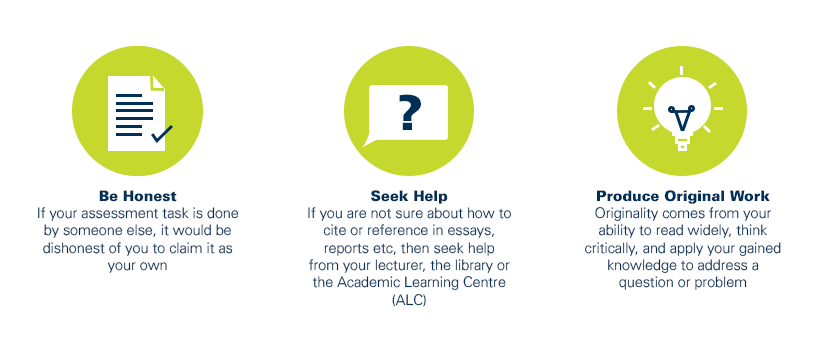
As a CQUniversity student you are expected to act honestly in all aspects of your academic work.
Any assessable work undertaken or submitted for review or assessment must be your own work. Assessable work is any type of work you do to meet the assessment requirements in the unit, including draft work submitted for review and feedback and final work to be assessed.
When you use the ideas, words or data of others in your assessment, you must thoroughly and clearly acknowledge the source of this information by using the correct referencing style for your unit. Using others’ work without proper acknowledgement may be considered a form of intellectual dishonesty.
Participating honestly, respectfully, responsibly, and fairly in your university study ensures the CQUniversity qualification you earn will be valued as a true indication of your individual academic achievement and will continue to receive the respect and recognition it deserves.
As a student, you are responsible for reading and following CQUniversity’s policies, including the Student Academic Integrity Policy and Procedure. This policy sets out CQUniversity’s expectations of you to act with integrity, examples of academic integrity breaches to avoid, the processes used to address alleged breaches of academic integrity, and potential penalties.
What is a breach of academic integrity?
A breach of academic integrity includes but is not limited to plagiarism, self-plagiarism, collusion, cheating, contract cheating, and academic misconduct. The Student Academic Integrity Policy and Procedure defines what these terms mean and gives examples.
Why is academic integrity important?
A breach of academic integrity may result in one or more penalties, including suspension or even expulsion from the University. It can also have negative implications for student visas and future enrolment at CQUniversity or elsewhere. Students who engage in contract cheating also risk being blackmailed by contract cheating services.
Where can I get assistance?
For academic advice and guidance, the Academic Learning Centre (ALC) can support you in becoming confident in completing assessments with integrity and of high standard.
What can you do to act with integrity?