Overview
The 21st-century nursing profession is a product of historical and contemporary, socio-political and cultural influences. You will explore these while considering legal and ethical frameworks, the role of professional governing bodies and governance while investigating the profession of nursing. You will validate the personal skills, inherent requirements and attributes required in the profession and consider what your personal journey towards becoming a registered nurse will require. You will discuss the important role of communication in nursing practice and devise strategies to effectively communicate as a nurse. You will examine types of communication strategies that are relevant to different health contexts. In addition, you will acquire fundamental knowledge and skills to provide basic nursing care. In particular, you will be able to conduct a holistic assessment and assist a person with their activities of daily living in the simulated environment. You will be introduced to the significance of the Nursing and Midwifery Board of Australia (NMBA) Registered Nurse Standards for Practice (2016) and other policies, codes, and guidelines relevant to professional nursing practice. You will explore the importance of the National Safety and Quality Health Service (NSQHS) Standards (2021) to all nursing practice in Australia and commence using the Patient Safety Competency Framework (PSCF) (Levett-Jones et al., 2017) in your practice as a nursing student. You will become familiar with scope of practice using the decision-making framework (DMF) (NMBA, 2020). As part of this unit, you are required to participate in either 32 hours of compulsory on-campus workshops if enrolled in the internal mode or a residential school if enrolled in the mixed mode.
Details
Pre-requisites or Co-requisites
Pre-requisite: Must be enrolled in Master of Nursing (Graduate Entry)
Important note: Students enrolled in a subsequent unit who failed their pre-requisite unit, should drop the subsequent unit before the census date or within 10 working days of Fail grade notification. Students who do not drop the unit in this timeframe cannot later drop the unit without academic and financial liability. See details in the Assessment Policy and Procedure (Higher Education Coursework).
Offerings For Term 2 - 2026
Attendance Requirements
All on-campus students are expected to attend scheduled classes - in some units, these classes are identified as a mandatory (pass/fail) component and attendance is compulsory. International students, on a student visa, must maintain a full time study load and meet both attendance and academic progress requirements in each study period (satisfactory attendance for International students is defined as maintaining at least an 80% attendance record).
Recommended Student Time Commitment
Each 6-credit Postgraduate unit at CQUniversity requires an overall time commitment of an average of 12.5 hours of study per week, making a total of 150 hours for the unit.
Class Timetable
Assessment Overview
Assessment Grading
This is a graded unit: your overall grade will be calculated from the marks or grades for each assessment task, based on the relative weightings shown in the table above. You must obtain an overall mark for the unit of at least 50%, or an overall grade of 'pass' in order to pass the unit. If any 'pass/fail' tasks are shown in the table above they must also be completed successfully ('pass' grade). You must also meet any minimum mark requirements specified for a particular assessment task, as detailed in the 'assessment task' section (note that in some instances, the minimum mark for a task may be greater than 50%). Consult the University's Grades and Results Policy for more details of interim results and final grades.
All University policies are available on the CQUniversity Policy site.
You may wish to view these policies:
- Grades and Results Policy
- Assessment Policy and Procedure (Higher Education Coursework)
- Review of Grade Procedure
- Student Academic Integrity Policy and Procedure
- Academic Progression Policy and Procedure
- Student Refund and Credit Balance Policy and Procedure
- Complaints Policy and Procedure
- Information and Communications Technology Acceptable Use Policy and Procedure
This list is not an exhaustive list of all University policies. The full list of University policies are available on the CQUniversity Policy site.
- Adapt skills and knowledge to communicate effectively in nursing practice to underpin patient safety
- Evaluate the role of professional governing bodies for professional nursing practice, patient safety and governance
- Demonstrate, analyse and evaluate foundation nursing practice in relation to the four major bioethical principles
- Perform a holistic health assessment and physical examination and execute appropriate documentation to support patient safety
- Deconstruct the Nursing and Midwifery Board of Australia (NMBA) Registered nurse standards for practice (2016) for decision-making, to promote the provision of evidence-based nursing care
- Demonstrate knowledge and application of safe supply and administration of parenteral and non-parenteral medication.
Content in this unit incorporates a number of professional nursing requirements
Nursing and Midwifery Board of Australia (NMBA) Registered Nurse Standards for Practice
Thinks critically and analyses nursing practice
Engages in therapeutic and professional relationships
Maintains the capability for practice
Comprehensively conducts assessments
Develops a plan for nursing practice
Provides safe, appropriate and responsive quality nursing practice
Evaluates outcomes to inform nursing practice
Nursing and Midwifery Board of Australia (NMBA) Code of Conduct
Legal compliance
Person-centred practice
Cultural practice and respectful relationships
Professional behaviour
Research in health
Health and wellbeing
International Council of Nurses Code of Ethics for Nurses
Nurses and People
Nurses and Practice
Nurses and the Profession
Nurses and Co-workers
National Safety and Quality Health Service Standards
Clinical governance
Partnering with consumers
Communicating for safety
Patient Safety Competency Framework
Person-centred care
Therapeutic communication
Cultural competence
Teamwork and collaborative practice
Evidence-based practice
Preventing, minimising and responding to adverse events
Aged Care Quality Standards
Consumer dignity and choice
Alignment of Assessment Tasks to Learning Outcomes
| Assessment Tasks | Learning Outcomes | |||||
|---|---|---|---|---|---|---|
| 1 | 2 | 3 | 4 | 5 | 6 | |
| 1 - Online Test - 0% | ||||||
| 2 - Essay - 40% | ||||||
| 3 - Reflective Practice Assignment - 60% | ||||||
| 4 - Objective Structured Clinical Examinations (OSCEs) - 0% | ||||||
Alignment of Graduate Attributes to Learning Outcomes
| Graduate Attributes | Learning Outcomes | |||||
|---|---|---|---|---|---|---|
| 1 | 2 | 3 | 4 | 5 | 6 | |
| 1 - Knowledge | ||||||
| 2 - Communication | ||||||
| 3 - Cognitive, technical and creative skills | ||||||
| 4 - Research | ||||||
| 5 - Self-management | ||||||
| 6 - Ethical and Professional Responsibility | ||||||
| 7 - Leadership | ||||||
| 8 - First Nations Knowledges | ||||||
| 9 - Aboriginal and Torres Strait Islander Cultures | ||||||
Textbooks
Nursing Student's Clinical Survival Guide
- Edition: 4 (2018)
- Authors: Trudy Dwyer
- Pearson Education Australia
- ISBN: 9781488622731
You may access the eBook via Nursing Student's Clinical Survival Guide
Potter and Perry's Fundamentals of Nursing - AUS Version - E-Book
- Edition: 4 (2012)
- Authors: Geraldine Rebeiro, Jackie Crisp, Clint Douglas, and Geraldine Rebeiro
- Elsevier Australia
- ISBN: 9780729581103
You may access the eBook via Potter and Perry's Fundamentals of Nursing - AUS Version - E-Book or have a version greater than Edition 4 for reference.
Skills in Clinical Nursing
- Edition: 2 (2020)
- Authors: Shirlee J. Snyder, Audrey Berman, Trish Burton, Tracy Levett-Jones, and Nichole Harvey
- Pearson Education Australia
- ISBN: 9780655700548
You may access the eBook via Skills in Clinical Nursing
Additional Textbook Information
https://ebookcentral.proquest.com/lib/cqu/detail.action?docID=1724206
https://ebookcentral.proquest.com/lib/cqu/detail.action?docID=6977035
https://ebookcentral.proquest.com/lib/cqu/detail.action?docID=5573864
IT Resources
- CQUniversity Student Email
- Internet
- Unit Website (Moodle)
- Academic Learning Centre services
- CQUniversity library literature search tools
- Microsoft Word
- Wordprocessing, spreadsheeting and powerpoint software
- Access to eMIMs and AMH through the university library Paramedic Science Resource Guide
- Microsoft Teams
- CQUniversity Library Nursing Resources
- CQU Library hosted Literature Databases
- Students must have necessary equipment/accessories to attend online lectures via Zoom or Microsoft Teams
- Microsoft Teams (both microphone and webcam capability)
- EndNote (bibliographical software). EndNote bibliographic software to format your references is NOT mandatory. However, it will be a great tool to manage your research references and cite them in texts. Consult ITD for instructions on how to download this software. It is easy to use and very helpful. See https://my.cqu.edu.au/group/it-services/endonte to access the software
- Access to Microsoft software such as Word, PowerPoint, MS Project and Visio
- CQUniversity Library search engines for research articles
- CQUniversity Library Nursing/Midwifery/Social Work Resources
- Australian Standards (through CQU library)
- CQU Library Resources
All submissions for this unit must use the referencing style: American Psychological Association 7th Edition (APA 7th edition)
For further information, see the Assessment Tasks.
l.jose@cqu.edu.au
Week 1 — Professional Identity of the Nurse: Scholarship, History of Nursing and Regulatory Frameworks
Begin Date: 13 Jul 2026Module/Topic
Regulatory frameworks
Evolution of Nursing
Chapter
Readings and activities as outlined in module.
Events and Submissions/Topic
Welcome and Unit Introduction.
Activity: Access the General Channel on Teams page and introduce yourself to your colleagues by providing your name and maybe why you are studying this unit and course.
Activity: Access the Weekly Channel on Teams page and review contents and complete activities as per Moodle
Assessments: Review the assessment tasks and make a study plan.
Foundations of Academic Integrity Program: Complete your annual program.
Student email – Check your student email at least twice per week for important communications.
Week 2 — Ethics, Law & Governance in Complex Care
Begin Date: 20 Jul 2026Module/Topic
Critically evaluate Bioethical principles in clinical decision making.
Analyse the NMBA RN standards & legal accountabilities.
Chapter
Readings and activities as outlined in module.
Events and Submissions/Topic
Activity: Access the Weekly Channel on Teams page and review contents and complete activities as per Moodle
Student email – Check your student email at least twice per week for important communications.
Week 3 — Clinical Reasoning & Decision Making
Begin Date: 27 Jul 2026Module/Topic
Apply & critique clinical reasoning frameworks.
Integrate nursing process with evidence-based care
Chapter
Readings and activities as outlined in module.
Events and Submissions/Topic
Census date is next week. If you are struggling, please contact your Unit Coordinator for help.
Activity: Access the Weekly Channel on Teams page and review contents and complete activities as per Moodle
Student email – Check your student email at least twice per week for important communications.
Week 4 — Advanced Communication in Healthcare Contexts
Begin Date: 03 Aug 2026Module/Topic
Apply therapeutic communication in complex scenarios
Apply culturally safe & person-centred communication
Introduce ISBAR & PACE
Introduction NESB person in your care. (CALD)
Importance of family centered & patient centered communication
Chapter
Readings and activities as outlined in module.
Events and Submissions/Topic
Census Date T2 2026
Tuesday, 4 August 2026
Activity: Access the Weekly Channel on Teams page and review contents and complete activities as per Moodle
Student email – Check your student email at least twice per week for important communications.
Week 5 — Infection Control, Safety & Systems Thinking
Begin Date: 10 Aug 2026Module/Topic
Critically evaluate infection prevention strategies.
Apply systems thinking to patient safety
Isolation Precautions
Immunology, Infection, Infection prevention, patient safety
Chapter
Readings and activities as outlined in module.
Events and Submissions/Topic
Assessment 2: Written Assessment Due on Wednesday at 1600 hours (AEST).
Assessment 2: Check the originality of your assessment through Turnitin and make relevant changes to your assessment after reviewing your originality report.
Activity: Access the Weekly Channel on Teams page and review contents and complete activities as per Moodle
Student email – Check your student email at least twice per week for important communications.
Essay (40% as per the approved AIMS Proposal) Due: Week 5 Wednesday (12 Aug 2026) 4:00 pm AEST
Week 6 — Advanced Assessment – Vital Signs & Interpretation
Begin Date: 17 Aug 2026Module/Topic
Analyze the physiological parameters of Vital signs & its deviations.
Interpret the variations
Chapter
Readings and activities as outlined in module.
Events and Submissions/Topic
Activity: Access the Weekly Channel on Teams page and review contents and complete activities as per Moodle
Student email – Check your student email at least twice per week for important communications.
Break Week
Begin Date: 24 Aug 2026Module/Topic
Take time to refresh, recover and recoup.
Chapter
Please use this mid-term break as an opportunity to rest and recover. Enjoy your break!
Events and Submissions/Topic
Residential School Block 1
Thursday, 27 August – Sunday, 30 August 2026
Teaching/contact: 32 hours
Students must attend one residential school (either August OR September)
Student email – Check your student email at least twice per week for important communications.
Activity: Access the Weekly Channel on Teams page and review contents and complete activities as per Moodle
Student email – Check your student email at least twice per week for important communications.
Practice Experience Unit 1 (NURS29004) – Master of Nursing
- Enrol in NURS29004 Practice Experience Unit 1.
- Ensure all Mandatory Checks are uploaded by the closing date (Monday, Week 10).
Reminder: Review and confirm your unit enrolments for the upcoming term.
Week 7 — Cardiopulmonary Assessment
Begin Date: 31 Aug 2026Module/Topic
Interpret pulse & resp in complex conditions.
Corelate physiology with the clinical presentation
Chapter
Readings and activities as outlined in module.
Events and Submissions/Topic
Activity: Access the Weekly Channel on Teams page and review contents and complete activities as per Moodle
Student email – Check your student email at least twice per week for important communications.
Practice Experience Unit 1 (NURS29004) – Master of Nursing
- Enrol in NURS29004 Practice Experience Unit 1.
- Ensure all Mandatory Checks are uploaded by the closing date (Monday, Week 10).
Reminder: Review and confirm your unit enrolments for the upcoming term.
Week 8 — Medication Safety & Clinical Judgement
Begin Date: 07 Sep 2026Module/Topic
Critically analyse the medication safety principles
Apply pharmacological reasoning in care decisions.
Chapter
Readings and activities as outlined in module.
Events and Submissions/Topic
Activity: Access the Weekly Channel on Teams page and review contents and complete activities as per Moodle
Student email – Check your student email at least twice per week for important communications.
Practice Experience Unit 1 (NURS29004) – Master of Nursing
- Enrol in NURS29004 Practice Experience Unit 1.
- Ensure all Mandatory Checks are uploaded by the closing date (Monday, Week 10).
Reminder: Review and confirm your unit enrolments for the upcoming term.
Week 9 — Comprehensive Health Assessment
Begin Date: 14 Sep 2026Module/Topic
Primary survey
Secondary survey.
Focused assessment.
Prepare for Residential school.
Chapter
Readings and activities as outlined in module.
Events and Submissions/Topic
Residential School:
Thursday, 17 September – Sunday, 20 September 2026
Teaching/contact: 32 hours
Students must attend one residential school (either August OR September)
Activity: Access the Weekly Channel on Teams page and review contents and complete activities as per Moodle
Student email – Check your student email at least twice per week for important communications.
Practice Experience Unit 1 (NURS29004) – Master of Nursing
- Enrol in NURS29004 Practice Experience Unit 1.
- Ensure all Mandatory Checks are uploaded by the closing date (Monday, Week 10).
Reminder: Review and confirm your unit enrolments for the upcoming term.
Week 10 — Mobility, Risks, Rehabilitation
Begin Date: 21 Sep 2026Module/Topic
Evaluate mobility interventions and risks.
ADL Environment & Patient Safety basics
Chapter
Readings and activities as outlined in module.
Events and Submissions/Topic
Activity: Access the Weekly Channel on Teams page and review contents and complete activities as per Moodle
Assessment 3: Reflective Practice Assignment is due on Wednesday 1600 hours.
Assessment 3: Check the originality of your assessment through Turnitin and make relevant changes to your assessment after reviewing your originality report.
Student email – Check your student email at least twice per week for important communications.
Practice Experience Unit 1 (NURS29004) – Master of Nursing
- Enrol in NURS29004 Practice Experience Unit 1.
- Ensure all Mandatory Checks are uploaded by the closing date (Monday, Week 10).
Reminder: Review and confirm your unit enrolments for the upcoming term.
Reflective Practice Assignment (60% as per the approved AIMS Proposal) Due: Week 10 Wednesday (23 Sept 2026) 4:00 pm AEST
Week 11 — Complex care needs & ADLs
Begin Date: 28 Sep 2026Module/Topic
Analyze patient need in complex care situations
Elimination, Fluid Balance, Psychosocial and Perioperative Care
Chapter
Readings and activities as outlined in module.
Events and Submissions/Topic
Activity: Access the Weekly Channel on Teams page and review contents and complete activities as per Moodle
Student email – Check your student email at least twice per week for important communications.
Student Unit and Teaching Evaluation survey – We encourage you to provide feedback about your unit and teaching experiences in this unit. The survey opens Week 11 and closes one week before release of grades.
Week 12 — Wrap up, Integrate & Synthesise
Begin Date: 05 Oct 2026Module/Topic
Evaluate the patient care & outcomes.
Holistic Care
Chapter
Readings and activities as outlined in module.
Events and Submissions/Topic
Activity: Access the Weekly Channel on Teams page and review contents and complete activities as per Moodle
Student email – Check your student email at least twice per week for important communications.
Student Unit and Teaching Evaluation survey – Please complete the unit evaluation survey.
Congratulations on completing this unit. Don’t forget to check your unit enrolments for next term.
Exam Week - should we remove this
Begin Date: 12 Oct 2026Module/Topic
Nil
Chapter
Nil
Events and Submissions/Topic
Nil
Vacation/Exam Week - should we remove this
Begin Date: 19 Oct 2026Module/Topic
Nil
Chapter
Nil
Events and Submissions/Topic
Nil
The Master of Nursing (Graduate Entry) Residential School for Term 2, 2026 is delivered as a four-day intensive, face-to-face learning experience at the Cairns campus. The program is designed to support the development of clinical skills while consolidating underpinning theoretical knowledge.
To provide flexibility, two equivalent residential school blocks are offered: 27–30 August (Break Week) and 17–20 September (Week 9). Students are required to attend one of these blocks as a mandatory component for successful completion of the subject.
Each residential school follows a structured full-day schedule, incorporating planned breaks, and provides a total of 32 teaching/contact hours across the four days. This consistent format ensures equitable learning outcomes while accommodating varying student availability.
As this unit is offered Mixed Mode, students are asked to prepare their own individual study plan to undertake self-led and self-directed study throughout the term. A key to your success is a strategic self-directed approach to learning and regular contact with your Unit Coordinator/s. Please check the Announcements and Discussion forums at least twice a week – there will be regular announcements about assessments and unit resources throughout the term and reviewing this information is essential to unit knowledge and your success. CQUniversity communicates with students through CQUniversity email. We recommend that you access your CQUniversity email at least twice a week so that you do not miss vital information about your studies.
1 Online Test
You will complete an in-class, invigilated medication calculation quiz to demonstrate your ability to perform basic mathematical calculations, accurately complete medication dosage calculations, and apply your understanding of safe medication practices.
Instructions
Please refer to the assessment task instructions on the unit Moodle site.
Academic Integrity
You must abide by the principles of academic integrity (see Student Academic Integrity Policy and Procedure). Completion of this assessment with another party or sharing of responses is not permitted at any time. This assessment requires students to adhere to the guidelines on the use of artificial intelligence tools as specified in the Artificial Intelligence Assessment Scale (AIAS). Any misuse or lack of disclosure regarding the use of AI tools will be considered a breach of academic integrity. No Generative AI use is permitted in the completion of this assignment. You must not use AI tools or technology to produce substantive content. You are permitted to use technology or tools that assist with spelling, grammar or formatting.
Level of GenAI Use Allowed: Level 1: You must not use AI at any point during the assessment. You must demonstrate your core skills and knowledge.
Extensions:
Extensions for this assessment are not available as per policy. The 72-hour grace period does not apply to this assessment.
Minimum Pass Criteria:
- You must achieve 100% to pass this assessment.
- You must pass this assessment to progress to professional experience placement.
- To pass this unit, you are required to achieve a pass grade in both assessments.
- Supplementary assessment is not available as per policy for Work Integrated Learning Units.
In accordance with policy, any marks and/or grades for assessments released to students prior to Certification of Grades are provisional and are subject to moderation and confirmation through the relevant Program and Divisional Assessment Committees.
To be undertaken in residential school week (includes Saturday and Sunday) of the Term.
Results for the quiz will be available immediately after the attempt is complete.
Assessment criteria will be available on the Moodle site.
- Demonstrate knowledge and application of safe supply and administration of parenteral and non-parenteral medication.
2 Essay
You will complete a written essay to demonstrate your understanding of key nursing theories and your ability to critically analyse how these theories inform and influence contemporary nursing practice, decision-making, and professional standards.
Instructions
Please refer to the assessment task instructions on the unit Moodle site.
Academic Integrity
You must abide by the principles of academic integrity (see Student Academic Integrity Policy and Procedure). Completion of this assessment with another party or sharing of responses is not permitted at any time. This assessment requires students to adhere to the guidelines on the use of artificial intelligence tools as specified in the Artificial Intelligence Assessment Scale (AIAS). Any misuse or lack of disclosure regarding the use of AI tools will be considered a breach of academic integrity. CQUniversity Gen AI tools approved for use in this assessment are Microsoft CoPilot (protected version), Studiosity and Grammarly. You are permitted to use technology or tools that assist with spelling, grammar or formatting.
Level of GenAI Use Allowed: Level 2: You may use Al for planning, idea development, and research. Your final submission should show how you have developed and refined these ideas.
Extensions
Extensions to this assessment are available as per policy. The 72-hour grace period may apply to this assessment.
Minimum Pass Criteria
- You must achieve a cumulative grade of at least 49.5% across all assessments to pass this unit.
- In the event you are eligible for a supplementary assessment, all assessment tasks must be reasonably attempted in this unit.
In accordance with policy, any marks and/or grades for assessments released to students prior to Certification of Grades are provisional and are subject to moderation and confirmation through the relevant Program and Divisional Assessment Committees.
Week 5 Wednesday (12 Aug 2026) 4:00 pm AEST
Students must submit the assessment via Moodle as a Word document (.doc/.docx).
Week 7 Wednesday (2 Sept 2026)
Results and feedback will be returned to students through Moodle, and students will also be notified via email. Please regularly check your student email account for updates and feedback notifications.
Refer to the marking rubric on the Moodle site for more detail on how marks will be assigned.
- Evaluate the role of professional governing bodies for professional nursing practice, patient safety and governance
- Demonstrate, analyse and evaluate foundation nursing practice in relation to the four major bioethical principles
3 Reflective Practice Assignment
You will complete a Reflective Practice Assignment to demonstrate your understanding of reflective models and their effective use in nursing practice. In this task, you will critically reflect on your experiences to explore how reflective frameworks support learning, enhance critical thinking, guide professional development, and contribute to improving the quality and safety of patient care from a health professional perspective.
Instructions
Please refer to the assessment task instructions on the unit Moodle site.
Academic Integrity
You must abide by the principles of academic integrity (see Student Academic Integrity Policy and Procedure). Completion of this assessment with another party or sharing of responses is not permitted at any time. This assessment requires students to adhere to the guidelines on the use of artificial intelligence tools as specified in the Artificial Intelligence Assessment Scale (AIAS). Any misuse or lack of disclosure regarding the use of AI tools will be considered a breach of academic integrity. CQUniversity Gen AI tools approved for use in this assessment are Microsoft CoPilot (protected version), Studiosity and Grammarly. You are permitted to use technology or tools that assist with spelling, grammar or formatting.
Level of GenAI Use Allowed: Level 2: You may use Al for planning, idea development, and research. Your final submission should show how you have developed and refined these ideas.
Extensions
Extensions to this assessment are available as per policy. The 72-hour grace period may apply to this assessment.
Minimum Pass Criteria
· You must achieve a cumulative grade of at least 49.5% across all assessments to pass this unit.
· In the event you are eligible for a supplementary assessment, all assessment tasks must be reasonably attempted in this unit.
In accordance with policy, any marks and/or grades for assessments released to students prior to Certification of Grades are provisional and are subject to moderation and confirmation through the relevant Program and Divisional Assessment Committees.
Week 10 Wednesday (23 Sept 2026) 4:00 pm AEST
Students must submit the assessment via Moodle as a Word document (.doc/.docx).
Exam Week Wednesday (14 Oct 2026)
Results and feedback will be returned to students through Moodle, and students will also be notified via email. Please regularly check your student email account for updates and feedback notifications.
Refer to the marking rubric on the Moodle site for more detail on how marks will be assigned.
- Adapt skills and knowledge to communicate effectively in nursing practice to underpin patient safety
- Evaluate the role of professional governing bodies for professional nursing practice, patient safety and governance
- Demonstrate, analyse and evaluate foundation nursing practice in relation to the four major bioethical principles
- Deconstruct the Nursing and Midwifery Board of Australia (NMBA) Registered nurse standards for practice (2016) for decision-making, to promote the provision of evidence-based nursing care
4 Objective Structured Clinical Examinations (OSCEs)
You will complete an Objective Structured Clinical Examination (OSCE) to demonstrate your ability to deliver safe, competent, and evidence-based nursing care within a simulated clinical environment. This assessment requires you to apply clinical knowledge and skills in alignment with the NMBA Registered Nurse Standards for Practice, including conducting holistic patient assessments, communicating effectively, implementing and evaluating care, and safely administering medications while ensuring patient safety and professional accountability.
Instructions
Please refer to the assessment task instructions on the unit Moodle site.
Academic Integrity
You must abide by the principles of academic integrity (see Student Academic Integrity Policy and Procedure). Completion of this assessment with another party or sharing of responses is not permitted at any time. This assessment requires students to adhere to the guidelines on the use of artificial intelligence tools as specified in the Artificial Intelligence Assessment Scale (AIAS). Any misuse or lack of disclosure regarding the use of AI tools will be considered a breach of academic integrity. No Generative AI use is permitted in the completion of this assignment. You must not use AI tools or technology to produce substantive content. You are permitted to use technology or tools that assist with spelling, grammar or formatting.
Level of GenAI Use Allowed: Level 1: You must not use AI at any point during the assessment. You must demonstrate your core skills and knowledge. [update this section to align to your unit and information in the assessment task sheet]
Extensions
Extensions to this assessment are not available as per policy. The 72-hour grace period does not apply to this assessment.
Minimum Pass Criteria
- You must achieve a Pass grade for all criteria in this assessment.
- You must pass this assessment to progress to professional experience placement.
- Supplementary assessment is not available as per policy for Work Integrated Learning Units.
In accordance with policy, any marks and/or grades for assessments released to students prior to Certification of Grades are provisional and are subject to moderation and confirmation through the relevant Program and Divisional Assessment Committees.
This OSCE is conducted during the residential School
Results will be available on the day of completion of the assessment and will need to be uploaded by the student
Assessment criteria will be available on the Moodle site.
- Adapt skills and knowledge to communicate effectively in nursing practice to underpin patient safety
- Perform a holistic health assessment and physical examination and execute appropriate documentation to support patient safety
- Deconstruct the Nursing and Midwifery Board of Australia (NMBA) Registered nurse standards for practice (2016) for decision-making, to promote the provision of evidence-based nursing care
- Demonstrate knowledge and application of safe supply and administration of parenteral and non-parenteral medication.
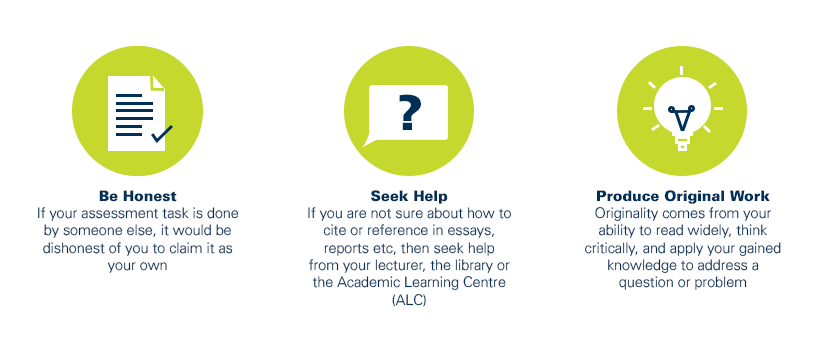
As a CQUniversity student you are expected to act honestly in all aspects of your academic work.
Any assessable work undertaken or submitted for review or assessment must be your own work. Assessable work is any type of work you do to meet the assessment requirements in the unit, including draft work submitted for review and feedback and final work to be assessed.
When you use the ideas, words or data of others in your assessment, you must thoroughly and clearly acknowledge the source of this information by using the correct referencing style for your unit. Using others’ work without proper acknowledgement may be considered a form of intellectual dishonesty.
Participating honestly, respectfully, responsibly, and fairly in your university study ensures the CQUniversity qualification you earn will be valued as a true indication of your individual academic achievement and will continue to receive the respect and recognition it deserves.
As a student, you are responsible for reading and following CQUniversity’s policies, including the Student Academic Integrity Policy and Procedure. This policy sets out CQUniversity’s expectations of you to act with integrity, examples of academic integrity breaches to avoid, the processes used to address alleged breaches of academic integrity, and potential penalties.
What is a breach of academic integrity?
A breach of academic integrity includes but is not limited to plagiarism, self-plagiarism, collusion, cheating, contract cheating, and academic misconduct. The Student Academic Integrity Policy and Procedure defines what these terms mean and gives examples.
Why is academic integrity important?
A breach of academic integrity may result in one or more penalties, including suspension or even expulsion from the University. It can also have negative implications for student visas and future enrolment at CQUniversity or elsewhere. Students who engage in contract cheating also risk being blackmailed by contract cheating services.
Where can I get assistance?
For academic advice and guidance, the Academic Learning Centre (ALC) can support you in becoming confident in completing assessments with integrity and of high standard.
What can you do to act with integrity?