Overview
This unit provides you with advanced knowledge of contemporary nursing practice in the Australian healthcare industry. You will examine current legislation, registration standards and scope of practice documents in order to organise and delegate safe and effective healthcare for individuals, families and groups. Ethical and legal considerations that arise from working in the nursing profession will be critically analysed, and you will consider ethical, professional and self-management implications for practice. You will be encouraged to demonstrate sound judgment in applying legal and ethical frameworks in a simulated activity. You will critically evaluate the use of evidence-informed practice in nursing and will examine its significance in clinical leadership. This allows you to design and communicate a quality improvement plan in a simulated health setting.
Details
Pre-requisites or Co-requisites
There are no requisites for this unit.
Important note: Students enrolled in a subsequent unit who failed their pre-requisite unit, should drop the subsequent unit before the census date or within 10 working days of Fail grade notification. Students who do not drop the unit in this timeframe cannot later drop the unit without academic and financial liability. See details in the Assessment Policy and Procedure (Higher Education Coursework).
Offerings For Term 1 - 2026
Attendance Requirements
All on-campus students are expected to attend scheduled classes - in some units, these classes are identified as a mandatory (pass/fail) component and attendance is compulsory. International students, on a student visa, must maintain a full time study load and meet both attendance and academic progress requirements in each study period (satisfactory attendance for International students is defined as maintaining at least an 80% attendance record).
Recommended Student Time Commitment
Each 6-credit Postgraduate unit at CQUniversity requires an overall time commitment of an average of 12.5 hours of study per week, making a total of 150 hours for the unit.
Class Timetable
Assessment Overview
Assessment Grading
This is a graded unit: your overall grade will be calculated from the marks or grades for each assessment task, based on the relative weightings shown in the table above. You must obtain an overall mark for the unit of at least 50%, or an overall grade of 'pass' in order to pass the unit. If any 'pass/fail' tasks are shown in the table above they must also be completed successfully ('pass' grade). You must also meet any minimum mark requirements specified for a particular assessment task, as detailed in the 'assessment task' section (note that in some instances, the minimum mark for a task may be greater than 50%). Consult the University's Grades and Results Policy for more details of interim results and final grades.
All University policies are available on the CQUniversity Policy site.
You may wish to view these policies:
- Grades and Results Policy
- Assessment Policy and Procedure (Higher Education Coursework)
- Review of Grade Procedure
- Student Academic Integrity Policy and Procedure
- Academic Progression Policy and Procedure
- Student Refund and Credit Balance Policy and Procedure
- Complaints Policy and Procedure
- Information and Communications Technology Acceptable Use Policy and Procedure
This list is not an exhaustive list of all University policies. The full list of University policies are available on the CQUniversity Policy site.
Feedback, Recommendations and Responses
Every unit is reviewed for enhancement each year. At the most recent review, the following staff and student feedback items were identified and recommendations were made.
Feedback from anonymous questionnaire on Microsoft Teams
Nine of the 12 students who responded strongly agreed that the learning expectations were clearly defined.
Clearly define the expectations for each term.
Feedback from anonymous questionnaire on Microsoft Teams
Nine of the 12 students who responded agreed that the course was well organised, while an additional three students strongly agreed.
Build on these successful methods by developing additional learning materials (e.g., visual aids, practical examples, or interactive tools) that align with the teaching approach.
Feedback from anonymous questionnaire on Microsoft Teams
All twelve students who responded strongly agreed that the course was taught in a manner that helped them understand the underlying concepts.
Continue using the current teaching strategies, as they effectively support student understanding of underlying concepts.
Feedback from anonymous questionnaire on Microsoft Teams
Ten of the 12 students who responded agreed that the course was interesting and important.
Given that ten students agreed the course was both interesting and important, it is recommended that the current course content and structure be retained and further enhanced through engaging, real-world applications. This positive feedback also suggests value in promoting the course more widely to attract future enrolments and support student engagement across similar programs.
Feedback from email
Content and teaching were relevant, well organised and effective. The weekly classes prepared us well for the quiz. I appreciate that it was referred to as a quiz and not an exam. It lightened the pressure. Having the time we did for the quiz was excellent as it gave me the chance to actually think about the questions, refer to notes and references, and then answer. Thinking critically doesn't happen instantly Having that time is important.
Continue to structure weekly classes to align closely with assessment tasks, as students have found this approach effective in preparing for the quiz. Maintain the use of the term quiz rather than exam, as this has been shown to reduce student anxiety and foster a more positive learning environment. Additionally, preserve the time allocation for the quiz, as it supports deeper critical thinking and allows students to engage meaningfully with the content, refer to notes and references, and respond thoughtfully. These elements collectively contribute to a supportive and pedagogically sound assessment experience.
- Apply legal and ethical frameworks and professional codes and guidelines to nursing practice
- Delegate nursing care in an appropriate manner, to optimise patient outcomes in simulated scenarios
- Evaluate sources of evidence in order to design an evidence-informed nursing care plan
- Apply the principles of clinical leadership to construct a best-practice change concept.
The unit learning outcomes are linked to the Nursing and Midwifery Board of Australia's "Registered Nurses Standards for Practice".
Alignment of Assessment Tasks to Learning Outcomes
| Assessment Tasks | Learning Outcomes | |||
|---|---|---|---|---|
| 1 | 2 | 3 | 4 | |
| 1 - Online Quiz(zes) - 20% | ||||
| 2 - Written Assessment - 60% | ||||
| 3 - Presentation - 20% | ||||
Alignment of Graduate Attributes to Learning Outcomes
| Graduate Attributes | Learning Outcomes | |||
|---|---|---|---|---|
| 1 | 2 | 3 | 4 | |
| 1 - Knowledge | ||||
| 2 - Communication | ||||
| 3 - Cognitive, technical and creative skills | ||||
| 4 - Research | ||||
| 5 - Self-management | ||||
| 6 - Ethical and Professional Responsibility | ||||
| 7 - Leadership | ||||
| 8 - First Nations Knowledges | ||||
| 9 - Aboriginal and Torres Strait Islander Cultures | ||||
Textbooks
There are no required textbooks.
IT Resources
- CQUniversity Student Email
- Internet
- Unit Website (Moodle)
- Academic Learning Centre services
- CQUniversity library literature search tools
- Microsoft Word
- Wordprocessing, spreadsheeting and powerpoint software
- Zoom account (Free)
- Zoom app on your smart phone or access to Zoom on your laptop
- Laptop/Computer
- CQUniveristy Library Resources
- CQU Library hosted Literature Databases
- Microsoft Teams (both microphone and webcam capability)
- EndNote (bibliographical software). EndNote bibliographic software to format your references is NOT mandatory. However, it will be a great tool to manage your research references and cite them in texts. Consult ITD for instructions on how to download this software. It is easy to use and very helpful. See https://my.cqu.edu.au/group/it-services/endonte to access the software
- Zoom access: microphone and webcam required
- CQUniversity Library Nursing/Midwifery/Social Work Resources
- Australian Standards (through CQU library)
- Zoom ( both microphone and webcam capability)
All submissions for this unit must use the referencing style: American Psychological Association 7th Edition (APA 7th edition)
For further information, see the Assessment Tasks.
s.ohlin@cqu.edu.au
d.lelagadec@cqu.edu.au
Week 1
Begin Date: 09 Mar 2026Module/Topic
E-book 1: Person-centred Care
Chapter
Review the Moodle site and click on all the links.
Find out what is in Student Support?
Find out how to find the library?
Click on the link to learn about the Academic Learning Centre.
Readings and activities as outlined in the E-Book.
Events and Submissions/Topic
Activity: Access the Teams page and introduce yourself to your colleagues by providing your name and maybe why you are studying this unit and course.
Check out the Academic Learning Centre (ALC), which has dedicated resources for your unit. Week 2 ALC class will outline your assessment
Assessments: Review the assessment tasks and make a study plan.
Foundations of Academic Integrity Program: Complete your annual program.
Announcements and Discussion Teams: Check for posts and updates.
Week 2
Begin Date: 16 Mar 2026Module/Topic
E-book 1: Person-centred Care
Chapter
Readings and activities as outlined in the E-Book.
Events and Submissions/Topic
Zoom/Teams – Workshop as scheduled in the Moodle Virtual Classes tab.
Starts with ALC in the afternoon session. ALC time management, referencing and analysing the task.
Announcement and Discussion Teams – Check for posts and updates.
Student email – Check your student email or Teams at least once per week for important communications.
Week 3
Begin Date: 23 Mar 2026Module/Topic
E-Book 2: Doing a Literature Review
Chapter
Readings and activities as outlined in the E-Book.
Events and Submissions/Topic
Zoom/Teams – Workshop as scheduled in the Moodle Virtual Classes tab.
Announcement and Discussion Teams – Check for posts and updates.
Student email – Check your student email or Teams at least once per week for important communications.
Week 4
Begin Date: 30 Mar 2026Module/Topic
E-Book 2: Doing a Literature Review
Chapter
Readings and activities as outlined in the E-Book.
Events and Submissions/Topic
Zoom/Teams – Workshop as scheduled in the Moodle Virtual Classes tab.
Census Date – Tuesday Week 4
Sentence and paragraph structure with the ALC in the afternoon class.
Announcement and Discussion Teams – Check for new posts and updates.
Student email – Check your student email or Teams at least once per week for important communications.
Week 5
Begin Date: 06 Apr 2026Module/Topic
E-Book 2: Doing a Literature Review
Chapter
Readings and activities as outlined in the E-Book.
Events and Submissions/Topic
Zoom/Teams – Workshop as scheduled in the Moodle Virtual Classes tab.
Announcement and Discussion Teams – Check for new posts and updates.
Student email – Check your student email or Teams at least once per week for important communications.
Week 6
Begin Date: 13 Apr 2026Module/Topic
E-Book 3: Scope of Practice
Chapter
Readings and activities as outlined in the E-Book.
Events and Submissions/Topic
Zoom/Teams – Workshop as scheduled in the Moodle Virtual Classes tab.
Announcement and Discussion Teams – Check for new posts and updates.
Student email – Check your student email or Teams at least once per week for important communications.
Online Quiz Due: Week 6 Wednesday (15 Apr 2026) 11:59 pm AEST
Vacation Week
Begin Date: 20 Apr 2026Module/Topic
This is a designated vacation week. Enjoy a well-earned rest.
Chapter
Please use this mid-term break as an opportunity to rest and recover. Enjoy your break!
Events and Submissions/Topic
No timetabled learning activities. Please use this week to progress your assessments.
Week 7
Begin Date: 27 Apr 2026Module/Topic
E-Book 3: Scope of Practice
Chapter
Readings and activities as outlined in the E-Book.
Events and Submissions/Topic
Zoom/Teams – Workshop as scheduled in the Moodle Virtual Classes tab.
Announcement and Discussion Teams – Check for new posts and updates.
Referencing with the ALC in the afternoon class.
Student email – Check your student email or Teams at least once per week for important communications.
Week 8
Begin Date: 04 May 2026Module/Topic
E-Book 4: Legal, ethical and professional practice
Chapter
Readings and activities as outlined in the E-Book.
Events and Submissions/Topic
Zoom/Teams – Workshop as scheduled in the Moodle Virtual Classes tab.
Announcement and Discussion Teams – Check for new posts and updates.
Student email – Check your student email or Teams at least once per week for important communications.
Written Assessment Due: Week 8 Wednesday (6 May 2026) 4:00 pm AEST
Week 9
Begin Date: 11 May 2026Module/Topic
E-Book 4: Legal, ethical and professional practice
Chapter
Readings and activities as outlined in the E-Book.
Events and Submissions/Topic
Zoom/Teams – Workshop as scheduled in the Moodle Virtual Classes tab.
Announcement and Discussion Teams – Check for new posts and updates.
Student email – Check your student email or Teams at least once per week for important communications.
Week 10
Begin Date: 18 May 2026Module/Topic
E-Book 4: Legal, ethical and professional practice
Chapter
Readings and activities as outlined in the E-Book.
Events and Submissions/Topic
Zoom/Teams – Workshop as scheduled in the Moodle Virtual Classes tab.
Announcement and Discussion Teams – Check for new posts and updates.
Student email – Check your student email or Teams at least once per week for important communications.
Presentation Due: Week 10 Wednesday (20 May 2026) 4:00 pm AEST
Week 11
Begin Date: 25 May 2026Module/Topic
Please fill in the "have your say" email evaluations for this unit.
Chapter
Finalise readings and activities as outlined in the E-Book.
Events and Submissions/Topic
Announcement and Discussion Teams – Check for new posts and updates.
Student email – Check your student email or Teams at least once per week for important communications.
Student Unit and Teaching Evaluation survey – We encourage you to provide feedback about your unit and teaching experiences in this unit. The survey opens in Week 11 and closes one week before the release of grades.
Week 12
Begin Date: 01 Jun 2026Module/Topic
Revision week
Chapter
Use this week to revise the unit learning material.
Events and Submissions/Topic
Announcement and Discussion Teams – Check for new posts and updates.
Student email – Check your student email or Teams at least once per week for important communications.
Student Unit and Teaching Evaluation survey – Please complete the unit evaluation survey.
Congratulations on completing this unit. Don’t forget to check your unit enrolments for next term.
Exam Week
Begin Date: 08 Jun 2026Module/Topic
Nil.
Chapter
Nil.
Events and Submissions/Topic
Nil.
As this unit is offered online, students are asked to prepare their own individual study plan to undertake self-led and self-directed study throughout the term. A key to your success is a strategic self-directed approach to learning and regular contact with your Unit Coordinator. Please check the Teams page and your CQUniversity email at least once a week. There will be regular announcements about assessments and unit resources throughout the term, and reviewing this information is essential to unit knowledge and your success. CQUniversity communicates with students through the CQUniversity email.
1 Online Quiz(zes)
You will be completing an open-book online quiz. The Quiz will assess your knowledge and understanding of the materials covered in Weeks 1–5.
Intructions
Please refer to the assessment task instructions on the unit Moodle site.
Academic Integrity
You must abide by the principles of academic integrity (see Student Academic Integrity Policy and Procedure). Completion of this assessment with another party or sharing of responses is not permitted at any time.
Level of GenAI Use Allowed: Level 1: The use of any generative artificial intelligence is not permitted within this assessment.
Extensions
Extensions are not available for the quiz as per policy. The 72-hour grace period does not apply to this assessment.
Minimum Pass Criteria
- You must achieve a minimum grade of 49.5% to pass this assessment and you must pass this assessment to pass the unit.
- You must achieve a cumulative grade of at least 49.5% across all assessments to pass this unit.
Week 6 Wednesday (15 Apr 2026) 11:59 pm AEST
The quiz will open from 00:01 hours (AEST) Wednesday 15/04/26 and will close on 23:59 hours (AEST) Wednesday 15/04/2026
Week 6 Thursday (16 Apr 2026)
Results are available when the quiz closes
Please refer to the Moodle site for more details on how marks will be assigned.
- Evaluate sources of evidence in order to design an evidence-informed nursing care plan
- Apply the principles of clinical leadership to construct a best-practice change concept.
2 Written Assessment
The aim of this assessment is to provide you with an opportunity to develop your ability to formulate a systematic database search strategy using the PICO or PEO framework, evaluate current evidence, and apply professional, legal, and ethical frameworks to clinical decision-making.
Instructions
Please refer to the assessment task instructions on the unit Moodle site.
Academic Integrity
You must abide by the principles of academic integrity (see Student Academic Integrity Policy and Procedure). Completion of this assessment with another party or sharing of responses is not permitted at any time. This assessment requires students to adhere to the guidelines on the use of artificial intelligence tools as specified in the Artificial Intelligence Assessment Scale (AIAS). Any misuse or lack of disclosure regarding the use of AI tools will be considered a breach of academic integrity. CQUniversity Gen AI tools approved for use in this assessment are Microsoft CoPilot (protected version), Studiosity and Grammarly. You are permitted to use technology or tools that assist with spelling, grammar or formatting.
Level of GenAI Use Allowed: Level 2: You may use Al for planning, idea development, and research. Your final submission should show how you have developed and refined these ideas.
Extensions
Extensions to this assessment are available as per policy. The 72-hour grace period may apply to this assessment.
Minimum Pass Criteria
- You must achieve a cumulative grade of at least 49.5% across all assessments to pass this unit.
- In order for a supplementary assessment to be considered, all assessment tasks must be reasonably attempted in this unit.
Week 8 Wednesday (6 May 2026) 4:00 pm AEST
Week 11 Wednesday (27 May 2026)
Students will be advised of release of assessment marking via an announcement posted to the Announcement's Board on the Unit Moodle site. Please note, the 'Return to Students Information" is an approximate date.
Refer to the marking rubric on the Moodle site for more detail on how marks will be assigned.
- Apply legal and ethical frameworks and professional codes and guidelines to nursing practice
- Evaluate sources of evidence in order to design an evidence-informed nursing care plan
3 Presentation
The aim of this assessment is to provide you with the opportunity to articulate your decisions regarding staff delegation, including the rationales for these decisions.
Instructions
Please refer to the assessment task instructions on the unit Moodle site.
Academic Integrity
You must abide by the principles of academic integrity (see Student Academic Integrity Policy and Procedure). Completion of this assessment with another party or sharing of responses is not permitted at any time. This assessment requires students to adhere to the guidelines on the use of artificial intelligence tools as specified in the Artificial Intelligence Assessment Scale (AIAS). Any misuse or lack of disclosure regarding the use of AI tools will be considered a breach of academic integrity. CQUniversity Gen AI tools approved for use in this assessment are Microsoft CoPilot (protected version), Studiosity and Grammarly. You are permitted to use technology or tools that assist with spelling, grammar or formatting.
Level of GenAI Use Allowed: Level 2: You may use Al for planning, idea development, and research. Your final submission should show how you have developed and refined these ideas.
Extentions
Extensions to this assessment are available as per policy. The 72-hour grace period may apply to this assessment.
Minimum Pass Criteria
- You must achieve a minimum grade of 49.5% to pass this assessment and you must pass this assessment to pass the unit.
- You must achieve a cumulative grade of at least 49.5% across all assessments to pass this unit.
- In order for a supplementary assessment to be considered, all assessment tasks must be reasonably attempted in this unit.
In accordance with policy, any marks and/or grades for assessments released to students prior to Certification of Grades are provisional and are subject to moderation and confirmation through the relevant Program and Divisional Assessment Committees
Week 10 Wednesday (20 May 2026) 4:00 pm AEST
Week 12 Wednesday (3 June 2026)
Students will be advised of release of assessment marking via an announcement posted to the Announcement's Board on the Unit Moodle site. Please note, the 'Return to Students Information" is an approximate date.
Refer to the marking rubric on the Moodle site for more details on how marks will be assigned.
- Apply legal and ethical frameworks and professional codes and guidelines to nursing practice
- Delegate nursing care in an appropriate manner, to optimise patient outcomes in simulated scenarios
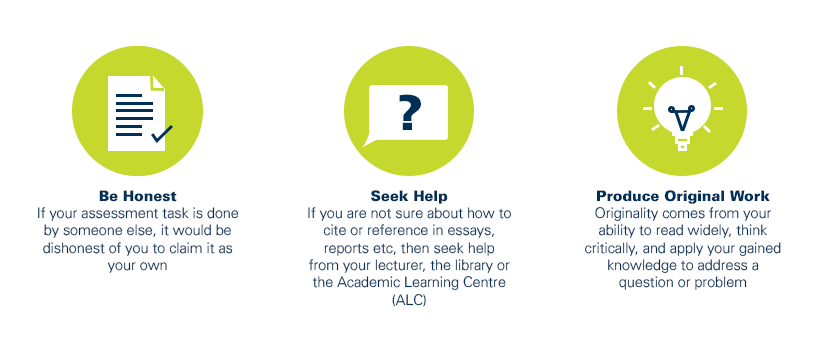
As a CQUniversity student you are expected to act honestly in all aspects of your academic work.
Any assessable work undertaken or submitted for review or assessment must be your own work. Assessable work is any type of work you do to meet the assessment requirements in the unit, including draft work submitted for review and feedback and final work to be assessed.
When you use the ideas, words or data of others in your assessment, you must thoroughly and clearly acknowledge the source of this information by using the correct referencing style for your unit. Using others’ work without proper acknowledgement may be considered a form of intellectual dishonesty.
Participating honestly, respectfully, responsibly, and fairly in your university study ensures the CQUniversity qualification you earn will be valued as a true indication of your individual academic achievement and will continue to receive the respect and recognition it deserves.
As a student, you are responsible for reading and following CQUniversity’s policies, including the Student Academic Integrity Policy and Procedure. This policy sets out CQUniversity’s expectations of you to act with integrity, examples of academic integrity breaches to avoid, the processes used to address alleged breaches of academic integrity, and potential penalties.
What is a breach of academic integrity?
A breach of academic integrity includes but is not limited to plagiarism, self-plagiarism, collusion, cheating, contract cheating, and academic misconduct. The Student Academic Integrity Policy and Procedure defines what these terms mean and gives examples.
Why is academic integrity important?
A breach of academic integrity may result in one or more penalties, including suspension or even expulsion from the University. It can also have negative implications for student visas and future enrolment at CQUniversity or elsewhere. Students who engage in contract cheating also risk being blackmailed by contract cheating services.
Where can I get assistance?
For academic advice and guidance, the Academic Learning Centre (ALC) can support you in becoming confident in completing assessments with integrity and of high standard.
What can you do to act with integrity?