Overview
This unit builds on the knowledge, skills and dispositions from the foundational nursing units to explore the nursing care for individuals experiencing an acute episode of illness. Given Australia’s ageing population, it is important to recognise chronic illnesses are often first diagnosed as a result of an acute alteration. This unit will equip you to apply an evidence-based approach to assessing, planning, implementing, evaluating and documenting nursing care for patients experiencing acute illness. You will consider the nursing process and clinical decision-making required to support individuals with acute conditions and/or early recognition of clinical deterioration.
Details
Pre-requisites or Co-requisites
Pre-requisites: NURS11170 or admission to CM77
Important note: Students enrolled in a subsequent unit who failed their pre-requisite unit, should drop the subsequent unit before the census date or within 10 working days of Fail grade notification. Students who do not drop the unit in this timeframe cannot later drop the unit without academic and financial liability. See details in the Assessment Policy and Procedure (Higher Education Coursework).
Offerings For Term 1 - 2026
Attendance Requirements
All on-campus students are expected to attend scheduled classes - in some units, these classes are identified as a mandatory (pass/fail) component and attendance is compulsory. International students, on a student visa, must maintain a full time study load and meet both attendance and academic progress requirements in each study period (satisfactory attendance for International students is defined as maintaining at least an 80% attendance record).
Recommended Student Time Commitment
Each 6-credit Undergraduate unit at CQUniversity requires an overall time commitment of an average of 12.5 hours of study per week, making a total of 150 hours for the unit.
Class Timetable
Assessment Overview
Assessment Grading
This is a graded unit: your overall grade will be calculated from the marks or grades for each assessment task, based on the relative weightings shown in the table above. You must obtain an overall mark for the unit of at least 50%, or an overall grade of 'pass' in order to pass the unit. If any 'pass/fail' tasks are shown in the table above they must also be completed successfully ('pass' grade). You must also meet any minimum mark requirements specified for a particular assessment task, as detailed in the 'assessment task' section (note that in some instances, the minimum mark for a task may be greater than 50%). Consult the University's Grades and Results Policy for more details of interim results and final grades.
All University policies are available on the CQUniversity Policy site.
You may wish to view these policies:
- Grades and Results Policy
- Assessment Policy and Procedure (Higher Education Coursework)
- Review of Grade Procedure
- Student Academic Integrity Policy and Procedure
- Academic Progression Policy and Procedure
- Student Refund and Credit Balance Policy and Procedure
- Complaints Policy and Procedure
- Information and Communications Technology Acceptable Use Policy and Procedure
This list is not an exhaustive list of all University policies. The full list of University policies are available on the CQUniversity Policy site.
Feedback, Recommendations and Responses
Every unit is reviewed for enhancement each year. At the most recent review, the following staff and student feedback items were identified and recommendations were made.
Feedback from SUTE Unit Comments 2025
Students valued the range of learning resources, including podcasts and interactive tutorials, which supported flexible and engaging learning.
Continue offering diverse learning resources, including weekly podcasts with industry experts and interactive tutorials, to maintain high engagement and accommodate different learning preferences.
Feedback from SUTE Unit Comments 2025, End of Term UC Report 2025
Some students found Assessment 1 timing too early in the term and Assessment 2 word count too restrictive for the required depth of analysis.
Move Assessment 1 to Week 5 to allow for greater content assimilation, particularly for Enrolled Nurse (EN) and direct-entry students. Increase word limit for Assessment 2 to allow for more comprehensive responses, while ensuring alignment between the task, rubric, and tutorial guidance.
Feedback from SUTE Unit Comments 2025
Students noted inconsistencies in marking and feedback across assessors, with some feedback perceived as unclear or overly critical.
Strengthen marker calibration through consensus moderation sessions, provision of exemplar responses, and clearer marking guidelines to ensure consistent interpretation of rubrics and constructive feedback delivery.
Feedback from SUTE Unit Comments 2025
Some students indicated that assessment support sessions occurred too close to due dates, limiting the opportunity to apply feedback or clarification.
Schedule assessment Q&A sessions and Academic Learning Centre drop-ins at least two weeks before submission dates to maximise usefulness and reduce last-minute confusion.
- Investigate physiological, pathophysiological and psychosocial factors associated with the early recognition and escalation of care for individuals with acute alterations in health.
- Assess, plan, implement, evaluate and communicate priority care needs of the individual with an acute alteration in their health.
- Apply evidence-based interventions that incorporate psychosocial, ethico-legal, and cultural safety considerations in caring for the individual with acute health alterations.
- Analyse the independent and collaborative roles of the registered nurse caring for individuals experiencing acute health alterations within diverse inter-professional care contexts.
Content in this unit incorporates a number of professional nursing requirements
Nursing and Midwifery Board of Australia decision-Making Framework (DMF) - Nursing
Nursing and Midwifery Board of Australia Registered Nurse Standards for Practice
Thinks critically and analyses nursing practice
Maintains the capability for practice
Develops a plan for nursing practice
Evaluates outcomes to inform nursing practice
Nursing and Midwifery Board of Australia Nursing Code of Conduct
Legal compliance
Person-centred practice
Cultural practice and respectful relationships
Professional behaviour
Research in health
Health and wellbeing
International Council of Nursing Code of Ethics for Nursing
Nurses and People
Nurses and Practice
Nurses and the Profession
Nurses and co-workers
National Safety and Quality Health Service Standards
Clinical governance
Partnering with consumers
Preventing and Controlling healthcare-associated infection
Medication safety
Comprehensive care
Communicating for safety
Recognising and responding to acute deterioration
Patient Safety Competency Framework
Person-centred care
Therapeutic communication
Cultural competence
Teamwork and collaborative practice
Clinical reasoning
Evidence-based practice
Preventing, minimising and responding to adverse events
Infection prevention and control
Medication safety
Aged Care Quality Standards
Consumer dignity and choice
Ongoing assessment and planning with consumer
Personal care and clinical care
Services and supports for daily living
Organisation’s service environment
Feedback and complaints
Human resources
Organisational governance
Alignment of Assessment Tasks to Learning Outcomes
| Assessment Tasks | Learning Outcomes | |||
|---|---|---|---|---|
| 1 | 2 | 3 | 4 | |
| 1 - Online Quiz(zes) - 40% | ||||
| 2 - Written Assessment - 60% | ||||
Alignment of Graduate Attributes to Learning Outcomes
| Graduate Attributes | Learning Outcomes | |||
|---|---|---|---|---|
| 1 | 2 | 3 | 4 | |
| 1 - Communication | ||||
| 2 - Problem Solving | ||||
| 3 - Critical Thinking | ||||
| 4 - Information Literacy | ||||
| 5 - Team Work | ||||
| 6 - Information Technology Competence | ||||
| 7 - Cross Cultural Competence | ||||
| 8 - Ethical practice | ||||
| 9 - Social Innovation | ||||
| 10 - First Nations Knowledges | ||||
| 11 - Aboriginal and Torres Strait Islander Cultures | ||||
Textbooks
Skills in Nursing
- 2nd Edition (2021)
- Authors: Berman., Snyder., Levett-Jones., Trish Burton., Nichole Harvey
- Pearson Education
- Melbourne Melbourne , Victoria , Australia
- ISBN: 9781488620690
LeMone and Burke's Medical-Surgical Nursing
- 5th Edition (2024)
- Authors: Bauldoff., Gubrud., Carno., Levett-Jones., Carville., Hales,. Hillman,. Houlis-Berry., Langtree., Moxham., Reid-Searl., Stanley., Stanton
- Pearson Education
- Melbourne Melbourne , Victoria , Australia
- ISBN: 9780655709268
IT Resources
- CQUniversity Student Email
- Internet
- Unit Website (Moodle)
- Academic Learning Centre services
- Computer
- Microsoft Office
- EndNote (bibliographical software). EndNote bibliographic software to format your references is NOT mandatory. This software is available to both on-campus and flex students and is available for Windows and Mac users. Consult ITD for instructions on how to download this software. You are encouraged to trial this software early as I will be providing tips on its use and links to instructions each week. It is easy to use and very helpful. See https://my.cqu.edu.au/group/it-services/endonte to access the software
- CQUniveristy Library Resources
- Zoom access for weekly meetings
All submissions for this unit must use the referencing style: American Psychological Association 7th Edition (APA 7th edition)
For further information, see the Assessment Tasks.
e.r.brown@cqu.edu.au
m.kelso@cqu.edu.au
r.l.cross@cqu.edu.au
n.branch@cqu.edu.au
r.g.harland@cqu.edu.au
k.l.morgan@cqu.edu.au
Week 1
Begin Date: 09 Mar 2026Module/Topic
Introduction to the Nursing Process, Overview of the Primary and Secondary Survey and Sociocultural and Lifestyle factors
Chapter
Learning activities and readings within the Module Tile on Moodle.
Events and Submissions/Topic
Lectures are pre-recorded in the week's workbook and available on the Moodle site.
Online Tutorial via Zoom. The Tutorials will cover the unit content, module activities, provide a Q&A and will discuss assessments. Tutorials will be recorded for those students who cannot attend.
Review and complete the Foundations of Academic Integrity.
Announcements and Discussion Forums: Check for posts and updates
Student email: Check your student email at least twice per week for important communications.
Week 2
Begin Date: 16 Mar 2026Module/Topic
Nursing Care of People Experiencing Sepsis
Chapter
Learning activities and readings within the Module Tile on Moodle.
Events and Submissions/Topic
Lectures are pre-recorded in the week's workbook and available on the Moodle site.
Online Tutorial via Zoom. The Tutorials will cover the unit content, module activities, provide a Q&A and will discuss assessments. Tutorials will be recorded for those students who cannot attend.
Drop‑In Sessions via Zoom will begin in Week 2 on Tuesdays. These sessions provide students with an opportunity to speak with unit coordinators about the weekly content and any upcoming assessments.
Announcements and Discussion Forums: Check for posts and updates.
Week 3
Begin Date: 23 Mar 2026Module/Topic
The Perioperative Environment
Chapter
Learning activities and readings within the Module Tile on Moodle.
Events and Submissions/Topic
Census Date is next week. If you are struggling, please contact your Unit Coordinator for help
Lectures are pre-recorded in the week's workbook and available on the Moodle site.
Online Tutorial via Zoom. The Tutorials will cover the unit content, module activities, provide a Q&A and will discuss assessments. Tutorials will be recorded for those students who cannot attend.
Drop‑In Session via Zoom. These sessions provide students with an opportunity to speak with unit coordinators about the weekly content and any upcoming assessments.
Announcements and Discussion Forums: Check for posts and updates.
Student email: Check your student email at least twice per week for important communications.
Week 4
Begin Date: 30 Mar 2026Module/Topic
Acute Alteration in Respiratory Health
Chapter
Learning activities and readings within the Module Tile on Moodle.
Events and Submissions/Topic
Census Date – Tuesday 31st March 2026 Week 4
Lectures are pre-recorded in the week's workbook and available on the Moodle site.
Assessment 1 Information Session. Session will be recorded for those who cannot attend and published on Moodle.
Online Tutorial via Zoom. The Tutorials will cover the unit content, module activities, provide a Q&A and will discuss assessments. Tutorials will be recorded for those students who cannot attend.
Drop‑In Session via Zoom. These sessions provide students with an opportunity to speak with unit coordinators about the weekly content and any upcoming assessments.
Announcements and Discussion Forums: Check for posts and updates.
Student email: Check your student email at least twice per week for important communications.
Week 5
Begin Date: 06 Apr 2026Module/Topic
Acute Alterations in Cardiovascular Health
Chapter
Learning activities and readings within the Module Tile on Moodle.
Events and Submissions/Topic
Lectures are pre-recorded in the week's workbook and available on the Moodle site.
Online Tutorial via Zoom. The Tutorials will cover the unit content, module activities, provide a Q&A and will discuss assessments. Tutorials will be recorded for those students who cannot attend.
Drop‑In Session via Zoom. These sessions provide students with an opportunity to speak with unit coordinators about the weekly content and any upcoming assessments.
Announcements and Discussion Forums: Check for posts and updates.
Student email: Check your student email at least twice per week for important communications.
Week 6
Begin Date: 13 Apr 2026Module/Topic
Acute Alterations in Neurological Health
Chapter
Learning activities and readings within the Module Tile on Moodle.
Events and Submissions/Topic
Lectures are pre-recorded in the week's workbook and available on the Moodle site.
Online Tutorial via Zoom. The Tutorials will cover the unit content, module activities, provide a Q&A and will discuss assessments. Tutorials will be recorded for those students who cannot attend.
Drop‑In Session via Zoom. These sessions provide students with an opportunity to speak with unit coordinators about the weekly content and any upcoming assessments.
Announcements and Discussion Forums: Check for posts and updates.
Student email: Check your student email at least twice per week for important communications.
Assessment One: Online Quiz
Opens Monday 13th April 2026 at 0001 hours (AEST)
Closes Wednesday 18th February 2026 at 2359 hours (AEST)
Vacation Week
Begin Date: 20 Apr 2026Module/Topic
Vacation Week
Chapter
Please use this mid-term break as an opportunity to rest and recover. Enjoy your break!
Events and Submissions/Topic
No timetabled learning activities. Please use this week to progress your assessments.
Week 7
Begin Date: 27 Apr 2026Module/Topic
Acute Alterations in Renal/Kidney Health
Chapter
Learning activities and readings within the Module Tile on Moodle.
Events and Submissions/Topic
Lectures are pre-recorded in the week's workbook and available on the Moodle site.
Online Tutorial via Zoom. The Tutorials will cover the unit content, module activities, provide a Q&A and will discuss assessments. Tutorials will be recorded for those students who cannot attend.
Drop‑In Session via Zoom. These sessions provide students with an opportunity to speak with unit coordinators about the weekly content and any upcoming assessments.
Announcements and Discussion Forums: Check for posts and updates.
Student email: Check your student email at least twice per week for important communications.
Week 8
Begin Date: 04 May 2026Module/Topic
Acute Alterations in Gastrointestinal Health
Chapter
Learning activities and readings within the Module Tile on Moodle.
Events and Submissions/Topic
Lectures are pre-recorded in the week's workbook and available on the Moodle site.
Online Tutorial via Zoom. The Tutorials will cover the unit content, module activities, provide a Q&A and will discuss assessments. Tutorials will be recorded for those students who cannot attend.
Drop‑In Session via Zoom. These sessions provide students with an opportunity to speak with unit coordinators about the weekly content and any upcoming assessments.
Announcements and Discussion Forums: Check for posts and updates.
Student email: Check your student email at least twice per week for important communications.
Week 9
Begin Date: 11 May 2026Module/Topic
Acute Alterations in Endocrine Health
Chapter
Learning activities and readings within the Module Tile on Moodle.
Events and Submissions/Topic
Lectures are pre-recorded in the week's workbook and available on the Moodle site.
Assessment 2 Information Session. Session will be recorded for those who cannot attend and published on Moodle.
Online Tutorial via Zoom. The Tutorials will cover the unit content, module activities, provide a Q&A and will discuss assessments. Tutorials will be recorded for those students who cannot attend.
Drop‑In Session via Zoom. These sessions provide students with an opportunity to speak with unit coordinators about the weekly content and any upcoming assessments.
Announcements and Discussion Forums: Check for posts and updates.
Student email: Check your student email at least twice per week for important communications.
Week 10
Begin Date: 18 May 2026Module/Topic
Acute Alterations in Reproductive Health
Chapter
Learning activities and readings within the Module Tile on Moodle.
Events and Submissions/Topic
Lectures are pre-recorded in the week's workbook and available on the Moodle site.
Online Tutorial via Zoom. The Tutorials will cover the unit content, module activities, provide a Q&A and will discuss assessments. Tutorials will be recorded for those students who cannot attend.
Drop‑In Session via Zoom. These sessions provide students with an opportunity to speak with unit coordinators about the weekly content and any upcoming assessments.
Announcements and Discussion Forums: Check for posts and updates.
Student email: Check your student email at least twice per week for important communications.
Week 11
Begin Date: 25 May 2026Module/Topic
Acute Alterations in Musculoskeletal Health
Chapter
Learning activities and readings within the Module Tile on Moodle.
Events and Submissions/Topic
Student Unit and Teaching Evaluation survey – We encourage you to provide feedback about your unit and teaching experiences in this unit. The survey opens Week 11 and closes one week before release of grades.
Lectures are pre-recorded in the week's workbook and available on the Moodle site.
Online Tutorial via Zoom. The Tutorials will cover the unit content, module activities, provide a Q&A and will discuss assessments. Tutorials will be recorded for those students who cannot attend.
Drop‑In Session via Zoom. These sessions provide students with an opportunity to speak with unit coordinators about the weekly content and any upcoming assessments.
Announcements and Discussion Forums: Check for posts and updates.
Student email: Check your student email at least twice per week for important communications.
Assessment Two: Case Study
Due Week 11 Wednesday (27th May 2026) 4:00 pm AEST
Assessment Two: Case Study Due: Week 11 Wednesday (27 May 2026) 4:00 pm AEST
Week 12
Begin Date: 01 Jun 2026Module/Topic
Acute Alterations in Ear, Eye and Integumentary Health
Chapter
Learning activities and readings within the Module Tile on Moodle.
Events and Submissions/Topic
Student Unit and Teaching Evaluation survey – Please complete the unit evaluation survey. AND Congratulations on completing this unit. Don’t forget to check your unit enrolments for next term.
Lectures are pre-recorded in the week's workbook and available on the Moodle site.
Online Tutorial via Zoom. The Tutorials will cover the unit content, module activities, provide a Q&A and will discuss assessments. Tutorials will be recorded for those students who cannot attend.
Drop‑In Session via Zoom. These sessions provide students with an opportunity to speak with unit coordinators about the weekly content and any upcoming assessments.
Announcements and Discussion Forums: Check for posts and updates.
Student email: Check your student email at least twice per week for important communications.
Exam Week
Begin Date: 08 Jun 2026Module/Topic
Vacation week
Chapter
Please use this break as an opportunity to rest and recover. Enjoy your break!
Events and Submissions/Topic
No timetabled learning activities.
Vacation/Exam Week
Begin Date: 15 Jun 2026Module/Topic
Vacation week
Chapter
Please use this break as an opportunity to rest and recover. Enjoy your break!
Events and Submissions/Topic
No timetabled learning activities.
As this unit is offered online, students are asked to prepare their own individual study plan to undertake self-led and self-directed study throughout the term. A key to your success is a strategic self-directed approach to learning and regular contact with your Unit Coordinator/s. Please check the Announcements and Discussion forums at least twice a week – there will be regular announcements about assessments and unit resources throughout the term and reviewing this information is essential to unit knowledge and your success. CQUniversity communicates with students through CQUniversity email. We recommend that you access your CQUniversity email at least twice a week so that you do not miss vital information about your studies.
1 Online Quiz(zes)
You will complete an online quiz to demonstrate your knowledge and application of critical thinking in caring for people experiencing acute alteration in health related to content from Weeks 1 to 5.
Instructions
Please refer to the assessment task instructions on the unit Moodle site.
Academic Integrity
You must abide by the principles of academic integrity (see Student Academic Integrity Policy and Procedure). Completion of this assessment with another party or sharing of responses is not permitted at any time. This assessment requires students to adhere to the guidelines on the use of artificial intelligence tools as specified in the Artificial Intelligence Assessment Scale (AIAS). Any misuse or lack of disclosure regarding the use of AI tools will be considered a breach of academic integrity. No Generative AI use is permitted in the completion of this assignment. You must not use AI tools or technology to produce substantive content. You are permitted to use technology or tools that assist with spelling, grammar or formatting.
Level of GenAI Use Allowed: Level 1: You must not use AI at any point during the assessment. You must demonstrate your core skills and knowledge.
Extensions
Extensions to this assessment are not available as per policy. The 72-hour grace period does not apply to this assessment.
Minimum Pass Criteria
· You must achieve a cumulative grade of at least 49.5% across all assessments to pass this unit.
· In order for a supplementary assessment to be considered, all assessment tasks must be reasonably attempted in this unit.
The quiz will open at 00:01 hours (AEST) Monday 13th April 2026 and close at 23:59 hours (AEST) Wednesday 15th April 2026.
Week 6 Thursday (16 Apr 2026)
Quiz results will be available after the quiz has closed.
Assessment criteria will be available on the Moodle site.
- Investigate physiological, pathophysiological and psychosocial factors associated with the early recognition and escalation of care for individuals with acute alterations in health.
- Assess, plan, implement, evaluate and communicate priority care needs of the individual with an acute alteration in their health.
- Apply evidence-based interventions that incorporate psychosocial, ethico-legal, and cultural safety considerations in caring for the individual with acute health alterations.
- Analyse the independent and collaborative roles of the registered nurse caring for individuals experiencing acute health alterations within diverse inter-professional care contexts.
2 Written Assessment
You must read the case study and answer the questions to demonstrate your ability to discuss the care and management of a patient experiencing a deteriorating acute health condition. This discussion will include identifying physiological signs of acute deterioration and inking with underlying pathophysiology as well as the management strategies to improve patient outcome.
Instructions
Please refer to the assessment task instructions on the unit Moodle site.
Academic Integrity
You must abide by the principles of academic integrity (see Student Academic Integrity Policy and Procedure). Completion of this assessment with another party or sharing of responses is not permitted at any time. This assessment requires students to adhere to the guidelines on the use of artificial intelligence tools as specified in the Artificial Intelligence Assessment Scale (AIAS). Any misuse or lack of disclosure regarding the use of AI tools will be considered a breach of academic integrity. No Generative AI use is permitted in the completion of this assignment. You must not use AI tools or technology to produce substantive content. You are permitted to use technology or tools that assist with spelling, grammar or formatting.
Level of GenAI Use Allowed: Level 2: You must not use AI at any point during the assessment. You must demonstrate your core skills and knowledge.
Extensions
Extensions to this assessment are available as per policy. The 72-hour grace period may apply to this assessment.
Minimum Pass Criteria
· You must achieve a cumulative grade of at least 49.5% across all assessments to pass this unit.
· In order for a supplementary assessment to be considered, all assessment tasks must be reasonably attempted in this unit.
Week 11 Wednesday (27 May 2026) 4:00 pm AEST
Submit your assessment via the unit Moodle site in Microsoft Word format only. Late penalties of 5% per day of the available mark may be applied as per the Assessment Policy and Procedure (Higher Education Coursework). Contact TASAC if you experience technical issues submitting your assessment: • Phone toll-free 1300 666 620 • Email tasac@cqu.edu.au
Vacation/Exam Week Wednesday (17 June 2026)
Students will be advised of release of assessment marking via an announcement posted to the Announcement's Board on the Unit Moodle site. Please note, the 'Return to Students Information' is an approximate date
Refer to the marking rubric on the Moodle site for more detail on how marks will be assigned.
- Investigate physiological, pathophysiological and psychosocial factors associated with the early recognition and escalation of care for individuals with acute alterations in health.
- Assess, plan, implement, evaluate and communicate priority care needs of the individual with an acute alteration in their health.
- Apply evidence-based interventions that incorporate psychosocial, ethico-legal, and cultural safety considerations in caring for the individual with acute health alterations.
- Analyse the independent and collaborative roles of the registered nurse caring for individuals experiencing acute health alterations within diverse inter-professional care contexts.
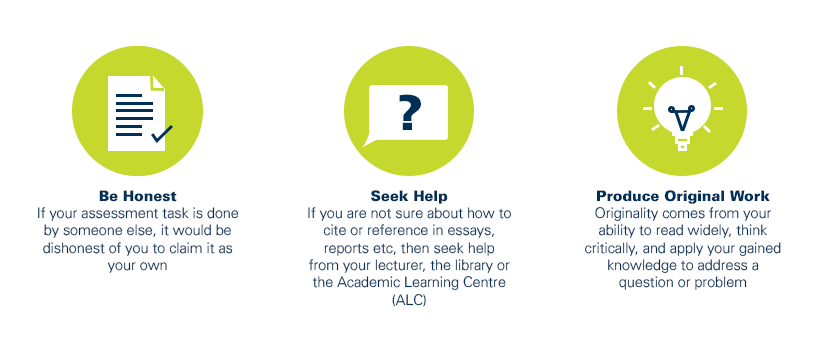
As a CQUniversity student you are expected to act honestly in all aspects of your academic work.
Any assessable work undertaken or submitted for review or assessment must be your own work. Assessable work is any type of work you do to meet the assessment requirements in the unit, including draft work submitted for review and feedback and final work to be assessed.
When you use the ideas, words or data of others in your assessment, you must thoroughly and clearly acknowledge the source of this information by using the correct referencing style for your unit. Using others’ work without proper acknowledgement may be considered a form of intellectual dishonesty.
Participating honestly, respectfully, responsibly, and fairly in your university study ensures the CQUniversity qualification you earn will be valued as a true indication of your individual academic achievement and will continue to receive the respect and recognition it deserves.
As a student, you are responsible for reading and following CQUniversity’s policies, including the Student Academic Integrity Policy and Procedure. This policy sets out CQUniversity’s expectations of you to act with integrity, examples of academic integrity breaches to avoid, the processes used to address alleged breaches of academic integrity, and potential penalties.
What is a breach of academic integrity?
A breach of academic integrity includes but is not limited to plagiarism, self-plagiarism, collusion, cheating, contract cheating, and academic misconduct. The Student Academic Integrity Policy and Procedure defines what these terms mean and gives examples.
Why is academic integrity important?
A breach of academic integrity may result in one or more penalties, including suspension or even expulsion from the University. It can also have negative implications for student visas and future enrolment at CQUniversity or elsewhere. Students who engage in contract cheating also risk being blackmailed by contract cheating services.
Where can I get assistance?
For academic advice and guidance, the Academic Learning Centre (ALC) can support you in becoming confident in completing assessments with integrity and of high standard.
What can you do to act with integrity?