Overview
In this unit, you will explore composition and production techniques for professional film and game audio in the creation of an original score for visual media. You will analyse the composition and sound design techniques of a range of visual media from film to game audio and learn a range of techniques that underpin these styles. You will further explore advanced recording, synthesis and sampling techniques in composing for visual media. In the major portfolio assessment, you will be required to plan for and create an original score and sound design elements for a piece of visual media.
Details
Pre-requisites or Co-requisites
Pre-requisite: Completion of 72 credit points in CG51. Students outside of CG51 may seek approval from the CG51 Head of Course to undertake this unit.
Important note: Students enrolled in a subsequent unit who failed their pre-requisite unit, should drop the subsequent unit before the census date or within 10 working days of Fail grade notification. Students who do not drop the unit in this timeframe cannot later drop the unit without academic and financial liability. See details in the Assessment Policy and Procedure (Higher Education Coursework).
Offerings For Term 2 - 2026
Attendance Requirements
All on-campus students are expected to attend scheduled classes - in some units, these classes are identified as a mandatory (pass/fail) component and attendance is compulsory. International students, on a student visa, must maintain a full time study load and meet both attendance and academic progress requirements in each study period (satisfactory attendance for International students is defined as maintaining at least an 80% attendance record).
Recommended Student Time Commitment
Each 6-credit Postgraduate unit at CQUniversity requires an overall time commitment of an average of 12.5 hours of study per week, making a total of 150 hours for the unit.
Class Timetable
Assessment Overview
Assessment Grading
This is a graded unit: your overall grade will be calculated from the marks or grades for each assessment task, based on the relative weightings shown in the table above. You must obtain an overall mark for the unit of at least 50%, or an overall grade of 'pass' in order to pass the unit. If any 'pass/fail' tasks are shown in the table above they must also be completed successfully ('pass' grade). You must also meet any minimum mark requirements specified for a particular assessment task, as detailed in the 'assessment task' section (note that in some instances, the minimum mark for a task may be greater than 50%). Consult the University's Grades and Results Policy for more details of interim results and final grades.
All University policies are available on the CQUniversity Policy site.
You may wish to view these policies:
- Grades and Results Policy
- Assessment Policy and Procedure (Higher Education Coursework)
- Review of Grade Procedure
- Student Academic Integrity Policy and Procedure
- Academic Progression Policy and Procedure
- Student Refund and Credit Balance Policy and Procedure
- Complaints Policy and Procedure
- Information and Communications Technology Acceptable Use Policy and Procedure
This list is not an exhaustive list of all University policies. The full list of University policies are available on the CQUniversity Policy site.
Feedback, Recommendations and Responses
Every unit is reviewed for enhancement each year. At the most recent review, the following staff and student feedback items were identified and recommendations were made.
Feedback from Student Feedback
Students indicated a need for clearer unit and assessment instructions, highlighting uncertainty around expectations and task requirements.
Review and refine all unit documentation, including weekly instructions, assessment briefs, and example resources. Provide more explicit guidance in class and through Moodle, and introduce step-by-step breakdowns of assessment tasks to support clarity and consistency for future cohorts.
- Analyse a range of professional music composition techniques and their relationship to visual media
- Prepare and pitch a concept document and project plan for the sound design and music composition elements for synchronisation with visual media
- Create an original music score and sound design elements for visual media using a digital audio workstation.
Alignment of Assessment Tasks to Learning Outcomes
| Assessment Tasks | Learning Outcomes | ||
|---|---|---|---|
| 1 | 2 | 3 | |
| 1 - Written Assessment - 30% | |||
| 2 - Presentation - 20% | |||
| 3 - Portfolio - 50% | |||
Alignment of Graduate Attributes to Learning Outcomes
| Graduate Attributes | Learning Outcomes | ||
|---|---|---|---|
| 1 | 2 | 3 | |
| 1 - Knowledge | |||
| 2 - Communication | |||
| 3 - Cognitive, technical and creative skills | |||
| 4 - Research | |||
| 5 - Self-management | |||
| 6 - Ethical and Professional Responsibility | |||
| 7 - Leadership | |||
| 8 - First Nations Knowledges | |||
| 9 - Aboriginal and Torres Strait Islander Cultures | |||
Textbooks
There are no required textbooks.
IT Resources
- CQUniversity Student Email
- Internet
- Unit Website (Moodle)
- Ableton Live software
- Splice Instrument
All submissions for this unit must use the referencing style: American Psychological Association 7th Edition (APA 7th edition)
For further information, see the Assessment Tasks.
p.preece@cqu.edu.au
Week 1
Begin Date: 13 Jul 2026Module/Topic
Unit introduction
Chapter
Events and Submissions/Topic
Week 2
Begin Date: 20 Jul 2026Module/Topic
History of music for film
Chapter
Events and Submissions/Topic
Week 3
Begin Date: 27 Jul 2026Module/Topic
Dynamics in film music
Chapter
Events and Submissions/Topic
Week 4
Begin Date: 03 Aug 2026Module/Topic
Foundational harmony and melody for film music
Chapter
Events and Submissions/Topic
Week 5
Begin Date: 10 Aug 2026Module/Topic
Drum and beat programming
Chapter
Events and Submissions/Topic
Week 6
Begin Date: 17 Aug 2026Module/Topic
Programming strings and working with traditional musical elements
Chapter
Events and Submissions/Topic
Vacation Week
Begin Date: 24 Aug 2026Module/Topic
Chapter
Events and Submissions/Topic
Week 7
Begin Date: 31 Aug 2026Module/Topic
Programming synths and working with non-traditional musical elements
Chapter
Events and Submissions/Topic
Week 8
Begin Date: 07 Sep 2026Module/Topic
The role of Sound Effects (SFX) in foley and score integration
Chapter
Events and Submissions/Topic
Week 9
Begin Date: 14 Sep 2026Module/Topic
Mixing and mastering basics for optimal mix output
Chapter
Events and Submissions/Topic
Week 10
Begin Date: 21 Sep 2026Module/Topic
Project week and feedback sessions
Chapter
Events and Submissions/Topic
Week 11
Begin Date: 28 Sep 2026Module/Topic
Immersive mixing
Chapter
Events and Submissions/Topic
Week 12
Begin Date: 05 Oct 2026Module/Topic
Final mix and major assessment preparation
Chapter
Events and Submissions/Topic
Exam Week
Begin Date: 12 Oct 2026Module/Topic
Chapter
Events and Submissions/Topic
Vacation/Exam Week
Begin Date: 19 Oct 2026Module/Topic
Chapter
Events and Submissions/Topic
Use of Generative Artificial Intelligence (AI) in Assessment Materials
Generative artificial intelligence (AI) tools may have been used by academic/teaching staff in the design of this assessment task and/or associated marking resources (for example, for initial drafting, rubric development, or feedback scaffolding).
Any AI‑assisted content has been critically reviewed and refined by academic staff. The final assessment design, marking criteria, and feedback processes reflect academic judgement and comply with CQUniversity assessment and academic integrity requirements.
1 Written Assessment
Assessment Task 1: Film Music Analysis
Music plays a critical role in shaping narrative, emotion, character, and atmosphere in film. Through the analysis of professional works, composers can develop a deeper understanding of the creative and technical strategies used to support visual storytelling.
For this assessment, you will analyse two film excerpts provided by your lecturer. Your analysis should demonstrate an understanding of how compositional, production, and technical techniques contribute to storytelling and audience engagement.
Part A: Annotated Cue Analysis
For each film excerpt, identify and analyse at least six significant timestamped moments where music interacts with visual action, dialogue, sound effects, editing, character movement, or camera movement.
Present your analysis in a table using the following format:
Timecode
Visual Event
Musical Material
Production / Mix Feature
Dramatic Function
For each timestamped moment, explain:
What is occurring on screen.
What musical material is present (e.g., melody, harmony, rhythm, texture, orchestration, motif, sound design).
Any notable production or mixing features (e.g., dynamics, timbre, spatialisation, balance, interaction with dialogue or sound effects).
How the music shapes audience understanding of the scene, character, mood, tension, pacing, or narrative.
Part B: Critical Discussion
Drawing on evidence from your annotated cue analysis, write a critical discussion comparing the two film excerpts.
Your discussion should consider:
The narrative, emotional, and dramatic functions of the music.
Compositional techniques including melody, harmony, rhythm, texture, form, orchestration, and thematic development.
The relationship between music and visual storytelling.
The interaction between music, dialogue, sound effects, and editing.
Production and technical considerations such as dynamics, timbre, spatialisation, and mix balance.
The effectiveness of the musical and technical choices in supporting audience engagement and storytelling.
Your discussion should move beyond description and critically evaluate how the music contributes to the effectiveness of each scene. Support your observations with specific references to the supplied film excerpts and your annotated cue analysis.
Submission Requirements
Annotated cue analysis table for both film excerpts.
Critical discussion (approximately 1000–1200 words).
Submit as a Word document (.docx).
APA 7th edition referencing.
Include acknowledgement of any Generative AI tools used.
AI Assessment Scale: Level 2
You may use Generative AI tools to support planning, brainstorming, and research. Your final submission must demonstrate your own critical analysis and interpretation of the supplied film excerpts. The annotated cue analysis must be based on direct engagement with the audiovisual material provided by your lecturer. Any use of AI must be appropriately acknowledged in accordance with CQUniversity guidelines. Failure to disclose AI use may be considered a breach of academic integrity.
Week 6 Friday (21 Aug 2026) 11:45 pm AEST
Week 8 Friday (11 Sept 2026)
- Analysis of musical elements: Accurately identifies and explains key compositional techniques (e.g. harmony, melody, texture, orchestration, leitmotifs) used in both excerpts, with appropriate terminology. (20%)
- Understanding of narrative integration: Demonstrates a clear understanding of how the music supports and enhances the narrative, mood, or action within the visual context. (15%)
- Comparative analysis: Effectively compares and contrasts the two excerpts, highlighting similarities and differences in compositional and technical approaches(15%)
- Clarity and structure of written analysis: Presents ideas in a clear, logical and well-structured format. Use of appropriate academic language and maintains focus on the task requirements. (15%)
- Use of appropriate terminology and critical reflection: Employs correct musical and technical vocabulary and demonstrates reflective thinking about how compositional decisions shape the audience’s experience. (10%)
- Adherence to delivery requirements: Meets word count, formatting, and presentation guidelines. Submits in an appropriate file format. (5%)
- APA referencing: Correctly cites all sources, including Gen AI, using APA referencing style. (5%)
- Analyse a range of professional music composition techniques and their relationship to visual media
2 Presentation
Creating music for visual media is a dynamic and collaborative process, shaped by the specific needs of a project and the creative relationships involved. This assessment gives you the opportunity to define and present your creative vision for your major assessment task, while demonstrating your growing understanding of music for screen.
In this task, you will prepare a video pitch presentation where you will outline your creative direction and approach for your major portfolio project. Your pitch should clearly communicate your concept, explaining how your music will support the mood, narrative, and style of the visual media.
You will be required to:
- Present a comprehensive brief and detailed explanation of your proposed creative direction
- Discuss your influences, ideas, and how you intend to respond to the visual narrative
- Demonstrate techniques and concepts acquired throughout the course
- Include minor audio examples from Assessment 3 that reflect your current progress
- Provide a technical list of any virtual instruments, DAW, and sound libraries you will use in your final project
Your video presentation should be no longer than 5 minutes and should contain audio and visual elements. By the end of your pitch, the audience should have a clear understanding of your creative intentions, your planned technical approach, and a sense of excitement about the potential of your final work.
AI Assessment scale tool:
Level 2 - You may use Al for planning, idea development, and research. Your final submission should show how you have developed and refined these ideas. Any misuse or lack of disclosure regarding the use of AI tools will be considered a breach of academic integrity.
Week 10 Friday (25 Sept 2026) 11:45 pm AEST
Week 12 Friday (9 Oct 2026)
- Response to the creative brief: Clearly articulates a thoughtful and relevant response to the provided brief, demonstrating a strong understanding of the project’s narrative, mood, and technical requirements. (20%)
- Creative direction and concept: Effectively communicates the intended creative direction for the project, including mood, style, and narrative alignment. Shows originality and clear artistic intention. (15%)
- Demonstration of techniques and compositional approach: Explains the techniques and skills acquired throughout the course and how these will be applied to the final project. (10%)
- Audio examples demonstrating progress: Presents well-produced, relevant audio examples that reflect partial progress toward the final score. Audio should clearly demonstrate emerging compositional ideas, techniques, and alignment with the brief. (30%)
- Technical planning and feasibility: Outlines the DAW, virtual instruments, sound libraries, and other tools that will be used, with clear reasoning for their selection and how they support the project’s goals. (15%)
- Presentation quality and delivery: Communicates ideas clearly and professionally within the time limit. Uses appropriate software and formatting for video presentation. (10%)
- Prepare and pitch a concept document and project plan for the sound design and music composition elements for synchronisation with visual media
3 Portfolio
Composers working in film and games must be able to create original music that supports narrative, emotion, character, and atmosphere while responding to the timing and pacing of visual media.
For this assessment, you will compose, produce, and mix an original score for a video clip provided by your lecturer. The score must be entirely original and synchronised to the supplied vision. Your composition should demonstrate an understanding of the compositional and production techniques explored throughout the term and reflect an intentional creative response to the visual material.
You may begin your compositional process using notation software such as MuseScore if desired, however all music must be realised using MIDI, virtual instruments, sampler instruments, or original recordings within your DAW.
Your composition should demonstrate:
• Effective use of music to support narrative, emotion, atmosphere, pacing, or character.
• Development of original musical ideas and themes.
• Appropriate use of orchestration, texture, harmony, rhythm, and dynamics.
• Considered synchronisation between music and visual events.
• Professional use of virtual instruments, sampler instruments, synthesis, or sound design techniques.
• A balanced and coherent final mix.
Minimum Requirements
Your composition must:
• Score the entire duration of the supplied video clip.
• Include at least four independent instrumental parts.
• Include at least one sustained or melodic instrument and one rhythmic, textural, or sound design element.
• Be created primarily using MIDI and software instruments.
• Contain no copyrighted audio material.
Final Submission
• Stereo WAV export (24-bit, 48kHz)
• MP3 export (320 kbps)
• DAW project file (Ableton Live Set or equivalent)
• MP4 video export containing the completed score synchronised to picture
Use of Artificial Intelligence
AI Assessment Scale: Level 2
You may use Generative AI tools to support planning, brainstorming, and research. Your final submission must demonstrate your own creative and technical work. Any use of AI must be acknowledged in accordance with CQUniversity guidelines. Failure to disclose AI use may be considered a breach of academic integrity.
Week 12 Friday (9 Oct 2026) 11:45 pm AEST
Vacation/Exam Week Monday (19 Oct 2026)
Creative Response to Picture (30%)
Demonstrates an intentional and effective musical response to the visual material. The composition enhances narrative, emotion, atmosphere, pacing, character, or dramatic action through thoughtful creative choices and an understanding of the relationship between music and image.
Composition and Musical Development (25%)
Demonstrates the development of original musical ideas through melody, harmony, rhythm, texture, orchestration, and form. Musical material is coherent, engaging, and appropriately developed across the duration of the clip.
Application of Screen Composition Techniques (20%)
Applies techniques commonly used in film and game music, such as thematic development, synchronisation, pacing, tension and release, orchestration, and sound design. Compositional choices are appropriate to the visual context and support the intended audience experience.
Technical Realisation and Production (15%)
Demonstrates effective use of virtual instruments, sampler instruments, synthesis, MIDI programming, automation, effects processing, and sound design. Technical decisions contribute to the overall quality and artistic intent of the score.
Mixing and Final Delivery (10%)
The final mix demonstrates appropriate balance, clarity, dynamics, and overall presentation. Audio and video files meet the specified submission requirements and are presented to a professional standard.
- Create an original music score and sound design elements for visual media using a digital audio workstation.
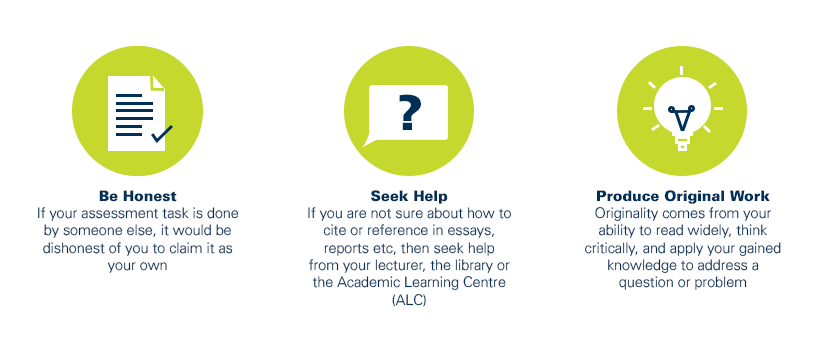
As a CQUniversity student you are expected to act honestly in all aspects of your academic work.
Any assessable work undertaken or submitted for review or assessment must be your own work. Assessable work is any type of work you do to meet the assessment requirements in the unit, including draft work submitted for review and feedback and final work to be assessed.
When you use the ideas, words or data of others in your assessment, you must thoroughly and clearly acknowledge the source of this information by using the correct referencing style for your unit. Using others’ work without proper acknowledgement may be considered a form of intellectual dishonesty.
Participating honestly, respectfully, responsibly, and fairly in your university study ensures the CQUniversity qualification you earn will be valued as a true indication of your individual academic achievement and will continue to receive the respect and recognition it deserves.
As a student, you are responsible for reading and following CQUniversity’s policies, including the Student Academic Integrity Policy and Procedure. This policy sets out CQUniversity’s expectations of you to act with integrity, examples of academic integrity breaches to avoid, the processes used to address alleged breaches of academic integrity, and potential penalties.
What is a breach of academic integrity?
A breach of academic integrity includes but is not limited to plagiarism, self-plagiarism, collusion, cheating, contract cheating, and academic misconduct. The Student Academic Integrity Policy and Procedure defines what these terms mean and gives examples.
Why is academic integrity important?
A breach of academic integrity may result in one or more penalties, including suspension or even expulsion from the University. It can also have negative implications for student visas and future enrolment at CQUniversity or elsewhere. Students who engage in contract cheating also risk being blackmailed by contract cheating services.
Where can I get assistance?
For academic advice and guidance, the Academic Learning Centre (ALC) can support you in becoming confident in completing assessments with integrity and of high standard.
What can you do to act with integrity?