Overview
In this unit, you will study the history and cultural development of western art music from the Romantic era of the 19th century through to the Modernist era around the turn of the 20th century. Your studies will focus on prominent musicians, composers and their repertoire through the analysis of scores and recordings. You will also investigate important forms and instruments; aural characteristics of the music, as well as the technological, sociological and political events that influenced musical trends during this period.
Details
Pre-requisites or Co-requisites
For entry into this unit, you must have completed 72 credit points in this course.
Important note: Students enrolled in a subsequent unit who failed their pre-requisite unit, should drop the subsequent unit before the census date or within 10 working days of Fail grade notification. Students who do not drop the unit in this timeframe cannot later drop the unit without academic and financial liability. See details in the Assessment Policy and Procedure (Higher Education Coursework).
Offerings For Term 1 - 2026
Attendance Requirements
All on-campus students are expected to attend scheduled classes - in some units, these classes are identified as a mandatory (pass/fail) component and attendance is compulsory. International students, on a student visa, must maintain a full time study load and meet both attendance and academic progress requirements in each study period (satisfactory attendance for International students is defined as maintaining at least an 80% attendance record).
Recommended Student Time Commitment
Each 6-credit Undergraduate unit at CQUniversity requires an overall time commitment of an average of 12.5 hours of study per week, making a total of 150 hours for the unit.
Class Timetable
Assessment Overview
Assessment Grading
This is a graded unit: your overall grade will be calculated from the marks or grades for each assessment task, based on the relative weightings shown in the table above. You must obtain an overall mark for the unit of at least 50%, or an overall grade of 'pass' in order to pass the unit. If any 'pass/fail' tasks are shown in the table above they must also be completed successfully ('pass' grade). You must also meet any minimum mark requirements specified for a particular assessment task, as detailed in the 'assessment task' section (note that in some instances, the minimum mark for a task may be greater than 50%). Consult the University's Grades and Results Policy for more details of interim results and final grades.
All University policies are available on the CQUniversity Policy site.
You may wish to view these policies:
- Grades and Results Policy
- Assessment Policy and Procedure (Higher Education Coursework)
- Review of Grade Procedure
- Student Academic Integrity Policy and Procedure
- Academic Progression Policy and Procedure
- Student Refund and Credit Balance Policy and Procedure
- Complaints Policy and Procedure
- Information and Communications Technology Acceptable Use Policy and Procedure
This list is not an exhaustive list of all University policies. The full list of University policies are available on the CQUniversity Policy site.
Feedback, Recommendations and Responses
Every unit is reviewed for enhancement each year. At the most recent review, the following staff and student feedback items were identified and recommendations were made.
Feedback from Student Evaluation Data.
Distribution of content over the term.
Review unit content and additional learning resources to ensure there is an even distribution of materials over the term.
Feedback from Student Evaluation Data.
Gen AI policy on assessment items.
Review the use of Gen AI on assessment items.
- Describe the important musical, structural and aural characteristics of western art music of the 19th and early 20th centuries
- Analyse musical works from prominent art music composers of the 19th and early 20th centuries
- Describe the contribution of significant composers and musicians to the development of western art music of the 19th and early 20th centuries
- Contextualise the principal stylistic trends of western art music within the important social and political movements of the 19th and early 20th centuries.
Alignment of Assessment Tasks to Learning Outcomes
| Assessment Tasks | Learning Outcomes | |||
|---|---|---|---|---|
| 1 | 2 | 3 | 4 | |
| 1 - Written Assessment - 30% | ||||
| 2 - Written Assessment - 30% | ||||
| 3 - Written Assessment - 40% | ||||
Alignment of Graduate Attributes to Learning Outcomes
| Graduate Attributes | Learning Outcomes | |||
|---|---|---|---|---|
| 1 | 2 | 3 | 4 | |
| 1 - Communication | ||||
| 2 - Problem Solving | ||||
| 3 - Critical Thinking | ||||
| 4 - Information Literacy | ||||
| 5 - Team Work | ||||
| 6 - Information Technology Competence | ||||
| 7 - Cross Cultural Competence | ||||
| 8 - Ethical practice | ||||
| 9 - Social Innovation | ||||
| 10 - First Nations Knowledges | ||||
| 11 - Aboriginal and Torres Strait Islander Cultures | ||||
Alignment of Assessment Tasks to Graduate Attributes
| Assessment Tasks | Graduate Attributes | ||||||||||
|---|---|---|---|---|---|---|---|---|---|---|---|
| 1 | 2 | 3 | 4 | 5 | 6 | 7 | 8 | 9 | 10 | 11 | |
| 1 - Written Assessment - 30% | |||||||||||
| 2 - Written Assessment - 30% | |||||||||||
| 3 - Written Assessment - 40% | |||||||||||
Textbooks
There are no required textbooks.
IT Resources
- CQUniversity Student Email
- Internet
- Unit Website (Moodle)
- Microsoft Office
All submissions for this unit must use the referencing style: American Psychological Association 7th Edition (APA 7th edition)
For further information, see the Assessment Tasks.
d.reaston@cqu.edu.au
Week 1
Begin Date: 09 Mar 2026Module/Topic
Unit Introduction; Music Analysis
Chapter
Events and Submissions/Topic
Week 2
Begin Date: 16 Mar 2026Module/Topic
The Romantic Lied and the Music of Schubert
Chapter
Events and Submissions/Topic
Week 3
Begin Date: 23 Mar 2026Module/Topic
Early 19th Century Nationalism
Chapter
Events and Submissions/Topic
Week 4
Begin Date: 30 Mar 2026Module/Topic
Music and Literature
Chapter
Events and Submissions/Topic
Week 5
Begin Date: 06 Apr 2026Module/Topic
Virtuosos and the Concerto
Chapter
Events and Submissions/Topic
Week 6
Begin Date: 13 Apr 2026Module/Topic
Exoticism
Chapter
Events and Submissions/Topic
Vacation Week
Begin Date: 20 Apr 2026Module/Topic
Chapter
Events and Submissions/Topic
Week 7
Begin Date: 27 Apr 2026Module/Topic
The Italian Art Form
Chapter
Events and Submissions/Topic
Week 8
Begin Date: 04 May 2026Module/Topic
Music of the Future
Chapter
Events and Submissions/Topic
Week 9
Begin Date: 11 May 2026Module/Topic
Total Art Work: the Music of Wagner
Chapter
Events and Submissions/Topic
Week 10
Begin Date: 18 May 2026Module/Topic
The Late Romantic Symphony
Chapter
Events and Submissions/Topic
Week 11
Begin Date: 25 May 2026Module/Topic
The Late Romantic Symphony
Chapter
Events and Submissions/Topic
Week 12
Begin Date: 01 Jun 2026Module/Topic
Early Modernism
Chapter
Events and Submissions/Topic
Exam Week
Begin Date: 08 Jun 2026Module/Topic
Chapter
Events and Submissions/Topic
Vacation/Exam Week
Begin Date: 15 Jun 2026Module/Topic
Chapter
Events and Submissions/Topic
1 Written Assessment
In this assessment, you are to analyse three different musical settings of a poem by the Romantic poet, Johann Wolfgang von Goethe. The poem and the three settings (scores and recordings) will be available on the Moodle website. Through engagement with the score and recordings, you will complete the following tasks:
Task 1: Harmonic Analysis (40%)
Using the scores provided, analyse the harmony of each setting using chord symbols. Your analysis should focus primarily on the piano accompaniment, with attention to harmonic function, chromaticism, and tonal organisation.
- Write your analysis directly onto the provided scores
- Ensure every chord is labelled clearly and accurately
- Save each analysed score and compile them into a single PDF file.
Task 2: Comparative Written Analysis (60%)
Using the scores, recordings, and your harmonic analyses from Task 1, write a 750–1000 word comparative essay addressing how each composer sets Goethe’s text to music. Your essay should draw explicitly on harmonic analysis to support interpretive claims and may consider:
- Overall tonality, mood, and harmonic language
- The relationship between harmony, rhythm, and text meaning
- Treatment of melodic phrasing and vocal range
- The role of the piano accompaniment in shaping expression
- Text-setting strategies (repetition, spacing, continuity, interludes)
- Strengths and expressive effectiveness of each setting
- Which setting you find most successful and why.
Assessment Submission and Presentation
You must submit:
- Harmonic analyses (Task 1) compiled as a single PDF (.pdf)
- Comparative essay (Task 2) as a Microsoft Word Document (.docx), 750–1000 words in length, using 12-point Times New Roman, double-line spacing, and APA referencing, following the CQUniversity APA Style Guide.
*The word count is considered from the first word of the introduction to the last word of the conclusion. It excludes the cover page, abstract, contents page, reference page and appendices. It includes in-text references and direct quotations.
AI Assessment scale tool:
Level 2: You may use AI for planning, idea development, and research. Your final submission should show how you have developed and refined these ideas. Any misuse or lack of disclosure regarding AI tools will be considered a breach of academic integrity.
Please refer to the Moodle Assessment tile for specific details.
Please note: The 72-Hour grace period applies to this assessment.
Week 5 Friday (10 Apr 2026) 11:45 pm AEST
Week 7 Friday (1 May 2026)
Task 1: Harmonic Analysis (40%)
- Accuracy and appropriateness of harmonic analysis – Schubert (13%)
- Accuracy and appropriateness of harmonic analysis – Schumann (13%)
- Accuracy and appropriateness of harmonic analysis – Liszt (14%)
Task 2: Written Analysis (60%)
- Depth and insight of comparative harmonic and text–music analysis (30%)
- Integration of harmonic analysis into interpretive argument (15%)
- Critical evaluation and justification of musical effectiveness (10%)
- Clarity of writing, structure, and scholarly presentation (5%)
- Describe the important musical, structural and aural characteristics of western art music of the 19th and early 20th centuries
- Analyse musical works from prominent art music composers of the 19th and early 20th centuries
- Describe the contribution of significant composers and musicians to the development of western art music of the 19th and early 20th centuries
- Communication
- Problem Solving
- Critical Thinking
- Information Literacy
2 Written Assessment
This assessment develops advanced analytical skills through close engagement with nineteenth-century dramatic and programmatic repertoire. You will analyse how composers use harmony, orchestration, texture, and thematic material to construct musical meaning in response to narrative and dramatic context.
Task 1: Operatic / Dramatic Analysis (35%)
Using the score and recording provided analyse three contrasting moments from the Wolf’s Glen scene that demonstrate Weber’s use of music to support drama and supernatural narrative.
Your analysis should address:
- orchestration and texture,
- harmonic language,
- rhythmic or gestural devices,
- how these elements contribute to characterisation and dramatic tension.
You must include bar numbers and/or timestamps and refer directly to the score.
Suggested moments include (you may choose others if justified):
- Samiel’s first appearance
- The casting of one magic bullet
- The storm or supernatural hunt imagery
Length: 500–600 words
Task 2: Programmatic / Symphonic Analysis (35%)
Using the score and Berlioz’s 1855 program, analyse how musical materials are used to represent both pastoral calm and underlying emotional tension. Your response should address:
- orchestration and instrumental colour,
- thematic material (including the idée fixe),
- rhythmic and textural contrasts,
- how these elements support the programmatic narrative.
Include bar numbers and timestamps in your discussion.
Length: 400–500 words
Task 3: Comparative Synthesis (30%)
Drawing on Tasks 1 and 2, write a comparative synthesis that examines similarities and differences in how Weber and Berlioz construct musical narrative.
Your response should:
- compare approaches to drama and programmatic meaning,
- identify contrasting uses of orchestration, harmony, or form,
- demonstrate clarity of synthesis and integration of analytical insights across works.
Length: 400–500 words
*The word count is considered from the first word of the introduction to the last word of the conclusion. It excludes the cover page, abstract, contents page, reference page and appendices. It includes in-text references and direct quotations.
Assessment Submission and Presentation
You must:
- Submit one Microsoft Word Document (.docx), using 12 point Times New Roman font and double spacing for the body of the assignment,
- Use clear headings for each task,
- Reference bar numbers and timestamps consistently,
- Follow the CQUniversity APA Style Guide.
AI Assessment scale tool:
Level 2: You may use AI for planning, idea development, and research. Your final submission should show how you have developed and refined these ideas. Any misuse or lack of disclosure regarding AI tools will be considered a breach of academic integrity.
Please refer to the Moodle Assessment tile for specific details.
Please note: The 72-Hour grace period applies to this assessment.
Week 9 Friday (15 May 2026) 11:45 pm AEST
Week 11 Friday (29 May 2026)
Results will be available on the Moodle website at the end of term.
Task 1
- Accurate and detailed analysis of selected moments (15%)
- Demonstrates musical devices clearly linked to drama and narrative meaning (10%)
- Examples supported by appropriate score references and timestamps (5%)
- Clear, coherent writing using appropriate analytical terminology (5%)
Task 2
- Orchestration and thematic analysis reflects programmatic narrative accurately (15%)
- Understanding of idée fixe development and contextual function demonstrated (10%)
- Score references and timestamps effectively support analytical claims (5%)
- Writing is clear, structured, and discipline-appropriate (5%)
Task 3
- Meaningful similarities and differences identified across works (15%)
- Clarity of synthesis and integration of analytical insights across works (10%)
- Writing is organised, academic, and clearly expressed (5%)
- Describe the important musical, structural and aural characteristics of western art music of the 19th and early 20th centuries
- Analyse musical works from prominent art music composers of the 19th and early 20th centuries
- Describe the contribution of significant composers and musicians to the development of western art music of the 19th and early 20th centuries
- Communication
- Problem Solving
- Critical Thinking
- Information Literacy
3 Written Assessment
In this assessment, you are to research one of the following topics, and present your research as a 2000–2500 word essay.
Topic 1: Discuss the piano music of either Fanny Mendelssohn or Clara Wieck Schumann, in relation to Felix Mendelssohn and Robert Schumann, respectively. Your focus should compare the musical stylistic influences of either Fanny to Felix or Clara to Robert, and discuss the legacy of either Fanny or Clara's music. This discussion should be contextualised within the representation of women's music in the 19th century more generally. Provide appropriate score samples, images and video excerpts to support your research.
Topic 2: Franz Schubert and Johannes Brahms were both innovative figures in 19th century chamber music. In this topic, you are to compare the chamber works of each composer (Schubert to Brahms) and discuss the stylistic influences, innovative quality and legacy of the music. Provide appropriate score samples, images and video excerpts to support your research.
Topic 3: The Mighty Five (or Mighty Handful) is the name given to a group of Russian composers comprising of Miliy Balakirev, César Cui, Alexander Borodin, Modest Musorgsky, and Nikolai Rimsky-Korsakov. In this topic, you are to discuss the music of one of these composers. Your discussion should focus on the composer's use of orchestration, as well as the incorporation of folk elements in specific musical examples. Use appropriate score samples, images and video excerpts to support your research.
Assessment Submission and Presentation
Your assessment must be submitted as a Microsoft Word Document (.docx) and:
- Must use 12 point Times New Roman font, and double spacing for the body of the assignment
- Include your name and student number on each page as part of a header or footer
- Must adhere to the CQUniversity APA Style Guide
- All music score excerpts and or recorded audio/video examples should include an in-text reference, and full details included in the reference list.
*The word count is considered from the first word of the introduction to the last word of the conclusion. It excludes the cover page, abstract, contents page, reference page and appendices. It includes in-text references and direct quotations.
AI Assessment scale tool:
Level 2: You may use AI for planning, idea development, and research. Your final submission should show how you have developed and refined these ideas. Any misuse or lack of disclosure regarding AI tools will be considered a breach of academic integrity.
Please refer to the Moodle Assessment tile for specific details.
Please note: The 72-Hour grace period applies to this assessment.
Exam Week Monday (8 June 2026) 11:45 pm AEST
Assessment to be returned at the end of term.
Content:
- Appropriateness of introduction and conclusion (10%)
- Accuracy of information and depth of treatment of the topic (20%)
- Flow of information and development of argument or theme (15%)
- Use of primary sources to support argument or theme (15%)
- Ability to critically evaluate research findings (15%)
General points:
- Referencing system precision (10%)
- Accuracy of spelling, punctuation and grammar; clarity of writing style (10%)
- Meeting delivery requirements (presentation, word count*, style guide) (5%)
- Describe the important musical, structural and aural characteristics of western art music of the 19th and early 20th centuries
- Describe the contribution of significant composers and musicians to the development of western art music of the 19th and early 20th centuries
- Contextualise the principal stylistic trends of western art music within the important social and political movements of the 19th and early 20th centuries.
- Communication
- Critical Thinking
- Information Literacy
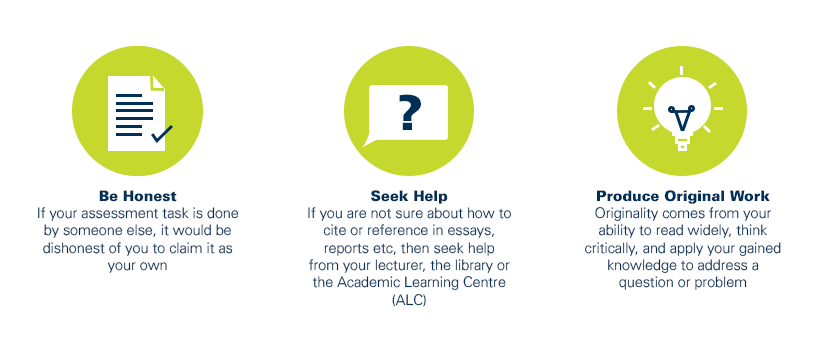
As a CQUniversity student you are expected to act honestly in all aspects of your academic work.
Any assessable work undertaken or submitted for review or assessment must be your own work. Assessable work is any type of work you do to meet the assessment requirements in the unit, including draft work submitted for review and feedback and final work to be assessed.
When you use the ideas, words or data of others in your assessment, you must thoroughly and clearly acknowledge the source of this information by using the correct referencing style for your unit. Using others’ work without proper acknowledgement may be considered a form of intellectual dishonesty.
Participating honestly, respectfully, responsibly, and fairly in your university study ensures the CQUniversity qualification you earn will be valued as a true indication of your individual academic achievement and will continue to receive the respect and recognition it deserves.
As a student, you are responsible for reading and following CQUniversity’s policies, including the Student Academic Integrity Policy and Procedure. This policy sets out CQUniversity’s expectations of you to act with integrity, examples of academic integrity breaches to avoid, the processes used to address alleged breaches of academic integrity, and potential penalties.
What is a breach of academic integrity?
A breach of academic integrity includes but is not limited to plagiarism, self-plagiarism, collusion, cheating, contract cheating, and academic misconduct. The Student Academic Integrity Policy and Procedure defines what these terms mean and gives examples.
Why is academic integrity important?
A breach of academic integrity may result in one or more penalties, including suspension or even expulsion from the University. It can also have negative implications for student visas and future enrolment at CQUniversity or elsewhere. Students who engage in contract cheating also risk being blackmailed by contract cheating services.
Where can I get assistance?
For academic advice and guidance, the Academic Learning Centre (ALC) can support you in becoming confident in completing assessments with integrity and of high standard.
What can you do to act with integrity?