Overview
In this unit, you will be introduced to the fundamental principles of electronic music production including synthesis, sampling, MIDI sequencing and signal processing and apply these to the composition of an original piece of electronic music. You will explore genre-specific music production and composition techniques in the analysis of a chosen genre of electronic music. You will use these findings to inform the planning stage of your original composition project. Once you define the scope of your composition project, you will pitch this to your peers. Your project planning will culminate in the creation of an original piece of electronic music that adheres to the conventions of your chosen genre.
Details
Pre-requisites or Co-requisites
Pre-requisite: Completion of 36 credit points in CG51. Students outside of CG51 may seek approval from the CG51 Head of Course to undertake this unit.
Important note: Students enrolled in a subsequent unit who failed their pre-requisite unit, should drop the subsequent unit before the census date or within 10 working days of Fail grade notification. Students who do not drop the unit in this timeframe cannot later drop the unit without academic and financial liability. See details in the Assessment Policy and Procedure (Higher Education Coursework).
Offerings For Term 2 - 2026
Attendance Requirements
All on-campus students are expected to attend scheduled classes - in some units, these classes are identified as a mandatory (pass/fail) component and attendance is compulsory. International students, on a student visa, must maintain a full time study load and meet both attendance and academic progress requirements in each study period (satisfactory attendance for International students is defined as maintaining at least an 80% attendance record).
Recommended Student Time Commitment
Each 6-credit Undergraduate unit at CQUniversity requires an overall time commitment of an average of 12.5 hours of study per week, making a total of 150 hours for the unit.
Class Timetable
Assessment Overview
Assessment Grading
This is a graded unit: your overall grade will be calculated from the marks or grades for each assessment task, based on the relative weightings shown in the table above. You must obtain an overall mark for the unit of at least 50%, or an overall grade of 'pass' in order to pass the unit. If any 'pass/fail' tasks are shown in the table above they must also be completed successfully ('pass' grade). You must also meet any minimum mark requirements specified for a particular assessment task, as detailed in the 'assessment task' section (note that in some instances, the minimum mark for a task may be greater than 50%). Consult the University's Grades and Results Policy for more details of interim results and final grades.
All University policies are available on the CQUniversity Policy site.
You may wish to view these policies:
- Grades and Results Policy
- Assessment Policy and Procedure (Higher Education Coursework)
- Review of Grade Procedure
- Student Academic Integrity Policy and Procedure
- Academic Progression Policy and Procedure
- Student Refund and Credit Balance Policy and Procedure
- Complaints Policy and Procedure
- Information and Communications Technology Acceptable Use Policy and Procedure
This list is not an exhaustive list of all University policies. The full list of University policies are available on the CQUniversity Policy site.
Feedback, Recommendations and Responses
Every unit is reviewed for enhancement each year. At the most recent review, the following staff and student feedback items were identified and recommendations were made.
Feedback from Staff feedback
Provide students with more explicit guidance on the role of AI tools within contemporary electronic music production workflows.
Integrate AI into the unit by demonstrating practical applications within sound design, composition, and workflow enhancement. This could include short demonstrations, guided exploration activities, and discussions on ethical and creative considerations, ensuring students understand how to use AI meaningfully within electronic music practice.
- Analyse the compositional elements and production techniques of a chosen electronic music genre in a written essay
- Prepare and pitch a concept document and project plan for an original electronic music composition
- Apply music technology fundamentals and genre-specific composition techniques to the creation of an original electronic music composition.
Alignment of Assessment Tasks to Learning Outcomes
| Assessment Tasks | Learning Outcomes | ||
|---|---|---|---|
| 1 | 2 | 3 | |
| 1 - Written Assessment - 30% | |||
| 2 - Presentation - 20% | |||
| 3 - Portfolio - 50% | |||
Alignment of Graduate Attributes to Learning Outcomes
| Graduate Attributes | Learning Outcomes | ||
|---|---|---|---|
| 1 | 2 | 3 | |
| 1 - Communication | |||
| 2 - Problem Solving | |||
| 3 - Critical Thinking | |||
| 4 - Information Literacy | |||
| 5 - Team Work | |||
| 6 - Information Technology Competence | |||
| 7 - Cross Cultural Competence | |||
| 8 - Ethical practice | |||
| 9 - Social Innovation | |||
| 10 - First Nations Knowledges | |||
| 11 - Aboriginal and Torres Strait Islander Cultures | |||
Textbooks
There are no required textbooks.
IT Resources
- CQUniversity Student Email
- Internet
- Unit Website (Moodle)
- Ableton Live software
All submissions for this unit must use the referencing style: American Psychological Association 7th Edition (APA 7th edition)
For further information, see the Assessment Tasks.
p.preece@cqu.edu.au
Week 1
Begin Date: 13 Jul 2026Module/Topic
Introduction to MIDI and electronic music styles
Chapter
Events and Submissions/Topic
Week 2
Begin Date: 20 Jul 2026Module/Topic
A brief history of synthesisers
Chapter
Events and Submissions/Topic
Week 3
Begin Date: 27 Jul 2026Module/Topic
A brief history of drum machines
Chapter
Events and Submissions/Topic
Week 4
Begin Date: 03 Aug 2026Module/Topic
Track deconstruction
Chapter
Events and Submissions/Topic
Week 5
Begin Date: 10 Aug 2026Module/Topic
Sound design and programming - drums
Chapter
Events and Submissions/Topic
Week 6
Begin Date: 17 Aug 2026Module/Topic
Sound design and programming - bass lines
Chapter
Events and Submissions/Topic
Vacation Week
Begin Date: 24 Aug 2026Module/Topic
Chapter
Events and Submissions/Topic
Week 7
Begin Date: 31 Aug 2026Module/Topic
Sound design and programming - keys and chords
Chapter
Events and Submissions/Topic
Week 8
Begin Date: 07 Sep 2026Module/Topic
Sound design and programming - melodic elements
Chapter
Events and Submissions/Topic
Week 9
Begin Date: 14 Sep 2026Module/Topic
Sampling
Chapter
Events and Submissions/Topic
Week 10
Begin Date: 21 Sep 2026Module/Topic
Project Week
Chapter
Events and Submissions/Topic
Week 11
Begin Date: 28 Sep 2026Module/Topic
Arrangement, form and transitions
Chapter
Events and Submissions/Topic
Week 12
Begin Date: 05 Oct 2026Module/Topic
Final mix and media preparation
Chapter
Events and Submissions/Topic
Exam Week
Begin Date: 12 Oct 2026Module/Topic
Chapter
Events and Submissions/Topic
Vacation/Exam Week
Begin Date: 19 Oct 2026Module/Topic
Chapter
Events and Submissions/Topic
Use of Generative Artificial Intelligence (AI) in Assessment Materials
Generative artificial intelligence (AI) tools may have been used by academic/teaching staff in the design of this assessment task and/or associated marking resources (for example, for initial drafting, rubric development, or feedback scaffolding).
Any AI‑assisted content has been critically reviewed and refined by academic staff. The final assessment design, marking criteria, and feedback processes reflect academic judgement and comply with CQUniversity assessment and academic integrity requirements.
1 Written Assessment
Electronic music encompasses a diverse range of styles, technologies, and cultural movements. Through the analysis of professional recordings, producers can develop a deeper understanding of how musical, technical, and cultural factors contribute to a track's identity and impact.
For this assessment, you will complete a comparative analysis of two contrasting electronic music tracks provided by your lecturer. Both tracks feature production aesthetics and instrumentation that are primarily electronic. Your analysis should demonstrate critical listening skills and an understanding of the historical, sociological, musical, and production techniques that shape each work.
Part A: Annotated Listening Analysis
For each track, identify and analyse at least six significant timestamped moments that demonstrate important musical or production decisions.
Present your observations in a table using the following format:
Time
Section/Form
Instrumentation & Musical Material
Production Features
Musical Effect / Function
For each timestamped moment, discuss:
What is occurring musically at that point in the track.
The instrumentation, synthesisers, samplers, or sound sources that are audible.
Production techniques such as effects processing, automation, layering, filtering, dynamics processing, spatial effects, or mixing decisions.
The role the moment plays within the track's structure, development, energy, tension, or emotional impact.
Your observations should be based on direct critical listening of the supplied tracks.
Part B: Comparative Analysis
Using evidence from your annotated listening analysis, compare the two tracks in relation to the following areas:
Historical and Sociological Context
Discuss the origins and development of the genres represented by each track.
Consider significant technological developments, influential artists, and historical milestones associated with each genre.
Examine the cultural, social, and political contexts that have shaped the music and its audience.
Technical Attributes
Identify and discuss the synthesisers, samplers, and electronic sound sources used within each track.
Analyse production techniques including layering, effects processing, automation, mixing, and sound design.
Evaluate how production choices contribute to the aesthetic identity of each work.
Musical Elements
Analyse instrumentation and timbral choices.
Examine the form and structure of each track, including traditional and non-traditional approaches to organisation and development.
Discuss the use of musical devices such as texture, rhythm, melody, harmony, dynamics, and contrast.
Evaluate the use of audio effects and their contribution to the sonic character of the work.
Your discussion should move beyond description and critically evaluate how musical, technical, and cultural factors contribute to the effectiveness and identity of each track. Support your observations with specific references to the supplied tracks and your annotated listening analysis.
Submission Requirements
Annotated listening analysis table for both supplied tracks.
Comparative analysis (approximately 1000–1200 words).
Submit as a Word document (.docx).
APA 7th edition referencing.
Include acknowledgement of any Generative AI tools used.
AI Assessment Scale: Level 2
You may use Generative AI tools for planning, idea development, and research. Your final submission must demonstrate your own critical listening, analysis, and interpretation of the supplied tracks. The annotated listening analysis must be based on direct engagement with the audio material provided by your lecturer. Any use of AI must be appropriately acknowledged in accordance with CQUniversity guidelines. Failure to disclose AI use may be considered a breach of academic integrity.
Week 6 Friday (21 Aug 2026) 11:45 pm AEST
Week 8 Friday (11 Sept 2026)
Accurate analysis of technical attributes of the two tracks - 20%
Accurate analysis of musical elements of the two excerpts - 20%
Appropriate discussion of the historical/sociological context of the genre - 10%
Clarity and organisation of the analysis, including the structure of the discussion, coherence of arguments, and logical flow of ideas - 20%
Use of Examples to support analysis - 10%
Writing style and presentation - 10%
Engagement with relevant sources (Gen AI inclusive) - 10%
- Analyse the compositional elements and production techniques of a chosen electronic music genre in a written essay
2 Presentation
In this task, you will create a video pitch of no more than 5 minutes to present your idea for a new electronic music composition. Pitching is a crucial skill in the creative industries, used to share your ideas with clients, collaborators, and potential funders. This assessment will help you develop these skills and enhance your ability to articulate and present your creative concepts effectively.
Your pitch should include the following components:
Introduction:
- Briefly introduce yourself and the genre you have chosen for your new composition.
- Provide a clear and concise overview of your idea.
Genre Identification and Traits:
- Identify the genre you are working in.
- Discuss the key traits and characteristics of the genre, including typical instrumentation, tempo, rhythm patterns, sound design, and production techniques.
- Use audio examples to illustrate these traits. These can be excerpts from existing tracks within the genre that inspire your composition.
Approach to Composition:
- Explain your creative approach and the steps you plan to take in the production of your new track.
- Discuss any specific tools, software, or hardware you will use.
- Highlight any unique or innovative elements you intend to incorporate into your composition.
Demonstration:
- Present an 8-bar loop that you have created, showcasing the drums, bass, and chords of your new track.
- Discuss how this loop aligns with the genre traits you identified and how it sets the foundation for the rest of your composition.
Conclusion:
- Summarise your pitch, reiterating the key points of your idea and approach.
AI Assessment scale tool:
Level 2 - You may use Al for planning, idea development, and research. Your final submission should show how you have developed and refined these ideas. Any misuse or lack of disclosure regarding the use of AI tools will be considered a breach of academic integrity.
Week 10 Friday (25 Sept 2026) 11:45 pm AEST
Week 12 Friday (9 Oct 2026)
Clear and insightful overview of music styles - 20%
Clarity and Organisation - 15%
Originality and Innovation - 15%
Competent use of project presentation software - 10%
Demonstration of 8-Bar Loop - 40%
- Prepare and pitch a concept document and project plan for an original electronic music composition
3 Portfolio
This final assessment task allows you to synthesise everything you have learned throughout the course by creating a complete electronic music composition. Building on the 8-bar loop you developed for your project pitch, you will expand your idea into a full-length track that showcases your understanding of genre production traits, sound design, MIDI sequencing, and song structure.
In the music industry, the ability to create polished and compelling compositions is essential. This task will help you develop and refine these skills, preparing you for future projects and professional opportunities. By demonstrating originality and creativity, you will also learn to infuse your unique artistic voice into your work, making your music stand out in a crowded field.
Through this task, you will gain hands-on experience with Ableton Live software, enhancing your technical proficiency and production capabilities. You will also practice critical listening and analytical skills as you ensure your track adheres to the conventions of your chosen genre while incorporating innovative elements.
Your composition must include the following components:
Genre Production Traits:
- Demonstrate an understanding of the chosen genre by incorporating its key production traits.
- Use appropriate sound design, instrumentation, and production techniques that are characteristic of the genre.
Software Instruments:
- Choose presets or create your own software instruments that fit within your chosen genre.
- Ensure the instruments are well-crafted and fit seamlessly into the overall composition.
MIDI Patterns:
- Sequence MIDI patterns that are typical of the genre.
- Ensure the patterns are rhythmically and melodically coherent and contribute to the genre's style.
Originality:
- Show originality in your composition, incorporating unique elements and creative ideas.
- Strive to make your track stand out while still adhering to the genre’s conventions.
Transition Elements:
- Use transition elements such as risers, downlifters, fills, and effects to create smooth transitions between sections.
- Ensure the transitions enhance the flow and dynamics of the track.
Song Form:
- Create a clear and effective song form, including sections such as intro, verse, chorus, bridge, and outro.
- Ensure the form provides a coherent structure to your composition and maintains listener interest.
Submission Requirements:
- Your track should be at least 3 minutes long and no longer than 10 minutes.
- Export your final composition as a high-quality WAV or AIFF audio file (48KHz, 32 Bit).
- Submit your Ableton Live Project according to Moodle Guidelines
- Include a brief written explanation (300-500 words) describing your creative process, the genre traits you incorporated, and any unique elements or techniques you used - upload this to Moodle.
AI Assessment scale tool:
Level 2 - You may use Al for planning, idea development, and research. Your final submission should show how you have developed and refined these ideas. Any misuse or lack of disclosure regarding the use of AI tools will be considered a breach of academic integrity.
Week 12 Friday (9 Oct 2026) 11:45 pm AEST
Vacation/Exam Week Friday (23 Oct 2026)
Composition demonstrates genre-specific production techniques - 15%
Composition meets submission requirements - 15%
Sound design is implemented effectively - 15%
MIDI sequencing is implemented effectively - 15%
Originality and Creativity - 10%
Use of Transition Elements - 10%
Song Form and Structure - 10%
Session layout and project handling - 10%
- Apply music technology fundamentals and genre-specific composition techniques to the creation of an original electronic music composition.
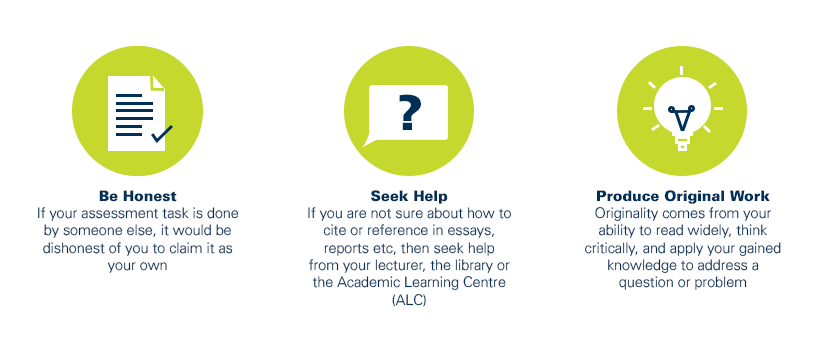
As a CQUniversity student you are expected to act honestly in all aspects of your academic work.
Any assessable work undertaken or submitted for review or assessment must be your own work. Assessable work is any type of work you do to meet the assessment requirements in the unit, including draft work submitted for review and feedback and final work to be assessed.
When you use the ideas, words or data of others in your assessment, you must thoroughly and clearly acknowledge the source of this information by using the correct referencing style for your unit. Using others’ work without proper acknowledgement may be considered a form of intellectual dishonesty.
Participating honestly, respectfully, responsibly, and fairly in your university study ensures the CQUniversity qualification you earn will be valued as a true indication of your individual academic achievement and will continue to receive the respect and recognition it deserves.
As a student, you are responsible for reading and following CQUniversity’s policies, including the Student Academic Integrity Policy and Procedure. This policy sets out CQUniversity’s expectations of you to act with integrity, examples of academic integrity breaches to avoid, the processes used to address alleged breaches of academic integrity, and potential penalties.
What is a breach of academic integrity?
A breach of academic integrity includes but is not limited to plagiarism, self-plagiarism, collusion, cheating, contract cheating, and academic misconduct. The Student Academic Integrity Policy and Procedure defines what these terms mean and gives examples.
Why is academic integrity important?
A breach of academic integrity may result in one or more penalties, including suspension or even expulsion from the University. It can also have negative implications for student visas and future enrolment at CQUniversity or elsewhere. Students who engage in contract cheating also risk being blackmailed by contract cheating services.
Where can I get assistance?
For academic advice and guidance, the Academic Learning Centre (ALC) can support you in becoming confident in completing assessments with integrity and of high standard.
What can you do to act with integrity?