Overview
You will continue your development of the theoretical and practical application of effective studio teaching skills by investigating the methods and materials required to teach an instrument or voice in a private music studio with students at intermediate and advanced levels. You will concentrate on identifying the essential performing and educational elements of significant repertoire while learning how to assist students to harness these elements to support good performance practice at intermediate and advanced levels.
Details
Pre-requisites or Co-requisites
For entry into this unit, you must have completed 36 credit points in this course.
Important note: Students enrolled in a subsequent unit who failed their pre-requisite unit, should drop the subsequent unit before the census date or within 10 working days of Fail grade notification. Students who do not drop the unit in this timeframe cannot later drop the unit without academic and financial liability. See details in the Assessment Policy and Procedure (Higher Education Coursework).
Offerings For Term 2 - 2026
Attendance Requirements
All on-campus students are expected to attend scheduled classes - in some units, these classes are identified as a mandatory (pass/fail) component and attendance is compulsory. International students, on a student visa, must maintain a full time study load and meet both attendance and academic progress requirements in each study period (satisfactory attendance for International students is defined as maintaining at least an 80% attendance record).
Recommended Student Time Commitment
Each 6-credit Undergraduate unit at CQUniversity requires an overall time commitment of an average of 12.5 hours of study per week, making a total of 150 hours for the unit.
Class Timetable
Assessment Overview
Assessment Grading
This is a graded unit: your overall grade will be calculated from the marks or grades for each assessment task, based on the relative weightings shown in the table above. You must obtain an overall mark for the unit of at least 50%, or an overall grade of 'pass' in order to pass the unit. If any 'pass/fail' tasks are shown in the table above they must also be completed successfully ('pass' grade). You must also meet any minimum mark requirements specified for a particular assessment task, as detailed in the 'assessment task' section (note that in some instances, the minimum mark for a task may be greater than 50%). Consult the University's Grades and Results Policy for more details of interim results and final grades.
All University policies are available on the CQUniversity Policy site.
You may wish to view these policies:
- Grades and Results Policy
- Assessment Policy and Procedure (Higher Education Coursework)
- Review of Grade Procedure
- Student Academic Integrity Policy and Procedure
- Academic Progression Policy and Procedure
- Student Refund and Credit Balance Policy and Procedure
- Complaints Policy and Procedure
- Information and Communications Technology Acceptable Use Policy and Procedure
This list is not an exhaustive list of all University policies. The full list of University policies are available on the CQUniversity Policy site.
Feedback, Recommendations and Responses
Every unit is reviewed for enhancement each year. At the most recent review, the following staff and student feedback items were identified and recommendations were made.
Feedback from Student evaluation
Increase the word limit for Assessment item 1 & 2
It is recommended that the word limits for Assessment Items 1 and 2 be increased to allow students greater scope to demonstrate depth of analysis and reflection.
- Identify essential performing and educational elements of significant repertoire for your chosen instrument or voice at intermediate and advancing levels
- Articulate the various pedagogies used in studio music teaching for intermediate and advancing levels for your chosen instrument or voice
- Explain and demonstrate the methods for assisting intermediate and advancing students to harness these elements to support good performance practice.
Alignment of Assessment Tasks to Learning Outcomes
| Assessment Tasks | Learning Outcomes | ||
|---|---|---|---|
| 1 | 2 | 3 | |
| 1 - Written Assessment - 30% | |||
| 2 - Written Assessment - 30% | |||
| 3 - Practical and Written Assessment - 40% | |||
Alignment of Graduate Attributes to Learning Outcomes
| Graduate Attributes | Learning Outcomes | ||
|---|---|---|---|
| 1 | 2 | 3 | |
| 1 - Communication | |||
| 2 - Problem Solving | |||
| 3 - Critical Thinking | |||
| 4 - Information Literacy | |||
| 5 - Team Work | |||
| 6 - Information Technology Competence | |||
| 7 - Cross Cultural Competence | |||
| 8 - Ethical practice | |||
| 9 - Social Innovation | |||
| 10 - First Nations Knowledges | |||
| 11 - Aboriginal and Torres Strait Islander Cultures | |||
Alignment of Assessment Tasks to Graduate Attributes
| Assessment Tasks | Graduate Attributes | ||||||||||
|---|---|---|---|---|---|---|---|---|---|---|---|
| 1 | 2 | 3 | 4 | 5 | 6 | 7 | 8 | 9 | 10 | 11 | |
| 1 - Written Assessment - 30% | |||||||||||
| 2 - Written Assessment - 30% | |||||||||||
| 3 - Practical and Written Assessment - 40% | |||||||||||
Textbooks
There are no required textbooks.
IT Resources
- CQUniversity Student Email
- Internet
- Unit Website (Moodle)
All submissions for this unit must use the referencing style: American Psychological Association 7th Edition (APA 7th edition)
For further information, see the Assessment Tasks.
p.mckenzie@cqu.edu.au
n.thomson@cqu.edu.au
Week 1
Begin Date: 13 Jul 2026Module/Topic
Introduction to the unit/Introduction to Learning Theories
Chapter
Events and Submissions/Topic
Week 2
Begin Date: 20 Jul 2026Module/Topic
Topic 1 The beginner student
Chapter
Events and Submissions/Topic
Week 3
Begin Date: 27 Jul 2026Module/Topic
Topic 1 The beginner student
Chapter
Events and Submissions/Topic
Week 4
Begin Date: 03 Aug 2026Module/Topic
Topic 1 The beginner student
Chapter
Events and Submissions/Topic
Week 5
Begin Date: 10 Aug 2026Module/Topic
Topic 2 The intermediate student
Chapter
Events and Submissions/Topic
Week 6
Begin Date: 17 Aug 2026Module/Topic
Topic 2 The intermediate student
Chapter
Events and Submissions/Topic
Vacation Week
Begin Date: 24 Aug 2026Module/Topic
Chapter
Events and Submissions/Topic
Week 7
Begin Date: 31 Aug 2026Module/Topic
Topic 2 The intermediate student
Chapter
Events and Submissions/Topic
Week 8
Begin Date: 07 Sep 2026Module/Topic
Topic 2 The intermediate student
Chapter
Events and Submissions/Topic
Week 9
Begin Date: 14 Sep 2026Module/Topic
Topic 3: The advancing student
Chapter
Events and Submissions/Topic
Week 10
Begin Date: 21 Sep 2026Module/Topic
Topic 3: The advancing student
Chapter
Events and Submissions/Topic
Week 11
Begin Date: 28 Sep 2026Module/Topic
Topic 3: The advancing student
Chapter
Events and Submissions/Topic
Week 12
Begin Date: 05 Oct 2026Module/Topic
Topic 3: The advancing student
Chapter
Events and Submissions/Topic
Exam Week
Begin Date: 12 Oct 2026Module/Topic
Chapter
Events and Submissions/Topic
Vacation/Exam Week
Begin Date: 19 Oct 2026Module/Topic
Chapter
Events and Submissions/Topic
1 Written Assessment
Assessment 1: Understanding the Beginner Music Learner
Length: 2000 words
Task: Understanding the Beginner Music Learner – An Evidence-Informed Teaching Essay
You are required to prepare a reflective and evidence-informed essay that examines the needs of a beginner music student and outlines how you would support their learning during their first year of study.
You may focus on any instrument or voice, and any age group. The chosen instrument and the intended age of the beginner student must be clearly stated at the beginning of the assignment.
Your submission will consist of:
1. Learner Profile and Development
Describe your chosen beginner student and discuss the developmental characteristics relevant to their learning.
This section should consider:
Age and stage of development
Physical, cognitive, and social characteristics
Factors that may influence learning and motivation
The implications of these characteristics for music teaching
You should draw on relevant educational theories, such as Piaget’s stages of cognitive development and other relevant literature.
2. Learning Goals for the First Year
Identify and discuss the key learning goals you would establish for the student during their first year of study.
These goals may include:
Technical development
Musical understanding
Creativity and improvisation
Performance skills
Listening and musicianship
You should explain how these goals align with the learner’s developmental stage and learning needs.
3. Applying Educational Theory to Music Teaching
Discuss how educational frameworks would inform your teaching approach.
You should include:
Piaget’s theory of cognitive development
Bloom’s Taxonomy
At least one additional music or educational framework (e.g., Vygotsky, Bruner, Suzuki, Kodály, Orff)
Rather than simply describing the theories, explain how they would influence your teaching decisions, activities, and expectations for the student.
4. Teaching Activities and Repertoire
Provide examples of teaching activities, exercises, and repertoire that would support the student’s learning throughout the first year.
You should:
Describe 3–5 suitable pieces, exercises, or musical activities
Justify their inclusion
Explain how they support skill progression, engagement, and motivation
Full scores or PDFs are required.
5. Technology and Learning Resources
Discuss the role of technology and other learning resources in supporting the student’s development.
Examples may include:
Practice apps
Backing tracks
Video resources
Digital notation software
Online learning tools
Justify how these resources would enhance learning and engagement.
Assignment Format
Use 12-point Times New Roman font for the body of the essay.
Use 1.5 spacing throughout.
You may use sub-headings to organise your assignment.
Include in-text citations throughout the assignment.
Include a reference list at the end of the assignment in APA 7th edition format.
A minimum of 10 academic references is required.
Do not cite Wikipedia or websites without an identifiable author.
Include in the reference list all musical works, apps, videos, teaching resources, and scholarly sources referred to in the assignment.
AI Assessment scale tool:
Level 2 - You may use Al for planning, idea development, and research. Your final submission should show how you have developed and refined these ideas. Any misuse or lack of disclosure regarding the use of AI tools will be considered a breach of academic integrity.
Please note: The 72-Hour grace period applies to assessment 1.
If you need longer than 72 hours, you'll still need to use the normal Assessment Extension System process.
Week 7 Monday (31 Aug 2026) 11:59 pm AEST
Upload to Moodle assessment page.
Week 9 Monday (14 Sept 2026)
Results available on Moodle site.
- Identification and Analysis of the Beginner Learner's Cognitive, Physical and Musical Learning Needs (20%)
- Application of Educational Theory (Piaget, Bloom’s Taxonomy and other relevant frameworks) to Music Teaching (20%)
- Identification and Justification of First-Year Learning Goals (15%)
- Selection and Justification of Teaching Activities and Repertoire (15%)
- Discussion of Technology and Learning Resources to Support Learning (10%)
- Ability to Write Clearly and Logically (10%)
- Correct Spelling, Grammar, Punctuation and Clear Presentation (5%)
- Accurate Use of APA Style (7th Edition) for In-Text Citations and Reference List, Including an Appropriate Number and Range of Scholarly Sources (5%)
- Identify essential performing and educational elements of significant repertoire for your chosen instrument or voice at intermediate and advancing levels
- Articulate the various pedagogies used in studio music teaching for intermediate and advancing levels for your chosen instrument or voice
- Communication
- Critical Thinking
- Information Literacy
2 Written Assessment
Assessment 1: Intermediate Student Teaching Portfolio and Professional Discussion
Length: 1000–1500 words
Task
Prepare a portfolio of pieces suitable for an intermediate student after approximately three years of study. You may focus on any instrument or voice, and any age group. The instrument chosen and the intended age of the intermediate student must be stated at the beginning of the assignment.
This portfolio will consist of:
- Five different pieces suitable for an intermediate student after approximately three years of study, provided as a PDF.
- For each piece, provide an explanation of the technical challenges the student may encounter and discuss strategies for addressing these challenges.
- Provide a justification for the inclusion of each piece in terms of the student's musical development and ongoing motivation.
- Discuss how educational theories, including Bloom's Taxonomy and relevant developmental learning theories, inform your repertoire selection and teaching approach.
- Discuss the technological resources that could support student learning and mastery of the selected repertoire.
Professional Discussion (15 minutes)
Following submission, students will participate in a 15-minute face-to-face professional discussion with the unit coordinator.
The discussion will focus on the submitted portfolio and may include questions relating to:
- Repertoire selection and sequencing
- Technical and musical challenges identified within the pieces
- Application of Bloom's Taxonomy and educational theory
- Teaching strategies and learner development
- Use of technology to support learning
- Adaptations for different learner needs
The purpose of the discussion is to provide students with an opportunity to demonstrate and elaborate upon the pedagogical decisions presented in their portfolio.
Assignment Format
12-point Times New Roman font
1.5 line spacing
Appropriate headings and subheadings
APA 7th edition referencing
Minimum of 10 scholarly references
Include all scores, recordings, online resources and scholarly sources in the reference list
AI Assessment Scale
Level 2 – You may use AI for planning, idea development and research. Your final submission should demonstrate your own development, refinement and application of ideas. Any misuse or lack of disclosure regarding AI use may constitute a breach of academic integrity.
Week 10 Friday (25 Sept 2026) 11:59 pm AEST
Upload to Moodle assessment page.
Week 12 Friday (9 Oct 2026)
Results available on Moodle site.
Assessment Criteria
Part 1: Teaching Portfolio (80%)
- Appropriate selection of repertoire for an intermediate learner (15%)
- Identification and analysis of technical and musical challenges within the selected repertoire (15%)
- Application of teaching strategies and educational theory to support student learning and development (15%)
- Justification of repertoire choices in relation to student growth, motivation and progression (5%)
- Discussion and application of technological resources to support learning (8%)
- Ability to write clearly and logically (10%)
- Correct spelling, grammar, punctuation and presentation (5%)
- Accurate use of APA Style (7th edition), including appropriate scholarly sources (7%)
Part 2: Professional Discussion (20%)
- Demonstrated understanding of the submitted portfolio and ability to justify pedagogical decisions with clarity and confidence (10%)
- Application of educational theory, including Bloom's Taxonomy and learner development principles, to teaching practice (5%)
- Ability to respond fluently, thoughtfully and professionally to questions, demonstrating ownership of ideas and understanding of the submitted work (5%)
- Identify essential performing and educational elements of significant repertoire for your chosen instrument or voice at intermediate and advancing levels
- Articulate the various pedagogies used in studio music teaching for intermediate and advancing levels for your chosen instrument or voice
- Communication
- Critical Thinking
- Information Literacy
3 Practical and Written Assessment
Length: 1200 words minimum + video recording of a minimum of 30 minutes in total.
Task:
Part A: You are to create six videos, each of a minimum length of five minutes. Each video will feature you as the performer on your chosen instrument or voice and will focus on technical and musical challenges for the intermediate-advanced performer.
- Three videos are to focus on three separate technical areas relevant to your chosen instrument/voice. You will demonstrate through speech and performance how to approach these technical issues. They should be relevant to the intermediate - advanced student in your instrument. You should show how not to do the technique as well as how to do the technique. Here are some possible examples to get you thinking:
- Playing spiccato bowing on the violin
- Double and triple tonguing on the flute
- Breath control for long phrases (wind instruments and singing)
- Bringing out the melody in a chordal piano piece
- Sticking techniques for drummers.
- Three videos are to focus on three separate repertoire/style/performance areas relevant to your chosen instrument. This should be related to specific pieces of music that are part of the standard repertoire for your instrument/voice. You will demonstrate through speech and performance how to approach these repertoire/style/performance issues. You should show how not to do the performance issue as well as how to do the performance issue. They should be relevant to the intermediate - advanced student in your instrument. Here are some possible examples to get you thinking:
- The application of rubato in a piece of piano music by Chopin
- Developing characterisation in a music theatre song using vocal colour
- Appropriate guitar soloing for a particular rock song
- How to apply the damper pedal in a Bach Prelude for the piano
- Funk drumming patterns for a particular funk tune.
Part B: For each of the six videos, you will write a minimum of 200 words explaining your approach in the video and why this particular technique or musical style is important for an intermediate-advancing student in your instrument/voice. This written part must include a reference list in APA style, 7th edition.
Video assignment format:
- Each video should start with a title page that outlines the topic of the video and the name of the presenter.
- Make sure your camera position shows clearly your performance on the instrument, and is filmed with plenty of light on you and your instrument.
- The final videos should be compressed as mp4 files, as this is compatible across computer platforms and will be smaller in size.
- The six videos can be uploaded separately to Moodle or zip them together before uploading to Moodle.
- You may upload private youtube files or use DropBox to share the files.
- Each video should contain your discussion of the concept as well as a demonstration of the concept by you on your chosen instrument.
AI Assessment scale tool:
Level 1: You must not use Al at any point during the assessment. You must demonstrate your core skills and knowledge. Any misuse or lack of disclosure regarding the use of AI tools will be considered a breach of academic integrity.
Written assignment format:
- Use 12 point Times New Roman font for the body of the essay.
- 1.5 spacing throughout
- You may use sub-headings if you wish to organise your assignment. These may be in a different colour or different size font.
- Include in-text references (citations) throughout the assignment.
- Include a Reference List at the end of the assignment in APA style, 7th edition.
- Do NOT cite from Wikipedia or other websites that do not have an acknowledged author.
- Include in your reference list all music scores used, CD and DVD recordings, Youtube sources, as well as books, academic journal articles, and articles from Oxford Music Online.
Vacation/Exam Week Monday (19 Oct 2026) 11:45 pm AEST
Upload to Moodle site
Results will be available at the end of the term.
- Appropriate material chosen for inclusion in the videos (12.5%)
- Clear and accurate discussion of the concept by the presenter on the videos (30%)
- Clear and accurate demonstration of the concept by the presenter on the videos (30%)
- Detailed written justification for each concept presented on the videos (20%)
- Correct spelling, grammar, punctuation and clear lay-out (5%)
- Correct use of APA style for the in-text referencing and reference list (2.5%)
- Explain and demonstrate the methods for assisting intermediate and advancing students to harness these elements to support good performance practice.
- Communication
- Problem Solving
- Critical Thinking
- Information Literacy
- Information Technology Competence
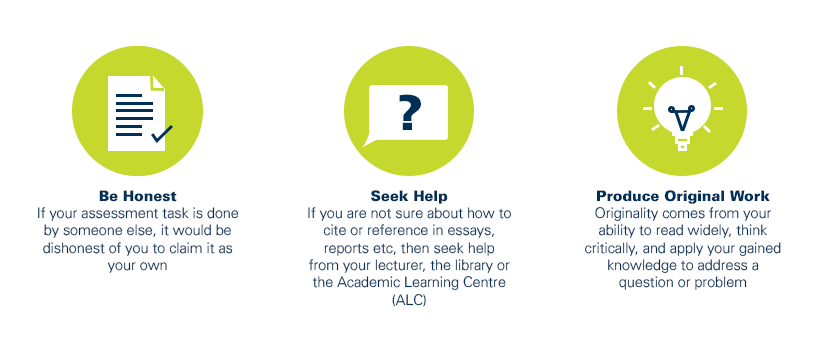
As a CQUniversity student you are expected to act honestly in all aspects of your academic work.
Any assessable work undertaken or submitted for review or assessment must be your own work. Assessable work is any type of work you do to meet the assessment requirements in the unit, including draft work submitted for review and feedback and final work to be assessed.
When you use the ideas, words or data of others in your assessment, you must thoroughly and clearly acknowledge the source of this information by using the correct referencing style for your unit. Using others’ work without proper acknowledgement may be considered a form of intellectual dishonesty.
Participating honestly, respectfully, responsibly, and fairly in your university study ensures the CQUniversity qualification you earn will be valued as a true indication of your individual academic achievement and will continue to receive the respect and recognition it deserves.
As a student, you are responsible for reading and following CQUniversity’s policies, including the Student Academic Integrity Policy and Procedure. This policy sets out CQUniversity’s expectations of you to act with integrity, examples of academic integrity breaches to avoid, the processes used to address alleged breaches of academic integrity, and potential penalties.
What is a breach of academic integrity?
A breach of academic integrity includes but is not limited to plagiarism, self-plagiarism, collusion, cheating, contract cheating, and academic misconduct. The Student Academic Integrity Policy and Procedure defines what these terms mean and gives examples.
Why is academic integrity important?
A breach of academic integrity may result in one or more penalties, including suspension or even expulsion from the University. It can also have negative implications for student visas and future enrolment at CQUniversity or elsewhere. Students who engage in contract cheating also risk being blackmailed by contract cheating services.
Where can I get assistance?
For academic advice and guidance, the Academic Learning Centre (ALC) can support you in becoming confident in completing assessments with integrity and of high standard.
What can you do to act with integrity?