Overview
In this unit, you will study the fundamental theoretical and practical aspects of effective studio teaching in music for the beginner student. You will gain knowledge and skills in a number of internationally recognised music teaching philosophies and methods including those developed by Suzuki, Orff and Kodaly. You will also gain an understanding of core principles underpinning the studio teaching business industry. This includes developing a studio teaching business plan and associated risk analysis, as well as exploring current technologies that relate to marketing and promoting a music studio teaching business.
Details
Pre-requisites or Co-requisites
For entry into this unit, you must have completed 36 credit points in this course.
Important note: Students enrolled in a subsequent unit who failed their pre-requisite unit, should drop the subsequent unit before the census date or within 10 working days of Fail grade notification. Students who do not drop the unit in this timeframe cannot later drop the unit without academic and financial liability. See details in the Assessment Policy and Procedure (Higher Education Coursework).
Offerings For Term 1 - 2026
Attendance Requirements
All on-campus students are expected to attend scheduled classes - in some units, these classes are identified as a mandatory (pass/fail) component and attendance is compulsory. International students, on a student visa, must maintain a full time study load and meet both attendance and academic progress requirements in each study period (satisfactory attendance for International students is defined as maintaining at least an 80% attendance record).
Recommended Student Time Commitment
Each 6-credit Undergraduate unit at CQUniversity requires an overall time commitment of an average of 12.5 hours of study per week, making a total of 150 hours for the unit.
Class Timetable
Assessment Overview
Assessment Grading
This is a graded unit: your overall grade will be calculated from the marks or grades for each assessment task, based on the relative weightings shown in the table above. You must obtain an overall mark for the unit of at least 50%, or an overall grade of 'pass' in order to pass the unit. If any 'pass/fail' tasks are shown in the table above they must also be completed successfully ('pass' grade). You must also meet any minimum mark requirements specified for a particular assessment task, as detailed in the 'assessment task' section (note that in some instances, the minimum mark for a task may be greater than 50%). Consult the University's Grades and Results Policy for more details of interim results and final grades.
All University policies are available on the CQUniversity Policy site.
You may wish to view these policies:
- Grades and Results Policy
- Assessment Policy and Procedure (Higher Education Coursework)
- Review of Grade Procedure
- Student Academic Integrity Policy and Procedure
- Academic Progression Policy and Procedure
- Student Refund and Credit Balance Policy and Procedure
- Complaints Policy and Procedure
- Information and Communications Technology Acceptable Use Policy and Procedure
This list is not an exhaustive list of all University policies. The full list of University policies are available on the CQUniversity Policy site.
Feedback, Recommendations and Responses
Every unit is reviewed for enhancement each year. At the most recent review, the following staff and student feedback items were identified and recommendations were made.
Feedback from Student evaluation
Provide assessment exemplars on varying instruments.
Staff will provide exemplars that demonstrate assessment requirements across the diverse range of instruments students teach.
Feedback from Staff evaluation
Tutorial engagement.
Continue to provide engaging tutorials that promote self-reflection and encourage students to apply theoretical concepts to their own instrumental and performance contexts.
- Compare and contrast the various pedagogical methods used in studio music teaching for beginner music students
- Articulate the pedagogical strategies for assisting beginner music students to develop good performance practice for a particular instrument/voice in the studio
- Generate a business plan and risk analysis for a music studio teaching business
- Create a marketing and promotional plan for a music studio teaching business.
Alignment of Assessment Tasks to Learning Outcomes
| Assessment Tasks | Learning Outcomes | |||
|---|---|---|---|---|
| 1 | 2 | 3 | 4 | |
| 1 - Written Assessment - 35% | ||||
| 2 - Written Assessment - 35% | ||||
| 3 - Practical and Written Assessment - 30% | ||||
Alignment of Graduate Attributes to Learning Outcomes
| Graduate Attributes | Learning Outcomes | |||
|---|---|---|---|---|
| 1 | 2 | 3 | 4 | |
| 1 - Communication | ||||
| 2 - Problem Solving | ||||
| 3 - Critical Thinking | ||||
| 4 - Information Literacy | ||||
| 5 - Team Work | ||||
| 6 - Information Technology Competence | ||||
| 7 - Cross Cultural Competence | ||||
| 8 - Ethical practice | ||||
| 9 - Social Innovation | ||||
| 10 - First Nations Knowledges | ||||
| 11 - Aboriginal and Torres Strait Islander Cultures | ||||
Alignment of Assessment Tasks to Graduate Attributes
| Assessment Tasks | Graduate Attributes | ||||||||||
|---|---|---|---|---|---|---|---|---|---|---|---|
| 1 | 2 | 3 | 4 | 5 | 6 | 7 | 8 | 9 | 10 | 11 | |
| 1 - Written Assessment - 35% | |||||||||||
| 2 - Written Assessment - 35% | |||||||||||
| 3 - Practical and Written Assessment - 30% | |||||||||||
Textbooks
There are no required textbooks.
IT Resources
- CQUniversity Student Email
- Internet
- Unit Website (Moodle)
- eBooks from the CQUniversity Library
All submissions for this unit must use the referencing style: American Psychological Association 7th Edition (APA 7th edition)
For further information, see the Assessment Tasks.
p.mckenzie@cqu.edu.au
Week 1
Begin Date: 09 Mar 2026Module/Topic
Module 1: Introduction to Studio Teaching. What is it?
The Beginner Student
Reflection Task
Chapter
Events and Submissions/Topic
Week 2
Begin Date: 16 Mar 2026Module/Topic
Module 2: The Suzuki Method
Chapter
Events and Submissions/Topic
Week 3
Begin Date: 23 Mar 2026Module/Topic
Module 2: The Suzuki Method
Chapter
Events and Submissions/Topic
Week 4
Begin Date: 30 Mar 2026Module/Topic
Module 3: Orff Schulwerk Method
Chapter
Events and Submissions/Topic
Week 5
Begin Date: 06 Apr 2026Module/Topic
Module 3: Orff Schulwerk Method
Chapter
Events and Submissions/Topic
Week 6
Begin Date: 13 Apr 2026Module/Topic
Module 4: Kodaly Method
Chapter
Events and Submissions/Topic
Vacation Week
Begin Date: 20 Apr 2026Module/Topic
Chapter
Events and Submissions/Topic
Week 7
Begin Date: 27 Apr 2026Module/Topic
Module 4: Kodaly Method
Chapter
Events and Submissions/Topic
Week 8
Begin Date: 04 May 2026Module/Topic
Module 5: Dalcroze Method
Chapter
Events and Submissions/Topic
Week 9
Begin Date: 11 May 2026Module/Topic
Module 6: Questioning how we teach music
Chapter
Events and Submissions/Topic
Week 10
Begin Date: 18 May 2026Module/Topic
Module 7: Studio Teaching Website Design and Business Fundamentals
Chapter
Events and Submissions/Topic
Week 11
Begin Date: 25 May 2026Module/Topic
Module 7: Studio Teaching Website Design and Business Fundamentals
Chapter
Events and Submissions/Topic
Week 12
Begin Date: 01 Jun 2026Module/Topic
Module 7: Studio Teaching Website Design and Business Fundamentals
Chapter
Events and Submissions/Topic
Exam Week
Begin Date: 08 Jun 2026Module/Topic
Chapter
Events and Submissions/Topic
Vacation/Exam Week
Begin Date: 15 Jun 2026Module/Topic
Chapter
Events and Submissions/Topic
1 Written Assessment
Task: Feature Article on Best Practices in Studio Music Teaching
You have been tasked with writing a Feature Article for Studio Teacher’s Digest, an education magazine, on best practices for studio music teachers. To inform your article, you must interview a studio music teacher in your community (or online) to gain insights into their perspectives on various aspects of music teaching.
Using this information, you will write a well-balanced and informative article that demonstrates your understanding of studio music teaching, integrates diverse perspectives, and critically analyses expert insights. The article must demonstrate academic rigour through critical analysis, use of relevant literature, and reflective engagement with expert practice. Your analysis should be informed by relevant music education and studio pedagogy literature (e.g., feedback, motivation, assessment, technology, or learner-centred teaching).
Interview Guide
Students will be provided with a structured interview guide containing set questions, available on the Moodle assessment page.
Process and Presentation
Word count: 2,500 words
Steps to Complete the Task:
- Conduct the Interview
- Identify and organise an interview with a studio music teacher.
- Record the interview for accuracy and reference.
- Analyse the Interview
- Review your recording and notes, reflecting on the teacher’s opinions and insights.
- Compare their perspectives with your own understanding of best practices in studio teaching.
- Summarise the teacher’s views
- Write a concise summary of the teacher’s responses, highlighting key points.
- Incorporate direct quotes or key insights to support your summary.
- Present your own perspective
- Discuss your views on best practices in studio teaching.
- Use evidence and arguments to support your position.
- Reflect on how your perspectives align with or differ from those of the interviewed teacher.
Submission:
You must upload:
- Word document (docx.)
- Recording of interview. (.mp3 or .mp4)
*Interviews MUST be one-to-one (i.e. in-person interviews or zoom/online) Video recording is preferred. In some instances participants may not wish to be filmed. If so, an audio recording will be accepted.
Assignment format:
· Use 12 point Times New Roman font for the body of the essay.
· 1.5 spacing throughout
· You may use sub-headings if you wish to organise your assignment in areas.
· Include in-text references (citations) throughout the assignment.
· Include a Reference List at the end of the assignment in APA style, 7th edition. (Minimum 6 references)
*The word count is considered from the first word of the introduction to the last word of the conclusion. It excludes the cover page, abstract, contents page, reference page and appendices. It includes in-text references and direct quotations
AI Assessment Scale: Level 2
You may use AI for planning, idea development, and research. Your final submission should show how you have developed and refined these ideas. Any misuse or lack of disclosure regarding AI tools will be considered a breach of academic integrity.
Please note: The 72-Hour grace period applies to Assessment item 1
If you need longer than 72 hours, you'll still need to use the normal Assessment Extension System process.
Week 8 Friday (8 May 2026) 11:59 pm AEST
Submit through Moodle assessment page
Week 10 Friday (22 May 2026)
Through Moodle assessment page
- Clearly describes teaching philosophies and how they can inform private music tutoring (10%)
- Discussion on the assessment of skill level and learning styles of students (5%)
- Describes approaches to planning and organising lessons (5%)
- Quality of discussion and argument relating to providing feedback to students (10%)
- Discussion on how to evaluate student progress (5%)
- Demonstrates a professional and proactive discussion to problem-solving and conflict resolution (10%)
- Discussion of how technology can support student learning and engagement (10%)
- Discusses strategies on how to communicate with parents or guardians about their child's progress (10%)
- Describes how to stay current and updated on teaching techniques and music industry developments (10%)
- Overall structure, grammar, spelling and presentation of opinion piece (12.5%)
- Evidence of wide reading & referencing system precision (12.5%)
- Compare and contrast the various pedagogical methods used in studio music teaching for beginner music students
- Communication
- Critical Thinking
- Information Literacy
2 Written Assessment
Task:
You will demonstrate your understanding and application of various teaching methodologies by developing a portfolio of lesson plans for a beginner student in a one-to-one studio teaching environment. This task requires you to integrate strategies from multiple teaching approaches (e.g., Suzuki, Orff, Kodály, Dalcroze) to create a well-rounded and adaptable lesson plan structure. Students should demonstrate purposeful integration of methodologies, rather than treating each approach as isolated or interchangeable.
Length: 2000 words
Prepare a portfolio of lesson plans suitable for a beginner student in their first year of study.
- You may focus on any instrument or voice, and any age group.
- State the teaching methodologies/ and specific strategies chosen (Suzuki, Orff, Kodaly or Dalcroze).
- Give the intended age of the beginner student at the start of the assignment.
Possible scenarios:
- Learning the notes of an instrument
- Reading basic rhythms
- Teaching basic instrumental/vocal techniques
- Learning repertoire
This portfolio will consist of two parts:
Part 1: Five lesson plans
- Create five distinct lesson plans suitable for a beginner student in their first year of study, incorporating specific teaching methodology strategies from multiple approaches (lesson duration 30 minutes)
- For each lesson, develop a template that articulates the lesson layout/schedule. (Examples found on moodle site)
- The lesson plans should articulate the lesson format. This may include activity titles, learning objectives, resources/materials, lesson outline information.
- Include any teaching resources/materials/activities as an Appendix.
Part 2: Written Justification
- For each lesson provide an explanation of the challenges that the student will face when learning the material/concepts and a discussion on how to meet those challenges.
- Justify the choice in material used in the lesson (exercises/concepts/musical pieces) in relation to the chosen methodology
- Provide a clear justification on how you used different aspects/strategies from different methodologies to achieve your learning/teaching goals.
- To support your justification, you must refer to published books or journal articles on these topics. This will involve some direct quotations as well as information that you paraphrase into your own words. Always use in-text references and include these in your reference list.
Assignment format:
- Use 12 point Times New Roman font for the body of the essay.
- 1.5 spacing throughout
- You may use sub-headings if you wish to organise your assignment. These may be in a different colour or different size font.
- Include in-text references (citations) throughout the assignment.
- Include a Reference List at the end of the assignment in APA style, 7th edition.
- You should have a minimum of 10 references for this assignment
- Do NOT cite from Wikipedia or other websites that do not have an acknowledged author.
- Include in your reference list all music scores used, media, Youtube sources, as well as books, academic journal articles, and articles from Oxford Music Online.
AI Assessment Scale: Level 2
You may use AI for planning, idea development, and research. Your final submission should show how you have developed and refined these ideas. Any misuse or lack of disclosure regarding AI tools will be considered a breach of academic integrity.
Please note: The 72-Hour grace period applies to Assessment item 1
If you need longer than 72 hours, you'll still need to use the normal Assessment Extension System process.
Week 11 Friday (29 May 2026) 11:59 pm AEST
Submit through Moodle assessment page
Vacation/Exam Week Monday (15 June 2026)
Through Moodle assessment page
Assessment Criteria
- Logical teaching plan that is appropriate for the age group and teaching scenario (10%)
- Pedagogical issues have been addressed using the chosen methodologies (15%)
- Understanding and application of the chosen methodologies (15%)
- Support materials provided clearly support the teaching plan (10%)
- Detailed analysis and justification of methods used to meet these challenges for each lesson of the portfolio (20%)
- Ability to write clearly and logically (15%)
- Correct spelling, grammar, punctuation and clear lay-out (5%)
- Correct use of APA style for the in-text referencing and reference list (10%)
- Articulate the pedagogical strategies for assisting beginner music students to develop good performance practice for a particular instrument/voice in the studio
- Communication
- Critical Thinking
- Information Literacy
3 Practical and Written Assessment
Task:
Using free website development software (links provided on the Moodle site), create a website for a real or imaginary music teaching business that involves you as the centre of the business.
Examples of music teaching businesses could be:
· Studio teaching business (face to face)
· Virtual studio business (online lessons)
Incorporation of all elements in the music teaching business website will include:
· Overview of the music teaching business
· Teaching philosophy/methodology
· Services provided
· Contact details
· Information on lesson prices/content purchasing
· Relevant policies
· Biography
· Photos & videos
· Other media
· The website is easy to navigate
· Accuracy of spelling and grammar
Submission Requirements:
Your assessment must be submitted as a Microsoft Word Document (.docx) and:
- Provide a link to access the website on the Word document
- Provide your name and student number on the Word Document.
AI Assessment Scale: Level 2
You may use AI for planning, idea development, and research. Your final submission should show how you have developed and refined these ideas. Any misuse or lack of disclosure regarding AI tools will be considered a breach of academic integrity.
Please note: The 72-Hour grace period applies to Assessment item 1
If you need longer than 72 hours, you'll still need to use the normal Assessment Extension System process.
Exam Week Friday (12 June 2026) 11:59 pm AEST
Submit through Moodle assessment page
Results will be returned after certification of grades
· Appropriate overview of the music teaching business (12.5%)
· Evidence of teaching philosophy/methodology (10%)
· Appropriate contact details (2.5%)
· Appropriate information on lessons/products/services (15%)
· Clarity of relevant policies (20%)
· Inclusion of biography (2.5%)
· Appropriate photos & videos and other media (10%)
· The website is easy to navigate (10%)
· The website design is considered and appropriate (12.5%)
· Accuracy of spelling and grammar (5%)
- Generate a business plan and risk analysis for a music studio teaching business
- Create a marketing and promotional plan for a music studio teaching business.
- Communication
- Critical Thinking
- Information Literacy
- Information Technology Competence
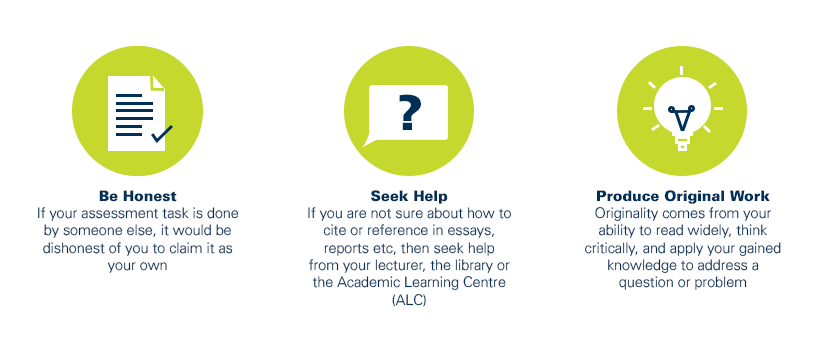
As a CQUniversity student you are expected to act honestly in all aspects of your academic work.
Any assessable work undertaken or submitted for review or assessment must be your own work. Assessable work is any type of work you do to meet the assessment requirements in the unit, including draft work submitted for review and feedback and final work to be assessed.
When you use the ideas, words or data of others in your assessment, you must thoroughly and clearly acknowledge the source of this information by using the correct referencing style for your unit. Using others’ work without proper acknowledgement may be considered a form of intellectual dishonesty.
Participating honestly, respectfully, responsibly, and fairly in your university study ensures the CQUniversity qualification you earn will be valued as a true indication of your individual academic achievement and will continue to receive the respect and recognition it deserves.
As a student, you are responsible for reading and following CQUniversity’s policies, including the Student Academic Integrity Policy and Procedure. This policy sets out CQUniversity’s expectations of you to act with integrity, examples of academic integrity breaches to avoid, the processes used to address alleged breaches of academic integrity, and potential penalties.
What is a breach of academic integrity?
A breach of academic integrity includes but is not limited to plagiarism, self-plagiarism, collusion, cheating, contract cheating, and academic misconduct. The Student Academic Integrity Policy and Procedure defines what these terms mean and gives examples.
Why is academic integrity important?
A breach of academic integrity may result in one or more penalties, including suspension or even expulsion from the University. It can also have negative implications for student visas and future enrolment at CQUniversity or elsewhere. Students who engage in contract cheating also risk being blackmailed by contract cheating services.
Where can I get assistance?
For academic advice and guidance, the Academic Learning Centre (ALC) can support you in becoming confident in completing assessments with integrity and of high standard.
What can you do to act with integrity?