Overview
While studying the Principal Music Studios series of units you will undertake a series of developmental practical music studies relating to your primary study area. In Principal Music Studios 1, you will engage in practical music studies in one instrument, voice or composition, focusing on foundation level repertoire and technical work. These practical studies will be underpinned by your ability to demonstrate personal and professional skills necessary for your profession, such as punctuality and preparedness for each of your lessons, consistent attendance and thorough personal practice, and a mature response to direction. You are expected to demonstrate cumulative levels of skill and knowledge through this series of units.
Details
Pre-requisites or Co-requisites
Students must be enrolled in CG51 Bachelor of Music or CC41 Diploma of Music to enrol in this unit.
Important note: Students enrolled in a subsequent unit who failed their pre-requisite unit, should drop the subsequent unit before the census date or within 10 working days of Fail grade notification. Students who do not drop the unit in this timeframe cannot later drop the unit without academic and financial liability. See details in the Assessment Policy and Procedure (Higher Education Coursework).
Offerings For Term 1 - 2026
Attendance Requirements
All on-campus students are expected to attend scheduled classes - in some units, these classes are identified as a mandatory (pass/fail) component and attendance is compulsory. International students, on a student visa, must maintain a full time study load and meet both attendance and academic progress requirements in each study period (satisfactory attendance for International students is defined as maintaining at least an 80% attendance record).
Recommended Student Time Commitment
Each 6-credit Undergraduate unit at CQUniversity requires an overall time commitment of an average of 12.5 hours of study per week, making a total of 150 hours for the unit.
Class Timetable
Assessment Overview
Assessment Grading
This is a graded unit: your overall grade will be calculated from the marks or grades for each assessment task, based on the relative weightings shown in the table above. You must obtain an overall mark for the unit of at least 50%, or an overall grade of 'pass' in order to pass the unit. If any 'pass/fail' tasks are shown in the table above they must also be completed successfully ('pass' grade). You must also meet any minimum mark requirements specified for a particular assessment task, as detailed in the 'assessment task' section (note that in some instances, the minimum mark for a task may be greater than 50%). Consult the University's Grades and Results Policy for more details of interim results and final grades.
All University policies are available on the CQUniversity Policy site.
You may wish to view these policies:
- Grades and Results Policy
- Assessment Policy and Procedure (Higher Education Coursework)
- Review of Grade Procedure
- Student Academic Integrity Policy and Procedure
- Academic Progression Policy and Procedure
- Student Refund and Credit Balance Policy and Procedure
- Complaints Policy and Procedure
- Information and Communications Technology Acceptable Use Policy and Procedure
This list is not an exhaustive list of all University policies. The full list of University policies are available on the CQUniversity Policy site.
Feedback, Recommendations and Responses
Every unit is reviewed for enhancement each year. At the most recent review, the following staff and student feedback items were identified and recommendations were made.
Feedback from Personal Communication
Masterclass Topics
Students have responded positively to the variety of masterclass topics presented. It is suggested that staff continue enhancing this aspect of the unit for future offerings.
- Perform the foundation level technical work studied in this unit
- Perform the foundation level repertoire studied in this unit, demonstrating an understanding of the stylistic and interpretive requirements
- Engage in the process of developing and reflecting on the personal and professional skills necessary for your area of study
- Construct a professional e-Portfolio/performer website that showcases skills, capabilities, attributes, and achievements pertinent to your future career.
Alignment of Assessment Tasks to Learning Outcomes
| Assessment Tasks | Learning Outcomes | |||
|---|---|---|---|---|
| 1 | 2 | 3 | 4 | |
| 1 - Practical Assessment - 40% | ||||
| 2 - Practical Assessment - 40% | ||||
| 3 - Critical Review - 10% | ||||
| 4 - Portfolio - 10% | ||||
Alignment of Graduate Attributes to Learning Outcomes
| Graduate Attributes | Learning Outcomes | |||
|---|---|---|---|---|
| 1 | 2 | 3 | 4 | |
| 1 - Communication | ||||
| 2 - Problem Solving | ||||
| 3 - Critical Thinking | ||||
| 4 - Information Literacy | ||||
| 5 - Team Work | ||||
| 6 - Information Technology Competence | ||||
| 7 - Cross Cultural Competence | ||||
| 8 - Ethical practice | ||||
| 9 - Social Innovation | ||||
| 10 - First Nations Knowledges | ||||
| 11 - Aboriginal and Torres Strait Islander Cultures | ||||
Textbooks
There are no required textbooks.
IT Resources
- CQUniversity Student Email
- Internet
- Unit Website (Moodle)
- Head phones
- Microphone
- Audio interface
All submissions for this unit must use the referencing style: American Psychological Association 7th Edition (APA 7th edition)
For further information, see the Assessment Tasks.
j.smyth-tomkins@cqu.edu.au
Week 1
Begin Date: 09 Mar 2026Module/Topic
ALL students: Individual lesson.
Chapter
Events and Submissions/Topic
Week 2
Begin Date: 16 Mar 2026Module/Topic
ALL students: Individual lesson.
Chapter
Events and Submissions/Topic
Week 3
Begin Date: 23 Mar 2026Module/Topic
ALL students: Individual lesson.
Chapter
Events and Submissions/Topic
Technical Assessment: Materials to be submitted by tutors to the Unit Coordinator for approval.
Week 4
Begin Date: 30 Mar 2026Module/Topic
ALL students: Masterclass 1 (no individual lesson).
Chapter
Events and Submissions/Topic
Week 5
Begin Date: 06 Apr 2026Module/Topic
ALL students: Individual lesson.
Chapter
Events and Submissions/Topic
Repertoire Assessment: Materials to be submitted by tutors to the Unit Coordinator for approval.
Week 6
Begin Date: 13 Apr 2026Module/Topic
ALL students: Individual lesson.
Chapter
Events and Submissions/Topic
Vacation Week
Begin Date: 20 Apr 2026Module/Topic
Chapter
Events and Submissions/Topic
Week 7
Begin Date: 27 Apr 2026Module/Topic
ALL students: Individual lesson.
Chapter
Events and Submissions/Topic
Week 8
Begin Date: 04 May 2026Module/Topic
ALL students: Individual lesson.
Chapter
Events and Submissions/Topic
Week 9
Begin Date: 11 May 2026Module/Topic
ALL students: Masterclass 2 (no individual lesson).
Chapter
Events and Submissions/Topic
Week 10
Begin Date: 18 May 2026Module/Topic
ALL students: Technical Assessment (in-class test).
Chapter
Events and Submissions/Topic
Week 11
Begin Date: 25 May 2026Module/Topic
ALL students: Individual lesson.
Chapter
Events and Submissions/Topic
Week 12
Begin Date: 01 Jun 2026Module/Topic
ALL students: Individual lesson.
Chapter
Events and Submissions/Topic
Exam Week
Begin Date: 08 Jun 2026Module/Topic
Chapter
Events and Submissions/Topic
Vacation/Exam Week
Begin Date: 15 Jun 2026Module/Topic
Chapter
Events and Submissions/Topic
1 Practical Assessment
In this assessment, you will demonstrate foundation-level techniques and musicianship skills through a range of technical materials relevant to your instrument/voice/genre (or your composition practice, if applicable). This assessment encompasses a range of technical materials relating to scales/modes, arpeggios/chords, etudes/studies, comping exercises, sight-reading, rudiments, and the application of compositional devices and elements. Your technical curriculum will be individually designed by your tutor and communicated via the unit coordinator.
- Instrumentalists or vocalists will complete this assessment as either an in-class test (scheduled to occur in your regular weekly lesson time in Week 10), or as a recorded assessment submission.
- Composers will submit a portfolio of work demonstrating the technical tasks developed across the term.
AI Assessment Scale (AIAS): Level 1 No AI
This assessment is completed entirely without AI assistance in a controlled environment, ensuring that students rely solely on their existing knowledge, understanding and skills. You must not use AI at any point in the assessment. You must use your core skills and knowledge.
72-hour grace period
No exemption statement applies. The standard 72-hour grace period applies.
Week 10 Friday (22 May 2026) 11:45 pm AEST
Week 12 Friday (5 June 2026)
You will be assessed on your demonstrated development of musical and technical skills as applied to your instrument/voice/composition practice. Relevant to your study area, you may be assessed against a combination of the following criteria:
Technical Proficiency
You will demonstrate accurate pitch/intonation (where applicable), agility/dexterity, fluency, and technical control in the performance or notation of your assigned technical materials (e.g., scales/modes, arpeggios/chords, etudes/studies, comping exercises, sight reading, rudiments, or equivalent compositional technical tasks).
Articulation and Phrasing
You will demonstrate stylistically appropriate articulation techniques and phrasing, applied accurately and intentionally within the assigned technical materials (or within compositional outputs, where applicable).
Tone Production / Timbre Control
You produce a consistent, appropriate tone/vocal sound (e.g., breath control, resonance, consistency across registers) or, for composers, you demonstrate effective use of timbre/instrumentation and sound-world choices aligned to the task.
Rhythmic Accuracy
You demonstrate precise rhythmic control and tempi in performance of the assigned technical materials; or, for composers, accurate and clear rhythmic notation and rhythmic device use aligned to your portfolio works.
Composition Analysis (where applicable)
You demonstrate your understanding of structure, melody, harmony, rhythm, instrumentation, texture, and phrasing through the analytical tasks set for your technical program.
(If analysis tasks are not set for your stream, this criterion is not assessed.)
Overall Musical Interpretation
You apply technical skills in context, demonstrating musicality and stylistic understanding (e.g., expression, dynamics, tempo, phrasing, memorisation where relevant) in performance or compositional outcomes.
- Perform the foundation level technical work studied in this unit
2 Practical Assessment
In this assessment, you will demonstrate foundation-level repertoire outcomes through either performance (instrumentalists/vocalists) or a composition portfolio (composers). The focus is on performance skills, musicianship, stylistic understanding, and interpretive decision-making (or composition technique and portfolio development, where applicable).
- Instrumentalists or vocalists will perform repertoire from an agreed list relevant to your instrument and genre.
- Composers will submit a portfolio of works demonstrating a range of styles and specifications, as negotiated with your tutor and approved by the unit coordinator.
Your repertoire program will be individualised by your tutor in consultation with the unit coordinator. Minimum requirements (number/length of works, performance duration, format) and submission instructions are provided on the unit Moodle site.
AI Assessment Scale (AIAS): Level 1 No AI
This assessment is completed entirely without AI assistance in a controlled environment, ensuring that students rely solely on their existing knowledge, understanding and skills. You must not use AI at any point in the assessment. You must use your core skills and knowledge.
72-hour grace period
No exemption statement applies. The standard 72-hour grace period applies.
Exam Week Friday (12 June 2026) 11:45 pm AEST
End of Term
You will be assessed on your demonstrated development of musical and performance/composition skills as applied to your repertoire program/portfolio. You may be assessed against a combination of the following criteria:
Technical Proficiency
You will demonstrate accuracy of pitch/intonation (where applicable), fluency, and technical control in the performance or notation of your assigned repertoire/portfolio works.
Articulation and Phrasing
You will demonstrate stylistically appropriate articulation and phrasing choices, applied consistently and accurately throughout the assigned repertoire/portfolio works.
Tone Production / Timbre Control
You will produce a consistent, appropriate tone/vocal sound across the repertoire; or, for composers, you demonstrate purposeful timbral/instrumentation decisions aligned to the portfolio works.
Rhythmic Accuracy
You will demonstrate precision and rhythmic control in performing the assigned repertoire; or, for composers, accurate rhythmic notation and effective rhythmic device use aligned to your portfolio works.
Stylistic and Interpretive Authenticity
You will demonstrate an understanding of the stylistic and interpretive requirements of the repertoire (e.g., genre conventions, stylistic articulation, phrasing language, feel/groove, tempo choices, expressive intent), evidenced through your performance/compositional outcomes.
Improvisation / Interpretation (where applicable)
You will demonstrate improvisational skill and/or interpretive choice-making appropriate to the repertoire requirements of your program.
Overall Musical Interpretation
You will demonstrate musicality in context through expression, dynamics, phrasing, tempo control, memorisation where relevant, and coherent artistic decision-making in performance or portfolio works.
- Perform the foundation level repertoire studied in this unit, demonstrating an understanding of the stylistic and interpretive requirements
3 Critical Review
In this assessment, your tutor will evaluate your engagement and professional practice across the term. This evaluation is based on your participation and demonstrated development in lessons/masterclasses and related learning activities.
This assessment supports your development of personal and professional skills, including consistent preparation, focus and concentration, responsiveness to feedback, and sustained improvement.
AI Assessment Scale (AIAS): Not applicable
There is no AI use relevant to the tutor’s grading assessment.
72-hour grace period: Not applicable
There is no student submission for this assessment item.
This assessment item is graded and submitted by your individual tutor. As such, no specific due date is required.
End of term.
Your tutor will evaluate you against the following criteria:
Attendance and Punctuality
You attend required lessons consistently and arrive on time.
Preparation and Practice
You demonstrate thorough preparation for lessons (e.g., evidence of regular practice and task completion).
Application of Direction and Concepts
You apply tutor feedback and concepts effectively and demonstrate progress in implementing them.
Focus and Concentration
You demonstrate attentiveness, engagement, and concentration during lessons.
Improvement
You demonstrate observable growth and development across the term.
No submission method provided.
- Engage in the process of developing and reflecting on the personal and professional skills necessary for your area of study
4 Portfolio
In this assessment, you will design and publish a website using free website development software to establish an online presence in your musical field. Your site must showcase your skills and achievements, describe your services, and make it easy for people to contact you for bookings or enquiries.
Your website must include:
Home page – visually appealing landing page showcasing your work (e.g., photos, videos, testimonials, short intro).
About page – profile including background, experience, achievements, and philosophy; includes bio and a detailed CV.
Services page – clear description of services offered (e.g., lessons, performance, commissions, workshops, bookings).
Portfolio page – curated examples of your work (e.g., recordings, videos, photos, lyrics, composition portfolio samples).
Contact page – clear contact method and accurate details (email/phone/social links); integrate social media links.
Responsive design – optimised for desktop, tablet, and mobile.
Design attributes – consistent branding (imagery, typography, colour theme) aligned to your professional identity.
AI Assessment Scale (AIAS): Level 3 AI Collaboration
You may use AI to assist with specific tasks such as drafting text, refining and evaluating your work. You must critically evaluate and modify any AI-generated content you use.
72-hour grace period
No exemption statement applies. The standard 72-hour grace period applies.
Week 6 Friday (17 Apr 2026) 11:45 pm AEST
Week 8 Friday (8 May 2026)
You will be assessed on a combination of criteria relating to the development of your website, subject to area of interest. Your website may include the assessment of some or all of these criteria:
User-friendly Interface and Navigation
Your site is logically organised, easy to navigate, and provides a positive user experience.
Responsive Design
Your site displays correctly and is usable across desktop, tablet, and mobile devices.
Quality and Relevance of Media/Portfolio Content
Your site includes professional, relevant media that showcases your work effectively (audio/video/images) and supports your field of interest.
Completeness of Required Pages and Information
Your site includes all required pages (Home, About, Services, Portfolio, Contact) with appropriate depth and clarity, including a bio and detailed CV.
Services and Professional Communication
Your services are clearly described, appropriate for your intended professional pathway, and written for a target audience (clients, students, promoters, collaborators).
Contact Accessibility and Professional Presence
Your contact method is clear, accurate, and functional; social media links (where used) are relevant and support your professional presence.
Branding and Design Coherence
Your visual design choices are consistent and reflect a coherent professional identity (style, imagery, typography, colour theme).
- Construct a professional e-Portfolio/performer website that showcases skills, capabilities, attributes, and achievements pertinent to your future career.
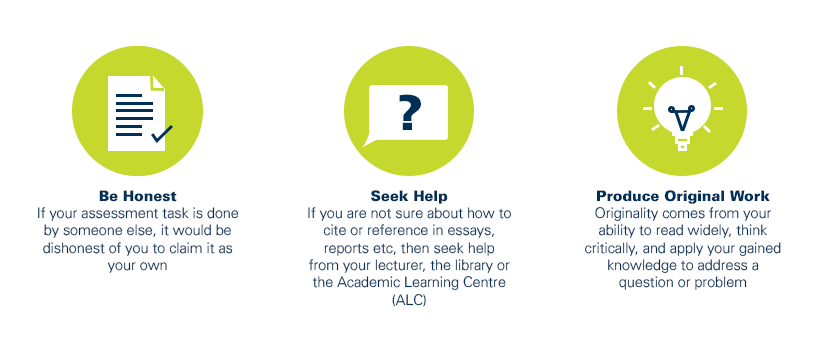
As a CQUniversity student you are expected to act honestly in all aspects of your academic work.
Any assessable work undertaken or submitted for review or assessment must be your own work. Assessable work is any type of work you do to meet the assessment requirements in the unit, including draft work submitted for review and feedback and final work to be assessed.
When you use the ideas, words or data of others in your assessment, you must thoroughly and clearly acknowledge the source of this information by using the correct referencing style for your unit. Using others’ work without proper acknowledgement may be considered a form of intellectual dishonesty.
Participating honestly, respectfully, responsibly, and fairly in your university study ensures the CQUniversity qualification you earn will be valued as a true indication of your individual academic achievement and will continue to receive the respect and recognition it deserves.
As a student, you are responsible for reading and following CQUniversity’s policies, including the Student Academic Integrity Policy and Procedure. This policy sets out CQUniversity’s expectations of you to act with integrity, examples of academic integrity breaches to avoid, the processes used to address alleged breaches of academic integrity, and potential penalties.
What is a breach of academic integrity?
A breach of academic integrity includes but is not limited to plagiarism, self-plagiarism, collusion, cheating, contract cheating, and academic misconduct. The Student Academic Integrity Policy and Procedure defines what these terms mean and gives examples.
Why is academic integrity important?
A breach of academic integrity may result in one or more penalties, including suspension or even expulsion from the University. It can also have negative implications for student visas and future enrolment at CQUniversity or elsewhere. Students who engage in contract cheating also risk being blackmailed by contract cheating services.
Where can I get assistance?
For academic advice and guidance, the Academic Learning Centre (ALC) can support you in becoming confident in completing assessments with integrity and of high standard.
What can you do to act with integrity?