Overview
In this unit, you will examine the role and importance of marketing in an organisation. The theories and concepts of marketing are examined and you will assess how the marketing process works in an increasingly complex and competitive business environment. You will analyse marketing planning, strategy, digital communications and evaluate various tools and techniques used by professional marketers. The increasing attention to social media and the digital space as a means of connecting organisations to customers and stakeholders is also an underlying theme addressed in this unit. At the weekly workshops, this unit enables students to investigate how marketing concepts and methods can be applied in an organisation, industry, or sector of their choice.
Details
Pre-requisites or Co-requisites
There are no requisites for this unit.
Important note: Students enrolled in a subsequent unit who failed their pre-requisite unit, should drop the subsequent unit before the census date or within 10 working days of Fail grade notification. Students who do not drop the unit in this timeframe cannot later drop the unit without academic and financial liability. See details in the Assessment Policy and Procedure (Higher Education Coursework).
Offerings For Term 1 - 2026
Attendance Requirements
All on-campus students are expected to attend scheduled classes - in some units, these classes are identified as a mandatory (pass/fail) component and attendance is compulsory. International students, on a student visa, must maintain a full time study load and meet both attendance and academic progress requirements in each study period (satisfactory attendance for International students is defined as maintaining at least an 80% attendance record).
Recommended Student Time Commitment
Each 6-credit Postgraduate unit at CQUniversity requires an overall time commitment of an average of 12.5 hours of study per week, making a total of 150 hours for the unit.
Class Timetable
Assessment Overview
Assessment Grading
This is a graded unit: your overall grade will be calculated from the marks or grades for each assessment task, based on the relative weightings shown in the table above. You must obtain an overall mark for the unit of at least 50%, or an overall grade of 'pass' in order to pass the unit. If any 'pass/fail' tasks are shown in the table above they must also be completed successfully ('pass' grade). You must also meet any minimum mark requirements specified for a particular assessment task, as detailed in the 'assessment task' section (note that in some instances, the minimum mark for a task may be greater than 50%). Consult the University's Grades and Results Policy for more details of interim results and final grades.
All University policies are available on the CQUniversity Policy site.
You may wish to view these policies:
- Grades and Results Policy
- Assessment Policy and Procedure (Higher Education Coursework)
- Review of Grade Procedure
- Student Academic Integrity Policy and Procedure
- Academic Progression Policy and Procedure
- Student Refund and Credit Balance Policy and Procedure
- Complaints Policy and Procedure
- Information and Communications Technology Acceptable Use Policy and Procedure
This list is not an exhaustive list of all University policies. The full list of University policies are available on the CQUniversity Policy site.
Feedback, Recommendations and Responses
Every unit is reviewed for enhancement each year. At the most recent review, the following staff and student feedback items were identified and recommendations were made.
Feedback from Student feedback
Students highlighted the lecturer’s engaging and supportive teaching style, noting that the ability to make learning enjoyable and stress-free fostered a positive classroom environment. This approach not only kept students motivated but also made classes something to look forward to.
Continue to maintain and build upon the engaging, supportive, and student-centered teaching approach, as it is a clear strength that enhances motivation and classroom enjoyment.
Feedback from Student feedback
Overall, the module content and delivery were good and engaging.
Continue to ensure that content remains engaging and is delivered in an interactive, student-focused manner to maintain high levels of interest and participation.
Feedback from Student feedback
Students expressed strong appreciation for the coordinator’s prompt and clear communication. Quick and helpful responses to questions were seen as highly supportive, enhancing students’ confidence in the unit and contributing to a smoother learning experience.
Maintain prompt and clear communication, and explore opportunities to further streamline response channels (e.g., drop-in sessions) to ensure consistent access to timely support.
- Research and analyse the marketing environment and evaluate marketing opportunities
- Analyse marketing concepts and theories in relation to business challenges, reflect upon the issues and synthesise complex information to develop solutions
- Critically assess the key role of marketing management including digital and traditional communications in the business environment
- Research, develop and communicate a comprehensive marketing plan
- Effectively communicate marketing knowledge in general business contexts.
Alignment of Assessment Tasks to Learning Outcomes
| Assessment Tasks | Learning Outcomes | ||||
|---|---|---|---|---|---|
| 1 | 2 | 3 | 4 | 5 | |
| 1 - Written Assessment - 20% | |||||
| 2 - Report - 40% | |||||
| 3 - Written Assessment - 40% | |||||
Alignment of Graduate Attributes to Learning Outcomes
| Graduate Attributes | Learning Outcomes | ||||
|---|---|---|---|---|---|
| 1 | 2 | 3 | 4 | 5 | |
| 1 - Knowledge | |||||
| 2 - Communication | |||||
| 3 - Cognitive, technical and creative skills | |||||
| 4 - Research | |||||
| 5 - Self-management | |||||
| 6 - Ethical and Professional Responsibility | |||||
| 7 - Leadership | |||||
| 8 - First Nations Knowledges | |||||
| 9 - Aboriginal and Torres Strait Islander Cultures | |||||
Textbooks
Marketing Management: an Asian Perspective
- Edition: 7th (2017)
- Authors: Philip Kotler, Kevin Lane Keller, Swee Hoon Ang, Chin Tiong Tan and Siew Meng Leong
- Pearson
- ISBN: 978-1-292-08958-4
- Binding: Paperback
IT Resources
- CQUniversity Student Email
- Internet
- Unit Website (Moodle)
- Microsoft Office
All submissions for this unit must use the referencing style: American Psychological Association 7th Edition (APA 7th edition)
For further information, see the Assessment Tasks.
e.li@cqu.edu.au
j.ban@cqu.edu.au
Week 1
Begin Date: 09 Mar 2026Module/Topic
Defining marketing for new realities.
Chapter
Chapter 1
Events and Submissions/Topic
Week 2
Begin Date: 16 Mar 2026Module/Topic
Developing marketing strategies and plans.
Chapter
Chapter 2
Events and Submissions/Topic
Week 3
Begin Date: 23 Mar 2026Module/Topic
Gathering information and forecasting demand.
Chapter
Chapter 3
Events and Submissions/Topic
Week 4
Begin Date: 30 Mar 2026Module/Topic
Conducting marketing research.
Chapter
Chapter 4
Events and Submissions/Topic
Week 5
Begin Date: 06 Apr 2026Module/Topic
Creating customer value, satisfaction, and loyalty; Analyzing consumer markets; Identifying market segments and targeting.
Chapter
Chapters 5, 6, and 8
Events and Submissions/Topic
Week 6
Begin Date: 13 Apr 2026Module/Topic
Setting product strategies; Designing and managing services; Introducing new product offerings.
Chapter
Chapters 12, 13 and 21
Events and Submissions/Topic
Vacation Week
Begin Date: 20 Apr 2026Module/Topic
Chapter
Events and Submissions/Topic
Week 7
Begin Date: 27 Apr 2026Module/Topic
Developing pricing strategies and programs.
Chapter
Chapter 14
Events and Submissions/Topic
Week 8
Begin Date: 04 May 2026Module/Topic
Designing and managing marketing channels and value networks; Managing retailing, wholesaling and logistics.
Chapter
Chapters 15 and 16
Events and Submissions/Topic
Week 9
Begin Date: 11 May 2026Module/Topic
Designing and managing integrated marketing communications; Managing mass communications; Managing personal communications.
Chapter
Chapters 17, 18 and 20
Events and Submissions/Topic
Week 10
Begin Date: 18 May 2026Module/Topic
Managing digital communications.
Chapter
Chapter 19
Events and Submissions/Topic
Marketing Audit Live Presentations during your workshop.
Week 11
Begin Date: 25 May 2026Module/Topic
Creating brand equity; Crafting the brand positioning.
Chapter
Chapters 9 and 10
Events and Submissions/Topic
Marketing Audit Live Presentations during your workshop.
Week 12
Begin Date: 01 Jun 2026Module/Topic
Managing a holistic marketing organisation.
Chapter
Chapter 23
Events and Submissions/Topic
Exam Week
Begin Date: 08 Jun 2026Module/Topic
Chapter
Events and Submissions/Topic
Vacation/Exam Week
Begin Date: 15 Jun 2026Module/Topic
Chapter
Events and Submissions/Topic
1 Written Assessment
For this individual assessment, each student is required to choose one news article (from the two articles provided on Moodle) that focuses on selected United Nations Sustainable Development Goals (UNSDGs), and respond to a set of questions examining the marketing implications of the article. Students must address the following questions:
1. Which of the UNSDGs does the news article relate to?
2. Who are the important stakeholders?
3. What potential marketing issues can be identified from the article?
4. How would you respond to these issues, and why?
5. What have you learned from this assessment, and how can this learning be applied in the future?
This assessment must be submitted as a single Word document, with a maximum word limit of 1000 words, and a minimum of five references.
Any assessment with a 'Turnitin' score of more than 25% will be checked by the marker for potential plagiarism issues, although it may not necessarily mean that you have plagiarised. If there is a substantial similarity score in the 'Turnitin' report, your assessment may be forwarded to an appropriate office/authority.
This assessment requires students to adhere to the guidelines on the use of artificial intelligence tools as specified in the Artificial Intelligence Assessment Scale (AIAS). Any misuse or lack of disclosure regarding the use of AI tools will be considered a breach of academic integrity. The appropriate AI scale level for this Assessment is AI PLANNING. You may use AI for planning, idea development, and research. Your final submission should show how you have developed and refined these ideas.
Week 5 Friday (10 Apr 2026) 5:00 pm AEST
Results will be released after marking and moderation is completed.
- Identification of the appropriate UNSDG from the article (10%)
- Identifying the important stakeholders (20%)
- Reflective analysis (i.e. identifying potential marketing issues and response to these issues) (40%)
- Reflect on what you have learned from this assessment, and consider how your learning could be applied in future (10%)
- Writing style (i.e. spelling, grammar, etc.) (10%)
- Referencing (10%)
- Research and analyse the marketing environment and evaluate marketing opportunities
- Analyse marketing concepts and theories in relation to business challenges, reflect upon the issues and synthesise complex information to develop solutions
- Critically assess the key role of marketing management including digital and traditional communications in the business environment
- Effectively communicate marketing knowledge in general business contexts.
2 Report
Assessment 2 requires students to work in groups of up to 5 students on the organisation "MADEC" (https://madec.org.au/) to prepare a comprehensive marketing audit. This assessment aims to conduct a systematic, comprehensive and objective analysis of the marketing activities undertaken by the organisation.
In addition, you are also required to provide one recommendation for the organisation and to reflect on what you have learned from this assessment and how your learning could be applied in the future. Groups are required to present the major parts of the report in the week 10 workshop or the week 11 workshop. Each group's presentation should last no more than 10 minutes and be based on a maximum of 10 PowerPoint slides.
This is a group assessment (maximum group size is 5 students). All group members must be from the same workshop. Workshop facilitators will provide additional information about forming groups in the workshop classes. Please note that once you are placed in a group, you are not allowed to change groups (i.e. join another group) without prior permission from the teaching staff (workshop facilitator).
This group assessment should be submitted in a single Word document file, through Moodle by the assessment due time (only one member per group is required to submit this file). This file should include two chapters, including "Chapter A - Marketing audit report" and "Chapter B - Screenshots of presentation slides". In other words, this file should include your group's written marketing audit report as well as the screenshots of the PowerPoint slides your group will utilise when delivering your group's presentation in the corresponding workshop.
This Word document submission file has a maximum word limit of 2000 words. In addition, "Chapter A - Marketing audit report" requires a minimum of 10 references.
Any assessment with a 'Turnitin' score of more than 25% will be checked by the marker for potential plagiarism issues, although it may not necessarily mean that you have plagiarised. If there is a substantial similarity score in the 'Turnitin' report, your assessment may be forwarded to an appropriate office/authority.
This assessment requires students to adhere to the guidelines on the use of artificial intelligence tools as specified in the Artificial Intelligence Assessment Scale (AIAS). Any misuse or lack of disclosure regarding the use of AI tools will be considered a breach of academic integrity. The appropriate AI scale level for this Assessment is AI PLANNING. You may use AI for planning, idea development, and research. Your final submission should show how you have developed and refined these ideas.
Week 9 Friday (15 May 2026) 5:00 pm AEST
Results will be released after marking and moderation is completed.
* Executive summary (3%)
* Introduction to the report (2%)
* Situation analysis (10%)
* Discussion of segmentation, targeting and positioning (STP) (10%)
* Marketing mix strategy used by the organisation (10%)
* Recommendation and group reflection (10%)
* Mechanics (report format and writing style) (3%)
* Presentation (50%)
* Referencing (2%)
- Research and analyse the marketing environment and evaluate marketing opportunities
- Analyse marketing concepts and theories in relation to business challenges, reflect upon the issues and synthesise complex information to develop solutions
- Critically assess the key role of marketing management including digital and traditional communications in the business environment
- Research, develop and communicate a comprehensive marketing plan
- Effectively communicate marketing knowledge in general business contexts.
3 Written Assessment
In this hypothetical business scenario exercise, you will need to answer two questions based on hypothetical business scenarios. These questions will be provided on Moodle in week 10 and will require you to demonstrate your ability to apply marketing concepts and theories in hypothetical business contexts. This individual assessment should be submitted in a single Word document file, has a maximum word limit of 1200 words, and requires a minimum of 10 references. Any assessment with a 'Turnitin' score of more than 25% will be checked by the marker for potential plagiarism issues, although it may not necessarily mean that you have plagiarised. If there is a substantial similarity score in the 'Turnitin' report, your assessment may be forwarded to an appropriate office/authority.
This assessment requires students to adhere to the guidelines on the use of artificial intelligence tools as specified in the Artificial Intelligence Assessment Scale (AIAS). Any misuse or lack of disclosure regarding the use of AI tools will be considered a breach of academic integrity. The appropriate AI scale level for this Assessment is AI PLANNING. You may use AI for planning, idea development, and research. Your final submission should show how you have developed and refined these ideas.
Week 12 Wednesday (3 June 2026) 5:00 pm AEST
Results for this assessment will be provided to students after certification of grades on Wednesday, 8 July 2026.
- Argument and analysis in answering Question 1 (40%)
- Argument and analysis in answering Question 2 (40%)
- Writing style (i.e. spelling, grammar, etc.) (10%)
- Referencing (10%)
- Analyse marketing concepts and theories in relation to business challenges, reflect upon the issues and synthesise complex information to develop solutions
- Critically assess the key role of marketing management including digital and traditional communications in the business environment
- Effectively communicate marketing knowledge in general business contexts.
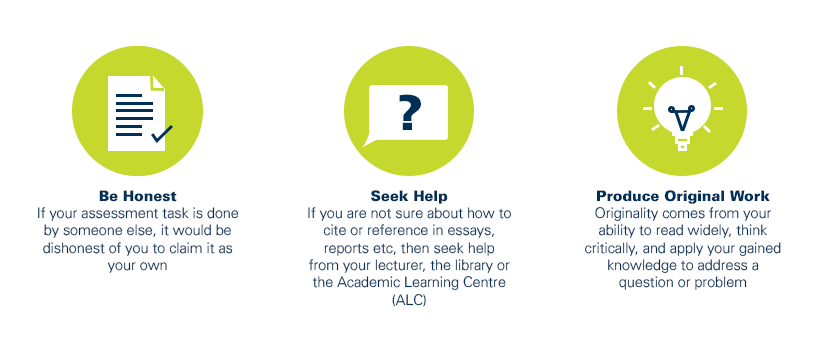
As a CQUniversity student you are expected to act honestly in all aspects of your academic work.
Any assessable work undertaken or submitted for review or assessment must be your own work. Assessable work is any type of work you do to meet the assessment requirements in the unit, including draft work submitted for review and feedback and final work to be assessed.
When you use the ideas, words or data of others in your assessment, you must thoroughly and clearly acknowledge the source of this information by using the correct referencing style for your unit. Using others’ work without proper acknowledgement may be considered a form of intellectual dishonesty.
Participating honestly, respectfully, responsibly, and fairly in your university study ensures the CQUniversity qualification you earn will be valued as a true indication of your individual academic achievement and will continue to receive the respect and recognition it deserves.
As a student, you are responsible for reading and following CQUniversity’s policies, including the Student Academic Integrity Policy and Procedure. This policy sets out CQUniversity’s expectations of you to act with integrity, examples of academic integrity breaches to avoid, the processes used to address alleged breaches of academic integrity, and potential penalties.
What is a breach of academic integrity?
A breach of academic integrity includes but is not limited to plagiarism, self-plagiarism, collusion, cheating, contract cheating, and academic misconduct. The Student Academic Integrity Policy and Procedure defines what these terms mean and gives examples.
Why is academic integrity important?
A breach of academic integrity may result in one or more penalties, including suspension or even expulsion from the University. It can also have negative implications for student visas and future enrolment at CQUniversity or elsewhere. Students who engage in contract cheating also risk being blackmailed by contract cheating services.
Where can I get assistance?
For academic advice and guidance, the Academic Learning Centre (ALC) can support you in becoming confident in completing assessments with integrity and of high standard.
What can you do to act with integrity?