Overview
Why do some organisations perform better than others and how can an organisation deliver the best return for their marketing investment? These are fundamental questions of marketing strategy and demand rigorous marketing planning. Marketing plans are used in organisations to outline various strategies to create, promote, and divest products and services. In this unit you will be fostering a strategic approach to marketing and then developing and reviewing a marketing plan. You will work closely with an identified and approved business or organisation of your choice. Various tools and techniques used in the development, implementation and review of marketing planning will be explored. The unit will enable you to recognise how product and service targets are set and achieved, analyse and translate the marketing environments, and deliver and review a strategic marketing plan.
Details
Pre-requisites or Co-requisites
Prerequisite: MRKT11029 - Marketing Fundamentals; plus the completion of an additional 24 credit points from units within the marketing major.
Important note: Students enrolled in a subsequent unit who failed their pre-requisite unit, should drop the subsequent unit before the census date or within 10 working days of Fail grade notification. Students who do not drop the unit in this timeframe cannot later drop the unit without academic and financial liability. See details in the Assessment Policy and Procedure (Higher Education Coursework).
Offerings For Term 2 - 2026
Attendance Requirements
All on-campus students are expected to attend scheduled classes - in some units, these classes are identified as a mandatory (pass/fail) component and attendance is compulsory. International students, on a student visa, must maintain a full time study load and meet both attendance and academic progress requirements in each study period (satisfactory attendance for International students is defined as maintaining at least an 80% attendance record).
Recommended Student Time Commitment
Each 6-credit Undergraduate unit at CQUniversity requires an overall time commitment of an average of 12.5 hours of study per week, making a total of 150 hours for the unit.
Class Timetable
Assessment Overview
Assessment Grading
This is a graded unit: your overall grade will be calculated from the marks or grades for each assessment task, based on the relative weightings shown in the table above. You must obtain an overall mark for the unit of at least 50%, or an overall grade of 'pass' in order to pass the unit. If any 'pass/fail' tasks are shown in the table above they must also be completed successfully ('pass' grade). You must also meet any minimum mark requirements specified for a particular assessment task, as detailed in the 'assessment task' section (note that in some instances, the minimum mark for a task may be greater than 50%). Consult the University's Grades and Results Policy for more details of interim results and final grades.
All University policies are available on the CQUniversity Policy site.
You may wish to view these policies:
- Grades and Results Policy
- Assessment Policy and Procedure (Higher Education Coursework)
- Review of Grade Procedure
- Student Academic Integrity Policy and Procedure
- Academic Progression Policy and Procedure
- Student Refund and Credit Balance Policy and Procedure
- Complaints Policy and Procedure
- Information and Communications Technology Acceptable Use Policy and Procedure
This list is not an exhaustive list of all University policies. The full list of University policies are available on the CQUniversity Policy site.
Feedback, Recommendations and Responses
Every unit is reviewed for enhancement each year. At the most recent review, the following staff and student feedback items were identified and recommendations were made.
Feedback from Student and Unit Teaching Evaluations (SUTE)
Everything seems to be clear and the lecturer and unit coordinator are very friendly and happy to assist us anytime with any confusion questions.
The future unit coordinator will continue to assist students in a friendly and helpful manner.
Feedback from Student and Unit Teaching Evaluations (SUTE)
Additional resources relevant to weekly topics would be useful. For example, additional tools to understand BCG matrix, or Ansoff Matrix. Some additional resources provided (eg web articles) were not even available to read as they required a subscription
The future unit coordinator should ensure specific and accessible resources explaining the concepts connected to the lecture and assessments be provided to students.
- Explain and critique the importance of strategic marketing and the marketing planning process
- Evaluate marketing strategy concepts to develop creative solutions in the form of marketing objectives, strategies and tactics
- Develop the key analytical skills and competencies for effective strategic marketing analysis and planning, implementation and evaluation
- Construct, evaluate and review the major components of a marketing plan that enables sustainable, superior organisational performance in the market place.
This unit forms the capstone of your marketing major. Aligning with the Australian Business Deans Council academic standards for marketing graduates and with the accreditation criteria for the Australian Marketing Institute, this unit examines and applies the depth of your marketing knowledge gained throughout your studies. You will demonstrate your professional judgement, your ability to undertake systematic problem identification and solution, your communication skills, and your analysis and ethical decision-making skills within a real business situation.
Alignment of Assessment Tasks to Learning Outcomes
| Assessment Tasks | Learning Outcomes | |||
|---|---|---|---|---|
| 1 | 2 | 3 | 4 | |
| 1 - Presentation - 10% | ||||
| 2 - Research Assignment - 40% | ||||
| 3 - Report - 50% | ||||
Alignment of Graduate Attributes to Learning Outcomes
| Graduate Attributes | Learning Outcomes | |||
|---|---|---|---|---|
| 1 | 2 | 3 | 4 | |
| 1 - Communication | ||||
| 2 - Problem Solving | ||||
| 3 - Critical Thinking | ||||
| 4 - Information Literacy | ||||
| 5 - Team Work | ||||
| 6 - Information Technology Competence | ||||
| 7 - Cross Cultural Competence | ||||
| 8 - Ethical practice | ||||
| 9 - Social Innovation | ||||
| 10 - First Nations Knowledges | ||||
| 11 - Aboriginal and Torres Strait Islander Cultures | ||||
Alignment of Assessment Tasks to Graduate Attributes
| Assessment Tasks | Graduate Attributes | ||||||||||
|---|---|---|---|---|---|---|---|---|---|---|---|
| 1 | 2 | 3 | 4 | 5 | 6 | 7 | 8 | 9 | 10 | 11 | |
| 1 - Presentation - 10% | |||||||||||
| 2 - Research Assignment - 40% | |||||||||||
| 3 - Report - 50% | |||||||||||
Textbooks
Strategic Marketing: Decision-Making and Planning
- 5th edition (2019)
- Authors: Peter Reed & Michael Baird
- Engage
- ISBN: 9780170288941
IT Resources
- CQUniversity Student Email
- Internet
- Unit Website (Moodle)
- Microsoft Powerpoint
- Microsoft Word
- Zoom
- CQU Success
All submissions for this unit must use the referencing style: American Psychological Association 7th Edition (APA 7th edition)
For further information, see the Assessment Tasks.
vishnu.menon@cqu.edu.au
Week 1
Begin Date: 13 Jul 2026Module/Topic
The Changing World of Marketing
Chapter
Chapter 1
Events and Submissions/Topic
Unit overview, assessment briefing, WIL briefing
Week 2
Begin Date: 20 Jul 2026Module/Topic
Strategic Thinking and Strategic Decision Making
Chapter
Chapter 2
Events and Submissions/Topic
Begin SME selection
Week 3
Begin Date: 27 Jul 2026Module/Topic
Strategic analysis - External, customer and competitor environments
Chapter
Chapter 3
Events and Submissions/Topic
Week 4
Begin Date: 03 Aug 2026Module/Topic
Strategic analysis - CSF, Internal analysis, Problems and Opportunities
Chapter
Chapter 3 contd.
Events and Submissions/Topic
Week 5
Begin Date: 10 Aug 2026Module/Topic
Writing the Situation Analysis
Chapter
No set chapter
Events and Submissions/Topic
Assessment 2 discussion
Week 6
Begin Date: 17 Aug 2026Module/Topic
Strategy Development - High-level decision making
Chapter
Chapter 4
Events and Submissions/Topic
Vacation Week
Begin Date: 24 Aug 2026Module/Topic
Chapter
Events and Submissions/Topic
Week 7
Begin Date: 31 Aug 2026Module/Topic
Segmentation, Targeting and Positioning Strategies
Chapter
Chapter 5
Events and Submissions/Topic
Week 8
Begin Date: 07 Sep 2026Module/Topic
The Customer Value Creation Mix - Digital Strategies
Chapter
Chapter 6
Events and Submissions/Topic
Assessment 3 discussion
Week 9
Begin Date: 14 Sep 2026Module/Topic
Market Penetration and Development Strategies
Chapter
Chapter 7 and 9
Events and Submissions/Topic
Week 10
Begin Date: 21 Sep 2026Module/Topic
Strategy Implementation, Evaluation and Control
Chapter
Chapter 11
Events and Submissions/Topic
Assessment 3 discussion
Week 11
Begin Date: 28 Sep 2026Module/Topic
Ethical Considerations in Strategy Planning
Chapter
Chapter 12
Events and Submissions/Topic
Week 12
Begin Date: 05 Oct 2026Module/Topic
Writing a Strategic Marketing Plan
Chapter
No set chapter
Events and Submissions/Topic
1 Presentation
AI scale level
This assessment requires students to adhere to the guidelines on the use of artificial intelligence tools as specified in the Artificial Intelligence Assessment Scale (AIAS). Any misuse or lack of disclosure regarding the use of AI tools will be considered a breach of academic integrity. The designated AI scale level for this assessment is AI PLANNING. You may use AI for planning, idea development, and initial research, but your final submission must reflect your own analysis, judgement, and academic voice. You must disclose how AI was used in accordance with the assessment guidelines available on Moodle.
Overview
This is a Work-Integrated Learning unit. Throughout the term, you will develop a complete strategic marketing plan for a real Australian business or organisation. This will be accomplished in three stages: a project brief presentation (Assessment 1), a situation analysis report (Assessment 2), and a marketing plan (Assessment 3).
Before you begin, ensure that you understand the requirements for each assessment, as data gathered across all three will be integrated into your final marketing plan. Assessment 1 is the first of these three stages: a project brief pitch that establishes your chosen organisation and outlines your proposed plan.
Selecting a Suitable Business
Select an Australian-based small to medium enterprise (SME) or not-for-profit organisation with which you can regularly interact and access marketing information. The organisation must be primarily targeting the Australian domestic market and must have a physical presence. If the organisation has export ambitions, clearly state that the scope of your marketing plan is limited to the domestic market.
The following types of organisations are not suitable for this assessment:
· Businesses that operate exclusively online, as the competitive environment would be global and therefore too broad to analyse meaningfully within the timeframe of this unit
· Franchises or companies with an established marketing department, as these are generally too large and complex for a situation analysis to be completed within the scope of this unit
The organisation must have a minimum hypothetical marketing budget of $10,000 for the 12-month planning period (December 2026 to November 2027). You do not need access to the organisation's financial records, but you should be able to demonstrate its viability. For e.g., through its years of operation, asset base, or capacity to invest in marketing activity.
Examples of organisations students have used in the past include: honey producers and retailers, beauty therapy businesses, delicatessens, berry farms, stock agencies, cycle shops, real estate agencies, wine bars, micro-breweries, confectionery makers, chocolate factories, plumbers, garage repair shops, dental practices, physiotherapy clinics, butchers, tree nurseries, garden centres, and artisan cheese makers.
The following companies are excluded: Apple, Coca-Cola, McDonald's, Nike, PepsiCo, Samsung, Sony, and any other multinational company whose marketing plans are publicly available online or through published reports.
Alternatively, you may use an organisation in which you currently work, subject to the approval process described below.
Before You Approach Your Client
Before making contact with your chosen organisation, review Chapter 3 of Reed and Baird to familiarise yourself with the information you will need to gather, particularly for the Business Definition and Scope and Internal Capabilities sections of your situation analysis.
Important Note: Approval Required by the End of Week 2
You must obtain approval for your chosen organisation by the end of Week 2. Email your unit coordinator (or workshop leader) with a brief description of the organisation you intend to work with.
Your submission for this assessment is contingent on receipt of a signed authorisation letter on corporate letterhead from a senior manager of the selected organisation. A template will be provided on Moodle. The letter must confirm that management is aware of your involvement in obtaining information to develop a marketing plan, and that the work will not be used for any purpose other than fulfilling the learning requirements of this unit.
In special circumstances, the unit coordinator or workshop leader may accept a signed declaration from the student confirming that all information obtained will be used for academic purposes only and will not be disclosed to any third party without the consent of the owner or manager.
The unit coordinator or workshop leader reserves the right to contact your chosen organisation directly to confirm authorisation and that confidentiality requirements are understood.
Assessment Task 1 – Project Brief Presentation
Prepare and record a 5-minute audio-narrated PowerPoint presentation addressing the following seven criteria:
- Title slide: Project title, your name, organisation name, and logos where applicable.
- Introduction slide: A brief overview of the organisation, the aims of the presentation, and its structure.
- Company background: A brief history of the organisation, its mission statement, corporate objectives (where available), brand identity, and an overview of its products or services.
- The pitch: Outline the scope of your proposed marketing plan. Indicate whether you are developing a plan for the organisation as a whole (e.g., a marketing plan for the Rockhampton Zoo), for a specific product or service within it (e.g., a marketing plan for the coffee shop within the Rockhampton Zoo), or to address a specific business issue (e.g., a plan to launch a new exhibit at the Rockhampton Zoo to increase visitor numbers and rebuild its image following a natural disaster). Include an outline of the key sections of the marketing plan, focusing on the principal data-gathering requirements and the outcomes the client can expect.
- Conclusion slide: Three key benefits the organisation will gain from having a tailored marketing plan developed for it.
- Signed authorisation letter: Attached as the second-last slide.
- Reference list: A minimum of five references in APA 7th edition format, presented as the final slide. You do not need to read these aloud.
Instructions
- This is an individual assessment. Group submissions are not permitted.
- Prepare a single PowerPoint file in .pptx or .ppt format. Do not submit video files (MP4, MOV, AVI, or similar).
- Record an audio voiceover directly within PowerPoint, addressing all seven criteria above.
- The voiceover must not exceed 5 minutes in duration.
- A written script must be included in the notes section of each slide.
- Submit your file through the Assessment tile on the unit Moodle site.
Week 3 Friday (31 July 2026) 11:45 pm AEST
Week 5 Friday (14 Aug 2026)
- Title slide, introduction, and company background - 3 marks
- Pitch and conclusion slides - 3 marks
- Voiceover: clarity, fluency, and professionalism - 1.5 marks
- Evidence of research and referencing (min. 5 references, APA 7th) - 1.5 marks
- Signed authorisation letter included - 1 mark
Total - 10 marks
- Explain and critique the importance of strategic marketing and the marketing planning process
- Communication
- Problem Solving
- Information Literacy
- Information Technology Competence
- Ethical practice
2 Research Assignment
AI scale level
This assessment requires students to adhere to the guidelines on the use of artificial intelligence tools as specified in the Artificial Intelligence Assessment Scale (AIAS). Any misuse or lack of disclosure regarding the use of AI tools will be considered a breach of academic integrity. The designated AI scale level for this assessment is AI PLANNING. You may use AI for planning, idea development, and initial research, but your final submission must reflect your own analysis, judgement, and academic voice. You must disclose how AI was used in accordance with the assessment guidelines available on Moodle.
Overview
Building on your approved project brief (Assessment 1), your task is to conduct and write up a comprehensive situation analysis for your chosen organisation. This report forms the analytical foundation for your final marketing plan (Assessment 3). The purpose of a situation analysis is not simply to describe the organisation, rather, it is to identify the strategic implications of what you find: the problems, opportunities, and conditions that will inform your marketing objectives and strategies.
Think carefully about how you present your information. Tables, matrices, and visual summaries are often more effective than extended prose. Be selective and analytical, not exhaustive.
Task Description
Undertaking a situation analysis requires the gathering of pertinent information from a wide range of sources and demands time, diligence, and selective judgement. The purpose of a situation analysis is to enable you to identify problems and opportunities, formulate sound objectives, and select appropriate strategies. Use the Reed & Baird Strategic Marketing Plan template (available on Moodle) as your structural guide throughout.
This assessment assumes you have already selected an organisation and a specific product or service for which you intend to develop a marketing plan. If you have not yet done so, contact your unit coordinator immediately.
Your report must address the following sections:
- Structural components: Title page, table of contents, table of figures and tables, reference list (APA 7th ed.), and appendices where appropriate.
- Introduction: State the purpose of the report, provide a brief background of the organisation and the strategic planning unit, and describe the environmental context in which the analysis was conducted (refer to Chapter 3 of Reed & Baird for guidance).
- Business definition and scope (refer to the template): Mission statement, market definition, product definition, competitors, and strategic scope and timeframe.
- External environment – remote (refer to the template): For each of the five environmental forces below, provide a scenario description and identify rated opportunities and threats using the double-digit, 5-point rating scale provided in the template (significance × probability of occurrence):
- Economic forces
- Sociocultural forces
- Political-legal forces
- Technological forces
- Natural environment forces
- Near environment analysis (refer to the template): Provide a scenario description and rated opportunities and threats for the following two sub-sections:
- Competitive review: identify direct and indirect competitors, estimate relative market share, and identify the basis of competition.
- End-user customers: profile the organisation's target customers, including demographics, psychographics, buying behaviour, basis of transactions, and any trends with strategic implications.
- Determination of Critical Success Factors (CSFs)/Key Success Factors (KSFs): Skills and resources that do the most to either lower costs or create superior customer value.
- Internal capabilities (refer to the template): for each of the two capability areas below, provide a review and identify rated strengths and weaknesses using the single-digit, 5-point rating scale provided in the template:
- Organisation-wide capabilities: Financial position, organisational effectiveness, structure, strategy, systems, style, staff, skills, and shared values.
- Marketing capabilities: Marketing management, market intelligence, planning, control processes, strategies, and performance.
- Summary of opportunities and threats: Consolidate the findings from Sections 5 and 6 into the opportunity and threat summary matrices, plotting each item by significance (high/low) and probability of occurrence (high/low), as per the template.
- Conclusion: Summarise the main strategic findings and their implications for the organisation. Introduce no new content.
- Reference list: A minimum of 10 references, cited and listed in APA 7th edition format.
Instructions
- This is an individual assessment. Group submissions will not be permitted.
- Submit as a single Microsoft Word document (.docx). PDF submissions will not be accepted.
- Use Times New Roman, 12pt font, double-line spacing.
- Word limit: Maximum 2000 words excluding the title page, table of contents, tables, figures, and reference list. Note that content presented in tables, rated matrices, and scenario grids does not count toward the word limit.
- Referencing style: APA 7th edition.
- Late submission penalty: 5% mark deduction per day unless an approved extension has been granted.
- Word limit penalty: 1% mark deduction for every 100 words exceeding 2,000 words.
Week 7 Friday (4 Sept 2026) 11:45 pm AEST
Week 9 Friday (18 Sept 2026)
- Introduction, business definition and scope (mission, market/product definition, scope etc.) – 6 marks
- External remote environment – 10 marks
- Near environment analysis (competitive review, end-user customer etc.) – 7 marks
- Critical Success Factors and Internal capabilities (organisation wide and marketing) – 7 marks
- Summary of opportunities and threats – 5 marks
- Report structure and referencing (professional report layout, title page, table of contents, appropriate headings and subheadings etc.) – 5 marks
Total - 40 marks
- Evaluate marketing strategy concepts to develop creative solutions in the form of marketing objectives, strategies and tactics
- Develop the key analytical skills and competencies for effective strategic marketing analysis and planning, implementation and evaluation
- Construct, evaluate and review the major components of a marketing plan that enables sustainable, superior organisational performance in the market place.
- Communication
- Problem Solving
- Critical Thinking
- Information Literacy
- Ethical practice
3 Report
AI scale level
This assessment requires students to adhere to the guidelines on the use of artificial intelligence tools as specified in the Artificial Intelligence Assessment Scale (AIAS). Any misuse or lack of disclosure regarding the use of AI tools will be considered a breach of academic integrity. The designated AI scale level for this assessment is AI PLANNING. You may use AI for planning, idea development, and initial research, but your final submission must reflect your own analysis, judgement, and academic voice. You must disclose how AI was used in accordance with the assessment guidelines available on Moodle.
Overview
This is the capstone deliverable of the unit. Building on your situation analysis (Assessment 2), you will produce a complete, actionable strategic marketing plan for your chosen organisation. The plan should be written as a formal business document addressed to a senior decision-maker such as a general manager, owner, or board member who will decide whether to provide the financial support needed to implement your proposed strategies.
Write with that reader in mind. Your plan must be rigorous and analytical, but also practical and persuasive. You may revise and improve your situation analysis based on feedback received on Assessment 2 before incorporating it into this final document. The final plan should read as one complete, coherent document.
Use the Reed & Baird Strategic Marketing Plan template (available on Moodle) as your structural guide throughout. Your marketing plan should be 4,000-4,500 words. Note that your revised situation analysis will form the first half of the completed plan and should be no more than 2,000 words, leaving 2,000-2,500 words for the strategic recommendations sections.
Task Description
Your report must address the following sections in order:
- Structural components: Title page (including company logo), table of contents, table of figures and tables, reference list (APA 7th ed.), and appendices where appropriate.
- Executive summary: Write this after you have completed all other sections. Highlight the most significant findings from the strategic analysis, the key strategic challenges facing the organisation and its capabilities to meet them, the main strategic recommendations, and a brief outline of implementation and evaluation. (Refer to the template guidance.)
- Introduction: State the purpose of the report, provide a brief background of the organisation and the strategic planning unit, and describe the environmental context in which the analysis was conducted. Include a statement of the organisation's strategic style (refer to Chapter 3 of Reed & Baird for guidance).
- Revised situation analysis: An improved and corrected version of your Assessment 2 report, incorporating feedback received. This section must follow the same structure as Assessment 2: business definition and scope, external remote environment (PESTN), external near environment (competitive review and end-user customers), critical success factors, internal capabilities, and summary of opportunities and threats. It forms the analytical foundation of the complete marketing plan and should not exceed 2,000 words.
- Problems and opportunities statement (refer to the template and Chapter 3 of Reed & Baird): Address all of the following components: a. The organisation's capabilities in relation to critical success factors (use the template table). b. Opportunities the organisation can exploit with its existing capabilities. c. Opportunities the organisation can exploit with improved capabilities. d. Threats that must be addressed. e. Strategic implications — what do the above findings mean for the strategic direction of the marketing plan?
- Marketing objectives (refer to the template, Worksheet 1, and Chapter 4 of Reed & Baird): State three marketing objectives for the organisation. For each objective, provide a clear rationale explaining how it was derived from your situational analysis and problems and opportunities statement.
- Segmentation, targeting and positioning strategies (refer to Chapter 5 of Reed & Baird): Address the following: a) How is the market the organisation competes in segmented? b) What segments are currently targeted? c) What new market segments could be targeted? d) What are the organisation's current brand positioning strategies? e) Do you recommend a shift in positioning strategy? Justify your answer.
- Customer value creation mix (refer to Chapter 6 of Reed & Baird): Develop strategies to create, communicate, and deliver customer value. Each strategy should identify a target market segment and a customised marketing mix for that segment. Address the following: a) What is the organisation's current value creation mix? b) What changes do you recommend, and why? c) What specific strategies do you recommend to create, communicate, and deliver customer value? Digital and platform strategy considerations must be incorporated where relevant.
- Framework of marketing metrics: For each of your recommended strategies, identify how success will be measured and how outcomes will be controlled to ensure your objectives are achieved.
- Conclusion: A concise summary of the main findings and strategic recommendations, linked back to the introduction. No new content should be introduced here.
- Reference list: A minimum of 10 references, cited and listed in APA 7th edition format.
- Include (attach) the signed (original) authorisation letter from senior management or signed declaration as required.
- Appendices (if required)
Instructions
- This is an individual assessment. Group submissions are not permitted.
- Submit as a single Microsoft Word document (.docx). PDF submissions will not be accepted.
- Use Times New Roman, 12pt font size, double-line spacing
- Word limit: 4,000-4,500 words, excluding the title page, table of contents, tables, figures, and reference list. The revised situation analysis (Section 4) should not exceed 2,000 words of this total.
- Referencing style: APA 7th edition.
- Late submission penalty: 5% mark deduction per day unless an approved extension has been granted.
- Word limit penalty: 1% mark deduction for every 100 words exceeding 4,500 words.
Week 12 Friday (9 Oct 2026) 11:45 pm AEST
Marked assessments will be returned following certification of grades (4 November)
- Executive summary and introduction – 5 marks
- Revised and improved situation analysis – 2.5 marks
- Problems and opportunities statement – 7.5 marks
- Marketing objectives, segmentation, targeting, and positioning – 12.5 marks
- Customer value creation mix and marketing metrics – 12.5 marks
- Conclusion – 5 marks
- Report structure and referencing (professional report layout, title page, table of contents, appropriate headings and subheadings etc.) – 5 marks
Total - 50 marks
- Evaluate marketing strategy concepts to develop creative solutions in the form of marketing objectives, strategies and tactics
- Develop the key analytical skills and competencies for effective strategic marketing analysis and planning, implementation and evaluation
- Construct, evaluate and review the major components of a marketing plan that enables sustainable, superior organisational performance in the market place.
- Communication
- Problem Solving
- Critical Thinking
- Information Literacy
- Ethical practice
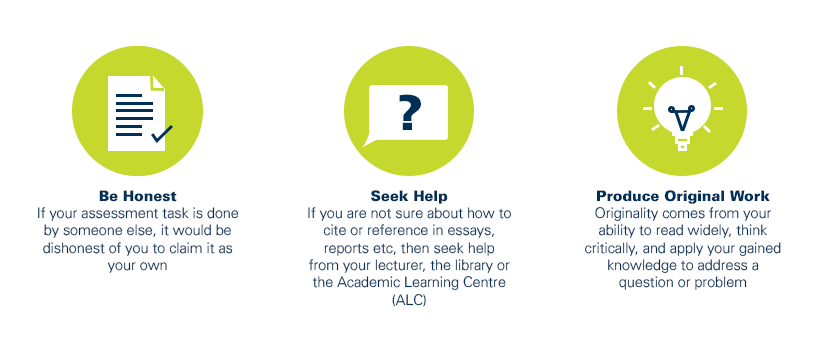
As a CQUniversity student you are expected to act honestly in all aspects of your academic work.
Any assessable work undertaken or submitted for review or assessment must be your own work. Assessable work is any type of work you do to meet the assessment requirements in the unit, including draft work submitted for review and feedback and final work to be assessed.
When you use the ideas, words or data of others in your assessment, you must thoroughly and clearly acknowledge the source of this information by using the correct referencing style for your unit. Using others’ work without proper acknowledgement may be considered a form of intellectual dishonesty.
Participating honestly, respectfully, responsibly, and fairly in your university study ensures the CQUniversity qualification you earn will be valued as a true indication of your individual academic achievement and will continue to receive the respect and recognition it deserves.
As a student, you are responsible for reading and following CQUniversity’s policies, including the Student Academic Integrity Policy and Procedure. This policy sets out CQUniversity’s expectations of you to act with integrity, examples of academic integrity breaches to avoid, the processes used to address alleged breaches of academic integrity, and potential penalties.
What is a breach of academic integrity?
A breach of academic integrity includes but is not limited to plagiarism, self-plagiarism, collusion, cheating, contract cheating, and academic misconduct. The Student Academic Integrity Policy and Procedure defines what these terms mean and gives examples.
Why is academic integrity important?
A breach of academic integrity may result in one or more penalties, including suspension or even expulsion from the University. It can also have negative implications for student visas and future enrolment at CQUniversity or elsewhere. Students who engage in contract cheating also risk being blackmailed by contract cheating services.
Where can I get assistance?
For academic advice and guidance, the Academic Learning Centre (ALC) can support you in becoming confident in completing assessments with integrity and of high standard.
What can you do to act with integrity?