Overview
This unit will provide you with a sound knowledge of the origins of trading goods and services and the development of modern marketing practice and theory. Emphasis is placed on developing an understanding of marketing principles and their application when acquiring and retaining customers, as well as driving business profitability. You will examine innovative marketing strategies deployed including AI, blockchain, digital marketing, and social media in different kinds of organisations.
Details
Pre-requisites or Co-requisites
There are no requisites for this unit.
Important note: Students enrolled in a subsequent unit who failed their pre-requisite unit, should drop the subsequent unit before the census date or within 10 working days of Fail grade notification. Students who do not drop the unit in this timeframe cannot later drop the unit without academic and financial liability. See details in the Assessment Policy and Procedure (Higher Education Coursework).
Offerings For Term 1 - 2026
Attendance Requirements
All on-campus students are expected to attend scheduled classes - in some units, these classes are identified as a mandatory (pass/fail) component and attendance is compulsory. International students, on a student visa, must maintain a full time study load and meet both attendance and academic progress requirements in each study period (satisfactory attendance for International students is defined as maintaining at least an 80% attendance record).
Recommended Student Time Commitment
Each 6-credit Undergraduate unit at CQUniversity requires an overall time commitment of an average of 12.5 hours of study per week, making a total of 150 hours for the unit.
Class Timetable
Assessment Overview
Assessment Grading
This is a graded unit: your overall grade will be calculated from the marks or grades for each assessment task, based on the relative weightings shown in the table above. You must obtain an overall mark for the unit of at least 50%, or an overall grade of 'pass' in order to pass the unit. If any 'pass/fail' tasks are shown in the table above they must also be completed successfully ('pass' grade). You must also meet any minimum mark requirements specified for a particular assessment task, as detailed in the 'assessment task' section (note that in some instances, the minimum mark for a task may be greater than 50%). Consult the University's Grades and Results Policy for more details of interim results and final grades.
All University policies are available on the CQUniversity Policy site.
You may wish to view these policies:
- Grades and Results Policy
- Assessment Policy and Procedure (Higher Education Coursework)
- Review of Grade Procedure
- Student Academic Integrity Policy and Procedure
- Academic Progression Policy and Procedure
- Student Refund and Credit Balance Policy and Procedure
- Complaints Policy and Procedure
- Information and Communications Technology Acceptable Use Policy and Procedure
This list is not an exhaustive list of all University policies. The full list of University policies are available on the CQUniversity Policy site.
Feedback, Recommendations and Responses
Every unit is reviewed for enhancement each year. At the most recent review, the following staff and student feedback items were identified and recommendations were made.
Feedback from Unit evaluation
Some students appeared to lack an understanding of the knowledge and skills they would gain in the unit, as well as its relevance to their degree.
Emphasise the knowledge and skills that will be gained in the unit, as well as its relevance to their degree, in the welcome message on Moodle before the term begins.
Feedback from Student feedback
Students were open to receiving assessment guidelines, marking rubrics, and mark sheets.
Offer students extra assessment support by providing assessment guidelines, marking rubrics, and mark sheets accessible on the unit Moodle site.
Feedback from Student feedback
Students appreciated interacting with the unit coordinator during scheduled weekly Zoom workshops that focused on weekly learning activities and provided an opportunity to discuss assessments.
Schedule at least one weekly Zoom workshop to cover the learning activities and discuss assessments. All Zoom meetings will be recorded and made available on the unit Moodle website within 24 hours. This will assist students who are unable to attend.
- Articulate awareness of the nature and scope of marketing in organisations
- Analyse modern marketing strategies used in different kinds of organisations
- Critically examine marketing principles and their application
- Assess the impact of innovative technologies, such as blockchain and fintech, on marketing strategies and consumer engagement
- Examine ethical and legal issues in business marketing.
Alignment of Assessment Tasks to Learning Outcomes
| Assessment Tasks | Learning Outcomes | ||||
|---|---|---|---|---|---|
| 1 | 2 | 3 | 4 | 5 | |
| 1 - Portfolio - 50% | |||||
| 2 - Presentation and Written Assessment - 50% | |||||
Alignment of Graduate Attributes to Learning Outcomes
| Graduate Attributes | Learning Outcomes | ||||
|---|---|---|---|---|---|
| 1 | 2 | 3 | 4 | 5 | |
| 1 - Communication | |||||
| 2 - Problem Solving | |||||
| 3 - Critical Thinking | |||||
| 4 - Information Literacy | |||||
| 5 - Team Work | |||||
| 6 - Information Technology Competence | |||||
| 7 - Cross Cultural Competence | |||||
| 8 - Ethical practice | |||||
| 9 - Social Innovation | |||||
| 10 - First Nations Knowledges | |||||
| 11 - Aboriginal and Torres Strait Islander Cultures | |||||
Textbooks
Marketing: An Introduction, 9th edition
- 9th Edition (2025)
- Authors: Gary Armstrong, Philip Kotler, Michael Volkov, Swee Hoon Ang, Karen V. Fernandez, Sven Tuzovic
- Pearson
- ISBN: ISBN-13: 9780655722915
The previous edition, Principles of Marketing (8th edition), is available online through the CQU library. For my course, I intend to use the latest edition (9th). However, if the 9th edition is not accessible, students may refer to the 8th edition as an alternative.
Additional Textbook Information
If the 9th edition is not accessible, students may refer to the 8th edition as an alternative.
IT Resources
- CQUniversity Student Email
- Internet
- Unit Website (Moodle)
All submissions for this unit must use the referencing style: American Psychological Association 7th Edition (APA 7th edition)
For further information, see the Assessment Tasks.
vishnu.menon@cqu.edu.au
Week 1 - Non teaching week
Begin Date: 09 Mar 2026Module/Topic
Non teaching week
Chapter
Non teaching week
Events and Submissions/Topic
Non teaching week
Week 2 - Marketing and the Marketing Process Plus Analysing the Environment
Begin Date: 16 Mar 2026Module/Topic
This week we define marketing, outline the steps in the marketing process, examine how organisations build customer relationships and capture value from customers, and explore customer-driven marketing strategies and marketing programs. We also look at different ways of marketing because it's important to understand the complicated and changing environment in which marketing works.
Chapter
Chapters 1, 2, & 3
Events and Submissions/Topic
In-class activities: Discussion questions / exercises / mini cases.
Week 3 - Marketing Analytics and Artificial Intelligence
Begin Date: 23 Mar 2026Module/Topic
This week we examine why, in today's rapidly changing environments, managers need more up-to-date information in order to make timely decisions. In addition, we explore how companies develop and manage information about important marketplace elements: customers, competitors, products and marketing programs.
Chapter
Chapter 4
Events and Submissions/Topic
In-class activities: Discussion questions / exercises / mini cases.
Week 4 - Buyer Behaviour
Begin Date: 30 Mar 2026Module/Topic
This week we take a close look at the important field of consumer and business buyer behaviour. To successfully market your products and services to both types of customers, you need to understand the differences between the consumer and business buying processes and this is one of the biggest challenges marketers face.
Chapter
Chapter 5
Events and Submissions/Topic
In-class activities: Discussion questions / exercises / mini cases.
Week 5 - Market Segmentation, Targeting and Positioning
Begin Date: 06 Apr 2026Module/Topic
This week we examine the four main elements of a customer-driven marketing strategy: segmentation (the bases upon which markets are broken up into meaningful customer groups), targeting (how we choose which customer groups to serve), differentiation (creation of market offerings that best serve targeted customers) and positioning (position the offerings in the minds of consumers).
Chapter
Chapter 6
Events and Submissions/Topic
In-class activities: Discussion questions / exercises / mini cases.
Week 6 - Products, Services and Brands Hidden from students
Begin Date: 13 Apr 2026Module/Topic
This week we examine what a product is (including services), why products are critical in the overall market offering, and how marketers manage and develop products and brands.
Chapter
Chapter 7
Events and Submissions/Topic
In-class activities: Discussion questions / exercises / mini cases.
Vacation Week
Begin Date: 20 Apr 2026Module/Topic
Vacation Week
Chapter
Vacation Week
Events and Submissions/Topic
Vacation Week
Week 7 - New Products
Begin Date: 27 Apr 2026Module/Topic
This week we examine the development of new products, managing products through their life cycles, social responsibility in product decisions, and international product and services considerations.
Chapter
Chapter 8
Events and Submissions/Topic
In-class activities: Discussion questions / exercises / mini cases.
Assessment 1 due on Friday, 1 May, 11:00 pm
Market opportunity analysis Due: Week 7 Friday (1 May 2026) 11:00 pm AEST
Week 8 - Pricing
Begin Date: 04 May 2026Module/Topic
This week we examine why pricing decisions are pervasive throughout the business, what role pricing plays in marketing decisions, and the basic principles underlying pricing.
Chapter
Chapter 9
Events and Submissions/Topic
In-class activities: Discussion questions / exercises / mini cases.
Week 9 - Placement
Begin Date: 11 May 2026Module/Topic
This week we examine placement (i.e. distribution) which is the process of making a product or service accessible for use or consumption by a consumer or business user, using direct means, or using indirect means with intermediaries. This process is referred to as the supply chain with businesses today paying close attention to it and to managing it as an area of potentially high cost savings and improved customer satisfaction.
Chapter
Chapter 10
Events and Submissions/Topic
In-class activities: Discussion questions / exercises / mini cases.
Week 10 - Advertising, Public Relations, Personal Selling and Sales Promotion
Begin Date: 18 May 2026Module/Topic
This week we begin the promotion component of the traditional marketing mix to see how companies use integrated marketing communications (IMC) to communicate customer value. We'll take a close look at four of the promotional tools - advertising, public relations, personal selling and sales promotion.
Chapter
Chapter 11 & 12
Events and Submissions/Topic
In-class activities: Discussion questions / exercises / mini cases.
Week 11 - Direct and Digital Marketing Plus Sustainable Marketing
Begin Date: 25 May 2026Module/Topic
This week we explore the last IMC element, direct and digital marketing, which is becoming a widely adopted marketing discipline because of its lower cost and connection with response fulfilment.
Chapter
Chapter 13 & 14
Events and Submissions/Topic
In-class activities: Discussion questions / exercises / mini cases.
Assessment 2 due on Friday, 29 May 11:00 pm
Market Report Due: Week 11 Friday (29 May 2026) 11:00 pm AEST
Week 12 - Non teaching week/Unit review only
Begin Date: 01 Jun 2026Module/Topic
Non teaching week/Unit review only
Chapter
Non teaching week/Unit review only
Events and Submissions/Topic
Non teaching week/Unit review only
1 Portfolio
“This assessment requires students to adhere to the guidelines on the use of artificial intelligence tools as specified in the Artificial Intelligence Assessment Scale (AIAS). Any misuse or lack of disclosure regarding the use of AI tools will be considered a breach of academic integrity.”
The appropriate AI scale level for this Assessment is AI PLANNING. You may use AI for planning, idea development, and research. Your final submission should show how you have developed and refined these ideas.
The Assessment 1 task requires you to undertake a market opportunity analysis for a new product or service. You will present the market opportunity analysis as a portfolio simulating a real-world scenario. This portfolio should be a maximum of 2000 words excluding the title page and reference list.
Your task is to choose ONE (1) of the options listed below and write a market opportunity analysis focusing on current Australian market conditions for your new product or service.
a) Olight Ostation 2: Next Gen of Personal Smart Battery Hub (viewed 09/10/2025)
https://www.kickstarter.com/projects/olight/olight-ostation-2-next-gen-of-personal-smart-battery-hub?ref=discovery_category_popular&total_hits=55315&category_id=337
b) Eiliko - Your Tiny AI Charm Bot That Matches Every Outfit (viewed 09/10/2025)
https://www.kickstarter.com/projects/energize-lab/eiliko?ref=discovery_category_popular&total_hits=55315&category_id=338
c) MCHOSE x Unbox Therapy - UT98 Mechanical Keyboard (viewed 09/10/2025)
https://www.kickstarter.com/projects/mchose/mchose-x-unbox-therapy-ut98-compact-mechanical-keyboard?ref=discovery_category_popular&total_hits=55315&category_id=337
d) A new product or service for the business/organisation you are currently working for or the business/organisation you want to start up. If you decide this option, students will need to gain approval from your workshop leader.
NB: The option you choose will also be used in the Assessment 2 task.
You will need to address the following criteria:
- Describe the new product or service chosen and current market conditions in Australia by examining THREE relevant business trends and customer needs. This could include the legal and ethical environment of business (research evidence is expected to help support your discussion);
- Analyse TWO competitors in Australia, including their relevant marketing strategies and innovative marketing approaches (e.g., digital and social media), and assess how this may affect consumer purchasing (research evidence is expected to help support your discussion); and
- Conduct strengths, weaknesses, opportunities, and threats (SWOT) analysis for your new product or service.
Instructions
- This is an individual assessment (no groups).
- Submit your portfolio online through the Assessment tile on the unit Moodle site.
Your portfolio should contain the following:
- A single Word document (no PDF), including a title page, that addresses each of the three criteria listed above plus a reference list, using APA referencing style.
- Be no more than 2000 words in length excluding the title page and reference list.
- Use in-text of at least ten (10) quality sources of information such as from academic journal articles, academic textbooks, trade journals, newspaper articles and industry/business websites.
- Use size 12, Times New Roman font with DOUBLE line-spacing
- An appendix or appendices (this is compulsory) inserted at the end of the Word document that includes:
- A completed self-evaluation/reflection, documenting your learning journey (the template to be inserted into your Word document is available in the Assessment 1 resources folder on Moodle).
- Provide at least three additional supporting items, with a brief discussion justifying each, such as graphs, charts, tables, photographs, and diagrams you deem suitable in helping support your learning journey.
Skills
- A market opportunity analysis is widely used to determine market attractiveness.
- A portfolio is a collection of items documenting what and how you have learnt.
- This is a challenging assignment. It will provide you with the opportunity to undertake a significant piece of work with a practical commercial application.
Week 7 Friday (1 May 2026) 11:00 pm AEST
Results will be released after moderation is completed (The expected release time to students is 2 weeks after the submission, excluding public holidays and University holidays).
- Product description and three current market conditions (10 marks).
- Two competitor marketing strategies and their innovative marketing approaches (8 marks).
- SWOT analysis (6 marks).
- Citations and reference list (3 marks).
- Self-evaluation/reflection (10 marks).
- At least three additional supporting items with justification (10 marks).
- Spelling, grammar, and written presentation (3 marks).
- Total: 50 marks.
- Articulate awareness of the nature and scope of marketing in organisations
- Analyse modern marketing strategies used in different kinds of organisations
- Critically examine marketing principles and their application
- Assess the impact of innovative technologies, such as blockchain and fintech, on marketing strategies and consumer engagement
- Examine ethical and legal issues in business marketing.
2 Presentation and Written Assessment
“This assessment requires students to adhere to the guidelines on the use of artificial intelligence tools as specified in the Artificial Intelligence Assessment Scale (AIAS). Any misuse or lack of disclosure regarding the use of AI tools will be considered a breach of academic integrity.”
The appropriate AI scale level for this Assessment is AI PLANNING. You may use AI for planning, idea development, and research. Your final submission should show how you have developed and refined these ideas.
The Assessment 2 task requires the submission of TWO items (i.e., one Word file and one PowerPoint file).
You are to write and make a presentation on marketing objectives, marketing strategy, social responsibility, ethics, and legal issues for the new product or service chosen in the Assessment 1 task. The written component should be a maximum 2000 words excluding the title page and reference list. The presentation component will be in PowerPoint format with recorded voice-over, limited to 6 slides (including title slide and references slide) and be no longer than 5 minutes in duration.
Assume that the new product or service selected in the Assessment 1 task is viable for market entry into Australia. The decision has now been made by senior management to launch this new product or service into Australia in 2026.
Your task is to prepare marketing objectives, marketing strategy and examine social responsibility, ethical and legal issues when marketing your new product or service in Australia.
You will need to address the following criteria:
- Propose and justify THREE marketing objectives you think are achievable within the first six months of product or service launch (e.g., sales targets, product/service awareness, customer retention and satisfaction, brand management);
- Justify market segments for one (1) primary targeted customer and outline your intended positioning;
- Propose and justify innovative marketing strategies for two (2) of the 4Ps; and
- Examine ONE social responsibility, ONE ethical, and ONE legal issue when marketing your new product or service in Australia.
Instructions
- This is an individual assessment (no groups).
- Submit both your written component and presentation component online through the Assessment tile on the unit Moodle site.
Your written component should contain the following:
- A single Word document (no PDF), including a title page, that addresses each of the 4 criteria listed above plus a reference list, using APA referencing style.
- Be no more than 2000 words in length excluding the title page and reference list.
- Use in-text of at least TEN quality sources of information such as from academic journal articles, academic textbooks, trade journals, newspaper articles and industry/business websites.
- Use size 12, Times New Roman font with DOUBLE in this Word document.
Your presentation component should contain the following:
- A single PowerPoint presentation in .pptx or .ppt file format (no video files such as MP4, MOV, or AVI).
- A voice-over (i.e. an oral summary only) of key information already in your written Word document.
- The format will be PowerPoint with recorded voice-over (no word limit) but limited to a maximum 6 slides (including title slide and references slide) and be no longer than a maximum 5 minutes in duration.
Skills
- The written component consisting of the marketing objectives, marketing strategy, social responsibility, ethics and legal issues are all integral elements of a marketing plan.
- Using PowerPoint with recorded voice-over enhances professionalism and helps keep the viewer's focus during presentations.
- This is a challenging assignment. It will provide you with the opportunity to undertake a significant piece of work with a practical commercial application.
Week 11 Friday (29 May 2026) 11:00 pm AEST
Results will be released after moderation is completed (The expected release time to students is 2 weeks after the submission, excluding public holidays and University holidays).
- Three marketing objectives and their justifications (3 marks).
- Market segments for one primary targeted customer with intended positioning (5 marks).
- First innovative marketing strategy (6 marks).
- Second innovative marketing strategy (6 marks).
- One social responsibility, one ethical, and one legal issue (4 marks).
- Citations and reference list (3 marks).
- Spelling, grammar, and written presentation (3 marks).
- PowerPoint meets specified requirements (10 marks).
- The voice-over is clear and fluent (10 marks).
- Total: 50 marks.
- Articulate awareness of the nature and scope of marketing in organisations
- Analyse modern marketing strategies used in different kinds of organisations
- Critically examine marketing principles and their application
- Assess the impact of innovative technologies, such as blockchain and fintech, on marketing strategies and consumer engagement
- Examine ethical and legal issues in business marketing.
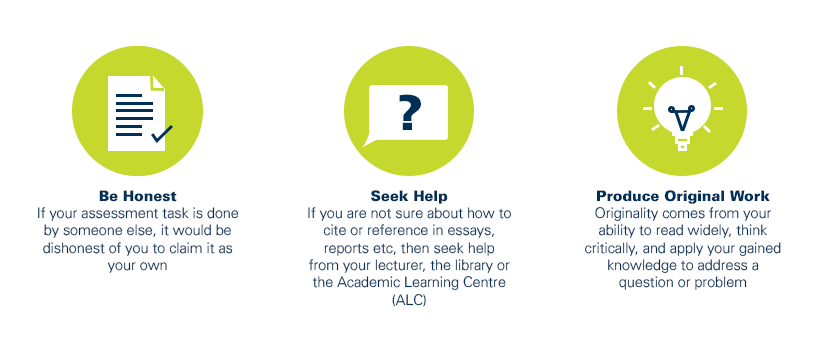
As a CQUniversity student you are expected to act honestly in all aspects of your academic work.
Any assessable work undertaken or submitted for review or assessment must be your own work. Assessable work is any type of work you do to meet the assessment requirements in the unit, including draft work submitted for review and feedback and final work to be assessed.
When you use the ideas, words or data of others in your assessment, you must thoroughly and clearly acknowledge the source of this information by using the correct referencing style for your unit. Using others’ work without proper acknowledgement may be considered a form of intellectual dishonesty.
Participating honestly, respectfully, responsibly, and fairly in your university study ensures the CQUniversity qualification you earn will be valued as a true indication of your individual academic achievement and will continue to receive the respect and recognition it deserves.
As a student, you are responsible for reading and following CQUniversity’s policies, including the Student Academic Integrity Policy and Procedure. This policy sets out CQUniversity’s expectations of you to act with integrity, examples of academic integrity breaches to avoid, the processes used to address alleged breaches of academic integrity, and potential penalties.
What is a breach of academic integrity?
A breach of academic integrity includes but is not limited to plagiarism, self-plagiarism, collusion, cheating, contract cheating, and academic misconduct. The Student Academic Integrity Policy and Procedure defines what these terms mean and gives examples.
Why is academic integrity important?
A breach of academic integrity may result in one or more penalties, including suspension or even expulsion from the University. It can also have negative implications for student visas and future enrolment at CQUniversity or elsewhere. Students who engage in contract cheating also risk being blackmailed by contract cheating services.
Where can I get assistance?
For academic advice and guidance, the Academic Learning Centre (ALC) can support you in becoming confident in completing assessments with integrity and of high standard.
What can you do to act with integrity?