Overview
This unit supports you in your preparation for your professional life beyond graduation. You will learn about contemporary perspectives on professional practice, professionalism, and careers, and you will develop your understanding of how these concepts are related to your future career choices. You will develop awareness of the labour market, as well as the competencies required in the pursuit of various career options. Throughout this unit, you will rely on self-analysis and reflection to establish your own level of competence and personal development needs. Based on understanding the environment, career options, and your current situation, you will strategise for future career success by setting career goals, working towards them, and planning for continued success through lifelong learning and continuous professional development.
Details
Pre-requisites or Co-requisites
Anti-requisite: MGMT20147 Professional Practice and Career Development
Important note: Students enrolled in a subsequent unit who failed their pre-requisite unit, should drop the subsequent unit before the census date or within 10 working days of Fail grade notification. Students who do not drop the unit in this timeframe cannot later drop the unit without academic and financial liability. See details in the Assessment Policy and Procedure (Higher Education Coursework).
Offerings For Term 1 - 2026
Attendance Requirements
All on-campus students are expected to attend scheduled classes - in some units, these classes are identified as a mandatory (pass/fail) component and attendance is compulsory. International students, on a student visa, must maintain a full time study load and meet both attendance and academic progress requirements in each study period (satisfactory attendance for International students is defined as maintaining at least an 80% attendance record).
Recommended Student Time Commitment
Each 6-credit Postgraduate unit at CQUniversity requires an overall time commitment of an average of 12.5 hours of study per week, making a total of 150 hours for the unit.
Class Timetable
Assessment Overview
Assessment Grading
This is a graded unit: your overall grade will be calculated from the marks or grades for each assessment task, based on the relative weightings shown in the table above. You must obtain an overall mark for the unit of at least 50%, or an overall grade of 'pass' in order to pass the unit. If any 'pass/fail' tasks are shown in the table above they must also be completed successfully ('pass' grade). You must also meet any minimum mark requirements specified for a particular assessment task, as detailed in the 'assessment task' section (note that in some instances, the minimum mark for a task may be greater than 50%). Consult the University's Grades and Results Policy for more details of interim results and final grades.
All University policies are available on the CQUniversity Policy site.
You may wish to view these policies:
- Grades and Results Policy
- Assessment Policy and Procedure (Higher Education Coursework)
- Review of Grade Procedure
- Student Academic Integrity Policy and Procedure
- Academic Progression Policy and Procedure
- Student Refund and Credit Balance Policy and Procedure
- Complaints Policy and Procedure
- Information and Communications Technology Acceptable Use Policy and Procedure
This list is not an exhaustive list of all University policies. The full list of University policies are available on the CQUniversity Policy site.
Feedback, Recommendations and Responses
Every unit is reviewed for enhancement each year. At the most recent review, the following staff and student feedback items were identified and recommendations were made.
Feedback from Informal student feedback; self-reflection; students misunderstanding what professional bodies are.
Students often do not understand what professional bodies are and how these can be valuable for their careers.
Invite representatives of various professional bodies (e.g. Engineers Australia, AHRI (Australian HR Institution), Australian Marketing Institute) to deliver small guest speaker sessions about their organisation.
Feedback from Student feedback; tutor feedback.
Practical and career-relevant activities are useful and appreciated.
Continue the approach of focusing more on practical activities than theory. Keep involving the Careers team and their resources and tools.
- Develop an advanced and integrated understanding of contemporary perspectives on careers, professionalism, and professional practice in your cognate field
- Critically analyse and interpret industry conditions and labour market trends
- Enhance self-awareness through application of reflective practice and critical assessment of competencies and competency gaps
- Apply job search and career management strategies to set realistic career goals and identify relevant opportunities for lifelong learning and continuous professional development
- Apply professional communication skills to effectively engage with various audiences in a career transition and progression context.
N/A
Alignment of Assessment Tasks to Learning Outcomes
| Assessment Tasks | Learning Outcomes | ||||
|---|---|---|---|---|---|
| 1 | 2 | 3 | 4 | 5 | |
| 1 - Written Assessment - 25% | |||||
| 2 - Reflective Practice Assignment - 25% | |||||
| 3 - Portfolio - 50% | |||||
Alignment of Graduate Attributes to Learning Outcomes
| Graduate Attributes | Learning Outcomes | ||||
|---|---|---|---|---|---|
| 1 | 2 | 3 | 4 | 5 | |
| 1 - Knowledge | |||||
| 2 - Communication | |||||
| 3 - Cognitive, technical and creative skills | |||||
| 4 - Research | |||||
| 5 - Self-management | |||||
| 6 - Ethical and Professional Responsibility | |||||
| 7 - Leadership | |||||
| 8 - First Nations Knowledges | |||||
| 9 - Aboriginal and Torres Strait Islander Cultures | |||||
Textbooks
There are no required textbooks.
IT Resources
- CQUniversity Student Email
- Internet
- Unit Website (Moodle)
All submissions for this unit must use the referencing style: American Psychological Association 7th Edition (APA 7th edition)
For further information, see the Assessment Tasks.
s.macht@cqu.edu.au
a.kaul@cqu.edu.au
Week 1 - Unit and Assessment Overview
Begin Date: 09 Mar 2026Module/Topic
Unit and Assessment Overview
Please note: The lectures in this unit are pre-recorded and can be accessed in the weekly tiles on the Moodle site. Some lectures consist of multiple short videos, while others consist of one longer video. It is important you watch the lecture content before you attend the workshop in any given week - the workshops will build on but not repeat the lecture content.
Chapter
There is no prescribed reading this week. Please use this week to familiarise yourself with the Moodle contents, especially the assessment resources.
Events and Submissions/Topic
The lecture introduces the unit and the assessments.
The workshop contains a range of interactive activities, which are aimed at enhancing your professional and career development skills. You also need those activities to build your portfolio (Assessment 3).
Week 2 - Contemporary Labour Market Trends
Begin Date: 16 Mar 2026Module/Topic
Contemporary Labour Market Trends
Chapter
Prescribed reading:
Risavy, S. D. (2017). The resume research literature: Where have we been and where should we go next. Journal of Educational and Developmental Psychology, 7(1), 169-187. DOI: doi:10.5539/jedp.v7n1p169.
Kamerlin, S. C. L., & Ratcliff, W. C. (2025). Using AI to prepare for academic interviews–don’t trade authenticity for polish. EMBO Reports, 26(5), 1189-1190. DOI: 10.1038/s44319-025-00396-7.
Pena, L., Curado, C., & Oliveira, M. (2022). The contribution of LinkedIn use to career outcome expectations. Journal of Business Research, 144, 788-796. DOI: https://doi.org/10.1016/j.jbusres.2021.09.047.
Please refer to the eReading list in Moodle for additional recommended readings.
Events and Submissions/Topic
The lecture introduces various contemporary labour market trends.
The workshop contains a range of interactive activities, which are aimed at enhancing your professional and career development skills. You also need those activities to build your portfolio (Assessment 3).
Week 3 - Contemporary Career Options
Begin Date: 23 Mar 2026Module/Topic
Contemporary Career Options
Chapter
Prescribed reading:
Li, C. S., Goering, D. D., Montanye, M. R., & Su, R. (2021). Understanding the career and job outcomes of contemporary career attitudes within the context of career environments: An integrative meta‐analysis. Journal of Organizational Behavior, 43(2), 286-309. DOI: 10.1002/job.2510.
Coetzee, M. & Schreuder, A. (2002). The relationship between career patterns and personality type. SA Journal of Industrial Psychology, 28(1), 53-59.
Please refer to the eReading list in Moodle for additional recommended readings.
Events and Submissions/Topic
The lecture introduces various contemporary career options.
The workshop contains a range of interactive activities, which are aimed at enhancing your professional and career development skills. You also need those activities to build your portfolio (Assessment 3).
Week 4 - Profession, Career, Professional Body, and Related Concepts
Begin Date: 30 Mar 2026Module/Topic
Profession, Career, Professional Body, and Related Concepts
Chapter
Prescribed reading:
Khurana, R., Nohria, N., & Penrice, D. (2005). Is business management a profession? Harvard Business School Working Knowledge, available at: https://hbswk.hbs.edu/item/4650.html.
Senapaty, S. & Bhuyan, N. (2014). Evaluating the profession and professionalism of business managers: control embedded in character. Decision, 41(3), 271–278. https://doi.org/10.1007/s40622-014-0051-3
Please refer to the eReading list in Moodle for additional recommended readings.
Events and Submissions/Topic
The lecture introduces the concepts related to professions, careers and professional bodies.
The workshop contains a range of interactive activities, which are aimed at enhancing your professional and career development skills. You also need those activities to build your portfolio (Assessment 3).
Week 5 - Professionalism in the (Australian) workplace
Begin Date: 06 Apr 2026Module/Topic
Professionalism in the (Australian) workplace
Chapter
Prescribed reading:
Kaptein, M. (2019). Prescribing Outside-Work Behavior: Moral Approaches, Principles, and Guidelines. Employee Responsibilities and Rights Journal, 31(3), 165–185. https://doi.org/10.1007/s10672-019-09333-y
Reconciliation Australia (2024) ‘Reconciliation Australia’. Available at: https://www.reconciliation.org.au
Please refer to the eReading list in Moodle for additional recommended readings.
Events and Submissions/Topic
The lecture focuses on the concept of professionalism in the workplace, specifically within the Australian context.
The workshop contains a range of interactive activities, which are aimed at enhancing your professional and career development skills. You also need those activities to build your portfolio (Assessment 3).
Essay Due: Week 5 Friday (10 Apr 2026) 11:59 pm AEST
Week 6 - Career Development 1: The Current Self
Begin Date: 13 Apr 2026Module/Topic
Career Development 1: The Current Self
Chapter
Prescribed reading:
Ball, B. (1997). Career management competences ‐ the individual perspective. Career Development International, 2(2), 74-79. https://doi.org/10.1108/13620439710163653
Please refer to the eReading list in Moodle for additional recommended readings.
Events and Submissions/Topic
The lecture focuses on the importance of self-awareness and self-reflection in career development.
The workshop contains a range of interactive activities, which are aimed at enhancing your professional and career development skills. You also need those activities to build your portfolio (Assessment 3).
Vacation Week
Begin Date: 20 Apr 2026Module/Topic
No classes this week unless make-up classes needed to be scheduled. Please check communications from the unit team.
Chapter
Please catch up on material you may have missed and continue to build your portfolio.
Events and Submissions/Topic
Week 7 - Career Development 2: The Future Self
Begin Date: 27 Apr 2026Module/Topic
Career Development 2: The Future Self
Chapter
Prescribed reading:
Duffy, R. D. & Dik, B. J. (2009). Beyond the self: External influences in the career development process. The career development quarterly, 58(1), 29-43. https://doi.org/10.1002/j.2161-0045.2009.tb00171.x
Please refer to the eReading list in Moodle for additional recommended readings.
Events and Submissions/Topic
The lecture focuses on career planning, continuous professional development and lifelong learning.
The workshop contains a range of interactive activities, which are aimed at enhancing your professional and career development skills. You also need those activities to build your portfolio (Assessment 3).
Week 8 - Career Planning Tools
Begin Date: 04 May 2026Module/Topic
Career Planning Tools
Chapter
There is no prescribed reading this week – please, instead, familiarise yourself with the resources and tools on the CQU Careers website.
Please refer to the eReading list in Moodle for additional recommended readings.
Events and Submissions/Topic
This week, there will be a guest facilitator from CQUni Careers. The lecture provides a demonstration of the career tools available to CQUniversity students and alumni.
The workshop contains a range of interactive activities, which are aimed at enhancing your professional and career development skills. You also need those activities to build your portfolio (Assessment 3).
Reflective Report Due: Week 8 Friday (8 May 2026) 11:59 pm AEST
Week 9 - Job Search and Career Management Strategies
Begin Date: 11 May 2026Module/Topic
Job Search and Career Management Strategies
Chapter
Prescribed reading:
Islam, Z. U., Weng, Q. D., Ali, Z., Ghani, U., Kiani, A., & Naeem, R. M. (2020). Are job seekers predisposed to job search strategies? International Journal of Manpower. 42(6), 984-1001. https://doi.org/10.1108/IJM-09-2019-0417
Please refer to the eReading list in Moodle for additional recommended readings.
Events and Submissions/Topic
The lecture introduces job search and career management strategies in a contemporary context.
The workshop contains a range of interactive activities, which are aimed at enhancing your professional and career development skills. You also need those activities to build your portfolio (Assessment 3).
Week 10 - Personal Branding and Personal Image
Begin Date: 18 May 2026Module/Topic
Personal Branding and Personal Image
Chapter
Prescribed reading:
Rangarajan, D., Gelb, B. D., & Vandaveer, A. (2017). Strategic personal branding—And how it pays off. Business Horizons, 60(5), 657-666. https://doi.org/10.1016/j.bushor.2017.05.009
Please refer to the eReading list in Moodle for additional recommended readings.
Events and Submissions/Topic
The lecture introduces the importance of personal branding and personal image in the context of career development.
The workshop contains a range of interactive activities, which are aimed at enhancing your professional and career development skills. You also need those activities to build your portfolio (Assessment 3).
Week 11 - Networking: On- and Offline
Begin Date: 25 May 2026Module/Topic
Networking: On- and Offline
Chapter
Prescribed reading:
de Janasz, S. C. & Forret, M. L. (2008). Learning the art of networking: A critical skill for enhancing social capital and career success. Journal of management education, 32(5), 629-650. https://doi.org/10.1177%2F1052562907307637
Please refer to the eReading list in Moodle for additional recommended readings.
Events and Submissions/Topic
The lecture introduces the importance of online and offline networking for career development.
The workshop contains a range of interactive activities, which are aimed at enhancing your professional and career development skills. You also need those activities to build your portfolio (Assessment 3).
Week 12 - Career Transitions
Begin Date: 01 Jun 2026Module/Topic
Career Transitions
Chapter
Prescribed reading:
Peake, S., & McDowall, A. (2012). Chaotic careers: A narrative analysis of career transition themes and outcomes using chaos theory as a guiding metaphor. British Journal of Guidance & Counselling, 40(4), 395-410. https://doi.org/10.1080/03069885.2012.704350
Please refer to the eReading list in Moodle for additional recommended readings.
Events and Submissions/Topic
The lecture focuses on the process and concepts of career transitions.
The workshop contains a range of interactive activities, which are aimed at enhancing your professional and career development skills. You also need those activities to build your portfolio (Assessment 3).
Career Development Portfolio Due: Week 12 Friday (5 June 2026) 11:59 pm AEST
1 Written Assessment
Artificial Intelligence (AI) has taken the world by storm – it is finding its way into all aspects of our lives, including our career development. GenAI can provide many benefits for individuals and companies alike. In the recruitment process, companies increasingly rely on AI to scan resumes of applicants, and use Applicant Tracking Systems (ATS), an AI-based recruitment software, to manage the entire hiring process. This adds a level of complexity to jobseekers as they have to ensure their resume is not only effective in and of itself, but also that it can be easily read by AI tools.
This essay has multiple purposes: first, it allows you to understand what makes a good resume, so you can implement this for the portfolio and your future career moves; second, it increases your understanding of what makes an AI-/ATS-friendly resume, which will increase your chances of progressing through the recruitment process; third, it allows you to develop actionable recommendations for immediate improvement of your own resume.
To successfully complete this essay, you must screenshot all pages of your current resume and place the screenshots into the appendix of your essay (if you do not have a resume, you must create one and provide those screenshots). You must then review the academic and high-quality practitioner literature about what makes an effective and AI-/ATS-friendly resume. Subsequently, you must compare your existing resume against the information and critique your resume in light of the literature about effective and AI-/ATS-friendly resume. Finally, you must present some clear recommendations to yourself about how you should improve your resume in order to make it more effective and AI-/ATS-friendly. The recommendations must make specific comment about your personal resume and the marker will compare your resume against your recommendations. It is important that you include some content on effectiveness and some content on AI-ATS-friendliness, but it is up to you to decide how to achieve this. This means you may focus your essay on one or multiple aspects that make a resume effective (e.g. focused on effective layout, effective content, effective word choice, etc.) as long as you also include some discussion around one or multiple aspects that make a resume AI-/ATS-friendly.
You are required to use a MINIMUM of 6 high-quality literature sources for this assignment: this must consist of a minimum of 3 high-quality academic sources, AND a minimum of 3 high-quality practitioner sources. Note: High-quality academic literature refers to peer-reviewed scholarly journal articles. High-quality practitioner information refers to material published by reliable practitioner and industry bodies, such as reports from professional bodies or career experts, reputable news outlets, etc. ALL sources, which you have used in the text of your essay, need to be referenced correctly in the text AND within a reference list at the end of the essay.
This is an individual assessment. The required length for this essay is 1,000 - 1,200 words, excluding diagrams, tables, and reference list. The screenshots of your resume are mandatory, but other figures and tables are optional and should only be used if relevant and clearly referred to in the body of the essay. You must use common font (e.g. Arial, Calibri, Times New Roman, etc.) with font size 11 or 12, as well as appropriate margins and spacing. A professional title page should be provided, but abstract/executive summary, table of contents, and structured headings must not be included.
Artificial Intelligence (AI) Statement: This assessment requires students to adhere to the guidelines on the use of artificial intelligence tools as specified in the Artificial Intelligence Assessment Scale (AIAS). Any misuse or lack of disclosure regarding the use of AI tools will be considered a breach of academic integrity. For this assessment, you must use AI to generate an interview question response. Following that, you may use AI only for planning, idea development, and research. Your final submission should show how you have developed and refined these ideas.
Week 5 Friday (10 Apr 2026) 11:59 pm AEST
Please submit your essay as a Word document via Moodle.
Results and feedback will be available in Moodle within 10 business days.
As a Masters-level student, you are required to engage in research as per the Australian Qualifications Framework (AQF) guidelines. Two specific requirements need to be considered. Students need to demonstrate “a body of knowledge that includes the understanding of recent developments in a discipline and/or area of professional practice", and demonstrate "knowledge of research principles and methods applicable to a field of work and/or learning”. Each unit in your Masters program has a number of required weekly readings in terms of academic texts, journals and business publications that represent the appropriate body of knowledge and recent developments referred to by the AQF. In order to demonstrate the ability to engage in appropriate research, students should read and utilise these texts and journals and publications, and as a Masters student, demonstrate an ability to research beyond this minimum standard through additional texts, journals and studies that demonstrate an ability to engage in independent research. This is an advanced level unit, and accrediting bodies are also looking for evidence of independent research, so the ability to conduct this project without continually relying on your tutors and lecturers is an important part of the learning process for this unit.
You should ensure that you understand the specific research that is required for each assessment piece and recognise that if you merely meet this minimum requirement, you will receive the minimum grade for demonstrated research. Your attention is drawn to the University’s stated position on plagiarism. THE WORK OF OTHERS, WHICH IS INCLUDED IN THE ASSIGNMENT MUST BE ATTRIBUTED TO ITS SOURCE. A full list of references must be submitted as part of the assessment. Your assignment will be marked on the following criteria; detailed marking rubrics are available in Moodle:
- Demonstrate understanding of resume literature (20%)
- Ability to critically assess your resume in relation to the reviewed literature (20%)
- Ability to identify suitable recommendations for yourself to improve your resume (20%)
- Demonstrate ability to relate recommendations to specific elements of your own resume (15%)
- Quality and appropriateness of references, and accuracy of referencing (10%)
- Professional written communication (15%)
Late submission and academic misconduct penalties will be applied in accordance with the university policies.
- Develop an advanced and integrated understanding of contemporary perspectives on careers, professionalism, and professional practice in your cognate field
- Critically analyse and interpret industry conditions and labour market trends
2 Reflective Practice Assignment
This is an individual, written assessment, in the form of a report. You are required to:
- Identify a role/job that you would like to get within 6-12 months after you have completed your Masters course.
- Use job search portals to identify two (2) current job advertisements that correspond to the role/job you have identified. Please make sure you download/screenshot ALL details of the job advertisements so you can attach them as appendices to your assignment.
- Identify the various requirements/criteria outlined in the two job advertisements. Map them out in a table (see assessment briefing in Moodle for examples).
- Critically reflect on your own current competencies in comparison to all of the requirements/criteria from the two job advertisements. Competencies include skills, knowledge, attitudes, etc. (you may ignore qualifications, licenses, visas, and vaccinations as these do not allow for reflection). To reflect effectively, you should identify specific examples of past/current behaviour relating to the assessment of your competencies.
- Compare your own current competencies to the requirements outlined in the job advertisements – establish competency gaps. Please ONLY reflect on those competencies that are included in the job advertisement requirements/criteria.
- Develop a realistic action plan for filling the competency gaps you have identified.
- Prepare a report, which includes: a short introduction that outlines the purpose of the report; the table mapping the requirements/criteria of the job advertisements; your reflection on current competencies, and identification of competency gaps; and a realistic and specific action plan that outlines how you plan to fill the competency gaps between now and 6-12 months after your graduation. The action plan functions as the conclusion - you do not need to write an additional conclusion paragraph.
The report must clearly demonstrate the reflection, not just the outcome thereof – this means specific reference to past/current behaviour must be made; please do NOT use diagnostic tools for reflection, but focus entirely on your past/current behaviour. You must present your chosen two job advertisements in their entirety in an appendix. Academic literature references should NOT be used in this assessment.
The required length for this report is 1,200 words (+/-10%), excluding preliminaries, diagrams, tables, appendices, and reference list. You must use common font (e.g. Arial, Calibri, Times New Roman, etc.) with font size 11 or 12, as well as appropriate margins and spacing. Preliminaries include: title page; executive summary; table of contents with numbered, hierarchical headings; and any other optional elements (e.g. table of figures, etc.) you wish to include to make your report more professional.
Artificial Intelligence (AI) Statement: This assessment requires students to adhere to the guidelines on the use of artificial intelligence tools as specified in the Artificial Intelligence Assessment Scale (AIAS). Any misuse or lack of disclosure regarding the use of AI tools will be considered a breach of academic integrity. For this assessment, you must not use AI at any point during the assessment. You must demonstrate your core skills and knowledge.
Week 8 Friday (8 May 2026) 11:59 pm AEST
Please submit your report as a Word document via Moodle.
Results and feedback will be available in Moodle within 10 business days.
As a Masters-level student, you are required to engage in research as per the Australian Qualifications Framework (AQF) guidelines. Two specific requirements need to be considered. Students need to demonstrate “a body of knowledge that includes the understanding of recent developments in a discipline and/or area of professional practice", and demonstrate "knowledge of research principles and methods applicable to a field of work and/or learning”. Each unit in your Masters program has a number of required weekly readings in terms of academic texts, journals and business publications that represent the appropriate body of knowledge and recent developments referred to by the AQF. In order to demonstrate the ability to engage in appropriate research, students should read and utilise these texts and journals and publications, and as a Masters student, demonstrate an ability to research beyond this minimum standard through additional texts, journals and studies that demonstrate an ability to engage in independent research. This is an advanced level unit, and accrediting bodies are also looking for evidence of independent research, so the ability to conduct this project without continually relying on your tutors and lecturers is an important part of the learning process for this unit.
You should ensure that you understand the specific research that is required for each assessment piece and recognise that if you merely meet this minimum requirement, you will receive the minimum grade for demonstrated research. Your attention is drawn to the University’s stated position on plagiarism. THE WORK OF OTHERS, WHICH IS INCLUDED IN THE ASSIGNMENT MUST BE ATTRIBUTED TO ITS SOURCE. A full list of references must be submitted as part of the assessment. Your assignment will be marked on the following criteria; detailed marking rubrics are available in Moodle:
- Ability to analyse job advertisements to identify current job requirements (15%)*
- Ability to critically reflect on own current competencies (30%)
- Ability to identify competency gaps (20%)
- Ability to devise a realistic and specific action plan to address competency gaps (20%)
- Professional written communication (15%)
*Please note: if you do not submit both job ads in their ENTIRETY in the appendix, you will not be able to achieve a pass mark for this criterion as we will not be able to verify if you are able to analyse the job ads.
Late submission and academic misconduct penalties will be applied in accordance with the university policies.
- Critically analyse and interpret industry conditions and labour market trends
- Enhance self-awareness through application of reflective practice and critical assessment of competencies and competency gaps
- Apply job search and career management strategies to set realistic career goals and identify relevant opportunities for lifelong learning and continuous professional development
- Apply professional communication skills to effectively engage with various audiences in a career transition and progression context.
3 Portfolio
This is an individual assessment, which takes the form of a portfolio. Throughout the term, the workshops will expose you to various activities relating to professional practice and career development. These activities allow you to develop a range of artefacts (e.g. written or infographic resume, brief reflections, elevator pitch video, cover letter), which you need to collate and compile into one single Word document (a template is available in Moodle). A list of acceptabe artefacts is available in Moodle and you must ensure that TEN (10) of these are included in your portfolio - please note that some of the artefacts on the list are compulsory for all students, while the remaining artefacts are to be considered a pool, from which you need to choose artefacts relevant to you and your career aspirations.
At the end of term, you must produce a short overview introduction (700 words +/- 10%) that provides a very brief overview of your background, your short- to medium-term career aspirations, and a comment on each of your artefacts that should outline each artefact's relevance to your personal career development.
The portfolio (including the overview introduction) will be submitted at the end of term via Moodle, but it is crucial you compile the artefacts THROUGHOUT the term, not all at the end.
The portfolio can contain multimedia artefacts (e.g. ECHO360 video links; screenshots of LinkedIn page; PowerPoint slides) but any text-based documents you create yourself (e.g. reflective statements, resumes, cover letter) need to be provided in Word format within the portfolio – screenshots of these documents are not permissible. Please also note that access to any online artefacts (e.g. video or LinkedIn page hyperlinks) is your responsibility – any broken links or inaccessible artefacts will not be able to attract marks. Some artefacts require referencing - if that is the case, you should provide in-text referencing in the artefact and a reference list after the relevant artefact (this may mean your portfolio contains multiple small reference lists, each following the artefact it refers to). There is no word or page limit for the portfolio itself.
Artificial Intelligence (AI) Statement: This assessment requires students to adhere to the guidelines on the use of artificial intelligence tools as specified in the Artificial Intelligence Assessment Scale (AIAS). Any misuse or lack of disclosure regarding the use of AI tools will be considered a breach of academic integrity. For this assessment, you may use AI for planning, idea development, and research. Your final submission should show how you have developed and refined these ideas.
Week 12 Friday (5 June 2026) 11:59 pm AEST
Please submit your portfolio via Moodle, in the form of a Word document, by using the template available in Moodle.
Results and feedback will be available in Moodle on certification day.
As a Masters-level student, you are required to engage in research as per the Australian Qualifications Framework (AQF) guidelines. Two specific requirements need to be considered. Students need to demonstrate “a body of knowledge that includes the understanding of recent developments in a discipline and/or area of professional practice", and demonstrate "knowledge of research principles and methods applicable to a field of work and/or learning”. Each unit in your Masters program has a number of required weekly readings in terms of academic texts, journals and business publications that represent the appropriate body of knowledge and recent developments referred to by the AQF. In order to demonstrate the ability to engage in appropriate research, students should read and utilise these texts and journals and publications, and as a Masters student, demonstrate an ability to research beyond this minimum standard through additional texts, journals and studies that demonstrate an ability to engage in independent research. This is an advanced level unit, and accrediting bodies are also looking for evidence of independent research, so the ability to conduct this project without continually relying on your tutors and lecturers is an important part of the learning process for this unit.
You should ensure that you understand the specific research that is required for each assessment piece and recognise that if you merely meet this minimum requirement, you will receive the minimum grade for demonstrated research. Your attention is drawn to the University’s stated position on plagiarism. THE WORK OF OTHERS, WHICH IS INCLUDED IN THE ASSIGNMENT MUST BE ATTRIBUTED TO ITS SOURCE. A full list of references must be submitted as part of the assessment. Your assignment will be marked on the following criteria; detailed marking rubrics are available in Moodle:
- Overview introduction (background, aspirations, and clear statement of relevance of included artefacts for the student’s personal situation) (15%)
- Ability to apply professional practice and career development skills demonstrated through accurate and complete artefacts (70%; all artefacts are weighted equally at 7% per artefact)
- Professional presentation of portfolio (15%)
Late submission and academic misconduct penalties will be applied in accordance with the university policies.
- Develop an advanced and integrated understanding of contemporary perspectives on careers, professionalism, and professional practice in your cognate field
- Enhance self-awareness through application of reflective practice and critical assessment of competencies and competency gaps
- Apply job search and career management strategies to set realistic career goals and identify relevant opportunities for lifelong learning and continuous professional development
- Apply professional communication skills to effectively engage with various audiences in a career transition and progression context.
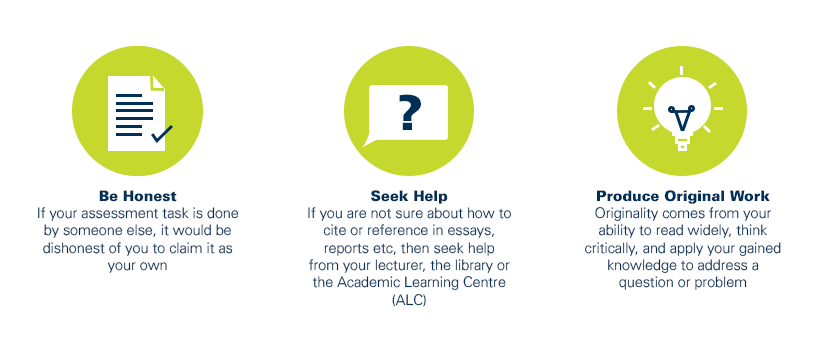
As a CQUniversity student you are expected to act honestly in all aspects of your academic work.
Any assessable work undertaken or submitted for review or assessment must be your own work. Assessable work is any type of work you do to meet the assessment requirements in the unit, including draft work submitted for review and feedback and final work to be assessed.
When you use the ideas, words or data of others in your assessment, you must thoroughly and clearly acknowledge the source of this information by using the correct referencing style for your unit. Using others’ work without proper acknowledgement may be considered a form of intellectual dishonesty.
Participating honestly, respectfully, responsibly, and fairly in your university study ensures the CQUniversity qualification you earn will be valued as a true indication of your individual academic achievement and will continue to receive the respect and recognition it deserves.
As a student, you are responsible for reading and following CQUniversity’s policies, including the Student Academic Integrity Policy and Procedure. This policy sets out CQUniversity’s expectations of you to act with integrity, examples of academic integrity breaches to avoid, the processes used to address alleged breaches of academic integrity, and potential penalties.
What is a breach of academic integrity?
A breach of academic integrity includes but is not limited to plagiarism, self-plagiarism, collusion, cheating, contract cheating, and academic misconduct. The Student Academic Integrity Policy and Procedure defines what these terms mean and gives examples.
Why is academic integrity important?
A breach of academic integrity may result in one or more penalties, including suspension or even expulsion from the University. It can also have negative implications for student visas and future enrolment at CQUniversity or elsewhere. Students who engage in contract cheating also risk being blackmailed by contract cheating services.
Where can I get assistance?
For academic advice and guidance, the Academic Learning Centre (ALC) can support you in becoming confident in completing assessments with integrity and of high standard.
What can you do to act with integrity?