Overview
Think Big is a unit about generating, developing, and evaluating ideas for the introduction of innovative and viable new ventures. Think Big entails a process of discovery designed to develop creation of dynamic and impactful enterprises. You will learn about innovative business concepts and the design of performance-differentiating business models. The unit will assist you to generate new marketable ideas and develop skills in innovative thinking, and market assessment in digital, commercial, service and social contexts. This unit will also introduce you to the concept of ideation and horizon thinking, and explore how creative and innovative ideas are generated through teamwork and by brainstorming or workshopping ideas. You will be able to apply the principles of lean entrepreneurship and appreciate what is involved when starting a business or a social enterprise, as well as how to pitch business ideas to potential investors as part of an entrepreneurial team. The unit has a strong practice and market disruption focus.
Details
Pre-requisites or Co-requisites
There are no requisites for this unit.
Important note: Students enrolled in a subsequent unit who failed their pre-requisite unit, should drop the subsequent unit before the census date or within 10 working days of Fail grade notification. Students who do not drop the unit in this timeframe cannot later drop the unit without academic and financial liability. See details in the Assessment Policy and Procedure (Higher Education Coursework).
Offerings For Term 3 - 2026
Attendance Requirements
All on-campus students are expected to attend scheduled classes - in some units, these classes are identified as a mandatory (pass/fail) component and attendance is compulsory. International students, on a student visa, must maintain a full time study load and meet both attendance and academic progress requirements in each study period (satisfactory attendance for International students is defined as maintaining at least an 80% attendance record).
Recommended Student Time Commitment
Each 6-credit Postgraduate unit at CQUniversity requires an overall time commitment of an average of 12.5 hours of study per week, making a total of 150 hours for the unit.
Class Timetable
Assessment Overview
| Assessment Task | Part Weighting (% of assessment) |
Assessment Security Level | Gen AI Guidance Levels |
|---|---|---|---|
| 1. Business Model Deconstruction (30% of unit ) | |||
| Business Model Deconstruction (Report) | 100% of 30% | Low | AI Integration (Authentic Professional Use) |
| 2. Idea Generation & BM Development (30% of unit ) | |||
| Idea Generation & BM Development (Report) | 100% of 30% | Low | AI Integration (Authentic Professional Use) |
| 3. Idea Selection (3A) & Pitch (3B) (40% of unit · 2 parts ) | |||
| Part 1 – Idea Selection (3A) (Group Work) | 40% of 40% | Low | AI Integration (Authentic Professional Use) |
| Part 2 – Business Pitch Presentation (Presentation) | 60% of 40% | Medium | AI Integration (Authentic Professional Use) |
Assessment Grading
This is a graded unit: your overall grade will be calculated from the marks or grades for each assessment task, based on the relative weightings shown in the table above. You must obtain an overall mark for the unit of at least 50%, or an overall grade of 'pass' in order to pass the unit. If any 'pass/fail' tasks are shown in the table above they must also be completed successfully ('pass' grade). You must also meet any minimum mark requirements specified for a particular assessment task, as detailed in the 'assessment task' section (note that in some instances, the minimum mark for a task may be greater than 50%). Consult the University's Grades and Results Policy for more details of interim results and final grades.
All University policies are available on the CQUniversity Policy site.
You may wish to view these policies:
- Grades and Results Policy
- Assessment Policy and Procedure (Higher Education Coursework)
- Review of Grade Procedure
- Student Academic Integrity Policy and Procedure
- Academic Progression Policy and Procedure
- Student Refund and Credit Balance Policy and Procedure
- Complaints Policy and Procedure
- Information and Communications Technology Acceptable Use Policy and Procedure
This list is not an exhaustive list of all University policies. The full list of University policies are available on the CQUniversity Policy site.
Feedback, Recommendations and Responses
Every unit is reviewed for enhancement each year. At the most recent review, the following staff and student feedback items were identified and recommendations were made.
Feedback from Workshop feedback
Inclusion of a real-world case study, supported by recorded interview with the co-founding entrepreneur, was very popular and insightful.
Include this approach in subsequent Terms.
Feedback from Workshop feedback
Business model deconstruction of existing entrepreneurial businesses provided deep context about the interactive effects of key components of the BMC.
Continue to incorporate examination of entrepreneurial businesses from home country contexts.
- Develop, through independent research, an advanced and integrated understanding of the key concepts of innovation, business models, and new ventures in commercial, digital, service, and social contexts
- Critically analyse cases of disruptive innovation by applying lean entrepreneurship principles
- Generate, evaluate and communicate creative ideas for new ventures, both as independent learners in teams and as leaders of teams, to a variety of audiences
- Research and apply established theories related to ideation processes, business model design principles, and forecasting
- Critically discuss and reflect on the technical, financial, and organisational constraints for innovative new ventures.
Not applicable.
Alignment of Assessment Tasks to Learning Outcomes
| Assessment Tasks | Learning Outcomes | ||||
|---|---|---|---|---|---|
| 1 | 2 | 3 | 4 | 5 | |
|
1.
Assessment 1
(30% of unit )
Report
|
|||||
|
2.
Assessment 2
(30% of unit )
Report
|
|||||
|
3.
Assessment 3
(40% of unit · 2 parts
)
Part 1 -
Group Work
Part 2 -
Presentation
|
|||||
Alignment of Graduate Attributes to Learning Outcomes
| Graduate Attributes | Learning Outcomes | ||||
|---|---|---|---|---|---|
| 1 | 2 | 3 | 4 | 5 | |
| 1 - Knowledge | |||||
| 2 - Communication | |||||
| 3 - Cognitive, technical and creative skills | |||||
| 4 - Research | |||||
| 5 - Self-management | |||||
| 6 - Ethical and Professional Responsibility | |||||
| 7 - Leadership | |||||
| 8 - First Nations Knowledges | |||||
Textbooks
There are no required textbooks.
IT Resources
- CQUniversity Student Email
- Internet
- Unit Website (Moodle)
All submissions for this unit must use the referencing style: American Psychological Association 7th Edition (APA 7th edition)
For further information, see the Assessment Tasks.
r.klafke@cqu.edu.au
Week 1
Begin Date: 09 Nov 2026Module/Topic
Introduction to Think Big - What is entrepreneurship?
Chapter
Kuratko, D & O'Connor, A. (2019). Entrepreneurship: Theory /Process /Practice (5th Asia-Pacific edition). Melbourne: Cengage Learning Australia. Chapter 1.
Blank, S. (2013). Why the lean start-up changes everything? Harvard Business Review, 91(5), 64.
Events and Submissions/Topic
Lecture: Introduction to Think Big
Workshop: Perspectives on the lean entrepreneur (and intrapreneur)
Week 2
Begin Date: 16 Nov 2026Module/Topic
Business Model Deconstruction - The Business Model Building Blocks
Chapter
Osterwalder, A. & Pigneur, Y. (2010). Business Model Generation: A handbook for visionaries, game changers, and challengers. Hoboken, NJ: Wiley. Chapters on 9 building blocks.
Events and Submissions/Topic
Lecture: Business Model Deconstruction
Workshop: Investigating the building blocks of a business model
Week 3
Begin Date: 23 Nov 2026Module/Topic
Advanced Manufacturing and Design Thinking
Chapter
Kuratko, D & O'Connor, A. (2019). Entrepreneurship: Theory /Process /Practice (5th Asia-Pacific edition). Melbourne: Cengage Learning Australia. Chapters 6 & 7.
Events and Submissions/Topic
Lecture: Advanced Manufacturing and Design Thinking
Workshop: Design thinking for business model innovation
Week 4
Begin Date: 30 Nov 2026Module/Topic
Disruptive Innovation and Think Big
Chapter
Christensen, C., Raynor, M. E., & McDonald, R. (2015). Disruptive innovation. Harvard Business Review. 93 (12): 44-53
Kuratko, D & O'Connor, A. (2019). Entrepreneurship: Theory /Process /Practice (5th Asia-Pacific edition). Melbourne: Cengage Learning Australia. Chapter 3.
Events and Submissions/Topic
Lecture: Disruptive Innovation and Technologies
Workshop: Exploring disruptive innovation and technologies to develop alternative models for your business idea
Business Model Deconstruction Due: Week 4 Friday (4 Dec 2026) 11:45 pm AEST
Week 5
Begin Date: 07 Dec 2026Module/Topic
Ideation: opportunity identification and the creative pursuit of an innovative idea
Chapter
Kuratko, D & O'Connor, A. (2019). Entrepreneurship: Theory /Process /Practice (5th Asia-Pacific edition). Melbourne: Cengage Learning Australia. Chapter 5.
Events and Submissions/Topic
Lecture: Idea Generation
Workshop: What will it take to develop a viable business idea? Creative thinking and developing a value proposition for a business idea.
Week 6
Begin Date: 14 Dec 2026Module/Topic
The Digital Age and Integration of Value Chains and People's Networks - Greater Connectivity
Chapter
Moodle learning resources
Events and Submissions/Topic
Lecture: The Digital Age and Integration of Value Chains and People's Networks- Greater Connectivity
Workshop: Critical success factors in a business model. Framing your business idea and value proposition to leverage value chains and social networks.
Mid-Term Break
Begin Date: 21 Dec 2026Module/Topic
Chapter
Events and Submissions/Topic
Week 7
Begin Date: 04 Jan 2027Module/Topic
Feasibility analysis
Chapter
Barringer, B. R. & Ireland, R. D. (2019). Entrepreneurship: Successfully launching new ventures (6th Global ed.). Pearson Education. Chapter 3.
Events and Submissions/Topic
Lecture: Ideation and feasibility
Workshop: Understanding the dimensions of feasibility
Week 8
Begin Date: 11 Jan 2027Module/Topic
Customer validation and financial forecasts
Chapter
Barringer, B. R. & Ireland, R. D. (2019). Entrepreneurship: Successfully launching new ventures (6th Global ed.). Pearson Education. Chapter 8.
Events and Submissions/Topic
Lecture: Customer discovery and validation
Workshop: Financial forecasts and more on business models
Idea Generation & BM Development Due: Week 8 Friday (15 Jan 2027) 11:45 pm AEST
Week 9
Begin Date: 18 Jan 2027Module/Topic
Entrepreneurial teams and reaching consensus
Chapter
Barringer, B. R. & Ireland, R. D. (2019). Entrepreneurship: Successfully launching new ventures (6th Global ed.). Pearson Education. Chapter 9.
Kuratko, D & O'Connor, A. (2019). Entrepreneurship: Theory /Process /Practice (5th Asia-Pacific edition). Melbourne: Cengage Learning Australia. Chapter 5.
Events and Submissions/Topic
Lecture: Entrepreneurial teams and reaching consensus
Workshop: Reaching a consensus and idea selection. How do you select the 'best' idea?
Week 10
Begin Date: 25 Jan 2027Module/Topic
Structuring a Pitch and Pre-pitch checks
Chapter
Kamps, H. (2020). Pitch Perfect: Raising Capital for Your Startup (1st ed). Chapters 1, 3 and 4.
Moodle resources.
Events and Submissions/Topic
Lecture: Structuring a pitch and pre-pitch checks
Workshop: What do you need to deliver a great Pitch?
Week 11
Begin Date: 01 Feb 2027Module/Topic
Reflection on the Unit and concluding remarks
Chapter
No readings
Events and Submissions/Topic
Student Group pitch preparations
Idea Selection (3A) Due: Week 11 Friday (5 Feb 2027) 10:00 am AEST
Business Pitch Presentation Due: Week 11 Friday (5 Feb 2027) 10:00 am AEST
Week 12
Begin Date: 08 Feb 2027Module/Topic
Pitch your business idea
Chapter
No readings
Events and Submissions/Topic
Student Group pitch presentations in class
Exam Week
Begin Date: 15 Feb 2027Module/Topic
Chapter
Events and Submissions/Topic
1. Business Model Deconstruction ( 30% of unit )
Report
This is an individual assignment and constitutes 30% of your total grade. It involves writing a business report that critically analyzes an organisation's business model.
This term, you are required to analyse an AI platform for managing contracts in the mining sector: https://www.hevi.app/ .
A link to a YouTube explanation of the product follows: https://www.youtube.com/@Hevi-app A recorded interview of the Co-founder and CEO has also been uploaded.
The assessment criteria below details what the assignment must cover.
Word limit is 1500-words, with a permissible variation of +/- 10%. Please refer to the resources provided for Assessment 1 on Moodle to guide your analysis.
AI Guided-collaboration.
Week 4 Friday (4 Dec 2026) 11:45 pm AEST
Marks and feedback usually will be returned approximately two working weeks from the assessment due date.
Provide a succinct description of the business, the industry in which it operates, the market and/or markets it serves, and the products and/or services it provides (10%);
Deconstruct the business model of the selected business using the nine building blocks in Osterwalder & Pigneur's (2010) Business Model Canvas (30%);
Explain the key interrelationships across the nine building blocks (30%);
Identify and discuss the critical success factors the business has to get right to achieve sustainable success (20%); and
Quality of written submission, APA 7e referencing format, and a minimum of 6 relevant peer-reviewed papers from academic journals. Literature cited from non-academic sources (websites etc.) may be used to gather information about the organisation (10%).
- Develop, through independent research, an advanced and integrated understanding of the key concepts of innovation, business models, and new ventures in commercial, digital, service, and social contexts
- Critically analyse cases of disruptive innovation by applying lean entrepreneurship principles
- Critically discuss and reflect on the technical, financial, and organisational constraints for innovative new ventures.
2. Idea Generation & BM Development ( 30% of unit )
Report
This is an individual assignment, valued at 30% of your overall grade. It requires you to prepare a detailed report of your original business idea, bolstered by research and observational insights that underline its appeal.
The report must include a business model canvas, an exploration of the interrelationships among the business model's components critical to its success, and an assessment of the critical risks, assumptions, and overall feasibility of the idea. The assessment criteria below details what the report must cover.
You are to keep within a 1500-word limit +/- 10%
AI guided-collaboration.
Week 8 Friday (15 Jan 2027) 11:45 pm AEST
Every effort will be made to return submissions that were made on time within a fortnight of the due date.
Effective explanation of the customer/market problem that needs solving and/or the need for the innovation (15%). Is it solving a real-world problem?
Generation of useful idea and customer/client benefits (value) of generated idea (10%). What is your value proposition?
Brief discussion of the key interrelationships in the business model that will support the success of the idea (15%).
Critical success factors to be managed during the execution of the idea (15%).
Identification of critical risks and assumptions (10%)
Evaluation of the overall feasibility (product/service, target market, organisational and financial feasibility) of the idea (15%)
Quality of written submission, minimum of 6 relevant peer-reviewed journals, and APA 7e referencing format (10%)
- Develop, through independent research, an advanced and integrated understanding of the key concepts of innovation, business models, and new ventures in commercial, digital, service, and social contexts
- Critically analyse cases of disruptive innovation by applying lean entrepreneurship principles
- Generate, evaluate and communicate creative ideas for new ventures, both as independent learners in teams and as leaders of teams, to a variety of audiences
- Research and apply established theories related to ideation processes, business model design principles, and forecasting
3. Idea Selection (3A) & Pitch (3B) ( 40% of unit · 2 parts )
Part 1 - Group Work
This group assessment, which accounts for 40% of your grade, is divided into two parts: a 1500-word report worth 20% and a 12-minute live pitch worth 20%.
Building upon the work done in Assessment 2, the goal of Assessment 3 is to hone your skills in evaluating which business idea from the previous assessment holds the greatest potential for success. You will then develop a persuasive pitch to present a realistic business case aimed at securing financial backing. This process will enhance your understanding of the factors potential investors consider before deciding to invest in a business idea.
Group size: 3-4 people
Week 11 Friday (5 Feb 2027) 10:00 am AEST
Every effort will be made to return submissions that were made on time within a fortnight of the due date.
PART 3A: Selection Report (20%)
There is a limit of 1500-words +/- 10%.
Appendices (not included in the word limit) may be included to support key aspects summarised in your Selection Report. These appendices might include the amended business model canvas, budget and cash flows.
Develop an evaluation framework to compare the ideas developed individually in Assessment 2 (20%);
Describe and justify, with evidence, how the best idea was selected using the screening template on Moodle (20%);
Identify any gaps that need to be addressed before the idea is pitched to an investor (20%);
Revised business model canvas - Amend the business model canvas from Assessment 2, to incorporate the above revisions (20%); and
Budget (use the startup costing sheet template) and Cash Flow projections for the first two years (20%).
- Generate, evaluate and communicate creative ideas for new ventures, both as independent learners in teams and as leaders of teams, to a variety of audiences
- Research and apply established theories related to ideation processes, business model design principles, and forecasting
- Critically discuss and reflect on the technical, financial, and organisational constraints for innovative new ventures.
Part 2 - Presentation
Overview of the proposed venture idea, including the problem you are trying to solve or the opportunity you are trying to exploit.
Live presentation 10-minutes, PPT guidance is 12 slides maximum.
Week 11 Friday (5 Feb 2027) 10:00 am AEST
What is your "Think Big - Lean Entrepreneur" solution (value proposition) (20%);
Presentation Pitch: Detailed explanation of the underlying business model, and why now (timeliness/relevance)? (20%);
Presentation Pitch: Detailed explanation of scalability of the idea for commercialisation, and a realistic go-to-market plan (10%);
Presentation Pitch: What are you seeking from the investor? What are you offering in return? (10%); and
Quality of presentation: creativity, professionalism, and persuasiveness (10%)
- Generate, evaluate and communicate creative ideas for new ventures, both as independent learners in teams and as leaders of teams, to a variety of audiences
- Research and apply established theories related to ideation processes, business model design principles, and forecasting
- Critically discuss and reflect on the technical, financial, and organisational constraints for innovative new ventures.
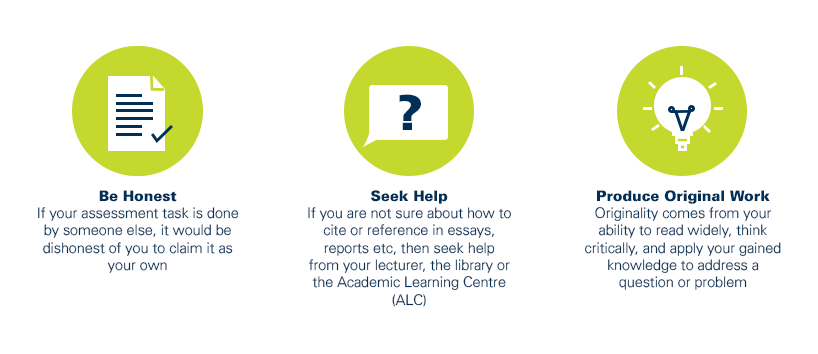
As a CQUniversity student you are expected to act honestly in all aspects of your academic work.
Any assessable work undertaken or submitted for review or assessment must be your own work. Assessable work is any type of work you do to meet the assessment requirements in the unit, including draft work submitted for review and feedback and final work to be assessed.
When you use the ideas, words or data of others in your assessment, you must thoroughly and clearly acknowledge the source of this information by using the correct referencing style for your unit. Using others’ work without proper acknowledgement may be considered a form of intellectual dishonesty.
Participating honestly, respectfully, responsibly, and fairly in your university study ensures the CQUniversity qualification you earn will be valued as a true indication of your individual academic achievement and will continue to receive the respect and recognition it deserves.
As a student, you are responsible for reading and following CQUniversity’s policies, including the Student Academic Integrity Policy and Procedure. This policy sets out CQUniversity’s expectations of you to act with integrity, examples of academic integrity breaches to avoid, the processes used to address alleged breaches of academic integrity, and potential penalties.
What is a breach of academic integrity?
A breach of academic integrity includes but is not limited to plagiarism, self-plagiarism, collusion, cheating, contract cheating, and academic misconduct. The Student Academic Integrity Policy and Procedure defines what these terms mean and gives examples.
Why is academic integrity important?
A breach of academic integrity may result in one or more penalties, including suspension or even expulsion from the University. It can also have negative implications for student visas and future enrolment at CQUniversity or elsewhere. Students who engage in contract cheating also risk being blackmailed by contract cheating services.
Where can I get assistance?
For academic advice and guidance, the Academic Learning Centre (ALC) can support you in becoming confident in completing assessments with integrity and of high standard.
What can you do to act with integrity?