Overview
This unit introduces the principles and practices of critical thinking and effective decision-making in contemporary business and organisational contexts. You will explore how reasoning, reflection, and evidence-based analysis underpin sound managerial judgment and problem-solving. The unit develops your ability to construct and evaluate arguments, apply decision-making frameworks, and critically assess the influence of cognitive biases and rational thinking on decision quality. You will examine the integration of digital transformation, artificial intelligence (AI), and data-driven insights in managerial decision making, and assess both the opportunities and limitations of these technologies. The unit also foregrounds ethical reasoning, cultural awareness, and Indigenous perspectives on decision making, encouraging inclusive and values-based approaches to complex business problems. By engaging in individual and group activities, you will strengthen your skills in analytical reasoning, persuasive communication, and collaborative problem solving. You will also reflect on emerging trends shaping the future of decision making, including cognitive computing and human–AI collaboration, to prepare for leadership in an increasingly digital and interconnected world.
Details
Pre-requisites or Co-requisites
There are no requisites for this unit.
Important note: Students enrolled in a subsequent unit who failed their pre-requisite unit, should drop the subsequent unit before the census date or within 10 working days of Fail grade notification. Students who do not drop the unit in this timeframe cannot later drop the unit without academic and financial liability. See details in the Assessment Policy and Procedure (Higher Education Coursework).
Offerings For Term 2 - 2026
Attendance Requirements
All on-campus students are expected to attend scheduled classes - in some units, these classes are identified as a mandatory (pass/fail) component and attendance is compulsory. International students, on a student visa, must maintain a full time study load and meet both attendance and academic progress requirements in each study period (satisfactory attendance for International students is defined as maintaining at least an 80% attendance record).
Recommended Student Time Commitment
Each 6-credit Postgraduate unit at CQUniversity requires an overall time commitment of an average of 12.5 hours of study per week, making a total of 150 hours for the unit.
Class Timetable
Assessment Overview
Assessment Grading
This is a graded unit: your overall grade will be calculated from the marks or grades for each assessment task, based on the relative weightings shown in the table above. You must obtain an overall mark for the unit of at least 50%, or an overall grade of 'pass' in order to pass the unit. If any 'pass/fail' tasks are shown in the table above they must also be completed successfully ('pass' grade). You must also meet any minimum mark requirements specified for a particular assessment task, as detailed in the 'assessment task' section (note that in some instances, the minimum mark for a task may be greater than 50%). Consult the University's Grades and Results Policy for more details of interim results and final grades.
All University policies are available on the CQUniversity Policy site.
You may wish to view these policies:
- Grades and Results Policy
- Assessment Policy and Procedure (Higher Education Coursework)
- Review of Grade Procedure
- Student Academic Integrity Policy and Procedure
- Academic Progression Policy and Procedure
- Student Refund and Credit Balance Policy and Procedure
- Complaints Policy and Procedure
- Information and Communications Technology Acceptable Use Policy and Procedure
This list is not an exhaustive list of all University policies. The full list of University policies are available on the CQUniversity Policy site.
Feedback, Recommendations and Responses
Every unit is reviewed for enhancement each year. At the most recent review, the following staff and student feedback items were identified and recommendations were made.
Feedback from Unit coordinator's observation
Students prefer a prescribe text.
It is difficult to find a textbook that covers the topics of this unit. A compilation of articles and some book chapters could be prepared as readings. This could be delivered through the CQU bookshop.
Feedback from SUTE
Students valued case study based learning and practical knowledge enhancement through workshop activities.
Continue incorporating practical activities including the application of diagnostic tools and decision-making frameworks.
Feedback from SUTE
Students liked constructive assessment feedback as it helped them understand their limitations in critical thinking and the competencies they are required to gain.
Continue strengthening assessment feedback. Provide clear and constructive and actional strategy to support students. Revise the marking criteria and marking rubric.
- Critically evaluate the principles and processes of critical thinking and reasoning as foundations for effective managerial and organisational decision-making.
- Apply and critique creative, digital, data-driven, and AI-supported decision-making tools and frameworks to address complex and uncertain business problems.
- Evaluate and integrate ethical, cultural, and Indigenous perspectives to promote inclusive, values-based, and responsible decision-making in contemporary organisations.
- Persuasively communicate complex ideas, evidence, and decision recommendations to specialist and non-specialist audiences using critical reasoning and data-informed insights.
- Reflect on emerging trends shaping the future of managerial decision-making, including digital transformation, cognitive computing, and human-AI collaboration.
Alignment of Assessment Tasks to Learning Outcomes
| Assessment Tasks | Learning Outcomes | ||||
|---|---|---|---|---|---|
| 1 | 2 | 3 | 4 | 5 | |
| 1 - Practical and Written Assessment - 30% | |||||
| 2 - Presentation and Written Assessment - 30% | |||||
| 3 - Written Assessment - 40% | |||||
Alignment of Graduate Attributes to Learning Outcomes
| Graduate Attributes | Learning Outcomes | ||||
|---|---|---|---|---|---|
| 1 | 2 | 3 | 4 | 5 | |
| 1 - Knowledge | |||||
| 2 - Communication | |||||
| 3 - Cognitive, technical and creative skills | |||||
| 4 - Research | |||||
| 5 - Self-management | |||||
| 6 - Ethical and Professional Responsibility | |||||
| 7 - Leadership | |||||
| 8 - First Nations Knowledges | |||||
| 9 - Aboriginal and Torres Strait Islander Cultures | |||||
Textbooks
There are no required textbooks.
Additional Textbook Information
The students are required to read the selected articles for each week's topics.
Case studies and class exercises on various diagnostic tools will be discussed at the workshops. Students are advised to read the unit profile and follow the Moodle site to understand the tasks they are required to perform each week.
IT Resources
- CQUniversity Student Email
- Internet
- Unit Website (Moodle)
- Students must have access to a digital device with audio-visual capabilities to participate in online classes and seminars
All submissions for this unit must use the referencing style: American Psychological Association 7th Edition (APA 7th edition)
For further information, see the Assessment Tasks.
q.alam@cqu.edu.au
Week 1: An Introduction to Critical Thinking
Begin Date: 13 Jul 2026Module/Topic
Introduction to critical thinking, creativity, and problem-solving.
What is critical thinking, and what is it not?
The importance of critical thinking in decision-making.
Characteristics of managers who are critical thinkers.
Chapter
Essential Readings:
Thinknetic (2021), Critical Thinking and Logic Mastery, Chapter 1.
Taylor, S. & Hunter, G. (2020), Critical Thinking and Business Decision Making, Scholars Press, Mauritius, Chapter 2.
Meyer, P.I (2023), The 4 Pillars of Critical Thinking, Technologies and Hacks, Chapter 1.
Supplementary Readings:
Moore and Parker (2017), Critical Thinking, 12th Ed., Chapter 1.
Paul, R., & Elder, L. (2013). Critical Thinking: Intellectual Standards Essential to Reasoning Well Within Every Domain of Human Thought, Part Two. Journal of developmental education, 37(1), 32.
Rutherford, A. (2018). Models for Critical Thinking, Chapter 7, pp. 159-173).
Events and Submissions/Topic
Discussion on the subject learning objectives.
Overview discussion on each of the three assessments.
How to use the Moodle site.
Engage students in discussions where they may have used critical thinking to make a decision and discuss the results.
Week 2: Developing Arguments and Reasoning
Begin Date: 20 Jul 2026Module/Topic
Understanding Argumentation and Reasoning.
Stages of Critical Thinking.
Components of Critical Thinking.
Paul-Elder Framework of Critical Thinking.
Characteristics and Competencies of Critical Thinking.
Chapter
Essential Readings:
Taylor, S. & Hunter, G. (2020), Critical Thinking and Business Decision Making, Scholars Press, Mauritius, Chapter 4.
Thinknetic (2021), Critical Thinking and Logic Mastery, Chapters 2 and 3.
Supplementary Readings:
Kallet, M. (2014), Think Smarter, Chapters 16 & 17.
Moore and Parker (2017), Critical Thinking, Chapters 9-11.
Paul & Elder (2014) Chapter 6
Events and Submissions/Topic
Briefing of Assessment 1.
Formation of groups for Assessment 2.
Discussion on the article: 'How Apple Is Organised for Innovation' - experts leading experts (posted on the Moodle site).
The Paul-Elder Framework.
Week 3: Self Awareness, Reflection and Critical Thinking
Begin Date: 27 Jul 2026Module/Topic
Understanding the Self and the Importance of Decision-Making.
Understanding the Importance of Self-reflection in Critical Thinking and Decision-Making.
Chapter
Essential Readings:
Taylor, S. & Hunter, G. (2020), Critical Thinking and Business Decision Making, Scholars Press, Mauritius, Chapters 7 and 8.
Thinknetic (2021), Critical Thinking and Logic Mastery, (Book 2), pp. 125-153.
Paul & Elder (2014), Critical Thinking, Tools for Taking Charge of Your Professional and Personal Life, Chapter 4.
Supplementary Readings:
Kallet, M. (2014). Think Smarter, Chapters 19 & 20.
Gosling & Mintzberg (2003), The five minds of a manager, Harvard Business Review, Nov, Vol 8111):54-63.
Mintzberg, H. (1990). The design school: reconsidering the basic premises of strategic management. Strategic management journal, 11(3), 171-195.
Kolb and Kolb ( 2013), The Kolb Learning Style Inventory 4.0: Guide to Theory, Psychometrics, Research & Applications.
Events and Submissions/Topic
Discussion on:
Blooms Taxonomy
The SOLO Taxonomy
Case study.
Week 4: Emerging Issues in Business Practice and Critical Thinking
Begin Date: 03 Aug 2026Module/Topic
Understanding Emerging Business Issues in a Real-World Context.
Changes in the Business Context as it Relates to the Global, Economic and Social Environment.
Chapter
Essential Readings:
Taylor, S. & Hunter, G. (2020), Critical Thinking and Business Decision Making, Scholars Press, Mauritius, Chapter 7.
The World Investment Report (WIR) 2025.
World Economic Forum 2025. (The issues discussed at various sessions).
Supplementary Readings:
Events and Submissions/Topic
Discussion on challenges of a constantly changing global business environment.
Workshop on emerging issues in business.
Discussion on the positive and negative factors of using AI in today's business environment.
Assessment 1 is due in Week 5.
Week 5: Critical Thinking and its Relationship to Business Problem Solving
Begin Date: 10 Aug 2026Module/Topic
Understanding the Causes of Problems.
Importance of Complexity and Problem-solving Techniques.
Importance of Argument and Reasoning in Decision-Making.
Chapter
Essential Reading:
Taylor, S. & Hunter, G. (2020), Critical Thinking and Business Decision Making, Scholars Press, Mauritius, Chapters 4 and 8.
Forman, J. (2020), Critical Thinking, Chapters8, 9, 11 and 12, Problem Solving Hacks to Learn.
Supplementary Readings:
Paul & Elder (2014), Critical Thinking, Tools for Taking Charge of Your Professional and Personal Life, Chapter 9.
Events and Submissions/Topic
Case studies for the workshop:
Tough Decisions at Rockwell International (Posted on Moodle site).
Bharti-Walmart Breakup: Co-evolution is not easy, as Indian and American companies discover (Posted on the Moodle site).
Submission of Assessment 1.
Week 6: Decision Making Models and Limitations
Begin Date: 17 Aug 2026Module/Topic
Understanding the Differences between Subjective and Objective Perspectives in Decision-Making.
Models of Decision Making:
- Rational model
- Satisfying model
- Rubbish-bin model
Chapter
Essential Readings:
Kallet, M. (2014), Think Smarter, Section V: Decisions.
Paul & Elder (2014), Chapter 10.
Supplementary Readings:
Burns, T., & Roszkowska, E. (2016). Rational choice theory: Toward a psychological, social, and material contextualization of human choice behavior. Theoretical Economics Letters, 6(2), 195-207.
Events and Submissions/Topic
Case study for the Workshop:
1. Decision-making at Macadamia.
2. Qantas's decision-making in a highly competitive airline industry.
Critical Review of Two Articles Using Key Concepts of Critical Analytical Thinking Due: Week 6 Friday (21 Aug 2026) 10:00 pm AEST
Vacation Week
Begin Date: 24 Aug 2026Module/Topic
No classes in MGMT20135 this week.
Chapter
Events and Submissions/Topic
Week 7: Cognitive Bias and Rational Decision Making
Begin Date: 31 Aug 2026Module/Topic
Definition of Cognitive Bias.
Types of Cognitive Biases.
How do Cognitive Biases Affect Decision-Making?
Chapter
Essential Readings:
Rutherford, A. (2014), Models for Critical Thinking, Chapter 6.
Forman, J. (2020), Critical Thinking, Chapter 16.
Gosling, J. and Mintzberg, H (2003), The Five Minds of a Manager, Harvard Business Review,
Supplementary Readings:
Forman, F (2020), Critical Thinking, Chapters 14, 15, and 16.
Moore and Parker (2017) Chapter 8
Events and Submissions/Topic
Case study for discussion at the workshop.
Exercise on Emotional Intelligence.
Discussion on questions of Assessment 2.
Week 8: Decision Making Frameworks and Tools
Begin Date: 07 Sep 2026Module/Topic
Diagnostic Tools for Decision-Making.
Kepner-Tregoe Methodology.
Lau (2011) Six-Step Decision-Making Process.
Group Decision-Making Model.
Fishbone Approach.
Benjamin Franklin's Method.
SWOT Matrix.
Chapter
Essential Readings:
Burns, T., & Roszkowska, E. (2016). Rational choice theory: Toward a psychological, social, and material contextualization of human choice behavior. Theoretical Economics Letters, 6(2), 195-207.
Events and Submissions/Topic
Case study for discussion at the workshop:
UNIQLO GOES GLOBAL (Posted on Moodle site).
Fishbone approach.
Lau's six-step decision-making process.
Week 9: Individual Presentations and Group Report Submission (Assessment 2)
Begin Date: 14 Sep 2026Module/Topic
Group Presentation.
Each team member must give an in-person presentation this week at the workshop with the other team members.
The Unit Coordinator will moderate the session.
Chapter
There are no prescribed readings for this week.
Events and Submissions/Topic
Case study presentation by individual members of each group at the workshop.
Submission of the group report.
Presentation and Written Assessment Due: Week 9 Monday (14 Sept 2026) 11:45 pm AEST
Week 10: Persuasion and Decision-Making
Begin Date: 21 Sep 2026Module/Topic
Role of Persuasion in Decision-Making.
Persuasion Versus Manipulation.
Four Persuasive Types.
Understanding the Types and Working Out Which One to Use.
Chapter
Essential Readings:
Bowden, M (2022). How to Persuade: The Skills You Need to Get What You Want. Wiley. Part 1 & 2.,
Kahneman, D (2011), Thinking Fast and Slow, Penguin Books, Part 1 and 4.
Emily C. Clark, C.E. Burnett, T. Blair, R. Traynor, L.B., Leah Hagerman, L. & Dobbins, M. (2024), Strategies to implement evidence-informed decision-making at the organisational level: a rapid systematic review, Volume 24, article number 405, (2024), Open Access.
Events and Submissions/Topic
Case study discussion at workshop.
Discussion on 4 Persuasive Types.
Exercise: An exporting business organisation lost its market share in the Asian Emerging Economies. The management team has decided to use the Fishbone Model in exploring decision options.
How do you apply the Fishbone Model as a team member?
Week 11: Ethical Decision Making
Begin Date: 28 Sep 2026Module/Topic
Ethical Decision-Making Frameworks.
Importance of Ethics to Business Practice.
Why Ethics and Moral Philosophy Require Critical Thinking (and vice versa).
Chapter
Essential Readings:
George, De T. R (2006), Business Ethics, Chapter 1.
Taylor, S. & Hunter, G. (2020), Critical Thinking and Business Decision Making, Scholars Press, Mauritius, Chapter 5.
Supplementary Readings:
Shaw, W, H. and Barry, V (2016), Moral Issues in Business, Cengage Learning,
Access the eBook$87.95
ISBN: 9780357692448
Events and Submissions/Topic
Case studies for discussion at the workshop:
Case 1: How does Starbucks' CSR policy ensure sustainable development and Global expansion? (CSR Policy of Starbucks, Starbucks website).
Case 2: The Wage Theft by 7 Eleven in Australia.
Week 12: Leading Issues in Critical Thinking and Managerial Decision Making in today's business environment.
Begin Date: 05 Oct 2026Module/Topic
Leading issues impacting managerial decision-making in today's business environment.
Managerial decision-making in a new global business environment. The business successes and failures.
Chapter
Essential Readings:
World Economic Forum 2025.
World Investment Report 2025.
Events and Submissions/Topic
Group workshop on decision-making complexity.
Disruption in managing people.
Summary of key topics studied in Critical Thinking and Decision Making.
Written Assessment- Reflective Essay Due: Week 12 Friday (9 Oct 2026) 10:00 pm AEST
Exam Week
Begin Date: 12 Oct 2026Module/Topic
Chapter
Events and Submissions/Topic
Vacation/Exam Week
Begin Date: 19 Oct 2026Module/Topic
Chapter
Events and Submissions/Topic
1 Practical and Written Assessment
Weighting: This assessment accounts for 30% of your final grade for this unit and must be completed by students individually.
Length: The review must be 1800 words in length, excluding the list of references.
Cover page: The report must include a cover page that contains your name, student number, resident campus, assessment title, lecturer and word count.
A critical review and analysis of two articles/cases.
Two articles will be posted in the Assessment Tile on Moodle.
Task: Students are to critically analyse the premise, context, and key issues discussed in two articles.
Students are required to develop clear and logical arguments supporting their opinions using appropriate critical thinking models and frameworks.
Both on-campus students and distance students must write a review of the two articles and submit it online via Moodle by the due date.
Format: Text should be word-processed, Times New Roman, 12 font, and line spacing (1.5). Please save/upload your file in a Word format (.doc or .docx).
Task Description: The purpose of this task is to demonstrate your ability to critically analyse, synthesise and evaluate information and present that information in a written format. You are expected to analyse the arguments using information from the articles. You are required to do research and collect recent information on key themes, ideas, and models you will focus on.
Two articles will be available for you on the unit’s Moodle site. Guidelines relating to critical thinking and analysis will be posted on the Moodle Page.
Week 6 Friday (21 Aug 2026) 10:00 pm AEST
You must submit your assessment with a cover page on Moodle by the due date. A late penalty applies of 5% per day for assignments submitted after the due date.
Week 8 Monday (7 Sept 2026)
Feedback will be provided via Feedback studio.
- A clear and structured report including introduction, main body, and conclusion (10%).
- Use of key critical thinking, problem-solving, and argumentation as the basis for analysing the main issues and arguments highlighted in the articles (40%).
- Identifying the strengths and weaknesses of the article against the critical thinking concepts (20%).
- Providing a clear perspective of the practical value of the articles to management practice. (20%).
- Using a minimum of 8-quality references made up of recommended texts and academic journal articles to demonstrate in-depth analysis and quality of research, including citation of the recommended texts. All sources must be correctly cited using the APA in-text referencing system, and a complete reference list must be provided at the end of the report. (10%)
This is the minimum standard expected for this assignment. Students who only meet the minimum should expect to receive the minimum pass grade.
As Master's students, you are required to engage in research as per the Australian Qualification Framework (AQF) guidelines. Two specific requirements need to be considered.
Students need to demonstrate “a body of knowledge that includes the understanding of recent developments in the discipline and/or area of professional practice, and demonstrate "knowledge of research principles and methods applicable to a field of work and/or learning”.
Each topic in your unit has a number of required weekly readings in terms of academic texts, journals, and business publications that represent the appropriate body of knowledge and recent developments referred to by the AQF.
In order to demonstrate the ability to engage in appropriate research, students should read and utilise these texts and journals, and publications, and as Masters students, indicate a willingness to research beyond this minimum standard through additional texts, journals, and studies that demonstrate an ability to engage in independent research.
A detailed rubric and audio file are available in the Assessment folder on the Moodle site that provides further information regarding this assessment.
Note: This assessment requires students to adhere to the guidelines on the use of artificial intelligence tools as specified in the Artificial Intelligence Assessment Scale (AIAS) Level-1. Any misuse or lack of disclosure regarding the use of AI tools will be considered a breach of academic integrity. AIAS Level-1 states: The assessment is completed entirely without AI assistance in a controlled environment, ensuring that students rely solely on their existing knowledge, understanding, and skills. You must not use AI at any point during the assessment. You must demonstrate your core skills and knowledge.
- Critically evaluate the principles and processes of critical thinking and reasoning as foundations for effective managerial and organisational decision-making.
- Persuasively communicate complex ideas, evidence, and decision recommendations to specialist and non-specialist audiences using critical reasoning and data-informed insights.
2 Presentation and Written Assessment
Weighing: This assessment accounts for 30% of your final grade for this unit and must be completed by students as a group. This assessment consists of two parts:
(1). A summary group report.
(2). An individual presentation.
Each team member must make an in-person presentation at the scheduled workshop with other team members.
Length: The written group report must be 1500 words in length, excluding the list of references.
Cover page: The report must include a cover page that contains your name, student number, resident campus, assessment title, lecturer, and word count.
The presentation (individual) is about 5 minutes per person.
Criteria for Individual Presentation (Assessment 2).
1. Presentation style and approach.
2. Answer the question (s) allocated to an individual member.
3. Demonstration of the understanding of decision-making models and their usefulness.
Criteria for (Report) Assessment 2
In groups, students are to examine the case study for a major organisation operating in Australia and critically analyse a key decision or series of decisions made by the organisation. Student groups are expected to use appropriate critical thinking and decision-making models to analyse the decisions made by the organisations and whether they were sound and justified.
You are required to collect recent information from the organisation's website and credible journals and articles.
Students need to consider the data available to the organisation, and demonstrate the decision tools and techniques used, including- Kepner-Tregoe Methodology, a detailed SWOT analysis, and ethical decision-making frameworks.
Your critical analysis should:
1. Identify the critical competencies of the organisation you are allocated. Support your observation with evidence.
2. What managerial decisions were made by the management to compete in their respective industry? Develop arguments justifying your observations. Were all decisions ethical?
3. How has the organisation developed a highly responsive supply chain that enables the delivery of new and changing products/services as trends emerge?
4. Identify some decision-making options that the organisation should consider to ensure growth and relevance.
There is a minimum of 10 peer-reviewed journal articles in APA style.
Submission of group report: Only one member of the group must submit the written group report and the PowerPoint slides. Individual marks will be allocated for both the presentation and the report. If more than one member of the group submits, then a high overlap score will be generated. Please save and upload your written report in a Word format (.doc or .docx) via the assessment link on Moodle. This is the minimum standard expected for this assessment. Students who only meet the minimum should expect to receive the minimum pass grade.
As Master's students, you are required to engage in research as per the Australian Qualification Framework (AQF) guidelines. Two specific requirements need to be considered.
Students need to demonstrate “a body of knowledge that includes the understanding of recent developments in the discipline and/or area of professional practice, and demonstrate "knowledge of research principles and methods applicable to a field of work and/or learning”.
Each topic in your unit has several required weekly readings in terms of academic texts, journals, and business publications that represent the appropriate body of knowledge and recent developments referred to by the AQF.
To demonstrate the ability to engage in appropriate research, students should read and utilise these texts, journals, and publications, and as Masters Students, indicate a willingness to research beyond this minimum standard through additional texts, journals, and studies that demonstrate an ability to engage in independent research.
A detailed rubric and audio file are available in the Assessment folder on the Moodle site that provides further information regarding this assessment.
Note: This assessment requires students to adhere to the guidelines on the use of artificial intelligence tools as specified in the Artificial Intelligence Assessment Scale (AIAS) Level-1. Any misuse or lack of disclosure regarding the use of AI tools will be considered a breach of academic integrity. AIAS Level-1 states: The assessment is completed entirely without AI assistance in a controlled environment, ensuring that students rely solely on their existing knowledge, understanding, and skills. You must not use AI at any point during the assessment. You must demonstrate your core skills and knowledge.
Week 9 Monday (14 Sept 2026) 11:45 pm AEST
Presentation will be at the workshop in Week 9. Written report and presentation slides are to be uploaded to the Moodle site by the due time.
Week 10 Wednesday (23 Sept 2026)
Feedback will be provided via Feedback Studio.
Students are to demonstrate knowledge of the subject matter and effective presentation skills by:
- Providing a concise and structured presentation with an introduction, main body, and conclusion (10%).
- Effectively using audiovisuals and verbal communication delivered within the time allocation (25%).
- Using key critical thinking, problem-solving models, concepts, and theories as an analytical frame (30%).
- Providing a clear set of recommendations supported by literature (if and when appropriate) (15%).
- Demonstrating a commitment to professional business presentation standards (10%).
- Ensuring all group members make a balanced contribution to the presentation (10%).
- Providing a copy of the presentation slides to the unit coordinator prior to the presentation session.
Students are to demonstrate knowledge of the subject matter and effective written skills by:
- Providing a concise overview of the content of the presentation of approximately 1500 words.
- Providing a clear set of recommendations supported by literature (if and when appropriate).
- Using a minimum of 10 quality references made up of recommended texts and academic journal articles to demonstrate in-depth and quality research, including citation of the recommended texts.
- The use of the APA in-text referencing system to correctly cite academic sources.
- Ensure a list of references used in the presentation is attached to the summary report.
Note: Artificial Intelligence (AI) Statement: This assessment requires students to adhere to the guidelines on the
use of artificial intelligence tools as specified in the Artificial Intelligence Assessment Scale (AIAS). Any
misuse or lack of disclosure regarding the use of AI tools will be considered a breach of academic integrity.
For this assessment, you may use AI for planning, idea development, and research. Your final submission
should show how you have developed and refined these ideas.
- Apply and critique creative, digital, data-driven, and AI-supported decision-making tools and frameworks to address complex and uncertain business problems.
- Evaluate and integrate ethical, cultural, and Indigenous perspectives to promote inclusive, values-based, and responsible decision-making in contemporary organisations.
- Persuasively communicate complex ideas, evidence, and decision recommendations to specialist and non-specialist audiences using critical reasoning and data-informed insights.
- Reflect on emerging trends shaping the future of managerial decision-making, including digital transformation, cognitive computing, and human-AI collaboration.
3 Written Assessment
Weighting: This assessment accounts for 40% of your final grade for this unit and must be completed by students individually.
Length: The essay must be 2000 words in length, excluding the list of references.
Cover page: The essay must include a cover page that contains your name, student number, resident campus, assessment title, lecturer and word count.
Referencing: A minimum of 12 academic references is required.
Submission: Please save and upload your file in a Word format (.doc or .docx) via the assessment link on Moodle. There will be a late penalty of 2 marks (5% of 40) for each day late.
Task Description: The objectives of this reflective essay are for students to:
(1) Summarise, critically review and reinforce key concepts and theories learned from week 1 to week 10 of this unit.
2) Reflect on these concepts/theories' potential impact on your decision-making, and how this learning is being applied and could be applied in your current jobs, the development of your future career, and/or your life generally. You will also complete at least two diagnostic tools related to learning styles and critical thinking and reflect on the results.
(3) Reflect on new insights gained about yourself as a result of learning the unit, and propose a plan for self-development.
You are expected to reflect on four topics covered from week 1 to week 10 and evaluate the topics that inspired your thinking and influenced your decision-making. Each topic needs to contain a CONVINCING and PERSONAL justification of why these topics were chosen and how the mentioned topics have changed/might change your thinking or your decisions.
The following questions are to be addressed.
- What have you learned about yourself through the unit activities?
- What skills do you possess, and what skills are you lacking?
- How are you going to improve your decision-making in the future? (Self-knowledge and self-development).
- You should tie all your arguments/insights together at the end of your essay, highlighting how you think you will be able to use your learnings in the future.
- Illustrate with personal examples how the learnings of this unit have enabled you to be more effective in making a certain decision at work.
- In the conclusion, the essay needs to reflect on self-knowledge and highlight implications for future self-development.
This assessment requires students to adhere to the guidelines on the use of artificial intelligence tools as specified in the Artificial Intelligence Assessment Scale (AIAS) Level-1. Any misuse or lack of disclosure regarding the use of AI tools will be considered a breach of academic integrity. AIAS Level-1 states: The assessment is completed entirely without AI assistance in a controlled environment, ensuring that students rely solely on their existing knowledge, understanding, and skills. You must not use AI at any point during the assessment. You must demonstrate your core skills and knowledge.
Week 12 Friday (9 Oct 2026) 10:00 pm AEST
Students are to submit their reflective essay via the Moodle site. Please note a late penalty of 5% per day is applied for assignments submitted after the due date.
Marks for Assessment 3 will not be published before the exam results are finalised. Written feedback will be posted on the feedback studio.
You should tie all your arguments/insights together at the end of your reflective essay, highlighting how you think you will be able to use your learning in your future career and in life generally.
- A well-structured reflective essay that demonstrates key aspects of critical and rational thinking (10%).
- Discuss the four selected topics and provide a clear reflection linking personal preferences in light of the diagnostic results (40%).
- Utilise and reflect on the results of a minimum of two diagnostic tools to assess personal learning styles and approaches to decision-making (20%).
- Utilise key critical thinking concepts and models to describe and analyse their positions or beliefs (20%).
- Use a minimum of 12 quality references, which include key readings and recommended texts. All sources must be correctly cited using the APA in-text referencing system, and a complete reference list must be provided at the end of the report (10%).
These are the minimum requirements. You should note that satisfactorily meeting the minimum requirements will typically result in the minimum pass grade being awarded.
A detailed rubric and an audio file are available on the Moodle site, which provides further details for this assessment task.
Note: Artificial Intelligence (AI) Statement: This assessment requires students to adhere to the guidelines on the
use of artificial intelligence tools as specified in the Artificial Intelligence Assessment Scale (AIAS). Any
misuse or lack of disclosure regarding the use of AI tools will be considered a breach of academic integrity.
For this assessment, you may use AI for planning, idea development, and research. Your final submission
should show how you have developed and refined these ideas.
Refer to the unit Moodle site for further details.
- Critically evaluate the principles and processes of critical thinking and reasoning as foundations for effective managerial and organisational decision-making.
- Apply and critique creative, digital, data-driven, and AI-supported decision-making tools and frameworks to address complex and uncertain business problems.
- Evaluate and integrate ethical, cultural, and Indigenous perspectives to promote inclusive, values-based, and responsible decision-making in contemporary organisations.
- Reflect on emerging trends shaping the future of managerial decision-making, including digital transformation, cognitive computing, and human-AI collaboration.
As a CQUniversity student you are expected to act honestly in all aspects of your academic work.
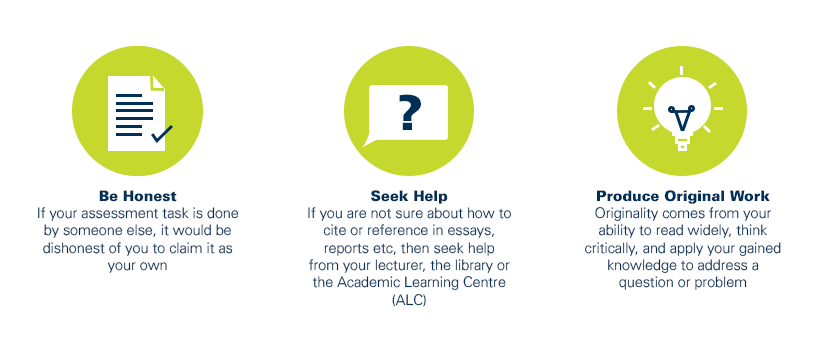
Any assessable work undertaken or submitted for review or assessment must be your own work. Assessable work is any type of work you do to meet the assessment requirements in the unit, including draft work submitted for review and feedback and final work to be assessed.
When you use the ideas, words or data of others in your assessment, you must thoroughly and clearly acknowledge the source of this information by using the correct referencing style for your unit. Using others’ work without proper acknowledgement may be considered a form of intellectual dishonesty.
Participating honestly, respectfully, responsibly, and fairly in your university study ensures the CQUniversity qualification you earn will be valued as a true indication of your individual academic achievement and will continue to receive the respect and recognition it deserves.
As a student, you are responsible for reading and following CQUniversity’s policies, including the Student Academic Integrity Policy and Procedure. This policy sets out CQUniversity’s expectations of you to act with integrity, examples of academic integrity breaches to avoid, the processes used to address alleged breaches of academic integrity, and potential penalties.
What is a breach of academic integrity?
A breach of academic integrity includes but is not limited to plagiarism, self-plagiarism, collusion, cheating, contract cheating, and academic misconduct. The Student Academic Integrity Policy and Procedure defines what these terms mean and gives examples.
Why is academic integrity important?
A breach of academic integrity may result in one or more penalties, including suspension or even expulsion from the University. It can also have negative implications for student visas and future enrolment at CQUniversity or elsewhere. Students who engage in contract cheating also risk being blackmailed by contract cheating services.
Where can I get assistance?
For academic advice and guidance, the Academic Learning Centre (ALC) can support you in becoming confident in completing assessments with integrity and of high standard.
What can you do to act with integrity?