Overview
This unit offers a critical exploration of the evolving landscape of entrepreneurship, innovation, and start-up development. It focuses on the strategic and contextual factors that shape new start-up creation, guiding you to assess the economic and societal impacts of innovation, analyse key drivers of start-up success across industries, and evaluate the viability and scalability of start-up ventures. You will explore the core stages of the entrepreneurial process, including opportunity identification, feasibility analysis, business modelling, funding, and growth planning. The unit places particular emphasis on how creativity, innovation, and digital transformation are reshaping start-up business models and market dynamics. Through real-world case studies and practical activities, you will strengthen your ability to manage uncertainty, assess entrepreneurial risk, and design start-ups that are innovative, sustainable, and competitive.
Details
Pre-requisites or Co-requisites
Completion of 48 credit points in first year of study.
Important note: Students enrolled in a subsequent unit who failed their pre-requisite unit, should drop the subsequent unit before the census date or within 10 working days of Fail grade notification. Students who do not drop the unit in this timeframe cannot later drop the unit without academic and financial liability. See details in the Assessment Policy and Procedure (Higher Education Coursework).
Offerings For Term 1 - 2026
Attendance Requirements
All on-campus students are expected to attend scheduled classes - in some units, these classes are identified as a mandatory (pass/fail) component and attendance is compulsory. International students, on a student visa, must maintain a full time study load and meet both attendance and academic progress requirements in each study period (satisfactory attendance for International students is defined as maintaining at least an 80% attendance record).
Recommended Student Time Commitment
Each 6-credit Undergraduate unit at CQUniversity requires an overall time commitment of an average of 12.5 hours of study per week, making a total of 150 hours for the unit.
Class Timetable
Assessment Overview
Assessment Grading
This is a graded unit: your overall grade will be calculated from the marks or grades for each assessment task, based on the relative weightings shown in the table above. You must obtain an overall mark for the unit of at least 50%, or an overall grade of 'pass' in order to pass the unit. If any 'pass/fail' tasks are shown in the table above they must also be completed successfully ('pass' grade). You must also meet any minimum mark requirements specified for a particular assessment task, as detailed in the 'assessment task' section (note that in some instances, the minimum mark for a task may be greater than 50%). Consult the University's Grades and Results Policy for more details of interim results and final grades.
All University policies are available on the CQUniversity Policy site.
You may wish to view these policies:
- Grades and Results Policy
- Assessment Policy and Procedure (Higher Education Coursework)
- Review of Grade Procedure
- Student Academic Integrity Policy and Procedure
- Academic Progression Policy and Procedure
- Student Refund and Credit Balance Policy and Procedure
- Complaints Policy and Procedure
- Information and Communications Technology Acceptable Use Policy and Procedure
This list is not an exhaustive list of all University policies. The full list of University policies are available on the CQUniversity Policy site.
Feedback, Recommendations and Responses
Every unit is reviewed for enhancement each year. At the most recent review, the following staff and student feedback items were identified and recommendations were made.
Feedback from SUTE
Separating Assessment 2 into two individual assignments would make the workload more manageable and less daunting.
Assessment 2 will be separated into two components with different due dates from Term 1 2026. This change will help distribute the workload more evenly and make the assessment process more manageable.
Feedback from SUTE
I really enjoyed this unit and found it extremely valuable. It helped reduce my fears about starting a business, and I now feel much more confident. The teaching team were knowledgeable and engaging.
We will ensure ongoing clarity in learning materials, provide practical examples to support confidence in entrepreneurship, and continue offering opportunities for direct engagement through consultations and workshops.
Feedback from SUTE
It was a pleasure listening to the lecturer throughout the unit. I appreciated the feedback provided and the timely clarification offered whenever I needed it. Thank you.
We will continue to provide timely clarification and constructive feedback to support student learning, while also ensuring that all lecture and workshop sessions are delivered in a professional setting to maintain consistency and student engagement.
Feedback from SUTE
Provide assignment exemplars.
Assignments in this unit require students to develop original business ideas with real-world application; therefore, past student work cannot be used as exemplars. Providing exemplars may also limit creativity, which is a key component of the unit. Instead, we will continue to offer clearer instructions, structured templates, and explicit expectations. In addition, students are encouraged to attend drop-in consultations for personalised guidance on their ideas, which has been found exceptionally useful by those who attended.
- Demonstrate an understanding of entrepreneurship, innovation, and new start-ups through critical review, synthesis of current knowledge and developments, and evaluation of their importance within society.
- Critically analyse and synthesise the knowledge, qualities, and skills required to become a successful entrepreneur in start-up ventures.
- Demonstrate creative and innovative thinking skills, along with critical thinking, to identify a new start-up opportunity and evaluate its feasibility.
- Synthesise knowledge and exercise critical thinking to apply appropriate frameworks that evaluate the preferred business model for the start-up opportunity.
- Apply technical skills to develop and communicate a business plan for launching a start-up venture in both oral and written formats.
Not applicable
Alignment of Assessment Tasks to Learning Outcomes
| Assessment Tasks | Learning Outcomes | ||||
|---|---|---|---|---|---|
| 1 | 2 | 3 | 4 | 5 | |
| 1 - Written Assessment - 40% | |||||
| 2 - Report - 30% | |||||
| 3 - Presentation - 30% | |||||
Alignment of Graduate Attributes to Learning Outcomes
| Graduate Attributes | Learning Outcomes | ||||
|---|---|---|---|---|---|
| 1 | 2 | 3 | 4 | 5 | |
| 1 - Communication | |||||
| 2 - Problem Solving | |||||
| 3 - Critical Thinking | |||||
| 4 - Information Literacy | |||||
| 5 - Team Work | |||||
| 6 - Information Technology Competence | |||||
| 7 - Cross Cultural Competence | |||||
| 8 - Ethical practice | |||||
| 9 - Social Innovation | |||||
| 10 - First Nations Knowledges | |||||
| 11 - Aboriginal and Torres Strait Islander Cultures | |||||
Textbooks
Entrepreneurship: Successfully Launching New Ventures, Updated Global Edition, 6th edition
- Updated Global Edition, 6th edition (2021)
- Authors: Bruce R. Barringer R Duane Ireland
- Pearson
- ISBN: 9781292402826
IT Resources
- CQUniversity Student Email
- Internet
- Unit Website (Moodle)
- MS Teams
All submissions for this unit must use the referencing style: American Psychological Association 7th Edition (APA 7th edition)
For further information, see the Assessment Tasks.
j.zhang@cqu.edu.au
Week 1
Begin Date: 09 Mar 2026Module/Topic
Introduction to Entrepreneurship
Chapter
Barringer & Ireland (2019): Chapter 1
Events and Submissions/Topic
Learning Objectives
- Analyse the Impact of Entrepreneurship: Understand how trends in entrepreneurship and entrepreneurial firms influence economies and societies.
- Explore Core Concepts in Entrepreneurship: Describe the fundamentals of entrepreneurship, including innovation, corporate entrepreneurship, and the distinguishing characteristics of entrepreneurial firms.
- Understand Entrepreneurial Motivations and Traits: Discuss the primary reasons why individuals choose to become entrepreneurs, identify the main characteristics of successful entrepreneurs, and clarify common myths about entrepreneurship.
- Examine Changes and Processes in Entrepreneurship: Explore the changing demographics of entrepreneurs and elucidate the entrepreneurial process.
Week 2
Begin Date: 16 Mar 2026Module/Topic
Developing the Business Idea: Recognising Opportunities and Generating Ideas
Chapter
Barringer & Ireland (2019): Chapter 2
Events and Submissions/Topic
Learning Objectives
- Explain the difference between opportunities and ideas.
- Describe the three general approaches entrepreneurs use to identify opportunities.
- Discuss the personal characteristics of entrepreneurs that contribute to their ability to recognise business opportunities.
- Identify and describe techniques entrepreneurs use to generate ideas.
Week 3
Begin Date: 23 Mar 2026Module/Topic
Feasibility, Industry and Competitor Analysis
Chapter
Barringer & Ireland (2019): Chapters 3 and 5
Events and Submissions/Topic
Learning Objectives
- Understanding Feasibility Analysis and Its Importance.
- Stages of Feasibility Analysis
- Porter’s Five Forces and Their Impact on Industry Profitability
- Industry Types, Business Opportunities, and Feasibility Analysis Application
Week 4
Begin Date: 30 Mar 2026Module/Topic
Developing an Effective Business Model
Chapter
Osterwalder, A., & Pigneur, Y. (2010). Business model generation: a handbook for visionaries, game changers, and challengers. John Wiley & Sons.
Events and Submissions/Topic
Learning Objectives
- Describe business models and discuss their importance.
- Identify and describe types of business models.
- Explain the components of the Business Model canvas that entrepreneurs can use to develop a business model for their firm.
Week 5
Begin Date: 06 Apr 2026Module/Topic
Writing a Business Plan
Chapter
Barringer & Ireland (2019): Chapter 6
Events and Submissions/Topic
Learning Objectives
- Explain the purpose of a business plan and its value to entrepreneurs and potential investors.
- Identify the key components of an effective business plan and the guidelines for writing it.
- Demonstrate how to tailor and present a business plan to meet the needs of its intended audience.
Week 6
Begin Date: 13 Apr 2026Module/Topic
Building a New-venture Team
Chapter
Barringer & Ireland (2019): Chapter 9
Events and Submissions/Topic
Learning Objectives
- Explain the concept called liabilities of newness.
- Describe a new-venture team and discuss the primary elements that form such a team.
- Identify professional advisers and consultants and explain their roles and value in supporting a new-venture team.
Vacation Week
Begin Date: 20 Apr 2026Module/Topic
Chapter
Events and Submissions/Topic
Week 7
Begin Date: 27 Apr 2026Module/Topic
Financial Viability and Funding
Chapter
Barringer & Ireland (2019): Chapters 8 and 10
Events and Submissions/Topic
Learning Objectives
- Learn about the importance of understanding the financial management of an entrepreneurial firm, and identify the four main financial objectives of entrepreneurial firms.
- Describe the process of financial management and understand the financial statement.
- Identify and describe the various sources of financing available to entrepreneurs.
Week 8
Begin Date: 04 May 2026Module/Topic
Marketing for Startups
Chapter
Barringer & Ireland (2019): Chapter 11
Events and Submissions/Topic
Learning Objectives
- Explain the three steps (segmenting the market, selecting a target market, and establishing a unique market position) entrepreneurial firms use to identify their customers.
- Define a brand and explain why it is important for an entrepreneurial firm’s marketing efforts.
- Identify and explain the 4Ps of marketing activities (product, price, promotion, and place) used by entrepreneurial firms.
Week 9
Begin Date: 11 May 2026Module/Topic
Ethical and Legal Foundations for Startups
Chapter
Barringer & Ireland (2019): Chapter 7
Chapple, et al. (2016). Company Law (1st ed.): Chapter 1.
Events and Submissions/Topic
Learning Objectives
- Discuss the actions founders can take to establish a strong ethical culture in their entrepreneurial ventures.
- Describe actions taken in new firms to effectively deal with legal issues.
- Identify and describe the different forms of organization available to new firms.
Week 10
Begin Date: 18 May 2026Module/Topic
Intellectual Property
Chapter
Barringer & Ireland (2019): Chapter 12
Select reading material from Australian Government resources given on the Unit Moodle site
Events and Submissions/Topic
Learning Objectives
- Define the concept of intellectual property and explain its significance in protecting innovative and creative business assets.
- Distinguish between key forms of intellectual property (patents, trademarks, copyrights, and trade secrets) and describe what each protects and how they are acquired or enforced.
- Analyse the processes and challenges involved in securing and maintaining intellectual property rights, including common causes of disputes and their implications for entrepreneurs.
Week 11
Begin Date: 25 May 2026Module/Topic
Internal and External Growth
Chapter
Barringer & Ireland (2019): Chapters 13 and 14
Events and Submissions/Topic
Learning Objectives
- Describe how firms can properly prepare for growth by understanding the six most common reasons for pursuing growth.
- Explain the importance of being able to manage the different stages of growth and describe the challenges of firm growth.
- Discuss the internal growth strategy for entrepreneurial firms and explain the different types of external growth strategies.
Week 12
Begin Date: 01 Jun 2026Module/Topic
Wrap-up and Reflections
Chapter
No readings
Events and Submissions/Topic
Exam Week
Begin Date: 08 Jun 2026Module/Topic
Chapter
Events and Submissions/Topic
Vacation/Exam Week
Begin Date: 15 Jun 2026Module/Topic
Chapter
Events and Submissions/Topic
1 Written Assessment
This assignment requires you to prepare a business report of approximately 1,800 words (+/− 10%) that applies key theoretical concepts from this unit to the development of a new business idea. The report should present a clear description of the proposed venture and explain the process or methodology used to develop the idea. You are also required to draw on relevant academic literature to examine the skills and capabilities associated with successful entrepreneurship, and to conduct a feasibility analysis assessing the practicality and relevance of the idea within a broader social and economic context.
Follow the assessment task instructions and guidance provided on the unit website in Moodle.
Note: This assessment requires students to adhere to the guidelines on the use of artificial intelligence tools as specified in the Artificial Intelligence Assessment Scale (AIAS) Level 2. Any misuse or lack of disclosure regarding the use of AI tools will be considered a breach of academic integrity. AIAS Level 2 (AI Planning) states: AI may be used for pre-task activities such as brainstorming, outlining, and initial research. This level focuses on the effective use of AI for planning, synthesis, and ideation, but assessments should emphasise the ability to develop and refine these ideas independently. You may use AI for planning, idea development, and research. However, your final submission should show how you have developed and refined these ideas.
Vacation Week Friday (24 Apr 2026) 11:45 pm AEST
A late penalty @ 5% per day will be applied
Week 9 Tuesday (12 May 2026)
Grade will be released on Moodle
New business idea and feasibility study (40% weighting, i.e. 40 marks)
- Provision of a description of the idea or opportunity (6 marks). Provision of a clear and coherent description of the proposed business idea or opportunity.
- Identify the process to develop the business idea or opportunity (6 marks). Critical explanation of the process used to develop the business idea or opportunity, supported by relevant entrepreneurial frameworks or concepts.
- Discuss the skills needed to be a successful entrepreneur (6 marks). Discussion of the skills and qualities associated with successful entrepreneurship, supported by academic literature.
- Evaluation of the viability of the proposed social or commercial enterprise through a feasibility study and concept statement (10 marks). Evaluation of the early-stage viability of the proposed enterprise through a feasibility study and concept statement.
- Explanation of the importance of the proposed enterprise within society (6 marks). Explanation of the importance of the proposed enterprise within society, including its potential social, environmental, or broader economic implications, and why addressing this issue is meaningful at a societal level.
- Citation of sources using APA referencing style (3 marks). Citation of a minimum of 5 relevant academic scholarly sources and 5 industry sources using APA referencing style.
- Essay structure and academic writing conventions (3 marks). Correct use of essay structure and appropriate conventions of academic writing.
- Demonstrate an understanding of entrepreneurship, innovation, and new start-ups through critical review, synthesis of current knowledge and developments, and evaluation of their importance within society.
- Critically analyse and synthesise the knowledge, qualities, and skills required to become a successful entrepreneur in start-up ventures.
- Demonstrate creative and innovative thinking skills, along with critical thinking, to identify a new start-up opportunity and evaluate its feasibility.
2 Report
This assignment requires you to prepare a business plan report of approximately 1,800 (+/- 10%) words that applies key theoretical concepts and business frameworks from this unit to the commercial development of a proposed start-up venture. Building on the business idea developed in Assessment 1, the report should present a clear description of the proposed venture and justify its market-based need or opportunity. You are required to analyse the industry context, competitors, target market, and operational and financial logic of the business, and to apply appropriate business model tools to assess its early-stage commercial viability. Where relevant, the report should also explain how social or environmental impact is operationalised and sustained within the business model, including any potential trade-offs between impact objectives and commercial viability.
Follow the assessment task instructions and guidance provided on the unit website in Moodle.
Note: This assessment requires students to adhere to the guidelines on the use of artificial intelligence tools as specified in the Artificial Intelligence Assessment Scale (AIAS) Level 2. Any misuse or lack of disclosure regarding the use of AI tools will be considered a breach of academic integrity. AIAS Level 2 (AI Planning) states: AI may be used for pre-task activities such as brainstorming, outlining, and initial research. This level focuses on the effective use of AI for planning, synthesis, and ideation, but assessments should emphasise the ability to develop and refine these ideas independently. You may use AI for planning, idea development, and research. However, your final submission should show how you have developed and refined these ideas.
Week 12 Friday (5 June 2026) 11:45 pm AEST
A late penalty @ 5% per day will be applied
Grades will be released one week before certification of grades date
Assignment 2: Business Plan Report (30%)
- Company Description (6 marks): Provide a description of the proposed new business and a compelling justification for the 'need' of the new business idea. Clarify if there is a tangible 'need' for its product or service in the real world, and whether it offers a potential solution to an actual problem. In Assessment 2, the justification of need should focus on market demand, customer pain points, and commercial or operational gaps, rather than broader societal importance discussed in Assessment 1.
- Founder Team (3 marks): Discuss the composition of the Founder Team, outlining the proposed roles of each member in the new venture. The focus should be on how team roles support the execution of the proposed business model, rather than general entrepreneurial traits discussed in Assessment 1.
- Legal Structure (3 marks): Outline the proposed legal structure for your new business.
- Business Analysis (7 marks): Ensure the business plan is professionally structured and complete, covering key aspects such as industry discussion, competitor analysis, target market, operational plan, and financial plan. Where relevant, the analysis should also consider how social or environmental impact is operationalised within the business model, including potential trade-offs between impact objectives and commercial viability.
- Business Model Canvas (5 marks): Use the business model canvas to detail elements crucial to the development of a social or commercial enterprise. For social enterprises, the canvas should clearly indicate how social impact is created and sustained alongside commercial activities.
- Research Quality and APA Referencing (3 marks): Demonstrate the quality of research and the accurate application of APA referencing throughout the report (e.g., in-text citation and at least 10 references). This assessment places particular emphasis on the use of industry, market, and competitor sources, in addition to relevant academic literature.
- Report Structure and Academic Writing Conventions (3 marks): Adhere to the correct report structure and apply the appropriate conventions of academic writing.
- Demonstrate an understanding of entrepreneurship, innovation, and new start-ups through critical review, synthesis of current knowledge and developments, and evaluation of their importance within society.
- Critically analyse and synthesise the knowledge, qualities, and skills required to become a successful entrepreneur in start-up ventures.
- Demonstrate creative and innovative thinking skills, along with critical thinking, to identify a new start-up opportunity and evaluate its feasibility.
- Synthesise knowledge and exercise critical thinking to apply appropriate frameworks that evaluate the preferred business model for the start-up opportunity.
- Apply technical skills to develop and communicate a business plan for launching a start-up venture in both oral and written formats.
3 Presentation
This assignment requires you to prepare and deliver a recorded business pitch presentation of approximately 6 minutes (±30 seconds) that communicates the proposed start-up venture developed across Assessments 1 and 2. The pitch should present a clear and engaging overview of the venture and demonstrate its attractiveness and persuasive value to a potential stakeholder audience, such as investors, partners, or customers. You are required to articulate the core value proposition, highlight key elements of the business logic at a high level, and convey how the venture creates value in a compelling and confident manner. Where relevant, the pitch may also communicate the social or environmental impact of the venture as part of the overall persuasive narrative. The emphasis of this assessment is on clarity, persuasiveness, and delivery, rather than detailed analysis or feasibility evaluation.
Follow the assessment task instructions and guidance provided on the unit website in Moodle.
Note: This assessment requires students to adhere to the guidelines on the use of artificial intelligence tools as specified in the Artificial Intelligence Assessment Scale (AIAS) Level 2. Any misuse or lack of disclosure regarding the use of AI tools will be considered a breach of academic integrity. AIAS Level 2 (AI Planning) states: AI may be used for pre-task activities such as brainstorming, outlining, and initial research. This level focuses on the effective use of AI for planning, synthesis, and ideation, but assessments should emphasise the ability to develop and refine these ideas independently. You may use AI for planning, idea development, and research. However, your final submission should show how you have developed and refined these ideas.
Exam Week Monday (8 June 2026) 11:45 pm AEST
A late penalty @ 5% per day will be applied; Presentations that exceed the specified time limit may be penalised.
Grades will be released one week before certification of grades date
Assignment 3: Pitch Presentation (30%)
- Attractiveness and Clarity of the Business Idea (8 marks): Clearly and concisely explains what the business is and why it is interesting. The pitch captures attention early through effective framing and presents the idea in an appealing and engaging manner.
- Value Proposition and Persuasiveness (7 marks): Communicates a compelling value proposition and convincingly explains why the idea deserves attention or support. The pitch demonstrates persuasive logic appropriate for a stakeholder or investor audience.
- Demonstration of Business Logic and Feasibility Signals (6 marks): Demonstrates a credible high-level understanding of how the business works, such as who the customers are, how value is created and delivered, and how the venture may generate returns.
- Delivery, Confidence, and Engagement (5 marks): Delivers the pitch with confidence, clarity, and appropriate pacing. The presenter maintains audience engagement through effective verbal communication, presence, and overall delivery.
- Visual Support and Professionalism (4 marks): Uses clear, professional, and well-designed slides or visual aids that support the pitch message without overcrowding or distracting from the spoken presentation.
- Demonstrate an understanding of entrepreneurship, innovation, and new start-ups through critical review, synthesis of current knowledge and developments, and evaluation of their importance within society.
- Synthesise knowledge and exercise critical thinking to apply appropriate frameworks that evaluate the preferred business model for the start-up opportunity.
- Apply technical skills to develop and communicate a business plan for launching a start-up venture in both oral and written formats.
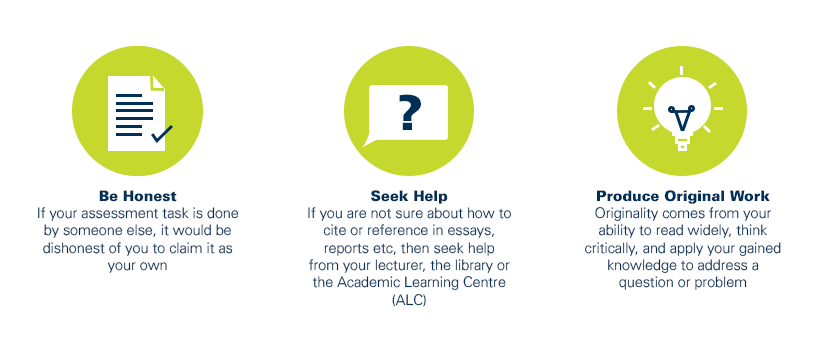
As a CQUniversity student you are expected to act honestly in all aspects of your academic work.
Any assessable work undertaken or submitted for review or assessment must be your own work. Assessable work is any type of work you do to meet the assessment requirements in the unit, including draft work submitted for review and feedback and final work to be assessed.
When you use the ideas, words or data of others in your assessment, you must thoroughly and clearly acknowledge the source of this information by using the correct referencing style for your unit. Using others’ work without proper acknowledgement may be considered a form of intellectual dishonesty.
Participating honestly, respectfully, responsibly, and fairly in your university study ensures the CQUniversity qualification you earn will be valued as a true indication of your individual academic achievement and will continue to receive the respect and recognition it deserves.
As a student, you are responsible for reading and following CQUniversity’s policies, including the Student Academic Integrity Policy and Procedure. This policy sets out CQUniversity’s expectations of you to act with integrity, examples of academic integrity breaches to avoid, the processes used to address alleged breaches of academic integrity, and potential penalties.
What is a breach of academic integrity?
A breach of academic integrity includes but is not limited to plagiarism, self-plagiarism, collusion, cheating, contract cheating, and academic misconduct. The Student Academic Integrity Policy and Procedure defines what these terms mean and gives examples.
Why is academic integrity important?
A breach of academic integrity may result in one or more penalties, including suspension or even expulsion from the University. It can also have negative implications for student visas and future enrolment at CQUniversity or elsewhere. Students who engage in contract cheating also risk being blackmailed by contract cheating services.
Where can I get assistance?
For academic advice and guidance, the Academic Learning Centre (ALC) can support you in becoming confident in completing assessments with integrity and of high standard.
What can you do to act with integrity?