Overview
This unit introduces you to the principal theories in musculoskeletal sonography. In this unit you will apply your knowledge of detailed relational anatomy and pathophysiology, and correlate this with new knowledge on sonographic appearance, scanning orientation and scanning skills relevant to the musculoskeletal system. You will demonstrate understanding of the clinical indication of musculoskeletal ultrasound, applying clinical reasoning in planning for the scanning protocol for each individual patient and implementing patient care and safety in performing musculoskeletal sonography. You will interpret static and dynamic musculoskeletal sonographic imaging and create a provisional diagnostic report as well as explaining differential diagnosis and alternative diagnostic studies based on the clinical information.
Details
Pre-requisites or Co-requisites
Corequisite: MEDS20016 Medical Sonography Clinical Unit 3
Important note: Students enrolled in a subsequent unit who failed their pre-requisite unit, should drop the subsequent unit before the census date or within 10 working days of Fail grade notification. Students who do not drop the unit in this timeframe cannot later drop the unit without academic and financial liability. See details in the Assessment Policy and Procedure (Higher Education Coursework).
Offerings For Term 1 - 2026
Attendance Requirements
All on-campus students are expected to attend scheduled classes - in some units, these classes are identified as a mandatory (pass/fail) component and attendance is compulsory. International students, on a student visa, must maintain a full time study load and meet both attendance and academic progress requirements in each study period (satisfactory attendance for International students is defined as maintaining at least an 80% attendance record).
Recommended Student Time Commitment
Each 6-credit Postgraduate unit at CQUniversity requires an overall time commitment of an average of 12.5 hours of study per week, making a total of 150 hours for the unit.
Class Timetable
Assessment Overview
Assessment Grading
This is a graded unit: your overall grade will be calculated from the marks or grades for each assessment task, based on the relative weightings shown in the table above. You must obtain an overall mark for the unit of at least 50%, or an overall grade of 'pass' in order to pass the unit. If any 'pass/fail' tasks are shown in the table above they must also be completed successfully ('pass' grade). You must also meet any minimum mark requirements specified for a particular assessment task, as detailed in the 'assessment task' section (note that in some instances, the minimum mark for a task may be greater than 50%). Consult the University's Grades and Results Policy for more details of interim results and final grades.
All University policies are available on the CQUniversity Policy site.
You may wish to view these policies:
- Grades and Results Policy
- Assessment Policy and Procedure (Higher Education Coursework)
- Review of Grade Procedure
- Student Academic Integrity Policy and Procedure
- Academic Progression Policy and Procedure
- Student Refund and Credit Balance Policy and Procedure
- Complaints Policy and Procedure
- Information and Communications Technology Acceptable Use Policy and Procedure
This list is not an exhaustive list of all University policies. The full list of University policies are available on the CQUniversity Policy site.
Feedback, Recommendations and Responses
Every unit is reviewed for enhancement each year. At the most recent review, the following staff and student feedback items were identified and recommendations were made.
Feedback from SUTE data, email communication
Students appreciate the unit content being well-structured and informative.
Maintain the structure of unit content and continue updating the newest knowledge for students.
Feedback from SUTE data, student reflection
Students would like to have more time between the submission of the two components of their written assessment.
Consider increasing the time between the submission of the two components of their written assessment to assist with the added time pressures students feel when on full-time clinical placement.
Feedback from SUTE data
Students would like to have more practice on MSK anatomy on ultrasound images.
Consider adding more interactive practice in tutorials on sonographic anatomy of Musculoskeletal (MSK) structures.
- Correlate relational anatomy of musculoskeletal structures with standard static and dynamic sonographic imaging
- Discuss clinical aspects of sonographic musculoskeletal examinations with respect to clinical indications, patient care and safety considerations, and alternative diagnostic studies that can be performed
- Perform sonographic imaging of musculoskeletal structures, including image optimisation, using a systematic protocol in a clinical environment
- Interpret static and dynamic musculoskeletal sonographic imaging of normal anatomy and imaging demonstrating variants, artefacts, or pathology to create a provisional diagnostic report
The learning outcomes for this unit relate to the requirements of general sonography courses under the Australasian Sonography Accreditation Registry (ASAR), Standards for the Accreditation of Sonographer Courses (SASC):
Foundation Units of Competence 1-5
Critical Practice Units of Competence 9
Alignment of Assessment Tasks to Learning Outcomes
| Assessment Tasks | Learning Outcomes | |||
|---|---|---|---|---|
| 1 | 2 | 3 | 4 | |
| 1 - Reflective Practice Assignment - 40% | ||||
| 2 - Presentation - 20% | ||||
| 3 - Online Quiz(zes) - 40% | ||||
Alignment of Graduate Attributes to Learning Outcomes
| Graduate Attributes | Learning Outcomes | |||
|---|---|---|---|---|
| 1 | 2 | 3 | 4 | |
| 1 - Knowledge | ||||
| 2 - Communication | ||||
| 3 - Cognitive, technical and creative skills | ||||
| 4 - Research | ||||
| 5 - Self-management | ||||
| 6 - Ethical and Professional Responsibility | ||||
| 7 - Leadership | ||||
| 8 - First Nations Knowledges | ||||
| 9 - Aboriginal and Torres Strait Islander Cultures | ||||
Textbooks
Fundamentals of Musculoskeletal Ultrasound, 3rd Edition
- Edition: 3rd (2018)
- Authors: Jacobson, Jon A.
- Elsevier
- ISBN: 9780323445252
This book is available via CQUniversity library eBooks and can be accessed via eReading link on unit Moodle. However the CQU license does not include access to the video links in the text.
Fundamentals of Musculoskeletal Ultrasound, 4th Edition
- Edition: 4th (2026)
- Authors: Jon A. Jacobson, MD
- Elsevier
- ISBN: 9780323791502
IT Resources
- CQUniversity Student Email
- Internet
- Unit Website (Moodle)
All submissions for this unit must use the referencing style: Vancouver
For further information, see the Assessment Tasks.
e.wang@cqu.edu.au
Week 1
Begin Date: 09 Mar 2026Module/Topic
Introduction to musculoskeletal ultrasound
Chapter
Jacobson JA. Fundamentals of musculoskeletal ultrasound e-book 3rd Ed: Elsevier Health Sciences; 2017. Chap 1, pp1-15
Additional content will be provided via lectures and eReading list.
Events and Submissions/Topic
Zoom session on Wednesday 19:00 AEST.
Week 2
Begin Date: 16 Mar 2026Module/Topic
Shoulder
Chapter
Jacobson (3rd Ed): Chap 3, pp55-125.
Additional content will be provided via lectures and eReading list.
Events and Submissions/Topic
Zoom session on Wednesday 19:00 AEST.
Week 3
Begin Date: 23 Mar 2026Module/Topic
Shoulder
Chapter
Jacobson (3rd Ed): Chap 3, pp55-125.
Additional content will be provided via lectures and eReading list.
Events and Submissions/Topic
Zoom session on Wednesday 19:00 AEST.
Week 4
Begin Date: 30 Mar 2026Module/Topic
Elbow
Chapter
Jacobson (3rd Ed): Chap 4, pp127-158.
Additional content will be provided via lectures and eReading list.
Events and Submissions/Topic
No Zoom session this week.
Be aware of the time changing as daylight saving ends on 5 April 2026
Week 5
Begin Date: 06 Apr 2026Module/Topic
Wrist and hand
Chapter
Jacobson (3rd Ed): Chap 5 , pp168-222 .
Additional content will be provided via lectures and eReading list.
Events and Submissions/Topic
Zoom session with presentation on Wednesday 19:00 AEST.
Week 6
Begin Date: 13 Apr 2026Module/Topic
Ankle and Foot
Chapter
Jacobson (3rd Ed): Chap 8 , pp328-350, 352-386, 387- 401.
Additional content will be provided via lectures and eReading list.
Events and Submissions/Topic
Zoom session with presentation on Wednesday 19:00 AEST.
ONLINE QUIZZES (1) available: Week 6 Wednesday (15 April 2026) 16:45 – 17:30, AEST.
Vacation Week
Begin Date: 20 Apr 2026Module/Topic
Break Week
Chapter
Events and Submissions/Topic
Zoom session with presentation on Wednesday 19:00 AEST.
Week 7
Begin Date: 27 Apr 2026Module/Topic
Knee and calf
Chapter
Jacobson (3rd Ed): Chap 7, pp284-327; Chap 8, pp350-351, 386-387.
Additional content will be provided via lectures and eReading list.
Events and Submissions/Topic
Zoom session with presentation on Wednesday 19:00 AEST.
REFLECTIVE PRACTICE ASSIGNMENT (Declaration form) Due: Week 7 Monday (27 April 2026) 08:30 AEST
Week 8
Begin Date: 04 May 2026Module/Topic
Hip and thigh
Chapter
Jacobson (3rd Ed): Chap 6, pp223-237, 239 -247, 249 -276.
Additional content will be provided via lectures and eReading list.
Events and Submissions/Topic
Zoom session with presentation on Wednesday 19:00 AEST.
REFLECTIVE PRACTICE ASSIGNMENT (PART A, Image Acquisition and Reflection) Due: Week 8 Monday (4 May 2026) 08:30 AEST
Week 9
Begin Date: 11 May 2026Module/Topic
Abdominal wall
Chapter
Jacobson (3rd Ed): Chap 6, pp237-239, 276-280
Additional content will be provided via lectures and eReading list.
Events and Submissions/Topic
Zoom session with presentation on Wednesday 19:00 AEST.
REFLECTIVE PRACTICE ASSIGNMENT (PART B, Peer Feedback) Due: Peer Feedback submission via Feedback Fruits at 17:30 AEST Week 9 Wednesday (13 May 2026) and Part B via Moodle submission at 17:30 AEST Week 9 Friday (15 May 2026).
Week 10
Begin Date: 18 May 2026Module/Topic
Peripheral nerve entrapment
Chapter
Jacobson (3rd Ed): Chap 4, pp158-166; Chap 5, pp203-210; Chap 6, pp271-273; Chap 7, pp320-321; Chap 8, pp398-401
Additional content will be provided via lectures and eReading list.
Events and Submissions/Topic
Zoom session on Wednesday 19:00 AEST.
Week 11
Begin Date: 25 May 2026Module/Topic
Inflammatory joint disease
Chapter
Jacobson (3rd Ed): Chap 4, pp141-149; Chap 5,pp189-195; Chap 7,pp 300-309 & 313; Chap 8,pp352-363.
Additional content will be provided via lectures and eReading list.
Events and Submissions/Topic
Zoom session on Wednesday 19:00 AEST.
Week 12
Begin Date: 01 Jun 2026Module/Topic
Musculoskeletal pathologies relevant to sonographic imaging
Chapter
Jacobson (3rd Ed): Chap 2 , pp16-53 .
Additional content will be provided via lectures and eReading list.
Events and Submissions/Topic
Zoom session on Wednesday 19:00 AEST.
Exam Week
Begin Date: 08 Jun 2026Module/Topic
Chapter
Events and Submissions/Topic
ONLINE QUIZZES (2)available: Week 13 Wednesday (10 June 2026) 16:00 – 17:30 AEST.
Vacation/Exam Week
Begin Date: 15 Jun 2026Module/Topic
Chapter
Events and Submissions/Topic
Your unit coordinator for this unit is Elaine Wang. Elaine works for CQUniversity on Mondays, Tuesdays, Wednesdays and Fridays. Elaine is based at the Sydney campus and can be reached via email (e.wang@cqu.edu.au).
The pre-requisite for enrolling MEDS28001 is that you are also enrolled in the clinical unit MEDS20016, as you are expected to practise the teaching content to enhance your learning and complete some of the assessment tasks at your placement. It is your responsibility to keep your unit coordinator updated with changes in your clinical placement arrangement.
In this unit, we unpack the sonographic assessment of musculoskeletal structures. To undertake sonographic musculoskeletal assessments, it is important to have a good understanding of the relative anatomy of the structures to be demonstrated. To allow you to both check on and refresh your anatomical knowledge (covered in year 1 of the CQU Medical Sonography course), a formative quiz is available for you to complete at the beginning of the term. You will need to ensure you complete this open book quiz (multiple attempts are allowed) prior to gaining access to subsequent resources in this unit.
All lectures provided within this unit are pre-recorded and available on the MEDS28001 Moodle site, along with the associated lecture notes. Reading material that supports lecture material can be found in the eReading list. Other resources you will find helps your learning on the Moodle site include weekly learning outcomes with review questions, formative tasks and games.
Tutorials are provided online via Zoom throughout the term on Wednesday evenings. You are encouraged to attend to catch up with your teacher and fellow students. You will be guided on how to develop systematic and logical thinking in regard to performing musculoskeletal sonography examinations and interpreting the images to inform a diagnosis. If you miss a tutorial, they are recorded for viewing at a later time. However, the best benefit from these sessions is gained by live attendance.
1 Reflective Practice Assignment
This task requires you to:
- Reproduce a sonographic image of a specific musculoskeletal region
- Reflect on the process of your planning and image acquiring.
- Provide feedback to two of your peer’s submission
One of the sonographic musculoskeletal images listed below will be assigned to you:
- Shoulder tendon – Short axis image
- Wrist tendon – Short axis image
Detailed Steps
1. Plan and acquire one sonographic image of musculoskeletal region as listed above.
- Labelling all the anatomical structures and orientations on the example sonographic image assigned to you and listing the important anatomical landmarks demonstrated in the image.
- Selecting the gross and cross-sectional anatomy diagram(s) correlating to the example image from the sources approved by your unit coordinator and justifying why they can be used to inform the image acquisition.
- Proposing a logical and actionable plan to reproduce the example image with adequate details to execute, including the patient positioning of body and structure of interest, transducer placement, sonographic landmarks and scanning technique to be used to locate and confirm the structure of interest in the region.
- From a healthy volunteer at your clinical placement site.
- Directly exported from ultrasound machine or PACS system at your placement site (raw image).
- With your name, your date of birth, date of image acquisition and location (your clinical placement site) originally recorded on the image title, unedited.
- Including scanning parameters and appropriate annotation such as axis of imaging, structure and region demonstrated.
2. Review and reflect on your practical technique used and the subsequent sonographic image acquired.
- Label all the anatomical structures and orientations on your acquired sonographic image.
- Compare the static sonographic image you acquired to the example image provided.
- Reflect on
- How the plan was executed and the image was acquired, if any expected and unexpected technical difficulties encountered, and if the process could have been improved to allow enhanced demonstration of the structures of interest with a justification.
- What you would incorporate into your technique to sonographically assess this musculoskeletal region in the future.
- What general musculoskeletal sonographic principles you would use to apply to other musculoskeletal regions of the body.
3. Propose a scanning protocol of the assigned musculoskeletal region.
- Select a common pathology in your assigned musculoskeletal region and a corresponding differential diagnosis, both of which are readily identifiable via ultrasound.
- Propose a systematic scanning protocol for this region which can confirm the provisional diagnosis and exclude the differential diagnosis, including a rationale for the proposal.
- Submit your work in a single WORD document as Part A.
4. Participate in anonymous feedback via the Feedback Fruits platform.
- Submit your de-identified Part A to the Feedback Fruits platform, after removing your name, date of birth and clinical site on your image, your name and student ID in the word document and in the file name.
- Provide your feedback based on the marking criteria to two peers assigned to you. Comment on their entire Part A submission, identify their strengths and offer actionable suggestions for improvement.
5. Obtain and submit the feedback document including:
- The two peer images (de-identified) and feedback you provided
- Your own image (the raw image without the add-on labels and not de-identified) with the feedback you received from two other peers
- Submit all information in a single WORD document as Part B.
Please note: there are multiple parts to this section with a different due dates across the term as follows. 1) Submit declaration form (PDF file) on Moodle, due: 27 April 2026, 08:30 AEST(week 7, Monday). 2) Submit Part A (Image Acquisition and Reflection, Word document) on Moodle and de-identified Part A (PDF file) on Feedback Fruits, both due: 04 May 2026, 08:30 AEST(Week 8, Monday). 3) Provide peer feedback via Feedback Fruits, due: 13 May 2026, 17:30 AEST(week 9, Wednesday). 4) Submit Part B (Feedback provided and received, Word document) on Moodle, due: 15 May 2026, 17:30 AEST(week 9, Friday)
Both parts will be marked together and returned on 29 May 2026 (week 11, Friday)
The detailed assessment criteria can be found from the unit Moodle site within the Assessment tile.
Overall, you will be assessed on:
- All sonographic images and anatomical diagrams are labelled accurately. Anatomical diagrams used are from the reference sources approved by your unit coordinator.
- The relevant information provided is reflective of a good understanding of the content.
- Reflection identifies areas for improvement if required and allows for future practice to be enhanced.
- Peer review feedback is relevant, specific, constructive and topic focused.
- In-text citation of sources are used to verify information with appropriate reference list at the end.
- Adherence to the word limit (±10%) for each section to allow adequate reflection to be discussed. Excess words will not be assessed.
- Part A – Own image and reflection: 1100 words including at least 350 words in Overall Reflection section.
- Part B – Peer review: minimal 350 words for each peer feedback.
An exemplar of Part A of this task is available for you to use as a guide, which can be found on the unit Moodle site within the Assessment tile.
Please Note:
- A signed declaration form (available on unit Moodle) must be submitted for this assessment, stating the submitted image was obtained by yourself at your clinical placement site.
- Images submitted in this assessment must be originally exported from PACS or the ultrasound machine. Screen photography of images will not be accepted as your own work. Modifying images or changing information on images will be treated as falsifying or fabricating data.
- Level of GenAI use allowed: Level 1. Large Language Models (LLMs), a type of artificial intelligence (AI) such as Chat GPT do not necessarily provide accurate, current or correctly referenced information and are not considered reliable to use for academic work. You must not use Al at any point during this assessment. You must demonstrate your core skills and knowledge.
- The 72-hour grace period does not apply to peer-review step (step 3) of this assessment.
- To avoid late penalty, all required documents must be submitted in correct format on time. Total overdue calendar days are calculated based on late submissions across all submission steps. For late submission, a late penalty of 5% per day or part thereof will be applied. This is 5% of the total available marks, not marks achieved.
- Correlate relational anatomy of musculoskeletal structures with standard static and dynamic sonographic imaging
- Perform sonographic imaging of musculoskeletal structures, including image optimisation, using a systematic protocol in a clinical environment
2 Presentation
This task requires you to:
- Present live via Zoom – Deliver your presentation on the selected topic of musculoskeletal (MSK) abnormality during the scheduled session.
- Submit revised materials – Upload a recorded video and updated PowerPoint slides that incorporate feedback from your peers.
- Provide peer feedback – Attend live Zoom sessions and offer constructive feedback to your peers.
Detailed Steps
1. Select your presentation date and one of the topics assigned for that day.
- Choose a scheduled presentation date from week 5 onward, then select one of the topics of MSK abnormality assigned for that day.
- Each weekly Zoom session will focus on a different MSK region, with all topics for that week drawn from the same area.
2. Prepare for your presentation slides.
- Create a maximum 5-slide PowerPoint (Title, normal sonographic appearance of this MSK structure with corresponding anatomical diagram(s), key sonographic features of the MSK abnormality, clinical presentation and management pathway of the MSK abnormality, and references). Sonographic images need to be either from your clinical placement site or peer-reviewed journals.
- Submit the draft PowerPoint presentation demonstrating a reasonable attempt on Moodle at least 24 hours before your presentation session.
3. Present via Zoom on your scheduled date
- Deliver a professional 3-minute presentation, strictly adhering to the time limit.
- Respond to peer questions and feedback during the discussion period.
4. Submit a recording of your revised presentation and updated slides
- Submission includes:
- On Moodle, your updated PowerPoint slides with adequate and accurate references, with a screenshot of your received written feedback as an appendix slide.
- On Echo360, a recorded video of your revised presentation that incorporates all peer feedback and addresses the questions you received. Submit your Echo360 video link within your PowerPoint appendix slide. This video link must remain functional from your due date.
- Submission is due within 14 calendar days after your live presentation date.
5. Provide constructive feedback to your peers.
- Attend at least three Zoom presentation sessions in the entire term (excluding your own presenting session), and provide feedback to at least one of your peers in each session you attend.
- Provide your feedback in two formats as the peer-reviewer:
- Verbal feedback – Share your thoughts during the live Zoom session
- Written feedback – Submit a written version of your verbal feedback via the Feedback Fruits platform within 24 hours of your attended session. Written feedback submission will only be accessible if you provide verbal feedback during the live Zoom session.
Please note that the due dates are based on your Zoom attendance dates. For your own presentation: Draft slides (on Moodle) due: 24 hours before your scheduled Zoom session. Recorded video (on Echo360) and updated slides (on Moodle) due: 5 pm on the 14th calendar day (two weeks) from your presentation day. For the feedback you provide to your peers: Verbal feedback due: during the live Zoom session. Written feedback (on Feedback Fruits) due: within 24 hours of the live Zoom session
Complete submissions will be marked and returned by 29 May 2026 (week 11, Friday)
The detailed assessment criteria can be found on the unit Moodle site within the Assessment tile. To receive a grade, you must complete all required submission steps. Incomplete submissions will not be assessed.
Overall, you will be assessed on whether:
- All sonographic images and anatomical diagrams are accurately labelled. Anatomical diagrams used are from the reference sources approved by your unit coordinator.
- The relevant information provided is reflective of a good understanding of the content.
- You have effectively delivered your 'take-home message' to your audience.
- You have adhere to the time limit (3 minutes) for your final video. A reference must be included, but it is not included in the 3-minute time limit. Any content of the video delivered after the 3-minute limit will not be reviewed or marked.
- Peer feedback has been incorporated, and the peer questions have been addressed.
- Accurate in-text citation of sources used for all diagrams, sonographic images and factual information.
- The in-text citations applied to support the information are appropriate.
- An accurate reference list is included at the end of the task in the current CQU Vancouver referencing style.
Please Note:
- Level of GenAI use allowed: Level 1. Large Language Models (LLMs), a type of artificial intelligence (AI) such as Chat GPT do not necessarily provide accurate, current or correctly referenced information and are not considered reliable to use for academic work. You must not use Al at any point during this assessment. You must demonstrate your core skills and knowledge.
- The 72-hour grace period does not apply to any steps relevant to the Zoom presentation. This includes draft submission and written peer-review feedback.
- To avoid a late penalty, all required documents must be submitted in the correct format on time. Total overdue calendar days are calculated based on late submissions across all submission steps. For late submission, a late penalty of 5% per day or part thereof will be applied. This is 5% of the total available marks, not marks achieved.
- Discuss clinical aspects of sonographic musculoskeletal examinations with respect to clinical indications, patient care and safety considerations, and alternative diagnostic studies that can be performed
- Interpret static and dynamic musculoskeletal sonographic imaging of normal anatomy and imaging demonstrating variants, artefacts, or pathology to create a provisional diagnostic report
3 Online Quiz(zes)
You need to complete two online quizzes which assess you on material covered in lectures, prescribed readings, tutorials and any additional resources supplied during the term.
- Quiz 1 weighting is 14% of unit total and covers content from week 1 to week 5.
- Quiz 2 weighting is 26% of unit total and covers content in the entire unit from week 1 to week 12.
The quizzes involve a variety of question type, which may include short and long answer questions which require typed answers, drag and drop questions and combined questions. Detailed information and exemplars can be accessed from the unit Moodle site.
The quiz cannot be paused once started, nor reattempted once finished.
These online quizzes must be completed by you alone, without assistance or collusion with others. You must ensure you are abiding by the CQU Student Academic Integrity Policy and Procedure. It is your responsibility to ensure that you are aware of and familiar with this policy and procedure. Any evidence of breaches of academic integrity (particularly collusion or academic misconduct) will be dealt with via this policy and procedure.
Please be aware:
- The quizzes are open book but time limited so familiarity with the content is required.
- If you experience any technical difficulties accessing or during the quiz, please ring TaSAC and notify your Unit Coordinator as soon as physically possible (same day) with details of the technical issue.
Quiz 1 Available: 16:45 - 17:30, 15 April 2026 (Week 6, Wednesday). Quiz 1 duration is forty five (45) minutes. Quiz 2 Available: 16:00 - 17:30, 10 June 2026 (Week 13, Wednesday). Quiz 2 duration is ninety (90) minutes.
Quiz 1: Return from 6 May 2026 (Week 8, Wednesday), after all students have completed. Quiz 2: Return from 24 June 2026, after all students have completed.
The quizzes involve a variety question type including the following ones.
- For drag and drop questions, you will be required to drag the most appropriate answer from a selection of possible answers and drop into the correct area.
- For combined questions including true or false, structure labelling, and gap filling questions, you will be asked either to decide whether the given statement is correct, or to fill in the words as required.
Typed response answers will be assessed according to:
- Use of appropriate medical and sonographic terminology and descriptors and directional terms.
- Correct spelling of the terms, including introducing the synonyms in full before using them.
- Relevance of response to the question asked.
- Irrelevant or incorrect information excluded.
- Adequate detail provided in the answer.
Practice questions can be accessed from the unit Moodle site.
Please Note:
- Level of GenAI use allowed: Level 1. You must not use Al at any point during this assessment. You must demonstrate your core skills and knowledge.
- Resources used in answers other than material provided by the unit coordinator need to be referenced.
- The 72-hour grace period does not apply to this assessment.
- Correlate relational anatomy of musculoskeletal structures with standard static and dynamic sonographic imaging
- Discuss clinical aspects of sonographic musculoskeletal examinations with respect to clinical indications, patient care and safety considerations, and alternative diagnostic studies that can be performed
- Perform sonographic imaging of musculoskeletal structures, including image optimisation, using a systematic protocol in a clinical environment
- Interpret static and dynamic musculoskeletal sonographic imaging of normal anatomy and imaging demonstrating variants, artefacts, or pathology to create a provisional diagnostic report
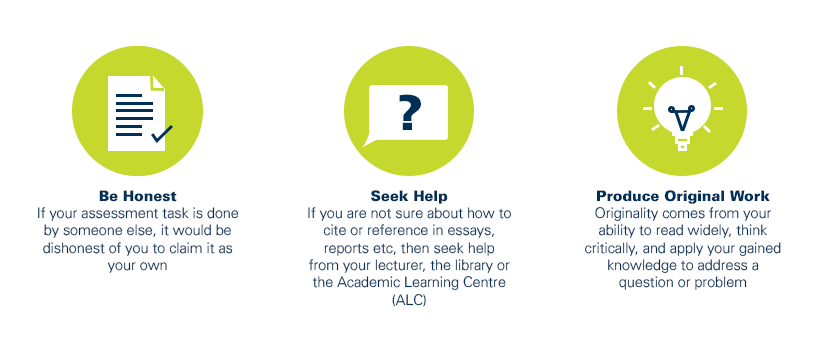
As a CQUniversity student you are expected to act honestly in all aspects of your academic work.
Any assessable work undertaken or submitted for review or assessment must be your own work. Assessable work is any type of work you do to meet the assessment requirements in the unit, including draft work submitted for review and feedback and final work to be assessed.
When you use the ideas, words or data of others in your assessment, you must thoroughly and clearly acknowledge the source of this information by using the correct referencing style for your unit. Using others’ work without proper acknowledgement may be considered a form of intellectual dishonesty.
Participating honestly, respectfully, responsibly, and fairly in your university study ensures the CQUniversity qualification you earn will be valued as a true indication of your individual academic achievement and will continue to receive the respect and recognition it deserves.
As a student, you are responsible for reading and following CQUniversity’s policies, including the Student Academic Integrity Policy and Procedure. This policy sets out CQUniversity’s expectations of you to act with integrity, examples of academic integrity breaches to avoid, the processes used to address alleged breaches of academic integrity, and potential penalties.
What is a breach of academic integrity?
A breach of academic integrity includes but is not limited to plagiarism, self-plagiarism, collusion, cheating, contract cheating, and academic misconduct. The Student Academic Integrity Policy and Procedure defines what these terms mean and gives examples.
Why is academic integrity important?
A breach of academic integrity may result in one or more penalties, including suspension or even expulsion from the University. It can also have negative implications for student visas and future enrolment at CQUniversity or elsewhere. Students who engage in contract cheating also risk being blackmailed by contract cheating services.
Where can I get assistance?
For academic advice and guidance, the Academic Learning Centre (ALC) can support you in becoming confident in completing assessments with integrity and of high standard.
What can you do to act with integrity?