Overview
Medical Science Research 2 will provide you with further training in research as you continue projects begun in Medical Science Research 1. This unit requires you to independently report on the investigation of the research question proposed. The final journal paper will typically contain the data analyses, results, and discussion in addition to a cogent literature review and hypotheses. It is anticipated that some journal papers may be suitable for eventual publication in an appropriate journal with the academic involved named as co-author. In all stages of the project you must adhere to appropriate ethical and professional standards.
Details
Pre-requisites or Co-requisites
Prerequisite: MEDS14001 Medical Science Research 1
Important note: Students enrolled in a subsequent unit who failed their pre-requisite unit, should drop the subsequent unit before the census date or within 10 working days of Fail grade notification. Students who do not drop the unit in this timeframe cannot later drop the unit without academic and financial liability. See details in the Assessment Policy and Procedure (Higher Education Coursework).
Offerings For Term 2 - 2026
Attendance Requirements
All on-campus students are expected to attend scheduled classes - in some units, these classes are identified as a mandatory (pass/fail) component and attendance is compulsory. International students, on a student visa, must maintain a full time study load and meet both attendance and academic progress requirements in each study period (satisfactory attendance for International students is defined as maintaining at least an 80% attendance record).
Recommended Student Time Commitment
Each 6-credit Undergraduate unit at CQUniversity requires an overall time commitment of an average of 12.5 hours of study per week, making a total of 150 hours for the unit.
Class Timetable
Assessment Overview
Assessment Grading
This is a graded unit: your overall grade will be calculated from the marks or grades for each assessment task, based on the relative weightings shown in the table above. You must obtain an overall mark for the unit of at least 50%, or an overall grade of 'pass' in order to pass the unit. If any 'pass/fail' tasks are shown in the table above they must also be completed successfully ('pass' grade). You must also meet any minimum mark requirements specified for a particular assessment task, as detailed in the 'assessment task' section (note that in some instances, the minimum mark for a task may be greater than 50%). Consult the University's Grades and Results Policy for more details of interim results and final grades.
All University policies are available on the CQUniversity Policy site.
You may wish to view these policies:
- Grades and Results Policy
- Assessment Policy and Procedure (Higher Education Coursework)
- Review of Grade Procedure
- Student Academic Integrity Policy and Procedure
- Academic Progression Policy and Procedure
- Student Refund and Credit Balance Policy and Procedure
- Complaints Policy and Procedure
- Information and Communications Technology Acceptable Use Policy and Procedure
This list is not an exhaustive list of all University policies. The full list of University policies are available on the CQUniversity Policy site.
Feedback, Recommendations and Responses
Every unit is reviewed for enhancement each year. At the most recent review, the following staff and student feedback items were identified and recommendations were made.
Feedback from Unit coordinator reflection
Students appreciated the one-on-one guidance provided by the unit coordinator in preparing their projects, analysis data, and writing.
Continue to provide support for students via email and Zoom as required.
Feedback from Unit coordinator reflection, student feedback
Students found the application of statistical analyses in research challenging.
Investigate further resources to support application of statistical analysis methods in research. Encourage students to take on projects in their workplaces where available.
- Collect and use data ethically
- Critically analyse and interpret research data
- Interpret research data and discuss findings professionally
- Prepare and present research reports within the required style and format of an appropriate journal or academic presentation in the field of course enrolment.
The purpose of Medical Science Research 1 & 2 is to provide the student with training in developing, conducting, and communicating research across theoretical and applied domains. This requires students to undertake an investigation of a research question in an area of medical science aligned with their course of enrolment and to report the investigation in written scholarly form. The research question investigated may have either theoretical or applied significance but will add to the body of discipline-specific knowledge and meet the performance criteria for the engaged research element of the appropriate professional competency standards.
Alignment of Assessment Tasks to Learning Outcomes
| Assessment Tasks | Learning Outcomes | |||
|---|---|---|---|---|
| 1 | 2 | 3 | 4 | |
| 1 - Written Assessment - 50% | ||||
| 2 - Presentation - 50% | ||||
Alignment of Graduate Attributes to Learning Outcomes
| Graduate Attributes | Learning Outcomes | |||
|---|---|---|---|---|
| 1 | 2 | 3 | 4 | |
| 1 - Communication | ||||
| 2 - Problem Solving | ||||
| 3 - Critical Thinking | ||||
| 4 - Information Literacy | ||||
| 5 - Team Work | ||||
| 6 - Information Technology Competence | ||||
| 7 - Cross Cultural Competence | ||||
| 8 - Ethical practice | ||||
| 9 - Social Innovation | ||||
| 10 - First Nations Knowledges | ||||
| 11 - Aboriginal and Torres Strait Islander Cultures | ||||
Textbooks
An introduction to research methods for undergraduate health professionals
- (2023)
- Authors: Faith Alele; Bunmi Malau-Aduli
- James Cook University
- ISBN: ISBN: 9780645587883
Research Methodology: A Step-by-Step Guide for Beginners
- Edition: 5th (2019)
- Authors: Ranjit Kumar
- Sage Publications Ltd.
- Great Britain
- ISBN: 9781526449900
Research methodology : techniques and trends
- (2022)
- Authors: Dubey, Umesh Kumar B.; Kothari, D.P.
- CRC Press
- Boca Raton Boca Raton , Florida , USA
- ISBN: ISBN : 1-351-68207-5
Additional Textbook Information
This text is available via the library catalogue. There is no requirement for purchase. Depending on your specific research project, elements of this text may be useful.
IT Resources
- CQUniversity Student Email
- Internet
- Unit Website (Moodle)
- Microsoft Teams
All submissions for this unit must use the referencing styles below:
For further information, see the Assessment Tasks.
m.s.gregory@cqu.edu.au
Week 1
Begin Date: 13 Jul 2026Module/Topic
Research integrity and referencing.
Project work for the duration of the term.
Chapter
This is a research unit. No textbook is prescribed.
Events and Submissions/Topic
Students should be actively engaged in their research project throughout this unit. Research project work (as proposed in MEDS14001 Medical Research Project 1) should be finalised before the end of the term to allow for sufficient time to analyse data and prepare research results for oral presentation and written report.
Week 2
Begin Date: 20 Jul 2026Module/Topic
Coherence and cohesion in academic writing.
Project work for the duration of the term.
Chapter
This is a research unit. No textbook is prescribed.
Events and Submissions/Topic
Week 3
Begin Date: 27 Jul 2026Module/Topic
Preparing the Introduction.
Project work for the duration of the term.
Chapter
This is a research unit. No textbook is prescribed.
Events and Submissions/Topic
Week 4
Begin Date: 03 Aug 2026Module/Topic
Preparing the Methods Section.
Project work for the duration of the term.
Chapter
This is a research unit. No textbook is prescribed.
Events and Submissions/Topic
Week 5
Begin Date: 10 Aug 2026Module/Topic
Preparing the Results Section.
Project work for the duration of the term.
Chapter
This is a research unit. No textbook is prescribed.
Events and Submissions/Topic
Week 6
Begin Date: 17 Aug 2026Module/Topic
Preparing the Discussion Section.
Project work for the duration of the term.
Chapter
This is a research unit. No textbook is prescribed.
Events and Submissions/Topic
Vacation Week
Begin Date: 24 Aug 2026Module/Topic
Chapter
Events and Submissions/Topic
Week 7
Begin Date: 31 Aug 2026Module/Topic
Preparing the Conclusion and Abstract.
Project work for the duration of the term.
Chapter
This is a research unit. No textbook is prescribed.
Events and Submissions/Topic
Week 8
Begin Date: 07 Sep 2026Module/Topic
Effective Research Oral Presentation (Design)
Project work for the duration of the term.
Chapter
This is a research unit. No textbook is prescribed.
Events and Submissions/Topic
Week 9
Begin Date: 14 Sep 2026Module/Topic
Effective Research Oral Presentation (Delivery)
Project work for the duration of the term.
Chapter
This is a research unit. No textbook is prescribed.
Events and Submissions/Topic
Project work should be finished by this week to allow sufficient time to complete assessment tasks.
Week 10
Begin Date: 21 Sep 2026Module/Topic
Proofreading and Scholarly Publishing.
Chapter
This is a research unit. No textbook is prescribed.
Events and Submissions/Topic
AT1: Research Report Due
Research Report Due: Week 10 Friday (25 Sept 2026) 11:59 pm AEST
Week 11
Begin Date: 28 Sep 2026Module/Topic
Chapter
Events and Submissions/Topic
Assessment preparation
Week 12
Begin Date: 05 Oct 2026Module/Topic
Chapter
Events and Submissions/Topic
Assessment preparation
Exam Week
Begin Date: 12 Oct 2026Module/Topic
Chapter
Events and Submissions/Topic
AT2: Research Presentation Due
Research Presentation Due: Exam Week Monday (12 Oct 2026) 11:59 pm AEST
Vacation/Exam Week
Begin Date: 19 Oct 2026Module/Topic
Chapter
Events and Submissions/Topic
Your Unit Coordinator for BMSC13021 Clinical Diagnostic Microbiology is Dr Sarah-Jane Gregory.
You can contact me by email (m.s.gregory@cqu.edu.au), on Teams (@Sarah-JaneGregory) or by phone (07) 4150 7750.
Each week you will be expected to complete the following activities:
- Watch pre-recorded lecture vignettes (Weeks 1-9)
- Access additional learning materials (readings and external resources) (Weeks 1-10)
- Conduct your research project (data collection, analysis) (Weeks 1-9)
- Work towards completion of assessment (Weeks 1-12)
1 Written Assessment
Dissemination of knowledge and research discoveries to the scientific communities are essential for global improvements to our technologies and currently accepted practices or standards of care. Researchers must be proficient in conveying their research findings through written submissions to journals or other forms of scientific communication. A scientific manuscript is a formal report of the research and findings. This assessment will provide you with the opportunity to prepare a written manuscript based on the project you have proposed and conducted and its findings.
The entire manuscript should be between 3500-5000 words and should include the following sections:
- Abstract: summary of the research and its findings in a coherent and logical, yet concise way;
- Introduction: definition of the topic and discussion on what is known (literature review), the gaps in knowledge and the significance of the study, and the aim and research questions;
- Methods: description of the materials, methods and analyses used to answer research questions;
- Results: presentation of the findings of the research in a clear and concise way in text, tables and figures;
- Discussion: interpretations of the findings and how they compare with literature, what they add and what are the limitations;
- Conclusion: summary of the findings, and meaningful and supported suggestions for the application of the findings;
- References to the literature used and cited in the manuscript.
A blank template from a scientific journal will be provided on the Moodle page.
Assessment Security Level: Low
Level of GenAI use allowed:
Level 3 AI COLLABORATION. Al may be used to help complete the task, including idea generation, drafting, feedback, and refinement. Students should critically evaluate and modify the Al suggested outputs, demonstrating their understanding.
Prior to uploading research data/content you should also ensure that you know the classification of your data. Public information is generally ok to upload, but anything that is considered as commercial, sensitive, novel or protected should be reviewed closely and never submitted to non-secure platforms.
Week 10 Friday (25 Sept 2026) 11:59 pm AEST
Submission via assessment portal on Moodle.
Week 12 Friday (9 Oct 2026)
The marking criteria for this assessment will include:
- Clarity and accuracy of the title, abstract, introduction and background;
- Accuracy of the methods/statistical analysis and ethics consideration (if applicable) outlined;
- Clarity of results and findings and accuracy of reporting;
- Logic and accuracy of discussion and limitations;
- Clarity of conclusion and the implication of findings;
- Referencing, structure, grammar, scientific conventions and submission requirements.
- Adherence to word limit.
The marking rubric will be provided on the Moodle page.
- Collect and use data ethically
- Critically analyse and interpret research data
- Interpret research data and discuss findings professionally
- Prepare and present research reports within the required style and format of an appropriate journal or academic presentation in the field of course enrolment.
2 Presentation
You are required to prepare and record a presentation that outlines your project as if it were to be delivered to an informed audience, e.g. your student peers and CL10 & CG93 course staff. The presentation will:
- Include a brief background to your project;
- Highlight the significance of the study;
- Outline the research question(s) to be answered;
- Describe the project methodology including ethical considerations and data collection and analytical techniques; and
- Describe the results of the study and conclusions drawn.
The presentation should contain 10-15 slides and be 10 minutes in length. The presentation and slides must be uploaded to Moodle. A task sheet and marking rubric will be provided on Moodle.
Assessment Security Level: Low
Level of GenAI use allowed:
Level 3 AI COLLABORATION. Al may be used to help complete the task, including idea generation, drafting, feedback, and refinement. Students should critically evaluate and modify the Al suggested outputs, demonstrating their understanding.
Prior to uploading research data/content you should also ensure that you know the classification of your data. Public information is generally ok to upload, but anything that is considered as commercial, sensitive, novel or protected should be reviewed closely and never submitted to non-secure platforms.
Exam Week Monday (12 Oct 2026) 11:59 pm AEST
Submission via assessment portal on Moodle.
Within 2 weeks of submission.
The presentation will be assessed on the following:
- Clarity and accuracy of presentation of research information (including topic, background, aims & hypotheses, methodology, findings) discussion, conclusion and future directions for the research;
- Clarity and quality of presentation structure;
- Suitable presentation style (both verbal and supporting slides);
- Structure, grammar and submission requirements.
A marking rubric will be available on Moodle.
- Collect and use data ethically
- Critically analyse and interpret research data
- Interpret research data and discuss findings professionally
- Prepare and present research reports within the required style and format of an appropriate journal or academic presentation in the field of course enrolment.
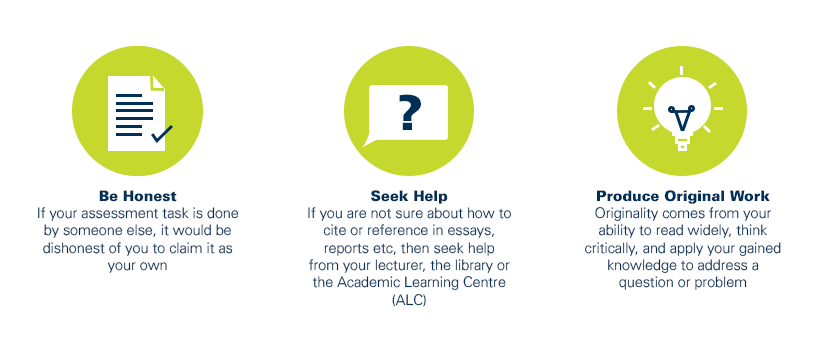
As a CQUniversity student you are expected to act honestly in all aspects of your academic work.
Any assessable work undertaken or submitted for review or assessment must be your own work. Assessable work is any type of work you do to meet the assessment requirements in the unit, including draft work submitted for review and feedback and final work to be assessed.
When you use the ideas, words or data of others in your assessment, you must thoroughly and clearly acknowledge the source of this information by using the correct referencing style for your unit. Using others’ work without proper acknowledgement may be considered a form of intellectual dishonesty.
Participating honestly, respectfully, responsibly, and fairly in your university study ensures the CQUniversity qualification you earn will be valued as a true indication of your individual academic achievement and will continue to receive the respect and recognition it deserves.
As a student, you are responsible for reading and following CQUniversity’s policies, including the Student Academic Integrity Policy and Procedure. This policy sets out CQUniversity’s expectations of you to act with integrity, examples of academic integrity breaches to avoid, the processes used to address alleged breaches of academic integrity, and potential penalties.
What is a breach of academic integrity?
A breach of academic integrity includes but is not limited to plagiarism, self-plagiarism, collusion, cheating, contract cheating, and academic misconduct. The Student Academic Integrity Policy and Procedure defines what these terms mean and gives examples.
Why is academic integrity important?
A breach of academic integrity may result in one or more penalties, including suspension or even expulsion from the University. It can also have negative implications for student visas and future enrolment at CQUniversity or elsewhere. Students who engage in contract cheating also risk being blackmailed by contract cheating services.
Where can I get assistance?
For academic advice and guidance, the Academic Learning Centre (ALC) can support you in becoming confident in completing assessments with integrity and of high standard.
What can you do to act with integrity?