Overview
In this unit, you will explore the principles of clinical governance and quality improvement within the context of diagnostic imaging practice. You will examine quality management frameworks, consider factors contributing to adverse events, and discuss strategies that support safe, effective, and patient-centred care. The unit introduces the role and function of multiple imaging modalities and examines how they work together within the patient’s diagnostic journey. Through comparative image evaluation, you will analyse the complementary roles, strengths, and limitations of different modalities, with consideration of safety and clinical application. In addition, the unit includes focused content on breast anatomy and breast imaging techniques, providing foundational knowledge of scanning approaches and clinical considerations in this specialised area of practice.
Details
Pre-requisites or Co-requisites
Prerequisite MEDS12007 Medical Sonography Clinical Unit 1
Important note: Students enrolled in a subsequent unit who failed their pre-requisite unit, should drop the subsequent unit before the census date or within 10 working days of Fail grade notification. Students who do not drop the unit in this timeframe cannot later drop the unit without academic and financial liability. See details in the Assessment Policy and Procedure (Higher Education Coursework).
Offerings For Term 2 - 2026
Attendance Requirements
All on-campus students are expected to attend scheduled classes - in some units, these classes are identified as a mandatory (pass/fail) component and attendance is compulsory. International students, on a student visa, must maintain a full time study load and meet both attendance and academic progress requirements in each study period (satisfactory attendance for International students is defined as maintaining at least an 80% attendance record).
Recommended Student Time Commitment
Each 6-credit Undergraduate unit at CQUniversity requires an overall time commitment of an average of 12.5 hours of study per week, making a total of 150 hours for the unit.
Class Timetable
Assessment Overview
Assessment Grading
This is a graded unit: your overall grade will be calculated from the marks or grades for each assessment task, based on the relative weightings shown in the table above. You must obtain an overall mark for the unit of at least 50%, or an overall grade of 'pass' in order to pass the unit. If any 'pass/fail' tasks are shown in the table above they must also be completed successfully ('pass' grade). You must also meet any minimum mark requirements specified for a particular assessment task, as detailed in the 'assessment task' section (note that in some instances, the minimum mark for a task may be greater than 50%). Consult the University's Grades and Results Policy for more details of interim results and final grades.
All University policies are available on the CQUniversity Policy site.
You may wish to view these policies:
- Grades and Results Policy
- Assessment Policy and Procedure (Higher Education Coursework)
- Review of Grade Procedure
- Student Academic Integrity Policy and Procedure
- Academic Progression Policy and Procedure
- Student Refund and Credit Balance Policy and Procedure
- Complaints Policy and Procedure
- Information and Communications Technology Acceptable Use Policy and Procedure
This list is not an exhaustive list of all University policies. The full list of University policies are available on the CQUniversity Policy site.
Feedback, Recommendations and Responses
Every unit is reviewed for enhancement each year. At the most recent review, the following staff and student feedback items were identified and recommendations were made.
Feedback from Student feedback
Some students felt the assessment task was somewhat ambiguous, making it difficult to fully understand the requirements.
Provide an exemplar for further assessments and edit the task description for clarity.
Feedback from Student Feedback
Excellent response to the updated content on the quality assurance lectures - students recommended updating all previous quality assurance content .
The remaining quality assurance lectures will be updated and restructured to ensure the content is current, relevant, and presented in a clear and concise manner.
- Discuss key aspects of clinical governance, quality improvement, risk management and patient safety cultures in the context of a clinical sonography environment.
- Describe the safe application of contemporary medical imaging modalities.
- Identify, describe and compare complementary imaging pathways for specified pathologies.
- Correlate the appearance of specified disease processes using complimentary imaging modalities.
- Analyse normal and abnormal breast ultrasound findings with reference to anatomy, clinical presentation, sonographic appearance, aetiology and correlation with other breast imaging modalities
The learning outcomes for this unit relate to the requirements of general sonography courses under the Australasian Sonography Accreditation Registry (ASAR), Standards for the Accreditation of Sonographer Courses (SASC):
Foundation Units of Competence 1-5
Critical Practice Units of Competence 6, 7, 9, 10, 12 & 13
Alignment of Assessment Tasks to Learning Outcomes
| Assessment Tasks | Learning Outcomes | ||||
|---|---|---|---|---|---|
| 1 | 2 | 3 | 4 | 5 | |
| 1 - Written Assessment - 60% | |||||
| 2 - Online Test - 40% | |||||
Alignment of Graduate Attributes to Learning Outcomes
| Graduate Attributes | Learning Outcomes | ||||
|---|---|---|---|---|---|
| 1 | 2 | 3 | 4 | 5 | |
| 1 - Communication | |||||
| 2 - Problem Solving | |||||
| 3 - Critical Thinking | |||||
| 4 - Information Literacy | |||||
| 5 - Team Work | |||||
| 6 - Information Technology Competence | |||||
| 7 - Cross Cultural Competence | |||||
| 8 - Ethical practice | |||||
| 9 - Social Innovation | |||||
| 10 - First Nations Knowledges | |||||
| 11 - Aboriginal and Torres Strait Islander Cultures | |||||
Textbooks
There are no required textbooks.
IT Resources
- CQUniversity Student Email
- Internet
- Unit Website (Moodle)
All submissions for this unit must use the referencing style: Vancouver
For further information, see the Assessment Tasks.
h.s.patroni@cqu.edu.au
Week 1 Clinical Governance
Begin Date: 13 Jul 2026Module/Topic
Clinical Governance, Foundations of Sonographic Safety and the ALARA Principle
Chapter
Readings: eReading List
Events and Submissions/Topic
Week 2 Risk Management
Begin Date: 20 Jul 2026Module/Topic
Risk Management
Chapter
Readings: eReading List
Events and Submissions/Topic
Online Tutorial
Tuesday 7:00-8:00pm AEST
Week 3 Near Misses, Adverse Events, Quality Improvement and Clinical Audits
Begin Date: 27 Jul 2026Module/Topic
Near Misses and Adverse Events.
Quality Improvement and Clinical Audits
Chapter
Readings: eReading List
Events and Submissions/Topic
Week 4 Safe Sonographic Practice
Begin Date: 03 Aug 2026Module/Topic
Safe Sonographic Practice.
Safety Culture and the role of a sonographer.
Chapter
Readings: eReading List
Events and Submissions/Topic
Online Tutorial
Tuesday 7:00-8:00pm AEST
Week 5 Introduction to Medical Imaging Modalities and Safety Considerations
Begin Date: 10 Aug 2026Module/Topic
Introduction to Medical Imaging Modalities and Safety Considerations
Chapter
Readings: eReading List
Events and Submissions/Topic
Week 6 Appearances of Common Structures
Begin Date: 17 Aug 2026Module/Topic
Multi-modality appearances of common structures.
Chapter
Readings: eReading List
Events and Submissions/Topic
Online Tutorial
Tuesday 7:00-8:00pm AEST
Vacation Week
Begin Date: 24 Aug 2026Module/Topic
Break Week
Chapter
Events and Submissions/Topic
Week 7 Comparative Imaging Abdomen and Pelvis
Begin Date: 31 Aug 2026Module/Topic
Comparative Imaging Abdomen and Pelvis
Chapter
Readings: eReading List
Events and Submissions/Topic
Week 8 Comparative Imaging Vascular
Begin Date: 07 Sep 2026Module/Topic
Comparative Imaging Vascular
Chapter
Readings: eReading List
Events and Submissions/Topic
Online Tutorial
Tuesday 7:00-8:00pm AEST
Week 9 Comparative Imaging Musculoskeletal and Superficial Structures
Begin Date: 14 Sep 2026Module/Topic
Comparative Imaging Musculoskeletal
Comparative Imaging Superficial Structures
Chapter
Readings: eReading List
Events and Submissions/Topic
Week 10 Breast Anatomy, Pathology and Scanning Technique
Begin Date: 21 Sep 2026Module/Topic
Breast Anatomy, Pathology and Scanning Technique
Chapter
Readings: eReading List
Events and Submissions/Topic
Online Tutorial
Tuesday 7:00-8:00pm AEST
Week 11 Augmented Breast, Comparative Imaging and Lesion Localisation
Begin Date: 28 Sep 2026Module/Topic
Augmented Breast, Comparative Imaging and Lesion Localisation
Chapter
Readings: eReading List
Events and Submissions/Topic
Week 12 Revision Week
Begin Date: 05 Oct 2026Module/Topic
Online Test
Chapter
All content assessed from weeks 1-12
Events and Submissions/Topic
Online Tutorial
Tuesday 7:00-8:00pm AEST
End of Term Test Due: Week 12 Thursday (8 Oct 2026) 12:00 pm AEST
Exam Week
Begin Date: 12 Oct 2026Module/Topic
Chapter
Events and Submissions/Topic
Vacation/Exam Week
Begin Date: 19 Oct 2026Module/Topic
Chapter
Events and Submissions/Topic
Your unit coordinator for this unit is Hayley Moloney, who is based at the Mackay Ooralea Campus. This unit is run online. You can contact Hayley via her email h.s.patroni@cqu.edu.au. If you wish to have a meeting or discussion with Hayley at any time, please email to organise this. Alternatively, you can ask questions related to unit content in the tutorials or post to the online forum.
Hayley will hold live online interactive sessions every second Tuesday evening (Tutorials) from 7-8pm AEST - the dates for the tutorials can be found in the Virtual Classroom tile on the Moodle site. The sessions will be recorded and uploaded the following day for those who cannot attend.
1 Written Assessment
You are required to investigate a realistic adverse event or near-miss that could occur within a medical imaging department. The event must involve a specific pathology that was misdiagnosed, delayed, or mismanaged, resulting in potential or actual compromise to patient safety, diagnostic accuracy, or clinical workflow.
This assessment requires a critical analysis of the event, including exploration of the underlying pathology, imaging considerations, and comparative imaging pathways relevant to the chosen condition. It also involves developing a structured quality improvement strategy using the Plan–Do–Study–Act (PDSA) framework. The task assesses your ability to apply principles of clinical governance, risk management, and patient safety within the context of sonographic practice.
For further information, including a detailed guide to the assessment structure refer to the Assessment tile on Moodle.
Level Of GenAI use allowed: Level 2. You may use AI for planning, idea development and research. Your final submission should show how you have developed and refined these ideas.
Week 9 Wednesday (16 Sept 2026) 4:00 pm AEST
The 72 hour grace period does apply to this assessment.
Week 11 Wednesday (30 Sept 2026)
This assessment is designed to assess your understanding of the relationship between pathology, diagnostic imaging, patient safety, and quality improvement. You will be expected to critically evaluate an adverse event or near-miss scenario, analyse the imaging considerations associated with the chosen pathology, and explore how clinical governance and risk management principles can be used to improve patient outcomes. The assessment also examines your ability to apply a structured quality improvement methodology, justify clinical decisions using evidence, and reflect on the role of the sonographer in maintaining safe and effective healthcare practices. The rubric for assessment can be accessed on Moodle under the assessments drop down tab.
- Discuss key aspects of clinical governance, quality improvement, risk management and patient safety cultures in the context of a clinical sonography environment.
- Describe the safe application of contemporary medical imaging modalities.
- Identify, describe and compare complementary imaging pathways for specified pathologies.
- Correlate the appearance of specified disease processes using complimentary imaging modalities.
2 Online Test
This online test assesses your understanding and application of the concepts covered throughout Weeks 1–12 of the unit.
You will be assessed on your ability to accurately recall and apply knowledge, interpret clinical scenarios, justify decisions using appropriate reasoning, and communicate responses clearly and concisely.
This 90-minute online test will assess your understanding and application of the content covered throughout the term (Weeks 1–12). The test will consist of a combination of short-answer and medium-answer questions designed to evaluate your knowledge of key concepts, clinical reasoning, and ability to apply theory to sonographic practice.
This assessment must be completed individually. Collaboration or collusion with other students is considered academic misconduct and will be reported to the Academic Integrity Unit.
Level of GenAI use allowed: Level 1. You must not use GenAl at any point during the assessment. You must demonstrate your core skills and knowledge.
The 72-hour grace period does not apply to this assessment.
Week 12 Thursday (8 Oct 2026) 12:00 pm AEST
Online test opens Thursday (8 Oct 2026) 12:00pm and closes Friday (9 Oct 2026) 12:00 pm AEST. The 72 hour grace period DOES NOT apply to this assessment.
Vacation/Exam Week Thursday (22 Oct 2026)
14 Days After Assessment.
Questions may include clinical case studies, imaging pathway selection, pathology recognition, patient safety and quality improvement concepts, as well as image recognition and interpretation tasks. You will be expected to identify and analyse sonographic findings, justify clinical decisions, and demonstrate an understanding of the role of ultrasound within patient diagnosis and management.
- Discuss key aspects of clinical governance, quality improvement, risk management and patient safety cultures in the context of a clinical sonography environment.
- Describe the safe application of contemporary medical imaging modalities.
- Identify, describe and compare complementary imaging pathways for specified pathologies.
- Correlate the appearance of specified disease processes using complimentary imaging modalities.
- Analyse normal and abnormal breast ultrasound findings with reference to anatomy, clinical presentation, sonographic appearance, aetiology and correlation with other breast imaging modalities
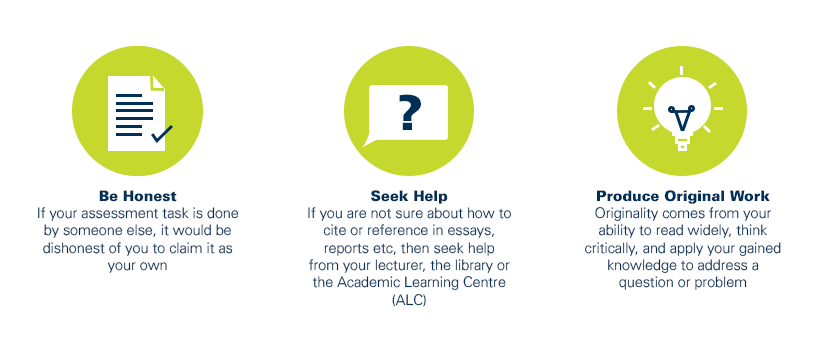
As a CQUniversity student you are expected to act honestly in all aspects of your academic work.
Any assessable work undertaken or submitted for review or assessment must be your own work. Assessable work is any type of work you do to meet the assessment requirements in the unit, including draft work submitted for review and feedback and final work to be assessed.
When you use the ideas, words or data of others in your assessment, you must thoroughly and clearly acknowledge the source of this information by using the correct referencing style for your unit. Using others’ work without proper acknowledgement may be considered a form of intellectual dishonesty.
Participating honestly, respectfully, responsibly, and fairly in your university study ensures the CQUniversity qualification you earn will be valued as a true indication of your individual academic achievement and will continue to receive the respect and recognition it deserves.
As a student, you are responsible for reading and following CQUniversity’s policies, including the Student Academic Integrity Policy and Procedure. This policy sets out CQUniversity’s expectations of you to act with integrity, examples of academic integrity breaches to avoid, the processes used to address alleged breaches of academic integrity, and potential penalties.
What is a breach of academic integrity?
A breach of academic integrity includes but is not limited to plagiarism, self-plagiarism, collusion, cheating, contract cheating, and academic misconduct. The Student Academic Integrity Policy and Procedure defines what these terms mean and gives examples.
Why is academic integrity important?
A breach of academic integrity may result in one or more penalties, including suspension or even expulsion from the University. It can also have negative implications for student visas and future enrolment at CQUniversity or elsewhere. Students who engage in contract cheating also risk being blackmailed by contract cheating services.
Where can I get assistance?
For academic advice and guidance, the Academic Learning Centre (ALC) can support you in becoming confident in completing assessments with integrity and of high standard.
What can you do to act with integrity?