Overview
This clinical unit will provide you with opportunities to apply and integrate theoretical and practical knowledge, skills and professional behaviour in the clinical environment, independently and under the supervision of qualified professionals. The practical focus in this unit includes the completion of an ultrasound scan to ‘Advanced Beginner’ – (student) Level 2 competence as described by the Professional Competency Framework for Sonographers adopted by the Australasian Sonographers Association and the Australian Sonographer Accreditation Register. You will learn to analyse images and solve problems, developing critical thinking and clinical reasoning skills. You will demonstrate reflective practice to expand your core knowledge and experience. You will also behave professionally using interpersonal skills relevant to sonographic practice in accordance with CQUniversity graduate attributes and Australian Sonographer Accreditation Registry accreditation requirements. You are expected to critically reflect on your own performance and exhibit a high level of safe patient care. Critical appraisal of performance will enable you to develop your own patient care, professional, technical and analytical skills in a work setting.
Details
Pre-requisites or Co-requisites
Prerequisites MEDS12006 Ultrasound in Obstetrics and Gynaecology and MEDS12004 Sonographic Skills Development 1 and MEDS12007 Medical Sonography Clinical Unit 1 and MEDS13008 Vascular Sonography AND MEDS13011 Sonographic Skills Development 2 which must have been successfully completed within the last twelve months. Should this time limit have elapsed the student must successfully complete a skills / clinical revision and assessment as determined by the discipline lead or designate.
Important note: Students enrolled in a subsequent unit who failed their pre-requisite unit, should drop the subsequent unit before the census date or within 10 working days of Fail grade notification. Students who do not drop the unit in this timeframe cannot later drop the unit without academic and financial liability. See details in the Assessment Policy and Procedure (Higher Education Coursework).
Offerings For Term 2 - 2026
Attendance Requirements
All on-campus students are expected to attend scheduled classes - in some units, these classes are identified as a mandatory (pass/fail) component and attendance is compulsory. International students, on a student visa, must maintain a full time study load and meet both attendance and academic progress requirements in each study period (satisfactory attendance for International students is defined as maintaining at least an 80% attendance record).
Recommended Student Time Commitment
Each 12-credit Undergraduate unit at CQUniversity requires an overall time commitment of an average of 25 hours of study per week, making a total of 300 hours for the unit.
Class Timetable
Assessment Overview
Assessment Grading
This is a pass/fail (non-graded) unit. To pass the unit, you must pass all of the individual assessment tasks shown in the table above.
All University policies are available on the CQUniversity Policy site.
You may wish to view these policies:
- Grades and Results Policy
- Assessment Policy and Procedure (Higher Education Coursework)
- Review of Grade Procedure
- Student Academic Integrity Policy and Procedure
- Academic Progression Policy and Procedure
- Student Refund and Credit Balance Policy and Procedure
- Complaints Policy and Procedure
- Information and Communications Technology Acceptable Use Policy and Procedure
This list is not an exhaustive list of all University policies. The full list of University policies are available on the CQUniversity Policy site.
Feedback, Recommendations and Responses
Every unit is reviewed for enhancement each year. At the most recent review, the following staff and student feedback items were identified and recommendations were made.
Feedback from Student Unit Teacher Evaluation
Students reported that while on placement, managing the written assignment alongside clinical responsibilities felt overwhelming. Several suggested that the due date could be more flexible or moved to the end of the university semester to reduce stress.
Consider adjusting the written assignment due date to allow greater flexibility, ideally allowing extra time after each placement block to make it fair and equitable for both students in block 1 and block 2.
- Perform sonographic examinations under supervision to meet the Competency Standards for Level 2 - Advanced Beginner (Student).
- Evaluate sonographic findings and describe them in simple terms to solve straightforward diagnostic problems.
- Display professional behavior, teamwork and communication skills consistent with safe sonographic practice in accordance with CQUniversity graduate attributes, the Professional Competency Framework for Sonographers, and Australian Sonographer Accreditation Registry accreditation requirements.
- Critically reflect upon own professional practice, sonographer psychomotor skills, sonographic knowledge, teamwork, communication skills and safe clinical practice.
The learning outcomes for this unit relate to the requirements of general sonography courses under the Australasian Sonography Accreditation Registry (ASAR), Standards for the Accreditation of Sonographer Courses (SASC):
Foundation Units of Competence 1-5
Critical Practice Units of Competence 6-7, 9-10, 12-13
Alignment of Assessment Tasks to Learning Outcomes
| Assessment Tasks | Learning Outcomes | |||
|---|---|---|---|---|
| 1 | 2 | 3 | 4 | |
| 1 - Practical Assessment - 0% | ||||
| 2 - Direct observation of procedural skills (DOPs) - 0% | ||||
| 3 - Professional Practice Placement - 0% | ||||
| 4 - Written Assessment - 0% | ||||
Alignment of Graduate Attributes to Learning Outcomes
| Graduate Attributes | Learning Outcomes | |||
|---|---|---|---|---|
| 1 | 2 | 3 | 4 | |
| 1 - Communication | ||||
| 2 - Problem Solving | ||||
| 3 - Critical Thinking | ||||
| 4 - Information Literacy | ||||
| 5 - Team Work | ||||
| 6 - Information Technology Competence | ||||
| 7 - Cross Cultural Competence | ||||
| 8 - Ethical practice | ||||
| 9 - Social Innovation | ||||
| 10 - First Nations Knowledges | ||||
| 11 - Aboriginal and Torres Strait Islander Cultures | ||||
Textbooks
There are no required textbooks.
IT Resources
- CQUniversity Student Email
- Internet
- Unit Website (Moodle)
All submissions for this unit must use the referencing style: Vancouver
For further information, see the Assessment Tasks.
d.chester@cqu.edu.au
Block 1 Week 1
Begin Date: 29 Jun 2026Module/Topic
Compulsory Induction Tutorial on WEDNESDAY at 7PM AEST
- Welcome, clinical placement tips & advice
Chapter
Events and Submissions/Topic
Assessment 3 Part 1 due FRIDAY at 10PM AEST
- Clinical placement checklist
Block 1 Week 2
Begin Date: 06 Jul 2026Module/Topic
Tutorial on WEDNESDAY at 7PM AEST
- Case presentation presented by UC
- Peer feedback discussion
Chapter
Events and Submissions/Topic
Assessment 3 Part 2 due FRIDAY at 10PM AEST
- Week 2 clinical attendance and case log (draft)
Block 1 Week 3
Begin Date: 13 Jul 2026Module/Topic
Tutorial on WEDNESDAY at 7PM AEST
- Communicating your findings & learning from your mistakes
- 4th year student interview
Chapter
Events and Submissions/Topic
Block 1 Week 4
Begin Date: 20 Jul 2026Module/Topic
Drop in session WEDNESDAY at 7PM AEST
Chapter
Events and Submissions/Topic
Assessment 3 Part 2 due FRIDAY at 10PM AEST
- week 4 clinical attendance and case log (draft)
Block 1 Week 5
Begin Date: 27 Jul 2026Module/Topic
Drop in session WEDNESDAY at 7PM AEST
Chapter
Events and Submissions/Topic
Assessment 4 Part 1 due MONDAY at 7PM AEST
- Block 1 - case presentation (draft)
Block 1 Week 6
Begin Date: 03 Aug 2026Module/Topic
Drop in session WEDNESDAY at 7PM AEST
Chapter
Events and Submissions/Topic
Assessment 2 due MONDAY at 7PM AEST
- Mid GAPA
Assessment 3 Part 2 due FRIDAY at 10PM AEST
- week 6 clinical attendance and case log (draft)
Block 1 Week 7
Begin Date: 10 Aug 2026Module/Topic
Drop in session WEDNESDAY at 7PM AEST
Chapter
Events and Submissions/Topic
Assessment 4 Part 2 due MONDAY at 7PM AEST
- Block 1 - peer feedback
Block 1 Week 8
Begin Date: 17 Aug 2026Module/Topic
Drop in session WEDNESDAY at 7PM AEST
Chapter
Events and Submissions/Topic
Assessment 3 Part 2 due FRIDAY at 10PM AEST
- week 8 clinical attendance and case log (draft)
Block 1 Week 9
Begin Date: 24 Aug 2026Module/Topic
Drop in session WEDNESDAY at 7PM AEST
Chapter
Events and Submissions/Topic
Assessment 4 Part 3 due MONDAY at 7PM AEST
- Block 1 - case presentation (final)
Block 1 Week 10
Begin Date: 31 Aug 2026Module/Topic
Drop in session WEDNESDAY at 7PM AEST
Chapter
Events and Submissions/Topic
End of Block 1 on FRIDAY
Assessments 1, 2 & 3 due by MONDAY 7 September 7PM AEST
- Practical assessment
- End GAPA
- Clinical attendance and case log
Block 2 Week 1
Begin Date: 07 Sep 2026Module/Topic
Tutorial on WEDNESDAY at 7PM AEST
- Case presentation presented by UC
- Peer feedback discussion
Chapter
Events and Submissions/Topic
Assessment 3 Part 1 due FRIDAY at 10PM AEST
- Clinical placement checklist
Block 2 Week 2
Begin Date: 14 Sep 2026Module/Topic
Tutorial on WEDNESDAY at 7PM AEST
- Communicating your findings & learning from your mistakes
- 4th year student interview
Chapter
Events and Submissions/Topic
Assessment 3 Part 2 due FRIDAY at 10PM AEST
- Week 2 clinical attendance and case log (draft)
Block 2 Week 3
Begin Date: 21 Sep 2026Module/Topic
Drop in session WEDNESDAY at 7PM AEST
Chapter
Events and Submissions/Topic
Block 2 Week 4
Begin Date: 28 Sep 2026Module/Topic
Drop in session WEDNESDAY at 7PM AEST
Chapter
Events and Submissions/Topic
Assessment 3 Part 2 due FRIDAY at 10PM AEST
- Week 4 clinical attendance and case log (draft)
Block 2 Week 5
Begin Date: 05 Oct 2026Module/Topic
Drop in session WEDNESDAY at 7PM AEST
Chapter
Events and Submissions/Topic
Assessment 4 Part 1 due MONDAY at 7PM AEST
- Block 2 - case presentation (draft)
Block 2 Week 6
Begin Date: 12 Oct 2026Module/Topic
Drop in session WEDNESDAY at 7PM AEST
Chapter
Events and Submissions/Topic
Assessment 2 due MONDAY at 7PM AEST
- Mid GAPA
Assessment 3 Part 2 due FRIDAY at 10PM AEST
- Week 6 clinical attendance and case log (draft)
Block 2 Week 7
Begin Date: 19 Oct 2026Module/Topic
Drop in session WEDNESDAY at 7PM AEST
Chapter
Events and Submissions/Topic
Assessment 4 Part 2 due MONDAY at 7PM AEST
- Block 2 - peer feedback
Block 2 Week 8
Begin Date: 26 Oct 2026Module/Topic
Drop in session WEDNESDAY at 7PM AEST
Chapter
Events and Submissions/Topic
Assessment 3 Part 2 due FRIDAY at 10PM AEST
- Week 8 clinical attendance and case log (draft)
Block 2 Week 9
Begin Date: 02 Nov 2026Module/Topic
Drop in session WEDNESDAY at 7PM AEST
Chapter
Events and Submissions/Topic
Assessment 4 Part 3 due MONDAY at 7PM AEST
- Block 2 - case presentation (final)
Block 2 Week 10
Begin Date: 09 Nov 2026Module/Topic
Drop in session WEDNESDAY at 7PM AEST
Chapter
Events and Submissions/Topic
End of Block 2 on FRIDAY
Assessments 1, 2 & 3 due by MONDAY 16 November 7PM AEST
- Practical assessment
- End GAPA
- Clinical attendance and case log
The unit coordinator for this unit is Deanne Chester, assisted by Daisy Vella. We can be contacted via the forum, email or telephone, however the forum is the preferred initial method. If you are reaching out for a more personal matter, please email us ensuring that you include both of us (Deanne and Daisy) in all emails. It is important to check your student email and Moodle regularly to be aware of unit updates. We are very happy to arrange phone calls or Zoom meetings to support you in your learning. If you would like to know more about us, please see the Moodle site Learning Community tile where you can find our contact details.
The clinical placement team are an integral part of the staffing in this course. They are Julie Cahill (BNE, MKY, MEL), Gina Zhang (SYD), and the Work-Integrated Learning (WIL) officer Vanessa Henderson. The clinical placement team contact details are also available in the Learning Community tile on the unit Moodle site.
This unit requires you to attend a minimum 10-week clinical placement for a minimum of 400 hours. There are two placement blocks running. Block 1 commences on 29 June 2026 and Block 2 commences on 7 September 2026. Please note that students may be allocated placements outside of the standard block dates. If you are on an unconventional block, it is your responsibility to notify the unit coordinator so that unit requirements may be aligned with these placement dates. This unit and associated placement extend beyond the standard CQUniversity academic calendar term dates.
You will have been allocated a specific clinical facility (or facilities) to attend for the placement. You must attend for your allocated placement for the entirety of each working day, including the last day of placement, unless alternative arrangements have been agreed upon by both the unit coordinator and clinical supervisor.
Please note that there may be public holidays during your clinical placement. You are welcome to enter these as 8 hours on your clinical attendance form and do not need to make up this time.
If you are unable to attend your scheduled shift due to illness, you must inform your clinical supervisor (phone) as soon as possible. You must also notify the unit coordinator (d.chester@cqu.edu.au) and provide valid supporting documentation (medical certificate) explaining the reason for your absence during your clinical placement. You MUST also log the absence on SONIA.
Any absence for part, or all of, a working day must be made up after, or during (e.g. Saturday /evenings if available), the clinical placement. Please advise the unit coordinator if you need to extend your placement end date in order to complete unit requirements. If you are experiencing difficulty meeting unit requirements you may apply for an extension following the Assessment Policy and Procedure guidelines via the unit Moodle site.
You will require regular internet access, word processing and document scanning technology in order to complete assessment requirements. Clinical sites may not provide computer or internet access, so it is your responsibility to provide your own. There are no specified texts for this unit. However, it is advised to take your academic texts with you if you relocate for clinical placement to enable you to revise and complete tasks set by the unit coordinator and your clinical supervisor.
Compulsory Zoom tutorial
This Zoom session covers requirements for Assessment 2 (Professional Attributes) and important information about the term. It is compulsory for all students to attend regardless of when your placement is. This will occur on Wednesday 1 July at 7PM AEST and further details are available on the unit Moodle site.
Other non compulsory tutorials are an opportunity to engage in real time about the content with the unit coordinator and other students, so it is highly recommended to be available for tutorials. The tutorials will be recorded. Attending tutorials is a more active method of learning than watching the recordings. Active learning is a more effective way of learning and improves the chance of success. The online tutorials are an opportunity to ask questions, gain feedback, and join in discussions concerning theoretical concepts and the completion of assessment tasks.
1 Practical Assessment
The purpose of this competency is to assess your performance as an observable indicator of your readiness to become a graduate entry level sonographer. The criteria examined is that which is required for a sonographer to demonstrate their knowledge and skill to perform in an area of sonographic practice. The assessment criteria are based on the core minimum requirements for a graduate level sonographer as defined by the Professional Competency Framework for Sonographers.
This practical assessment examines your clinical sonographic scanning abilities when performing a sonographic examination in:
- DVT and
- Thyroid
Prior to and alongside this clinical placement you will have studied the anatomy, pathophysiology, sonographic appearance, and scanning technique. You have completed extensive scanning skills training on normal volunteers and gained practical experience on clinical placement.
This assessment should be conducted before the end of week 10 of the clinical placement. You are permitted 1 re-attempt to complete this assessment.
Note: Before you can attempt a competency, you must log a minimum of ten (10) cases for that particular study/domain. For example, if you intend on attempting a thyroid competency, you must have logged a minimum of ten (10) thyroid studies.
Your supervisor will complete the assessment with you present and will discuss any areas that they feel are not performing at a satisfactory level. It is anticipated that your supervisor will ask you questions to ascertain your knowledge of anatomy, pathology, scanning technique, rationale for any extended scan and scan findings. Your supervisor will provide you with an opportunity to ask questions that will allow you to improve your clinical ultrasound skills in future placements.
Level of GenAI use allowed: Level 1. You must not use AI at any point during this assessment. You must demonstrate your core skills and knowledge.
Note: This assessment must be marked by an ASAR accredited sonographer with a minimum of 2 years post qualification experience.
If you received a fail on your first attempt, you are permitted one (1) re-attempt in the domain that was failed with no more than two (2) attempts in total. Submit the assessment documents from ALL attempts
Block 1: MONDAY 7 September 2026 7PM AEST / Block 2: MONDAY 16 November 2026 7PM AEST. If you are on a non-standard placement block, it is due on the MONDAY 7pm AEST following the completion of your clinical placement. It is recommended the forms are submitted as soon as you have completed the assessment.
Results will be returned to students two weeks after submission.
Your assessor will grade you on each criterion according to how dependent you are upon their direction and support.
To pass this assessment you must reach Level 2 Advanced Beginner:
- Intermediate stage in learning a complex physical skill. It is the ability to converted learnt responses into habitual actions so the movements can be performed with a medium level of proficiency and confidence.
- Requires direction some of the time.
- Performs uncomplicated sonographic examinations to an acceptable standard, but needs assistance to meet acceptable standards for more complex examinations.
The grade checked will be describing your average performance in each area, and the assessor will describe a specific example of your good performance and/or areas for improvement in the comments box on page 4. In order to Pass this competency, you must achieve Level 2 in all assessment areas, which is at the ‘advanced beginner’ (student) level.
To be passed as an Advanced Beginner, the student must achieve Level 3 in patient communication and Level 2 or above in all other assessment areas.
Please see the Moodle Unit for practical assessment criteria.
The 72-hour grace period does not apply to this assessment.
- Perform sonographic examinations under supervision to meet the Competency Standards for Level 2 - Advanced Beginner (Student).
- Evaluate sonographic findings and describe them in simple terms to solve straightforward diagnostic problems.
- Display professional behavior, teamwork and communication skills consistent with safe sonographic practice in accordance with CQUniversity graduate attributes, the Professional Competency Framework for Sonographers, and Australian Sonographer Accreditation Registry accreditation requirements.
2 Direct observation of procedural skills (DOPs)
Clinical placement occurs in the professional workplace. As a clinical student, you are provided access to that workplace on the condition that you demonstrate behaviour and attributes of a healthcare professional and present a positive image to the clinical facility's staff and clients. As a student in the medical sonographer profession in Australia, you are also required to be working toward consistent compliance with the Code of Conduct for Medical Sonographers. The purpose of the GAPA is for the student to demonstrate their competency in the holistic matrix key components that are fundamental for sonographer practice as detailed in the Professional Competency Framework for Sonographers.
Your clinical supervisor, or delegate, will be working in the sonography area with you, directly observing your day-to-day performance. These observations and collected feedback relate to your demonstrated knowledge, skills and behaviour over a span of time, not limited to a particular scan type or patient case. The observations and feedback are then used to complete the Global Assessment of Professional Attributes (GAPA) form provided.
There are four main sections to the GAPA form:
- Section 1: Applied Knowledge
- Section 2: Psychomotor Skills (scanning skills) and Standard of Work
- Section 3: Professionalism
- Section 4: Privacy and Confidentiality*
In each section there are multiple observable behaviours that you are required to demonstrate throughout your placement. Your assessor will score your performance based on how frequently and to what extent you demonstrate each of the listed behaviours. Your assessor is also encouraged to provide comments to expand on the scoring feedback. This assessment occurs twice during the placement; mid-placement GAPA (week 5) and end placement GAPA (week 10).
* Any breaches in Privacy and Confidentiality will result in a FAIL for this assessment. Confidential information includes patient details, medical records, images, and any personally collected information, whether verbal or written. This confidentiality obligation extends to all stakeholders, including clinical placement sites, patients, staff, and fellow students. Any breaches in confidentiality will result in a fail for this assessment (both mid or end GAPA) and a fail for the unit. This will also result in a Student Conduct case being raised.
The mid-placement GAPA assessment is formative, meaning its function is to provide you and your unit coordinator with formal documented feedback on your performance. You are expected to use that feedback to reflect on your performance, develop an action plan to address any areas of performance that are not yet at the target level for this placement, and use the remaining weeks to achieve those targets. For any behaviour that you score well on at the mid-placement assessment, it is expected that you will continue to meet that level of performance or surpass it for the rest of the placement. I recommend that you print a copy of the GAPA for your supervisor to provide them with the required paperwork.
If minimum scores in the mid-placement GAPA are not met, you will be regarded as a 'Student at Risk'. The unit coordinator will contact you to advise you of the risk of failing this unit and provide formative feedback. You must respond to this email to show you understand the implications of this information and give details of your plans for immediate improvement. A phone call or clinical visit will follow. A review of your progress will be completed a short time after the mid placement GAPA, at any time as requested by your supervisor or unit coordinator. Unsatisfactory scores at this end placement GAPA will result in a fail grade for the unit.
The end GAPA assessment occurs during week 10, the final week of the placement. The end-of-placement GAPA assessment is summative, in that its primary use is to evaluate and document your performance relative to the stated performance targets. The minimum required scores are listed in the Assessment Criteria section below. Your final overall grade in this assessment depends on where you stand relative to those performance targets. As this placement is the second of four in the course, you should use this end-of-placement assessment as formative as well, to inform your plans for improvement in your third placement.
It is your responsibility to remind your clinical supervisor, at least a week in advance, to complete the assessment and schedule a meeting with him/her afterwards to discuss it before the assessment due date. This allows your supervisor to collect feedback and arrange for an alternate assessor if necessary.
If there are extenuating circumstances that prevent you from being assessed in time before the assessment due date, you must inform the unit coordinator in a timely manner and request an extension through the Moodle site.
Occasionally student behaviour is beyond acceptable risk to clinical sites. Clinical supervisors contact CQUniversity academics immediately when this occurs. A GAPA assessment is requested at this time (which could be at any point during your placement). If the outcome of this GAPA is unsatisfactory, and/or the site feedback indicates that they can no longer host you due to the risk incurred, then this one GAPA alone, or site refusal to host, will constitute a fail grade of this unit. Where such risk exists, your placement will terminate immediately. It is difficult to place such students in the clinical environment again and your continued progress within the sonography course may be at risk.
Level of GenAI use allowed: Level 1. You must not use AI at any point during this assessment. You must demonstrate your core skills and knowledge.
The 72-hour grace period does not apply to this assessment.
Part 1 Mid GAPA submitted by you via the unit Moodle site MONDAY placement week 6 by 7PM AEST. Part 2 End placement GAPA submitted by you via the unit Moodle site MONDAY 7PM AEST following completion of your placement.
Feedback regarding each GAPA should be provided to you by your clinical supervisor following the completion of the assessment. If assessment conditions are not met the unit coordinator will follow up. The end placement GAPA will be returned to students two weeks after submission.
There are 33 behaviours you are required to demonstrate during placement and are listed in the GAPA form. These required behaviours are grouped into four (4) sections:
- Section 1: Applied Knowledge has five (5) required behaviours
- Section 2: Psychomotor Skills (Scanning Skills) and Standard of Work has twelve (12) required behaviours
- Section 3: Professionalism has sixteen (15) required behaviours.
- Section 4: Privacy and Confidentiality*
*Any breaches in Privacy and Confidentiality will result in a FAIL for this assessment. Confidential information includes patient details, medical records, images, and any personally collected information, whether verbal or written. This confidentiality obligation extends to all stakeholders, including clinical placement sites, patients, staff, and fellow students. Any breaches in confidentiality will result in a fail for this assessment (both mid or end GAPA) and a fail for the unit.
For the mid-placement GAPA, you are required to have demonstrated satisfactory performance at a Level 1 or above across all 33 behaviours outlined in the GAPA. If you have not met the requirements, you will be regarded as a 'Student at Risk'. The unit coordinator will contact you to advise you of the risk of failing this unit and provide formative feedback. You must respond to this email to show you understand the implications of this information and give details of your plans for immediate improvement.
For the end placement GAPA, you are required to have demonstrated satisfactory performance at a Level 2 or above across all 33 behaviours outlined in the GAPA.
In order to be successful in this assessment task, you must:
- undergo both the mid-placement and end-of-placement assessments by the required date and time frame,
- meet the minimum required scores across all three sections on the end-of-placement assessment,
- ensure the documentation of each assessment is complete, and
- upload each the completed end placement GAPA form into the unit Moodle site by the due date.
- Perform sonographic examinations under supervision to meet the Competency Standards for Level 2 - Advanced Beginner (Student).
- Critically reflect upon own professional practice, sonographer psychomotor skills, sonographic knowledge, teamwork, communication skills and safe clinical practice.
3 Professional Practice Placement
The purpose of this assessment is to prepare you for the professionalism and documentation responsibilities you will have on clinical placement, as well as take accurate records of your attendance and exposure to different examinations.
Part 1
Clinical Placement Checklist & Induction
All WIL Mandatory Checks must be completed and verified on SONIA before the start of your placement to be eligible to undertake this unit.
Your clinical supervisor/s will need to complete the ‘Clinical Placement Checklist’ to confirm they understand the assessment requirements for this unit. This document must be signed by the clinical supervisor/s within the first week of your clinical placement and submitted via unit Moodle site before Friday 7PM AEST, week 1 of your placement block.
Compulsory Zoom Tutorial
As part of this assessment you must attend the compulsory first tutorial, Wednesday 1 July 2026 at 7PM AEST. Failure to attend may result in a fail for this assessment. Any assessment that is failed in a pass/fail unit will result in a fail for the unit. This compulsory induction tutorial takes place in Week 1 of this unit for ALL students regardless of when you are undertaking the placement. It is compulsory that all students attend. The compulsory tutorial covers requirements for professional behaviour, clinical placement advice and information, as well as important induction and term information.
Part 2
Clinical Placement Attendance and Case Log
As a health care professional, your attendance is relied upon for the provision of quality patient care. Your absence impacts service delivery and safe patient care.
The electronic spreadsheet will be a record of your hours and examinations performed. Please continue to use the attendance and case log you began in MEDS12007 as this document will be your record of hours and cases for the whole course.
It is expected that you attend 100% of the time during your clinical placement to achieve the minimum requirement of ten (10) weeks of placement with a minimum 400 clinical attendance hours for this unit.
The verify hours sheet of the document must be printed, verified, and signed by your clinical site supervisor (preferred), radiologist, or a sonographer delegated by the clinical supervisor on a weekly basis. You must submit this document at the end of the clinical placement. Each day you are to enter the following details into the electronic spreadsheet; the date, hours worked, clinical site, any leave taken and leave type, the initials of the supervisor who signs your weekly verification. The minimum required clinical placement hours for the CG91 course is 2000. This is a minimum not a maximum. The minimum required hours for this unit is 400 hours.
For this unit, you may submit outside of clinical placement hours accumulated from after your Year 2 placement block and before the beginning of the Year 3 placement block. However, these hours can only be used towards your clinical hours in exceptional circumstances where there is an unexpected shortfall of your clinical placement hours. The number of hours submitted is at the discretion of the unit coordinator and Head of Course. Please read through the Clinical Placement Attendance and Logbook Form carefully so you understand the criteria against which your clinical attendance will be evaluated.
Please note that there may be public holidays during your clinical placement. You are welcome to enter these as 8 hours on your clinical attendance form and do not need to make up this time.
If you are unable to attend your scheduled shift due to illness, you must inform your clinical supervisor (phone) as soon as possible. You must also notify the unit coordinator (d.chester@cqu.edu.au) and provide valid supporting documentation (medical certificate) explaining the reason for your absence during your clinical placement. You MUST also log the absence on SONIA.
Any absence for part, or all of, a working day must be made up after, or during (e.g. Saturday /evenings if available), the clinical placement. Please advise the unit coordinator if you need to extend your placement end date in order to complete unit requirements. If you are experiencing difficulty meeting unit requirements you may apply for an extension following the Assessment Policy and Procedure guidelines via the unit Moodle site.
The case log sheet serves as a record of the depth and breadth of experience you attained during the placement. It demonstrates the degree of progression of your skill development within and across examination types. You should analyse this record at regular intervals to assist in the formulation of learning goals that will support your achievement of the unit outcomes. Students' are required to maintain a weekly logbook of cases performed to ensure accurate record keeping of all case studies which was observed or participated in whilst on clinical placement.
Each case will be categorised within one of the following domains (see Moodle unit for individual examinations):
- Abdomen
- Superficial Parts
- Breast
- Obstetrics
- Vascular
- Musculoskeletal
- Other
You must also complete the reflection component of the document at the end of your clinical placement hours.
In each reflection, address the following topics:
- What was you expectation before your placement?
- What was you experience during placement (regarding supervision, clinical work, overall workload - academic and clinical, etc)?
- Major Achievements (clinical, academic, other) during your placement.
- Goals for next clinical unit.
The Clinical Placement Attendance and Case Log spreadsheet is available via the unit Moodle site. Information on how to complete this Clinical Placement Attendance and Logbook form is also available through the unit Moodle site. Please print the verify hours/case log sheet which is to be signed and verified each week by your supervisor or person as delegated by your supervisor. Please read the form and information sheet carefully so you understand the criteria against which your logbook will be evaluated. It is the student's responsibility to ensure the Clinical Placement Attendance form is maintained and signed off weekly.
Level of GenAI use allowed: Level 1. You must not use AI at any point during this assessment. You must demonstrate your core skills and knowledge.
The 72-hour grace period does not apply to this assessment.
Part 1 due FRIDAY placement week 1 by 7PM AEST. Part 2 submitted as drafts FRIDAYS weeks 2, 4, 6 & 8 by 10PM AEST with final submission for grading submitted MONDAY following final week of placement by 7PM AEST.
Grades will be released to students two weeks after submission.
To pass this assessment you must achieve the following minimum requirements by the end of this clinical placement:
- Upload the completed and signed 'Clinical Placement Checklist' form before the end of your first week of placement. Failure to submit on time may result in a fail for this assessment. A fail in any component of a PASS/FAIL assessment will result in a fail for the unit.
- Students are required to record a minimum of thirty (30) cases across varied domains in total in an entire 10-week placement, of which ten [10] must be complete studies in thyroid and DVT. Each incomplete study (i.e. partially completed study) is counted as 0.5 of a complete study. Please note these are the minimum numbers only, and all examinations that you participate in or perform are to be recorded.
- Complete a minimum of ten (10) weeks with a minimum of 400 hours of clinical attendance.
- Document your attendance and case logs accurately in your electronic spreadsheet. Have your hours verified and signed every week. The electronic form and verified hours document must be uploaded by 7PM AEST on the Monday following your placement block. Block 1: Monday 7 September 2026 and Block 2: Monday 16 November 2026. For those on a non-standard placement block due on the Monday following your clinical placement block.
Assessment due dates:
Part 1
Clinical placement checklist
The completed clinical placement checklist must be submitted by you via the unit Moodle site.
Compulsory Zoom Tutorial Induction:
All students regardless of placement allocation block attend on WEDNESDAY 1 JULY 2026, 7PM AEST
Part 2
Clinical placement attendance and case log
The completed clinical placement attendance and case log must be submitted by you via the unit Moodle site every two weeks (weeks 2, 4, 6, 8, & 10) of placement.
Submit in draft form weeks 2, 4 , 6, and 8. Submit week 10 for grading.
- Display professional behavior, teamwork and communication skills consistent with safe sonographic practice in accordance with CQUniversity graduate attributes, the Professional Competency Framework for Sonographers, and Australian Sonographer Accreditation Registry accreditation requirements.
4 Written Assessment
The Professional Competency Framework for Sonographers lays out expectations that accredited sonographers must actively contribute to the profession, not just by maintaining their own competence, but also by sharing knowledge, supporting education, and contributing to the development of others (e.g., mentoring, teaching, presenting, or engaging in professional activities). After graduation, presenting at conferences or local education events is one way you can meet this future expectation.
With this in mind, the aim of this assessment is to deepen your clinical knowledge in a particular condition or pathology, and give you exposure to presenting.
This assessment tasks consists of three parts.
Part 1 Case Presentation - draft
Prepare a 'Five slides in five minutes' interesting case presentation which will be pre-recorded and uploaded to Feedback Fruits. This will be a first draft.
You can discuss any topic of a particular case that you have scanned during your presentation. The case report will explore the clinical case findings as well as technical details about the examination performed, so it is important to choose an appropriate case for both types of assessment styles (e.g. pathology found can be used for the clinical case report, and your case presentation could explore the optimisation factors or scanning techniques you undertook to ensure diagnostic imaging of this pathology). An example of case topics are outlined below, however you are not limited to these options. Try to think of different concepts that you could present in your case presentation to highlight a particular facet of the case that you have chosen.
- Report of an interesting case finding and critique of your images.
- Compare before and after applying a specific optimisation technique with ultrasound physics explained and demonstration of the difference in the quality of images for a particular case.
- Explain a scanning method(s) applied to overcome the obstacle encountered in a particular case. (e.g. transducer manipulation/selection, patient position, etc), and demonstrate the difference in the images before and after.
- Explain how you have extended a sonographic examination when required and discuss the sonographic reasoning for this for a particular case.
Part 2: Peer Marking
You are required to watch and provide peer feedback for three different case presentations using the supplied template. These presentations will be randomly allocated to you within the Feedback Fruits platform. Please provide sufficient quality feedback to enable your peers to action improvements to their draft presentations.
Part 3: Reflection and Final Submission
- Refine your case presentation based on the peer feedback received.
- Provide a one-page reflective report explaining the steps you took to understand the feedback, make informed judgments about it, and implement it in your work.
- Record a final version of your case presentation and upload to Feedback Fruits to be marked by academic staff.
Level of GenAI use allowed: Level 2. You may use AI for planning, idea development, and research. Your final submission should show how you have developed and refined these ideas.
Draft due MONDAY week 5 @7PM AEST (Block 1 - 27 July, Block 2 - 5 October); Peer feedback due MONDAY week 7 @7PM AEST (Block 1 - 10 August, Block 2 - 19 October); Presentation final submission due MONDAY week 9 @7PM AEST (Block 1 - 24 August, Block 2 - 2 November)
Grades will be released to students two weeks after submission.
Part 1: Case Presentation - draft
Formatting Requirements:
- Five content slides only - title slide and reference list slide are additional
- Five minute recorded presentation of your slide deck
- Accurate patient presentation and sonographic appearances described
- Impactful patient considerations for optimal patient outcomes
- Description of impact of the pathology on the ultrasound examination both technically and professionally
- Presentation submitted as recording with slides and audio
- All slides to be in a ‘landscape’ format
- Font style and size (e.g. 16–24 points: should be large and clear enough to be easily read from a distance)
- Images and graphics of high resolution
- Consider a colour scheme selection that would be easy to read from a distance (contrast of text content with
background colour) - Spelling, grammar, academic writing, technical language, and appropriate visuals on slides
- Referencing and the use of current literature to inform your discussion
Part 2: Peer Marking
Peer feedback template provided.
You must provide feedback to three peers as allocated.
Part 3: Case Presentation - final submission
Create a polished version of your case presentation which will be your final submission.
Create a short (1 page freeform) reflection on the implementation of the feedback.
Referencing
Referencing is essential. It is a vital component of any academic work and plagiarism is taken seriously by the university. Please refer to the Student Academic Integrity Policy and Procedure document. Students suspected of any form of plagiarism will be reported to the Academic Integrity Unit.
The marking rubric will be made available via the unit Moodle site.
The 72-hour grace period does not apply to this assessment.
Any students whose clinical placement dates have been negotiated beyond standard Block 1 and Block 2 dates will be eligible to apply for an extension via the unit Moodle site.
The following assessment supports can be found on the unit Moodle site:
- Discussions in tutorials
- Marking rubric
- Vancouver referencing information
- ALC contact information
- Published case reports as exemplars
- Evaluate sonographic findings and describe them in simple terms to solve straightforward diagnostic problems.
- Critically reflect upon own professional practice, sonographer psychomotor skills, sonographic knowledge, teamwork, communication skills and safe clinical practice.
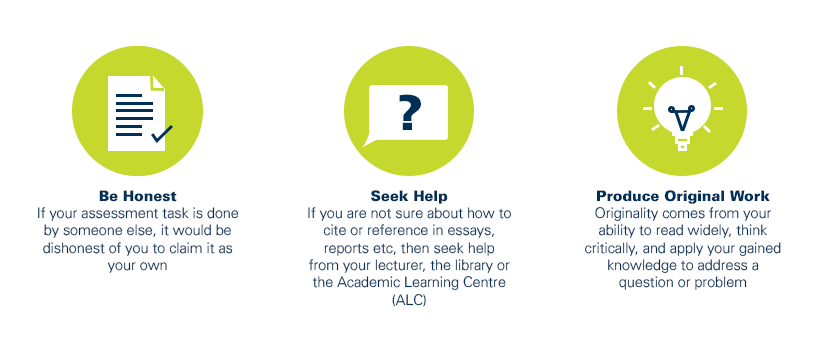
As a CQUniversity student you are expected to act honestly in all aspects of your academic work.
Any assessable work undertaken or submitted for review or assessment must be your own work. Assessable work is any type of work you do to meet the assessment requirements in the unit, including draft work submitted for review and feedback and final work to be assessed.
When you use the ideas, words or data of others in your assessment, you must thoroughly and clearly acknowledge the source of this information by using the correct referencing style for your unit. Using others’ work without proper acknowledgement may be considered a form of intellectual dishonesty.
Participating honestly, respectfully, responsibly, and fairly in your university study ensures the CQUniversity qualification you earn will be valued as a true indication of your individual academic achievement and will continue to receive the respect and recognition it deserves.
As a student, you are responsible for reading and following CQUniversity’s policies, including the Student Academic Integrity Policy and Procedure. This policy sets out CQUniversity’s expectations of you to act with integrity, examples of academic integrity breaches to avoid, the processes used to address alleged breaches of academic integrity, and potential penalties.
What is a breach of academic integrity?
A breach of academic integrity includes but is not limited to plagiarism, self-plagiarism, collusion, cheating, contract cheating, and academic misconduct. The Student Academic Integrity Policy and Procedure defines what these terms mean and gives examples.
Why is academic integrity important?
A breach of academic integrity may result in one or more penalties, including suspension or even expulsion from the University. It can also have negative implications for student visas and future enrolment at CQUniversity or elsewhere. Students who engage in contract cheating also risk being blackmailed by contract cheating services.
Where can I get assistance?
For academic advice and guidance, the Academic Learning Centre (ALC) can support you in becoming confident in completing assessments with integrity and of high standard.
What can you do to act with integrity?