Overview
This unit advances your study of obstetric sonography from MEDS12006 beyond the early dating scan. You will explore the sonographic assessment of normal and pathological obstetric ultrasound cases spanning from 12 to 24 weeks of gestation. You will participate in simulated scanning sessions to facilitate the identification of normal sonographic appearance of the second trimester fetus. Clinical scenarios are used to engage you in the sonographic decision-making process which expands your knowledge and assists in creating sonographer reports.
Details
Pre-requisites or Co-requisites
Prerequisite: MEDS12006 Ultrasound in Obstetrics and Gynaecology 1
Important note: Students enrolled in a subsequent unit who failed their pre-requisite unit, should drop the subsequent unit before the census date or within 10 working days of Fail grade notification. Students who do not drop the unit in this timeframe cannot later drop the unit without academic and financial liability. See details in the Assessment Policy and Procedure (Higher Education Coursework).
Offerings For Term 1 - 2026
Attendance Requirements
All on-campus students are expected to attend scheduled classes - in some units, these classes are identified as a mandatory (pass/fail) component and attendance is compulsory. International students, on a student visa, must maintain a full time study load and meet both attendance and academic progress requirements in each study period (satisfactory attendance for International students is defined as maintaining at least an 80% attendance record).
Recommended Student Time Commitment
Each 6-credit Undergraduate unit at CQUniversity requires an overall time commitment of an average of 12.5 hours of study per week, making a total of 150 hours for the unit.
Class Timetable
Assessment Overview
Assessment Grading
This is a graded unit: your overall grade will be calculated from the marks or grades for each assessment task, based on the relative weightings shown in the table above. You must obtain an overall mark for the unit of at least 50%, or an overall grade of 'pass' in order to pass the unit. If any 'pass/fail' tasks are shown in the table above they must also be completed successfully ('pass' grade). You must also meet any minimum mark requirements specified for a particular assessment task, as detailed in the 'assessment task' section (note that in some instances, the minimum mark for a task may be greater than 50%). Consult the University's Grades and Results Policy for more details of interim results and final grades.
All University policies are available on the CQUniversity Policy site.
You may wish to view these policies:
- Grades and Results Policy
- Assessment Policy and Procedure (Higher Education Coursework)
- Review of Grade Procedure
- Student Academic Integrity Policy and Procedure
- Academic Progression Policy and Procedure
- Student Refund and Credit Balance Policy and Procedure
- Complaints Policy and Procedure
- Information and Communications Technology Acceptable Use Policy and Procedure
This list is not an exhaustive list of all University policies. The full list of University policies are available on the CQUniversity Policy site.
Feedback, Recommendations and Responses
Every unit is reviewed for enhancement each year. At the most recent review, the following staff and student feedback items were identified and recommendations were made.
Feedback from SUTE comments
Some students found the weekly tutorial scheduling made it challenging to attend
Review the scheduling of weekly tutorials to align better with students' availability.
Feedback from SUTE comments
Some students found the on campus assessment tutorial cut into their time for completing the practical tasks of the assessment.
Consider recording the assessment information to provide students with more time for the practical tasks of the assessment.
Feedback from SUTE comments
Some students found the lectures lacked depth of explanation and real life examples.
Continue to update lectures using more real life examples and images demonstrating the anatomy and pathology being discussed.
Feedback from SUTE comments
Students found the frequent quizzes useful for helping them stay focused and up to date with the content.
Maintain the four online quizzes to keep students focused and up to date with their learning.
- Analyse normal and abnormal obstetric sonographic findings with reference to embryology, clinical presentation, sonographic appearance and aetiology
- Analyse clinical scenarios to provide a differential diagnosis and produce sonographic reports
- Formulate strategies for the provision of safe and ethical patient care
- Apply sonographic techniques and diagnostic criteria appropriate to obstetric examinations, to produce and analyse limited sonographic examinations in a simulated environment.
The learning outcomes for this unit relate to the requirements of general sonography courses under the Australian Sonography Accreditation Registry (ASAR), Standards for the Accreditation of Sonographer Courses (SASC):
Foundation Units of Competence 1-5
Critical Practice Units of Competence 10
Alignment of Assessment Tasks to Learning Outcomes
| Assessment Tasks | Learning Outcomes | |||
|---|---|---|---|---|
| 1 | 2 | 3 | 4 | |
| 1 - Practical and Written Assessment - 30% | ||||
| 2 - Online Quiz(zes) - 20% | ||||
| 3 - Examination - 50% | ||||
Alignment of Graduate Attributes to Learning Outcomes
| Graduate Attributes | Learning Outcomes | |||
|---|---|---|---|---|
| 1 | 2 | 3 | 4 | |
| 1 - Communication | ||||
| 2 - Problem Solving | ||||
| 3 - Critical Thinking | ||||
| 4 - Information Literacy | ||||
| 5 - Team Work | ||||
| 6 - Information Technology Competence | ||||
| 7 - Cross Cultural Competence | ||||
| 8 - Ethical practice | ||||
| 9 - Social Innovation | ||||
| 10 - First Nations Knowledges | ||||
| 11 - Aboriginal and Torres Strait Islander Cultures | ||||
Textbooks
There are no required textbooks.
IT Resources
- CQUniversity Student Email
- Internet
- Unit Website (Moodle)
All submissions for this unit must use the referencing style: Vancouver
For further information, see the Assessment Tasks.
k.russo@cqu.edu.au
Week 1
Begin Date: 09 Mar 2026Module/Topic
- Understand the role and expectations of the 12-14 week ultrasound examination
- Review genetic screening principles in the first trimester
Chapter
Content provided in lectures and reading items on eReading list.
Events and Submissions/Topic
Compulsory Online Safety Induction to be completed by Monday.
Zoom tutorial Thursday 12th March 1:00pm AEST.
Week 2
Begin Date: 16 Mar 2026Module/Topic
- Overview of obstetric sonography in the second trimester
fetal environment cervix
placenta
amniotic fluid
fetal position and situs
Chapter
Content provided in lectures and reading items on eReading list.
Events and Submissions/Topic
Zoom tutorial Thursday 19th March 1:00pm AEST.
Week 3
Begin Date: 23 Mar 2026Module/Topic
- Fetal biometry Image acquisition planes
- Measurement techniques
- Ultrasound reports and graphs
Chapter
Content provided in lectures and reading items on eReading list.
Events and Submissions/Topic
Zoom tutorial Thursday March 26th 1:00pm AEST.
Week 4
Begin Date: 30 Mar 2026Module/Topic
- Cardiovascular system overview
normal sonographic appearance
sonographic examination: systematic, sequential approach
Chapter
Content provided in lectures and reading items on eReading list.
Events and Submissions/Topic
Lab #1 Wednesday April 1st
Quiz 1 opens Wednesday 1st April 2pm and closes Thursday 2nd April 3pm AEST
Zoom tutorial Thursday April 2nd 1:00pm AEST.
Week 5
Begin Date: 06 Apr 2026Module/Topic
- Cardiac anomalies part 1
Chapter
Content provided in lectures and reading items on eReading list.
Events and Submissions/Topic
Zoom tutorial Thursday 9th April 1:00pm AEST.
Week 6
Begin Date: 13 Apr 2026Module/Topic
- Cardiac anomalies part 2
Chapter
Content provided in lectures and reading items on eReading list.
Events and Submissions/Topic
Lab #2 Wednesday 15th April.
Zoom tutorial Thursday 16th April 1:00pm AEST
Vacation Week
Begin Date: 20 Apr 2026Module/Topic
Vacation week. No new content.
Chapter
Events and Submissions/Topic
Week 7
Begin Date: 27 Apr 2026Module/Topic
- Central nervous system
Chapter
Content provided in lectures and reading items on eReading list.
Events and Submissions/Topic
Quiz 2 opens Thursday 30th April 2pm and closes Friday 1st May 3:00pm AEST
Zoom tutorial Thursday April 30th 1:00pm AEST.
Week 8
Begin Date: 04 May 2026Module/Topic
- Face, neck and chest
Chapter
Content provided in lectures and reading items on eReading list.
Events and Submissions/Topic
Assessment 1 due Tuesday 5th May 4:00pm AEST
Zoom tutorial Thursday 7th May 1:00pm AEST.
Practical and Written Assessment Due: Week 8 Tuesday (5 May 2026) 4:00 pm AEST
Week 9
Begin Date: 11 May 2026Module/Topic
- Gastrointestinal system
Chapter
Content provided in lectures and reading items on eReading list.
Events and Submissions/Topic
Zoom tutorial Thursday 14th May 1:00pm AEST.
Week 10
Begin Date: 18 May 2026Module/Topic
- Genitourinary and musculoskeletal systems
Chapter
Content provided in lectures and reading items on eReading list.
Events and Submissions/Topic
Quiz 3 opens Thursday 21 May 2pm and closes Friday 22nd May 3:00pm AEST
Zoom tutorial Thursday 21st May 1:00pm AEST.
Week 11
Begin Date: 25 May 2026Module/Topic
- Multiple gestations
Chapter
Content provided in lectures and reading items on eReading list.
Events and Submissions/Topic
Zoom tutorial Thursday 28th May 1:00pm AEST.
Week 12
Begin Date: 01 Jun 2026Module/Topic
- Review week
Chapter
Events and Submissions/Topic
Quiz 4 opens Thursday 4th June and closes Friday 5th June 3:00pm AEST
Zoom tutorial Thursday 4th June 1:00pm AEST.
Exam Week
Begin Date: 08 Jun 2026Module/Topic
Chapter
Events and Submissions/Topic
End of term examination. Time and date tbc.
The Unit Coordinator for this unit is Kate Russo. Kate is based on the Adelaide campus and works part‑time with CQU on Tuesday, Wednesday, Thursday, and Friday.
The best way to contact her is via email at k.russo@cqu.edu.au. Kate will endeavour to respond to email enquiries within two (2) business days. If you would like to arrange a phone conversation or Zoom meeting, please email to organise a suitable time.
Please ensure you check your CQU student email regularly, as important updates about the unit will be communicated by email. All email correspondence must be sent from your CQU student email address.
General questions regarding unit content should be posted in the Q&A Forum under the Learning Community tile on Moodle. This allows all students to benefit from both your question and the response.
As this is a 6 credit point unit, you are expected to spend on average 12.5 hours each week on study activities for this unit.
This time includes:
Watching recorded lectures and attending tutorials
Creating study notes to meet weekly learning objectives using lectures, videos, and additional resources via the eReading list to supplement your learning
Researching, revising, and working on assessment items
Completing formative quiz questions and worksheets
Lab time is made available (weeks 4 and 6) to obtain recordings and images to complete Assessment 1.
Discussions about unit content and assessments will take place during the tutorials. Tutorials are held on Thursdays at 1:00 pm AEST. These sessions provide an opportunity to engage in real time with the Unit Coordinator and your fellow students, and attendance is highly recommended. Participating in tutorials is a more active and effective learning approach than relying solely on uploaded tutorial materials.
The tutorial schedule and access links are available on Moodle under the Virtual Classroom tile. Tutorial slides and recordings will be uploaded to the unit Moodle site the following day; however, please note that not all tutorials will be recorded. Further information can be found under the Virtual Classroom tile.
The unit is graded. There are three assessment items. Please refer to the assessment information for more details.
1 Practical and Written Assessment
Overview
The mid-trimester (morphology) ultrasound examination plays an important role in antenatal obstetric care. In this assessment, you will learn about the role of ultrasound in evaluating fetal anatomy and biometry, as well as assessing placental position and amniotic fluid in a singleton pregnancy. Fetal findings can have significant implications for pregnancy care and management. The purpose of this assessment is to help you understand the sonographer’s role in the routine mid-trimester ultrasound examination and to prepare you for performing these scans in a clinical environment.
This assessment develops your ability to safely and effectively assess and image obstetric patients in the second trimester using obstetric phantoms in the cqu laboratories. You will demonstrate probe manipulation to adapt for fetal position, appropriate image optimisation, accurate measurements, and sonographic image evaluation. You will also demonstrate clear, patient‑centred communication.
Laboratory access: Wednesdays in Weeks 4 and 6 for practice and image acquisition. A concurrent tutorial will run in Week 4, starting 8:30am on campus. Labs are largely self/peer‑directed with tutors present to assist. Attendance is strongly recommended; additional lab time cannot be guaranteed.
Academic integrity: All images and videos must be your own work. Any potential collusion will result in an academic integrity case being raised.
Level of GenAI use allowed: Level 2: You may use Al for planning, idea development, and research. Your final submission should show how you have developed and refined these ideas.
Task Description
Practical Component – Acquisition of images and videos (50%)
It is important that sonographers have the necessary skills and knowledge to safely and effectively assess and image obstetric patients. This involves probe manipulation to adapt to fetal position, appropriate image optimisation, accurate measurements, and sonographic image evaluation. You will complete the following:
1. Technique demonstration videos (2 × videos, ≤3 minutes each, with audio)
Using the second trimester obstetric phantoms in the CQU sonography lab, produce two short videos recorded on a smartphone (or similar), with clear audio narration, demonstrating and explaining how you would assess:
- Video 1 – Fetal environment: fetal position and situs, placental assessment and amniotic fluid assessment
- Video 2 – Fetal heart sweeps: axial sweep of the 5 cardiac screening planes: abdominal situs, 4-chamber heart, left outflow tract, right outflow tract and 3VV (Tip: if you have difficulty demonstrating the any of these views make sure your narration explains how you would do this in the real world)
2. Static image acquisition (5 images)
Using the second trimester obstetric phantoms, acquire the following static images to the highest quality possible and annotate the views:
- Sagittal fetal profile
- Axial trans-thalamic plane
- Axial abdomen at the level used for abdominal circumference
- Longitudinal femur
- Placenta image including cord insertion
3. Patient‑communication video (1 × video, ≤3 minutes)
Record a short video showing how you would greet the patient, introduce yourself, explain the mid-trimester ultrasound examination in layperson language, and elicit relevant clinical history (i.e. this is your ‘patient spiel’).
Written Component (50%)
Part A Discussion of image series (30%)
Word count: 1200 words (±10%). Titles, tables, and figures are not included in the word count.
Technical image selection from Moodle (5 images)
Images have been provided on Moodle for you to review (labelled: Assessment 1 Images 2026 available in both PDF and PowerPoint formats). Critically evaluate the images labelled A, B, C and D in each of the categories outlined below. Identify which one from each category represents the most technically correct and justify your selection. Include these selected images in your written assessment.
- Biparietal diameter and head circumference
- Transverse posterior fossa
- Abdominal circumference
- Femur length
- Longitudinal cervix
Key information to include in your discussion:
- Critically evaluate all the images in each category.
- Identify the most technical correct image for each category and justify your selection.
- Describe the normal anatomical landmarks required for each of the five images. (Hint: A table is a good way to outline this information that does not contribute to your word count).
- Describe the correct measurement technique. (Hint: Consider a diagram and insert as a Figure).
- Outline any additional structures that can be assessed in each view.
- Consider the limitations of imaging in the second trimester with reference to fetal biometry, posterior fossa development and cervical length assessment.
- Ensure the discussion is appropriately supported by evidence from the literature and referenced.
Part B Reflection (20%)
Word count: 300 words (±10%).
Reflect on your experience using the obstetric phantom and discuss what imaging challenges you may encounter in the clinical setting.
Week 8 Tuesday (5 May 2026) 4:00 pm AEST
Week 10 Friday (22 May 2026)
All components will be assessed for adherence and attention to task requirements. A marking rubric is available for more
detailed outline of assessment criteria.
Practical component - Acquisition of images.
Your images and videos will be assessed for:
name visible on all videos and images
image optimisation and use of machine settings (preset, zoom, chroma maps, split screen, etc.)
acquisition scan plane
demonstration and explanation of imaging technique (language and clarity)
appropriate selection of image
accurate caliper placement
annotation
appropriate timing (where applicable)
Written component - Discussion of image series.
Your discussion will be assessed on:
critical evaluation of the provided images
reflection (what went well, what did not go well, how could I improve and what I would do differently in the future)
relevant, accurate and complete referencing
spelling, grammar and academic writing
adherence to word count (penalties will apply if too brief or too lengthy: +/-10%)
spelling, grammar, and academic writing
critical evaluation of research sources and accurate and complete referencing
The following assessment supports can be found on the unit Moodle site:
Marking rubric
Assessment Video
Vancouver referencing information
If Generative AI is used in any way, it must be cited as per the CQU guidelines. If students choose to use Generative AI,
the following statement must be completed and included on the front page of the uploaded assessment: "I have used
(insert technology) to (insert how it was used) in accordance with the requirements of this unit. The reason I used this
was to (explain why it was used). The details of how it was used is as follows (insert how). I hereby declare that the
submission is an appropriate representation of my individual skills and abilities to meet the requirements of the task."
As per academic writing requirements and assessment criteria: citation of information should be of the primary source
(i.e. information returned by AI must be fact-checked and referenced from their original source as well as the AI source).
There is information on CQU's Academic Learning Centre (ALC) site that can assist you with referencing AI.
Failure to cite primary sources as well as AI sources could be considered a breach of academic integrity.
Your use of generative AI must be clearly outlined in an appendix as a separate file which includes the prompt used and
generative AI response. Failure to include an appendix may result in an academic integrity investigation.
- Formulate strategies for the provision of safe and ethical patient care
- Apply sonographic techniques and diagnostic criteria appropriate to obstetric examinations, to produce and analyse limited sonographic examinations in a simulated environment.
2 Online Quiz(zes)
There are four (4) online quizzes to complete in this unit.
In Week 4, you will complete an online quiz to assess your understanding of the concepts delivered for weeks 1-3. The quiz can be accessed through the assessment tab on Moodle.
In Week 7, you will complete an online quiz to assess your understanding of the concepts delivered for weeks 4-6. The quiz can be accessed through the assessment tab on Moodle.
In Week 10, you will complete an online quiz to assess your understanding of the concepts delivered for weeks 7-9. The quiz can be accessed through the assessment tab on Moodle.
In Week 12, you will complete an online quiz to assess your understanding of the concepts delivered for weeks 10-11. The quiz can be accessed through the assessment tab on Moodle.
All quizzes will comprise of multiple choice and matching questions, and are worth 5% each. Students will need to note
opening and closing times to complete the quizzes during this time period.
Each quiz will be open for 20 mins and only ONE attempt is allowed. Once started, the quiz cannot be paused or
restarted.
Questions will be drawn from a pool of questions to allow tests to be different for each student.
This assessment is to be undertaken as an individual. As with all other university assessment, colluding with other
students on non group work tasks is considered academic misconduct, and will be reported to the Academic Integrity
Unit.
Level of GenAI use allowed: Level 1: You must not use Al at any point during the assessment. You must demonstrate your core skills and knowledge.
Please note that the 72 hour grace period does not apply for this assessment.
Quiz 1 due Thursday 2/4/26 3pm AEST. Quiz 2 due Friday 1/5/26 3pm AEST. Quiz 3 due 22/5/26 3pm AEST. Quiz 4 5/6/26 3pm AEST.
Quiz results will be released when all students have attempted the quiz.
Answers will be either correct or incorrect and tabulated by the unit's online Moodle system.
Students must achieve a minimum mark of 50% to pass this assessment.
- Analyse normal and abnormal obstetric sonographic findings with reference to embryology, clinical presentation, sonographic appearance and aetiology
Examination
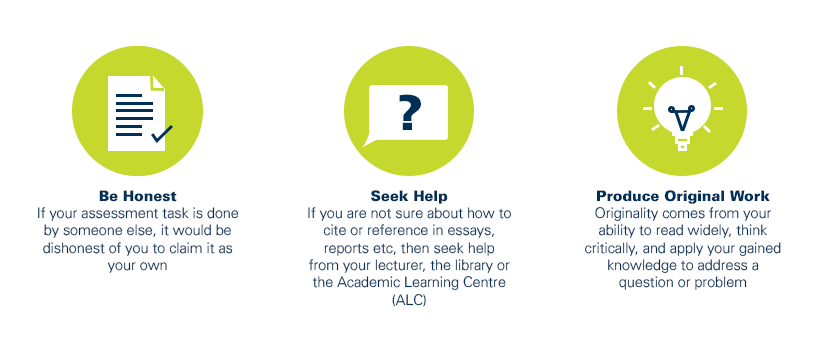
As a CQUniversity student you are expected to act honestly in all aspects of your academic work.
Any assessable work undertaken or submitted for review or assessment must be your own work. Assessable work is any type of work you do to meet the assessment requirements in the unit, including draft work submitted for review and feedback and final work to be assessed.
When you use the ideas, words or data of others in your assessment, you must thoroughly and clearly acknowledge the source of this information by using the correct referencing style for your unit. Using others’ work without proper acknowledgement may be considered a form of intellectual dishonesty.
Participating honestly, respectfully, responsibly, and fairly in your university study ensures the CQUniversity qualification you earn will be valued as a true indication of your individual academic achievement and will continue to receive the respect and recognition it deserves.
As a student, you are responsible for reading and following CQUniversity’s policies, including the Student Academic Integrity Policy and Procedure. This policy sets out CQUniversity’s expectations of you to act with integrity, examples of academic integrity breaches to avoid, the processes used to address alleged breaches of academic integrity, and potential penalties.
What is a breach of academic integrity?
A breach of academic integrity includes but is not limited to plagiarism, self-plagiarism, collusion, cheating, contract cheating, and academic misconduct. The Student Academic Integrity Policy and Procedure defines what these terms mean and gives examples.
Why is academic integrity important?
A breach of academic integrity may result in one or more penalties, including suspension or even expulsion from the University. It can also have negative implications for student visas and future enrolment at CQUniversity or elsewhere. Students who engage in contract cheating also risk being blackmailed by contract cheating services.
Where can I get assistance?
For academic advice and guidance, the Academic Learning Centre (ALC) can support you in becoming confident in completing assessments with integrity and of high standard.
What can you do to act with integrity?