Overview
This unit prepares you for the clinical workplace through the development of skills in sonographic scanning techniques for the abdomen and urinary tract. You will be required to demonstrate the skills, knowledge and professional behaviours needed to work in a clinical setting, and will be assessed within a simulated environment. This unit prepares you for entry into the sonographic clinical environment using the Assessment of Readiness for Clinical tool (ARC) in conjunction with other assessment tasks.
Details
Pre-requisites or Co-requisites
Pre-requisites: MEDS12003 Superficial Structures in Ultrasound AND MEDS12002 - Abdominal Ultrasound AND MEDS12001 Physics of Ultrasound Co-requisites: MEDS12006 Ultrasound in Obstetrics and Gynaecology Condition: Continued enrolment in MEDS12004 is conditional upon passing any outstanding assessment pieces in MEDS12001 and MEDS12002 and MEDS12003.
Important note: Students enrolled in a subsequent unit who failed their pre-requisite unit, should drop the subsequent unit before the census date or within 10 working days of Fail grade notification. Students who do not drop the unit in this timeframe cannot later drop the unit without academic and financial liability. See details in the Assessment Policy and Procedure (Higher Education Coursework).
Offerings For Term 2 - 2026
Attendance Requirements
All on-campus students are expected to attend scheduled classes - in some units, these classes are identified as a mandatory (pass/fail) component and attendance is compulsory. International students, on a student visa, must maintain a full time study load and meet both attendance and academic progress requirements in each study period (satisfactory attendance for International students is defined as maintaining at least an 80% attendance record).
Recommended Student Time Commitment
Each 12-credit Undergraduate unit at CQUniversity requires an overall time commitment of an average of 25 hours of study per week, making a total of 300 hours for the unit.
Class Timetable
Assessment Overview
Assessment Grading
This is a pass/fail (non-graded) unit. To pass the unit, you must pass all of the individual assessment tasks shown in the table above.
All University policies are available on the CQUniversity Policy site.
You may wish to view these policies:
- Grades and Results Policy
- Assessment Policy and Procedure (Higher Education Coursework)
- Review of Grade Procedure
- Student Academic Integrity Policy and Procedure
- Academic Progression Policy and Procedure
- Student Refund and Credit Balance Policy and Procedure
- Complaints Policy and Procedure
- Information and Communications Technology Acceptable Use Policy and Procedure
This list is not an exhaustive list of all University policies. The full list of University policies are available on the CQUniversity Policy site.
Feedback, Recommendations and Responses
Every unit is reviewed for enhancement each year. At the most recent review, the following staff and student feedback items were identified and recommendations were made.
Feedback from SUTE data Student feedback
Some students identified that the tutorial time was difficult to manage along with lab commitments.
Request timetabling changes to ensure the weekly tutorial time is well clear of other competing learning activities.
Feedback from SUTE data Self-reflection
A lack of connection was sometimes noted between the protocol and the marking tool by students and tutors.
Prioritise review and revision of marking tools and protocol for all modules before the term begins.
- Formulate strategies and implement skills necessary to complete sonographic examinations of the abdominal and urinary tract organs.
- Recognise the normal sonographic appearances of abdominal and urinary tract organs and identify anatomical variants when present, and discriminate from pathological processes.
- Critically reflect and improve upon own professional practice and sonographic psychomotor skills utilising constructive feedback.
- Display professional behaviour, teamwork, communication skills and criteria to meet safe sonographic practice and industry expectation.
The learning outcomes for this unit relate to the requirements of general sonography courses under the Australasian Sonography Accreditation Registry (ASAR), Standards for the Accreditation of Sonographer Courses (SASC):
Foundation Units of Competence 1-5
Critical Practice Units of Competence 6
Alignment of Assessment Tasks to Learning Outcomes
| Assessment Tasks | Learning Outcomes | |||
|---|---|---|---|---|
| 1 | 2 | 3 | 4 | |
| 1 - Practical Assessment - 0% | ||||
| 2 - Written Assessment - 0% | ||||
| 3 - Online Quiz(zes) - 0% | ||||
| 4 - On-campus Activity - 0% | ||||
Alignment of Graduate Attributes to Learning Outcomes
| Graduate Attributes | Learning Outcomes | |||
|---|---|---|---|---|
| 1 | 2 | 3 | 4 | |
| 1 - Communication | ||||
| 2 - Problem Solving | ||||
| 3 - Critical Thinking | ||||
| 4 - Information Literacy | ||||
| 5 - Team Work | ||||
| 6 - Information Technology Competence | ||||
| 7 - Cross Cultural Competence | ||||
| 8 - Ethical practice | ||||
| 9 - Social Innovation | ||||
| 10 - First Nations Knowledges | ||||
| 11 - Aboriginal and Torres Strait Islander Cultures | ||||
Textbooks
Textbook of Diagnostic Sonography
- Edition: 8th (2017)
- Authors: Hagen-Ansert
- Elsevier
- St Lois St Lois , MO , USA
- ISBN: 9780323353755
- Binding: Hardcover
Workbook for Textbook of Diagnostic Sonography
- Edition: 8th (2017)
- Authors: Hagen-Ansert
- Elsevier
- St Lois St Lois , MO , USA
- ISBN: 9780323441834
- Binding: Paperback
IT Resources
- CQUniversity Student Email
- Internet
- Unit Website (Moodle)
- Computer
- Microsoft Teams
All submissions for this unit must use the referencing style: Vancouver
For further information, see the Assessment Tasks.
m.clifford@cqu.edu.au
Week 1
Begin Date: 13 Jul 2026Module/Topic
Module 1-Renal
- Orientation
- Bladder
- Prostate
- Right Kidney
Chapter
(Please note: Hagen-Ansert is the prescribed text for this unit. Other readings from chapters in Curry & Tempkin, and Alty & Hoey are available via e-book in the e-reading list for this unit or through CQU library)
Hagen-Ansert chapter 15
Curry and Tempkin Ch 20 (The male pelvis)
Hagen-Ansert chapter 15
Curry & Tempkin Ch 17
Alty & Hoey (2013) Ch 3 pp 22-25 and Ch 4 pp 50-53, 62-73
Events and Submissions/Topic
Assessment 2 Part A - Induction due MONDAY:
- Compulsory tutorial 10.30AM AEST
- WHS quiz & lab documents 1.00PM AEST
Lab activities:
- Compulsory lab TUESDAY & THURSDAY
- Tutor-assisted practice WEDNESDAY
- Peer-assisted practice FRIDAY
Week 2
Begin Date: 20 Jul 2026Module/Topic
Module 1- Renal
- Left Kidney
- Renal Protocol
Chapter
Hagen-Ansert chapter 15
Curry & Tempkin Ch 17
Alty & Hoey (2013) Ch 3 pp 22-25 and Ch 4 pp 50-53, 62-73
Events and Submissions/Topic
Tutorial:
- MONDAY @ 10.30AM AEST
Lab activities:
- Compulsory lab TUESDAY & THURSDAY
- Tutor-assisted practice WEDNESDAY
- Peer-assisted practice FRIDAY & SATURDAY
Week 3
Begin Date: 27 Jul 2026Module/Topic
Module 1- Renal
- Renal Mock Assessment
Module 2- Epigastrium
- Pancreas
Chapter
Hagen-Ansert chapter 10 (biliary system)
Hagen-Ansert chapter 12
Alty & Hoey (2013) Ch 3 pp 12-13, 44-45
Curry & Tempkin Ch 16
Hagen-Ansert Chapter 8
Curry & Tempkin Ch 10 and 13
Alty & Hoey (2013) Ch 3 pp 12-13 and Ch 5 pp 79-85
Events and Submissions/Topic
Tutorial:
- MONDAY @ 10.30AM AEST
Lab activities:
- Compulsory lab TUESDAY & THURSDAY
- Tutor-assisted practice WEDNESDAY
- Peer-assisted practice FRIDAY
Week 4
Begin Date: 03 Aug 2026Module/Topic
Module 2- Epigastrium
- Pancreas
- Aorta
Chapter
Hagen-Ansert Chapter 9
Curry and Tempkin Ch 14
Alty & Hoey (2013) Ch 3 pp 14-19, 28-37
Events and Submissions/Topic
Tutorial:
- MONDAY @ 10.30AM AEST
Lab activities:
- Compulsory lab TUESDAY & THURSDAY
- Tutor-assisted practice WEDNESDAY
- Peer-assisted practice FRIDAY
- Peer-assisted practice SATURDAY (BNE only)
Week 5
Begin Date: 10 Aug 2026Module/Topic
Module 2- Epigastrium
- Liver long
- Liver Trans
Chapter
Hagen-Ansert Chapter 9
Curry and Tempkin Ch 14
Alty & Hoey (2013) Ch 3 pp 14-19, 28-37
Events and Submissions/Topic
Tutorial:
- MONDAY @ 10.30AM AEST
Lab activities:
- Compulsory lab TUESDAY & THURSDAY
- Tutor-assisted practice FRIDAY
- Peer-assisted practice WEDNESDAY (SYD, MKY & MEL only)
- Peer-assisted practice SATURDAY
Assessment 3 – Quiz 1
Open MONDAY @ 12PM AEST
Closes TUESDAY @ 12PM AEST
Week 6
Begin Date: 17 Aug 2026Module/Topic
Module 2- Epigastrium
- Liver Images
- Epigastrium Mock Assessment
Chapter
Events and Submissions/Topic
Tutorial:
- MONDAY @ 10.30AM AEST
Lab activities:
- Compulsory lab TUESDAY & THURSDAY
- Tutor-assisted practice WEDNESDAY
- Peer-assisted practice FRIDAY
Vacation Week
Begin Date: 24 Aug 2026Module/Topic
Break Week
Chapter
Events and Submissions/Topic
Week 7
Begin Date: 31 Aug 2026Module/Topic
Chapter
Events and Submissions/Topic
Lab activities:
- Peer-assisted practice FRIDAY and SATURDAY
Week 8
Begin Date: 07 Sep 2026Module/Topic
Module 3- Biliary
- Gallbladder/ Professional Day Live Tutorial
- Porta Hepatis
Chapter
Hagen-Ansert chapter 8 (portal vein)
Curry & Tempkin Ch 15 (biliary system)
Curry & Tempkin Ch 12 (portal vein)
Alty & Hoey (2013) Ch 3 pp 16, 20-21, 38-43 (biliary system) Ch 6 pp94-95 (portal vein)
Events and Submissions/Topic
Tutorial:
MONDAY @ 10.30AM AEST
Lab activities:
- Compulsory lab TUESDAY (students are on campus all day) & THURSDAY
- Tutor-assisted practice WEDNESDAY
- Peer-assisted practice FRIDAY and SATURDAY
Week 9
Begin Date: 14 Sep 2026Module/Topic
Module 3- Biliary
- Biliary Mock Assessment
- Spleen
Chapter
Hagen-Ansert chapter 11
Curry & Tempkin Ch 18
Alty & Hoey (2013) Ch 3 pp 24-25 and 46-47
Events and Submissions/Topic
Tutorial:
MONDAY @ 10.30AM AEST
Lab activities:
- Compulsory lab TUESDAY & THURSDAY
- Tutor-assisted practice WEDNESDAY
- Peer-assisted practice FRIDAY
- Peer-assisted practice (MEL only)
Week 10
Begin Date: 21 Sep 2026Module/Topic
Module 4- Full Abdomen
- Full Abdomen Mock Assessment
Chapter
Events and Submissions/Topic
Tutorial:
- MONDAY @ 10.30AM AEST
Lab activities:
- Compulsory lab TUESDAY & THURSDAY
- Tutor-assisted practice WEDNESDAY
- Peer-assisted practice FRIDAY (BNE, SYD & MKY only)
- Peer-assisted practice SATURDAY
Assessment 3 – Quiz 2
Open MONDAY @ 12AM AEST
Closes TUESDAY @ 12PM AEST
Week 11
Begin Date: 28 Sep 2026Module/Topic
Assessment 1, attempt 1: Sonographic scanning skills assessment of the full abdomen (Tuesday and Thursday)
Chapter
Events and Submissions/Topic
Lab activities:
- Tutor-assisted practice group A MONDAY & group B WEDNESDAY & both groups FRIDAY
- Peer-assisted practice SATURDAY
Assessment 1
- TUESDAY & THURSDAY
Students must be on campus all day on assessment days.
Week 12
Begin Date: 05 Oct 2026Module/Topic
Assessment 1, attempt 2: Sonographic scanning skills assessment of the full abdomen (Tuesday and Thursday)
Chapter
Events and Submissions/Topic
Assessment 1
- TUESDAY & WEDNESDAY
Students must be on campus all day on assessment days.
Exam Week
Begin Date: 12 Oct 2026Module/Topic
Chapter
Events and Submissions/Topic
Vacation/Exam Week
Begin Date: 19 Oct 2026Module/Topic
Chapter
Events and Submissions/Topic
Welcome to the Unit
My name is Mehrnaz (Naz) Clifford, and I am the coordinator for this unit. You can reach me at m.clifford@cqu.edu.au or by phone at 07 3023 4138. Each campus also has co-coordinators assigned, providing students with a local point of contact in addition to myself. Together, we are responsible for the overall delivery of this unit and the marking of all assessments, including practical skills evaluations. Our goal is to support you throughout the term and help ensure a smooth learning experience. Please don’t hesitate to reach out if you have any concerns, questions, or just need to talk.
Unit Overview
This is a 12-credit-point (double) unit, and we recommend setting aside approximately 25 hours per week to successfully manage your studies.
This unit is non-graded (pass/fail). It’s important to familiarise yourself with the university’s policies on pass/fail units and assessments. These are outlined in the Assessment Policy and Procedure (Higher Education Coursework), available via the CQUni IMPortal: http://www.cqu.edu.au/policy. Please note that this unit runs once annually, with the next offering scheduled for Term 2, 2027. Due to the pass/fail structure, all assessment items must be submitted accurately, in the correct format, and by the due date-late submissions cannot incur a 5% penalty and will not be accepted.
Online Sessions
Tutorials for this unit will be delivered online via Zoom every Monday at 10.30 am AEST throughout the term. Please refer to the Virtual Classes tile on the MEDS12004 Moodle site for the Zoom link and any updates regarding the sessions.
Assessment 1: Skills Labs
Attendance at skills labs and assessment days is mandatory. Skills labs, along with Peer- and Tutor-assisted practice sessions, will be scheduled throughout the term. Practical scanning assessments are planned for weeks 11 and 12. Please refer to the lab schedule on Moodle for detailed information.
If you are unable to attend a compulsory lab or expect to be late, you must notify both the unit coordinator and your local lab staff via phone or email prior to the session. Absences require supporting documentation and arrangements must be made to make up missed scanning time during practice sessions. Labs missed without prior approval, or late arrivals, cannot be rescheduled. Attendance at Peer and Tutor-assisted practices is not compulsory and does not require documentation if missed. However, if you know you'll be absent and don’t want to miss out on scanning time, you are encouraged to arrange a swap with a peer.
You must also inform staff before beginning scanning on any day if you are feeling unwell or injured. Just as in clinical settings, if your condition poses a risk to yourself or others (e.g., worsening injury or infectious illness), you will be sent home. If the session was compulsory, you will need to provide medical documentation as outlined earlier.
Exceptional Circumstances
CQUniversity’s Assessment Policy outlines what constitutes acceptable grounds for assessment adjustments. These policies apply to practical assessments, quizzes, and written components. If you cannot attend a scheduled practical skills assessment due to illness or injury and have proper documentation, an alternate time will be arranged.
Practice Sessions and Professional Behaviour
While Tutor and Peer-assisted practice sessions are optional, they are strongly recommended for success in the practical assessments. If you are unable to attend or will be late, please notify your peer partner in advance. Professional conduct is expected in all lab activities and unit-related interactions. See Assessment 4 for more information on expectations.
Assessment 2: Inductions
There are mandatory induction activities that must be completed on Monday, 13th July 2026 (Week 1, Day 1) before accessing labs on Tuesday. This includes the compulsory online WH&S Lab Induction, which must be completed prior to any lab attendance.
Assessment 3: Quizzes
Quizzes will take place in Weeks 5 and 10. If you're unable to complete a quiz due to illness or other exceptional circumstances and have valid documentation, request an extension via the Assessment Extension Request link in the Moodle Support menu. If your request is close to the quiz closing time, notify me via email or phone before the quiz ends to ensure the extension can be granted.
Assessment 4: Professional Behaviour
A compulsory online Zoom session will be held at 10.30 am AEST on Monday, 13th July 2026 to discuss the Professional Behaviour Assessment. This session will outline the marking criteria and explain what constitutes exemplary, satisfactory, and unsatisfactory professional conduct.
Lab Dress Code and Conduct
You must adhere to the Sonography Labs Dress Code at all times, including during Peer-assisted practices. The CQU Zero Tolerance Policy is enforced. Both of these are covered under Assessment 4. Failure to follow dress code or professional standards may result in being asked to leave the lab.
This unit is designed to prepare you for clinical placement, where compliance with WH&S requirements, proper uniform, and professional behaviour is mandatory at all times.
1 Practical Assessment
As aspiring diagnostic medical sonographers, students are expected to demonstrate competence in performing abdominal ultrasound examinations with precision, professionalism, and within clinically appropriate timeframes. This assessment is designed to evaluate the technical and professional skills necessary to competently perform sonographic examinations of the renal system as well as the entire abdomen. Both components of the assessment will be conducted in a clinical simulation setting within the sonography laboratories, utilising a standardised patient model. A standardised patient refers to a student who has been formally briefed and prepared to act in the role of a patient, allowing for a realistic and controlled assessment environment.
Each module will have a mock assessment:
- Module 1- Renal- Tuesday 28th July 2026
- Module 2- Epigastrium- Thursday 20th August 2026
- Module 3- Biliary- Tuesday 15th September 2026
- Module 4- Full Abdomen- Thursday 24th September 2026
Mock Assessments
Mock assessments are designed to evaluate your developing skills at key points during the term, providing valuable feedback to support your ongoing learning and improvement. These assessments offer an opportunity to reflect on your performance and make targeted adjustments ahead of the final assessment. You will be required to complete sonographic examinations within designated timeframes, aligned with the relevant imaging protocols. This includes meeting expectations across the professional (pre-scan, in-scan, and post-scan conduct), technical (image acquisition and technique), and clinical (knowledge and decision-making) domains, as outlined in the unit lab manual and reinforced through practical labs, lectures, demonstrations, and tutorials. Mock assessments are formative in nature and are intended to provide experiential learning. They do not contribute to your final unit grade. The associated ARC tools used during these sessions are not moderated and should be used as personal learning aids to guide your progress.
The purpose of Assessment 1 is to assess your competency in performing a complete abdominal ultrasound examination. You will be assessed on the professional, technical and clinical components of the examination. During the assessment, your assessor will observe you performing the full abdominal scan and will assess your performance against the standards outlined in the Assessment of Readiness for Clinical (ARC) tool. This assessment will initially be marked live, and moderation will follow. Video recordings of your performance will be used for this purpose. Please carefully review the assessment information and ARC tools posted on the unit Moodle site. Provisional results will be released once moderation is finalised after the second attempt.
No AI- The assessment is completed entirely without AI assistance in a controlled environment, ensuring that students rely solely on their existing knowledge, understanding, and skills. You must not use AI at any point during the assessment. You must demonstrate your core skills and knowledge.
The 72-hour grace period does not apply to this assessment.
Practical Assessment will be assessed on-campus during the Compulsory labs Week 11 Tuesday and Thursday and Week 12 Tuesday and Wednesday
Returned via upload to Moodle within 14 days
This is a PASS/FAIL assessment item.
To PASS this assessment, the professional, technical and clinical components must be graded as a pass against the marking criteria framework - refer to the ARC tool for specifications.
The professional 'critical' skills are the bolded items in the ARC tool and must be completed in order to pass.
The technical and clinical skills are separated into critical and non- critical skills. Critical skills must be demonstrated consistently throughout the assessment to pass. There is no limit of non critical errors that may be made and still pass this assessment, however if any of those errors result in a critical error due to severity, then they will count instead as a critical error.
Two attempts at this assessment will be offered. Students must pass at least one of these attempts to achieve an overall pass for this unit.
Additional information
Your grade (PASS/FAIL) will be allocated following consensus moderation. Please be aware that all practical skills assessments (including mocks) will be video recorded. Recordings of the mock assessments will be released to students for reflection and learning purposes, however assessment videos of attempt 1 and 2 will not be released to students. Videos may be viewed by CQU sonography staff and tutors for the purposes of marking and moderation of assessments. It also may be required to be viewed by other CQU staff in the event of a student requesting a Review of Grade or Appeal of Grade.
- Formulate strategies and implement skills necessary to complete sonographic examinations of the abdominal and urinary tract organs.
- Recognise the normal sonographic appearances of abdominal and urinary tract organs and identify anatomical variants when present, and discriminate from pathological processes.
- Display professional behaviour, teamwork, communication skills and criteria to meet safe sonographic practice and industry expectation.
2 Written Assessment
The purpose of this assessment is to prepare you for the professionalism and documentation responsibilities you will have on clinical placement, as well as to develop self-reflection skills by setting weekly goals and following-up on your progress. When working clinically, patients and physicians rely on quick, efficient, and complete documentation to issue treatment. Failure to complete paperwork correctly in the clinical environment may have dire consequences to patient management.
This assessment will require you to complete tasks as follows:
PART A - Induction
• Workplace Health and Safety Induction - quiz completed
• Consent and Confidentiality Form - signed
• Compulsory tutorial - attended.
Uploaded documentation is in pdf format. Please ensure your first name, surname, student number, and name of document you are uploading is used in that order in the title of the document, separated by either underscores or single spaces. Any other order variation or information is incorrect so please take note of this.
eg: Naz_Clifford_10123456_lab_agreement.pdf OR Naz Clifford 10123456 lab agreement.pdf
To simulate real clinical environments where correct documentation is of critical importance, non-completed or incorrectly completed paperwork will be returned to students with ONE opportunity provided to correct the error. As this is a pass/fail assessment item, repeated errors may result in a fail of the assessment item.
The compulsory tutorial covers requirements for the Professional Behaviour Assessment (Assessment 4), as well as important induction and term information. It is compulsory that all students attend on MONDAY 13th July 2026 10:30 AM AEST.
PART B – Reflection
Reflective practice is a vital component of medical sonography, involving the critical analysis of clinical experiences to inform and improve future practice. By encouraging self-awareness and ongoing evaluation of strengths, challenges, and biases, reflective practice supports the development of clinical skills, decision-making, and professional growth. In a field characterised by evolving technology, techniques, and patient needs, it also fosters lifelong learning and adaptability, enabling sonographers to continually enhance the quality of care they provide.
From this, you are required to complete weekly self-reflection based on your performance in the sonography labs this term.
The purpose of this assessment is to prepare you for professional attendance and documentation responsibilities on clinical placement, as well as to develop self-reflection skills by setting weekly goals and following up on progress.
The correct completion and upload of documentation in Parts A and B:
• Demonstrates understanding of the lab processes, procedures and Codes of Conduct
• Ensures that you agree to take part in scanning procedures with due regard for volunteer consent processes
• Ensures you understand safety procedures and requirements when in the sonography labs.
• Ensures that you attend scanning labs as scheduled
• Allows you to collect tutor and peer feedback on your skills in ultrasound scanning, image optimisation, and documentation, patient care, communication, and ergonomic performance
• Helps you to respond to feedback with your own reflections and objectives for practice and improvement
No AI- The assessment is completed entirely without AI assistance in a controlled environment, ensuring that students rely solely on their existing knowledge, understanding, and skills. You must not use AI at any point during the assessment. You must demonstrate your core skills and knowledge.
The 72-hour grace period does not apply to this assessment.
Part A due Monday 13th July 2026 at 1PM AEST. Part B due Friday of each week by 12PM with the FINAL submission due Friday 9 October 2026 at 12PM AEST. Students will receive results within 14 days.
To pass this assessment item you must:
• Complete all paperwork accurately and on time
• Save and upload in the format specified
• Engage in weekly self-reflection
• Submit by the due date and time specified
Documentation in the clinical environment must be correctly issued, otherwise there can be dire consequences for the patient and legal ramifications for the sonographer. Hence, in the lab, non-completed or incorrectly completed paperwork will be returned to students to correct and re upload. As sonographers, it is important for you to both understand and comply with requirements regarding paperwork and documentation.
This is a pass/fail assessment task in a pass/fail unit - a fail grade for any component of a pass/fail assessment task will result in a fail grade for the assessment task, and subsequently the entire unit.
Additionally, in a non-graded pass/fail unit, all assessment items must be correctly and accurately submitted by the due date, as there is no opportunity to apply a five percent penalty, due to the pass/fail nature of each assessment task.
Referencing Style: Vancouver
Submission: Online
Submission Instructions: Via Feedback Fruits on Moodle
Learning Outcomes Assessed:
• Critically reflect and improve upon own professional practice and sonographic psychomotor skills utilising constructive feedback.
- Critically reflect and improve upon own professional practice and sonographic psychomotor skills utilising constructive feedback.
3 Online Quiz(zes)
There are two (2) separate online quizzes to complete for this unit. These will assess:
Your understanding of sonographic anatomy
Your ability to identify normal variants and discriminate these from pathological processes
Your knowledge of sonographic techniques and protocols
The purpose of these quizzes is to ensure adequate review of anatomy and their sonographic appearances sufficient preparation of protocol and procedures is undertaken prior to sonographic labs.
Once available, quizzes are open for 24 hours.
- Quiz 1 is in week 5 and covers the bladder, prostate, right/left kidneys (renal system), pancreas and aorta.
- Quiz 2 is in week 10 and covers liver, biliary system, spleen and professional components.
- You are allowed ONE attempt at each quiz, so please ensure you are prepared beforehand.
- The time limit for the quiz is 20 mins and there are 20 multiple choice questions.
- These assessment tasks must be completed on or before the due dates.
- No late submissions are permitted after each quiz has closed, so please ensure adequate time for completion, with additional time for computer mishaps. If you have computer/quiz access difficulties, you need to contact TaSAC as soon as possible for assistance. Take a screenshot of the issue. After you have contacted TaSAC, please contact the unit coordinator for assistance if you cannot complete the quiz in the allocated time before the end of the quiz.
- In the event you are unable to complete the quiz in the allocated time and have suitable medical/supporting documentation, you can apply for an extension through the Assessment Extension system on Moodle before the end of the quiz to be granted an extension to the quiz time without academic penalty.
- In the absence of an approved extension, there will be no opportunity to complete a quiz after it has closed.
AI Planning- AI may be used for pre-task activities such as brainstorming, outlining and initial research. This level focuses on the effective use of AI for planning, synthesis, and ideation, but assessments should emphasise the ability to develop and refine these ideas independently. You may use AI for planning, idea development, and research. Your final submission should show how you have developed and refined these ideas.
The 72-hour grace period does not apply to this assessment.
QUIZ ONE (1) opens 12PM AEST Monday 10th August 2026 and closes 12PM AEST Tuesday 11th August 2026; QUIZ 2 opens 12PM AEST Monday 21st September 2026 and closes 12PM AEST Tuesday 22nd September 2026.
Students will receive their scores and feedback for each quiz once all students have completed that quiz within 14 days.
Answers will be either correct or incorrect and tabulated by the unit's online Moodle system.
Once started, the quiz cannot be paused, stopped or re-started. Once the time limit is reached any open questions will be automatically submitted. Once you have completed the test, it cannot be retaken.
Students must achieve a cumulative pass rate of 60% across the two quizzes to pass this assessment. (Please note that if one of the quizzes is not completed, a maximum cumulative score of only 50% can be achieved).
This assessment is to be undertaken as an individual, and is not approved as group work. Colluding with other students on non-group work tasks is considered academic misconduct, and will be reported to the Academic Integrity Unit.
This is a pass/fail assessment task in a pass/fail unit. A fail grade for any component of a pass/fail assessment task will result in a fail grade for the assessment task, and subsequently the entire unit.
In a case that an accumulative score of 60% is not achieved in the two quizzes, a third quiz will be made available to students. This quiz will assess content from all weeks of the unit and the result can considered for the overall minimum 60% required to pass the assessment item.
- Formulate strategies and implement skills necessary to complete sonographic examinations of the abdominal and urinary tract organs.
- Recognise the normal sonographic appearances of abdominal and urinary tract organs and identify anatomical variants when present, and discriminate from pathological processes.
4 On-campus Activity
Professionalism and professional behaviour are critical parts of any medically aligned profession, and encompass the manner in which we treat our colleagues, patients, and the professional settings and equipment provided to us. The purpose of this assessment is to ensure that students from the Medical Sonography course are well-equipped to embody the high standards of professionalism that are expected from CQUniversity students while on their upcoming clinical placements, and as graduate sonographers in their future careers. Developing your professionalism during this unit will prepare you for the next environment in which you will be expected to maintain professional behaviour whenever in your uniform and representing the university, placement site, and yourself.
This assessment will require you to treat each of your lab sessions as a scheduled "work shift" and to exhibit professional attitudes to ensure you are prepared to enter the work force with the skills required to provide safe and professional patient care. As such, this assessment is based on assessment of student application and attendance during labs throughout the term. You must comply with uniform standards in all lab sessions.
Expected behaviour and its relevance to the clinical environment is listed in the Professional Behaviour Assessment Document. Additionally, please familiarise yourself with the CODE OF CONDUCT in the Lab Manual as well as the ASA CODE OF CONDUCT and the CQU CODE OF CONDUCT so that you have a clear understanding of the rationale for, and importance of this assessment. All of these documents are posted on Moodle (under Assessment 5 documentation) for your information. Professionalism extends to colleagues, staff, patients, environment, and equipment.
This assessment is marked against the Professional Behaviour Assessment (PBA) description and incorporates a process of warnings and feedback on expected behaviour of students when in the lab environment. This will commence in week 3 of the term, and apply to activities within the lab. A warning is known as a Lapse in Professionalism (LiP). Up to three LiPs can be received within the unit without adverse consequence. A fourth LiP however will result in the assessment being graded as a fail.
In the event that a LiP point is accrued, written documentation of the reason will be completed by the on-site lecturer or the unit coordinator, and provided to you as feedback. You will have the opportunity to seek further clarification from unit coordinator.
If unprofessional attitude or behaviour is reported by fellow classmates and not witnessed by a staff member, an unofficial warning with formative feedback will be provided in writing detailing the allegation, and your response will be documented.
There is a COMPULSORY professional behaviour Zoom session on MONDAY 13th July 2026 10:30 am AEST.
No AI- The assessment is completed entirely without AI assistance in a controlled environment, ensuring that students rely solely on their existing knowledge, understanding, and skills. You must not use AI at any point during the assessment. You must demonstrate your core skills and knowledge.
The 72-hour grace period does not apply to this assessment.
Students will receive results within 14 days.
No submission method provided.
- Display professional behaviour, teamwork, communication skills and criteria to meet safe sonographic practice and industry expectation.
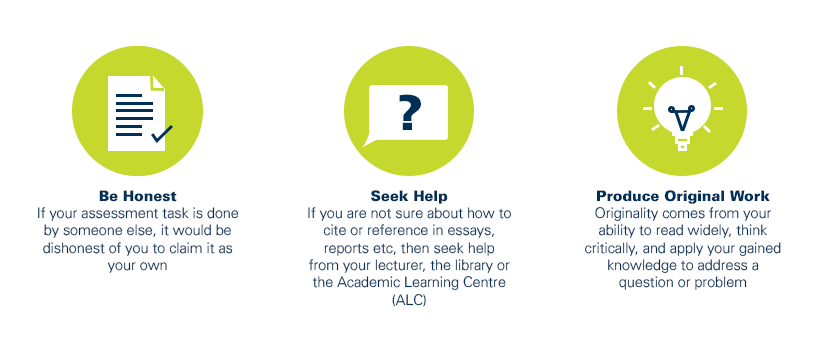
As a CQUniversity student you are expected to act honestly in all aspects of your academic work.
Any assessable work undertaken or submitted for review or assessment must be your own work. Assessable work is any type of work you do to meet the assessment requirements in the unit, including draft work submitted for review and feedback and final work to be assessed.
When you use the ideas, words or data of others in your assessment, you must thoroughly and clearly acknowledge the source of this information by using the correct referencing style for your unit. Using others’ work without proper acknowledgement may be considered a form of intellectual dishonesty.
Participating honestly, respectfully, responsibly, and fairly in your university study ensures the CQUniversity qualification you earn will be valued as a true indication of your individual academic achievement and will continue to receive the respect and recognition it deserves.
As a student, you are responsible for reading and following CQUniversity’s policies, including the Student Academic Integrity Policy and Procedure. This policy sets out CQUniversity’s expectations of you to act with integrity, examples of academic integrity breaches to avoid, the processes used to address alleged breaches of academic integrity, and potential penalties.
What is a breach of academic integrity?
A breach of academic integrity includes but is not limited to plagiarism, self-plagiarism, collusion, cheating, contract cheating, and academic misconduct. The Student Academic Integrity Policy and Procedure defines what these terms mean and gives examples.
Why is academic integrity important?
A breach of academic integrity may result in one or more penalties, including suspension or even expulsion from the University. It can also have negative implications for student visas and future enrolment at CQUniversity or elsewhere. Students who engage in contract cheating also risk being blackmailed by contract cheating services.
Where can I get assistance?
For academic advice and guidance, the Academic Learning Centre (ALC) can support you in becoming confident in completing assessments with integrity and of high standard.
What can you do to act with integrity?