Overview
In this unit, you will be introduced to the principles of ultrasound physics and instrumentation. Ultrasound safety, quality assurance and recognition of artifacts will also be covered. The knowledge and skills learnt from this unit are integral to all concurrent and subsequent sonography and echocardiography units and forms the foundation from which you will build your image acquisition, recognition and assessment skills. You will apply your knowledge and skills of physics principles in the laboratory setting using ultrasound equipment.
Details
Pre-requisites or Co-requisites
Prerequisite MEDI11002 Physics for Health Sciences Co requisite MEDS12003 Superficial Structures in Ultrasound or ECHO12006 Cardiac Science
Important note: Students enrolled in a subsequent unit who failed their pre-requisite unit, should drop the subsequent unit before the census date or within 10 working days of Fail grade notification. Students who do not drop the unit in this timeframe cannot later drop the unit without academic and financial liability. See details in the Assessment Policy and Procedure (Higher Education Coursework).
Offerings For Term 1 - 2026
Attendance Requirements
All on-campus students are expected to attend scheduled classes - in some units, these classes are identified as a mandatory (pass/fail) component and attendance is compulsory. International students, on a student visa, must maintain a full time study load and meet both attendance and academic progress requirements in each study period (satisfactory attendance for International students is defined as maintaining at least an 80% attendance record).
Recommended Student Time Commitment
Each 6-credit Undergraduate unit at CQUniversity requires an overall time commitment of an average of 12.5 hours of study per week, making a total of 150 hours for the unit.
Class Timetable
Assessment Overview
Assessment Grading
This is a graded unit: your overall grade will be calculated from the marks or grades for each assessment task, based on the relative weightings shown in the table above. You must obtain an overall mark for the unit of at least 50%, or an overall grade of 'pass' in order to pass the unit. If any 'pass/fail' tasks are shown in the table above they must also be completed successfully ('pass' grade). You must also meet any minimum mark requirements specified for a particular assessment task, as detailed in the 'assessment task' section (note that in some instances, the minimum mark for a task may be greater than 50%). Consult the University's Grades and Results Policy for more details of interim results and final grades.
All University policies are available on the CQUniversity Policy site.
You may wish to view these policies:
- Grades and Results Policy
- Assessment Policy and Procedure (Higher Education Coursework)
- Review of Grade Procedure
- Student Academic Integrity Policy and Procedure
- Academic Progression Policy and Procedure
- Student Refund and Credit Balance Policy and Procedure
- Complaints Policy and Procedure
- Information and Communications Technology Acceptable Use Policy and Procedure
This list is not an exhaustive list of all University policies. The full list of University policies are available on the CQUniversity Policy site.
Feedback, Recommendations and Responses
Every unit is reviewed for enhancement each year. At the most recent review, the following staff and student feedback items were identified and recommendations were made.
Feedback from SUTE Feedback
Assessment 1 (mid-term quiz) was not allocated adequate time based on the number of questions. Additionally, the question format was difficult to maneuver on some devices.
Review assessment timing and the use of ‘drag and drop’ questions to reduce student stress and improve quiz accessibility across devices.
Feedback from SUTE Feedback
Lab manual 3 has too many tasks for the two-hour session, and this causes students to feel rushed. Clearer passing criteria are also needed given the absence of a marking rubric.
Lab manual 3 has already been amended in previous offerings to include less tasks. Tasks cannot be moved to lab 2 as the concepts are not delivered at that time in the learning journey. However, increasing the lab session time or providing additional lab time elsewhere can be reviewed to alleviate student stress. Additionally, create a marking rubric to provide students with specific requirements regarding achieving a passing grade.
Feedback from SUTE Feedback
The Moodle site was difficult to navigate in the table format as tasks could not be "checked off". This also made it difficult to determine if content had been released on time and if all links were working appropriately.
Investigate options to improve Moodle layout and navigation.
Feedback from SUTE Feedback
Tutorials should review lecture content at the beginning, then review questions using Kahoot.
Consider splitting tutorial time between content review and a Kahoot session to keep students engaged.
- Apply the physical principles of diagnostic ultrasound to practical problems
- Evaluate the components and performance of diagnostic ultrasound equipment
- Apply knowledge of ultrasound physics and practical skills to acquire optimal ultrasound images, with due regard of safe practices
- Discuss the principles of ultrasound techniques, Doppler ultrasound and its application in medical ultrasound including safety issues
- Interpret the causes of, and apply problem solving skills to reduce, sources of artifacts on an ultrasound image.
The learning outcomes for this unit relate to the requirements of general sonography courses under the Australasian Sonography Accreditation Registry (ASAR), Standards for the Accreditation of Sonographer Courses (SASC):
Foundation Units of Competence 1-5
Alignment of Assessment Tasks to Learning Outcomes
| Assessment Tasks | Learning Outcomes | ||||
|---|---|---|---|---|---|
| 1 | 2 | 3 | 4 | 5 | |
| 1 - Online Quiz(zes) - 40% | |||||
| 2 - Laboratory/Practical - 0% | |||||
| 3 - Online Test - 60% | |||||
Alignment of Graduate Attributes to Learning Outcomes
| Graduate Attributes | Learning Outcomes | ||||
|---|---|---|---|---|---|
| 1 | 2 | 3 | 4 | 5 | |
| 1 - Communication | |||||
| 2 - Problem Solving | |||||
| 3 - Critical Thinking | |||||
| 4 - Information Literacy | |||||
| 5 - Team Work | |||||
| 6 - Information Technology Competence | |||||
| 7 - Cross Cultural Competence | |||||
| 8 - Ethical practice | |||||
| 9 - Social Innovation | |||||
| 10 - First Nations Knowledges | |||||
| 11 - Aboriginal and Torres Strait Islander Cultures | |||||
Textbooks
Sonography Principles and Instruments
- 10th Edition (2021)
- Authors: Frederick W. Kremkau
- Elsevier
- ISBN: 978-0-323-59708-1
Ultrasound Physics and Technology: How, Why and When
- (2009)
- Authors: Vivien Gibbs, David Cole, Antonio Sassano
- Elsevier
- ISBN: 978-0-7020-3041-3
Additional Textbook Information
Previous editions of the Kremkau "Sonography: Principles and Instrumentation" textbook can be utilised as the newer chapters can be accessed online.
IT Resources
- CQUniversity Student Email
- Internet
- Unit Website (Moodle)
- Zoom access
All submissions for this unit must use the referencing style: Vancouver
For further information, see the Assessment Tasks.
c.winnett@cqu.edu.au
d.chester@cqu.edu.au
Week 1: Basic Sonographic Physics Principles
Begin Date: 09 Mar 2026Module/Topic
- Sonography Two Principles of Operation
- Back to Basics
- Sound Parameters
- Continuous and Pulse Wave Ultrasound
- Pulsed Ultrasound
- Pulse Repetition Period and Pulse Repetition
- Frequency
- Maths Concepts
Chapter
Sonography Principles and Instruments, Kremkau, Chapter 1, PP: 1-12, Chapter 2, PP: 13-44
Events and Submissions/Topic
Tutorial: Thursday 4:30PM AEST
Physics Lab 1
Wednesday for CV69
Friday for CG91
Week 2: Pulsed Ultrasound
Begin Date: 16 Mar 2026Module/Topic
- Ultrasound Principle
- One Pulse-Echo Technique
- Pulse Duration, Duty Factor, Spatial Pulse Length, Bandwidth
- B-mode Image Formation
- Scan Lines
- Frame Rate
Chapter
Kremkau, Chapter 2, PP: 13-44
Events and Submissions/Topic
Tutorial: Thursday 4:30PM AEST
Week 3: Sound Interaction with Matter
Begin Date: 23 Mar 2026Module/Topic
- Sound Interaction with Matter
- Amplitude, Power and Intensity
- Attenuation and Absorption
- Reflection and Acoustic Impedance
- Types of Reflection
- Refraction
Chapter
Kremkau, Chapter 2, PP: 13-44
Ultrasound Physics and Technology, How, Why and When, Gibbs Chapter 4, PP: 19-22, Chapter 8, PP: 45-49
Events and Submissions/Topic
Tutorial: Thursday 4:30PM AEST
Assessment 1A: Online Quiz
Week 4: Transducers
Begin Date: 30 Mar 2026Module/Topic
- Transducers and Instrumentation
- Transducer Construction
- Beam Geometry
- Instrumentation (Operating Principle I)
Chapter
Kremkau, Chapter 3, PP: 45-63, Chapter 4, PP: 73-116
Gibbs, Chapter 6, PP: 27-37
Events and Submissions/Topic
Tutorial: Thursday 4:30PM AEST
Week 5: Image Resolution
Begin Date: 06 Apr 2026Module/Topic
- Image Resolution
- Lateral Resolution
- Axial Resolution
- Contrast Resolution
- Temporal Resolution
Chapter
Kremkau, Chapter 3, PP: 63-76, Chapter 4, PP: 110-116
Gibbs Chapter 6, PP 39-43
Events and Submissions/Topic
Tutorial: Thursday 4:30PM AEST
**Please note the new time due to the end of Daylight Savings Time.
Physics Lab 2
Wednesday for CV69
Friday for CG91
Week 6: Review and Consolidation
Begin Date: 13 Apr 2026Module/Topic
- No new content this week.
- Use this week to:
- review material from weeks 1-5 in preparation for the second online quiz
- complete questions and insert images into lab manuals 1 and 2
Chapter
Events and Submissions/Topic
Tutorial: Thursday 4:30PM AEST
Assessment 1B: Online Quiz
Break Week
Begin Date: 20 Apr 2026Module/Topic
Chapter
Events and Submissions/Topic
Week 7: Haemodynamics and the Doppler Principle
Begin Date: 27 Apr 2026Module/Topic
- Imaging Motion with Flow Principle I
- Blood Flow Haemodynamics
- The Doppler Principle
- Colour Doppler
Chapter
Kremkau, Chapter 5, PP: 138-162
Gibbs, Chapter 11, PP: 11-79
Events and Submissions/Topic
Tutorial: Thursday 4:30PM AEST
Week 8: Doppler Imaging
Begin Date: 04 May 2026Module/Topic
- Doppler Imaging
- Spectral Doppler
- Power Doppler
Chapter
Kremkau, Chapter 5, PP: 162-189
Gibbs, Chapter 11, PP: 79-89
Events and Submissions/Topic
Tutorial: Thursday 4:30PM AEST
Week 9: Ultrasound Artifacts
Begin Date: 11 May 2026Module/Topic
- Ultrasound Image/B-mode Artifacts
- Spectral Doppler Artifacts
- Colour Doppler Artifacts
Chapter
Kremkau, Chapter 7, PP 202-235
Gibbs, Chapter 9, PP 51-61
Events and Submissions/Topic
Tutorial: Thursday 4:30PM AEST
Week 10: Ultrasound Bioeffects
Begin Date: 18 May 2026Module/Topic
- Safety and Quality Assurance
- Output Measurements
- Ultrasound Bioeffects
Chapter
Kremkau, Chapter 8, PP: 236-247, Chapter 9, PP: 249-258
Gibbs, Chapter 12, PP: 91-99, Chapter 13, PP: 101-110
Events and Submissions/Topic
Tutorial: Thursday 4:30PM AEST
Physics Lab 3
Wednesday for CV69
Friday for CG91
Assessment 2: Lab Manual
Laboratory Manual Submission Due: Week 10 Wednesday (20 May 2026) 11:59 pm AEST
Week 11: Additional Modes of Ultrasound Imaging
Begin Date: 25 May 2026Module/Topic
- Additional Modes of Ultrasound Imaging
- Instruments: Imaging Anatomy, Motion and Flow with Principle II
Chapter
Kremkau, Chapter 4, PP: 111-137
Gibbs, Chapter 6, PP: 190-201
Events and Submissions/Topic
Tutorial: Thursday 4:30PM AEST
Week 12: Assessment 3 (End of Term Online Assessment)
Begin Date: 01 Jun 2026Module/Topic
- review material from the entire unit:
- prescribed and supplementary reading texts
- lectures
- tutorials
- online practice questions
- lab manual questions
Chapter
Events and Submissions/Topic
Assessment 3: End of Term Online Assessment
End of Term Online Assessment Due: Week 12 Wednesday (3 June 2026) 9:00 am AEST
The unit coordinator for this unit (MEDS12001) is Andrea Chandrarajan. Andrea is based remotely in Townsville, but works closely with the Mackay campus. The best way to contact Andrea is via the Q&A forum on the Moodle site. It is important to check both the Announcements and Q&A forums regularly for updates and information about the unit.
If there is an issue of a personal nature, Andrea can be contacted via email at a.chandrarajan@cqu.edu.au. Please ensure that all email correspondence is sent via your CQUniversity student email.
Discussion about unit content and assessments are provided through the tutorials. Tutorials will be held on Thursdays at 4:30PM AEST throughout the entire term. Please keep in mind this time is set in AEST, which may cause a time difference for those students where Daylight Savings Time is in effect. The schedule, Zoom links and tutorial recordings can be found in the Virtual Classes tile of the Moodle site. Tutorial recordings will be made available within 24-48 hours after the conclusion of the tutorial.
There are three (3) on-campus labs to attend during the term in weeks 1, 5 and 10. While attendance at these labs is non-compulsory, successful completion of the lab manual is a requirement of the unit. Students are expected to perform the tasks set out in the lab manual and answer all relevant questions (including images) regardless of their attendance in the lab session.
It is highly recommended that students attend the lab sessions in their entirety as the lab manual submission is a PASS/FAIL assessment of this unit. Failure to submit the lab manual on time will result in failing the unit, irrespective of the student's achievements in the other unit assessments.
No make-up lab sessions will be made available for students who fail to attend a lab session for any reason.
1 Online Quiz(zes)
There will be two online quizzes, week 3 and week 6. These will be used to assess your understanding of the concepts delivered in the previous three weeks. Assessment 1A (Online Quiz in Week 3) will include material from weeks 1 - 3, inclusive, and Assessment 1B (Online Quiz in Week 6) will include material from weeks 4 - 6 and lab manuals 1 and 2. Both quizzes will be accessed through the Assessment tile on the unit Moodle site.
Assessment 1A will be open from 7AM AEST Thursday to 11:59PM AEST Friday in Week 3.
Assessment 1B will be open from 7AM AEST Thursday to 11:59PM AEST Friday in Week 6.
The questions will be a combination of multiple choice, true or false and fill-in-the-gap questions.
Only one attempt at each quiz is allowed. This attempt cannot be paused or restarted once it has begun. Please ensure the quiz is started with ample time to complete it before it is automatically closed by Moodle at the indicated time.
Questions will be randomly drawn from a large pool of questions to allow the quiz to be individualised for each student.
This assessment is to be undertaken as an individual. As with all other university assessments, colluding with other students on non-group work tasks is considered academic misconduct, and will be reported to the Academic Integrity unit.
The 72-hour grace period does not apply to this assessment.
The approved level of AI is: Level 2
- You may use Al for planning, idea development, and research. Your final submission should show how you have developed and refined these ideas.
1A: The online quiz is open from 7AM AEST Thursday to 11:59PM AEST Friday Week 3 / 1B: The online quiz is open from 7AM AEST Thursday to 11:59PM AEST Friday Week 6.
Online quiz marks and feedback will be available to students two weeks after the quiz closes or after all students have completed the quiz, whichever is sooner.
Responses will be assessed according to:
- Knowledge and understanding of physics and ultrasound terminology and concepts,
- Correct interpretation of images/graphs and tables,
- Demonstration of the appropriate use of formulae and correct SI units throughout calculation questions.
- Apply the physical principles of diagnostic ultrasound to practical problems
- Evaluate the components and performance of diagnostic ultrasound equipment
- Apply knowledge of ultrasound physics and practical skills to acquire optimal ultrasound images, with due regard of safe practices
2 Laboratory/Practical
Physics laboratories (labs) will provide an opportunity for you to explore the principles of ultrasound physics and develop knowledge of machine instrumentation and controls, under the guidance of a tutor.
In small groups (4-5 people), you will collaboratively perform tasks set out in the lab manual during the practical laboratory sessions (weeks 1, 5 and 10).
During the labs, you will work in teams to acquire images and observe the effect of changing machine parameters on the resultant image. Acquired images are to be shared amongst the lab group.
You may complete the lab manual questions during the lab sessions or later in your own time. Lab manual questions are to be answered as an individual. Images included in the lab manual can be shared among group members. Questions should be answered concisely and supported by the acquired images where required.
Upload your completed lab manuals (lab manuals 1 - 3) to the unit Moodle page via the link provided under the Assessment tile.
It is highly recommended that you attend all the laboratory practical sessions in order to meet the unit learning outcomes.
If you do not attend a lab session for any reason, you are still required to complete the lab manual exercises and submit the lab manual by the due date.
During the lab session, record and store the acquired images as a group, following the instructions provided in the lab manual. Images are to be transferred onto a USB drive (provided by the student) at the end of the lab session to be inserted into the lab manual at a later time.
This assessment is a PASS/FAIL assessment where more than 50% of each lab manual must be correctly completed in order to be successful. Any late submissions without prior approval will result in a fail on the assessment and consequently, a fail in the unit, regardless of marks in the other assessments.
Week 10 Wednesday (20 May 2026) 11:59 pm AEST
CV69 students must submit all three lab manuals by 11:59PM AEST on Wednesday of Week 10 (20 May 2026). / CG91 students must submit all three lab manuals by 11:59PM AEST on Friday of Week 10 (22 May 2026).
Lab manual marks and feedback will be available to students two weeks after the assessment closes or after all students have submitted the assessment, whichever is sooner.
You are required to demonstrate your understanding of each lab task by performing the assigned task and correctly answering the assigned question for each task.
This assessment will be marked as a PASS or FAIL. A minimum of 50% of the questions must be answered correctly for students to obtain a PASS grade for each manual. A detailed marking rubric is available on the unit Moodle site.
Failure to submit the completed lab manual by the due date and time will result in a grade of "FAIL" for the student, regardless of their performance in other assessments of the unit.
The 72-hour grade period does not apply to this assessment.
The approved level of AI for this assessment is Level 2.
- You may use Al for planning, idea development, and research. Your final submission should show how you have developed and refined these ideas.
- Apply the physical principles of diagnostic ultrasound to practical problems
- Evaluate the components and performance of diagnostic ultrasound equipment
- Apply knowledge of ultrasound physics and practical skills to acquire optimal ultrasound images, with due regard of safe practices
- Discuss the principles of ultrasound techniques, Doppler ultrasound and its application in medical ultrasound including safety issues
- Interpret the causes of, and apply problem solving skills to reduce, sources of artifacts on an ultrasound image.
3 Online Test
You will complete an online test to assess your understanding of all the concepts delivered in MEDS12001 over the term.
Contents of weeks 1 to 11 inclusive will be assessed in the end of term online test.
Only one attempt is allowed. This attempt cannot be paused or restarted once it has begun. Please ensure the quiz is started with ample time to complete it before it is automatically closed by Moodle at the indicated time.
The end of term online test will occur on Wednesday of Week 12 from 9 - 11 AM AEST.
The questions will be combination of short answer, calculation, true or false and fill-in-the-gap questions.
Questions will be randomly drawn from a large pool of questions to allow the quiz to be individualised for each student.
This assessment is to be undertaken as an individual. As with all other university assessments, colluding with other students on non-group work tasks is considered academic misconduct, and will be reported to the Academic Integrity unit.
The 72-hour grace period does not apply to this assessment.
The approved level of AI is: Level 2
You may use Al for planning, idea development, and research. Your final submission should show how you have developed and refined these ideas.
Week 12 Wednesday (3 June 2026) 9:00 am AEST
This time is for students in both cohorts. Please ensure you select the correct assessment task that corresponds to your cohort.
Results from the end of the term online test will be available at Certification of Grades.
Responses will be assessed according to:
- Demonstration of appropriate and correct interpretation of ultrasound physics using the correct terminology, relevant to image formation, interpretation, clinical practice and patient safety,
- Correct interpretation of images/graphs and tables, with adequate correct explanation of the answer where required,
- Demonstration of correct working out of calculations, including the correct and appropriate use of formulae with correct and appropriate SI units relevant to the physics of ultrasound and its use in the clinical environment,
- Correct written answers, where the question has been comprehensively addressed appropriately in the answer and relevant to the practical and clinical application of the physics of ultrasound.
- Apply knowledge of ultrasound physics and practical skills to acquire optimal ultrasound images, with due regard of safe practices
- Discuss the principles of ultrasound techniques, Doppler ultrasound and its application in medical ultrasound including safety issues
- Interpret the causes of, and apply problem solving skills to reduce, sources of artifacts on an ultrasound image.
As a CQUniversity student you are expected to act honestly in all aspects of your academic work.
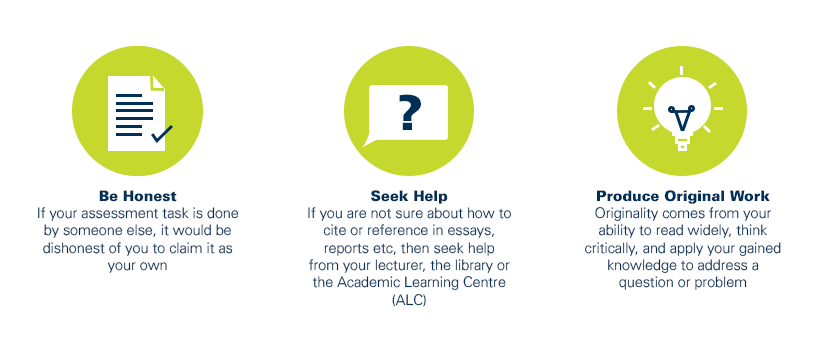
Any assessable work undertaken or submitted for review or assessment must be your own work. Assessable work is any type of work you do to meet the assessment requirements in the unit, including draft work submitted for review and feedback and final work to be assessed.
When you use the ideas, words or data of others in your assessment, you must thoroughly and clearly acknowledge the source of this information by using the correct referencing style for your unit. Using others’ work without proper acknowledgement may be considered a form of intellectual dishonesty.
Participating honestly, respectfully, responsibly, and fairly in your university study ensures the CQUniversity qualification you earn will be valued as a true indication of your individual academic achievement and will continue to receive the respect and recognition it deserves.
As a student, you are responsible for reading and following CQUniversity’s policies, including the Student Academic Integrity Policy and Procedure. This policy sets out CQUniversity’s expectations of you to act with integrity, examples of academic integrity breaches to avoid, the processes used to address alleged breaches of academic integrity, and potential penalties.
What is a breach of academic integrity?
A breach of academic integrity includes but is not limited to plagiarism, self-plagiarism, collusion, cheating, contract cheating, and academic misconduct. The Student Academic Integrity Policy and Procedure defines what these terms mean and gives examples.
Why is academic integrity important?
A breach of academic integrity may result in one or more penalties, including suspension or even expulsion from the University. It can also have negative implications for student visas and future enrolment at CQUniversity or elsewhere. Students who engage in contract cheating also risk being blackmailed by contract cheating services.
Where can I get assistance?
For academic advice and guidance, the Academic Learning Centre (ALC) can support you in becoming confident in completing assessments with integrity and of high standard.
What can you do to act with integrity?