Overview
This unit examines the gross, topographical and relational anatomy of the human body and develops the pattern recognition skills to identify normal anatomical structures on medical images. Each macroscopic anatomical structure, or its constituent part, is studied in terms of spatial characteristics, relative to adjacent structures, body planes, external and internal landmarks relevant to sonographic practice. This knowledge is engaged to enhance the development of pattern recognition skills in relation to the cross-sectional, oblique, coronal and sagittal display of these anatomical structures on normal medical images, with a particular focus on the interpretation of sonographic images.
Details
Pre-requisites or Co-requisites
Prerequisite: BMSC11001 Human Body Systems 1 OR BMSC11010 Human Anatomy and Physiology 1 AND Corequisite BMSC11002 Human Body Systems 2 OR BMSC11011 Human Anatomy and Physiology 2
Important note: Students enrolled in a subsequent unit who failed their pre-requisite unit, should drop the subsequent unit before the census date or within 10 working days of Fail grade notification. Students who do not drop the unit in this timeframe cannot later drop the unit without academic and financial liability. See details in the Assessment Policy and Procedure (Higher Education Coursework).
Offerings For Term 2 - 2026
Attendance Requirements
All on-campus students are expected to attend scheduled classes - in some units, these classes are identified as a mandatory (pass/fail) component and attendance is compulsory. International students, on a student visa, must maintain a full time study load and meet both attendance and academic progress requirements in each study period (satisfactory attendance for International students is defined as maintaining at least an 80% attendance record).
Recommended Student Time Commitment
Each 12-credit Undergraduate unit at CQUniversity requires an overall time commitment of an average of 25 hours of study per week, making a total of 300 hours for the unit.
Class Timetable
Assessment Overview
Assessment Grading
This is a graded unit: your overall grade will be calculated from the marks or grades for each assessment task, based on the relative weightings shown in the table above. You must obtain an overall mark for the unit of at least 50%, or an overall grade of 'pass' in order to pass the unit. If any 'pass/fail' tasks are shown in the table above they must also be completed successfully ('pass' grade). You must also meet any minimum mark requirements specified for a particular assessment task, as detailed in the 'assessment task' section (note that in some instances, the minimum mark for a task may be greater than 50%). Consult the University's Grades and Results Policy for more details of interim results and final grades.
All University policies are available on the CQUniversity Policy site.
You may wish to view these policies:
- Grades and Results Policy
- Assessment Policy and Procedure (Higher Education Coursework)
- Review of Grade Procedure
- Student Academic Integrity Policy and Procedure
- Academic Progression Policy and Procedure
- Student Refund and Credit Balance Policy and Procedure
- Complaints Policy and Procedure
- Information and Communications Technology Acceptable Use Policy and Procedure
This list is not an exhaustive list of all University policies. The full list of University policies are available on the CQUniversity Policy site.
Feedback, Recommendations and Responses
Every unit is reviewed for enhancement each year. At the most recent review, the following staff and student feedback items were identified and recommendations were made.
Feedback from Student emails.
Students report that it can take them a couple of weeks (3-4 weeks) to appreciate how they learn within this unit.
Although students are already informed via the unit profile, unit Moodle site and regular emails including weekly email updates, further communication to inform students how they learn in this unit will be provided.
- Describe the features and location of sonographically significant macroscopic anatomical structures
- Describe the spatial orientation of each anatomical structure relative to adjacent structures, body planes and landmarks
- Identify cross-sectional, coronal and sagittal representation of organs and structures
- Apply the skill of pattern recognition to the interpretation of medical images, particularly sonographic
- Identify anatomical features on medical images, particularly sonographic views.
The learning outcomes for this unit relate to the requirements of general sonography courses under the Australasian Sonography Accreditation Registry (ASAR), Standards for the Accreditation of Sonographer Courses (SASC):
Foundation Units of Competence 1-5
Critical Practice Units of Competence 6, 7, 9, 10, 12 & 13
Alignment of Assessment Tasks to Learning Outcomes
| Assessment Tasks | Learning Outcomes | ||||
|---|---|---|---|---|---|
| 1 | 2 | 3 | 4 | 5 | |
| 1 - Online Quiz(zes) - 20% | |||||
| 2 - Online Test - 20% | |||||
| 3 - Online Test - 60% | |||||
Alignment of Graduate Attributes to Learning Outcomes
| Graduate Attributes | Learning Outcomes | ||||
|---|---|---|---|---|---|
| 1 | 2 | 3 | 4 | 5 | |
| 1 - Communication | |||||
| 2 - Problem Solving | |||||
| 3 - Critical Thinking | |||||
| 4 - Information Literacy | |||||
| 5 - Team Work | |||||
| 6 - Information Technology Competence | |||||
| 7 - Cross Cultural Competence | |||||
| 8 - Ethical practice | |||||
| 9 - Social Innovation | |||||
| 10 - First Nations Knowledges | |||||
| 11 - Aboriginal and Torres Strait Islander Cultures | |||||
Textbooks
Sectional Anatomy for Imaging Professions
- Edition: 4 (2018)
- Authors: Lorrie L Kelley & Connie M Petersen
- Elsevier
- St Louis St Louis , Missouri , USA
- ISBN: 978-0-323-41487
- Binding: Paperback
Sectional Anatomy for Imaging Professions - Workbook
- Edition: 4 (2018)
- Authors: Lorrie L Kelley & Connie M Petersen
- Elsevier
- St Louis St Louis , Missouri , USA
- ISBN: 978-0-323-56961-3
- Binding: Paperback
IT Resources
- CQUniversity Student Email
- Internet
- Unit Website (Moodle)
- Computer with camera and microphone to participate in tutorials via zoom
All submissions for this unit must use the referencing style: Vancouver
For further information, see the Assessment Tasks.
m.fenech@cqu.edu.au
Week 1 - The pelvis part 1
Begin Date: 13 Jul 2026Module/Topic
Pelvis part 1
Chapter
Chapter 8 Kelley and Petersen text
Please note: the direction for where to focus your learning for this unit is achieved by attending tutorials and study groups.
Events and Submissions/Topic
Tutorial Tuesday 11 am to 1 pm AEST via Zoom.
Virtual study group Thursday via Zoom 11 am - 1 pm.
Week 2 - The pelvis part 2
Begin Date: 20 Jul 2026Module/Topic
Pelvis part 2
Chapter
Chapter 8 Kelley and Petersen text
Events and Submissions/Topic
Tutorial Tuesday 11 am to 1 pm AEST via Zoom.
Virtual study group Thursday via Zoom 11 am - 1 pm.
Week 3 - The abdomen part 1
Begin Date: 27 Jul 2026Module/Topic
The abdomen part 1
Chapter
Chapter 7 Kelley and Petersen text
Events and Submissions/Topic
Tutorial Tuesday 11 am - 1 pm AEST via Zoom.
Virtual study group Thursday via Zoom 11 am - 1 pm.
Week 4 - The abdomen part 2
Begin Date: 03 Aug 2026Module/Topic
The abdomen part 2
Chapter
Chapter 7 Kelley and Petersen text
Events and Submissions/Topic
Tutorial Tuesday 11 am to 1 pm AEST via Zoom.
Virtual study group Thursday via Zoom 11 am - 1 pm.
Online quiz 1 to be completed by Friday 7th August (AEST) 5 pm. This quiz assesses Pelvis content (weeks 1 and 2 content) only. 15 mins duration.
Week 5 - The thorax
Begin Date: 10 Aug 2026Module/Topic
The thorax
Chapter
Chapter 6 Kelley and Petersen text
Events and Submissions/Topic
Tutorial Time 11 am to 1 pm AEST.
Virtual study group Thursday via Zoom 11 am to 1 pm.
Week 6 - The neck
Begin Date: 17 Aug 2026Module/Topic
The neck
Chapter
Chapter 5 Kelley and Petersen text
Events and Submissions/Topic
Tutorial time to be confirmed
Virtual study group via Zoom 11 am to 1 pm.
Associate Professor Michelle Fenech is away this week - another lecturer will take sessions
Online quiz 2 to be completed by Friday 21st August 5 pm (AEST) assessing Abdomen content (weeks 3 and 4 content) only.
Assessment 1: Online quiz 1 (week 4) and Online quiz 2 (week 6) Due: Week 6 Friday (21 Aug 2026) 5:00 pm AEST
Break Week
Begin Date: 24 Aug 2026Module/Topic
Take a break or use this week to catch up.
There is no new content delivered this week and no tutorial/study groups this week.
Chapter
Events and Submissions/Topic
Week 7 - The lower limb
Begin Date: 31 Aug 2026Module/Topic
The lower limb
Chapter
Chapter 10 Kelley and Petersen text
Events and Submissions/Topic
Tutorial Tuesday 11 am - 1 pm AEST via Zoom.
Virtual study group Thursday via Zoom 11 am - 1 pm.
Week 8 - The upper limb
Begin Date: 07 Sep 2026Module/Topic
The upper limb
Chapter
Chapter 9 Kelley and Petersen text
Events and Submissions/Topic
Tutorial Tuesday 11 am to 1 pm AEST via Zoom.
Virtual study group Thursday 11 am - 1 pm via Zoom.
Week 9 - Revision, catch up and Residential school
Begin Date: 14 Sep 2026Module/Topic
An on-campus residential school is held on Monday 14th September (non-compulsory).
No new content is delivered this week.
This week allows consolidation of learning of content from weeks 1 - 8.
Chapter
No new content designated for this week - revision only.
Events and Submissions/Topic
Residential school: Monday 14th September 8.30am - 3.00 pm (local time) at your campus of enrolment.
The residential school is non-compulsory but is a fun and interactive learning experience to use the ultrasound units in the on-campus sonography labs to image the anatomy we have covered to date and consolidate your learning. It is also an opportunity to catch up with your peers, meet new friends, and talk to your tutors in a face-to-face environment.
There are no online classes this week.
Online test 1 (Week 9 Online test) will assess content from weeks 1 - 7 only (up to and including lower limb content). It will be open to complete from Friday 18th September 9 am and close 11:59 pm AEST.
It must be completed at some stage throughout the time when the test is open.
Assessment 2: Week 9 Online test (Online test 1) Due: Week 9 Friday (18 Sept 2026) 11:59 pm AEST
Week 10 - The brain and cranium
Begin Date: 21 Sep 2026Module/Topic
The brain and cranium
Chapter
Chapter 2 and 3 Kelley and Petersen text
Events and Submissions/Topic
Tutorial Tuesday 11 am to 1 pm AEST via Zoom.
Virtual study group Thursday via Zoom 11 am to 1 pm.
Week 11 - The spine and back
Begin Date: 28 Sep 2026Module/Topic
The spine and back
Chapter
Chapter 4 Kelley and Petersen text
Events and Submissions/Topic
Tutorial Tuesday 11 am to 1 pm AEST via Zoom.
Week 12 - Facial muscles and facial bones
Begin Date: 05 Oct 2026Module/Topic
Facial muscles and facial bones
Chapter
Chapter 2 Kelley and Petersen text
Tutorial relating to facial muscles and facial bones will be pre-recorded and available this week.
Events and Submissions/Topic
No scheduled virtual tutorials or study groups this week to allow you to undertake self-study, and study with others (your peers) in preparation for the final online test.
Exam Week
Begin Date: 12 Oct 2026Module/Topic
Chapter
Events and Submissions/Topic
The final test will be held this week, Wednesday 14th October. It opens 9 am and will close 11:59 pm. It is 2 hours duration.
Assessment 3: Online test 2 - End of term test Due: Exam Week Wednesday (14 Oct 2026) 11:59 pm AEST
Vacation/Exam Week
Begin Date: 19 Oct 2026Module/Topic
Chapter
Events and Submissions/Topic
Your unit coordinator for this unit (MEDS11002) is Associate Professor Michelle Fenech, who is based at the Brisbane campus. This unit is run predominantly online. You can contact Michelle via her email m.fenech@cqu.edu.au. If you wish to have a meeting or discussion with Michelle at any time, please email to organise this. Alternatively, you can ask questions related to unit content in the tutorials and study groups held each week.
Michelle will hold live online interactive sessions on Tuesdays (tutorials) and Thursdays (Study groups) which run from 11 am to 1 pm on these days for each week of the term, except for weeks 9 and 12. The sessions will be recorded and uploaded later on the evening they are delivered for those that cannot attend.
On the Monday in week 9, there is a non-compulsory on-campus res school which will be held from 8:30 am to 3 pm. You are encouraged to attend, as it will help with your preparation for a test (Online test 1) at the end of that week (Friday of week 9).
There are peer assisted study sessions (PASS) available for this unit, and you are encouraged to take advantage of them. They are facilitated by higher year level sonography students who have successfully passed this unit and can provide extra assistance to help you think about the anatomy we are discussing in this unit.
1 Online Quiz(zes)
There are two online quizzes (online quiz 1 and 2) which contribute to 20% of your overall grade (each quiz is worth 10%). The quizzes can be accessed via the MEDS11002 unit Moodle site, under the 'Assessment' tile. Each quiz will consist of 10 multiple choice questions. You will have 15 minutes to complete each quiz (equating to 1.5 minutes per question).
Level of GenAI use allowed: Level 1: You must not use GenAl at any point during the assessment. You must demonstrate your core skills and knowledge.
Please note the due dates and times for individual quizzes. Quiz 1 (week 4): Friday 7th August, 5 pm (tests pelvic anatomy knowledge only - related to content from weeks 1 and 2) and quiz 2 (week 6): Friday 21st August 5 pm (tests abdominal anatomy knowledge only - related to content from weeks 3 and 4). Both quizzes open at 5 pm on the Thursday and close 24 hours later (Friday 5 pm).
You will require internet access to complete these online quizzes. As these quizzes involve multiple choice questions, you will be required to select the most appropriate answer from a selection of possible answers in relation to the question asked. It is recommended to watch the video on how to navigate the quiz before undertaking it. It is best completed on a computer rather than a phone or tablet, as you will need to have a large enough screen to look at medical images well.
Week 6 Friday (21 Aug 2026) 5:00 pm AEST
Friday 21st August is the due date for online quiz 2. Note: The due date for online quiz 1 is Friday evening of week 4.
Week 8 Friday (11 Sept 2026)
Feedback will be available after all students have completed the quizzes. This hopefully can be earlier than the stated return date.
Questions will involve identifying anatomical structures from medical images and describing spatial relationships. Quizzes will be graded on the correct answers provided related to the questions asked. There are 10 questions within each online quiz. Understanding images discussed in tutorials and study groups, including how to systematically identify structures will assist your learning for this assessment item.
- Apply the skill of pattern recognition to the interpretation of medical images, particularly sonographic
- Identify anatomical features on medical images, particularly sonographic views.
2 Online Test
This Week 9 Online Test (Online test 1) will be conducted in week 9 on Friday 14th September. The test will be open for you to complete from 9 am to 11:59 pm AEST.
You need to complete this test during the time the test is open.
Note: the CQU 72-hour grace period for assessments does not apply to this timed online test.
Level of GenAI use allowed: Level 1: You must not use GenAl at any point during the assessment. You must demonstrate your core skills and knowledge.
Online test 1 will assess your understanding of content pertaining to weeks 1 - 7 of this unit.
The questions will involve a combination of question types, including multi-choice quiz (MCQ) questions, mix and match questions and possibly some short answer questions which will require typed answers.
Questions may include, but are not limited to, identifying anatomical structures from diagnostic medical images as well as identifying or describing locations, orientations and relative positions of anatomical structures.
Week 9 Friday (18 Sept 2026) 11:59 pm AEST
This online test will be only open for the duration of the test. The test will be available for you to complete between 9 am and 11:59 pm AEST.
Week 11 Friday (2 Oct 2026)
Feedback will be provided once all students have completed the test.
Multiple choice quiz questions will require the most correct answer to be selected. Answers will be assessed according to:
- The selection of appropriate and correct anatomic terminology and descriptors and directional terms (superior, inferior, medial, lateral, anterior, posterior, superficial, deep, right and left)
- Selection of answer most relevant in response to the question asked
- Selection of appropriate and correct identification of anatomical structures from medical images
- Selection of appropriate and correct description of where a structure of interest sits relative to other structures.
- Describe the features and location of sonographically significant macroscopic anatomical structures
- Describe the spatial orientation of each anatomical structure relative to adjacent structures, body planes and landmarks
- Identify cross-sectional, coronal and sagittal representation of organs and structures
- Apply the skill of pattern recognition to the interpretation of medical images, particularly sonographic
- Identify anatomical features on medical images, particularly sonographic views.
3 Online Test
The End of Term Online test (Online test 2) will assess you on content covered throughout the whole of the MEDS11002 unit (weeks 1 to 12).
The questions will involve a combination of question types, including multi-choice quiz questions, questions where you are required to match the correct answer to a question and possibly some short answer questions which require typed answers.
Descriptions of the location of structures relative to other structures may be requested.
Identification of structures from medical images and diagrams will also be required.
This final online test will be held on Wednesday 14th October and available for you to complete between 09:00 AM and 11:59 PM on this day. The test is 120 minutes (2-hour) duration.
Note: the CQU 72-hour grace period for assessments does not apply to this final online test.
Level of GenAI use allowed: Level 1: You must not use GenAl at any point during the assessment. You must demonstrate your core skills and knowledge.
Exam Week Wednesday (14 Oct 2026) 11:59 pm AEST
The final online test (Online test 2) will be available to complete between 09:00 AM and 11:59 PM AEST.
Results of Online test 2 will be made available after all students have completed the test and marking is completed. If grades are released prior to the certification of grades, the grades are considered 'interim grades' until unit grades are formally released by the university at the end of term.
Multiple choice questions will require the most correct answer to be selected. Answers to short answer questions are required to correctly and adequately address the question. If you are asked to describe the exact location of a structure relative to other structures, detail in the description is required to ensure your description cannot be confused for another structure. A one-word relative term may not be an appropriate answer, and a descriptive sentence will be required.
Short answer responses will require:
- Correct use of anatomic names of structures and positions (not lay person terminology)
- Correct use of relative anatomic terminology
- Answers contain detail to demonstrate depth of understanding and awareness of bilateral structures
- Correct identification of medical imaging planes and interpretation of structural relationships
- Describe the features and location of sonographically significant macroscopic anatomical structures
- Describe the spatial orientation of each anatomical structure relative to adjacent structures, body planes and landmarks
- Identify cross-sectional, coronal and sagittal representation of organs and structures
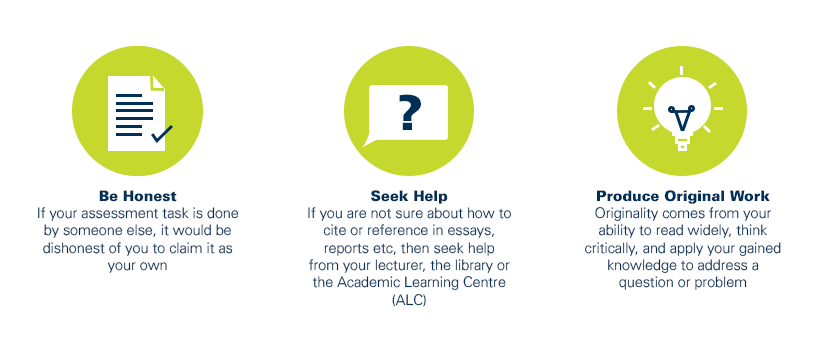
As a CQUniversity student you are expected to act honestly in all aspects of your academic work.
Any assessable work undertaken or submitted for review or assessment must be your own work. Assessable work is any type of work you do to meet the assessment requirements in the unit, including draft work submitted for review and feedback and final work to be assessed.
When you use the ideas, words or data of others in your assessment, you must thoroughly and clearly acknowledge the source of this information by using the correct referencing style for your unit. Using others’ work without proper acknowledgement may be considered a form of intellectual dishonesty.
Participating honestly, respectfully, responsibly, and fairly in your university study ensures the CQUniversity qualification you earn will be valued as a true indication of your individual academic achievement and will continue to receive the respect and recognition it deserves.
As a student, you are responsible for reading and following CQUniversity’s policies, including the Student Academic Integrity Policy and Procedure. This policy sets out CQUniversity’s expectations of you to act with integrity, examples of academic integrity breaches to avoid, the processes used to address alleged breaches of academic integrity, and potential penalties.
What is a breach of academic integrity?
A breach of academic integrity includes but is not limited to plagiarism, self-plagiarism, collusion, cheating, contract cheating, and academic misconduct. The Student Academic Integrity Policy and Procedure defines what these terms mean and gives examples.
Why is academic integrity important?
A breach of academic integrity may result in one or more penalties, including suspension or even expulsion from the University. It can also have negative implications for student visas and future enrolment at CQUniversity or elsewhere. Students who engage in contract cheating also risk being blackmailed by contract cheating services.
Where can I get assistance?
For academic advice and guidance, the Academic Learning Centre (ALC) can support you in becoming confident in completing assessments with integrity and of high standard.
What can you do to act with integrity?