Overview
This unit provides an insight into medical ultrasound by exploring the role and global scope of practice of the medical sonographer and the use of ultrasound in medical imaging, the types of examinations available and the provision of safe patient care as an allied health professional. The aim of this unit is to provide introductory knowledge and skills that will support your learning throughout the Medical Sonography course. Simulation exercises will enable you to apply theory to practice.
Details
Pre-requisites or Co-requisites
There are no requisites for this unit.
Important note: Students enrolled in a subsequent unit who failed their pre-requisite unit, should drop the subsequent unit before the census date or within 10 working days of Fail grade notification. Students who do not drop the unit in this timeframe cannot later drop the unit without academic and financial liability. See details in the Assessment Policy and Procedure (Higher Education Coursework).
Offerings For Term 1 - 2026
Attendance Requirements
All on-campus students are expected to attend scheduled classes - in some units, these classes are identified as a mandatory (pass/fail) component and attendance is compulsory. International students, on a student visa, must maintain a full time study load and meet both attendance and academic progress requirements in each study period (satisfactory attendance for International students is defined as maintaining at least an 80% attendance record).
Recommended Student Time Commitment
Each 6-credit Undergraduate unit at CQUniversity requires an overall time commitment of an average of 12.5 hours of study per week, making a total of 150 hours for the unit.
Class Timetable
Assessment Overview
Assessment Grading
This is a graded unit: your overall grade will be calculated from the marks or grades for each assessment task, based on the relative weightings shown in the table above. You must obtain an overall mark for the unit of at least 50%, or an overall grade of 'pass' in order to pass the unit. If any 'pass/fail' tasks are shown in the table above they must also be completed successfully ('pass' grade). You must also meet any minimum mark requirements specified for a particular assessment task, as detailed in the 'assessment task' section (note that in some instances, the minimum mark for a task may be greater than 50%). Consult the University's Grades and Results Policy for more details of interim results and final grades.
All University policies are available on the CQUniversity Policy site.
You may wish to view these policies:
- Grades and Results Policy
- Assessment Policy and Procedure (Higher Education Coursework)
- Review of Grade Procedure
- Student Academic Integrity Policy and Procedure
- Academic Progression Policy and Procedure
- Student Refund and Credit Balance Policy and Procedure
- Complaints Policy and Procedure
- Information and Communications Technology Acceptable Use Policy and Procedure
This list is not an exhaustive list of all University policies. The full list of University policies are available on the CQUniversity Policy site.
Feedback, Recommendations and Responses
Every unit is reviewed for enhancement each year. At the most recent review, the following staff and student feedback items were identified and recommendations were made.
Feedback from Student discussions and SUTE data
Students continued to enjoy the residential school in its current two-day format, finding it valuable for hands-on learning and peer interaction.
Where appropriate, maintain the structure of the two-day residential school to support practical skill development and foster student engagement.
Feedback from Student discussions and SUTE data
Students appreciated the additional focused tutorials dedicated to each assessment, which helped guide study and provided timely support.
Where feasible, continue offering focused assessment tutorials to provide structured support and clarify expectations in the lead-up to submission dates.
Feedback from SUTE data
Students requested the inclusion of a broader range of third-year students from diverse backgrounds to share their experiences managing the demands of full-time study at a question and answer session held during the residential school.
Where possible, invite a diverse panel of third-year students to participate in future residential schools to share their experiences and strategies for managing full-time study alongside personal commitments.
- Discuss the role and scope of practice of the medical sonographer, including professional and legal frameworks
- Apply knowledge of ultrasound equipment, transducer / patient positioning and sonographic image appearance using appropriate medical and sonographic terminology
- Discuss the role of diagnostic medical ultrasound and how it relates to other diagnostic imaging modalities and picture archiving communication systems
- Demonstrate sonographic manual skill development in a simulated environment.
The learning outcomes for this unit relate to the requirements of general sonography courses under the Australasian Sonography Accreditation Registry (ASAR), Standards for the Accreditation of Sonographer Courses (SASC):
Foundation Units of Competence 1-5
Critical Practice Units of Competence 6-7, 9-10, 12-13
Alignment of Assessment Tasks to Learning Outcomes
| Assessment Tasks | Learning Outcomes | |||
|---|---|---|---|---|
| 1 | 2 | 3 | 4 | |
| 1 - Online Quiz(zes) - 30% | ||||
| 2 - Written Assessment - 20% | ||||
| 3 - Practical Assessment - 0% | ||||
| 4 - Online Test - 50% | ||||
Alignment of Graduate Attributes to Learning Outcomes
| Graduate Attributes | Learning Outcomes | |||
|---|---|---|---|---|
| 1 | 2 | 3 | 4 | |
| 1 - Communication | ||||
| 2 - Problem Solving | ||||
| 3 - Critical Thinking | ||||
| 4 - Information Literacy | ||||
| 5 - Team Work | ||||
| 6 - Information Technology Competence | ||||
| 7 - Cross Cultural Competence | ||||
| 8 - Ethical practice | ||||
| 9 - Social Innovation | ||||
| 10 - First Nations Knowledges | ||||
| 11 - Aboriginal and Torres Strait Islander Cultures | ||||
Textbooks
There are no required textbooks.
IT Resources
- CQUniversity Student Email
- Internet
- Unit Website (Moodle)
All submissions for this unit must use the referencing style: Vancouver
For further information, see the Assessment Tasks.
j.gallagher@cqu.edu.au
Week 1
Begin Date: 09 Mar 2026Module/Topic
- Introduction to sonography and the healthcare environment
- The role of the sonographer
- The medical imaging department
- The Australian healthcare system
Chapter
Events and Submissions/Topic
Zoom tutorial Tuesday 11am AEST
Week 2
Begin Date: 16 Mar 2026Module/Topic
- Foundations of sonographic language and orientation
- Sonographic terminology and medical terminology
- Anatomical planes of the body
- Scan planes in sonography
- Directional terms and movement terms
Chapter
Events and Submissions/Topic
Zoom tutorial Tuesday 11am AEST
Week 3
Begin Date: 23 Mar 2026Module/Topic
- Communication and cultural safety in sonography
- Patient-centred care
- Communication in healthcare
- Cultural safety
- Communication in practice
Chapter
Events and Submissions/Topic
Zoom tutorial Tuesday 11am AEST
Week 4
Begin Date: 30 Mar 2026Module/Topic
- Infection control and vital signs in sonography
Chapter
Events and Submissions/Topic
Zoom tutorial Tuesday 11am AEST
Assessment 1: Online quiz 1: Opens Wednesday 9am AEST and closes Thursday 11.59 pm AEST. 23 mins duration.
Week 5
Begin Date: 06 Apr 2026Module/Topic
- Basic principles of the physics of ultrasound
- Brief history of ultrasound
- The physics of sound
- Interaction of ultrasound with tissue
- Image generation
- Introduction to artefacts and bioeffects
Chapter
Events and Submissions/Topic
Zoom tutorial Tuesday 11am AEST
Week 6
Begin Date: 13 Apr 2026Module/Topic
- The ultrasound system and safe scanning practice
- The ultrasound machine
- Safe moving and handling of patients
- Risk assessment in the medical imaging department
- Sonographer ergonomics
Chapter
Events and Submissions/Topic
Zoom tutorial Tuesday 11am AEST
Vacation Week
Begin Date: 20 Apr 2026Module/Topic
- No lectures or new information.
Chapter
Events and Submissions/Topic
No zoom tutorial.
Week 7
Begin Date: 27 Apr 2026Module/Topic
Compulsory two day face-to-face held on campus of your enrolment residential school Wednesday and Thursday.
Chapter
Events and Submissions/Topic
Zoom tutorial Tuesday 11am AEST
Residential school Wednesday 29th April and Thursday 30th April with compulsory attendance required all day both days.
Online induction quiz and consent forms to be completed and uploaded to Moodle before Monday 27th April at 4 pm AEST.
Assessment 2: Practical skills test held on Thursday 30th April 2026 at the residential school
Assessment 2: Practical Residential School Assessment Due: Week 7 Thursday (30 Apr 2026) 5:00 pm AEST
Week 8
Begin Date: 04 May 2026Module/Topic
- The Ultrasound Examination
- Bringing it all together from referral to report
Chapter
Events and Submissions/Topic
Zoom tutorial Tuesday 11am AEST
Assessment 1: Online quiz 2: Opens Wednesday 9am AEST and closes Thursday 11.59 pm AEST. 23 mins duration.
Assessment 1: Online Quiz 1 and Online Quiz 2 Due: Week 8 Thursday (7 May 2026) 11:59 pm AEST
Week 9
Begin Date: 11 May 2026Module/Topic
- Introduction to basic types of sonographic examinations (Part 1)
- Abdominal ultrasound
- Pelvic ultrasound
- Obstetric ultrasound
Chapter
Events and Submissions/Topic
Zoom tutorial Tuesday 11am AEST
Week 10
Begin Date: 18 May 2026Module/Topic
- Introduction to basic types of sonographic examinations (Part 2)
- Small parts ultrasound
- Vascular ultrasound
- Musculoskeletal ultrasound
Chapter
Events and Submissions/Topic
Zoom tutorial Tuesday 11am AEST
Assessment 2: Written Assessment Task due: Wednesday 20th May 4pm AEST.
Assessment 3: Written assessment Due: Week 10 Wednesday (20 May 2026) 4:00 pm AEST
Week 11
Begin Date: 25 May 2026Module/Topic
- Medico-legal and ethical principles in healthcare and sonography
- Medico-legal and ethical concepts in healthcare
- Informed consent
- Privacy and confidentiality
- Documentation
Chapter
Events and Submissions/Topic
Zoom tutorial Tuesday 11am AEST
Week 12
Begin Date: 01 Jun 2026Module/Topic
- Revision week
- Exam preparation
Chapter
Events and Submissions/Topic
Zoom tutorial Tuesday 11am AEST
Exam Week
Begin Date: 08 Jun 2026Module/Topic
Chapter
Events and Submissions/Topic
Assessment 4: Online test open and available to complete on Thursday 11th June 2026 between 2:00pm and 4:00pm AEST. 120 mins (2 hours) duration.
Assessment 4: End of Term Online Test Due: Exam Week Thursday (11 June 2026) 2:00 pm AEST
Vacation/Exam Week
Begin Date: 15 Jun 2026Module/Topic
Chapter
Events and Submissions/Topic
The unit coordinator for this unit (MEDS11001 Fundamentals of Ultrasound Practice) is Jodie Gallagher who is based on the Melbourne campus. The best way to contact her is via email at j.gallagher@cqu.edu.au. Jodie will endeavour to respond to your email enquiries within two (2) business days. If you would like to arrange a phone conversation or Zoom meeting with the unit coordinator, please email and organise a time for this. It is important to check your student email regularly as updates about the unit will be sent from the unit coordinator by email. Please ensure that all your email correspondence is done via your CQU student email address. General questions regarding the unit content can be placed in the Q and A forum under the learning community tile on Moodle. This ensures all students can benefit from your question and the answer.
The learning activities involved in this unit include pre-recorded lectures, demonstration scanning videos, weekly readings and weekly interactive online tutorials (via Zoom). Online tutorials will be offered live to discuss the unit content and assessments. You will be able to ask questions and gain feedback in these sessions. They will be recorded for later viewing if you are unable to attend, however, live attendance at the tutorial is highly recommended.
This unit is a 6-credit point unit which requires you to allocate around 12.5 hours per week for study. This time includes:
• Watching recorded lectures on Moodle
• Creating study notes to meet weekly learning objectives using lectures and readings
• Using additional resources and material in the e Reading list to supplement your learning
• Attending weekly online Zoom tutorials live or watching the recordings of these tutorials that will be made available on the unit Moodle site
• Researching and working on your assessments
• Completing formative quizzes and mock online test questions
It is very important for you to try to keep up to date week by week with the learning in this unit. Regular engagement with the learning activities provided is essential to allow yourself to keep up to date and achieve success in this unit. If you are encountering any sort of issues throughout the term, please contact your unit coordinator as early as possible, so a plan of support can be established to help you.
There is a compulsory two-day residential school held on-campus in the dedicated sonography labs in week 7 of term on Wednesday and Thursday. You are required to attend your campus of enrolment for this. During this residential school, you will have the opportunity to use the university’s ultrasound machines and scan dedicated sonographic anatomy phantoms and each other and participate in various other hands on activities throughout both days. There is a practical assessment associated with the residential school. Please see the assessment information section of this unit profile for more details on this assessment.
Note: Uniforms are not required for the on campus residential school in this unit, however, they are required to be worn in the sonography labs from Year 2, Term 1.
There are four assessment tasks associated with this unit.
1. Online quizzes (30% total)
2. Practical assessment (pass/fail)
3. Written assessment (20%)
4. End of term online test (50%)
Please refer to the assessment information section of this unit profile for more details on each assessment.
CQUniversity records lectures, video-conferencing sessions and teaching activities to aid student learning activities. This may involve the collection of personal information about you, if your image or voice is captured during participation. Recordings may be disseminated to other CQUniversity students. For more information, visit: https://www.cqu.edu.au/privacy.
1 Online Quiz(zes)
There are two (2) online quizzes to be completed during the term which together contribute to 30% of your overall grade. These are online quiz 1 and online quiz 2.
Both quizzes can be accessed via the MEDS11001 unit Moodle site, under the 'Assessment' tile or 'Assessment' tab.
Each quiz will consist of 15 multiple choice, match and mix, labeling or similar style questions and each quiz is worth 15% of the final grade for this unit. You will have 23 minutes to complete each quiz (equating to approximately 1.5 minutes per question).
Online quiz 1 and online quiz 2 will each be open and available to complete for 39 hours and you will need to allocate 23 minutes during the 39 hour period it is open to complete each online quiz.
Online Quiz 1 will be completed in Week 4 and is worth 15% of the final unit grade. The quiz will assess content covered in Weeks 1–3. The quiz will open at 9:00 am (AEST) on Wednesday 1st April and close at 11:59 pm (AEST) on Thursday 2nd April. .
Online Quiz 2 will be completed in Week 8 and is worth 15% of the final unit grade. The quiz will assess content covered in Weeks 5–7. The quiz will open at 9:00 am (AEST) on Wednesday 6th May and close at 11:59 pm (AEST) Thursday 7th May.
Once started, the quiz cannot be paused, stopped or re-started. Once the time limit is reached, the quiz will close and any open questions will be automatically submitted. Once you have completed the quiz, it cannot be retaken.
You will require stable internet access to complete these online quizzes.
As these quizzes involve multiple choice questions and similar style questions you will be required to select the most appropriate answer from a selection of possible answers in relation to the question asked.
These online quizzes must be completed by you, without assistance or collusion with others. Any evidence of collusion will be dealt with in adherence with the CQU student academic integrity policy and procedure.
Note: the CQU 72-hour grace period for assessments does not apply to online quiz 1 or online quiz 2.
Level of Gen AI use allowed: Level 1: You must not use Gen Al at any point during the assessment. You must demonstrate your core skills and knowledge.
Week 8 Thursday (7 May 2026) 11:59 pm AEST
Note this is the due date and time for completion of Quiz 2. Quiz 1 is due to be completed before 11.59 pm AEST Thursday 2nd April 2025.
Week 10 Thursday (21 May 2026)
Feedback and results will be available after all students have completed the quizzes.
Quizzes will be graded on the correct answers provided related to the questions asked.
There are fifteen questions within each online quiz and each question is worth one mark.
- Discuss the role and scope of practice of the medical sonographer, including professional and legal frameworks
- Apply knowledge of ultrasound equipment, transducer / patient positioning and sonographic image appearance using appropriate medical and sonographic terminology
- Discuss the role of diagnostic medical ultrasound and how it relates to other diagnostic imaging modalities and picture archiving communication systems
2 Practical Assessment
During your attendance at the compulsory Residential School, you will participate in practical activities, where you will observe, learn and perform practical scanning techniques and skills relating to the sonography profession.
Attendance for the entirety of the residential school is compulsory and you must attend the residential school at your campus of enrolment. You will be automatically allocated to this campus, and appropriate staffing/resource arrangements will be made for that location.
Following participation in the residential school practical activities, a practical assessment will be conducted and completed on the second day of the residential school (Thursday).
For this, you will be assessed on your ability to perform sonographic imaging in specific anatomical planes of the body, move the probe in specific directions using anatomical terms and identify the associated image orientation and recognise key sonographic landmarks.
If for some reason your first attempt at the practical test is unsuccessful, you are permitted a single re-sit of the practical assessment.
Detailed information about this assessment and marking criteria will be made available on the unit Moodle site.
Note: the CQU 72-hour grace period for assessments does not apply to the practical residential school assessment.
Level of Gen AI use allowed: Level 1: You must not use Gen Al at any point during the assessment. You must demonstrate your core skills and knowledge.
Week 7 Thursday (30 Apr 2026) 5:00 pm AEST
Week 7 Thursday (30 Apr 2026)
Students will receive results following the practical assessment on the same day.
The practical assessment will be conducted by a sonography lecturer or tutor, who will observe and assess your ability to carry out practical skills relating to your knowledge of anatomical planes of the body, sonographic scanning planes and associated image orientation recognition. As part of the assessment, you will also be observed performing appropriate hand hygiene prior to commencing the task and demonstrating awareness of appropriate ultrasound probe cleaning following completion of the task. Assessment of the task will be relative to the practical assessment marking criteria, which will be made available on the unit Moodle site.
The practical assessment is different from other assessments in this unit, it is not weighted, but rather a pass/fail assessment, meaning you need to pass this assessment task to successfully complete this unit.
As per the Assessment Policy and Procedure (Higher Education Coursework), Section 5.54, this assessment must be completed on the final day of the residential school in the absence of an approved extension.
No submission method provided.
- Apply knowledge of ultrasound equipment, transducer / patient positioning and sonographic image appearance using appropriate medical and sonographic terminology
- Demonstrate sonographic manual skill development in a simulated environment.
3 Written Assessment
Task Description
You are required to complete a structured reflective written assessment that integrates learning from unit content, residential school, the practical assessment, and independent academic research. The reflection should demonstrate the development of your understanding of diagnostic medical sonography, the role and responsibilities of the medical sonographer, and the broader context of medical imaging practice.
This assessment evaluates not only knowledge acquisition, but also your ability to interpret and reflect on learning experiences in relation to healthcare practice.
Accordingly, this task is not intended as a summary of unit materials. Instead, students are expected to reflect on learning experiences and explain how these have informed their understanding of professional practice and ongoing learning needs within sonography.
Task Structure
1. Role of the Medical Sonographer and Diagnostic Medical Ultrasound
Reflect on your learning about diagnostic medical ultrasound and the role and scope of practice of the medical sonographer, including key professional responsibilities. Consider an aspect of ultrasound practice that surprised you and how unit learning or residential school contributed to this understanding. Conclude by explaining how the real‑time, operator‑dependent nature of ultrasound shapes the sonographer’s responsibility and accountability in clinical practice.
2. Comparing Ultrasound with Other Imaging Modalities
Compare diagnostic ultrasound with one other imaging modality by considering differences in image acquisition, patient interaction, workflow and practitioner involvement, and safety. Explain how these differences influence the role of the sonographer in comparison with other medical imaging professionals.
3. Learning Through Practice: Residential School and Practical Assessment
Reflect on your residential school and practical assessment experiences by considering what you learned through hands‑on practice. Discuss how specific experiences and emotional responses influenced your learning or confidence, what these experiences revealed about the nature of ultrasound practice, and how feedback or self‑assessment clarified your strengths and areas for development. Conclude by identifying specific actions you will take to prepare for future practical or clinical learning.
4. Early Understanding of Patient Interaction
Reflect on patient interaction as experienced or observed during simulated, peer‑based, or phantom‑based activities. Consider how communication, positioning, and professional behaviour influence comfort, confidence, and engagement. Discuss your developing understanding of professional conduct, consent, and cultural awareness, and why respectful practice is essential in ultrasound, even within simulated learning environments
5. Reflection on Developing Attributes
Select two professional attributes relevant to early sonography practice and reflect on how they were demonstrated, challenged, or developed during this unit or residential school. For each attribute, consider a specific context in which it was evident, how you responded in the situation, and what this revealed about the expectations of sonography practice or your own strengths and learning needs. Conclude by outlining practical and achievable actions you will take to further develop each attribute as you continue your sonography training.
Length:
• 1000 words (+/- 10%). Reference list, title page and headings are excluded.
Presentation requirements:
• Submit your assessment as a Word document, with 1.5 line spacing and using a 12-point Arial font (not including headings).
• Include a separate title page with your name, student number, word count and assessment title.
• Include one (1) numbered reference list in CQU Vancouver format on a separate page at the end of the assessment for the whole assessment.
Referencing requirements:
• This assessment requires you to conduct your own research to support your response.
• You must consistently use in-text citations to support your analysis and discussion.
• You must clearly indicate the sources of your information through accurate referencing.
• A minimum of four (4) contemporary peer-reviewed journal articles (published within the last 10 years) must be included in your reference list.
• All in text citations and all references in the reference list are to be accurately formatted using the CQU Vancouver referencing style.
Submission requirements:
• Online submission via the assessment tab on Moodle before the due date and time.
• All submissions must be uploaded through Turnitin.
• When submitting, file names must follow the format: Surname_First name_student number_MEDS11001_WrittenAssessment.doc
An inherent requirement is that this assessment task is written in appropriate academic language, and free of grammatical and spelling errors.
Level of Generative AI use allowed for this assessment:
Students are permitted to use Generative AI for this assessment in the following ways:
Level 2: You may use AI for planning, idea development, and research. Your final submission should show how you have developed and refined these ideas.
As per academic writing requirements and assessment criteria, citations of information must be from the primary source (i.e. information returned by AI must be fact-checked and referenced from their original source as well as the AI source). There is information on CQU's Academic Learning Centre (ALC) site that can assist you with referencing AI. A link to this can be found through ALC website and on your unit Moodle page. Failure to cite primary sources as well as AI sources could be considered a breach of academic integrity.
Detailed information about this assessment and marking criteria will be made available on the unit Moodle site.
Week 10 Wednesday (20 May 2026) 4:00 pm AEST
Week 12 Friday (5 June 2026)
You will be assessed on the following criteria:
- Quality of submission addressing the topics in the questions clearly and concisely, with relevant and appropriate discussion and analysis of each topic
- Accuracy of spelling and grammar
- Correct use of medical and sonographic terminology
- Appropriateness of the reviewed literature
- Correct and accurate referencing
- Academic writing and expression
- All text, images, diagrams and tables correctly referenced and the word limit is adhered to.
A detailed marking rubric/criteria for this assessment will be made available on the unit Moodle site.
- Discuss the role and scope of practice of the medical sonographer, including professional and legal frameworks
- Discuss the role of diagnostic medical ultrasound and how it relates to other diagnostic imaging modalities and picture archiving communication systems
4 Online Test
To demonstrate understanding and knowledge of the unit's content, and to assess whether the unit's learning outcomes have been achieved, students are required to complete an end of the term online test.
This online test will assess the content covered in the entire unit (weeks 1 to 12). This includes material covered in lectures, tutorials, the e reading list and any additional resources or learning materials on Moodle supplied during the term.
The test will consist of a combination of question types, including multiple choice, mix and match, fill in the blank, labelling questions, questions with images and short and long answer questions which require typed answers. Please ensure you read the questions thoroughly before beginning to formulate your answers and ensure you are using appropriate terminology at all times.
The end of term online test will be available on Moodle under the 'Assessment tile' with two (2) hours of working time allocated. Once started, the test cannot be paused, stopped or re-started. Once the time limit is reached any open questions will be automatically submitted. Once you have completed the test, it cannot be retaken.
A stable internet connection is required for the online test.
This is an individual task. The online test must be completed by you, without assistance or collusion with others. Any evidence of collusion will be dealt with in adherence with the CQU student academic integrity policy and procedure.
Note: the CQU 72-hour grace period for assessments does not apply to this final online test.
Level of GenAI use allowed: Level 1: You must not use GenAl at any point during the assessment. You must demonstrate your core skills and knowledge.
Exam Week Thursday (11 June 2026) 2:00 pm AEST
Online test will be open for two (2) hours from 2pm AEST and close at 4pm AEST. The duration of the online test is two (2) hours working time.
Test results will be returned to students 10 business days after the test closes and all students have completed the test.
Multiple choice questions will be automatically marked correct or incorrect.
Written response questions will vary in mark allocation. Each question will have the maximum marks allocated displayed next to the question.
Short and long answers will require:
- use of correct anatomic names of structures and recognition of their normal and abnormal sonographic appearances
- use of correct sonographic terminology
- evaluation of clinical information
- detail to demonstrate depth of understanding and critical thinking.
- identification of sonographic imaging planes, protocols and conventions as relevant
- explanation of pre and post scanning requirements, including medico legal aspects and infection control standards
- Discuss the role and scope of practice of the medical sonographer, including professional and legal frameworks
- Apply knowledge of ultrasound equipment, transducer / patient positioning and sonographic image appearance using appropriate medical and sonographic terminology
- Discuss the role of diagnostic medical ultrasound and how it relates to other diagnostic imaging modalities and picture archiving communication systems
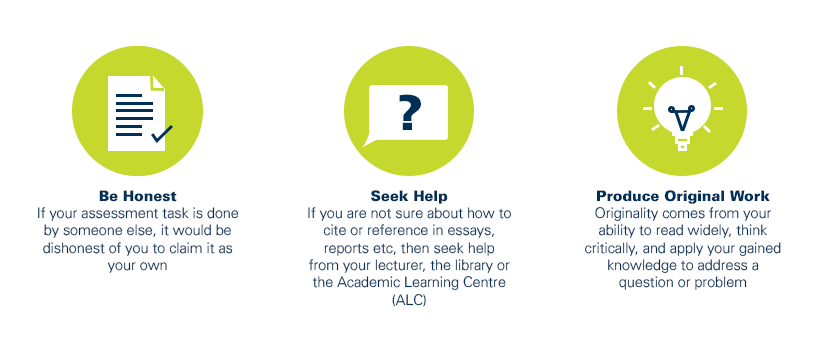
As a CQUniversity student you are expected to act honestly in all aspects of your academic work.
Any assessable work undertaken or submitted for review or assessment must be your own work. Assessable work is any type of work you do to meet the assessment requirements in the unit, including draft work submitted for review and feedback and final work to be assessed.
When you use the ideas, words or data of others in your assessment, you must thoroughly and clearly acknowledge the source of this information by using the correct referencing style for your unit. Using others’ work without proper acknowledgement may be considered a form of intellectual dishonesty.
Participating honestly, respectfully, responsibly, and fairly in your university study ensures the CQUniversity qualification you earn will be valued as a true indication of your individual academic achievement and will continue to receive the respect and recognition it deserves.
As a student, you are responsible for reading and following CQUniversity’s policies, including the Student Academic Integrity Policy and Procedure. This policy sets out CQUniversity’s expectations of you to act with integrity, examples of academic integrity breaches to avoid, the processes used to address alleged breaches of academic integrity, and potential penalties.
What is a breach of academic integrity?
A breach of academic integrity includes but is not limited to plagiarism, self-plagiarism, collusion, cheating, contract cheating, and academic misconduct. The Student Academic Integrity Policy and Procedure defines what these terms mean and gives examples.
Why is academic integrity important?
A breach of academic integrity may result in one or more penalties, including suspension or even expulsion from the University. It can also have negative implications for student visas and future enrolment at CQUniversity or elsewhere. Students who engage in contract cheating also risk being blackmailed by contract cheating services.
Where can I get assistance?
For academic advice and guidance, the Academic Learning Centre (ALC) can support you in becoming confident in completing assessments with integrity and of high standard.
What can you do to act with integrity?