Assessment 2
There is a correction to the date noted for the test. The date for the inclass test is Thursday, 14 May 2026.
Overview
This is the fourth and final Imaging Procedures unit in the course. There are two main areas of focus for the unit - adaptation radiography and fluoroscopic procedures. You will build on your knowledge and skills from prior theory units and clinical placements and further develop your problem-solving skills in the planning and execution of imaging procedures on complex patients and in complex environments such as theatre, casualty and wards. A range of fluoroscopic procedures will be discussed with respect to goals, technique, environments and the radiographer's role. You will examine the critical contribution of interpersonal skills such as effective communication and teamwork to the radiographer's ability to perform effectively and efficiently in these procedure areas.
Details
Pre-requisites or Co-requisites
Prerequisites: MEDI12006 Imaging Procedures 2MEDI12010 Radiographic Anatomy and Appearances 2MEDI12011 Medical Imaging Clinical Experience 1 Corequisites: MEDI13001 Imaging Science 4MEDI13002 Imaging Procedures 3
Important note: Students enrolled in a subsequent unit who failed their pre-requisite unit, should drop the subsequent unit before the census date or within 10 working days of Fail grade notification. Students who do not drop the unit in this timeframe cannot later drop the unit without academic and financial liability. See details in the Assessment Policy and Procedure (Higher Education Coursework).
Offerings For Term 1 - 2026
Attendance Requirements
All on-campus students are expected to attend scheduled classes - in some units, these classes are identified as a mandatory (pass/fail) component and attendance is compulsory. International students, on a student visa, must maintain a full time study load and meet both attendance and academic progress requirements in each study period (satisfactory attendance for International students is defined as maintaining at least an 80% attendance record).
Recommended Student Time Commitment
Each 6-credit Undergraduate unit at CQUniversity requires an overall time commitment of an average of 12.5 hours of study per week, making a total of 150 hours for the unit.
Class Timetable
Assessment Overview
Assessment Grading
This is a graded unit: your overall grade will be calculated from the marks or grades for each assessment task, based on the relative weightings shown in the table above. You must obtain an overall mark for the unit of at least 50%, or an overall grade of 'pass' in order to pass the unit. If any 'pass/fail' tasks are shown in the table above they must also be completed successfully ('pass' grade). You must also meet any minimum mark requirements specified for a particular assessment task, as detailed in the 'assessment task' section (note that in some instances, the minimum mark for a task may be greater than 50%). Consult the University's Grades and Results Policy for more details of interim results and final grades.
All University policies are available on the CQUniversity Policy site.
You may wish to view these policies:
- Grades and Results Policy
- Assessment Policy and Procedure (Higher Education Coursework)
- Review of Grade Procedure
- Student Academic Integrity Policy and Procedure
- Academic Progression Policy and Procedure
- Student Refund and Credit Balance Policy and Procedure
- Complaints Policy and Procedure
- Information and Communications Technology Acceptable Use Policy and Procedure
This list is not an exhaustive list of all University policies. The full list of University policies are available on the CQUniversity Policy site.
Feedback, Recommendations and Responses
Every unit is reviewed for enhancement each year. At the most recent review, the following staff and student feedback items were identified and recommendations were made.
Feedback from MI team teaching team review and unit coordinator reflection.
The written assessment contributed towards increased workload for staff and students.
Investigate the option of alternate assessment design and structure for the written assessment to identify opportunities for reducing complexity and workload for both students.
Feedback from Unit coordinator reflection and student feedback.
Having the mobile assessment earlier in the term was well received by students.
Maintain the timing of mobile assessment to earlier in the term to ease the spread of assessment load on students throughout the term.
Feedback from Unit coordinator reflection
The implementation of the in-class test instead of online open book test supported knowledge consolidation and ensured students demonstrated applied understanding.
Continue this assessment strategy in future iterations.
- Analyse the technical and psychosocial aspects of imaging procedures within complex circumstances
- Formulate strategies for the efficient and effective performance of adaptation radiography in complex circumstances relative to best practices
- Perform mobile and complex radiographic imaging procedures in a simulated clinical environment
- Discuss commonly performed diagnostic and interventional fluoroscopic procedures
- Interpret radiographic appearances for complex radiographic and fluoroscopic procedures
- Demonstrate currency of theoretical and practical knowledge of routine and adaptation projections for all general radiography examinations, including clinical indications, image acquisition technique and radiographic appearances of normal anatomy and pathological changes
- Demonstrate patient care and professional behaviours in the simulated clinical environment in a range of contexts.
- Provide culturally safe care that addresses the unique needs of the patient, including those of First Nations Peoples and of the individual across the lifespan, in the Australian healthcare setting.
This unit maps to the following components of the Medical Radiation Practice Board of Australia's Professional Capabilities for Medical Radiation Practice (2020 version):
- Domain 1:
o key capabilities 1, enabling components a, b, c
o key capabilities 2, enabling components c, d, e, g
o key capabilities 3, enabling components a, b
o key capabilities 4, enabling components a, b, c
o key capabilities 5, enabling components a, b, c, d, e, f
o key capabilities 6, enabling components a, b, c, d
o key capabilities 7, enabling components a, b, c, d,
o key capabilities 8, enabling components a, b, c, d, e - Domain 1A:
o key capabilities 1, enabling components a, b, c, d, e, f
o key capabilities 2, enabling components a, b, c, d, e, f, g, h - Domain 2:
o key capabilities 1, enabling components e, f, g, h,
o key capabilities 2, enabling components a, b, c
o key capabilities 3, enabling components c
o key capabilities 4, enabling components a, b, c
o key capabilities 5, enabling components a, b - Domain 3:
o key capabilities 1, enabling components a, b, c, d, e, f, g, h
o key capabilities 2, enabling components a, b, c, d - Domain 4:
o key capabilities 1, enabling components a, b, c - Domain 5:
o key capabilities 1, enabling components a, b, c, d, e, f
o key capabilities 2, enabling components a, b, c, d, e
o key capabilities 4, enabling components a, c, d, e, f, g
Alignment of Assessment Tasks to Learning Outcomes
| Assessment Tasks | Learning Outcomes | |||||||
|---|---|---|---|---|---|---|---|---|
| 1 | 2 | 3 | 4 | 5 | 6 | 7 | 8 | |
| 1 - In-class Test(s) - 40% | ||||||||
| 2 - In-class Test(s) - 60% | ||||||||
| 3 - Practical Assessment - 0% | ||||||||
| 4 - Practical Assessment - 0% | ||||||||
| 5 - Practical Assessment - 0% | ||||||||
| 6 - Laboratory/Practical - 0% | ||||||||
Alignment of Graduate Attributes to Learning Outcomes
| Graduate Attributes | Learning Outcomes | |||||||
|---|---|---|---|---|---|---|---|---|
| 1 | 2 | 3 | 4 | 5 | 6 | 7 | 8 | |
| 1 - Communication | ||||||||
| 2 - Problem Solving | ||||||||
| 3 - Critical Thinking | ||||||||
| 4 - Information Literacy | ||||||||
| 5 - Team Work | ||||||||
| 6 - Information Technology Competence | ||||||||
| 7 - Cross Cultural Competence | ||||||||
| 8 - Ethical practice | ||||||||
| 9 - Social Innovation | ||||||||
| 10 - First Nations Knowledges | ||||||||
| 11 - Aboriginal and Torres Strait Islander Cultures | ||||||||
Textbooks
Bontrager's Handbook of Radiographic Positioning and Techniques 10th Edition (2021)
- Edition: 10th edn (2021 )
- Authors: John Lampignano & Leslie E. Kendrick
- Elsevier
- St Louis St Louis , Missouri , USA
- ISBN: 9780323694223
- Binding: Spiral
Bontrager's Textbook of Radiographic Positioning and Related Anatomy 10th Edition (2021)
- Edition: 10th edn (2021)
- Authors: John Lampignano & Leslie E. Kendric
- Elsevier
- St Louis St Louis , Missouri , USA
- ISBN: 9780323653671
- Binding: Hardcover
Aboriginal and Torres Strait Islander Peoples' Health and Wellbeing EBook
- 1st edition (2019)
- Authors: Biles & Biles
- Oxford University Press Australia & New Zealand
- Australia
- ISBN: 9780190311452
- Binding: eBook
Accident and Emergency Radiology: A Survival Guide
- 3rd Edition (2015)
- Authors: Raby, Berman, De Lacey
- Elsevier
- Philadelphia Philadelphia , USA
- ISBN: 9780702042324
- Binding: Paperback
Culture, Diversity and Health in Australia: Towards Culturally Safe Health Care EBook
- 1st edition (2021)
- Authors: Dune, McLeod & Williams
- Taylor & Francis Group
- Australia
- ISBN: 9781000347135
- Binding: eBook
Radiographic Image Analysis EBook
- 5th edition (2018)
- Authors: McQuillen Martensen
- Elsevier
- St Louis St Louis , Missouri , USA
- ISBN: 9780323544672
IT Resources
- CQUniversity Student Email
- Internet
- Unit Website (Moodle)
All submissions for this unit must use the referencing style: Vancouver
For further information, see the Assessment Tasks.
n.sciascia@cqu.edu.au
Week 1
Begin Date: 09 Mar 2026Module/Topic
- Mobile Radiography and Image Evaluation
Chapter
Bontrager Textbook, Chapter 2, 15
Radiographic Image Analysis e-book, Chapter 3
See unit Moodle site for additional resources
Events and Submissions/Topic
On-campus tutorial, radiographic labs
Week 2
Begin Date: 16 Mar 2026Module/Topic
- Adaptive Techniques
Chapter
Bontrager Textbook, Chapters 1, 2, 4-9 & 15
Bontrager Handbook, Chapters 2-6, 10
Accident & Emergency Radiology, Chapters 6, 14 & 15
Radiographic Image Analysis e-book, Chapters 5-8
See unit Moodle site for additional resources
Events and Submissions/Topic
On-campus tutorial, radiographic labs
Week 3
Begin Date: 23 Mar 2026Module/Topic
- Cultural Competence and Safety
Chapter
Culture, Diversity and Health in Australia: Towards Culturally Safe Health Care e-book, Chapters 1, 6, 7, 9, 10 & 13
Aboriginal and Torres Strait Islander Peoples' Health and Wellbeing e-book, Chapters 1-3
See unit Moodle site for additional resources
Events and Submissions/Topic
On-campus tutorial
Assessment 1 Mobile Practical Due: Week 3 Tuesday, Wednesday & Thursday (24, 25 & 26 Mar 2026)
Week 4
Begin Date: 30 Mar 2026Module/Topic
- Inter-professional Collaboration & Teamwork Part A & Part B
Chapter
See unit Moodle site for additional resources
Events and Submissions/Topic
On-campus tutorial
Week 5
Begin Date: 06 Apr 2026Module/Topic
- Poly-trauma & Emergency Imaging
Chapter
Bontrager Textbook, Chapters 2, 5, 7, 8, 15
Bontrager Handbook, Chapters 3, 5, 6, 8, 10
Accident & Emergency Radiology, Chapters 11, 13-14, 18-19
Radiographic Image Analysis e-book, Chapters 6-8
See unit Moodle site for additional resources
Events and Submissions/Topic
Week 6
Begin Date: 13 Apr 2026Module/Topic
- Fluoroscopy & Interventional Imaging
Chapter
Bontrager Textbook, Chapters 1, 3, 12-14, 17, 19
Bontrager Handbook, Chapter 9
See unit Moodle site for additional resources
Events and Submissions/Topic
On-campus tutorial, radiographic labs
Vacation Week
Begin Date: 20 Apr 2026Module/Topic
Chapter
Events and Submissions/Topic
Week 7
Begin Date: 27 Apr 2026Module/Topic
- Theatre Imaging
Chapter
Bontrager Textbook, Chapter 15
Bontrager Handbook, Chapter 10
See unit Moodle site for additional resources
Events and Submissions/Topic
On-campus tutorial, radiographic labs
Week 8
Begin Date: 04 May 2026Module/Topic
- Neonatal & Paediatric Imaging, Bariatric Imaging
Chapter
Bontrager Textbook, Chapters 2-9, 11, 16
Bontrager Handbook, Chapters 1-2, 4-5, 9
Accident & Emergency Radiology, Chapters 2-3, 7 & 21
Radiographic Image Analysis e-book, Chapter 3
See unit Moodle site for additional resources
Events and Submissions/Topic
Radiographic labs
Week 9
Begin Date: 11 May 2026Module/Topic
- Imaging of the Elderly, Mental Health & Imaging
Chapter
Bontrager Textbook, Chapters 1, 2, 4-9
See unit Moodle site for additional resources
Events and Submissions/Topic
On-campus tutorial, radiographic labs
Assessment 2 in-class test Due: Week 9 Thursday (14 May 2026) 4:00 pm AEST
Week 10
Begin Date: 18 May 2026Module/Topic
- Magnetic Resonance Imaging
Chapter
Bontrager Textbook, Chapter 20
See unit Moodle site for additional resources
Events and Submissions/Topic
On-campus tutorial, radiographic labs
Week 11
Begin Date: 25 May 2026Module/Topic
Ultrasound, PET CT & Nuclear Medicine Imaging
Chapter
Bontrager Textbook, Chapter 20
See unit Moodle site for additional resources
Events and Submissions/Topic
On-campus tutorial
Assessment 3 General X-ray Practical Due: Week 11 Wednesday & Thursday (27 & 28 May 2026)
Assessment 3 Professional Behaviours Assessment Due: Week 11 Monday (25 May 2026) 5:00 pm AEST
Week 12
Begin Date: 01 Jun 2026Module/Topic
-Consolidation and Assessments
Chapter
Events and Submissions/Topic
Assessment 5 Complex Team Scenario Practical Due: Week 12 Monday, Tuesday & Wednesday (1, 2 & 3 Jun 2026)
Re-sits/Re-test for all Practical Assessments Due: Week 12 Friday (5 Jun 2026)
Assessment 6 Final In-class test Due: Week 12 Thursday (4 June 2026) 12:00 pm AEST
Exam Week
Begin Date: 08 Jun 2026Module/Topic
Chapter
Events and Submissions/Topic
Vacation/Exam Week
Begin Date: 15 Jun 2026Module/Topic
Chapter
Events and Submissions/Topic
This unit is at Mackay Ooralea Campus running from Weeks 1 to Week 12.
The lecture content will be pre-recorded and will run from Weeks 1 to 11. On-campus tutorials will run from Weeks 1 through to 11, excluding Public Holidays in Weeks 5 and 8. Tutorials will not be recorded. You should plan to attend all labs and tutorials as this will be integral to the development of knowledge and skills required for the assessment tasks to ensure success in this unit and in future clinical placements.
Note that 150 hours of student engagement is required for this unit. You are expected to complete all lectures (1-2 hrs/week), tutorial attendance (1 hrs/week), complete pre-readings (2 hrs/week). You are also expected to attend supervised labs (17 hrs total during weeks 1-11) and independent practice labs (6 hrs total during weeks 6-11). You should plan to spend approximately (1-3 hrs/week) attending labs from week 1-11. It is integral that you are prepared, undertaking personal studies prior to attending each lab sessions as the pace of the class lab activities have been set with the expectation of practice and corresponding skill development. You are expected to actively engage in practice of your positioning and adaptive techniques during supervised and independent practice timetabled lab sessions.
You should also plan to apply an equal amount of time per week to your personal studies (filling knowledge gaps, skills practice, assessment preparation and completion) as you complete required online and on-campus learning activities.
This unit will enable you to develop the knowledge, skills and behaviours required to deliver safe and high quality care in compliance with the Australian Government's National Safety and Quality Health Service (NHQHS) Standards, specifically:
- Clinical Governance (regarding actions related to the role of leaders and others in safety and quality, Aboriginal and Torres Strait Islander health and e-health)
- Partnering with Consumers (regarding actions related to treating patients with dignity and respect, sharing information with them, encouraging participation and collaboration in healthcare processes)
- Preventing and Controlling Infections (regarding actions related to the use of infection control systems and processes to reduce the risk to patient and the workforce)
- Comprehensive Care (regarding actions related to the coordinated delivery of health care and the identification and management of risks to the patient)
- Communicating for Safety (regarding actions related to effective communication with the patient and other health practitioners to support the delivery of continuous and safe care for patients, including correct identification and procedure matching, effective handover and effective communication and documentation of critical information)
- Recognising and Responding to Acute Deterioration (regarding actions related to the monitoring of patients, detection of changes, recognition of indicators of deterioration, response to deteriorations in provision of care and communication to other health practitioners)
1 Practical Assessment
Radiographers are capable of adapting techniques when working in the clinical environment to perform imaging of complex procedures, using different imaging modalities. Mobile x-ray imaging is routinely performed by radiographers, and you must be able to contribute technical expertise and operation of a mobile unit to optimise the examination outcomes.
This practical assessment is a 10 minute individual assessment in the Imaging Labs.
You will be required to perform one mobile x-ray examination that has been covered in the unit material for this term.
You will be presented with a referral for a mobile x-ray scenario. You must analyse the referral then safely, effectively and efficiently complete a simulated mobile imaging examination on a fellow student, whilst demonstrating a high level of patient care and imaging technique.
Please note:
- This is a timed examination. You will have 10 minutes to complete the assessment. Any part of the assessment not completed within the allocated 10 minutes will be scored as not attempted.
- You must present for your practical assessment dressed as you would present to the clinical environment. Any student not adhering to the course dress code may be excluded from the assessment.
- The assessment tasks will be recorded using video cameras to enable moderation.
- As this is a simulation of a clinical procedure, you must carry out this assessment without referring to any guidance resources (eg. notes, texts, electronic devices) - this is a closed book assessment.
- You must achieve the minimum required score for the assessment. If you have demonstrated a reasonable attempt to complete the assessment on the initial attempt but do not achieve the score required for a pass, you will be given one additional opportunity to perform the assessment and meet the minimum required scores for a pass. Re-sits are timetabled for the Friday week 12.
Level of GenAI use allowed: Level 1 - No AI. You must not use Al at any point during the assessment. You must demonstrate your core skills and knowledge.
This assessment item must be completed by the specified due date. If you have extenuating circumstances that cause you to be unable to attend your practical assessment at your timetabled date and time, you must apply for an assessment extension. See Section 5 of the University's Assessment Policy and Procedure for details regarding assessment management, specifically around assessment extension. The 72-hour grace period does not apply to this assessment.
If your request for an extension is approved, you will be assigned a new practical assessment date/time which will be set according to the availability of the imaging facilities and supervising staff. It is your responsibility to ensure that you can attend at that new assigned date/time.
In the absence of an approved extension, you will not be able to complete this task at a later date and would thus receive a Fail grade for the assessment, which would result in a Fail grade for the unit.
Assessments will be held during the timetabled practical assessment lab sessions on Tuesday, Wednesday and Thursday of Week 3
Your performance will be scored on your ability to perform the tasks to complete the assigned radiographic imaging examination following the posted standards of performance for the assessment.
Your performance target is to perform each task completely and correctly at the level of the stated standard. Tasks designated as ‘critical’ must be performed with no errors or omissions.
To achieve a pass on this assessment task, in a single attempt you must:
- Complete all critical tasks with no errors or omissions (scored 5/5)
- Attempt all non-critical tasks and of those:
- Perform no more than 15 with one error or component omission (scored 4/5 or 5/5)
- Perform the rest with no errors or component omissions (scored 5/5)
- Perform no tasks with errors or omissions which lead to a score of 1/5 or 2/5 or 3/5
- Formulate strategies for the efficient and effective performance of adaptation radiography in complex circumstances relative to best practices
- Perform mobile and complex radiographic imaging procedures in a simulated clinical environment
- Demonstrate patient care and professional behaviours in the simulated clinical environment in a range of contexts.
2 In-class Test(s)
A 80 minutes in-class test.
Radiographers are required to make efficient informed imaging decisions on how to approach each examination based on the patient and clinical presentation.
You will write an in-class Moodle test on the provided scenarios related to imaging in a complex situation based on content provided from weeks 1-8 of this unit. Questions will be similar to what you will practice in selected weekly tutorials. You are required to review the written imaging scenarios offered and to answer the questions related to each of the scenarios. Questions will be application-focused to assess your critical thinking, depth of analysis and depth of understanding.
You must consider how you would approach the imaging procedure and scenario in relation to best practice, NSQHS Standards, MRPBA Professional Capabilities, patient care and radiation safety. You must also discuss the technical and psychosocial aspects of the given scenario, and explain how you would best complete the procedure safely and effectively while minimising physical and psychological impact on yourself, the patient or any other involved person.
A hardcopy of selected NSQHS Standards and MRPBA Professional Capabilities relevant to the test will be provided during the in‑class assessment. A copy of these readings will also be available on the Moodle site for pre‑reading before the test.
This test is timetabled to take place on campus, on Thursday, 4th June, 2026. The test will run for 80 minutes. The test itself will start at 1:05pm and finish at 2:25pm AEST or start at 2:35pm and finish at 3:55pm depending upon your timetabled choice.
Level of GenAI use allowed: Level 1 - No AI. You must not use Al at any point during the assessment. You must demonstrate your core skills and knowledge.
This is a closed book assessment and no notes, texts or additional electronic devices are allowed into class during this assessment task. Although this is a closed‑book test, you will be provided with a hardcopy of selected NSQHS Standards and MRPBA Professional Capabilities for use during the assessment. The standards of academic integrity apply. All responses must be your own work. During the test you may not consult with any other person via any means or accept any input or assistance from any other person, group or artificial intelligence (AI) regarding the test questions and your responses. Colluding with other students on non-group work is considered academic misconduct. At the start of the test you will need to make a declaration that you understand the rules of academic integrity and that you agree to abide by them. Any identified cases of potential collusion will result in a breach of academic integrity case being raised.
This test must be written at the timetabled date and time. As per the Assessment Procedures, this task is to be completed during a defined period. There is no opportunity to apply a late penalty. If you arrive late, you may enter the test room up to 30 minutes after the start of the test; however, you will still be required to submit your test at the standard test end time of your timetabled session. In the absence of an approved extension, you cannot complete this assessment at a later time, and you will receive a mark of zero for the assessment if you have not completed it by the scheduled date and time. The 72-hour grace period does not apply to this assessment.
Week 9 Thursday (14 May 2026) 4:00 pm AEST
Week 11 Thursday (28 May 2026)
You will be assessed on the following criteria:
- Critical analysis of the technical requirements of the imaging procedure and scenario
- Critical analysis of psychosocial aspects of the imaging procedure and scenario
- Critical analysis of NSQHS standards relating to the imaging procedure and scenario
- Critical analysis of MRPBA professional capabilities relating to the imaging procedure and scenario
- Effectiveness of proposed strategy in addressing the following:
- Use of time and resources
- Approach to answering the clinical question
- Minimisation of detriment to patient, self and others
Question responses will be scored on the following criteria:
- Correct use of scientific terminology
- Correct selection, application and justification of core concepts to the specific content of the question
- Demonstration of critical thinking and depth of reasoning in addressing the question
- Clarity, correctness, relevance and completeness of the response in addressing the question that was asked
The number of marks for each question are allocated based on the depth and breadth of the required response, and will be indicated on the test.
- Analyse the technical and psychosocial aspects of imaging procedures within complex circumstances
- Formulate strategies for the efficient and effective performance of adaptation radiography in complex circumstances relative to best practices
- Discuss commonly performed diagnostic and interventional fluoroscopic procedures
3 Laboratory/Practical
The purpose of this assessment is to prepare you for the clinical environment and the professional responsibilities required of a radiographer.
Professional behaviour is a vital component of your competencies as a health care professional. As such you will be expected to demonstrate this consistently whilst working in the simulated clinical environment of the imaging labs.
A Professional Behaviours Assessment Form is available on the unit Moodle site.
It contains detailed descriptors of the required standard for each behaviour and the associated scoring guide. Lab facilitators will retain your assessment form for the duration of the term. Each supervised lab they will assess your performance relative to the stated standards, record your score and sign your form. Students are responsible for ensuring that their performance has been documented. At the conclusion of each session, you must report to the supervising academic to review and sign the form. Your signature confirms that you were present and have viewed your scores. Students are encouraged to photograph their completed form each week to track progress and identify areas for improvement.
Following the final supervised lab class in Week 10, this form will be scored and uploaded into Moodle by the unit coordinator.
Level of GenAI use allowed: Level 1 - No AI. You must not use Al at any point during the assessment. You must demonstrate your core skills and knowledge.
This is a pass/fail assessment item.
Week 11 Monday (25 May 2026) 5:00 pm AEST
Week 12 Monday (1 June 2026)
Assessed upon:
- Attendance
- Punctuality
- Professional attire
- Preparedness
- Productivity
- Teamwork
- Professional decorum
- Feedback
The professional behaviours form including detailed assessment criteria is available on the unit Moodle site.
You will receive 8 points per lab class if all assessment criteria are met. Any criteria, including attendance, where you have not demonstrated the behaviour to the required standard will receive 0 points.
To attain a 'Pass' for this assessment, you must:
- receive 85% of available points for the professional behaviours evaluation, based on 8 points per supervised practical lab class
- Demonstrate patient care and professional behaviours in the simulated clinical environment in a range of contexts.
4 Practical Assessment
In the clinical environment, radiographers must be capable of adapting general x-ray techniques to image ambulant patients with complex clinical presentations.
This practical assessment is a 15 minute individual assessment in the Imaging Labs.
You will be required to perform one simulated x-ray examination (including three (3) views/projections) that have been covered in the unit material of Imaging Procedures 1, Imaging Procedures 2 and Imaging Procedures 4.
You will be presented with a referral for a general x-ray examination that requires some adaptation due to a complex clinical presentation. Adaptations may include mobility/movement limitations as well as sensory and/or cultural considerations.
You must analyse the referral then safely, effectively and efficiently complete the examination using another student as your patient. You are required to demonstrate high level culturally safe care, adaptive patient care, imaging technique and communication skills.
Please note:
- This is a timed examination. You will have 15 minutes to complete the assessment. Any part of the assessment not completed within the allocated 15 minutes will be scored as not attempted.
- You must present for your practical assessment dressed as you would present to the clinical environment. Any student not adhering to the course dress code may be excluded from the assessment.
- This assessment task will be recorded using video cameras to enable moderation.
- As this is a simulation of a clinical procedure, you must carry out this assessment without referring to any guidance resources (eg. notes, texts, electronic devices) - this is a closed book assessment.
- You must achieve the minimum required score for the assessment. If you have demonstrated a reasonable attempt to complete the assessment on the initial attempt but do not achieve the score required for a pass, you will be given one additional opportunity to perform the assessment and meet the minimum required scores for a pass. Re-sits are timetabled for the Friday week 12.
Level of GenAI use allowed: Level 1 - No AI. You must not use Al at any point during the assessment. You must demonstrate your core skills and knowledge.
This assessment task must be completed by the specified due date. If you have extenuating circumstances that cause you to be unable to attend your practical assessment at your timetabled date and time, you must apply for an assessment extension. See Section 5 of the University's Assessment Policy and Procedure for details regarding assessment management, specifically around assessment extension. The 72-hour grace period does not apply to this assessment.
If your request for an extension is approved, you will be assigned a new practical assessment date/time which will be set according to the availability of the imaging facilities and supervising staff. It is your responsibility to ensure that you can attend at that new assigned date/time.
In the absence of an approved extension, you will not be able to complete this task at a later date and would thus receive a Fail grade for the assessment, which would result in a Fail grade for the unit.
Assessments will be held during the timetabled practical assessment lab sessions on Wednesday and Thursday of Week 11
Your performance will be scored on your ability to perform the tasks to complete the assigned radiographic imaging examination following the posted standards of performance for the assessment.
Your performance target is to perform each task completely and correctly at the level of the stated standard. Tasks designated as ‘critical’ must be performed with no errors or omissions.
To achieve a pass on this assessment task, in a single attempt you must:
- Complete all critical tasks with no errors or omissions (scored 5/5)
- Attempt all non-critical tasks and of those:
- Perform at least 14 with no error or omission (scored 5/5)
- Perform the rest with no more than one error or component omissions (scored either 4/5 or 5/5)
- Perform no task with errors or omissions which lead to a score of 1/5 or 2/5 or 3/5
- Analyse the technical and psychosocial aspects of imaging procedures within complex circumstances
- Formulate strategies for the efficient and effective performance of adaptation radiography in complex circumstances relative to best practices
- Perform mobile and complex radiographic imaging procedures in a simulated clinical environment
- Demonstrate patient care and professional behaviours in the simulated clinical environment in a range of contexts.
5 Practical Assessment
Radiographers regularly work in imaging teams when imaging complex patients or in complex environments. Each team member must contribute technical expertise and operate as an effective team member to optimise the examination outcomes. In the clinical environment, your team mate may be whoever is rostered to the same working area or is available, so you must be adaptable and communicate well.
This practical assessment is a 20 minute group and individual assessment in the Imaging Labs.
You will be required to perform one complex x-ray examination (which includes 1-2 views/projections) that have been covered in the unit material for this term.
In teams of two students you will be presented with a referral for a simulated complex imaging scenario. In your team you must analyse the referral, plan your approach to the imaging task and work together to safely, effectively and efficiently complete the imaging procedure on a full body anthropomorphic phantom. You must demonstrate a high level of patient care, imaging technique and communication skills. You will then critique your image/s.
Please note:
- Pairs of students for the practical assessment will be chosen at random by the academic assessor just prior to the assessment.
- This is a timed examination. You will have 20 minutes to complete the assessment. Any practical elements of the assessment not completed within the allocated 20 minutes will be scored as not attempted.
- You must present for your practical assessment dressed as you would present to the clinical environment. Any student not adhering to the course dress code may be excluded from the assessment.
- This assessment task will be recorded using video cameras to enable moderation.
- As this is a simulation of a clinical procedure, you must carry out this assessment without referring to any guidance resources (eg. notes, texts, electronic devices) - this is a closed book assessment.
- You must achieve the minimum required score for the assessment. If you have demonstrated a reasonable attempt to complete the assessment and are unsuccessful in obtaining an overall pass for both team and individual assessments, you will be given one additional opportunity to perform the assessment and meet the minimum required scores for a pass. Re-sits are timetabled for Friday week 12.
Level of GenAI use allowed: Level 1 - No AI. You must not use Al at any point during the assessment. You must demonstrate your core skills and knowledge.
This assessment task must be completed by the specified due date. If you have extenuating circumstances that cause you to be unable to attend your practical assessment at your timetabled date and time, you must apply for an assessment extension. See Section 5 of the University's Assessment Policy and Procedure for details regarding assessment management, specifically around assessment extension. The 72-hour grace period does not apply to this assessment.
If your request for an extension is approved, you will be assigned a new practical assessment date/time which will be set according to the availability of the imaging facilities and supervising staff. It is your responsibility to ensure that you can attend at that new assigned date/time.
In the absence of an approved extension, you will not be able to complete this task at a later date and would thus receive a Fail grade for the assessment, which would result in a Fail grade for the unit.
Assessments will be held during the timetabled practical assessment lab sessions on Monday, Tuesday and Wednesday of Week 12
Your performance will be scored on your ability to perform the tasks to complete the assigned radiographic imaging examination following the posted standards of performance for the assessment.
Your performance target is to perform each task completely and correctly at the level of the stated standards of performance. Tasks designated as ‘critical’ must be performed with no errors or omissions.
To achieve a pass on this assessment task, in a single attempt you must:
- Complete all critical tasks with no errors or omissions (so scored 5/5 on the feedback form) for both team and individual components
- Attempt all non-critical tasks for both team and individual components
- Pass both the team and individual criteria as per Standards of performance
For the Team component non-critical tasks:
- Perform at least 5 with no error or omission (scored 5/5)
- Perform the rest with no more than one error or component omissions (scored either 4/5 or 5/5)
- Perform no tasks with errors or omissions which lead to a score of 1/5 or 2/5 or 3/5
For the Individual component non-critical tasks:
- Perform at least 2 with no error or omission (scored 5/5)
- Perform the rest with no more than one error or component omissions (scored either 4/5 or 5/5)
- Perform no tasks with errors or omissions which lead to a score of 1/5 or 2/5 or 3/5
- Formulate strategies for the efficient and effective performance of adaptation radiography in complex circumstances relative to best practices
- Perform mobile and complex radiographic imaging procedures in a simulated clinical environment
- Demonstrate currency of theoretical and practical knowledge of routine and adaptation projections for all general radiography examinations, including clinical indications, image acquisition technique and radiographic appearances of normal anatomy and pathological changes
- Demonstrate patient care and professional behaviours in the simulated clinical environment in a range of contexts.
- Provide culturally safe care that addresses the unique needs of the patient, including those of First Nations Peoples and of the individual across the lifespan, in the Australian healthcare setting.
6 In-class Test(s)
A 80 minutes in-class test.
As health care professionals, radiographers must consider many variables during the radiographic imaging process and be able to apply their imaging knowledge and skills to solve problems as they present clinically.
You will write an in-class Moodle test to demonstrate your ability to apply the concepts and use the terminology based on content provided from all weeks of this unit. Question tasks will be of the same types that you will practice in weekly tutorials. You are required to review the images offered and to answer the questions related to each of the images. Questions may take the form of written imaging scenarios or images presented as photographs, radiographic images, radiographic referrals, or line‑drawn illustrations. You may be asked to identify anatomical structures, evaluate image quality, interpret radiographic appearances, or critically analyse imaging procedures and complex circumstances
This test is timetabled to take place on campus, on Thursday, 4th June, 2026. The test will run for 80 minutes. The test itself will start at 9:05am and finish at 10:25am AEST or start at 10:35am and finish at 11:55am depending upon your timetabled choice.
Level of GenAI use allowed: Level 1 - No AI. You must not use Al at any point during the assessment. You must demonstrate your core skills and knowledge.
This is a closed book assessment and no notes, texts or additional electronic devices are allowed into class during this assessment task. The standards of academic integrity apply. All responses must be your own work. During the test you may not consult with any other person via any means or accept any input or assistance from any other person, group or artificial intelligence (AI) regarding the test questions and your responses. Colluding with other students on non-group work is considered academic misconduct. At the start of the test you will need to make a declaration that you understand the rules of academic integrity and that you agree to abide by them. Any identified cases of potential collusion will result in a breach of academic integrity case being raised.
This test must be written at the timetabled date and time. As per the Assessment Procedures, this task is to be completed during a defined period. There is no opportunity to apply a late penalty. If you arrive late, you may enter the test room up to 30 minutes after the start of the test; however, you will still be required to submit your test at the standard test end time of your timetabled session. In the absence of an approved extension, you cannot complete this assessment at a later time, and you will receive a mark of zero for the assessment if you have not completed it by the scheduled date and time. The 72-hour grace period does not apply to this assessment.
Week 12 Thursday (4 June 2026) 12:00 pm AEST
Vacation/Exam Week Thursday (18 June 2026)
You will be assessed on:
- Description of effective and safe imaging practices for the given scenario
- Accurate description of normal, normal variant and abnormal appearances
- Accurate description of clinical indications for imaging procedures
- Accurate description of patient positioning
- Critical analysis of imaging procedures
- Accurate interpretation of radiographic appearances
- Consideration of interprofessional collaboration
- Critical thinking
Question responses will be scored on the following criteria:
- Correct use of scientific terminology
- Correct selection and application of core concepts to the specific content of the question
- Clarity, correctness, relevance and completeness of the response in addressing the question that was asked
The number of marks for each question are allocated based on the depth and breadth of the required response, and will be indicated on the test.
- Analyse the technical and psychosocial aspects of imaging procedures within complex circumstances
- Discuss commonly performed diagnostic and interventional fluoroscopic procedures
- Interpret radiographic appearances for complex radiographic and fluoroscopic procedures
- Demonstrate currency of theoretical and practical knowledge of routine and adaptation projections for all general radiography examinations, including clinical indications, image acquisition technique and radiographic appearances of normal anatomy and pathological changes
- Provide culturally safe care that addresses the unique needs of the patient, including those of First Nations Peoples and of the individual across the lifespan, in the Australian healthcare setting.
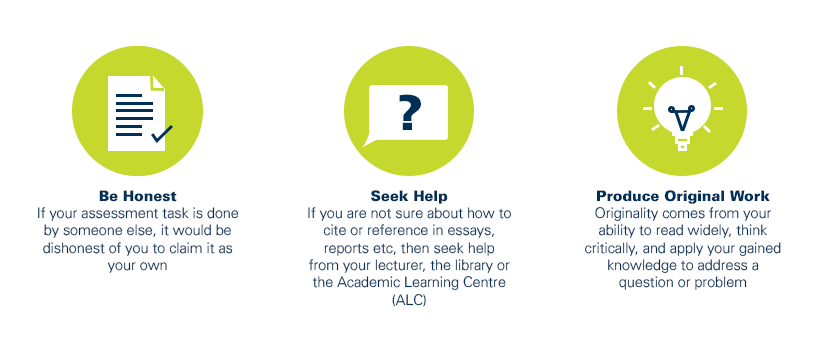
As a CQUniversity student you are expected to act honestly in all aspects of your academic work.
Any assessable work undertaken or submitted for review or assessment must be your own work. Assessable work is any type of work you do to meet the assessment requirements in the unit, including draft work submitted for review and feedback and final work to be assessed.
When you use the ideas, words or data of others in your assessment, you must thoroughly and clearly acknowledge the source of this information by using the correct referencing style for your unit. Using others’ work without proper acknowledgement may be considered a form of intellectual dishonesty.
Participating honestly, respectfully, responsibly, and fairly in your university study ensures the CQUniversity qualification you earn will be valued as a true indication of your individual academic achievement and will continue to receive the respect and recognition it deserves.
As a student, you are responsible for reading and following CQUniversity’s policies, including the Student Academic Integrity Policy and Procedure. This policy sets out CQUniversity’s expectations of you to act with integrity, examples of academic integrity breaches to avoid, the processes used to address alleged breaches of academic integrity, and potential penalties.
What is a breach of academic integrity?
A breach of academic integrity includes but is not limited to plagiarism, self-plagiarism, collusion, cheating, contract cheating, and academic misconduct. The Student Academic Integrity Policy and Procedure defines what these terms mean and gives examples.
Why is academic integrity important?
A breach of academic integrity may result in one or more penalties, including suspension or even expulsion from the University. It can also have negative implications for student visas and future enrolment at CQUniversity or elsewhere. Students who engage in contract cheating also risk being blackmailed by contract cheating services.
Where can I get assistance?
For academic advice and guidance, the Academic Learning Centre (ALC) can support you in becoming confident in completing assessments with integrity and of high standard.
What can you do to act with integrity?