Overview
During this clinical unit you will apply and expand on knowledge and skills previously learned both on campus and during your previous placements.You will further develop your clinical skills in general radiography to include adaptation to a range of patient types and imaging environments. You will develop clinical skills in computed tomography and theatre fluoroscopy. You will further develop your decision-making skills and use your knowledge of image evaluation to assess images from a wide range of procedures for technical sufficiency. You will use reflective practice to assist in your development as an imaging professional. At all times you will work within the profession's Code of Conduct and your scope of practice.
Details
Pre-requisites or Co-requisites
Pre-requisites: MEDI12011 Medical Imaging Clinical Experience 1 MEDI13001 Imaging Science 4 MEDI13002 Imaging Procedures 3 MEDI13006 Imaging Procedures 4 Both MEDI13002 and MEDI13006 must have been completed within the past six months. Should this time limit be exceeded, the student must undergo a period of on-campus skills revision as determined by the Head of Course and successfully complete skills assessments to demonstrate currency of professional skills.
Important note: Students enrolled in a subsequent unit who failed their pre-requisite unit, should drop the subsequent unit before the census date or within 10 working days of Fail grade notification. Students who do not drop the unit in this timeframe cannot later drop the unit without academic and financial liability. See details in the Assessment Policy and Procedure (Higher Education Coursework).
Offerings For Term 2 - 2026
Attendance Requirements
All on-campus students are expected to attend scheduled classes - in some units, these classes are identified as a mandatory (pass/fail) component and attendance is compulsory. International students, on a student visa, must maintain a full time study load and meet both attendance and academic progress requirements in each study period (satisfactory attendance for International students is defined as maintaining at least an 80% attendance record).
Recommended Student Time Commitment
Each 18-credit Undergraduate unit at CQUniversity requires an overall time commitment of an average of 37.5 hours of study per week, making a total of 450 hours for the unit.
Class Timetable
Assessment Overview
Assessment Grading
This is a pass/fail (non-graded) unit. To pass the unit, you must pass all of the individual assessment tasks shown in the table above.
All University policies are available on the CQUniversity Policy site.
You may wish to view these policies:
- Grades and Results Policy
- Assessment Policy and Procedure (Higher Education Coursework)
- Review of Grade Procedure
- Student Academic Integrity Policy and Procedure
- Academic Progression Policy and Procedure
- Student Refund and Credit Balance Policy and Procedure
- Complaints Policy and Procedure
- Information and Communications Technology Acceptable Use Policy and Procedure
This list is not an exhaustive list of all University policies. The full list of University policies are available on the CQUniversity Policy site.
Feedback, Recommendations and Responses
Every unit is reviewed for enhancement each year. At the most recent review, the following staff and student feedback items were identified and recommendations were made.
Feedback from Student evaluation feedback and unit coordinator reflection.
Students felt that the support and feedback offered by the unit coordinator and marker helped with their progression.
Maintain support via distance for students during placement and offer feedback in a timely manner.
Feedback from Unit coordinator reflection.
Clear assessment instructions helped students submit correctly.
Continue providing assessment summary guides on the CG92 portal.
- Behave in a professional manner, adhering to the profession's Code of Conduct and working within your scope of practice as appropriate to a third year student
- Reflect on your practice on an ongoing basis to integrate new learning and experiences
- Critique images across a wide range of procedure types for technical sufficiency and formulation of image improvement strategies where indicated
- Demonstrate a comprehensive knowledge of radiographic, fluoroscopic and computed tomography equipment, in keeping with your level of training and experience
- Perform all general radiographic examinations on non-complex patient presentations with minimal assistance and on complex patient presentations with moderate assistance
- Perform advanced radiographic examinations, fluoroscopic and computed tomography examinations with moderate assistance.
Medical Radiation Practice Board of Australia (MRPBA) Professional Capabilities for Medial Radiation Practice:
Domains: 1, 2, 3, 4, 5.1a, 5.2a, 5.3a
Alignment of Assessment Tasks to Learning Outcomes
| Assessment Tasks | Learning Outcomes | |||||
|---|---|---|---|---|---|---|
| 1 | 2 | 3 | 4 | 5 | 6 | |
| 1 - Professional Practice Placement - 0% | ||||||
| 2 - Portfolio - 0% | ||||||
| 3 - Portfolio - 0% | ||||||
| 4 - Practical Assessment - 0% | ||||||
| 5 - Practical Assessment - 0% | ||||||
Alignment of Graduate Attributes to Learning Outcomes
| Graduate Attributes | Learning Outcomes | |||||
|---|---|---|---|---|---|---|
| 1 | 2 | 3 | 4 | 5 | 6 | |
| 1 - Communication | ||||||
| 2 - Problem Solving | ||||||
| 3 - Critical Thinking | ||||||
| 4 - Information Literacy | ||||||
| 5 - Team Work | ||||||
| 6 - Information Technology Competence | ||||||
| 7 - Cross Cultural Competence | ||||||
| 8 - Ethical practice | ||||||
| 9 - Social Innovation | ||||||
| 10 - First Nations Knowledges | ||||||
| 11 - Aboriginal and Torres Strait Islander Cultures | ||||||
Textbooks
There are no required textbooks.
IT Resources
- CQUniversity Student Email
- Internet
- Unit Website (Moodle)
All submissions for this unit must use the referencing style: Vancouver
For further information, see the Assessment Tasks.
r.druva@cqu.edu.au
n.sciascia@cqu.edu.au
Week 1 of Clinical Placement
Begin Date: 03 Aug 2026Module/Topic
Standard start date for MEDI13005 is Monday 3rd August 2026.
Clinical Placement Week 1
Chapter
Events and Submissions/Topic
- Site orientation and induction
- Complete Week 1 logbook and upload within 3 days of the last rostered shift for the week (along with all forms for any performance assessments attempted this week).
Week 2 of Clinical Placement
Begin Date: 10 Aug 2026Module/Topic
Clinical Placement Week 2
Chapter
Events and Submissions/Topic
- Complete Week 2 logbook and upload within 3 days of the last rostered shift for the week (along with all forms for any performance assessments attempted this week).
Week 3 of Clinical Placement
Begin Date: 17 Aug 2026Module/Topic
Clinical Placement Week 3
Chapter
Events and Submissions/Topic
- Complete Week 3 logbook and upload within 3 days of the last rostered shift for the week (along with all forms for any performance assessments attempted this week).
- Complete first GAPA if moving to new site next week.
Week 4 of Clinical Placement
Begin Date: 24 Aug 2026Module/Topic
Clinical Placement Week 4
Chapter
Events and Submissions/Topic
- First reflection due by 4pm AEST Monday, Week 4.
- Complete Week 4 logbook and upload within 3 days of the last rostered shift for the week (along with all forms for any performance assessments attempted this week).
- First GAPA to be completed this week and uploaded within 3 days of the last rostered shift for the week.
Week 5 of Clinical Placement
Begin Date: 31 Aug 2026Module/Topic
Clinical Placement Week 5
Chapter
Events and Submissions/Topic
- Complete Week 5 logbook and upload within 3 days of the last rostered shift for the week (along with all forms for any performance assessments attempted this week).
Week 6 of Clinical Placement
Begin Date: 07 Sep 2026Module/Topic
Clinical Placement Week 6
Chapter
Events and Submissions/Topic
- Complete Week 6 logbook and upload within 3 days of the last rostered shift for the week (along with all forms for any performance assessments attempted this week).
- Complete GAPA if moving to new site next week.
Week 7 of Clinical Placement
Begin Date: 14 Sep 2026Module/Topic
Clinical Placement Week 7
Chapter
Events and Submissions/Topic
- Complete Week 7 logbook and upload within 3 days of the last rostered shift for the week (along with all forms for any performance assessments attempted this week).
Week 8 of Clinical Placement
Begin Date: 21 Sep 2026Module/Topic
Clinical Placement Week 8
Chapter
Events and Submissions/Topic
- Complete Week 8 logbook and upload within 3 days of the last rostered shift for the week (along with all forms for any performance assessments attempted this week).
- Second GAPA to be completed this week and uploaded within 3 days of the last rostered shift for the week.
Week 9 of Clinical Placement
Begin Date: 28 Sep 2026Module/Topic
Clinical Placement Week 9
Chapter
Events and Submissions/Topic
- Complete Week 9 logbook and upload within 3 days of the last rostered shift for the week (along with all forms for any performance assessments attempted this week).
Week 10 of Clinical Placement
Begin Date: 05 Oct 2026Module/Topic
Clinical Placement Week 10
Chapter
Events and Submissions/Topic
- Second reflection due by 4pm AEST Monday, Week 10.
- Complete Week 10 logbook and upload within 3 days of the last rostered shift for the week (along with all forms for any performance assessments attempted this week).
Week 11 of Clinical Placement
Begin Date: 12 Oct 2026Module/Topic
Clinical Placement Week 11
Chapter
Events and Submissions/Topic
- Complete Week 11 logbook and upload within 3 days of the last rostered shift for the week.
- If attendance requirement has been met, final GAPA to be completed and uploaded within 3 days of the last rostered shift for the week.
- All Performance assessments must be completed and submitted by the Tuesday of the final week of placement.
Week 12 of Clinical Placement
Begin Date: 19 Oct 2026Module/Topic
Clinical Placement Week 12
Chapter
Events and Submissions/Topic
- If you have taken any personal leave days, complete Week 12 logbook and upload within 3 days of the last rostered shift for the week.
- Final GAPA to be completed in your final week and uploaded within 3 days of the last rostered shift for the week.
- All Performance assessments must be completed and submitted by the Tuesday of the final week of placement.
This unit is an 11 week full-time clinical (Work Integrated learning or WIL) placement with 5 personal leave days, commencing on Monday 3rd August 2026, which is Week 4 of the standard Term 2 calendar. Full attendance of this clinical placement is 11 weeks. Some students may have placement start/end dates that differ from the standard scheduled start/end dates of the placement.
You will have been allocated a specific clinical site (or sites) to attend for the placement. The clinical site/s will provide the range and quantity of imaging procedures to support your achievement of the unit learning outcomes and support your completion of clinical assessments. You will be rostered by your clinical supervisor to attend at the variety of shift times and in a variety of work areas within the site/s. During this placement student rosters may not be standard Monday – Friday, but may include evening and night shifts, weekend work, compressed weekly rosters and scheduled leave days. Because of these factors, assessment due dates are expressed relative to the individual student’s roster and week of placement, not expressed in calendar days.
You will require regular computer and internet access, use of Microsoft Office software and document scanning technology in order to complete assessment requirements. Clinical sites do not provide computer or internet access, so it is your responsibility to ensure regular access to the technology needed to upload your assessment files by the submission due dates.
The unit teaching team will monitor your clinical progress and provide regular feedback through review of your weekly logbook, clinical assessments and 'wellness' surveys. In Weeks 3, 6, 9 and 11/12 of the placement, you will complete a 'wellness' survey allowing you to check-in with your unit coordinator to periodically notify them of your well-being and any issues that may be arising throughout your placement. You are encouraged to use the Q&A and Discussion Forums for general queries and comments, or to contact the unit coordinator directly for any queries or concerns related to your placement.
The unit coordinator for this clinical placement unit is - Ruth Druva. The preferred method of contact is via email - r.druva@cqu.edu.au. Alternatively contact can be via phone - (07) 4940 7850.
1 Professional Practice Placement
Staff workplace attendance and the ability to participate in rosters are critical to the success and morale of a medical imaging team, and therefore the quality of patient care provided by that team.
This unit is part of a professionally accredited course with significant Work Integrated Learning components. For this unit you must attend 11 weeks of full-time clinical placement or the equivalent number of days through an approved alternative scheduling arrangement. The placement location(s) and timing have been arranged by the course in order to provide sufficient learning and assessment opportunities for you to meet the unit learning outcomes.
You are required to achieve 100% attendance. This is defined as attending all hours relative to the quantity of time that you have been rostered by your clinical supervisor to achieve 11 weeks of full-time placement, minus any exceptional absence that is approved by both your clinical supervisor and unit coordinator. (Exceptional absence is separate from allocated personal leave days as discussed below.) You are not required to attend on any public holidays that fall within your rostered weeks, nor are you required to make up those days. If your allocated placement site terminates your placement due to your behavioural issues, as per the University’s Work Integrated Learning policy, you will not be provided any further placement for the unit. This will result in a Fail grade for the unit.
Your rostering, including daily start and end times, is determined by the clinical supervisor of the allocated placement site. The roster depends on the scheduling of imaging procedures that are relevant to your educational requirements, the typical hours of operation of the clinical facility and availability of sufficient supervision. You should not expect the roster to be modified to suit your personal life. You are not permitted to work extra shifts back to back in order to reduce the duration of clinical placement.
If you need to be absent for a part or full day of placement, you must inform both your clinical supervisor and unit coordinator as soon as possible, preferably in advance of the missed time. There are five allocated personal leave days during this placement. You are not required to take this leave, but you do have the flexibility to use the five personal leave days as a single week-long block or as a combination of single or multiple days. If you use any leave days in Weeks 1-11, then you will attend into your 12th scheduled week. If you have not used any leave in Weeks 1-11, then Week 11 is your final week of the placement.
Personal leave days may only be taken with the explicit approval of your clinical supervisor, and any leave days taken will add to the length of your clinical placement. Your personal leave days must be used for missed time due to illness, injury, caregiver responsibilities or other personal reasons for missing placement. Use the leave application form on the unit Moodle site to seek the approval of your clinical supervisor and upload the completed form to Moodle.
All unapproved absences must be made up. Any time to be made up is to be scheduled at the convenience of the clinical site and approved by your supervisor. This may result in extension of the work day or work week. Note that not all facilities have extended hours of operation, so opportunities to make up time are site-dependent. If you attend outside of your normally rostered hours (e.g. late day, evening or weekend), you must still be under direct supervision and working within your scope of practice, and the caseload anticipated by your supervisor must be such that the time would provide useful learning experience.
For any time missed beyond the five personal leave days, you may apply for special consideration of the missed time to the unit coordinator by providing supporting documentation. This may impact the quantity of time you are required to make up. Note that only in exceptional circumstances will any missed time be waived.
You must document your attendance relative to your rostered time each week in the weekly logbook file. The record must be accurate and complete. You must include any episodes of absence including scheduled leave days, lateness or early departure in the comments section.
The 72-hour grace period does not apply to this assessment.
AI scale for this task: 1 No AI. You must not use AI at any point during the assessment. You must demonstrate your core skills and knowledge.
Document weekly attendance in the logbook and upload within 3 calendar days of the last rostered shift of the week.
Weekly attendance will be reviewed by the unit coordinator, who will follow up within 5 working days of the log upload on any absences or incomplete attendance records.
To obtain a score of ‘Pass’ for this assessment, you must:
- complete 100% attendance as defined above,
- have documented all attendance accurately and completely in your weekly log, and
- have submitted each week's completed logbook file within 3 days of the last rostered shift of the week.
At the end of the scheduled 12 weeks of placement:
- if you have not met the 100% attendance requirement (11 weeks) AND you do have documented, justifiable grounds for your absence, you will be provided additional scheduled time to make up the time you have missed. This scheduled make up time may not be immediately following the scheduled placement, and/or may not be at the same placement site, depending on clinical availability.
- if you have not met the 100% attendance requirement (11 weeks) AND you do not have documented justifiable grounds for the absence, you will score 'Fail' for this assessment item.
- Behave in a professional manner, adhering to the profession's Code of Conduct and working within your scope of practice as appropriate to a third year student
- Demonstrate a comprehensive knowledge of radiographic, fluoroscopic and computed tomography equipment, in keeping with your level of training and experience
2 Portfolio
The clinical logbook serves as a record of your depth and breadth of experience attained during the placement. It demonstrates the degree of progression of your skill development within and across procedure types. You should use this record to inform your reflection on learning and in formulating weekly learning goals that will support achievement of the unit learning outcomes.
You must record in the electronic log tool (the Excel spreadsheet file provided on the unit Moodle site) a weekly listing of every imaging procedure in which you participate. Your level of involvement in each procedure is to be categorised as observed, assisted or performed, using the definitions provided. There are no minimum or maximum target numbers for any category of involvement, nor are there target numbers for any examination type.
- Observed: You have watched the radiographer(s) carry out the procedure, and your involvement in the case has been limited to an occasional task directly assigned by someone else.
- Assisted in: You have been an integral member of the imaging team that is led by a radiographer, and you have carried out many tasks to support the completion of the procedure. You may have carried out all imaging tasks but were provided significant guidance and direction by your supervising radiographer.
- Performed: You have planned and carried out the imaging procedure with occasional guidance, assistance and/or direction provided by your supervising radiographer.
For general radiographic procedures, you must also categorise the patient by type:
- Basic: The patient has no significant limitation in their ability to carry out your instructions, and procedure involves only standard views/projections that do not require significant customisation to the patient's condition.
- Complex: The patient's condition is such that you must significantly modify your approach (patient care and/or technical tasks) to carrying out the procedure relative to the requirements for a 'basic' patient. This includes patients with minor traumatic injuries.
- Paediatric: The patient is a child who is young enough to require you to modify your approach (patient care and/or technical tasks) to carrying out the procedure relative to a 'basic' patient.
- Trauma: The patient has major traumatic injury/injuries requiring significant modification to your approach (patient care and/or technical tasks).
All procedural information is to be recorded in such a way as to maintain patient confidentiality.
You must record in the logbook any performance assessments that you have attempted, whether passed or failed. All completed assessment forms are an extension of your log documentation, as they provide further evidence of your clinical learning experiences. Performance assessment documentation includes the patient type (basic vs complex).
You must also log other clinical learning activities. This includes facility induction and orientation, any meetings, image critique sessions or other feedback/learning activities with your clinical supervisor or other clinical educator. The facility induction and orientation must be completed by your second day of placement and logged in your logbook. If you have not completed a site induction/orientation by the end of the second day of placement, see your clinical educator/site supervisor and contact your unit coordinator to advise.
In addition to noting imaging procedures and performance assessments, your logbook must have a minimum of 3 notation entries each week. This could include documentation of other clinical learning activities or explanation of types of x-rays, scans, patients, scenarios or helpful tips that you encountered throughout the week.
The weekly log is a multi-sheet Excel workbook with built-in calculations to track your progress during the unit. You must follow the log instructions provided on the unit Moodle site and within the log to ensure that tracking calculations are correct. You must use Microsoft Excel for data entry and save the file in its native Excel file format. This same master file must be updated weekly, so that each week’s submission is a cumulative record of all weeks containing a running tally of examinations and assessments.
It is your responsibility to ensure that you have regular access to the technology needed to complete the spreadsheet each week. If you have a technical issue or personal circumstances that prevent you from being able to accurately complete and upload your file by the standard due dates, you MUST inform your unit coordinator and provide just cause by the due date to obtain approval for an assessment extension.
In the absence of an approved assessment extension, your failure to meet the weekly upload due date will result in a Fail for this assessment item. If you have more than two incidents of either missing the due date and/or having your logbook returned to you for correction due to inaccuracy or incompleteness, you will fail this assessment task.
The 72-hour grace period does not apply to this assessment.
AI scale for this task: 1 No AI. You must not use AI at any point during the assessment. You must demonstrate your core skills and knowledge.
MRPBA Professional Capabilities
This assessment task maps to the following MRPBA Professional Capabilities (2026):
- MRPBA Domain 1A, Key capability 1
Logbook must be uploaded each week, within 3 calendar days of last rostered shift of the week.
The unit coordinator will follow up within 5 working days of upload for any log entries that require further information or discuss any areas of concern.
The logbook is graded on a Pass/Fail basis. The logbook is assessed on accuracy and completeness of information entered and on timeliness of submissions.
If any week's upload have noticeable gaps, errors or omissions, you will be given one week to correct and resubmit that week's log.
To obtain a score of ‘Pass’ for this assessment, you must:
- ensure that your logbook is complete and accurate in regards to your attendance, your participation in imaging examinations, assessments you have attempted, as well as supervisor meetings and/or other educational activities,
- ensure the integrity of the file format of the logbook is maintained, and
- meet the stated standards of documentation completeness and timeliness, such that you have no more than two incidents in total of incompleteness or lateness.
- Perform all general radiographic examinations on non-complex patient presentations with minimal assistance and on complex patient presentations with moderate assistance
- Perform advanced radiographic examinations, fluoroscopic and computed tomography examinations with moderate assistance.
3 Portfolio
Critical reflection on your clinical practice is a necessary skill for your professional development, not only as a student, but also once qualified. Over the duration of this clinical placement, you are required to submit two reflections, which will complement learning from MEDI13006 Imaging Procedures 4, and will allow you to reflect upon your communication skills as a health professional.
Reflection task 1
For the first reflection task, you must choose one of the following topics:
- Reflect on your communication with a patient, or carer of a patient, that you have imaged or assisted with imaging.
- Reflect on your communication with a radiographer or work colleague within the Medical Imaging department, during the course of an imaging examination.
- Reflect on your communication with a member of an external healthcare team, during the course of an imaging examination that is performed either within the Medical Imaging department or within another department, ie. Doctor/Nurse in theatre/ICU etc.
- Reflect on your cultural awareness and ability to respond to the needs of a patient with whom you are culturally different.
For this reflection task, your discussion will focus on how the reflective moment triggered increased self-awareness and a resultant change in your knowledge, skills and/or behaviour. You must use either the Gibbs' or Borton's reflective tool pro-forma to develop an action plan. The reflection pro-forma, marking rubric and further guidance will be available on the unit Moodle site.
Reflection task 2
For the second reflection task, you must interview one healthcare professional, other than a radiographer. Healthcare professional options can include, but are not limited to, sonographer, nurse, nuclear medicine technologist, radiologist. You will need to determine what their role involves and their responsibilities within the healthcare team.
You will use the information discovered during the interview and reflect on the following:
- Your previous interactions with and knowledge of this professional role
- How your new learning may impact your perceptions of the wider healthcare team and your place within it
- How this new learning may impact your future interactions with the wider healthcare team
Please note that the requirements and marking rubric for this task are different to those of reflection task 1. This task does not require you to develop an action plan. It does require you to consider how your increased knowledge about the health professional you have interviewed will impact your perceptions of and interactions with members of the wider healthcare team. Further guidance will be available on the unit Moodle site.
Patient and staff confidentiality must always be maintained.
This is a pass/fail assessment item. In the absence of an approved assessment extension, if you have not met all of the minimum criteria for achieving a score of 'Pass' on this assessment, you will receive a Fail grade for the unit.
AI scale for this task: 3 AI Collaboration. You may use AI for to assist with specific tasks such as drafting text, refining and evaluating your work. You must critically evaluate and modify any Al-generated content you use.
MRPBA Professional Capabilities and NSQHS Standards
This assessment task maps to the following MRPBA Professional Capabilities (2026) and NSQHS Standards (2021):
- MRPBA Domain 2, Key capability 1
- MRPBA Domain 3, Key capabilities 1 and 2
- NSQHS Standard 2
First reflection is due by 4pm AEST Monday of Week 4. Second reflection is due by 4pm AEST Monday of Week10.
The unit coordinator will review the uploaded assessment and provide you feedback within two weeks of upload of each item.
The reflection submissions will be assessed for:
- critical reflection of an approved topic listed in the Task Description,
- completeness in addressing each item of the Gibbs' or Borton's reflective tool proforma,
- detailed action plan relevant to reflection,
- detailed analysis of performance,
- critical reflection on areas for improvement,
- demonstrated evidence of learning and development through reflection,
- use a minimum of two external resources to inform your reflection, that are cited and referenced correctly, and
- academic writing.
Detailed marking rubrics will be posted on the unit Moodle site to specify the 'Pass' requirements for each criterion listed above. This specifies the attributes for the three levels of scoring of criteria: 'meets requirements', 'marginally meets requirements' and 'does not meet requirements'.
For each of the reflection tasks, if you receive any score of 'does not meet the requirements' or 'marginally meets requirements' as per the marking rubric, you will be provided detailed feedback and guidance by the unit coordinator. You will then have one week to edit the submission and address the feedback to reach 'meets requirements' in all criteria on the re-attempt. Note that you will be permitted one re-attempt only for each of the reflection tasks.
To obtain a 'Pass' in this assessment item, you must:
- submit the two reflections by their stated due dates,
- attain 'meets requirements' scores in all criteria after a maximum of two attempts (initial submission and one resubmission for each reflection task).
- Reflect on your practice on an ongoing basis to integrate new learning and experiences
4 Practical Assessment
Clinical placement occurs in the professional workplace. As a clinical student, you are provided access to that workplace on the condition that you demonstrate behaviours and attributes of a healthcare professional, present a positive image to the clinical facility's staff and clients, and comply with the site's policies. As a student in a regulated healthcare profession in Australia, you are also required to be working toward consistent compliance with the Profession's Code of Conduct. As a CQUniversity student you must also meet the general behavioural requirements of the Student Conduct Policy and Procedure and refrain from misconduct as described in that Procedure.
Assessment process:
Your clinical supervisor will be working in the imaging areas with you, directly observing your day-to-day performance, and/or obtaining feedback from supervising radiographers who are doing so. These observations and collected feedback relate to your demonstrated knowledge, skills and behaviours over a span of time. This is not limited to a particular procedure or patient case. The observations and feedback are then used to complete the Global Assessment of Professional Attributes (GAPA) form provided on the unit Moodle site.
There are four main sections to the GAPA form:
- Section 1: initiative and communication
- Section 2: responsibility and demeanour
- Section 3: overall technical knowledge and skill
- Section 4: adherence to site policies
In each section, there are multiple observable behaviours that are required. For most behaviours, it is expected that you are aiming toward consistent performance. These behaviours are categorised as non-critical.
There is one critical behaviour: adhering to site policies. It is expected that all students, right from their first placement, are capable of full and ongoing compliance with site policies. This critical behaviour 'Adheres to site policies regarding privacy, confidentiality, use of mobile devices and use of social media' is scored separately using the following scale:
- Full compliance
- One incident of non-compliance
- More than one incident of non-compliance.
A student who is non-compliant on a single occasion will receive a warning from the supervising radiographer or clinical supervisor. This incident will be considered behavioural misconduct. This warning may be issued initially in verbal form or in writing. The clinical supervisor will inform the unit coordinator (UC) of the situation. The Head of Course will then lodge a formal report of behavioural misconduct. This will be addressed separately from the scoring of the GAPA.
Any student who violates site policy more than once during a placement unit (whether violation of the same or a different policy as previously) will fail the GAPA. This will result in a Fail grade for the unit. This repeated behaviour is considered serious misconduct and thus will also be dealt with under the Student Behavioural Misconduct Procedure.
Your assessor will score your performance based on how frequently and to what extent you demonstrate each of the listed behaviours. Your assessor is also encouraged to provide comments to expand on the scoring feedback. Your clinical supervisor (or designated assessor) will meet with you after completing each assessment to discuss it with you. This is your opportunity to get clarification on any score or comment on the assessment.
Timing of assessment:
This assessment occurs three times during the placement. The first occurs at the end of Week 4 and the second occurs at the end of Week 8. The third and final GAPA assessment occurs in the final week of the placement. If you haven't used any of your assigned days of leave during your placement, the final GAPA will be at the end of Week 11, or if you have taken 1-5 days of leave then your final GAPA will be in Week 12.
In the instance where a student has a split placement scheduled across two or more sites, a formative GAPA is to be completed in the last week of the block of the rotation at each of the sites (just before leaving the site to attend another site), and a GAPA should be completed at least once every four weeks.
It is your responsibility to ensure that you remind your clinical supervisor at least a week prior to the assessment that it needs to be completed and book a meeting with them toward the end of the week that the assessment is due. This gives your supervisor the opportunity to collect feedback and to designate an alternate assessor if they will not be available.
Formative and summative use of GAPA assessment:
The first two GAPAs are formative, meaning their function is to provide you and your unit coordinator with formal documented feedback on your performance, but there are no minimum required scores related to your final grade for Sections 1, 2 and 3. Adherence to site policies (Section 4) is a requirement for all GAPAs. You are expected to use that feedback to reflect on your performance, develop an action plan to address any areas of performance that are not yet at the target level for this placement, and use the remaining weeks to achieve those targets. For any behaviour that you score well on for these initial GAPAs, it is expected that you will continue to meet that level of performance or surpass it for the remainder of the placement.
The end-of-placement assessment is summative, in that its primary use is to evaluate and document your performance relative to the stated performance targets (the minimum required scores listed in the Assessment Criteria section below). Your final overall score in this assessment depends on where you stand relative to those performance targets. You should use the end-of-placement assessment as formative as well, to help inform your plans for improvement that you can implement in future placements.
Self-assessment:
For all GAPAs, prior to meeting with your supervisor, you must also use the assessment tool to self-assess your behaviours. Complete the form and take it with you to your meeting with your supervisor to aid in the discussion of your progress.
Documentation and submission requirements:
Once you have met with your supervisor about your GAPA, you both need to sign and date both assessment documents (your supervisor's assessment and your self-assessment). You need to ensure that each completed assessment form has scores entered in all sections and has all required information, including the name, dated signature and MRPBA registration number of your assessor, as well as your dated signature. (Note that both you and your supervisor must sign a hard copy document. Electronic signatures are not accepted.)
Your supervisor will provide you with a copy of the completed assessment form. You must then scan the supervisor-completed and self-completed GAPA forms and upload the file into the unit Moodle site using the link provided.
You are required to log these assessment meetings in Section 3 of your relevant weekly logs, including the meeting date and a brief summary of the discussion plus the overall score of each assessment.
It is your responsibility to ensure regular access to the technology needed to upload your assessment files by the submission due dates. Recognise that the clinical facility is not responsible for providing you access to computer facilities for your assessments.
If you have a technical issue or personal circumstances that prevent you from being able to accurately complete and upload your file by the standard due date, you MUST inform the unit coordinator by the due date and provide just cause.
If you have more than two incidents of either missing the due date and/or having your supervisor-completed GAPA or self-completed GAPA returned to you for correction due to inaccuracy or incompleteness, you will fail this assessment task.
Assessment due dates and extensions:
If there are extenuating circumstances at the clinical facility that prevent you from being assessed during the required weeks, you must contact the unit coordinator in a timely manner to explain the situation and request an extension.
This is a pass/fail assessment item. In the absence of an approved assessment extension, if you have not met all of the minimum criteria for achieving a score of 'Pass' on this assessment, you will receive a Fail grade for the unit.
The 72-hour grace period does not apply to this assessment.
AI scale for this task: 1 No AI. You must not use AI at any point during the assessment. You must demonstrate your core skills and knowledge.
MRPBA Professional Capabilities
This assessment task maps to the following MRPBA Professional Capabilities (2026):
- MRPBA Domain 1, Key capability 1, 2, 3, 5
- MRPBA Domain 1A, Key capability 1, 2
- MRPBA Domain 2, Key capability 1, 2, 3, 4
- MRPBA Domain 3, Key capability 1, 2, 3
- MRPBA Domain 4, Key capability 1, 2
- MRPBA Domain 5, Key capability 1, 2, 3, 4
- MRPBA Domain 6, Key capability 1, 3
First GAPA must be completed by the end of Week 4, second at the end of Week 8, and third completed in your final week of placement. Each completed form must be uploaded within 3 days of the last rostered shift of the week in which the assessment was completed.
The unit coordinator will review the uploaded assessment forms and provide feedback within 5 working days of upload of each item.
Non-critical behaviours and attributes:
The assessor will use the stated 1-6 scale to indicate the frequency and extent to which you demonstrate each of those.
| Score | Descriptor of performance |
| NA | No opportunity or insufficient opportunity to assess |
| 1 | Never or hardly ever demonstrated (<10%) despite opportunities to do so |
| 2 | Demonstrated infrequently, less than half of the time (<50%) |
| 3 | Demonstrated about half of the time (just as likely to happen as not) |
| 4 | Demonstrated much of the time, but with some lapses |
| 5 | Demonstrated consistently (nearly always, at the level expected of a newly qualified practitioner < 1 month) |
| 6 | Demonstrated consistently and to a high level (at the level expected of an experienced practitioner) |
The minimum required scores for each section's non-critical behaviours and attributes are:
Section 1: Initiative & Communication
- Minimum score on any task is '4'
Section 2: Responsibility & Demeanour
- Minimum score on any task is '4'
- Maximum of 4 scores of '4'
Section 3: Overall Technical Knowledge & Skill
- Minimum score on any task is '4'
Critical behaviour:
The behaviour 'Adheres to site policies on privacy, confidentiality, use of mobile devices and use of social media' is scored separately using the following scale:
- Full compliance
- One incident of non-compliance
- More than one incident of non-compliance.
Note the procedure for non-compliance with Section 4 of the GAPA, as detailed above in Task Description.
To obtain a score of 'Pass’ for this assessment, you must:
- undergo all GAPAs by the due dates listed,
- on the summative GAPA, meet the minimum required scores in all sections, and
- meet the stated standards of documentation completeness and timeliness, such that you have no more than two incidents in total of incompleteness or lateness.
- Behave in a professional manner, adhering to the profession's Code of Conduct and working within your scope of practice as appropriate to a third year student
- Critique images across a wide range of procedure types for technical sufficiency and formulation of image improvement strategies where indicated
- Demonstrate a comprehensive knowledge of radiographic, fluoroscopic and computed tomography equipment, in keeping with your level of training and experience
- Perform all general radiographic examinations on non-complex patient presentations with minimal assistance and on complex patient presentations with moderate assistance
- Perform advanced radiographic examinations, fluoroscopic and computed tomography examinations with moderate assistance.
5 Practical Assessment
This task is designed to further develop proficiency in general radiography, as well as develop your skills in CT procedures, mobile radiography, theatre fluoroscopy and/or non-theatre fluoroscopy procedures.
Planning for performance assessments:
It is your responsibility to communicate with your supervisor in a timely manner to ensure that you are rostered into the required work areas for the targeted quantity of time (~3 weeks for CT, ~4 weeks for mobiles/theatre/fluoroscopy and ~4 weeks for general radiography). It is also your responsibility to schedule the assessments during the weeks you are rostered into the appropriate work areas.
Once you have performed a given examination type multiple times and are able to carry it out with a moderate amount of guidance and correction from the supervising radiographer, you are to request an assessment in that examination type. Performance assessments will be conducted by your clinical supervisor or a radiographer designated as an assessor by your supervisor. The assessor will observe you as you perform one imaging examination. Your assessor will use the assessment tool provided to you on the unit Moodle site to document the level of independence, completeness and correctness you have demonstrated in each of the required tasks in that single examination or procedure. The assessment is formative as well as summative in that it provides you with feedback on your relative strengths and areas for improvement. Should you not attain the minimum required score, you should create an action plan, based on the feedback, on how you intend to improve your performance in the required area/s. Once you have carried out your action plan, you may re-attempt the assessment.
There is no limit to the number of attempts you may make at any performance assessment. However, you must recognise that the clinical site staff's first priority is patient care. Opportunities for assessment are limited by the time available as well as the availability of suitable patients and suitable procedures. You need to take initiative in starting the assessment process in a timely manner to ensure you will complete the assessments in the placement time available. If there are extenuating circumstances at the clinical facility that limit your ability to access radiographic procedures to undergo assessments, then you must discuss this with your clinical supervisor AND contact the unit coordinator in a timely manner, so that action can be taken prior to the end of placement.
Scope of assessments:
Over the course of the placement, you must pass a total of nine performance assessments as detailed below by procedure category.
General Radiography
You must pass five performance assessments in general radiography. Each of the five assessments must be completed on a different region of the body as categorised below:
- upper extremities
- lower extremities
- shoulder girdle
- pelvic girdle
- bony thorax
- spine
- chest
- abdomen
- craniofacial
- dental
Three of the five performance assessments in general radiography must be on a complex patient. A complex patient is defined as - the patient's condition is such that you must significantly modify your approach (patient care and/or technical tasks) to carry out the procedure relative to the requirements for a 'basic' patient. This includes patients with minor traumatic injuries. This adaptation may be required because of factors such as the patient's current health status, mobility, stability, cognitive status, communication abilities and/or ability to cooperate. The type of adaptation may include, but is not limited to, the approach to communicating with the patient, modification of patient positioning, the selection of views/projections to be obtained, infection control protocols to be followed. Your assessor will categorise the patient involved in the performance assessment as either basic or complex. Paediatric patients are categorised as complex only if significant adaptation is required.
The other two assessments may be on any type of patient (basic or complex). Any basic assessments are limited to the following body regions:
- craniofacial
- dental
- spine
- pelvic girdle
- bony thorax
- shoulder girdle
Adaptation Imaging in Complex Environments
You must pass two performance assessments in adaptation imaging. These may be for mobile radiography, theatre fluoroscopy and/or non-theatre fluoroscopy.
Note that it is a course requirement that all students must complete at least one mobile radiography, one theatre fluoroscopy and one non-theatre fluoroscopy assessment in either MEDI13005 Medical Imaging Clinical Placement 3 or MEDI14006 Medical Imaging Clinical Placement 4. Thus, any of these three categories of assessments that is not completed successfully during this unit must be completed during MEDI14006.
Computed Tomography (CT)
You must pass two performance assessments in CT. They can be either contrast or non-contrast and each must be on a different region from the list below:
- Head (including brain, facial bones or sinuses)
- Chest
- Abdomen/Pelvis
- Spine
- Extremities
For all performance assessments in all categories above, each must be completed on a separate patient presentation. It is not acceptable to image a single patient for several anatomical areas during one attendance and use those examinations for several performance assessments.
Documentation and submission of the completed assessment:
You must ensure that each completed assessment form has all required information, including the name, dated signature and MRPBA registration number of your assessor, as well as your dated signature. (Note that both your signature and your assessor's signature must be done on a hard copy document. Digital signatures are not accepted.) If you submit an incomplete form, you will be provided with feedback and will need to resubmit the completed form within one week. This is the case whether you have passed or failed the assessment.
If a radiographer other than your clinical supervisor completes the assessment, it is your responsibility to ensure that your supervisor knows the outcome of each attempted assessment and that they are provided with the original of the completed assessment form. Your supervisor will provide you with a copy of the completed assessment form. You will then scan it and upload each form into the unit Moodle site using the link provided. The form for each attempted assessment, whether passed or not, must be uploaded into Moodle.
If you have more than two incidents of either missing the due date and/or having your performance assessments returned to you for correction due to inaccuracy or incompleteness, you will fail this assessment task.
This is a pass/fail assessment item. In the absence of an approved assessment extension, if you have not met all of the minimum criteria for achieving a score of 'Pass' on this assessment, you will receive a Fail grade for the unit.
The 72-hour grace period does not apply to this assessment.
AI scale for this task: 1 No AI. You must not use AI at any point during the assessment. You must demonstrate your core skills and knowledge.
MRPBA Professional Capabilities and NSQHS Standards
This assessment task maps to the following MRPBA Professional Capabilities (2026) and NSQHS Standards (2021
- MRPBA Domain 1, Key capability 1, 2, 3, 4, 5, 7, 8, 9, 10
- MRPBA Domain 1A, Key capability 1, 2
- MRPBA Domain 2, Key capability 1, 2, 3, 4
- MRPBA Domain 3, Key capability 1, 2, 3
- MRPBA Domain 5, Key capability 1, 2, 3, 4
- NSQHS Standard 2
- NSQHS Standard 3
- NSQHS Standard 4
- NSQHS Standard 6
Each completed performance assessment form must be uploaded within 3 days of the last rostered shift of the week in which the assessment was done. The final date for completing and submitting all forms is Tuesday of the last week of placement.
The unit coordinator will review each uploaded assessment form and provide feedback within 5 working days of upload of each item.
Each performance assessment measures your ability to carry out the core tasks of a radiographic imaging procedure. These tasks are detailed on the assessment form. For each of the performance assessment forms - general radiography (basic and complex), mobile radiography, theatre fluoroscopy, screening fluoroscopy and CT, there are 'critical' and 'non-critical' tasks. The assessor will score your observed performance of each listed task using the 1 - 6 scale, below. The scale is based on quantity of assistance and correction you required to perform each task.
| Score | Descriptor |
| 1 | Unable to complete the task without radiographer intervention. |
| 2 | Completed with 3+ assists, OR completed with 1 - 2 assists but with 1 - 2 errors. |
| 3 | Completed with 2 assists OR completed with 2 errors OR completed with 1 assist and 1 error. |
| 4 | Completed with 1 assist OR completed with 1 error. |
| 5 | Completed without error and without the need for assistance or reminder (at entry to practice level). |
| 6 | Completed independently and to a high standard (at experienced practitioner level). |
To achieve a 'Pass' score on general radiography performance assessments, you must achieve the following scores:
- a minimum score of '5' for the critical tasks
- a minimum score of '4' for the non-critical tasks
- for BASIC patients: a maximum of 3 non-critical tasks scored at '4' and all remaining non-critical tasks scored at '5' or better
- for COMPLEX patients: a maximum of 4 non-critical tasks scored at '4' and all remaining non-critical tasks scored at '5' or better
To achieve a 'Pass' score on mobile radiography, non-theatre fluoroscopy and theatre fluoroscopy performance assessments, you must achieve the following scores:
- a minimum score of '5' for the 3 critical tasks
- a minimum score of '4' for the non-critical tasks
- for MOBILE RADIOGRAPHY AND NON-THEATRE FLUOROSCOPY: a maximum of 5 non-critical tasks scored at '4' and all remaining non-critical tasks scored at '5' or better
- for THEATRE FLUOROSCOPY: a maximum of 4 non-critical tasks scored at '4' and all remaining non-critical tasks scored at '5' or better
To achieve a 'Pass' score on CT performance assessments, you must achieve the following scores:
- a minimum score of '5' for critical tasks
- a minimum score of '3' for the non-critical tasks
- a maximum of 1 non-critical tasks scored at '3'
- a maximum of 3 non-critical tasks scored at '4'
- all remaining non-critical tasks scored at '5' or better
To obtain a score of 'Pass' for this assessment, you must:
- meet the minimum requirements for each assessment, as detailed above in the Assessment Criteria,
- ensure that each of the nine performance assessments are completed on an appropriate procedure or body region as detailed in the Task Description above, and
- meet the stated standards of documentation completeness and timeliness, such that you have no more than two incidents in total of incompleteness or lateness.
- Behave in a professional manner, adhering to the profession's Code of Conduct and working within your scope of practice as appropriate to a third year student
- Critique images across a wide range of procedure types for technical sufficiency and formulation of image improvement strategies where indicated
- Demonstrate a comprehensive knowledge of radiographic, fluoroscopic and computed tomography equipment, in keeping with your level of training and experience
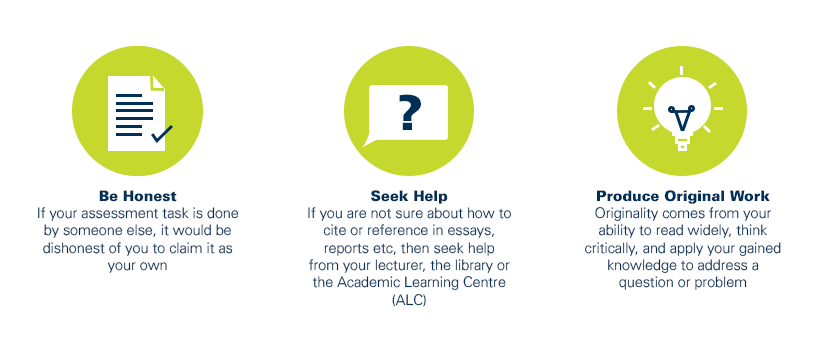
As a CQUniversity student you are expected to act honestly in all aspects of your academic work.
Any assessable work undertaken or submitted for review or assessment must be your own work. Assessable work is any type of work you do to meet the assessment requirements in the unit, including draft work submitted for review and feedback and final work to be assessed.
When you use the ideas, words or data of others in your assessment, you must thoroughly and clearly acknowledge the source of this information by using the correct referencing style for your unit. Using others’ work without proper acknowledgement may be considered a form of intellectual dishonesty.
Participating honestly, respectfully, responsibly, and fairly in your university study ensures the CQUniversity qualification you earn will be valued as a true indication of your individual academic achievement and will continue to receive the respect and recognition it deserves.
As a student, you are responsible for reading and following CQUniversity’s policies, including the Student Academic Integrity Policy and Procedure. This policy sets out CQUniversity’s expectations of you to act with integrity, examples of academic integrity breaches to avoid, the processes used to address alleged breaches of academic integrity, and potential penalties.
What is a breach of academic integrity?
A breach of academic integrity includes but is not limited to plagiarism, self-plagiarism, collusion, cheating, contract cheating, and academic misconduct. The Student Academic Integrity Policy and Procedure defines what these terms mean and gives examples.
Why is academic integrity important?
A breach of academic integrity may result in one or more penalties, including suspension or even expulsion from the University. It can also have negative implications for student visas and future enrolment at CQUniversity or elsewhere. Students who engage in contract cheating also risk being blackmailed by contract cheating services.
Where can I get assistance?
For academic advice and guidance, the Academic Learning Centre (ALC) can support you in becoming confident in completing assessments with integrity and of high standard.
What can you do to act with integrity?