Overview
This is the first of four work integrated learning placements in your course. This enables you to apply the knowledge, skills and behaviours that you will have developed in the pre-clinical simulation environment in prerequisite units. You will be placed at a clinical diagnostic imaging facility for eight weeks of fulltime clinical experience. You will work under the guidance and mentorship of clinical radiographers to perform radiography in a professional and effective manner and become a useful member of the imaging team. Your performance focus will be on general radiography examinations of non-complex patients. You will undergo assessments of your clinical performance of imaging examinations previously learned in the academic environment. You will also be assessed on your professional behaviours and attributes. You will apply reflective practice to support your skill development.
Details
Pre-requisites or Co-requisites
Pre-requisites: MPAT12001 Medical Pathophysiology MEDI12002 Imaging Science 2 MEDI12005 Imaging Science 3 MEDI12009 Radiographic Anatomy and Appearances 1 MEDI12010 Radiographic Anatomy and Appearances 2 MEDI12003 Imaging Procedures 1 MEDI12006 Imaging Procedures 2. This unit must have been completed within the last 6 months. Should this time limit be exceeded, the student must undergo a period of skills revision as determined by the Head of Course and successfully complete skills assessments to demonstrate currency of professional skills.
Important note: Students enrolled in a subsequent unit who failed their pre-requisite unit, should drop the subsequent unit before the census date or within 10 working days of Fail grade notification. Students who do not drop the unit in this timeframe cannot later drop the unit without academic and financial liability. See details in the Assessment Policy and Procedure (Higher Education Coursework).
Offerings For Term 3 - 2026
Attendance Requirements
All on-campus students are expected to attend scheduled classes - in some units, these classes are identified as a mandatory (pass/fail) component and attendance is compulsory. International students, on a student visa, must maintain a full time study load and meet both attendance and academic progress requirements in each study period (satisfactory attendance for International students is defined as maintaining at least an 80% attendance record).
Recommended Student Time Commitment
Each 12-credit Undergraduate unit at CQUniversity requires an overall time commitment of an average of 25 hours of study per week, making a total of 300 hours for the unit.
Class Timetable
Assessment Overview
| Assessment Task | Part Weighting (% of assessment) |
Assessment Security Level | Gen AI Guidance Levels |
|---|---|---|---|
| 1. Placement Attendance (Pass/Fail · 1 part ) | |||
| Part 1 – Placement Attendance (Professional Practice Placement) | 100% | High | No Gen AI Use |
| 2. Clinical Logbook (Pass/Fail · 1 part ) | |||
| Part 2 – Clinical Logbook (Learning logs / diaries / Journal / log books) | 100% | High | No Gen AI Use |
| 3. Performance Assessments (Pass/Fail · 1 part ) | |||
| Part 3 – Performance Assessments (Direct observation of procedural skills (DOPs)) | 100% | High | No Gen AI Use |
| 4. Global Assessment of Professional Attributes (GAPA) (Pass/Fail · 1 part ) | |||
| Part 4 – Global Assessment of Professional Attributes (GAPA) (Practical Assessment) | 100% | High | No Gen AI Use |
| 5. Reflection and Action Plan (Pass/Fail · 1 part ) | |||
| Part 5 – Reflection and Action Plan (Reflective Practice Assignment) | 100% | Low | AI-Assisted (Guided Collaboration) |
Assessment Grading
This is a pass/fail (non-graded) unit. To pass the unit, you must pass all of the individual assessment tasks shown in the table above.
All University policies are available on the CQUniversity Policy site.
You may wish to view these policies:
- Grades and Results Policy
- Assessment Policy and Procedure (Higher Education Coursework)
- Review of Grade Procedure
- Student Academic Integrity Policy and Procedure
- Academic Progression Policy and Procedure
- Student Refund and Credit Balance Policy and Procedure
- Complaints Policy and Procedure
- Information and Communications Technology Acceptable Use Policy and Procedure
This list is not an exhaustive list of all University policies. The full list of University policies are available on the CQUniversity Policy site.
Feedback, Recommendations and Responses
Every unit is reviewed for enhancement each year. At the most recent review, the following staff and student feedback items were identified and recommendations were made.
Feedback from Student evaluation feedback and unit coordinator reflection
Prompt feedback and support was provided by the unit coordinator and teaching staff during placement.
Maintain timely and accessible support for students throughout placement, with regular communication and prompt feedback to support student learning, engagement, and progression.
Feedback from Unit coordinator reflection
Some students did not appear to understand the importance of assessment tasks and the link between learning materials and assessment tasks.
Consider providing pre-placement assessment summary guides on CG92 portal and utilize email communication.
- Employ interpersonal skills in accordance with CQUniversity's graduate attributes and the profession's Code of Conduct
- Reflect on your performance on an ongoing basis to integrate new learning and experiences with the goal of improving your practice
- Critique radiographs for technical sufficiency and formulation of quality improvement strategies where indicated
- Use radiation and imaging equipment safely and effectively
- Perform routine radiographic examinations accurately, safely and effectively on non-complex patients at the advanced beginner stage of clinical competence
- Participate within your scope of practice as a useful member of the clinical medical imaging team.
This unit maps to the following components of the Medical Radiation Practice Board of Australia's Professional Capabilities for Medical Radiation Practice (2026 version):
Domain 1: Medical Radiation Practitioner
- key capability 1, enabling components a, b, c, d, e, f, h, i, j
- key capability 2, enabling components a, b, c
- key capability 3, enabling components b, c, d
- key capability 4, enabling components a, b, c, e, f
- key capability 5, enabling component a
- key capability 6, enabling components b, c
Domain 1A: Diagnostic Radiographer
- key capability 1, enabling components a, b, c, d, e, f, g
Domain 2: Professional and Ethical Practitioner
- key capability 1, enabling components a, b, c, d, f, h, i, j
- key capability 2, enabling components a, b, c, d, e
- key capability 3, enabling components a, b, c, d
Domain 3: Communicator and Collaborator
- key capability 1, enabling components a, c, d, e, f, g
- key capability 2, enabling components a, b, c, d, e
- key capability 4, enabling component c
Domain 4: Lifelong Learner
- key capability 1, enabling components a, d
- key capability 2, enabling components a, b, c, d
Domain 5: Safety, Quality and Risk Management Practitioner
- key capability 1, enabling components a, b, c, d, e
- key capability 2, enabling components a, b, c, d, g
- key capability 3, enabling component a
- key capability 4, enabling components a, b, d, e, f, g, h
Domain 6: Leader and Steward
- key capability 1, enabling components a, c, d, e
- key capability 3, enabling components a, c
Alignment of Assessment Tasks to Learning Outcomes
| Assessment Tasks | Learning Outcomes | |||||
|---|---|---|---|---|---|---|
| 1 | 2 | 3 | 4 | 5 | 6 | |
|
1.
Assessment 1
(Pass/Fail)
Part 1 -
Professional Practice Placement
|
||||||
|
2.
Assessment 2
(Pass/Fail)
Part 1 -
Learning logs / diaries / Journal / log books
|
||||||
|
3.
Assessment 3
(Pass/Fail)
Part 1 -
Direct observation of procedural skills (DOPs)
|
||||||
|
4.
Assessment 4
(Pass/Fail)
Part 1 -
Practical Assessment
|
||||||
|
5.
Assessment 5
(Pass/Fail)
Part 1 -
Reflective Practice Assignment
|
||||||
Alignment of Graduate Attributes to Learning Outcomes
| Graduate Attributes | Learning Outcomes | |||||
|---|---|---|---|---|---|---|
| 1 | 2 | 3 | 4 | 5 | 6 | |
| 1 - Communication | ||||||
| 2 - Problem Solving | ||||||
| 3 - Critical Thinking | ||||||
| 4 - Information Literacy | ||||||
| 5 - Team Work | ||||||
| 6 - Information Technology Competence | ||||||
| 7 - Cross Cultural Competence | ||||||
| 8 - Ethical practice | ||||||
| 9 - Social Innovation | ||||||
| 10 - First Nations Knowledges | ||||||
| 11 - Aboriginal and Torres Strait Islander Cultures | ||||||
Textbooks
There are no required textbooks.
IT Resources
- CQUniversity Student Email
- Internet
- Unit Website (Moodle)
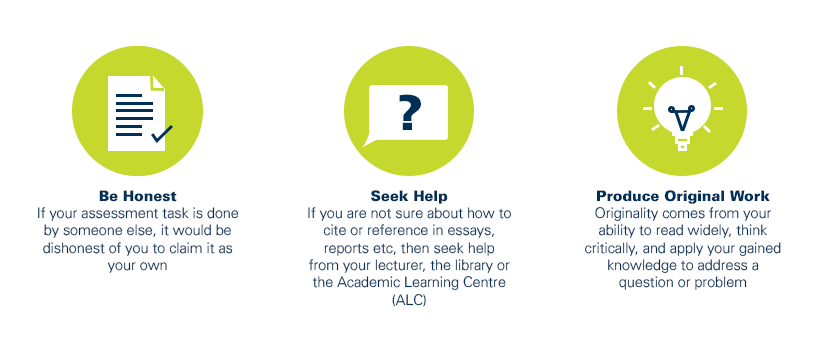
As a CQUniversity student you are expected to act honestly in all aspects of your academic work.
Any assessable work undertaken or submitted for review or assessment must be your own work. Assessable work is any type of work you do to meet the assessment requirements in the unit, including draft work submitted for review and feedback and final work to be assessed.
When you use the ideas, words or data of others in your assessment, you must thoroughly and clearly acknowledge the source of this information by using the correct referencing style for your unit. Using others’ work without proper acknowledgement may be considered a form of intellectual dishonesty.
Participating honestly, respectfully, responsibly, and fairly in your university study ensures the CQUniversity qualification you earn will be valued as a true indication of your individual academic achievement and will continue to receive the respect and recognition it deserves.
As a student, you are responsible for reading and following CQUniversity’s policies, including the Student Academic Integrity Policy and Procedure. This policy sets out CQUniversity’s expectations of you to act with integrity, examples of academic integrity breaches to avoid, the processes used to address alleged breaches of academic integrity, and potential penalties.
What is a breach of academic integrity?
A breach of academic integrity includes but is not limited to plagiarism, self-plagiarism, collusion, cheating, contract cheating, and academic misconduct. The Student Academic Integrity Policy and Procedure defines what these terms mean and gives examples.
Why is academic integrity important?
A breach of academic integrity may result in one or more penalties, including suspension or even expulsion from the University. It can also have negative implications for student visas and future enrolment at CQUniversity or elsewhere. Students who engage in contract cheating also risk being blackmailed by contract cheating services.
Where can I get assistance?
For academic advice and guidance, the Academic Learning Centre (ALC) can support you in becoming confident in completing assessments with integrity and of high standard.
What can you do to act with integrity?