Overview
Imaging Procedures 2 will build upon your foundation knowledge and skills developed in Imaging Procedures 1. On completion of this unit, you will be able to perform routine radiographic examinations of all regions of the body on an ambulant adult. You will demonstrate high levels of patient care and radiation safety. You will expand your image evaluation skills to encompass all regions of the body enabling you to assess radiographs for quality and to determine if an image is diagnostic. You will apply your understanding of the relationship between the beam, patient and image receptor and how it impacts on image appearance to determine strategies to improve imaging outcomes for all regions of the body. You will develop your skills as a reflective practitioner, to gain greater self-awareness and make progress toward a self-directed continued professional development habit. You will be introduced to additional areas of radiographic practice, including mammography, bone mineral densitometry and dental imaging. This unit includes a large element of clinical simulation to enhance readiness for clinical placement.
Details
Pre-requisites or Co-requisites
Pre-requisites: MEDI12002 Imaging Science 2 MEDI12003 Imaging Procedures 1 MEDI12009 Radiographic Anatomy and Appearances 1 Co-requisites: MEDI12005 Imaging Science 3 MEDI12010 Radiographic Anatomy and Appearances 2
Important note: Students enrolled in a subsequent unit who failed their pre-requisite unit, should drop the subsequent unit before the census date or within 10 working days of Fail grade notification. Students who do not drop the unit in this timeframe cannot later drop the unit without academic and financial liability. See details in the Assessment Policy and Procedure (Higher Education Coursework).
Offerings For Term 2 - 2026
Attendance Requirements
All on-campus students are expected to attend scheduled classes - in some units, these classes are identified as a mandatory (pass/fail) component and attendance is compulsory. International students, on a student visa, must maintain a full time study load and meet both attendance and academic progress requirements in each study period (satisfactory attendance for International students is defined as maintaining at least an 80% attendance record).
Recommended Student Time Commitment
Each 6-credit Undergraduate unit at CQUniversity requires an overall time commitment of an average of 12.5 hours of study per week, making a total of 150 hours for the unit.
Class Timetable
Assessment Overview
Assessment Grading
This is a graded unit: your overall grade will be calculated from the marks or grades for each assessment task, based on the relative weightings shown in the table above. You must obtain an overall mark for the unit of at least 50%, or an overall grade of 'pass' in order to pass the unit. If any 'pass/fail' tasks are shown in the table above they must also be completed successfully ('pass' grade). You must also meet any minimum mark requirements specified for a particular assessment task, as detailed in the 'assessment task' section (note that in some instances, the minimum mark for a task may be greater than 50%). Consult the University's Grades and Results Policy for more details of interim results and final grades.
All University policies are available on the CQUniversity Policy site.
You may wish to view these policies:
- Grades and Results Policy
- Assessment Policy and Procedure (Higher Education Coursework)
- Review of Grade Procedure
- Student Academic Integrity Policy and Procedure
- Academic Progression Policy and Procedure
- Student Refund and Credit Balance Policy and Procedure
- Complaints Policy and Procedure
- Information and Communications Technology Acceptable Use Policy and Procedure
This list is not an exhaustive list of all University policies. The full list of University policies are available on the CQUniversity Policy site.
Feedback, Recommendations and Responses
Every unit is reviewed for enhancement each year. At the most recent review, the following staff and student feedback items were identified and recommendations were made.
Feedback from Informal student feedback.
New lectures on projections were well received and supported learning.
Continue to use a lecture format that emphasises the link between patient position and image appearance.
Feedback from Unit Coordinator observation
The written image evaluation portfolio assessment task does not reflect the immediate verbal assessments that students are expected to provide when in the clinical setting.
Investigate the feasibility of changing the written image evaluation portfolio assessment task into an oral assessment of image evaluation.
- Perform safely and effectively at an advanced beginner level simulated radiographic examinations of all body regions, focusing on commonly requested examination on ambulant adults
- Demonstrate patient care and professional behaviours in the simulated clinical environment
- Assess radiographs for technical sufficiency
- Discuss methods to modify a radiographic examination to improve technical sufficiency and/or better demonstrate required anatomy
- Use technical terminology correctly in discussing the set-up of the beam, patient and image receptor for radiographic examinations and in discussing radiographic images and their appearances
- Discuss the indications for anatomical features demonstrated by technical set-ups, patient care requirements and specific imaging goals of routine radiographic projections of all body regions of ambulant adult patients
- Discuss the indications for and the techniques related to patient care requirements, safety considerations and image assessment of mammography, bone mineral densitometry and dental imaging.
- Reflect on your performance on an ongoing basis with the goal of improving your practice.
This unit maps to the following components of the Medical Radiation Practice Board of Australia's Professional Capabilities for Medical Radiation Practice (2020 version):
- Domain 1
- capability 1, enabling components a-f & j
- capability 2, enabling components a & c
- capability 3, enabling component b
- capability 4, enabling components c & e-f
- capability 5, enabling component a
- capability 6, enabling components b-c
- capability 7, enabling components a-c
- capability 8, enabling component a
- Domain 1A
- capability 1, enabling components a-d & f
- Domain 2
- capability 1, enabling components a-c
- capability 2, enabling components c
- capability 3, enabling components b-d
- capability 4, enabling components a
- Domain 3
- capability 1, enabling components a-g
- Domain 4
- capability 1, enabling components a & b
- capability 2, enabling components a-d
- Domain 5
- capability 1, enabling components a-e
- capability 2, enabling components a, b, d & g
- capability 3, enabling components d
- capability 4, enabling components a, b & d-f
- Domain 6
- capability 1, enabling components a & c
- capability 2, enabling components a
Alignment of Assessment Tasks to Learning Outcomes
| Assessment Tasks | Learning Outcomes | |||||||
|---|---|---|---|---|---|---|---|---|
| 1 | 2 | 3 | 4 | 5 | 6 | 7 | 8 | |
| 1 - Practical Assessment - 45% | ||||||||
| 2 - Reflective Practice Assignment - 15% | ||||||||
| 3 - Laboratory/Practical - 0% | ||||||||
| 4 - In-class Test(s) - 40% | ||||||||
Alignment of Graduate Attributes to Learning Outcomes
| Graduate Attributes | Learning Outcomes | |||||||
|---|---|---|---|---|---|---|---|---|
| 1 | 2 | 3 | 4 | 5 | 6 | 7 | 8 | |
| 1 - Communication | ||||||||
| 2 - Problem Solving | ||||||||
| 3 - Critical Thinking | ||||||||
| 4 - Information Literacy | ||||||||
| 5 - Team Work | ||||||||
| 6 - Information Technology Competence | ||||||||
| 7 - Cross Cultural Competence | ||||||||
| 8 - Ethical practice | ||||||||
| 9 - Social Innovation | ||||||||
| 10 - First Nations Knowledges | ||||||||
| 11 - Aboriginal and Torres Strait Islander Cultures | ||||||||
Textbooks
Textbook of Radiographic Positioning and Related Anatomy
- 10th Edition (2020)
- Authors: John P. Lampignano & Leslie E. Kendrick
- Elsevier
- St. Louis St. Louis , Missouri , United States of America
- ISBN: 9780323696548
You may use earlier editions of this textbook. You may also use a printed copy to this textbook.
There is limited access to the 9th edition of this textbook through the CQU Library.
This textbook will be used in multiple units throughout the Medical Imaging course.
Bontranger's Handbook of Radiographic Positioning and Techniques
- 10th Edition (2020)
- Authors: John P. Lampignano & Leslie E. Kendrick
- Elsevier
- St. Louis St. Louis , Missouri , United States of America
- ISBN: 9780323797894
You may use earlier editions of this book. You may also use a printed copy to this book.
There is limited access to earlier editions of this book through the CQU Library.
This book will be used in multiple units throughout the Medical Imaging course.
Additional Textbook Information
These textbooks are available for purchase as e-books.
You may use earlier editions of this textbook.
There is limited access to earlier editions of these textbooks through the CQU Library.
These textbooks will be used in multiple units throughout the Medical Imaging course.
IT Resources
- CQUniversity Student Email
- Internet
- Unit Website (Moodle)
All submissions for this unit must use the referencing style: Vancouver
For further information, see the Assessment Tasks.
c.e.agioritis@cqu.edu.au
Week 1
Begin Date: 13 Jul 2026Module/Topic
Radiography of the clavicle, AC joints and humerus
Chapter
Bontrager's Textbook Chapter 5
Bontrager's Handbook Chapter 3
Events and Submissions/Topic
Image taking lab
Simulated labs
Tutorial
Week 2
Begin Date: 20 Jul 2026Module/Topic
Radiography of the shoulder and scapula
Chapter
Bontrager's Textbook Chapter 5
Bontrager's Handbook Chapter 3
Events and Submissions/Topic
Image taking lab
Simulated labs
Tutorial
Week 3
Begin Date: 27 Jul 2026Module/Topic
Radiography of the thorax and abdomen
Chapter
Bontrager's Textbook Chapters 2, 3 & 10
Bontrager's Handbook Chapters 1, 7 & 9
Events and Submissions/Topic
Simulated labs
Tutorial
Week 4
Begin Date: 03 Aug 2026Module/Topic
Radiography of the pelvis, hip and femur
Chapter
Bontrager's Textbook Chapter 7
Bontrager's Handbook Chapter 5
Events and Submissions/Topic
Simulated labs
Tutorial
Week 5
Begin Date: 10 Aug 2026Module/Topic
Introduction to BMD and mammography
Chapter
Bontrager's Textbook Chapter 20
Events and Submissions/Topic
Practical Assessment 1.1 Due: at your scheduled time on either Wednesday (12 Aug 2026) or Thursday (13 Aug 2026)
Tutorial
Week 6
Begin Date: 17 Aug 2026Module/Topic
Radiography of the sacrum and SI joints
Chapter
Bontrager's Textbook Chapter 9
Bontrager's Handbook Chapter 6
Events and Submissions/Topic
Simulated labs
Tutorial
Vacation Week
Begin Date: 24 Aug 2026Module/Topic
Chapter
Events and Submissions/Topic
Week 7
Begin Date: 31 Aug 2026Module/Topic
Radiography of the lumbar spine
Chapter
Bontrager's Textbook Chapter 9
Bontrager's Handbook Chapter 6
Events and Submissions/Topic
Simulated labs
Tutorial
Week 8
Begin Date: 07 Sep 2026Module/Topic
Radiography of the cervical spine and thoracic spine
Chapter
Bontrager's Textbook Chapter 8
Bontrager's Handbook Chapter 6
Events and Submissions/Topic
Image taking lab
Simulated labs
Tutorial
Week 9
Begin Date: 14 Sep 2026Module/Topic
Radiography of the skull and dental
Chapter
Bontrager's Textbook Chapter 11
Bontrager's Handbook Chapter 8
Events and Submissions/Topic
Image taking lab
Simulated labs
Tutorial
Week 10
Begin Date: 21 Sep 2026Module/Topic
Radiography of the facial bones, sinuses and mandible
Chapter
Bontrager's Textbook Chapter 11
Bontrager's Handbook Chapter 8
Events and Submissions/Topic
Preclinical day
Simulated labs
Tutorial
Week 11
Begin Date: 28 Sep 2026Module/Topic
Consolidation. No new content.
Chapter
Events and Submissions/Topic
Image taking lab
Simulated labs
Tutorial
Professional Behaviours Due: Week 11 Friday (2 Oct 2026) 5:00 pm AEST
Week 12
Begin Date: 05 Oct 2026Module/Topic
Chapter
Events and Submissions/Topic
Exam Week
Begin Date: 12 Oct 2026Module/Topic
Chapter
Events and Submissions/Topic
Practical Assessment 1.2 Due: at your scheduled time on either Monday (12 Oct 2026) or Tuesday (13 Oct 2026)
Vacation/Exam Week
Begin Date: 19 Oct 2026Module/Topic
Chapter
Events and Submissions/Topic
This unit is delivered in on-campus mode at the Mackay Ooralea campus and runs from Weeks 1 to 13 (exam week). You will need to be on campus for tutorials, labs, and practical and theory assessments starting from Week 1.
Pre-requisites for this unit are:
- MEDI12002 Imaging Science 2
- MEDI12003 Imaging Procedures 1
- MEDI12009 Radiographic Anatomy and Appearances 1
The unit is designed to run concurrently with:
- MEDI12005 Imaging Science 3
- MEDI12010 Radiographic Anatomy and Appearances 2
You are expected to apply knowledge and skills from both pre-requisite and co-requisite units to the learning activities and assessments in this unit.
Learning Focus
This unit builds on the knowledge and skills developed in MEDI12003 Imaging Procedures 1. On completion of this unit, you will be able to perform routine radiographic examinations of all regions of the body on an ambulant adult. You will also be introduced to additional areas of radiographic practice, including mammography, bone mineral densitometry and dental imaging.
In this unit, you develop:
- The ability to successfully perform radiographic procedures.
- The ability to evaluate radiographs for technical adequacy.
These two skill sets are closely connected. Image evaluation is an integral part of performing and refining radiographic examinations. A skilled radiographer does more than capture radiographs—they must also assess them accurately and efficiently, making any necessary adjustments to ensure the final images meet high diagnostic standards. Successful completion of a radiographic examination depends on the precise execution of both skills.
Each radiograph demonstrates specific anatomy in a specific way. By understanding the relationship between:
- Patient positioning
- Beam direction
- Radiographic appearance
You will be able to identify and correct errors and omissions to improve imaging outcomes and by extension, improve patient outcomes.
Teaching and Learning Activities
This unit has been structured with a range of activities to support your success.
- Pre-recorded lectures: Introduce the weekly content. Watch these before attending tutorials and labs.
- Tutorials: Tutorial activities are designed to facilitate engagement with and application of the weekly content. Active participation will facilitate your preparation for assessments and provide you with feedback on your understanding of the weekly content. Tutorials are not recorded.
- High-fidelity clinical simulation labs: Involves the use of actual x-ray equipment with simulated patients in the Medical Imaging labs. You will have access to 1.5 hours of supervised time to apply weekly content to simulated clinical examinations and receive feedback. This is followed by 1.5 hours of unsupervised time for you to apply feedback received to your practice as you engage in deliberate practice to further develop your skills. Participation in both these labs will facilitate preparation for the practical assessments in this unit. Your preparation for these labs includes practicing weekly projections in advance of your scheduled lab time.
- Image taking labs: You will use anthropomorphic phantoms to perform x-rays, then apply your image evaluation skills to assess for appropriateness before proposing improvement strategies.
This unit has been designed with a lab-intensive structure. Attendance at, and engagement in, all labs and tutorials are essential for skill development and assessment preparation.
Lab participation requirements
All annual lab inductions listed on the Lab Inductions tile on the CG92 Medical Imaging Portal must be completed to enter the medical imaging labs. If you have not completed these within the last 12 months you must do so prior to your first lab. Students will not be admitted in the Medical Imaging labs until lab inductions are current.
All students are required to dress according to the Medical Imaging Student Dress Code when in the Medical Imaging labs. This includes the Medical Imaging course uniform or scrubs, dark plain shoes (closed toe and low heel), and CQU student name badge. The complete Dress Code is available on the Course Information & Documents for all Years tile on the CG92 Medical Imaging Portal.
Workload Expectation
This unit requires 150 hours of student engagement, averaging 12.5 hours per week. This includes both timetabled activities and independent study. Suggested weekly activities:
Pre-reading: 1 hour
View lectures: 2 hours
Build study notes and practice examination techniques outside of labs: 2 hours
Supervised labs: 1.5 hours
Independent labs: 1.5 hours
Tutorial preparation: 1 hour
Tutorials: 1.5 hours
Reflection: 1 hour
Assessment revision: 1 hour
Contact Information
Unit Coordinator: Carolyn Agioritis
Email: c.e.agioritis@cqu.edu.au
1 Practical Assessment
You will complete two practical assessments in the x-ray lab. These assessments allow you to demonstrate the radiographic examination skills you have developed during both MEDI12003 Imaging Procedures 1 and MEDI12006 Imaging Procedures 2. Attending both supervised and independent practice sessions is essential preparation for and success in these assessment tasks.
Overview
This assessment task comprises two parts:
- Practical Assessment 1.1
- Due: Week 5
- Weight: 20% of your grade
- Task: Perform a simulated radiographic examination involving 2 specified projections. Each projection will be from a different specified anatomical region.
- One specified projection from MEDI12003 Imaging Procedures 1 and
- One specified projection from weeks 1-4 of MEDI12006 Imaging Procedures 2.
Feedback will help you with your preparation for Practical Assessment 2.
- Practical Assessment 1.2
- Due: Exam week
- Weight: 25% of your grade
- Task: Perform a simulated radiographic examination involving 2 specified projections. Each projection will be from a different specified anatomical region.
- One specified projection from MEDI12003 Imaging Procedures 1 and
- Projections will be selected from weeks 6-10 of MEDI12006 Imaging Procedures 2.
Format
- Each practical assessment will be an individual performance of an x-ray examination using a peer as your patient.
- For each examination you will perform two specified projections
- Each practical assessment will be an 18-minute timed performance. Any steps not completed within the 18-minute limit will be marked as ‘not attempted.’
- Practical assessments will take place in the Medical Imaging labs in building 3.
Important
- There is no minimum score required for each individual assessment, but you must achieve a combined score of at least 50% to pass this task.
- You must dress according to the Medical Imaging Student Dress Code
- Your performance will be video recorded for scoring and moderation.
Academic Integrity – Read Carefully
- As this is a simulation of a clinical procedure, you may not access any resources while you perform this assessment – this is a closed book assessment.
- You must not consult with any other person via any means, or accept any input or assistance from any other person regarding the assessment.
- You must not communicate by any means with any other student during the test except for the student playing the part of the patient, and then only in the context of a student radiographer-patient interaction.
- Your performance must be your own effort without assistance in any form.
- You must not access or use artificial intelligence (AI) resources in any way.
- Both during and after the assessment, you must not record by any means, give access to or share any of the assessment resources with any other person.
- You must not provide assistance in any way to any other student during their assessment.
Level of GenAI use allowed: Level 1 – No AI. You must not use AI at any point during the assessment. You must demonstrate your core skills and knowledge.
Attendance & Extensions
- You must complete the assessment during your scheduled practical session on the specified due date
- If you cannot attend due to extenuating circumstances:
- You must apply for an extension (see Section 5 of the University Assessment Policy).
- If approved, you will be provided with a new date and time based on availability of the imaging facilities and assessor. It is your responsibility to ensure that you can attend at that new assigned date and time.
- In the absence of an extension, you will receive a score of zero for the assessment task
Note that the 72-hour grace period does NOT apply to this assessment.
Practical assessment 1.1 - will be held during the timetabled assessment sessions on Wednesday (12 Aug 2026) or Thursday (13 Aug 2026) of Week 5. Practical assessment 1.2 will be held during the timetabled assessment sessions on Monday (12 Oct 2026) or Tuesday (13 Oct 2026) of exam week.
Results will be available 2 weeks after the due date.
The radiographic imaging examination is divided into specific criteria. Your performance will be evaluated based on how well you meet these criteria in accordance with the posted performance standards.
Your goal is to complete each criterion accurately and completely, meeting the stated standard.
The criteria are organized into the following categories:
- Critical
- Professional Behaviours
- Patient Care
- Technical
- Workflow
Patient safety is a high priority in healthcare because the quality of radiographic practice directly affects health outcomes. To ensure performance meets required professional standards, category scores in this assessment are both scaled and weighted before contributing to your final mark. This approach reflects the importance of consistent, safe, and accurate radiographer performance. Details of the category scales, weightings, and the final score calculation are available on Moodle.
- Perform safely and effectively at an advanced beginner level simulated radiographic examinations of all body regions, focusing on commonly requested examination on ambulant adults
- Demonstrate patient care and professional behaviours in the simulated clinical environment
2 Reflective Practice Assignment
This assessment builds on the reflective skills introduced in MEDI11004 Professional Practice, and built on in MEDI12003 Imaging Procedures 1. You will analyse your performance during simulated labs and, drawing on authoritative resources, create a plan for improvement. This demonstrates your use of reflection to monitor your performance and ability to engage in evidence-informed practice, which is required by the MRPBA for entry to practice.
Resources
Detailed instructions and criteria are posted on the Moodle site:
- Reflective Practice Assessment Guide – step-by-step guidance.
- Assessment Template – structure for your submission.
- Marking Rubric – criteria for assessment.
Task
This task relates to your performance in the week 1-5 simulated labs only. You will complete the provided template with reference to the Assessment Guide to direct your reflection, and action plan development. Completion of this task involves:
- Tracking your progress in the simulated labs over weeks 1-5 through:
- Feedback from peers and your supervisor
- Your observations of your own performance
- Selecting one specific attribute or behaviour from your performance in weekly simulated labs, that directly relates to one of the practical assessment performance standards and requires improvement
- Completing a deep analysis and reflection of the selected attribute or behaviour to better understand why you perform at the level you do
- Developing a SMART Goal to improve this attribute or behaviour based on your reflection
- Supporting your reflection and action plan with at least one authoritative external source
- Declaring
- Any use of Artificial Intelligence (AI) in preparing your submission demonstrating compliance with allowed AI use
- Your authorship of your submission, confirming that you have appropriately acknowledged the ideas and findings of others, including AI, through correct citation and referencing
Key Requirements
- Word count: a maximum of 1000 words.
- Writing style: First person, clear and professional language.
- Independence: This is an individual task; collaboration or sharing work is not permitted.
- Submission: Via the assessment tile on Moodle by the due date.
- References: Include at least one correctly cited and referenced authoritative resource using the CQU abridged Guide to the Vancouver referencing, demonstrating how it has informed your position.
Academic integrity requirements
You must uphold the standards of academic integrity in this assessment.
- Your submission must be your own original work. You must not consult with or receive assistance from any other person regarding the content or presentation of your submission.
- You may use writing feedback tools such as Grammarly to assist with clarity and structure of your submission.
- You may use AI tools to find external sources that are relevant to your learning and to provide summaries of those information sources. However, you must verify the accuracy of any summarised content before using it in your work.
- All external sources, including but not limited to those identified or summarised using AI tools must be properly acknowledged using correct in-text citations and a reference list.
- If you use content generated by AI in your assignment, you must paraphrase or quote it appropriately, use quotation marks for any directly copied text and provide full citations for all AI tools and sources used.
- You must not use AI tools to write full paragraphs or complete the submission on your behalf.
- You must not submit work that is not your own or that has been generated entirely or in part by AI.
Any indications of possible breach of academic integrity will be investigated and formally reported.
Level of GenAI use allowed: Level 3 - AI Collaboration. You may use AI to assist with specific tasks such as drafting text, refining and evaluating your work. You must critically evaluate and modify any Al-generated content you use. Reflection is a personal process in which you examine your own actions, thoughts, and feelings to develop deeper understanding and enhance your learning. Because this process relies on your individual experiences and insights, generative AI cannot be used to create your reflection. To ensure transparency in how AI has been used throughout your assessment, you are required to complete an artificial intelligence declaration as part of your submission
Vacation Week Monday (24 Aug 2026) 10:00 am AEST
Results will be available 2 weeks after the due date.
The reflection and action plan submissions are assessed on the quality of:
- Selection and relevance of attribute or behaviour for focused reflection
- Analysis of feedback and self-observation
- Evaluation of Performance
- Insight into the cause of performance
- Efforts to improve and monitoring methods
- Clarity and relevance of the action plan (SMART Goal)
- Use of authoritative external sources to support your position
- Communication
- Documentation and use of Artificial Intelligence (AI) and declaration of authorship
The mark allocation for each criterion is detailed in the marking rubric that is posted on the unit Moodle site.
- Perform safely and effectively at an advanced beginner level simulated radiographic examinations of all body regions, focusing on commonly requested examination on ambulant adults
- Reflect on your performance on an ongoing basis with the goal of improving your practice.
3 Laboratory/Practical
Professional behaviour is a critical component of your competency as a healthcare professional. You are expected to consistently demonstrate professional behaviour while actively participating in the medical imaging labs.
The Professional Behaviours Assessment document, available on the unit Moodle site, details the professional behaviours that are assessed, the required standard of performance and scoring guide for each behaviour as well as the forms used to record your performance against these standards. At the end of each supervised lab session, your lab supervisor will assess your performance, record your score, and sign your form. If you are absent from a scheduled lab, you will receive 0 marks for all professional behaviours assessed during that session.
Students are responsible for ensuring that their performance has been documented. At the conclusion of each session, you must report to the supervising academic to review and sign the form. Your signature confirms that you were present and have viewed your scores. Students are encouraged to photograph their completed form each week to track progress and identify areas for improvement.
After your final lab class in Week 11, staff will mark your Professional Behaviours Assessment form and upload it to Moodle.
Level of GenAI use allowed: Level 1 - No AI. You must not use AI at any point during the assessment. You must demonstrate your core skills and knowledge.
Week 11 Friday (2 Oct 2026) 5:00 pm AEST
Results will be available 2 weeks after the due date.
The following professional behaviours are assessed during each supervised lab class:
- Attendance
- Punctuality
- Professional attire
- Preparedness
- Productivity
- Teamwork
- Professional decorum
- Feedback
Detailed performance standards for each behaviour are posted on the unit Moodle site.
There are 8 behaviours assessed, each worth 1 mark per lab class. Meeting the required standard for all behaviours earns 8 marks per lab class. Any behaviour not meeting the prescribed standard, including attendance, receives 0 marks.
To achieve a Pass for this assessment, you must earn at least 80% of the total available marks for the term, based on 8 marks per supervised lab class.
- Demonstrate patient care and professional behaviours in the simulated clinical environment
- Reflect on your performance on an ongoing basis with the goal of improving your practice.
4 In-class Test(s)
This assessment is an in-class, closed-book online Moodle test completed on campus. As future healthcare professionals, radiographers must be able to apply radiographic knowledge and skills to solve clinical problems as they arise.
Test Format
The test evaluates your ability to apply concepts and theory from both MEDI12003 Imaging Procedures 1 and MEDI12006 using correct profession-specific terminology.
A variety of questions formats may be used, including but not limited to, multiple choice, drag and drop, fill the blank and written response. Some questions may include images such as referrals, diagrams, photographs, radiographs, or line drawings. For these, you must review the provided image(s) and answer all related questions in the context of the image(s).
Timing and Conditions
- You will complete the test at your scheduled time in your assigned room.
- There are two back-to-back sessions; your start and end time depend on your registered session.
- Your session includes sufficient time to log in to your workstation and Moodle as well as time to complete the test.
- Once the test begins, you will have 60 minutes to complete it. The test will close automatically when time expires.
- If you arrive late, you may still attempt the test, but it will close after 60 minutes or at the scheduled session end time, whichever comes first.
- During the test, your computer may only be used to log in and complete the test. Access to other resources—including the internet and other Moodle content—is not permitted.
Academic Integrity Requirements
You must uphold the standards of academic integrity throughout this assessment:
- You may not access any resources while you perform this assessment – this is a closed book assessment.
- You must not consult with any other person via any means, or accept any input or assistance from any other person regarding the test questions and responses.
- You must not communicate, verbally, non-verbally or digitally, with any other student during the test.
- Your question responses must be your own effort without assistance in any form.
- You must not access or use artificial intelligence (AI) resources in any way.
- You must not use any resources such as homework assistance sites or similar platforms that provide direct answers to the submitted questions.
- Both during and after the test, you must not record by any means, give access to or share any of the test questions or your test responses with any other person.
- You must not provide assistance in any way to any other student during their test, whether it is before, during or after your own test.
At the start of your test, you will make a declaration that you understand the rules of Academic Integrity and agree to abide by them. Any suspected breach will be investigated and formally reported.
Level of GenAI use allowed: Level 1 – No AI. You must not use AI at any point during the assessment. You must demonstrate your core skills and knowledge.
Extensions
- If you do not have an approved extension, you cannot complete this assessment at a later time and will receive a mark of zero if you miss your scheduled date and time.
- If you have an approved extension, you will be assigned a new test date and time as soon as possible after the original date, based on supervisor and room availability. It is your responsibility to attend at the new assigned time.
- Please refer to Section 5 of the University's Assessment Policy and Procedure for details on assessment extensions.
Note that the 72-hour grace period does not apply to this assessment.
Week 12 Friday (9 Oct 2026) 12:00 pm AEST
Results will be available 2 weeks after the due date.
Your responses will be assessed based on the following criteria:
- Clarity, correctness, relevance, and completeness in addressing the question that was asked.
- Accurate use of professional and anatomical terminology.
- Appropriate selection and application of core concepts to the specific question.
- Evidence of problem-solving and critical thinking.
The marks allocated for each question reflect the required depth and breadth of the response and will be indicated in the test.
- Assess radiographs for technical sufficiency
- Discuss methods to modify a radiographic examination to improve technical sufficiency and/or better demonstrate required anatomy
- Use technical terminology correctly in discussing the set-up of the beam, patient and image receptor for radiographic examinations and in discussing radiographic images and their appearances
- Discuss the indications for anatomical features demonstrated by technical set-ups, patient care requirements and specific imaging goals of routine radiographic projections of all body regions of ambulant adult patients
- Discuss the indications for and the techniques related to patient care requirements, safety considerations and image assessment of mammography, bone mineral densitometry and dental imaging.
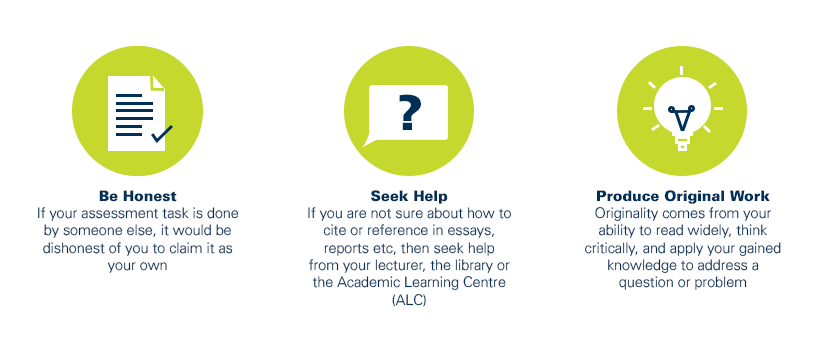
As a CQUniversity student you are expected to act honestly in all aspects of your academic work.
Any assessable work undertaken or submitted for review or assessment must be your own work. Assessable work is any type of work you do to meet the assessment requirements in the unit, including draft work submitted for review and feedback and final work to be assessed.
When you use the ideas, words or data of others in your assessment, you must thoroughly and clearly acknowledge the source of this information by using the correct referencing style for your unit. Using others’ work without proper acknowledgement may be considered a form of intellectual dishonesty.
Participating honestly, respectfully, responsibly, and fairly in your university study ensures the CQUniversity qualification you earn will be valued as a true indication of your individual academic achievement and will continue to receive the respect and recognition it deserves.
As a student, you are responsible for reading and following CQUniversity’s policies, including the Student Academic Integrity Policy and Procedure. This policy sets out CQUniversity’s expectations of you to act with integrity, examples of academic integrity breaches to avoid, the processes used to address alleged breaches of academic integrity, and potential penalties.
What is a breach of academic integrity?
A breach of academic integrity includes but is not limited to plagiarism, self-plagiarism, collusion, cheating, contract cheating, and academic misconduct. The Student Academic Integrity Policy and Procedure defines what these terms mean and gives examples.
Why is academic integrity important?
A breach of academic integrity may result in one or more penalties, including suspension or even expulsion from the University. It can also have negative implications for student visas and future enrolment at CQUniversity or elsewhere. Students who engage in contract cheating also risk being blackmailed by contract cheating services.
Where can I get assistance?
For academic advice and guidance, the Academic Learning Centre (ALC) can support you in becoming confident in completing assessments with integrity and of high standard.
What can you do to act with integrity?