Overview
In this unit, you will have the opportunity to gain theoretical knowledge in pharmacology relating to maternal, fetal and neonatal physiology for midwifery practice. This will include the use and effect of over the counter and prescribed medications, and illicit substances upon the mother, placenta, fetus and neonate. You will develop your midwifery knowledge of pharmacotherapeutics and the quality use of medicines to inform effective care across the childbearing continuum.
Details
Pre-requisites or Co-requisites
Pre-requisites: MDWF13003 Midwifery Practice 3, and MDWF13008 Foundations of Midwifery 3 and MDWF13007 Midwifery Practice for Aboriginal and Torres Strait Islander Families
Important note: Students enrolled in a subsequent unit who failed their pre-requisite unit, should drop the subsequent unit before the census date or within 10 working days of Fail grade notification. Students who do not drop the unit in this timeframe cannot later drop the unit without academic and financial liability. See details in the Assessment Policy and Procedure (Higher Education Coursework).
Offerings For Term 1 - 2026
Attendance Requirements
All on-campus students are expected to attend scheduled classes - in some units, these classes are identified as a mandatory (pass/fail) component and attendance is compulsory. International students, on a student visa, must maintain a full time study load and meet both attendance and academic progress requirements in each study period (satisfactory attendance for International students is defined as maintaining at least an 80% attendance record).
Recommended Student Time Commitment
Each 6-credit Undergraduate unit at CQUniversity requires an overall time commitment of an average of 12.5 hours of study per week, making a total of 150 hours for the unit.
Class Timetable
Assessment Overview
Assessment Grading
This is a graded unit: your overall grade will be calculated from the marks or grades for each assessment task, based on the relative weightings shown in the table above. You must obtain an overall mark for the unit of at least 50%, or an overall grade of 'pass' in order to pass the unit. If any 'pass/fail' tasks are shown in the table above they must also be completed successfully ('pass' grade). You must also meet any minimum mark requirements specified for a particular assessment task, as detailed in the 'assessment task' section (note that in some instances, the minimum mark for a task may be greater than 50%). Consult the University's Grades and Results Policy for more details of interim results and final grades.
All University policies are available on the CQUniversity Policy site.
You may wish to view these policies:
- Grades and Results Policy
- Assessment Policy and Procedure (Higher Education Coursework)
- Review of Grade Procedure
- Student Academic Integrity Policy and Procedure
- Academic Progression Policy and Procedure
- Student Refund and Credit Balance Policy and Procedure
- Complaints Policy and Procedure
- Information and Communications Technology Acceptable Use Policy and Procedure
This list is not an exhaustive list of all University policies. The full list of University policies are available on the CQUniversity Policy site.
Feedback, Recommendations and Responses
Every unit is reviewed for enhancement each year. At the most recent review, the following staff and student feedback items were identified and recommendations were made.
Feedback from Email from student.
A student expressed appreciation to the unit coordinator for providing prompt clarification regarding an error they had made on a quiz question.
The unit coordinator will continue to answer emails promptly to allay student anxiety about assessment tasks.
Feedback from Email from student.
The unit coordinator was thanked for proactively correcting a quiz grading error before the student needed to raise a query.
The unit coordinator will continue vigilant surveillance of the students' quiz results and make amendments to their grades as required.
- Demonstrate a sound understanding of pharmacology, pharmacokinetics and pharmacodynamics, inclusive of over the counter and prescribed medications and illicit substances, as related to maternal, placental/fetal and neonatal physiology for midwifery practice
- Demonstrate sound numeracy and mathematical calculation skills to correctly administer and critically evaluate medication orders for women and their infants
- Critically evaluate the physiological and psychological effects of medication administration on the maternal, fetal or neonatal wellbeing to determine the effectiveness of treatment
- Critically appraise the role of the midwife in the use of pharmacological therapies during the childbearing continuum.
Draft ANMAC Midwifery Education Standards.
Standard 3: Program of study.
NMBA Code of Conduct.
Principle 1: Legal compliance.
Principle 2: Woman centred practice.
Principle 3: Cultural practice and respectful relationships.
Principle 4: Professional behaviour.
Principle 6: Research in health.
Principle 7: Health and wellbeing.
NMBA Standards for Practice.
Standard 1: Promotes health and wellbeing through evidence based midwifery practice.
Standard 2: Engages in professional relationships and respectful partnerships.
Standard 3: Demonstrates the capability and accountability for midwifery practice.
Standard 4: Undertakes comprehensive assessments.
Standard 5: Develops a plan for midwifery practice.
Standard 6: Provides safety and quality in midwifery practice.
Standard 7: Evaluates outcomes to improve midwifery practice.
ICM code of Ethics.
1. Midwifery relationships
2. Practice of midwifery.
3. Professional responsibilities of midwives.
4. Advancement of midwifery knowledge and practice.
NPS Competencies Required to Prescribe Medicines: All competency areas apply.
NSQHSS: All standards apply.
National Nursing and Midwifery Digital Health Capability Framework
Alignment of Assessment Tasks to Learning Outcomes
| Assessment Tasks | Learning Outcomes | |||
|---|---|---|---|---|
| 1 | 2 | 3 | 4 | |
| 1 - Online Quiz(zes) - 40% | ||||
| 2 - Case Study - 60% | ||||
Alignment of Graduate Attributes to Learning Outcomes
| Graduate Attributes | Learning Outcomes | |||
|---|---|---|---|---|
| 1 | 2 | 3 | 4 | |
| 1 - Communication | ||||
| 2 - Problem Solving | ||||
| 3 - Critical Thinking | ||||
| 4 - Information Literacy | ||||
| 5 - Team Work | ||||
| 6 - Information Technology Competence | ||||
| 7 - Cross Cultural Competence | ||||
| 8 - Ethical practice | ||||
| 9 - Social Innovation | ||||
| 10 - First Nations Knowledges | ||||
| 11 - Aboriginal and Torres Strait Islander Cultures | ||||
Textbooks
Midwifery: Preparation for Practice
- Edition: 5th (2023)
- Authors: Pairman, S., Tracy, S. K., Dahlen, H. G., & Dixon, L.
- Elsevier
- ISBN: 9780729597852
IT Resources
- CQUniversity Student Email
- Internet
- Unit Website (Moodle)
- Computer - ability to access study materials, including instructional videos and scan and upload assessment.
- Zoom access: microphone and webcam required
All submissions for this unit must use the referencing style: American Psychological Association 7th Edition (APA 7th edition)
For further information, see the Assessment Tasks.
r.chee@cqu.edu.au
k.a.haynes@cqu.edu.au
j.carter2@cqu.edu.au
Week 1
Begin Date: 09 Mar 2026Module/Topic
Midwifery & medications - an overview
Chapter
Readings and activities as outlined in the Week 1 study guide.
Events and Submissions/Topic
Recorded presentations:
Welcome and Unit Introduction
Weekly lecture
Assessments:
Review the assessment tasks and make a study plan.
Foundations of Academic Integrity Program:
Complete your annual program.
Announcements and Discussion Forums:
Check for posts and updates.
Zoom:
Optional attendance at the weekly Zoom drop-in meeting.
Week 2
Begin Date: 16 Mar 2026Module/Topic
Law, medicines, and the midwife
Chapter
Readings and activities as outlined in the Week 2 study guide.
Events and Submissions/Topic
Zoom:
Join the weekly drop-in meeting for guidance on the assessments, hosted by the unit coordinator.
Announcement and Discussion Forums:
Check for posts and updates.
Student email:
Check your student email at least twice per week for important communications.
Week 3
Begin Date: 23 Mar 2026Module/Topic
What is pharmacology?
Chapter
Readings and activities as outlined in the Week 3 study guide.
Events and Submissions/Topic
Zoom:
Optional attendance at the weekly Zoom drop-in meeting.
Census Date is next week. If you are struggling, please contact your unit coordinator for help.
Announcement and Discussion Forums:
Check for posts and updates.
Student email:
Check your student email at least twice per week for important communications.
Week 4
Begin Date: 30 Mar 2026Module/Topic
Medicines during pregnancy
Chapter
Readings and activities as outlined in the Week 4 study guide.
Events and Submissions/Topic
Zoom:
Optional attendance at the weekly Zoom drop-in meeting.
Census Date:
Tuesday Week 4
Announcement and Discussion Forums:
Check for posts and updates.
Student email:
Check your student email at least twice per week for important communications.
Week 5
Begin Date: 06 Apr 2026Module/Topic
Medicines during childbirth
Chapter
Readings and activities as outlined in the Week 5 study guide.
Events and Submissions/Topic
Zoom:
Optional attendance at the weekly Zoom drop-in meeting.
Announcement and Discussion Forums:
Check for posts and updates.
Student email:
Check your student email at least twice per week for important communications.
Week 6
Begin Date: 13 Apr 2026Module/Topic
Medicines during the puerperium
Chapter
Readings and activities as outlined in the Week 6 study guide.
Events and Submissions/Topic
Zoom:
Optional attendance at the weekly Zoom drop-in meeting.
Announcement and Discussion Forums:
Check for posts and updates.
Student email:
Check your student email at least twice per week for important communications.
Vacation Week
Begin Date: 20 Apr 2026Module/Topic
Vacation week.
Chapter
Please use this mid-term break as an opportunity to rest and recover. Enjoy your break.
Events and Submissions/Topic
No timetabled learning activities. Please use this week to progress your assessments.
Week 7
Begin Date: 27 Apr 2026Module/Topic
Medication administration for neonates
Chapter
Readings and activities as outlined in the Week 7 study guide.
Events and Submissions/Topic
Zoom:
Optional attendance at the weekly Zoom drop-in meeting.
Announcement and Discussion Forums:
Check for posts and updates.
Student email:
Check your student email at least twice per week for important communications.
Week 8
Begin Date: 04 May 2026Module/Topic
Medications for disordered physiology during childbirth
Chapter
Readings and activities as outlined in the Week 8 study guide.
Events and Submissions/Topic
Zoom:
Optional attendance at the weekly Zoom drop-in meeting.
Announcement and Discussion Forums:
Check for posts and updates.
Student email:
Check your student email at least twice per week for important communications.
Week 9
Begin Date: 11 May 2026Module/Topic
Medicines and perinatal mental health
Chapter
Readings and activities as outlined in the Week 9 study guide.
Events and Submissions/Topic
Zoom:
Optional attendance at the weekly Zoom drop-in meeting.
Announcement and Discussion Forums:
Check for posts and updates.
Student email:
Check your student email at least twice per week for important communications.
Week 10
Begin Date: 18 May 2026Module/Topic
Complementary and alternative medicines (CAM), and over-the-counter medications
Chapter
Readings and activities as outlined in the Week 10 study guide.
Events and Submissions/Topic
Zoom:
Optional attendance at the weekly Zoom drop-in meeting.
Announcement and Discussion Forums:
Check for posts and updates.
Student email:
Check your student email at least twice per week for important communications.
Case Study Due: Week 10 Wednesday (20 May 2026) 4:00 pm AEST
Week 11
Begin Date: 25 May 2026Module/Topic
Illicit substances
Chapter
Readings and activities as outlined in the Week 11 study guide.
Events and Submissions/Topic
Zoom:
Optional attendance at the weekly Zoom drop-in meeting.
Announcement and Discussion Forums:
Check for posts and updates.
Student email:
Check your student email at least twice per week for important communications.
Student Unit and Teaching Evaluation Survey:
We encourage you to provide feedback about your unit and teaching experiences in this unit. The survey opens Week 11 and closes one week before release of grades.
Week 12
Begin Date: 01 Jun 2026Module/Topic
Medications, pregnancy, & disease
Chapter
Readings and activities as outlined in the Week 12 study guide.
Events and Submissions/Topic
Zoom:
Optional attendance at the weekly Zoom drop-in meeting.
Announcement and Discussion Forums:
Check for posts and updates.
Student email:
Check your student email at least twice per week for important communications.
Student Unit and Teaching Evaluation survey:
Please complete the unit evaluation survey.
Online Quizzes Due: Week 12 Wednesday (3 June 2026) 11:59 pm AEST
Exam Week
Begin Date: 08 Jun 2026Module/Topic
Chapter
Events and Submissions/Topic
Vacation/Exam Week
Begin Date: 15 Jun 2026Module/Topic
Chapter
Events and Submissions/Topic
This unit incorporates weekly self-directed online learning designed to support and consolidate student knowledge. Each week, students engage with a structured learning package that includes a lecture, a comprehensive study guide, and associated readings and learning activities. This approach encourages independent learning, critical thinking, and preparation for both clinical placement and simulation-based skill development.
1 Online Quiz(zes)
You will complete two online quizzes to demonstrate your knowledge and understanding of pharmacology for midwifery practice and its underpinning concepts. You will also demonstrate your knowledge of and ability to complete medication calculations.
Instructions
Please refer to the assessment task instructions on the unit Moodle site.
Academic Integrity
You must abide by the principles of academic integrity (see Student Academic Integrity Policy and Procedure). Completion of this assessment with another party or sharing of responses is not permitted at any time. This assessment requires students to adhere to the guidelines on the use of artificial intelligence tools as specified in the Artificial Intelligence Assessment Scale (AIAS). Any misuse or lack of disclosure regarding the use of AI tools will be considered a breach of academic integrity. No Generative AI use is permitted in the completion of this assignment. You must not use AI tools or technology to produce substantive content. You are permitted to use technology or tools that assist with spelling, grammar or formatting.
Level of GenAI Use Allowed: Level 1: You must not use AI at any point during the assessment. You must demonstrate your core skills and knowledge.
Extensions:
Extensions to this assessment are not available as per policy. The 72-hour grace period does not apply to this assessment.
Minimum Pass Criteria:
- You must achieve a cumulative grade of at least 49.5% across all assessments to pass this unit.
- In order for a supplementary assessment to be considered, all assessment tasks must be reasonably attempted in this unit.
Week 12 Wednesday (3 June 2026) 11:59 pm AEST
Quiz A will be available online from 00:01 hour (AEST) Monday 27th April 2026 (Week 7) to 23:59 hour (AEST) Wednesday 29th April 2026 (Week 7). Quiz B will be available online from 00:01 hour (AEST) Monday 1st June 2026 (Week 12) to 23:59 hour (AEST) Wednesday 3rd June 2026 (Week 12).
Week 12 Wednesday (3 June 2026)
Results for the quiz will be available immediately after the attempt is complete.
One mark will be awarded for each correct answer. In some cases, partial marks will be awarded for partially correct answers.
- Demonstrate a sound understanding of pharmacology, pharmacokinetics and pharmacodynamics, inclusive of over the counter and prescribed medications and illicit substances, as related to maternal, placental/fetal and neonatal physiology for midwifery practice
- Demonstrate sound numeracy and mathematical calculation skills to correctly administer and critically evaluate medication orders for women and their infants
- Critically evaluate the physiological and psychological effects of medication administration on the maternal, fetal or neonatal wellbeing to determine the effectiveness of treatment
- Critically appraise the role of the midwife in the use of pharmacological therapies during the childbearing continuum.
2 Case Study
You will complete a case study demonstrate knowledge and understanding of safe medication management in the Australian context across the childbearing continuum. You will understand the midwife's role in providing a woman-centred, multidisciplinary approach to ensuring safe outcomes for the pregnant woman and her baby.
Instructions
Please refer to the assessment task instructions on the unit Moodle site.
Academic Integrity
You must abide by the principles of academic integrity (see Student Academic Integrity Policy and Procedure). Completion of this assessment with another party or sharing of responses is not permitted at any time. This assessment requires students to adhere to the guidelines on the use of artificial intelligence tools as specified in the Artificial Intelligence Assessment Scale (AIAS). Any misuse or lack of disclosure regarding the use of AI tools will be considered a breach of academic integrity. You are permitted to use technology or tools that assist with spelling, grammar or formatting.
Level of GenAI Use Allowed: Level 2, AI Planning.
a. Gen AI content editing and proofreading.
b. Checking spelling and grammar
c. CQUniversity’s Gen AI tools approved for use in this assessment are Microsoft Copilot (protected version), Studiosity and Grammarly.
Extensions:
Extensions to this assessment are available as per policy. The 72-hour grace may apply to this assessment.
Minimum Pass Criteria:
- You must achieve a cumulative grade of at least 49.5% across all assessments to pass this unit.
- In order for a supplementary assessment to be considered, all assessment tasks must be reasonably attempted in this unit.
Week 10 Wednesday (20 May 2026) 4:00 pm AEST
Submit this assessment using the submission point on the unit Moodle site.
Exam Week Monday (8 June 2026)
Please allow three weeks from the due date for the return of this assessment.
Assessment Criteria
Assessment criteria will be available on the Moodle site.
- Demonstrate a sound understanding of pharmacology, pharmacokinetics and pharmacodynamics, inclusive of over the counter and prescribed medications and illicit substances, as related to maternal, placental/fetal and neonatal physiology for midwifery practice
- Demonstrate sound numeracy and mathematical calculation skills to correctly administer and critically evaluate medication orders for women and their infants
- Critically evaluate the physiological and psychological effects of medication administration on the maternal, fetal or neonatal wellbeing to determine the effectiveness of treatment
- Critically appraise the role of the midwife in the use of pharmacological therapies during the childbearing continuum.
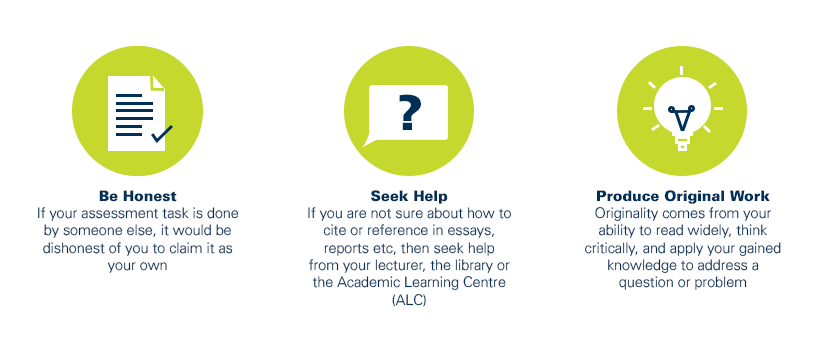
As a CQUniversity student you are expected to act honestly in all aspects of your academic work.
Any assessable work undertaken or submitted for review or assessment must be your own work. Assessable work is any type of work you do to meet the assessment requirements in the unit, including draft work submitted for review and feedback and final work to be assessed.
When you use the ideas, words or data of others in your assessment, you must thoroughly and clearly acknowledge the source of this information by using the correct referencing style for your unit. Using others’ work without proper acknowledgement may be considered a form of intellectual dishonesty.
Participating honestly, respectfully, responsibly, and fairly in your university study ensures the CQUniversity qualification you earn will be valued as a true indication of your individual academic achievement and will continue to receive the respect and recognition it deserves.
As a student, you are responsible for reading and following CQUniversity’s policies, including the Student Academic Integrity Policy and Procedure. This policy sets out CQUniversity’s expectations of you to act with integrity, examples of academic integrity breaches to avoid, the processes used to address alleged breaches of academic integrity, and potential penalties.
What is a breach of academic integrity?
A breach of academic integrity includes but is not limited to plagiarism, self-plagiarism, collusion, cheating, contract cheating, and academic misconduct. The Student Academic Integrity Policy and Procedure defines what these terms mean and gives examples.
Why is academic integrity important?
A breach of academic integrity may result in one or more penalties, including suspension or even expulsion from the University. It can also have negative implications for student visas and future enrolment at CQUniversity or elsewhere. Students who engage in contract cheating also risk being blackmailed by contract cheating services.
Where can I get assistance?
For academic advice and guidance, the Academic Learning Centre (ALC) can support you in becoming confident in completing assessments with integrity and of high standard.
What can you do to act with integrity?