Overview
Identification of the characteristic histopathological and cytopathological features of human organ systems and the hallmarks of pathological dysregulation of tissue organisation is fundamental to the work of the medical laboratory scientist. In this unit you will study normal and abnormal histopathological features of a range of tissues along with normal and abnormal cytopathological features of a range of cells. The relationship between cellular injury, immune response, tumour formation, infection and pathological dysregulation of tissue organisation will be explored in relation to clinical cases you may encounter. You will develop the knowledge and skills to perform microscopic examination of tissues and cells. Case studies will include new developments in immunohistochemistry and fluorescence imaging. You will be required to attend a compulsory residential school for development and assessment of your skill in histological and cytological techniques. The residential school may be scheduled outside of the term of offering of the unit.
Details
Pre-requisites or Co-requisites
Prerequisites: Enrolment in Master of Laboratory Medicine.
Important note: Students enrolled in a subsequent unit who failed their pre-requisite unit, should drop the subsequent unit before the census date or within 10 working days of Fail grade notification. Students who do not drop the unit in this timeframe cannot later drop the unit without academic and financial liability. See details in the Assessment Policy and Procedure (Higher Education Coursework).
Offerings For Term 1 - 2026
Attendance Requirements
All on-campus students are expected to attend scheduled classes - in some units, these classes are identified as a mandatory (pass/fail) component and attendance is compulsory. International students, on a student visa, must maintain a full time study load and meet both attendance and academic progress requirements in each study period (satisfactory attendance for International students is defined as maintaining at least an 80% attendance record).
Recommended Student Time Commitment
Each 6-credit Postgraduate unit at CQUniversity requires an overall time commitment of an average of 12.5 hours of study per week, making a total of 150 hours for the unit.
Class Timetable
Assessment Overview
Assessment Grading
This is a graded unit: your overall grade will be calculated from the marks or grades for each assessment task, based on the relative weightings shown in the table above. You must obtain an overall mark for the unit of at least 50%, or an overall grade of 'pass' in order to pass the unit. If any 'pass/fail' tasks are shown in the table above they must also be completed successfully ('pass' grade). You must also meet any minimum mark requirements specified for a particular assessment task, as detailed in the 'assessment task' section (note that in some instances, the minimum mark for a task may be greater than 50%). Consult the University's Grades and Results Policy for more details of interim results and final grades.
All University policies are available on the CQUniversity Policy site.
You may wish to view these policies:
- Grades and Results Policy
- Assessment Policy and Procedure (Higher Education Coursework)
- Review of Grade Procedure
- Student Academic Integrity Policy and Procedure
- Academic Progression Policy and Procedure
- Student Refund and Credit Balance Policy and Procedure
- Complaints Policy and Procedure
- Information and Communications Technology Acceptable Use Policy and Procedure
This list is not an exhaustive list of all University policies. The full list of University policies are available on the CQUniversity Policy site.
Feedback, Recommendations and Responses
Every unit is reviewed for enhancement each year. At the most recent review, the following staff and student feedback items were identified and recommendations were made.
Feedback from SUTE and self reflection
Rethink assessment structure
Consider changing assessment 2 (quizzes) to an invigilated approach.
Feedback from Student verbal feedback
Students unsure how to approach the essay-type examination questions and the response expectations.
Consider restructuring the final examination and dedicate a tutorial on example essay questions.
Feedback from SUTE, email and verbal feedback
Teaching staff were appreciated.
Consider retaining current selection of industry professional teaching staff for continuity and consistency.
- Critique changes in anatomical pathology techniques and how they have improved diagnosis
- Apply professional knowledge of inflammatory processes and tissue responses to clinical contexts
- Demonstrate skills in histological and cytological techniques, including the process of sectioning, antigen retrieval and staining
- Apply professional knowledge of the neoplastic process, grading and staging of neoplasms and gene expression to clinical contexts
- Discuss the principles, mechanisms, requirements and the application of use for special stain procedures and specialised fixation techniques in histology and cytology.
Alignment of Assessment Tasks to Learning Outcomes
| Assessment Tasks | Learning Outcomes | ||||
|---|---|---|---|---|---|
| 1 | 2 | 3 | 4 | 5 | |
| 1 - Poster Sessions - 25% | |||||
| 2 - Oral Examination - 25% | |||||
| 3 - Laboratory/Practical - 0% | |||||
| 4 - Examination - 50% | |||||
Alignment of Graduate Attributes to Learning Outcomes
| Graduate Attributes | Learning Outcomes | ||||
|---|---|---|---|---|---|
| 1 | 2 | 3 | 4 | 5 | |
| 1 - Knowledge | |||||
| 2 - Communication | |||||
| 3 - Cognitive, technical and creative skills | |||||
| 4 - Research | |||||
| 5 - Self-management | |||||
| 6 - Ethical and Professional Responsibility | |||||
| 7 - Leadership | |||||
| 8 - First Nations Knowledges | |||||
| 9 - Aboriginal and Torres Strait Islander Cultures | |||||
Textbooks
Cellular Pathology: An Introduction to Techniques and Applications
- Edition: 3rd (2015)
- Authors: D. J. Cook & P. J. Warren
- Scion
- Banbury Banbury , United Kingdom
- ISBN: 9781907904356
- Binding: Paperback
Wheater's Functional Histology A Text and Colour Atlas
- Edition: Seventh (2023)
- Authors: O'Dowd, G., Bell, S., Wright, S.
- Elsevier
- ISBN: 9780702083341
- Binding: Paperback
IT Resources
- CQUniversity Student Email
- Internet
- Unit Website (Moodle)
All submissions for this unit must use the referencing styles below:
For further information, see the Assessment Tasks.
t.q.nguyen@cqu.edu.au
i.christiansen@cqu.edu.au
Week 1
Begin Date: 09 Mar 2026Module/Topic
Module 1: Histology preparation techniques for FFPE
- fixation, Cutup
- tissue processing and microtomy
- Haematoxylin and Eosin stain
Chapter
Cook & Warren: Chapter 3
Cook & Warren: Chapter 4, 5, 6
Cook & Warren: Chapter 7.5
Events and Submissions/Topic
Start of Module 1
Tutorial: Recap of module 1 topics
Week 2
Begin Date: 16 Mar 2026Module/Topic
Module 2: Histology staining techniques
- staining theory
- carbohydrates
- connective tissue
Chapter
Cook & Warren: Chapter 7
Cook & Warren: Chapter 8
Cook & Warren: Chapter 7.5
Events and Submissions/Topic
Start of Module 2
Tutorial: poster preparation notes
Tutorial: Recap of week 2 topics
Week 3
Begin Date: 23 Mar 2026Module/Topic
Module 2: Histology staining techniques
- microorganisms & amyloid
- lipid
- pigments
- silver stains
Chapter
Cook & Warren: Chapter 11
Cook & Warren: Chapter 8.6
Cook & Warren: Chapter 10
Cook & Warren: Chapter 7.6
Events and Submissions/Topic
Tutorial: Recap of week 3 topics
Week 4
Begin Date: 30 Mar 2026Module/Topic
Module 2: Histology staining techniques
- immunohistochemistry
- in situ hybridisation
Chapter
Cook & Warren: Chapter 12
Cook & Warren: Chapter 16
Events and Submissions/Topic
Tutorial: Recap of week 4 topics
Week 5
Begin Date: 06 Apr 2026Module/Topic
Module 3: Histology of human body systems I
- tissue types
- cell injury & repair
- the "plasias"
- skin
Chapter
Young et al: Chapters 4 & 5
Cook & Warren: Chapter 2
Cook & Warren: Chapter 2
Young et al: Chapter 9
Events and Submissions/Topic
Start of Module 3
Tutorial: Recap of week 5 topics
Poster presentation Due: Week 5 Friday (10 Apr 2026) 4:00 pm AEST
Week 6
Begin Date: 13 Apr 2026Module/Topic
Module 3: Histology of human body systems I
- nerve
- muscle
- blood vessels
- lymphatics
Chapter
Young et al: Chapter 7
Young et al: Chapter 6
Young et al: Chapter 8
Young et al: Chapter 11
Events and Submissions/Topic
Tutorial: Recap of week 6 topics
Viva Voce examination Due: Week 6 Thursday (16 Apr 2026) 5:00 pm AEST
Vacation Week
Begin Date: 20 Apr 2026Module/Topic
Break week
Chapter
N/A
Events and Submissions/Topic
N/A
Week 7
Begin Date: 27 Apr 2026Module/Topic
Module 3: Histology of human body systems II
- gastro intestinal tract
- kidney & bladder
- liver
- lung
Chapter
Young et al: Chapter 14
Young et al: Chapter 16
Young et al: Chapter 15
Young et al: Chapter 12
Events and Submissions/Topic
Residential school for Rockampton & Mixed Mode cohort
Week 8
Begin Date: 04 May 2026Module/Topic
Module 3: Histology of human body systems II
- breast
- female genital tract
- prostate
Chapter
Young et al: Chapter 19
Young et al: Chapter 19
Young et al: Chapter 18
Events and Submissions/Topic
Tutorial: Recap of weeks 7 & 8 topics
Week 9
Begin Date: 11 May 2026Module/Topic
Module 3: Histology of human body systems II
- bone, cartilage, ligaments & tendons
- pituitary gland
- thyroid & parathyroid
- pancreas & adrenal gland
Chapter
Young et al: Chapter 10
Young et al: Chapter 17
Young et al: Chapter 17
Young et al: Chapter 15
Events and Submissions/Topic
Tutorial: Recap of week 9 topics
Week 10
Begin Date: 18 May 2026Module/Topic
Module 4: Anatomical Pathology disciplines
- gyneacological cytology
- effusion & respiratory cytology
- urine cytology
- thyroid and breast cytology
- electron microscopy
- autopsy & molecular pathology
Chapter
Cook & Warren: Chapter 13
Cook & Warren: Chapter 14.3
Cook & Warren: Chapter 14.2
Cook & Warren: Chapter 14.5
Cook & Warren: Chapter 19
Events and Submissions/Topic
Start of module 4
Tutorial: Recap of week 10 topics
Week 11
Begin Date: 25 May 2026Module/Topic
Residential School Melbourne
Chapter
N/A
Events and Submissions/Topic
Residential school for Melbourne cohort
Week 12
Begin Date: 01 Jun 2026Module/Topic
Residential School Melbourne
Residential School Sydney
Chapter
N/A
Events and Submissions/Topic
Residential school for Melbourne & Sydney cohorts
Exam Week
Begin Date: 08 Jun 2026Module/Topic
Assessment 4: invigilated exam (3 hours)
Chapter
N/A
Events and Submissions/Topic
Students will be notified of the exact date and time of the invigilated exam once it has been scheduled
Vacation/Exam Week
Begin Date: 15 Jun 2026Module/Topic
Assessment 4: invigilated exam (3 hours)
Chapter
N/A
Events and Submissions/Topic
Students will be notified of the exact date and time of the invigilated exam once it has been scheduled
Your unit coordinator for LMED29002 Anatomical Pathology 1 is Trung Nguyen. He can be contacted via the following options:
- posting on the forum within the unit's Moodle site which is continuously monitored and you can expect a response within one (1) business day of posting your question;
- email (t.q.nguyen@cqu.edu.au);
- telephone (03) 9616 0484
As the name suggests, this unit will provide you with technical and applied knowledge of Anatomical Pathology.
LMED29002 Anatomical Pathology 1 is a core unit in CM18 - Master of Laboratory Medicine.
Tutorials will be delivered live each week from the Melbourne campus, and students who are enrolled in either mixed mode, Rockhampton or Sydney campus will join these classes via Zoom. These tutorials will also be recorded for the benefit of those students who are unable to attend the live tutorials. During the tutorials, you will work through the discussion topics or weekly study questions that are provided to you on the Moodle site. These discussion topics and weekly study questions will help you apply knowledge learned during the weekly pre-recorded lecture and prepare you for the assessments. You will gain the most benefit from the tutorials if you watch/complete the weekly lectures beforehand and attempt the weekly study questions.
You are strongly encouraged to participate in tutorials, as studies have shown that students who attend the tutorials and participate in discussions have higher rates of success (Karnik et al., 2020).
Weekly learning activities comprising of revision quizzes, crosswords and other exercises are also provided to reinforce the knowledge you have gained from the lectures and to support your learning experience in this unit.
You will have an opportunity to apply the knowledge learnt during the teaching term in a compulsory residential school. The details for attendance at these practicals taking place within the teaching term are listed in the unit's Moodle page. The residential school will mirror Anatomical Pathology laboratory techniques as practiced in real hospital and private pathology laboratories with guidance from industry professionals.
As per Australian educational standards, you are expected to commit 150 hours of engagement to your study of this unit. This is broken down as:
- 2 - 3 hours per week watching recorded lectures and revising the content through study notes
- 3 - 4 hours per week completing the weekly study questions and weekly revision quizzes on the unit's Moodle site.
- 1 - 2 hours per week attending the weekly tutorial and reflecting on your answers to the weekly study questions
- 3 - 4 hours per week preparing your assessments or studying for your exam.
Karnik, A., Kishore, P., & Meraj, M. (2020). Examining the linkage between class attendance at university and academic performance in an International Branch Campus setting. Research in Comparative and International Education, 15(4), 371-390. https://doi.org/10.1177/1745499920958855
1 Poster Sessions
Diagnostic Anatomical Pathology is a dynamic landscape. Most of the tissue and cell slide preparation techniques have existed for well over 100 years, yet they are constantly evolving.
You will create a poster outlining the evolution of one of these slide preparation techniques and how it has improved the field of Anatomical Pathology. You will NOT be required to provide diagnoses, rather outline the development and enhancement of existing slide preparation techniques.
Some of the topics include (but are not limited to):
- Fixation of tissue
- Cut-Up/Macrodissection
- Cytology slide preparation
- Tissue Processing
- Embedding
- Microtomy
- Staining techniques (there are many of these to choose from)
- Coverslipping
Remember to include a technique which is unique to Anatomical Pathology. The poster should be completed in Microsoft PowerPoint or similar.
PLEASE BE CAREFUL! Choose your topic wisely. For example - The Gram Stain on bacteria is NOT a relevant Anatomical Pathology technique. If in doubt, please contact your unit coordinator.
Use of Generative AI: Level 3
You may use AI to assist with specific tasks such as drafting text, refining and evaluating your work. You must critically evaluate and modify any AI-generated content you use.
The submitted assessment item must be your own work, but you may be assisted by the use of Generative AI tools (GenAI/LLM). However, it is important to note that GenAI/LLM generated responses are not peer-reviewed. Therefore, if material for an assessment is generated through your engagement with GenAI/LLMs, it is important that this information is:
* Verified through rigorous comparison with peer-reviewed scholarly sources
* Paraphrased
* Referenced to peer-reviewed scholarly sources
* Correctly referenced as being generated via GenAI/LLM (See APA Guide)
Note: Cutting and pasting of GenAI/LLM material into assessments may be considered contract cheating and/or plagiarism. Further information regarding the appropriate use of GenAI/LLM for this assessment item is available on the unit Moodle page. If you have questions about the appropriate use of GenAI/LLM material, please speak with your lecturer and/or contact an ALC advisor.
Week 5 Friday (10 Apr 2026) 4:00 pm AEST
Week 7 Friday (1 May 2026)
Marks for this assessment will be awarded as per the rubric/marking guide provided in the Assessment tile on the Moodle site. Your written assessment will be marked on the following criteria:
- Is the topic relevant to Anatomical Pathology?
- Critical evaluation of how the technique has evolved over time
- Presents a clear and detailed understanding of the technique/topic
- Sections are clearly outlined and there is structured flow
- Poster contains the author and author's affiliation
- Appropriate use of images
- Quality of poster presentation - i.e. eye-catching, self-explanatory, etc.
- Quality, quantity and formatting of references used
- Grammar, sentence construction and spelling
- Formatting of the poster, does it attract the viewer's attention?
- Referencing and academic integrity
- Critique changes in anatomical pathology techniques and how they have improved diagnosis
2 Oral Examination
This assessment task requires you to demonstrate your knowledge and understanding of histological techniques that you have learnt in modules 1 and 2 of this unit (week 1 - week 5). You are required to:
- book an appropriate time for your viva voce examination in the Moodle site when instructed to do so by your unit coordinator
- select the correct campus location which is the default campus that you are enrolled in (vivas for mixed mode students will be conducted online)
- attend the viva voce in person and bring your student ID card with photo
- answer eight (8) questions randomly selected from the question bank previously released in the Moodle site
- the time limit for the viva is 20 minutes
The viva exam will be comprised of five (5) short answer questions worth two marks each and three (3) questions worth five marks each requiring more elaboration in the answer. Total marks available is 25.
The assessor will grade the student progressively in real time.
Each student's viva session will be recorded via Zoom.
You will be allowed one attempt at the viva.
The viva will contribute 25% to your final grade.
Use of Generative AI: Level 1
You must not use AI at any point during the assessment. You must demonstrate your core skills and knowledge.
The 72 hour grace period does not apply to this assessment.
Week 6 Thursday (16 Apr 2026) 5:00 pm AEST
Viva examinations will be held concurrently over multiple days during week 6 of term 1 across multiple campuses
Week 7 Friday (1 May 2026)
Marks for this assessment will be awarded by the assessor as per the rubric/marking guide provided in the Assessment tile on the Moodle site.
The short answer (Q1-5) is marked on content accuracy, each question is worth two marks (total 10 marks available):
- 2 marks = correct
- 0 marks = incorrect
The longer answer (Q6-8) is marked on knowledge, structure, communication and language, each question is worth five marks (total 15 marks available):
- basic knowledge, (accurate = 1 mark) (inaccurate = 0 marks)
- integrated knowledge, (high = 2 marks) (moderate = 1 mark) (low/none = 0 marks)
- logical structure, (structured = 0.5 marks) (unstructured = 0 marks)
- concise communication, (concise = 0.5 marks) (verbose = 0 marks)
- technical language, (appropriate = 1 mark) (inappropriate = 0 marks)
Your viva result will not be released until all students have completed their vivas.
The unit coordinator will monitor and check students' results via a moderation process.
- Critique changes in anatomical pathology techniques and how they have improved diagnosis
- Apply professional knowledge of inflammatory processes and tissue responses to clinical contexts
- Discuss the principles, mechanisms, requirements and the application of use for special stain procedures and specialised fixation techniques in histology and cytology.
3 Laboratory/Practical
Over the duration of the residential school/block practical you will learn to perform slide preparation processes, learn how to recognise different tissue types, simulate a Fine Needle Aspirate (FNA) technique and prepare a series of stains in accordance with instructions contained in the practical manual. You will be assessed on the quality of those stains by academic staff with expertise in Histology and Cytology. You will be required to demonstrate and pass professional behaviours, as well as the following competencies:
- Microtomy
- H&E Staining
- Immunohistochemistry
- Special Staining
- Cytology slide preparation and staining
- Workbook and tissue identification
- OSCE (Objective Structured Clinical Examination)
Students must pass 7/7 competencies AND Professional Behaviours to pass this assessment.
If the student does NOT pass the Professional Behaviours, the overall assessment grade will be a FAIL grade.
If the student passes 6/7 Competencies AND passes Professional Behaviours, they are allowed ONE second attempt at the unsuccessful competency.
Use of Generative AI: Level 1
You must not use AI at any point during the assessment. You must demonstrate your core skills and knowledge.
The submitted assessment item must be your own work, and not written, prepared, or composed using Generative AI tools (GenAI/LLM). This includes the manipulation or analysis of images and data.
Note: Cutting and pasting of GenAI/LLM material into assessments may be considered contract cheating and/or plagiarism. If you have questions about the appropriate use of GenAI/LLM material, please speak with your lecturer and/or contact an ALC advisor.
The 72 hour grace period does not apply to this assessment.
Submitted at the completion of the residential school
Marked and returned within two weeks following the residential school
Assessment of the slides will be done by academic staff with expertise in Histology and Cytology. Prepared slides will be submitted with a workbook. Marking criteria and minimum requirements for each of the seven (7) competencies are outined in the LMED29002 laboratory manual.
Professional Behaviours will also be assessed and are outined in the LMED29002 laboratory manual. These include (but are not limited to):
- Adherence to the AIMS code of conduct
- Attending all laboratory sessions
- Punctuality and dressing in appropriate clothing and footwear
- Respect for your work area
- Respect for staff and fellow students (including listening when the laboratory supervisor is instructing)
- Respect for laboratory rules and property
Students will receive a verbal warning if they are in breach of any of the professional behaviours. If the student continues to demonstrate poor professional behaviour, they will receive a Fail grade for this assessment.
- Demonstrate skills in histological and cytological techniques, including the process of sectioning, antigen retrieval and staining
Examination
No calculators permitted
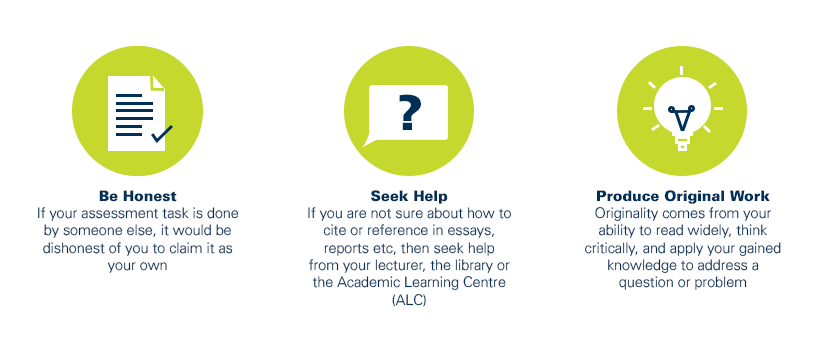
As a CQUniversity student you are expected to act honestly in all aspects of your academic work.
Any assessable work undertaken or submitted for review or assessment must be your own work. Assessable work is any type of work you do to meet the assessment requirements in the unit, including draft work submitted for review and feedback and final work to be assessed.
When you use the ideas, words or data of others in your assessment, you must thoroughly and clearly acknowledge the source of this information by using the correct referencing style for your unit. Using others’ work without proper acknowledgement may be considered a form of intellectual dishonesty.
Participating honestly, respectfully, responsibly, and fairly in your university study ensures the CQUniversity qualification you earn will be valued as a true indication of your individual academic achievement and will continue to receive the respect and recognition it deserves.
As a student, you are responsible for reading and following CQUniversity’s policies, including the Student Academic Integrity Policy and Procedure. This policy sets out CQUniversity’s expectations of you to act with integrity, examples of academic integrity breaches to avoid, the processes used to address alleged breaches of academic integrity, and potential penalties.
What is a breach of academic integrity?
A breach of academic integrity includes but is not limited to plagiarism, self-plagiarism, collusion, cheating, contract cheating, and academic misconduct. The Student Academic Integrity Policy and Procedure defines what these terms mean and gives examples.
Why is academic integrity important?
A breach of academic integrity may result in one or more penalties, including suspension or even expulsion from the University. It can also have negative implications for student visas and future enrolment at CQUniversity or elsewhere. Students who engage in contract cheating also risk being blackmailed by contract cheating services.
Where can I get assistance?
For academic advice and guidance, the Academic Learning Centre (ALC) can support you in becoming confident in completing assessments with integrity and of high standard.
What can you do to act with integrity?