Overview
This unit gives you an opportunity to undertake an independent project with an emphasis on how society, history, culture or politics have been framed within literature from different traditions, locations and at different periods of time, and to think across traditional boundaries to demonstrate how literature and culture are interrelated. The project is flexible and will be designed by you in consultation with academic supervisors to meet negotiated and specific project learning outcomes. It will involve academic research into a body of literature in the context of contemporary issues and culture.
Details
Pre-requisites or Co-requisites
Admission to CC10 or completion of 90 credit points in CA10, CB94, CC13, CG85 or CC43.
Important note: Students enrolled in a subsequent unit who failed their pre-requisite unit, should drop the subsequent unit before the census date or within 10 working days of Fail grade notification. Students who do not drop the unit in this timeframe cannot later drop the unit without academic and financial liability. See details in the Assessment Policy and Procedure (Higher Education Coursework).
Offerings For Term 2 - 2026
Attendance Requirements
All on-campus students are expected to attend scheduled classes - in some units, these classes are identified as a mandatory (pass/fail) component and attendance is compulsory. International students, on a student visa, must maintain a full time study load and meet both attendance and academic progress requirements in each study period (satisfactory attendance for International students is defined as maintaining at least an 80% attendance record).
Recommended Student Time Commitment
Each 6-credit Postgraduate unit at CQUniversity requires an overall time commitment of an average of 12.5 hours of study per week, making a total of 150 hours for the unit.
Class Timetable
Assessment Overview
Assessment Grading
This is a graded unit: your overall grade will be calculated from the marks or grades for each assessment task, based on the relative weightings shown in the table above. You must obtain an overall mark for the unit of at least 50%, or an overall grade of 'pass' in order to pass the unit. If any 'pass/fail' tasks are shown in the table above they must also be completed successfully ('pass' grade). You must also meet any minimum mark requirements specified for a particular assessment task, as detailed in the 'assessment task' section (note that in some instances, the minimum mark for a task may be greater than 50%). Consult the University's Grades and Results Policy for more details of interim results and final grades.
All University policies are available on the CQUniversity Policy site.
You may wish to view these policies:
- Grades and Results Policy
- Assessment Policy and Procedure (Higher Education Coursework)
- Review of Grade Procedure
- Student Academic Integrity Policy and Procedure
- Academic Progression Policy and Procedure
- Student Refund and Credit Balance Policy and Procedure
- Complaints Policy and Procedure
- Information and Communications Technology Acceptable Use Policy and Procedure
This list is not an exhaustive list of all University policies. The full list of University policies are available on the CQUniversity Policy site.
Feedback, Recommendations and Responses
Every unit is reviewed for enhancement each year. At the most recent review, the following staff and student feedback items were identified and recommendations were made.
Feedback from Student Unit Evaluation Data
Feedback indicated that organisation and sequencing of learning materials could be improved.
Review the unit’s learning materials to ensure logical sequencing and clear navigation.
Feedback from Unit Coordinator Observation
Student engagement and retention could be strengthened through increased opportunities for connection with the unit coordinator. Current delivery is largely text-based, which may limit students’ sense of personal engagement with the unit and its content.
Introduce short, unit coordinator–recorded videos at the beginning of modules or key topics.
Feedback from Student Unit Evaluation Data
Student feedback indicated that the transition to undertaking a research project felt challenging, with some students expressing a sense of being “dropped in the deep end”. While the unit is designed as an AQF 8 offering to introduce research processes for students progressing to Honours or Masters, clearer connections to prior learning and future pathways could enhance student confidence and engagement.
Make explicit links early in the unit to skills developed in previous literature units, highlighting how these underpin the research process. Additionally, provide clear explanations of the unit’s role within the vertical Master of Arts pathway and its relevance to post-graduate projects.
- Develop a critical research question and objectives for an independent comparative literary project, informed by individual interests and scholarly inquiry
- Collect and critically evaluate relevant literary texts and published scholarly criticism using initiative and judgement
- Plan and complete a literary project that integrates independent research, original comparative textual analysis, and relevant social/historical context, demonstrating synthesis of theory and scholarship.
Alignment of Assessment Tasks to Learning Outcomes
| Assessment Tasks | Learning Outcomes | ||
|---|---|---|---|
| 1 | 2 | 3 | |
| 1 - Research Proposal - 15% | |||
| 2 - Annotated bibliography - 25% | |||
| 3 - Project (research) - 60% | |||
Alignment of Graduate Attributes to Learning Outcomes
| Graduate Attributes | Learning Outcomes | ||
|---|---|---|---|
| 1 | 2 | 3 | |
| 1 - Knowledge | |||
| 2 - Communication | |||
| 3 - Cognitive, technical and creative skills | |||
| 4 - Research | |||
| 5 - Self-management | |||
| 6 - Ethical and Professional Responsibility | |||
| 7 - Leadership | |||
| 8 - First Nations Knowledges | |||
| 9 - Aboriginal and Torres Strait Islander Cultures | |||
Textbooks
There are no required textbooks.
IT Resources
- CQUniversity Student Email
- Internet
- Unit Website (Moodle)
- E-reading List
- Zoom access: microphone and webcam required
- CQU Library Resources
- Echo360
All submissions for this unit must use the referencing style: Harvard (author-date)
For further information, see the Assessment Tasks.
a.hickling@cqu.edu.au
Week 1
Begin Date: 13 Jul 2026Module/Topic
Introduction to Comparative Literature + Genres of comparison (Method) + choosing/developing a research question.
This is a student-driven research project unit.
Students are provided with topics each week that offer guidance on the fundamentals of comparative literature, continued skill development in literary analysis, and research methods necessary to complete the assessments and overall research project.
The unit is "Top Heavy" or "Front Loaded" meaning the first half of the unit is loaded with more content to provide direction and skill building, where the second half is focused on allowing students to immerse themselves in the close reading and analysis of the their texts, and providing supervision for completing the project.
Chapter
Each week there will be a suggested study guide and potential readings within each topic tile.
Events and Submissions/Topic
Students should:
- Introduce themselves via the Moodle forum.
- Familiarise themselves with the assessments via the Assessments Tile.
- Add the assessment due dates to their personal calendar or schedule; and
- Make note of the "Assessment Extension Request" form in the Support Menu.
- Work through the orientation tile and the study guide in the week 1 tile to familiarise themselves with the structure of the unit and how to work through the content.
- Attend the tutorial (check the timetable in the CQU Handbook for specifics) or watch the recording. This session will offer an introduction to the unit including details for assessments. It will also give students a chance to ask specific questions about Assessment Item 1. Date and time (AEST) and Zoom link are listed on the unit moodle site in the "Classes" tile. A recording of the session will be posted for those who are unable to attend as soon as practicable after the session.
- Work through the materials on developing their research question.
- Begin thinking about the texts they would like to compare for the final project.
Week 2
Begin Date: 20 Jul 2026Module/Topic
Writing a research question and proposal + Reading practices + Practices of comparison + Methods
Chapter
Refer to Study Guide
Events and Submissions/Topic
Students should:
- Be confident about the development of their research question.
- Have chosen their texts for comparison.
- Be drafting the A1 research proposal
Week 3
Begin Date: 27 Jul 2026Module/Topic
Writing a research proposal (continued)
Chapter
Refer to Study Guide
Events and Submissions/Topic
Students should:
- Lock in the date and time for a one-on-one zoom feedback session with the UC during week 4 – in this feedback, the student and the UC will discuss the suitability of the texts chosen for comparison and the research question. Further information on this will be provided on Moodle.
- Check assessment 1 against the Marking Guide prior to submission.
- Submit Assessment 1.
- Be gathering and cataloguing their research for use in the annotated bibliography (A2).
- Be reading the two primary texts and beginning analysis.
Research proposal Due: Week 3 Friday (31 July 2026) 11:59 pm AEST
Week 4
Begin Date: 03 Aug 2026Module/Topic
Methods of Comparison + Close Reading versus Distant Reading + Annotated Bibliography
Chapter
Refer to Study Guide
Events and Submissions/Topic
Students should:
- Have their zoom consult with UC to review A1 feedback and confirm research question and texts for comparison.
- Be gathering the scholarly texts for the annotated bibliography, and writing the draft.
- Be reading the two primary texts and beginning analysis.
Week 5
Begin Date: 10 Aug 2026Module/Topic
The Annotated bibliography
Chapter
Refer to Study Guide
Events and Submissions/Topic
Students should:
- Be drafting A2 annotated bibliography.
- Be reading the two primary texts for comparison and continuing analysis/close reading.
Week 6
Begin Date: 17 Aug 2026Module/Topic
Completing the annotated bibliography
Chapter
Refer to Study Guide
Events and Submissions/Topic
Students should:
- Be revising/polishing A2. Check against marking guide for gaps.
- Submit Assessment 2 -- annotated bibliography
- Be re-reading the two primary texts for comparison and continuing analysis/close reading.
Annotated bibliography Due: Week 6 Friday (21 Aug 2026) 11:59 pm AEST
Vacation Week
Begin Date: 24 Aug 2026Module/Topic
Chapter
Events and Submissions/Topic
Week 7
Begin Date: 31 Aug 2026Module/Topic
How to: From Annotated Bibliography to Literature Review
Chapter
Refer to Study Guide
Events and Submissions/Topic
Students should:
- Considering how to approach the organisation of their literature review based on the learnings from the module/topic and from the results of the analysis, and writing up the literature review.
- Be re-reading the two primary texts for comparison and continuing analysis/close reading.
Week 8
Begin Date: 07 Sep 2026Module/Topic
Diving deeper into the literary comparative analysis.
Chapter
Refer to Study Guide
Events and Submissions/Topic
Students should be:
- Documenting and writing around the analysis.
Week 9
Begin Date: 14 Sep 2026Module/Topic
Findings/Discussion
Chapter
Refer to Study Guide
Events and Submissions/Topic
Students should:
- Be documenting the findings of their analysis.
Week 10
Begin Date: 21 Sep 2026Module/Topic
Pulling it all together: Writing / Compiling your research project.
Chapter
Refer to Study Guide
Events and Submissions/Topic
Students should:
- Have a clear outline of their project structure.
Week 11
Begin Date: 28 Sep 2026Module/Topic
Conclusion + Editing and proofreading.
Chapter
Refer to Study Guide
Events and Submissions/Topic
Students should:
- Be revising assessment 3.
- Check their research project against the marking guide to look for any gaps.
Week 12
Begin Date: 05 Oct 2026Module/Topic
Finalising Project Week: No new unit content.
No tutorial
Chapter
No study guide
No tutorial
Events and Submissions/Topic
Students should:
- Be proofreading and editing assessment 3 -- research project.
- Submit A3 -- research project.
Unit reflection and evaluation.
Research project Due: Week 12 Friday (9 Oct 2026) 11:59 pm AEST
Exam Week
Begin Date: 12 Oct 2026Module/Topic
Chapter
Events and Submissions/Topic
Vacation/Exam Week
Begin Date: 19 Oct 2026Module/Topic
Chapter
Events and Submissions/Topic
1 Research Proposal
Weighting: 15%
Length: 800-900 words (+/- 10%)
Minimum references: Four (4) scholarly references (minimum 2 must be drawn from the e-reading list, and ALL must be accessible through the CQU Library or OpenAccess Journals. URLs and/or DOIs must be provided for all scholarly references).
CRITICAL INFORMATION:
1. All sources must be accessible via CQU Library or OpenAccess Journals and must be accompanied by a URL/DOI link.
2. Cover page must include GenAI Statement, even if declaring non-use of AI tools.
Task overview:
For this assessment, you are expected to develop a critical research question and objectives for an independent comparative literary project, informed by individual interests and scholarly inquiry, and will position it within the relevant social/historical/cultural/political landscape.
Choose your OWN adventure!! You will choose two texts* by two different authors** for your original literature comparison. Your research question will be presenting a unique take on these two texts* (the 'gap' in the existing literature).
For example: perhaps they've not been studied side-by-side before (though you must have a REASON to do so -- something to COMPARE), perhaps they have but you are using a new theoretical approach to analysing them, perhaps you are analysing a unique translation***, perhaps positioning these two texts side-by-side will contribute something to our understanding of genre (or subgenre) or literary movement or time or place! The literary world is your oyster!
*The unit study guides explain how to go about selecting these two texts, and the concept of addressing a research gap.
** If you are choosing translated texts, the book title and the original author may be the same, but the two books may be in different languages or may have had different translators. (For example, the original text may be Franz Kafka's 'The Metamorphosis', but you may be choosing two distinct translations to compare.
*** No, you do not have to be bi-lingual (or multi-lingual) to take this unit. Students who are, however, may choose texts in translation. If you only speak English, you may choose to look at texts that have been translated more than once and by different translators, and in that you can compare the meaning derived from those texts. You will learn about this in the first few weeks of the unit.
You will articulate a clear literary analysis method for investigating the research question, along with a clear plan for how you will conduct the necessary research (for example: what keywords or phrases are part of your search criteria?). This approach will then be demonstrated in Assessment 2: Annotated Bibliography, and end up forming part of your literature review (which forms part of your final project thesis).
You will choose a literary theory that you believe will best serve your research project (though this can change, and often does by the end of assessment 2).
The goal is to demonstrate the ability to conceptualise and design an original research project that contributes to the field of Comparative Literature.
The unit study guides and e-readings provide the content for learning how to write your own research question and how to write a research proposal with specifics on how to do so within Comparative Literature.
Mandatory One-on-One oral viva and feedback via Zoom:
This assessment will include a one-on-one oral feedback discussion with lecturer in week 4 facilitated via zoom (which will be locked in during week 3). This is designed for formative feedback that will confirm the suitability of the research question for the final project and the chosen texts for comparison. This early feedback session is critical for strong and focused progress, especially for students who do not attend weekly tutorials.
You must pass assessment 1 and complete your oral feedback session in order to move on to assessment 2 and assessment 3. The result of the assessment 1 will be confirmed in the feedback session – if there are recommended significant changes to either the research question or the texts for comparison (or both), these will need to be addressed prior to the final ‘okay’ to progress with the project. This will be completed by you and approved by the lecturer no later than Wednesday of week 5 to ensure you have enough time to complete A2 (due in week 6).
This is an official assessment item and the rules of academic integrity apply. Students are expected to complete this assessment independently and adhere to the conditions associated with undertaking an assessment task.
72-hour grace period applies.
Use of GenAI Tools
Level 2 - You may use Al for planning, idea development, and research. Your final submission should show how you have developed and refined these ideas. Any misuse or lack of disclosure regarding the use of AI tools will be considered a breach of academic integrity.
You must disclose all use of Gen AI in your submission and include a GenAI Statement on your cover page whether you used it or not.
You are expected to reference how and where it has been used using the ALC reference guide as they have defined a mechanism for this.
While the elements of this task will remain the same written descriptions may differ slightly in Moodle. Moodle descriptions may be refined or longer, aiming to provide more clarity or additional information.
Week 3 Friday (31 July 2026) 11:59 pm AEST
See unit site on Moodle for details.
Week 5 Friday (14 Aug 2026)
Finalised after mandatory zoom viva and feedback consult.
- Research Question: Clarity and relevance of research question
- Research Method(s): Suitability of proposed method of comparison
- Chosen Texts: Suitability of proposed texts for comparison
- Preliminary Research: Engagement with scholarly sources (min 4; 2 from e-readings, all from CQU Library or OpenAccess Journals), correct Harvard (author-date) referencing style, correct referencing of GenAI.
- Presentation and Referencing: Overall Presentation, including clarity of written expression, logical structure/organisation, spelling, grammar, and punctuation. Must include detailed GenAI Statement, even for non-use; lack of a statement is an automatic fail of this criteria and is considered a breach of academic integrity. All sources must be accessible via CQU Library or OpenAccess Journals, with URL/DOIs links.
Full descriptions of the assessment criteria will be provided in the assessment tiles in Moodle.
While the number of criteria and the title of each criterion will remain the same, written descriptions of each criterion may differ slightly in Moodle with the goal of providing more clarity or additional information.
- Develop a critical research question and objectives for an independent comparative literary project, informed by individual interests and scholarly inquiry
2 Annotated bibliography
Weighting: 25%
Length:
Part A: 1600-2400 words (max 2400 words)
Part B: 200 words
The word count is considered from the first word of the first annotation (Part A) to the last word of the future research section (Part B), exclusive of the bibliographic reference before each annotation. It excludes the cover page and reference list (if applicable - Part B). It includes in-text citations and direct quotations.
CRITICAL INFORMATION:
1. All sources must be accessible via CQU Library or OpenAccess Journals and must be accompanied by a URL/DOI link.
2. Cover page must include GenAI Statement, even if declaring non-use of AI tools.
PART A: Annotated Bibliography
Scholarly References: min 8 - max 12
The purpose of an annotated bibliography in academic writing is to provide a comprehensive overview and critical evaluation of the sources relevant to a particular research topic.
You are required to create an annotated bibliography comprising no less than 8 (eight) and no more than 12 (twelve) scholarly sources. ALL sources must have a URL or a DOI (journal articles), and must be accessible via CQU Library or OpenAccess journals.
Each annotation should be no more than 200 words.
This assessment requires you to research and select a minimum of 8 scholarly sources related to your research question, that should help contextualise your research problem, and write an evaluative paragraph for each source. This paragraph will summarise the main ideas and assess the source's relevance, quality, and credibility.
The annotated bibliography should comprise a mix of scholarly journal articles, books and book chapters closely related to your proposed research question.
The bibliography will demonstrate consideration of social/historical/cultural/political context.
You must apply Harvard (author date) standard referencing style throughout the assignment. Be accurate and check and double check the Harvard style requirements.
This assignment will help you to critically evaluate sources and begin synthesising research for your final research project: Assessment 3.
Note: The annotations are not just a review or summary of the content of the source/reference. The annotation needs to demonstrate your ability to critically evaluate and analyse the literature and relate its relevance to your comparative research project. It is expected that the literature used in this assignment will be relevant to Assessment Item 3: Research Project in this unit.
PART B: Articulation of Further Research
Length: 200 words
In Part B you are required to write a paragraph summarising the next steps in your research for this project.
You might talk about: What questions arose from your annotated bibliography and what do you need to learn/find out to answer them? What other sources have you flagged to find and read? What knowledge is "missing" from the base you've collected thus far? What keywords/phrases did not yield strong results in your initial search phase and what adjustments have you made? What else do you need to know and how are you going to research this?
This will be written in your first-person voice, and is reflective in nature. The response should be unique to your research question.
No minimum references apply to this, nor do you need to include a reference list unless you refer to specific book titles or journals in your paragraph.
Mandatory One-on-One oral viva and feedback via Zoom:
This assessment will include a one-on-one oral feedback discussion with lecturer in week 7 facilitated via zoom (which will be locked in by week 6). This is designed for formative feedback where we can discuss what was found during the research up to this point, any current challenges, and put in place any strategies moving forward.
From this point, the final six weeks are an intense period where you are close reading and writing up findings all heading towards assessment 3: your 5,000+ word thesis. This mid-point feedback session is critical, especially for students who are unable to attend weekly tutorials.
The result of the assessment 2 will be confirmed in the feedback session.
This is an official assessment item and the rules of academic integrity apply. Students are expected to complete this assessment independently and adhere to the conditions associated with undertaking an assessment task.
72-hour grace period applies.
Use of GenAI Tools
Level 2 - You may use Al for planning, idea development, and research. Your final submission should show how you have developed and refined these ideas. Any misuse or lack of disclosure regarding the use of AI tools will be considered a breach of academic integrity.
You must disclose all use of Gen AI in your submission and include a GenAI Statement on your cover page whether you used it or not.
You are expected to reference how and where it has been used using the ALC reference guide as they have defined a mechanism for this.
While the elements of this task will remain the same written descriptions may differ slightly in Moodle. Moodle descriptions may be refined or longer, aiming to provide more clarity or additional information.
Week 6 Friday (21 Aug 2026) 11:59 pm AEST
Week 8 Friday (11 Sept 2026)
Finalised after mandatory zoom viva and feedback consult.
- Source Selection: Demonstrates an overall methodical or logical process for source selection, emphasising quality, credibility, and relevance.
- Critical analysis and evaluation of sources: Each annotation demonstrates critical analysis of the source, including evaluating the research methods, considering the social/historical/cultural/political context as relevant to the research proposal, evaluating the theory used and its relevance (or difference), summary and evaluation of the key themes/arguments.
- Connection to the Project: Each annotation demonstrates the link between the source and proposed research project, and evaluates its usefulness and potential application in the final thesis.
- Future Research: Is written in a reflective, first-person voice that addresses any gaps or challenges in the research process thus far, and clearly articulates the foreseeable additional research needed to complete the project.
- Presentation and Referencing: The submission applies correct style, formatting, and layout for an Annotated Bibliography, including utilising academic prose style and referencing according with the Harvard (author date) style requirements for the minimum of 8 scholarly references, and the submission properly edited, spell-checked and grammar-checked. Must include detailed GenAI Statement, even for non-use; lack of a statement is an automatic fail of this criterion and is considered a breach of academic integrity. All sources must be accessible via CQU Library or OpenAccess Journals and include URL/DOI links.
Full descriptions of the assessment criteria will be provided in the assessment tiles in Moodle.
While the number of criteria and the title of each criterion will remain the same, written descriptions of each criterion may differ slightly in Moodle with the goal of providing more clarity or additional information.
- Collect and critically evaluate relevant literary texts and published scholarly criticism using initiative and judgement
- Plan and complete a literary project that integrates independent research, original comparative textual analysis, and relevant social/historical context, demonstrating synthesis of theory and scholarship.
3 Project (research)
Weighting: 60%
Length: min 5000 - max 6000 words
The word count is considered from the first word of the Introduction to the last word of the Conclusion. It excludes the cover page, abstract, contents page, reference list and appendices (if applicable). It includes in-text citations and direct quotations.
CRITICAL INFORMATION:
1. All sources must be accessible via CQU Library or OpenAccess Journals and must be accompanied by a URL/DOI link.
2. Cover page must include GenAI Statement, even if declaring non-use of AI tools.
Minimum Scholarly Sources: twelve (12) (this does not include the texts being analysed).
Task Overview:
As part of your studies in Comparative Literature, you will undertake a substantial research project that will allow you to explore a literary topic of your choice in depth. This project aims to develop your skills in independent research, critical literary analysis, and scholarly writing, while also fostering an understanding of the broader social, historical, cultural, and political contexts that shape literary works.
This project begins within assessments 1 & 2, where you develop your research question, literary construct (theme, genre, style, time period, translation, etc), method of analysis and begin your research from a variety of primary and secondary sources. This project is the culmination of further extensive research, and analysis and comparison of how your chosen literary construct is represented and interpreted in different contexts.
Through this process, you will gain experience in the rich and evolving discipline of comparative literature, and in synthesising diverse works of literature through critical approaches.
This project is a substantial written work that demonstrates your ability to engage with complex literary concepts, articulate original insights, and situate their analysis within a broader scholarly discourse.
It is not an extended essay. It is an original research project conducted by you and the written expression should reflect this (first-person voice is encouraged).
The final thesis will be comprised of an arrangement of the following elements:
- Cover Page (including the title of your research project, and detailed GenAI statement).
- Introduction (including background context, research question and aims).
- Literature Review (the existing literature around your topic -- the 'landscape' in which your research sits [hint: this begins with your annotated bibliography]).
- Critical Theory (What you chose and why? How is it relevant? What does using this theory contribute? etc).
- Methods of Literary Analysis (how you will analyse/compare).
- Comparative Analysis and Discussion (the meaty bit. This is the outcome of all your reading and analysing. What did you find?)
- Conclusion
- Reference List
The feedback sessions after assessments 1 and 2, along with the unit materials and weekly tutorials, are critical for developing your understanding of these elements of a research paper, and how you plan to structure your final thesis. These are ideas you discuss with me, your unit coordinator in the role of a 'supervisor', in our assessment viva/feedback sessions, tutorials and any drop-in sessions or scheduled one-on-one chats.
This is an official assessment item and the rules of academic integrity apply. Students are expected to complete this assessment independently and adhere to the conditions associated with undertaking an assessment task.
Late assignments may receive a grade but no feedback.
72-hour grace period applies.
Use of GenAI Tools
Level 2 - You may use Al for planning, idea development, and research. Your final submission should show how you have developed and refined these ideas. Any misuse or lack of disclosure regarding the use of AI tools will be considered a breach of academic integrity.
IMPORTANT: Note that this definition does not include WRITING or REWRITING any text -- yours or not.
You must disclose all use of GenAI in your submission and include a GenAI Statement on your cover page whether you used it or not.
You are expected to reference how and where it has been used using the ALC reference guide as they have defined a mechanism for this.
While the elements of this task will remain the same written descriptions may differ slightly in Moodle. Moodle descriptions may be refined or longer, aiming to provide more clarity or additional information.
Week 12 Friday (9 Oct 2026) 11:59 pm AEST
Refer to Moodle.
Vacation/Exam Week Friday (23 Oct 2026)
- Originality and Contribution: The project's research questions and aims are original, the analysis and discussion present a contribution to the discipline
- Comparative Analysis: concerns the depth and success of the comparative analysis as defined by the unit; hinges on directly quoted textual evidence; includes identification and use of appropriate methods of literary analysis
- Research: demonstrates research quality and source integration, well-beyond identification and summary; literature review is thematically or conceptually organised; evidence is specific, relevant and correctly cited
- Critical Literary Theory: Critical literary theory is appropriately justified and is applied consistently throughout the analysis. Its use has a measurable impact on the analysis
- Presentation and Referencing: The submission applies correct style, formatting, and layout appropriate for a research thesis, including utilising academic prose style and referencing according with the Harvard (author date) style requirements for the minimum of 12 scholarly references, and the submission properly edited, spell-checked and grammar-checked. Must include detailed GenAI Statement, even for non-use; lack of a statement is an automatic fail of this criterion and is considered a breach of academic integrity. All sources must be accessible via CQU Library or OpenAccess Journals and include URL/DOI links.
Full descriptions of the assessment criteria will be provided in the assessment tiles in Moodle.
While the number of criteria and the title of each criterion will remain the same, written descriptions of each criterion may differ slightly in Moodle with the goal of providing more clarity or additional information.
- Develop a critical research question and objectives for an independent comparative literary project, informed by individual interests and scholarly inquiry
- Collect and critically evaluate relevant literary texts and published scholarly criticism using initiative and judgement
- Plan and complete a literary project that integrates independent research, original comparative textual analysis, and relevant social/historical context, demonstrating synthesis of theory and scholarship.
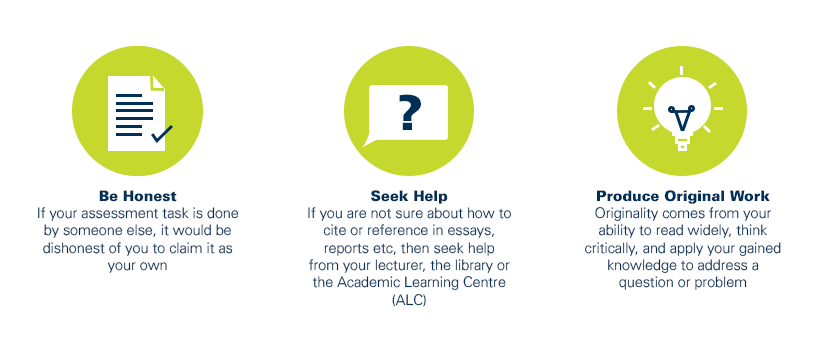
As a CQUniversity student you are expected to act honestly in all aspects of your academic work.
Any assessable work undertaken or submitted for review or assessment must be your own work. Assessable work is any type of work you do to meet the assessment requirements in the unit, including draft work submitted for review and feedback and final work to be assessed.
When you use the ideas, words or data of others in your assessment, you must thoroughly and clearly acknowledge the source of this information by using the correct referencing style for your unit. Using others’ work without proper acknowledgement may be considered a form of intellectual dishonesty.
Participating honestly, respectfully, responsibly, and fairly in your university study ensures the CQUniversity qualification you earn will be valued as a true indication of your individual academic achievement and will continue to receive the respect and recognition it deserves.
As a student, you are responsible for reading and following CQUniversity’s policies, including the Student Academic Integrity Policy and Procedure. This policy sets out CQUniversity’s expectations of you to act with integrity, examples of academic integrity breaches to avoid, the processes used to address alleged breaches of academic integrity, and potential penalties.
What is a breach of academic integrity?
A breach of academic integrity includes but is not limited to plagiarism, self-plagiarism, collusion, cheating, contract cheating, and academic misconduct. The Student Academic Integrity Policy and Procedure defines what these terms mean and gives examples.
Why is academic integrity important?
A breach of academic integrity may result in one or more penalties, including suspension or even expulsion from the University. It can also have negative implications for student visas and future enrolment at CQUniversity or elsewhere. Students who engage in contract cheating also risk being blackmailed by contract cheating services.
Where can I get assistance?
For academic advice and guidance, the Academic Learning Centre (ALC) can support you in becoming confident in completing assessments with integrity and of high standard.
What can you do to act with integrity?