Overview
The study of poetry, from the Romantics to contemporary slam poetry, offers a rich exploration of how human expression has evolved through language, form, and performance across centuries. This journey takes you from classic love sonnets to modern spoken word, showing how society and culture shape the way we express ourselves through verse. The aim of this unit is to introduce you to practical skills in understanding poetry and communicating your understanding to others. You'll learn to analyse poetry and appreciate its history and various forms while developing valuable skills in critical thinking and creative expression that you can use in any career path.
Details
Pre-requisites or Co-requisites
Students need to have completed 18 credit points prior to enrolling in this unit.
Important note: Students enrolled in a subsequent unit who failed their pre-requisite unit, should drop the subsequent unit before the census date or within 10 working days of Fail grade notification. Students who do not drop the unit in this timeframe cannot later drop the unit without academic and financial liability. See details in the Assessment Policy and Procedure (Higher Education Coursework).
Offerings For Term 1 - 2026
Attendance Requirements
All on-campus students are expected to attend scheduled classes - in some units, these classes are identified as a mandatory (pass/fail) component and attendance is compulsory. International students, on a student visa, must maintain a full time study load and meet both attendance and academic progress requirements in each study period (satisfactory attendance for International students is defined as maintaining at least an 80% attendance record).
Recommended Student Time Commitment
Each 6-credit Undergraduate unit at CQUniversity requires an overall time commitment of an average of 12.5 hours of study per week, making a total of 150 hours for the unit.
Class Timetable
Assessment Overview
Assessment Grading
This is a graded unit: your overall grade will be calculated from the marks or grades for each assessment task, based on the relative weightings shown in the table above. You must obtain an overall mark for the unit of at least 50%, or an overall grade of 'pass' in order to pass the unit. If any 'pass/fail' tasks are shown in the table above they must also be completed successfully ('pass' grade). You must also meet any minimum mark requirements specified for a particular assessment task, as detailed in the 'assessment task' section (note that in some instances, the minimum mark for a task may be greater than 50%). Consult the University's Grades and Results Policy for more details of interim results and final grades.
All University policies are available on the CQUniversity Policy site.
You may wish to view these policies:
- Grades and Results Policy
- Assessment Policy and Procedure (Higher Education Coursework)
- Review of Grade Procedure
- Student Academic Integrity Policy and Procedure
- Academic Progression Policy and Procedure
- Student Refund and Credit Balance Policy and Procedure
- Complaints Policy and Procedure
- Information and Communications Technology Acceptable Use Policy and Procedure
This list is not an exhaustive list of all University policies. The full list of University policies are available on the CQUniversity Policy site.
Feedback, Recommendations and Responses
Every unit is reviewed for enhancement each year. At the most recent review, the following staff and student feedback items were identified and recommendations were made.
Feedback from UC reflection and student performance data
Clarity of assessment expectations and scaffolding
Continue refining the scaffolding of assessments and ensure expectations are clearly communicated by the Unit Coordinator to students and any external markers. This will support consistency in marking and help maintain strong student outcomes.
Feedback from Student Unit Evaluation data
Volume of weekly content
Review the volume of content provided each week to ensure it remains accessible and manageable. While the unit’s scope is intentionally ambitious, care should be taken to present expansive topics in a way that supports student engagement and avoids cognitive overload.
- Identify and analyse different poetic forms and techniques, and how they shape meaning in a range of poetry
- Evaluate critical debates and theories surrounding the reception of different types of poetry
- Formulate responses to issues raised and ideas about poetry, and convey those ideas through cogent arguments
Alignment of Assessment Tasks to Learning Outcomes
| Assessment Tasks | Learning Outcomes | ||
|---|---|---|---|
| 1 | 2 | 3 | |
| 1 - Reflective Practice Assignment - 20% | |||
| 2 - Written Assessment - 35% | |||
| 3 - Essay - 45% | |||
Alignment of Graduate Attributes to Learning Outcomes
| Graduate Attributes | Learning Outcomes | ||
|---|---|---|---|
| 1 | 2 | 3 | |
| 1 - Communication | |||
| 2 - Problem Solving | |||
| 3 - Critical Thinking | |||
| 4 - Information Literacy | |||
| 5 - Team Work | |||
| 6 - Information Technology Competence | |||
| 7 - Cross Cultural Competence | |||
| 8 - Ethical practice | |||
| 9 - Social Innovation | |||
| 10 - First Nations Knowledges | |||
| 11 - Aboriginal and Torres Strait Islander Cultures | |||
Textbooks
There are no required textbooks.
IT Resources
- CQUniversity Student Email
- Internet
- Unit Website (Moodle)
- Students must have necessary equipment/accessories to attend online tutorials via Zoom or Microsoft Teams, or to watch the video recordings
- Zoom access (via smartphone/device app or laptop): microphone and webcam required
All submissions for this unit must use the referencing style: Harvard (author-date)
For further information, see the Assessment Tasks.
a.hickling@cqu.edu.au
Week 1
Begin Date: 09 Mar 2026Module/Topic
FOUNDATIONS: Reading Poetry + History and Evolution of Poetry
Chapter
Week 1 Study Guide via the Moodle unit site. Readings mentioned in the study guide will be available in the e-reading list.
Note: each week students are expected to review the study material before attending/watching tutorials so that they are prepared for the content and engage in the tutorial activities.
Events and Submissions/Topic
This week provides a brief overview of the history and evolution of poetry to orient you to the chronological structure of the unit. Deeper historical and contextual content will be provided each week as we explore individual movements and periods.
Week 2
Begin Date: 16 Mar 2026Module/Topic
FOUNDATIONS: Types and Traditions
Chapter
Weekly study guide via Moodle. Readings mentioned in the study guide will be available in the e-reading list.
Events and Submissions/Topic
This week explores the range of forms and traditions poetry can take.
Week 3
Begin Date: 23 Mar 2026Module/Topic
FOUNDATIONS: Poetic Vocabulary + Introduction to Critical Approaches
Chapter
Weekly study guide via Moodle. Readings mentioned in the study guide will be available in the e-reading list.
Events and Submissions/Topic
This week builds your working vocabulary for poetry analysis and introduces you to the major critical approaches used in literary studies.
We will return to these frameworks throughout the unit, pairing each approach with the movements and periods they speak to most directly.
Assessment 1 is due next week.
Week 4
Begin Date: 30 Mar 2026Module/Topic
DEEP DIVE: Romantic and Victorian Poetry
Critical focus: Historicism and biographical criticism
Chapter
Weekly study guide via Moodle. Readings mentioned in the study guide will be available in the e-reading list.
Events and Submissions/Topic
Finalise and submit Assessment 1. Review the assessment criteria carefully before submitting to ensure your work meets the task requirements.
Short Paper Due: Week 4 Friday (3 Apr 2026) 11:59 pm AEST
Week 5
Begin Date: 06 Apr 2026Module/Topic
DEEP DIVE: Early Modern and Modernist Poetry Critical focus: Formalism and New Criticism
Chapter
Weekly study guide via Moodle. Readings mentioned in the study guide will be available in the e-reading list.
Events and Submissions/Topic
Week 6
Begin Date: 13 Apr 2026Module/Topic
DEEP DIVE: Imagism and War Poetry
Critical focus: Ecocriticism; trauma theory
Chapter
Weekly study guide via Moodle. Readings mentioned in the study guide will be available in the e-reading list.
Events and Submissions/Topic
Vacation Week
Begin Date: 20 Apr 2026Module/Topic
Chapter
Events and Submissions/Topic
Week 7
Begin Date: 27 Apr 2026Module/Topic
DEEP DIVE: American Modernism and the Harlem Renaissance
Critical focus: Cultural criticism; race and identity theory
Chapter
Weekly study guide via Moodle. Readings mentioned in the study guide will be available in the e-reading list.
Events and Submissions/Topic
Week 8
Begin Date: 04 May 2026Module/Topic
DEEP DIVE: Confessional Poetry
Critical focus: Feminist theory; psychoanalytic criticism
Chapter
Weekly study guide via Moodle. Readings mentioned in the study guide will be available in the e-reading list.
Events and Submissions/Topic
Assessment 2 is due next week.
Week 9
Begin Date: 11 May 2026Module/Topic
DEEP DIVE: Australian and First Nations Poetry
Critical focus: Postcolonial theory; place-based and Indigenous methodologies
Chapter
Weekly study guide via Moodle. Readings mentioned in the study guide will be available in the e-reading list.
Events and Submissions/Topic
Assessment 2 is due.
Review the assessment 2 criteria carefully before submitting to ensure your work meets the task requirements.
Poetic Analysis and Creative Response: Poetry in Practice Due: Week 9 Friday (15 May 2026) 11:59 pm AEST
Week 10
Begin Date: 18 May 2026Module/Topic
DEEP DIVE: Contemporary and Slam Poetry
Critical focus: Cultural studies; performance theory; reader-response
Chapter
Weekly study guide via Moodle. Readings mentioned in the study guide will be available in the e-reading list.
Events and Submissions/Topic
Week 11
Begin Date: 25 May 2026Module/Topic
DEEP DIVE: Poetry and Identity
Critical focus: reflecting on frameworks encountered across the unit — this week considers how identity has shaped poetry across movements, periods, and cultures
Chapter
Weekly study guide via Moodle. Readings mentioned in the study guide will be available in the e-reading list.
Events and Submissions/Topic
This week draws together the threads of the unit, examining identity as a lens that runs through every movement and period we have studied.
Assessment 3 is due next week.
Week 12
Begin Date: 01 Jun 2026Module/Topic
Revising and Recap
Chapter
No new readings.
Events and Submissions/Topic
This week provides an opportunity to revise your essay in progress and consolidate your understanding of the unit.
Finalise and submit Assessment 3. Review the assessment criteria carefully before submitting to ensure your work meets the task requirements.
Essay Due: Week 12 Friday (5 June 2026) 11:59 pm AEST
Exam Week
Begin Date: 08 Jun 2026Module/Topic
Chapter
Events and Submissions/Topic
Vacation/Exam Week
Begin Date: 15 Jun 2026Module/Topic
Chapter
Events and Submissions/Topic
1 Reflective Practice Assignment
Length: 750-900 words
The word count excludes the cover page and reference list. It includes in-text references and direct quotations.
Task: Compose a 750-900-word reflective paper that examines your developing understanding of poetry through the Foundation content of the unit (weeks 1-3). Your reflection should demonstrate both personal growth and academic insight into poetic analysis.
Key Components
1. Critical Engagement
Analyse two specific moments from your learning that transformed your understanding of poetry.
These might include:
- Your response to a particular poem discussed in class
- A breakthrough in understanding poetic terminology
- An insight gained from class discussions
2. Connection
Connect your learning experiences with specific poetic concepts, vocabulary, and/or critical approaches covered in the unit. Consider how your understanding of form, tradition, and poetic language has evolved.
3. Future Application
Articulate how these insights will inform your approach to reading and analysing poetry in the remainder of the unit.
Your discussion must include a minimum of three (3) scholarly references, at least two of which must be drawn from the unit materials.
Important: Your response must refer to poets, poems, poetic vocabulary, poetic forms, from the unit material, including both the weekly study guides and unit readings.
Use of Generative Artificial Intelligence agents (Gen AI)
AI Assessment Scale: Level 2
You may use AI for planning, idea development, and research. Your final submission should show how you have developed and refined these ideas. Any misuse or lack of disclosure regarding AI tools will be considered a breach of academic integrity.
Week 4 Friday (3 Apr 2026) 11:59 pm AEST
Upload to Moodle.
Week 6 Friday (17 Apr 2026)
Feedback via Moodle.
- Critical Engagement and Reflection: Demonstrates critical thinking and self-awareness, using specific and meaningful examples from the Foundations content to show genuine engagement with learning.
- Technical Understanding and Connection: Demonstrates accurate use of poetic concepts, vocabulary, and critical approaches from the unit, connecting these clearly to the specific learning experiences discussed.
- Future Application: Articulates how the insights gained from the Foundations content will inform a developing approach to reading and analysing poetry, demonstrating forward-looking critical awareness.
- Presentation and Referencing: Adheres to submission guidelines, including proper formatting, meeting word count requirements, clarity and fluency of expression with accurate spelling and grammar, and a minimum of three (3) scholarly references with at least two drawn from the unit materials, in Harvard (author-date) style.
- Identify and analyse different poetic forms and techniques, and how they shape meaning in a range of poetry
2 Written Assessment
Length: UP TO 1800 words total
Part A: 1000-word critical analysis
Part B: UP TO 300-word creative response (original poem)
Part C: 400-500-word critical reflection
The word count excludes the cover page and reference list. It includes in-text references and direct quotations.
Analysis and Creative Dialogue: Poetry in Practice
Part A: Critical Analysis (1000 words)
Select one poem from the list provided in Moodle.
- Analyse technical elements and contextual significance
- Identify key stylistic features and techniques
- Examine the poem's relationship to its literary-historical context
- Include a minimum of three (3) scholarly references in your analysis, at least two of which must be drawn from the unit materials.
The list is comprised of a selection of poems from weeks 4-9, representing different poetic movements (e.g., Romanticism, Harlem Renaissance, American Modernism). See Moodle site for details and the list of poems.
Part B: Creative Response (UP TO 300 words MAX)
Compose an original poem that deliberately employs the techniques and style analysed in Part A.
Your Original Poem:
- Length: 14-30 lines, and a maximum 300 words (no matter how many lines of poetry, you cannot exceed 300 words)
- Demonstrate the deliberate use of three technical elements from the analysed poem
- Maintain thematic or stylistic connection to the chosen movement/period
Part C: Critical Reflection (400-500 words)
- Clearly state the three poetic techniques employed
- Explain your creative decisions and their relationship to the analysed poem
- Discuss the challenges encountered, and solutions found
- Critical evaluation of the effectiveness of chosen techniques
- Use of minimum of two (2) scholarly sources in your reflection
Use of Generative Artificial Intelligence agents (Gen AI)
AI Assessment Scale: Level 2
You may use AI for planning, idea development, and research. Your final submission should show how you have developed and refined these ideas. Any misuse or lack of disclosure regarding AI tools will be considered a breach of academic integrity.
Week 9 Friday (15 May 2026) 11:59 pm AEST
Upload to Moodle
Week 11 Friday (29 May 2026)
Feedback provided in Moodle
- Critical Analysis: Demonstrates detailed and well-supported understanding of the chosen poem through careful close reading, appropriate technical vocabulary, and integration of historical and cultural context.
- Creative Application: Presents an original poem that purposefully implements three identified poetic techniques from the analysed poem, maintaining thematic and/or stylistic connection to the chosen movement or period.
- Reflective Practice: Provides thoughtful and evidence-informed reflection that clearly identifies and evaluates the three techniques employed, explains creative decision-making with reference to the analysed poem, and discusses challenges encountered and solutions found.
- Presentation and Referencing: Adheres to submission guidelines, including proper formatting, meeting word count requirements for all parts, evidence of editing and proofreading, and a minimum of three (3) scholarly references in Part A and two (2) in Part C, with at least two of the total references drawn from the unit materials, in Harvard (author-date) style.
- Identify and analyse different poetic forms and techniques, and how they shape meaning in a range of poetry
- Evaluate critical debates and theories surrounding the reception of different types of poetry
- Formulate responses to issues raised and ideas about poetry, and convey those ideas through cogent arguments
3 Essay
Length: 2000 words + references
The word count excludes the cover page and reference list. It includes in-text references and direct quotations.
Critical Perspectives in Poetry: Essay
In this 2000-word essay, you will develop a sustained critical argument in response to one of the provided questions. Your essay should demonstrate comprehensive engagement with poetic analysis, drawing on specific examples from poems studied in the unit and incorporating relevant scholarly sources (minimum five (5) scholarly sources plus referencing the poets/each poem).
Your essay must:
- Present a clear and focused argument.
- Perform advanced poetry analysis in answering your chosen topic question.
- Analyse at least two (maximum 6) poems from the unit material to answer your question. Refer to each question for specifics.
- Provide direct evidence from the poems.
- Use secondary material to support both your argument and analysis and therefore engage with a minimum of five (5) scholarly sources.
- Demonstrate sophisticated understanding of poetic techniques and their cultural/historical contexts.
- Optional: Apply appropriate theoretical frameworks to support your analysis
Choose ONE of the following questions:
1. "The personal is political" - Examine how two or three poets use personal experience to engage with broader social or political issues. Consider how poetic form and voice contribute to the intersection of individual and collective experience. (For example: you might explore works by Judith Wright, Sylvia Plath, Adrienne Rich, or other poets who bridge personal and political themes). Your choices can be from different poetic/literary periods or within the same.
2. How do poets from different historical periods represent urban modernity and its impact on human experience? Analyse two or three poems from different time periods, examining how poetic form and imagery reflect changing perspectives on urban life. (For example: you might compare a Romantic poet's views of industrialisation with modernist urban poetry)
3. Analyse how two First Nations poets (such as Oodgeroo Noonuccal, Ali Cobby Eckermann, Lionel Fogarty, or Ellen van Neerven) explore themes of Country, sovereignty, and cultural continuation in their work. For example, how do their poetic techniques and use of language (including English and/or First Nations languages) contribute to their expression of these themes? Consider one or two (1-2) poems from each poet.
4. Examine how two or three poets use traditional poetic forms (such as the sonnet, villanelle, or ghazal) to address contemporary themes or challenge conventional expectations. How does their engagement with form contribute to meaning? Choose one poem from each poet.
5. Compare representations of grief and mourning across two or three poems from different cultural or historical contexts. How do the poets' choices of imagery, form, and voice reflect distinct approaches to expressing loss? Consider how cultural and historical contexts influence these representations.
If you wish to use a different number of poems or poets than specified in the questions, please consult the unit coordinator.
Use of Generative Artificial Intelligence agents (Gen AI)
AI Assessment Scale: Level 2
You may use AI for planning, idea development, and research. Your final submission should show how you have developed and refined these ideas. Any misuse or lack of disclosure regarding AI tools will be considered a breach of academic integrity.
Week 12 Friday (5 June 2026) 11:59 pm AEST
Upload to Moodle
Vacation/Exam Week Friday (19 June 2026)
Feedback via Moodle
- Critical Analysis and Argument: Presents a clear and well-developed thesis that builds a coherent, evidence-based argument through careful analysis of the chosen poems, demonstrating independent critical thinking.
- Textual Evidence and Close Reading: Demonstrates detailed and perceptive engagement with poetic language through close analysis of literary techniques, supported by specific and relevant textual evidence from the chosen poems.
- Contextual and Critical Understanding: Shows well-developed understanding of relevant historical, cultural, and literary contexts, and engages with relevant critical debates and/or theoretical frameworks to demonstrate how these shape the meaning and reception of the chosen poems.
- Comparative Analysis: Develops meaningful connections between the chosen poems, demonstrating understanding of how different poets approach similar themes or employ different techniques to achieve their effects.
- Presentation and Referencing: Adheres to submission guidelines, including proper formatting, meeting word count requirements, evidence of editing and proofreading, and a minimum of five (5) scholarly references in Harvard (author-date) style.
- Identify and analyse different poetic forms and techniques, and how they shape meaning in a range of poetry
- Evaluate critical debates and theories surrounding the reception of different types of poetry
- Formulate responses to issues raised and ideas about poetry, and convey those ideas through cogent arguments
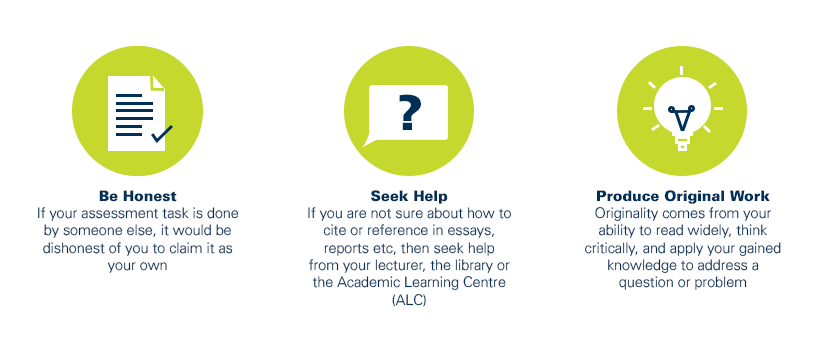
As a CQUniversity student you are expected to act honestly in all aspects of your academic work.
Any assessable work undertaken or submitted for review or assessment must be your own work. Assessable work is any type of work you do to meet the assessment requirements in the unit, including draft work submitted for review and feedback and final work to be assessed.
When you use the ideas, words or data of others in your assessment, you must thoroughly and clearly acknowledge the source of this information by using the correct referencing style for your unit. Using others’ work without proper acknowledgement may be considered a form of intellectual dishonesty.
Participating honestly, respectfully, responsibly, and fairly in your university study ensures the CQUniversity qualification you earn will be valued as a true indication of your individual academic achievement and will continue to receive the respect and recognition it deserves.
As a student, you are responsible for reading and following CQUniversity’s policies, including the Student Academic Integrity Policy and Procedure. This policy sets out CQUniversity’s expectations of you to act with integrity, examples of academic integrity breaches to avoid, the processes used to address alleged breaches of academic integrity, and potential penalties.
What is a breach of academic integrity?
A breach of academic integrity includes but is not limited to plagiarism, self-plagiarism, collusion, cheating, contract cheating, and academic misconduct. The Student Academic Integrity Policy and Procedure defines what these terms mean and gives examples.
Why is academic integrity important?
A breach of academic integrity may result in one or more penalties, including suspension or even expulsion from the University. It can also have negative implications for student visas and future enrolment at CQUniversity or elsewhere. Students who engage in contract cheating also risk being blackmailed by contract cheating services.
Where can I get assistance?
For academic advice and guidance, the Academic Learning Centre (ALC) can support you in becoming confident in completing assessments with integrity and of high standard.
What can you do to act with integrity?