Overview
Globalisation, economic liberalisation and technological advances have in the last three decades facilitated greater interaction and cooperation among States in ways never seen before. There is a greater awareness among States of their interdependence and the need for a concerted response to global issues such as global warming, environmental degradation, humanitarian crises, international refugees, human rights violations, rogue States, terrorism, military adventurism, and pandemics. In this era and context, Public International Law, which provides a regime of legal rules that governs the conduct and relations of sovereign States, and Human Rights Law have gained increasing importance.
Details
Pre-requisites or Co-requisites
Prerequisite: 24 credit points of law units including LAWS11057.
Important note: Students enrolled in a subsequent unit who failed their pre-requisite unit, should drop the subsequent unit before the census date or within 10 working days of Fail grade notification. Students who do not drop the unit in this timeframe cannot later drop the unit without academic and financial liability. See details in the Assessment Policy and Procedure (Higher Education Coursework).
Offerings For Term 3 - 2026
Attendance Requirements
All on-campus students are expected to attend scheduled classes - in some units, these classes are identified as a mandatory (pass/fail) component and attendance is compulsory. International students, on a student visa, must maintain a full time study load and meet both attendance and academic progress requirements in each study period (satisfactory attendance for International students is defined as maintaining at least an 80% attendance record).
Recommended Student Time Commitment
Each 6-credit Undergraduate unit at CQUniversity requires an overall time commitment of an average of 12.5 hours of study per week, making a total of 150 hours for the unit.
Class Timetable
Assessment Overview
| Assessment Task | Part Weighting (% of assessment) |
Assessment Security Level | Gen AI Guidance Levels |
|---|---|---|---|
| 1. Interactive Oral Assessment – Rhetorical International Law Argument 40% (40% of unit ) | |||
| Interactive Oral Assessment – Rhetorical International Law Argument 40% (Oral Examination) | 100% of 40% | High | No Gen AI Use |
| 2. International Diplomacy Simulation 60% (60% of unit ) | |||
| International Diplomacy Simulation 60% (Practical Assessment) | 100% of 60% | Medium | No Gen AI Use |
Assessment Grading
This is a graded unit: your overall grade will be calculated from the marks or grades for each assessment task, based on the relative weightings shown in the table above. You must obtain an overall mark for the unit of at least 50%, or an overall grade of 'pass' in order to pass the unit. If any 'pass/fail' tasks are shown in the table above they must also be completed successfully ('pass' grade). You must also meet any minimum mark requirements specified for a particular assessment task, as detailed in the 'assessment task' section (note that in some instances, the minimum mark for a task may be greater than 50%). Consult the University's Grades and Results Policy for more details of interim results and final grades.
All University policies are available on the CQUniversity Policy site.
You may wish to view these policies:
- Grades and Results Policy
- Assessment Policy and Procedure (Higher Education Coursework)
- Review of Grade Procedure
- Student Academic Integrity Policy and Procedure
- Academic Progression Policy and Procedure
- Student Refund and Credit Balance Policy and Procedure
- Complaints Policy and Procedure
- Information and Communications Technology Acceptable Use Policy and Procedure
This list is not an exhaustive list of all University policies. The full list of University policies are available on the CQUniversity Policy site.
Feedback, Recommendations and Responses
Every unit is reviewed for enhancement each year. At the most recent review, the following staff and student feedback items were identified and recommendations were made.
Feedback from Unit coordinator reflection
Integrate more contemporary issues and practical aspects into teaching materials
The success of the newly designed practical assessment delivered in 2024 demonstrates a need to integrate more contemporary issues and practical aspects into teaching materials, which should look beyond theory
- Discuss and explain key topics of Public International and Human Rights Law, such as: the sources and subjects of international law; statehood and State sovereignty; international trade law; State responsibility; human rights and self-determination; and the law of treaties
- Discuss, explain and apply key principles of Public International and Human Rights Law to real and theoretical contexts
- Critically analyse, research and provide solutions to practical and theoretical questions concerning Public International and Human Rights Law.
Alignment of Assessment Tasks to Learning Outcomes
| Assessment Tasks | Learning Outcomes | ||
|---|---|---|---|
| 1 | 2 | 3 | |
|
1.
Assessment 1
(40% of unit )
Oral Examination
|
|||
|
2.
Assessment 2
(60% of unit )
Practical Assessment
|
|||
Alignment of Graduate Attributes to Learning Outcomes
| Graduate Attributes | Learning Outcomes | ||
|---|---|---|---|
| 1 | 2 | 3 | |
| 1 - Communication | |||
| 2 - Problem Solving | |||
| 3 - Critical Thinking | |||
| 4 - Information Literacy | |||
| 5 - Team Work | |||
| 6 - Information Technology Competence | |||
| 7 - Cross Cultural Competence | |||
| 8 - Ethical practice | |||
| 9 - Social Innovation | |||
| 10 - First Nations Knowledges | |||
| 11 - Aboriginal and Torres Strait Islander Cultures | |||
Textbooks
Public International Law : A Multi-Perspective Approach
- Edition: 1st (2024)
- Authors: González Hauck, S., Kunz, R., & Milas, M.
- Taylor and Francis
- ISBN: 9781040010235
Also available online as an open textbook.
IT Resources
- CQUniversity Student Email
- Internet
- Unit Website (Moodle)
- Microphone and camera for use with Zoom
- Zoom access
All submissions for this unit must use the referencing style: Australian Guide to Legal Citation, 4th ed
For further information, see the Assessment Tasks.
s.beattie@cqu.edu.au
Module 1
Begin Date: 09 Nov 2026Module/Topic
What is Public International Law
Chapter
Chapter 1-2
Events and Submissions/Topic
Module 2
Begin Date: 16 Nov 2026Module/Topic
History of Public International Law
Chapter
Chapters 3-4
Events and Submissions/Topic
Module 3
Begin Date: 23 Nov 2026Module/Topic
Sources of Public International Law
Chapter
Chapters 5-6
Events and Submissions/Topic
Module 4
Begin Date: 30 Nov 2026Module/Topic
Institutions and processes
Chapter
Chapters 7-9
Events and Submissions/Topic
Module 5
Begin Date: 07 Dec 2026Module/Topic
Conflict in Public International Law
Chapter
Chapters 10-13
Events and Submissions/Topic
Module 6
Begin Date: 14 Dec 2026Module/Topic
Human Rights
Chapter
Chapter 13
Events and Submissions/Topic
Mid-Term Break
Begin Date: 21 Dec 2026Module/Topic
Chapter
Events and Submissions/Topic
Module 7
Begin Date: 04 Jan 2027Module/Topic
In Modules 7-10 students will select four topics from the available list.
Chapter
Armed conflict (chapter 14)
Law of the sea (chapter 15)
International environmental law (chapter 16)
Climate change law (chapter 17)
International migration law (chapter 18)
International law in cyberspace (chapter 19)
Space law (chapter 20)
International criminal law (chapter 22)
International economic law (chapter 23)
Events and Submissions/Topic
Module 8
Begin Date: 11 Jan 2027Module/Topic
Second choice
Chapter
Events and Submissions/Topic
Module 9
Begin Date: 18 Jan 2027Module/Topic
Third choice
Chapter
Events and Submissions/Topic
Module 10
Begin Date: 25 Jan 2027Module/Topic
Fourth choice
Chapter
Events and Submissions/Topic
Module 11
Begin Date: 01 Feb 2027Module/Topic
Conclusions
Chapter
Events and Submissions/Topic
Module 12
Begin Date: 08 Feb 2027Module/Topic
Revision
Chapter
Events and Submissions/Topic
Exam Week
Begin Date: 15 Feb 2027Module/Topic
Chapter
Events and Submissions/Topic
Week 12
Begin Date: 07 Feb 2028Module/Topic
Chapter
Events and Submissions/Topic
1. Interactive Oral Assessment – Rhetorical International Law Argument 40% ( 40% of unit )
Oral Examination
Due Week 7 onward
There is no doctrine of precedent in public international law. Consideration of case law is an important aspect of determining international norms but each principle must be presented on its rhetorical strength of reasoning rather than force of law. This assessment, supported by workshops in the first part of the course, will develop your skills of rhetorical argument, which will also improve your caselaw skills under domestic law.
This is an interactive oral assessment. You must book a 30 minute zoom appointment to complete this task (appointments start in week 7). At the commencement of the term you will be given three public international law cases that you must read ahead of the task in order to apply them in this assignment.
At the start of your interactive oral assessment you will be presented with a brief, randomised set of facts. You will have up to 5 minutes to review the facts and then you have 10-15 minutes to present your argument and answer questions from the moderator. This is an interactive discussion, not a pre-prepared presentation. You must prepare in advance, you will not have time to look up materials, although you may wish to consult your own notes.
After the completion of the exercise there will be 5- 10 minutes of feedback and discussion.
After week 9 there will be a second phase of appointments for students who are granted extensions. Students who fail during the first round due to nerves and anxiety may apply in writing to the unit coordinator for the opportunity to take a mulligan. There will not be a third round.
These zoom sessions will be recorded for the students’ own self evaluation and, if necessary, to be used as an official recording. They will not otherwise be shared with others.
AI Guidelines
This assessment requires students to adhere to the guidelines on the use of artificial intelligence tools as specified in the Artificial Intelligence Assessment Scale (AIAS). Any misuse or lack of disclosure regarding the use of AI tools will be considered a breach of academic integrity. The use of AI tools or technology is prohibited in the completion of this assignment (level 1). You must not use AI tools or technology to produce substantive content in any manner. You are permitted to use technology or tools that assist with spelling, grammar or formatting.
Extensions
This assessment must be submitted by the specified due date and time. Due to the nature of this task, the standard 72-hour grace period does not apply.
Extensions of more than 14 days are not available for this assessment. Due to the need to provide prompt feedback to students and the content of feedback provided, submissions received after the assessment has been returned to students cannot be accepted for academic integrity reasons. Students seeking extensions beyond this timeframe will be required to undertake a different version of the assessment task.
Bookings are available from week 7 onward
Assessment and feedback are completed during the interactive oral assessment
- Problem solving within fixed time limits
- Ability to answer questions thoroughly and knowledgeably
- Knowledge of public international law principles
- Practical understanding of rhetorical argument
No submission method provided.
- Discuss and explain key topics of Public International and Human Rights Law, such as: the sources and subjects of international law; statehood and State sovereignty; international trade law; State responsibility; human rights and self-determination; and the law of treaties
- Discuss, explain and apply key principles of Public International and Human Rights Law to real and theoretical contexts
- Critically analyse, research and provide solutions to practical and theoretical questions concerning Public International and Human Rights Law.
2. International Diplomacy Simulation 60% ( 60% of unit )
Practical Assessment
3000 words. Due week 11
You will engage with a simulation of international diplomacy during workshops 6 through to 10 in which you will negotiate with other teams and gather support for a United Nations General Assembly resolution that you will present in workshop 10 where it will be voted upon.
This task is best carried out in teams of 3-4. You are permitted to complete the task by yourself, but you will not gain the most from the learning experience. Each team will represent a fictional mid-level influence country and will select a resolution topic to present to the final assembly in workshop 10. By default this topic will be confidential to your team and the unit coordinator, although you may wish to share it with allies as the activity progresses
If you are in a team, each team member will take responsibility for one separate aspect of an overall resolution and draft the wording of that aspect.
Workshop 6: Formation of teams and selection of topic for proposed resolution
Workshops 7-9: Negotiation of international crises and gathering of support
Workshop 10: Simulated UN General Assembly. Presentation of resolutions and voting.
Assessment Components:
- Engagement in diplomacy and negotiation activities from workshops 6-10
- Drafting and presentation of your individual resolution or resolution compenent
- Discussion of the drafting process including international and domestic law aspects
- Reflection on diplomatic process and strategy – this will take the form of weekly notes and second order reflection at the completion of the term
Submissions are of individual work.
You must pass each of these elements to gain a pass overall. This means you must participate in the process, either via the regular zoom workshops or via another means that you have cleared with the unit coordinator at the start of term (prior to the conclusion of week 4)
AI Guidelines
This assessment requires students to adhere to the guidelines on the use of artificial intelligence tools as specified in the Artificial Intelligence Assessment Scale (AIAS). Any misuse or lack of disclosure regarding the use of AI tools will be considered a breach of academic integrity. The use of AI tools or technology is prohibited in the completion of this assignment (level 1). You must not use AI tools or technology to produce substantive content in any manner. You are permitted to use technology or tools that assist with spelling, grammar or formatting.
Extensions
This assessment must be submitted by the specified due date and time. Due to the nature of this task, the standard 72-hour grace period does not apply.
Extensions of more than 14 days are not available for this assessment. Due to the need to provide prompt feedback to students and the content of feedback provided, submissions received after the assessment has been returned to students cannot be accepted for academic integrity reasons. Students seeking extensions beyond this timeframe will be required to undertake a different version of the assessment task.
Week 11 Thursday (4 Feb 2027) 11:45 pm AEST
Exam Week Thursday (18 Feb 2027)
- Applied understanding of stratetic and diplomatic processes via regular engagement with the simulation
- Demonstrated understanding of the principles of public international law, evidenced through principled negotiations and discussions.
- Clarity and accuracy in drafting of resolution text, including reference to international and domestic law norms
- Ability to reflect on learning, connecting the practical diplomatic process to issues and themes of public international law.
- Discuss and explain key topics of Public International and Human Rights Law, such as: the sources and subjects of international law; statehood and State sovereignty; international trade law; State responsibility; human rights and self-determination; and the law of treaties
- Discuss, explain and apply key principles of Public International and Human Rights Law to real and theoretical contexts
- Critically analyse, research and provide solutions to practical and theoretical questions concerning Public International and Human Rights Law.
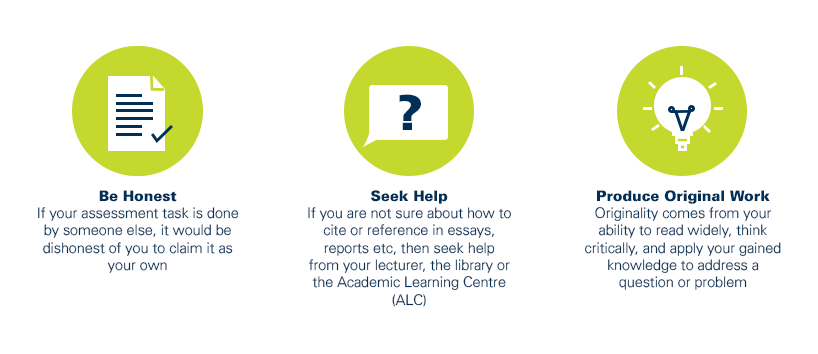
As a CQUniversity student you are expected to act honestly in all aspects of your academic work.
Any assessable work undertaken or submitted for review or assessment must be your own work. Assessable work is any type of work you do to meet the assessment requirements in the unit, including draft work submitted for review and feedback and final work to be assessed.
When you use the ideas, words or data of others in your assessment, you must thoroughly and clearly acknowledge the source of this information by using the correct referencing style for your unit. Using others’ work without proper acknowledgement may be considered a form of intellectual dishonesty.
Participating honestly, respectfully, responsibly, and fairly in your university study ensures the CQUniversity qualification you earn will be valued as a true indication of your individual academic achievement and will continue to receive the respect and recognition it deserves.
As a student, you are responsible for reading and following CQUniversity’s policies, including the Student Academic Integrity Policy and Procedure. This policy sets out CQUniversity’s expectations of you to act with integrity, examples of academic integrity breaches to avoid, the processes used to address alleged breaches of academic integrity, and potential penalties.
What is a breach of academic integrity?
A breach of academic integrity includes but is not limited to plagiarism, self-plagiarism, collusion, cheating, contract cheating, and academic misconduct. The Student Academic Integrity Policy and Procedure defines what these terms mean and gives examples.
Why is academic integrity important?
A breach of academic integrity may result in one or more penalties, including suspension or even expulsion from the University. It can also have negative implications for student visas and future enrolment at CQUniversity or elsewhere. Students who engage in contract cheating also risk being blackmailed by contract cheating services.
Where can I get assistance?
For academic advice and guidance, the Academic Learning Centre (ALC) can support you in becoming confident in completing assessments with integrity and of high standard.
What can you do to act with integrity?