Overview
LAWS11065 Constitutional law examines the organization, source and limits of Commonwealth and State powers, and the relations between the three branches of government at Commonwealth and State levels. In this unit you will examine State and Commonwealth constitutions and constitutional systems; the constitution and operation of the legislature, executive and judiciary; the relationship between the different institutions of government and the separation of powers; and the relationship between the different levels of government. This unit meets the LPAB requirements for federal and state constitutional law.
Details
Pre-requisites or Co-requisites
Co-requisite LAWS11057
Important note: Students enrolled in a subsequent unit who failed their pre-requisite unit, should drop the subsequent unit before the census date or within 10 working days of Fail grade notification. Students who do not drop the unit in this timeframe cannot later drop the unit without academic and financial liability. See details in the Assessment Policy and Procedure (Higher Education Coursework).
Offerings For Term 2 - 2026
Attendance Requirements
All on-campus students are expected to attend scheduled classes - in some units, these classes are identified as a mandatory (pass/fail) component and attendance is compulsory. International students, on a student visa, must maintain a full time study load and meet both attendance and academic progress requirements in each study period (satisfactory attendance for International students is defined as maintaining at least an 80% attendance record).
Recommended Student Time Commitment
Each 6-credit Undergraduate unit at CQUniversity requires an overall time commitment of an average of 12.5 hours of study per week, making a total of 150 hours for the unit.
Class Timetable
Assessment Overview
Assessment Grading
This is a graded unit: your overall grade will be calculated from the marks or grades for each assessment task, based on the relative weightings shown in the table above. You must obtain an overall mark for the unit of at least 50%, or an overall grade of 'pass' in order to pass the unit. If any 'pass/fail' tasks are shown in the table above they must also be completed successfully ('pass' grade). You must also meet any minimum mark requirements specified for a particular assessment task, as detailed in the 'assessment task' section (note that in some instances, the minimum mark for a task may be greater than 50%). Consult the University's Grades and Results Policy for more details of interim results and final grades.
All University policies are available on the CQUniversity Policy site.
You may wish to view these policies:
- Grades and Results Policy
- Assessment Policy and Procedure (Higher Education Coursework)
- Review of Grade Procedure
- Student Academic Integrity Policy and Procedure
- Academic Progression Policy and Procedure
- Student Refund and Credit Balance Policy and Procedure
- Complaints Policy and Procedure
- Information and Communications Technology Acceptable Use Policy and Procedure
This list is not an exhaustive list of all University policies. The full list of University policies are available on the CQUniversity Policy site.
Feedback, Recommendations and Responses
Every unit is reviewed for enhancement each year. At the most recent review, the following staff and student feedback items were identified and recommendations were made.
Feedback from Staff reflection
Many students are completing an invigilated in-person exam in the first term at university.
While the assessment in the unit cannot be changed due to accreditation requirements, the unit coordinator should consider what further guidance (whether from the ALC or otherwise) can be provided to students to help them prepare for the exam
- Examine and apply the constitutional law principles through discussion of the Commonwealth's legislative powers, and Commonwealth and state relations.
- Identify and interpret the appropriate constitutional provisions and case authorities to support the application of constitutional principles to factual legal problems.
- Critically analyse the scope and application of rights and liberties expressly stated or implied into the Constitution, including those of Aboriginal and Torres Strait Islanders.
- Communicate effectively through writing or in collaboration with others regarding the impact of High Court decisions on the development of constitutional principles on the character of the federal system in Australia and the separation of powers.
Alignment of Assessment Tasks to Learning Outcomes
| Assessment Tasks | Learning Outcomes | |||
|---|---|---|---|---|
| 1 | 2 | 3 | 4 | |
| 1 - Written Assessment - 40% | ||||
| 2 - Group Work - 10% | ||||
| 3 - Examination - 50% | ||||
Alignment of Graduate Attributes to Learning Outcomes
| Graduate Attributes | Learning Outcomes | |||
|---|---|---|---|---|
| 1 | 2 | 3 | 4 | |
| 1 - Communication | ||||
| 2 - Problem Solving | ||||
| 3 - Critical Thinking | ||||
| 4 - Information Literacy | ||||
| 5 - Team Work | ||||
| 6 - Information Technology Competence | ||||
| 7 - Cross Cultural Competence | ||||
| 8 - Ethical practice | ||||
| 9 - Social Innovation | ||||
| 10 - First Nations Knowledges | ||||
| 11 - Aboriginal and Torres Strait Islander Cultures | ||||
Textbooks
Australian Constitutional Law: Principles in Movement
- (2022)
- Authors: Jonathan Crowe
- Oxford University Press
- Docklands Docklands , Victoria , Australia
- ISBN: 9780190311414
The ISBN for the e-book is: 9780190311421
IT Resources
- CQUniversity Student Email
- Internet
- Unit Website (Moodle)
- Microsoft Teams
- Zoom access for weekly meetings
All submissions for this unit must use the referencing style: Australian Guide to Legal Citation, 4th ed
For further information, see the Assessment Tasks.
j.french@cqu.edu.au
Week 1
Begin Date: 13 Jul 2026Module/Topic
Introduction to Australian Constitutional Law: Constitutional Law in Movement
Chapter
Jonathan Crowe, Australian Constitutional Law: Principles in Movement (Oxford University Press, 2022) Chapter 1
Events and Submissions/Topic
Week 2
Begin Date: 20 Jul 2026Module/Topic
Interpreting Legislative Powers
Chapter
Jonathan Crowe, Australian Constitutional Law: Principles in Movement (Oxford University Press, 2022) Chapter 3
Events and Submissions/Topic
Week 3
Begin Date: 27 Jul 2026Module/Topic
Economic Powers of the Commonwealth I: Trade, Commerce, and Corporations Powers
Chapter
Jonathan Crowe, Australian Constitutional Law: Principles in Movement (Oxford University Press, 2022) Chapter 4
Events and Submissions/Topic
Week 4
Begin Date: 03 Aug 2026Module/Topic
Economic Powers of the Commonwealth II: Taxation Power
Chapter
Jonathan Crowe, Australian Constitutional Law: Principles in Movement (Oxford University Press, 2022) Chapter 4
Events and Submissions/Topic
Week 5
Begin Date: 10 Aug 2026Module/Topic
International Powers of the Commonwealth
Chapter
Jonathan Crowe, Australian Constitutional Law: Principles in Movement (Oxford University Press, 2022) Chapter 5
Events and Submissions/Topic
Week 6
Begin Date: 17 Aug 2026Module/Topic
Executive Power and Responsible Government
Chapter
Jonathan Crowe, Australian Constitutional Law: Principles in Movement (Oxford University Press, 2022) Chapter 6
Events and Submissions/Topic
Vacation Week
Begin Date: 24 Aug 2026Module/Topic
Break Week
Chapter
Events and Submissions/Topic
Week 7
Begin Date: 31 Aug 2026Module/Topic
Federalism and Governance
Chapter
Jonathan Crowe, Australian Constitutional Law: Principles in Movement (Oxford University Press, 2022) Chapter 7
Events and Submissions/Topic
Week 8
Begin Date: 07 Sep 2026Module/Topic
Judicial Power of the Commonwealth
Chapter
Jonathan Crowe, Australian Constitutional Law: Principles in Movement (Oxford University Press, 2022) Chapter 8
Events and Submissions/Topic
Week 9
Begin Date: 14 Sep 2026Module/Topic
Judicial Power in the States
Chapter
Jonathan Crowe, Australian Constitutional Law: Principles in Movement (Oxford University Press, 2022) Chapter 9
Events and Submissions/Topic
Week 10
Begin Date: 21 Sep 2026Module/Topic
Express Constitutional Rights
Chapter
Jonathan Crowe, Australian Constitutional Law: Principles in Movement (Oxford University Press, 2022) Chapter 10
Events and Submissions/Topic
Week 11
Begin Date: 28 Sep 2026Module/Topic
Implied Constitutional Rights
Chapter
Jonathan Crowe, Australian Constitutional Law: Principles in Movement (Oxford University Press, 2022) Chapter 11
Events and Submissions/Topic
Week 12
Begin Date: 05 Oct 2026Module/Topic
Review Week
Chapter
Events and Submissions/Topic
Exam Week
Begin Date: 12 Oct 2026Module/Topic
Chapter
Events and Submissions/Topic
Vacation/Exam Week
Begin Date: 19 Oct 2026Module/Topic
Chapter
Events and Submissions/Topic
1 Written Assessment
This written assessment is comprised of two parts:
- A written piece aimed at educating the public on a particular topic in constitutional law.
- A brief supporting the written piece, including the research conducted into the piece.
The specifics of the task and the marking rubric will be available on Moodle in Week 1.
Extensions of more than 14 days are not available for this assessment. Due to the need to provide prompt feedback to students and the content of feedback provided, submissions received after the assessment has been returned to students cannot be accepted for academic integrity reasons. Students seeking extensions beyond this timeframe will be required to undertake a different version of the assessment task.
Instructions on the Use of AI
This assessment requires students to adhere to the guidelines on the use of artificial intelligence tools as specified in the Artificial Intelligence Assessment Scale (AIAS). Any misuse or lack of disclosure regarding the use of AI tools will be considered a breach of academic integrity.
Level of GenAI Use Allowed
Level 1: You must not use AI at any point during the assessment. You must demonstrate your core skills and knowledge.
Week 7 Friday (4 Sept 2026) 5:00 pm AEST
Online, via Moodle
Week 9 Friday (18 Sept 2026)
This task will be assessed according to your ability to:
- Identify a topic that is appropriately connected to constitutional law and is relevant to laypeople.
- Demonstrate knowledge of constitutional law principles and the associated common law principles.
- Engage with secondary sources and apply them to constitutional principles.
- Write in a way that is entertaining, persuasive, and educational.
A detailed marking rubric is available on the Moodle site.
- Examine and apply the constitutional law principles through discussion of the Commonwealth's legislative powers, and Commonwealth and state relations.
- Identify and interpret the appropriate constitutional provisions and case authorities to support the application of constitutional principles to factual legal problems.
- Communicate effectively through writing or in collaboration with others regarding the impact of High Court decisions on the development of constitutional principles on the character of the federal system in Australia and the separation of powers.
2 Group Work
This assessment involves developing and conducting a survey or interview on a layperson's knowledge of constitutional law. Students will then need to complete a reflection on the results.
Particular details of the assessment and the marking rubric will be available on Moodle in Week 1.
Extensions of more than 14 days are not available for this assessment. Due to the need to provide prompt feedback to students and the content of feedback provided, submissions received after the assessment has been returned to students cannot be accepted for academic integrity reasons. Students seeking extensions beyond this timeframe will be required to undertake a different version of the assessment task.
Instructions on the Use of AI
This assessment requires students to adhere to the guidelines on the use of artificial intelligence tools as specified in the Artificial Intelligence Assessment Scale (AIAS). Any misuse or lack of disclosure regarding the use of AI tools will be considered a breach of academic integrity.
Level of GenAI Use Allowed
Level 1: You must not use AI at any point during the assessment. You must demonstrate your core skills and knowledge.
Week 10 Friday (25 Sept 2026) 5:00 pm AEST
Online (via Moodle)
Week 12 Friday (9 Oct 2026)
This assessment will be assessed according to your ability to:
- Conduct appropriate questioning that identifies gaps in a person's knowledge of constitutional law.
- Critically reflect on the outcome of this questioning and how these gaps can be addressed.
- Critically reflect on the questioning itself and how it can be improved to be more effective.
- Communicate effectively in writing.
A detailed marking rubric will be available on Moodle.
- Examine and apply the constitutional law principles through discussion of the Commonwealth's legislative powers, and Commonwealth and state relations.
- Critically analyse the scope and application of rights and liberties expressly stated or implied into the Constitution, including those of Aboriginal and Torres Strait Islanders.
- Communicate effectively through writing or in collaboration with others regarding the impact of High Court decisions on the development of constitutional principles on the character of the federal system in Australia and the separation of powers.
Examination
Law dictionaries, Business and Law dictionaries (discipline specific dictionaries) are authorised.
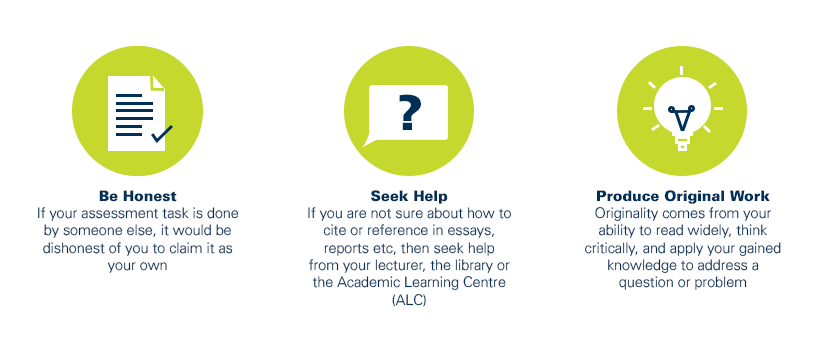
As a CQUniversity student you are expected to act honestly in all aspects of your academic work.
Any assessable work undertaken or submitted for review or assessment must be your own work. Assessable work is any type of work you do to meet the assessment requirements in the unit, including draft work submitted for review and feedback and final work to be assessed.
When you use the ideas, words or data of others in your assessment, you must thoroughly and clearly acknowledge the source of this information by using the correct referencing style for your unit. Using others’ work without proper acknowledgement may be considered a form of intellectual dishonesty.
Participating honestly, respectfully, responsibly, and fairly in your university study ensures the CQUniversity qualification you earn will be valued as a true indication of your individual academic achievement and will continue to receive the respect and recognition it deserves.
As a student, you are responsible for reading and following CQUniversity’s policies, including the Student Academic Integrity Policy and Procedure. This policy sets out CQUniversity’s expectations of you to act with integrity, examples of academic integrity breaches to avoid, the processes used to address alleged breaches of academic integrity, and potential penalties.
What is a breach of academic integrity?
A breach of academic integrity includes but is not limited to plagiarism, self-plagiarism, collusion, cheating, contract cheating, and academic misconduct. The Student Academic Integrity Policy and Procedure defines what these terms mean and gives examples.
Why is academic integrity important?
A breach of academic integrity may result in one or more penalties, including suspension or even expulsion from the University. It can also have negative implications for student visas and future enrolment at CQUniversity or elsewhere. Students who engage in contract cheating also risk being blackmailed by contract cheating services.
Where can I get assistance?
For academic advice and guidance, the Academic Learning Centre (ALC) can support you in becoming confident in completing assessments with integrity and of high standard.
What can you do to act with integrity?